Learn how to tell true grafted sweet almond seedlings (Prunus dulcis) from Indian almond trees (Terminalia catappa) in Kenya, and protect your farm investment before you plant.
Sweet Almond and Indian Almond in Kenya
Many farmers in Kenya want a crop that pays better than maize or beans. Some are planting macadamia, some are planting cashew, and more are now planting almond. Shelled almonds sell in Nairobi, Mombasa and Kisumu. Bakeries, supermarkets and makers of cosmetic oil all buy them.
The problem is that two different trees are called almond in Kenya. The first is the sweet almond, Prunus dulcis. This is the tree that gives the almonds you buy in a shop. The second is the Indian almond, Terminalia catappa. This is a large shade tree that grows at the coast and in warm towns, and nobody buys its seeds as a nut.
Some farmers buy Indian almond seedlings thinking they are sweet almond. They only find out when the trees fruit, which is three to five years later. By then they have cleared the land, dug the holes, added manure, built a fence and laid irrigation pipes. That money is lost, and they have to start again.
This guide shows how to tell the two trees apart. It covers the leaves, the stem, the fruit and the graft mark on a seedling. It also covers where each tree grows in Kenya, how to prepare the land, how to plant and look after the trees, what the work costs, what an acre can earn, and where to buy proper seedlings. Read it before you pay for any seedlings.
Sweet Almond and Indian Almond Compared
The table gives a short summary. The sections after it explain each point.
| Feature | Sweet almond (Prunus dulcis) | Indian almond (Terminalia catappa) |
|---|---|---|
| Main use | Edible nuts, baking, cosmetic oil | Shade, windbreak, landscaping |
| Plant family | Rosaceae (same as peach, plum, cherry) | Combretaceae |
| Best altitude in Kenya | 1,200 m to 2,200 m | 0 m to 1,000 m |
| Planting material | Grafted seedling from a certified nursery | Un-grafted seedling grown from seed |
| Seedling price | KSh 800 to KSh 2,500 | KSh 150 to KSh 400 |
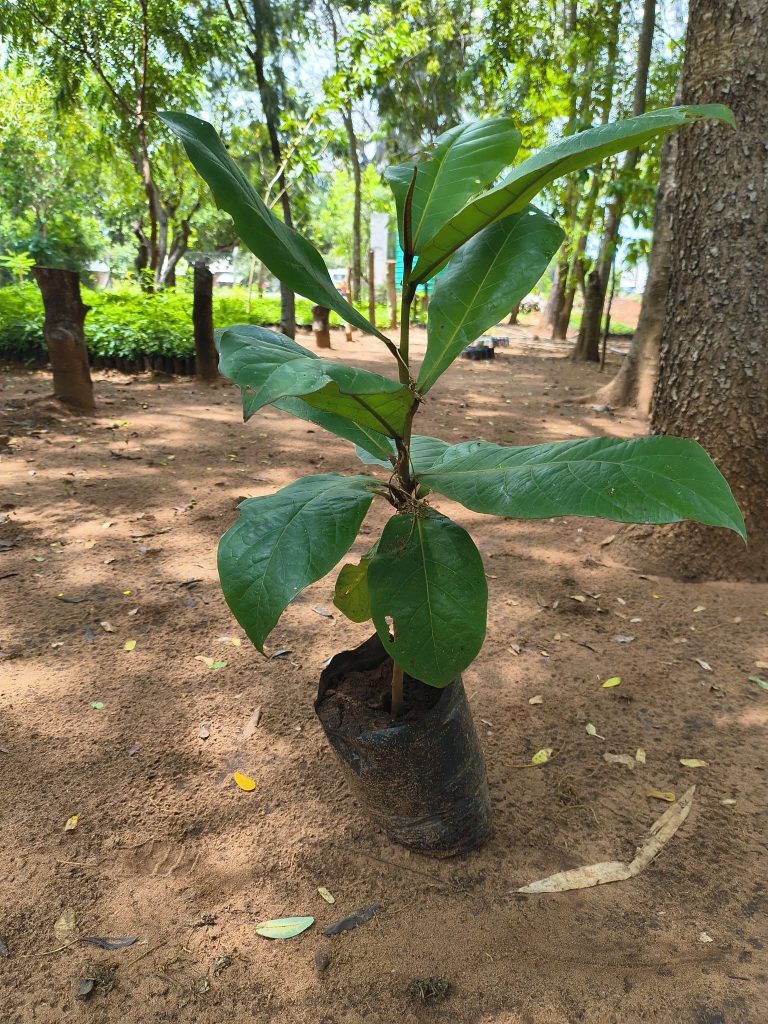
| Leaves | Narrow, lance shaped, fine teeth on the edge | Broad, thick, leathery, oval, turn red with age |
| Fruit | Green hull that splits open, hard shell, smooth kernel | Flat, egg-shaped pod with a corky husk and a tiny seed |
| Market for the nuts | KSh 800 to KSh 1,200 per kg of clean kernels | No formal commercial buyers in East Africa |
Why Farmers Buy the Wrong Tree
Often the seller is not trying to cheat anyone. In many parts of Kenya people call the Indian almond simply “almond”, and sellers repeat the name they have always heard. Some sellers do know the difference. Indian almond seeds are easy to pick up under any tree, and the seedlings cost very little to raise. A seller can grow a batch quickly and sell it to farmers who ask for almond seedlings.
Price is a clue. A grafted sweet almond takes skill and time to produce, so it sells for KSh 800 to KSh 2,500. An un-grafted seedling sells for KSh 150 to KSh 400. If someone offers almond seedlings at KSh 200 each, they are most likely not grafted sweet almond.
There are three other reasons the mistake is common. Most people buy at the start of the rains, when nurseries are busy and nobody checks the plants closely. Young seedlings of both trees look like small green plants, and the fruit, which is the clearest sign, is years away. And many buyers do not ask for the botanical name or for any papers.
A wrong purchase costs more than the seedlings. The land is used for years by trees that earn nothing, and the farmer loses the years in which a proper crop could have been growing. The best way to avoid this is to learn a few simple checks and to buy only from a nursery that can show what it is selling.
How the Two Trees Differ
Sweet almond
Sweet almond belongs to the rose family, Rosaceae. Its close relatives are peach, plum, apricot and cherry. It is a medium-sized tree that loses its leaves in the cool season. It has thin, bendy branches and narrow leaves, and in spring it carries pale pink and white flowers.
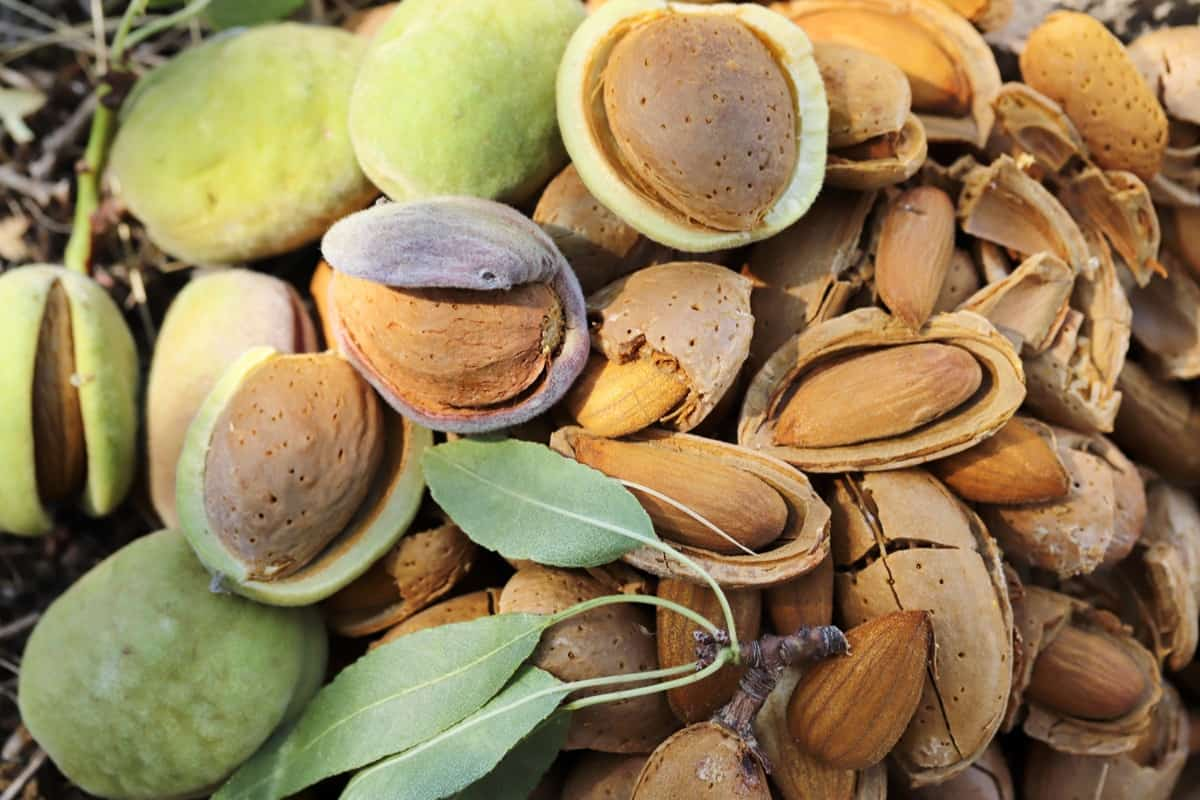
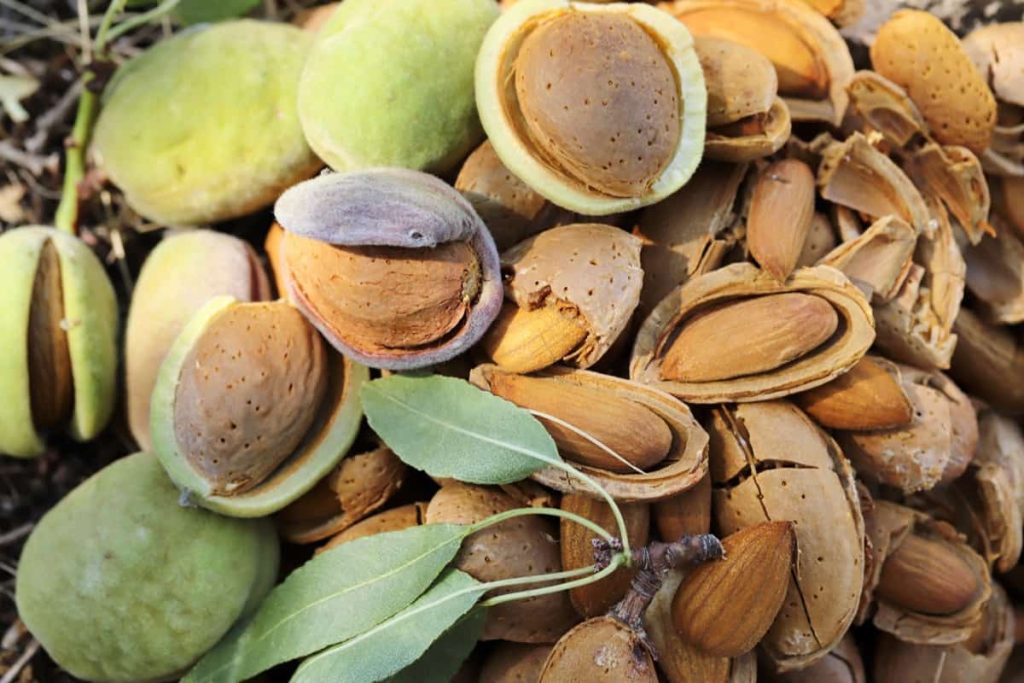
The part we eat is the kernel inside a hard shell. The shell sits inside a green hull covered in short, soft hairs. When the nut is ripe, the hull dries and splits open on the tree.
Indian almond
Indian almond belongs to a different family, Combretaceae. On the Kenyan coast it is also called tropical almond, sea almond or beach almond. It grows very large, with stiff branches that spread out sideways in layers, and people plant it for shade at homes, hotels and beaches.
The fruit is flat and shaped like an egg. The skin is smooth and turns yellow or purple when ripe. Under the skin is a thick, dry husk made of fibre, which floats on seawater. Inside is one small seed that is very hard to take out.
Why one cannot be turned into the other
The two trees come from different plant families. They cannot cross-pollinate and they cannot be grafted onto each other. No fertiliser, pruning or watering will make an Indian almond produce sweet almonds. If you plant the wrong one, the only fix is to cut it down.
Why Sweet Almond Seedlings Must Be Grafted
Even among real sweet almonds, the seedling you buy should not be grown from seed. A tree grown from seed does not copy its parent. The genes mix, so the yield, the nut quality and the time to fruit all vary from tree to tree. A seed-grown tree can take six to eight years to bear, and many give bitter nuts. Bitter almonds contain amygdalin, which is harmful in large amounts.
Commercial farms use grafted trees. In grafting, a nursery worker takes a cutting from a good variety. This cutting is called the scion. The worker joins it to the root system of another plant, called the rootstock. The two grow together and become one tree. Because the scion comes from a proven tree, the new tree gives the same kind of nuts.
Varieties
Common varieties are Nonpareil, Carmel, Mission and Tuono. They differ in flowering time, nut size and yield. Most varieties give a better crop when they receive pollen from a second variety, so an orchard usually has more than one. This is covered in the planting section.
Rootstocks
Rootstocks such as GF 677 and Nemaguard are widely used. They resist root-knot nematodes, which are small worms that live in the soil and damage roots. They also send roots deep into the subsoil, where the tree can find water in the dry months, and they help the trees in an orchard grow at the same pace. A well-grafted tree can give a first small crop in the third year after planting.
How to Identify a True Sweet Almond Seedling
You do not need to be a botanist. When you visit a nursery, look at the seedlings in the order below.
Leaves
Sweet almond leaves are long and narrow with a pointed tip. The edges have small, fine teeth that you can feel when you run a finger along them. The leaves are soft and light green. Indian almond leaves are large, broad, dark green and oval. They are smooth and thick, like leather, and as they age they turn red, copper or yellow. If the leaves are broad and thick, the plant is not a sweet almond.
Stem and branches
A young sweet almond has an upright, flexible stem that changes from green to reddish brown and carries thin side twigs. A young Indian almond has a thick, stiff, woody stem, and its side branches stick out almost flat from the trunk.
Graft union
This is the most reliable check on a seedling. Look at the lower part of the stem. A grafted sweet almond has a healed bump on the trunk, usually 8 to 15 centimetres above the soil. The bark often changes in colour or thickness at that point. If the stem is smooth and straight from the soil upward, the plant was not grafted. Wild Indian almond seedlings sold by the roadside never have this mark.
Papers
A good nursery will tell you the scion variety and the rootstock for each batch. It should also show that it is inspected by KEPHIS, the Kenya Plant Health Inspectorate Service. Ask to see the certificate, and ask for a receipt that names the variety. If the seller cannot answer these questions, do not buy.
General health
Choose seedlings that stand upright and have firm green leaves. Avoid plants with spots on the leaves, wilted tips or roots growing out of the bottom of the bag. A healthy seedling in a bag with good soil will settle faster in your field.
Fruit
You will not see fruit on a young seedling, but you should know what it looks like. The fruit of Prunus dulcis has a green hull covered in fine hairs. The hull splits open on the branch when the nut is ripe. Inside is a hard shell with small pits, and inside the shell is a smooth kernel. The fruit of Terminalia catappa is flat and shaped like an egg, with a corky husk. If you want to check an older tree on a neighbour’s farm, wait for the fruit.
Where Almonds Grow in Kenya
A true seedling still fails if it is planted in the wrong place. Sweet almond and Indian almond need different conditions.
Sweet almond zones
Sweet almond needs a cool season. During this time the tree rests, and it needs a number of cool hours to wake up and flower evenly. The usual figure is 200 to 400 chill hours, counted as hours between 2 and 12 degrees Celsius. Without enough cool hours, the buds open late and unevenly and the crop is poor.
In Kenya these conditions are found in highland areas between 1,200 and 2,200 metres above sea level. Counties that fit include parts of the Rift Valley, Laikipia, Nyeri, Meru, Embu, Nyandarua, Uasin Gishu and Trans Nzoia, and the higher parts of Machakos and Kiambu. The tree grows well when daytime temperatures in the growing season are between 15 and 32 degrees Celsius. Rainfall of 500 to 800 millimetres a year suits it, with drip irrigation in the dry spells.
Chill hours differ from farm to farm, even inside one county. Talk to a local agronomist or a good nursery before you plant a large area, and start with a small trial block if you can.
Indian almond zones
Indian almond is a lowland tree. It does best from sea level to about 1,000 metres. It is common in Mombasa, Kilifi, Kwale and Lamu, and in warm low areas inland. It tolerates salty air, sandy soil and humid weather, so it works well as a shade tree and windbreak at the coast.
What happens in the wrong zone
Sweet almond planted in the hot coastal lowlands gets no chill hours. It flowers badly or not at all, and the crop fails. Indian almond planted in cold highlands such as Nyandarua or Laikipia grows slowly, and frost can damage it. Each tree should stay in its own zone.
Soil and Land Preparation
Almond trees have a deep taproot, so they need open, deep soil that drains well. Prepare the land before the seedlings arrive, so that you can plant soon after you collect them.
Soil type and pH
Choose a deep, well-drained sandy loam or loam with a pH between 6.0 and 7.5. Heavy clay that stays wet after rain is a poor choice. Roots that sit in water cannot get air and begin to rot, and fungi such as Phytophthora can then kill the tree.
Take a soil sample to a laboratory before you buy fertiliser. The report will give the pH and the level of the main nutrients. If the pH is below 5.5, the soil is too acidic. Spread agricultural lime evenly over the field several months before planting, so it has time to work.
Clearing and ploughing
Clear the bush, perennial weeds and old stumps. Plough deep, and use a subsoiler to break any hard layer under the surface, because a hard layer stops roots from going down. On sloping land, build contour terraces and drains to carry rain water away. Without them, heavy rain washes away the topsoil that holds your manure and fertiliser.
Drainage test
Dig a pit one metre deep in a few places on the site and fill each one with water. If the water has not drained away after six hours, the site drains badly. You can fix this with drainage channels, or you can plant on raised mounds 40 to 50 centimetres high.
Orchard Layout and Spacing
A good layout leaves room for workers or a tractor to move, lets sunlight reach every tree, and fits the right number of trees on the land. The spacing you choose depends on soil fertility, water supply and how closely you plan to manage the orchard.
The most common spacing is 6 metres by 6 metres, which fits about 112 trees on one acre. Where water is steady and you manage the orchard closely, 5 metres by 5 metres fits about 160 trees per acre. In drier areas with little irrigation water, 7 metres by 7 metres gives about 82 trees per acre, and each tree has more soil to draw water from.
Plan for pollination
Many almond varieties do not set a full crop with their own pollen. They need pollen from a second variety that flowers at the same time. A common plan is three rows of a main variety such as Nonpareil, then one row of a pollinizer such as Carmel or Mission. Bees can then move easily between the two. Ask your nursery which varieties match well for your area, and order the right number of each before you plant.
How to Plant Almond Seedlings
Mark the layout with pegs and twine, then dig the holes. Each hole should be 60 cm wide, 60 cm long and 60 cm deep. Put the topsoil on one side and the subsoil on the other, and do not mix them.
Mix the topsoil with 20 kg of fully decomposed farmyard manure, 250 g of double superphosphate and 50 g of a biological fungicide such as Trichoderma. Put this mixture back into the hole and leave it to settle before the seedlings arrive. The manure and phosphate feed the young roots, and the fungicide helps guard them against soil diseases.
When to plant
Plant at the start of the rains. In most highland areas this is March and April for the long rains, or October and November for the short rains. Rain helps the roots settle and cuts down the amount of watering you have to do by hand.
Setting the tree in the hole
Planting depth is the step that farmers most often get wrong. The graft union, which is the bump on the lower stem, must stay 8 to 15 cm above the final soil level. If you bury it, the scion can grow its own roots and the tree loses the benefit of the rootstock. A buried union can also lead to collar rot.
Add the topsoil mixture back in stages and press it down gently to remove air pockets. Drive a strong wooden stake in beside the trunk and tie the tree to it loosely with soft nursery tape. A tight tie cuts into the bark as the tree grows. Water the tree straight away with about 20 litres of clean water. Then spread a layer of mulch about 10 cm thick around the tree, but keep it 10 cm away from the stem. Mulch against the trunk holds moisture and can cause rot.
Caring for the Orchard
The yield you get in year seven depends on the work you do in the first six years.
Water
Water affects how well the kernel fills. Mature trees can handle short dry spells, but good yields need about 40 to 80 litres of water per tree each week in the dry months. Micro-drip irrigation is the best way to give it, because it puts the water at the roots and wastes little. The tree needs the most water while the kernel is growing, from late spring to mid-summer. Cut back the water as harvest gets close, so that the hulls split open on their own.
Feeding
Give each mature tree 30 to 40 kg of well-decomposed farmyard manure every year. Add a balanced NPK fertiliser and a source of potassium. Potassium helps the kernel fill and makes the shell firmer. Split the nitrogen into two parts, one before bud break and one after fruit set. Just before flowering, spray the leaves with boron and zinc. This reduces flower drop and helps prevent corky or misshapen kernels.
Pruning and training
Most commercial growers use the open centre system, also called the vase shape. When you plant, cut the main stem back to 70 to 80 cm. This makes the tree grow three or four strong main branches. Each year in the cool season, remove branches that are dead, that cross over other branches, or that grow toward the middle. An open tree lets sunlight reach the centre, and the nuts ripen more evenly.
Bees and pollination
Place two to three active beehives per acre about three days before flowering starts. Do not spray chemical insecticides while the trees are in flower, because the spray kills the bees.
Pests and diseases
Almond trees can be attacked by peach twig borer, navel orangeworm, spider mites, bacterial canker and shot hole fungus. Keep the orchard clean. Remove old nuts that stay on the tree over the cool season, because pests hide in them. Spray copper-based fungicide before disease appears, and walk through the orchard every week to look for early signs. If you are not sure what you are seeing, ask your county extension officer before you spray.
Costs and Returns for One Acre
Almond is a long-term crop. It does not pay in the first two years, and you need to be ready for that. In year one the money goes on land preparation, drip lines, manure, fencing and seedlings. At 6 m by 6 m spacing you need about 112 trees per acre, and a certified grafted seedling costs KSh 800 to KSh 2,500, depending on age and the size of your order. In years one and two you can grow short-season legumes between the rows to help pay for weeding.
The first crop comes in year three and is small. Yields then rise each year. The model below assumes that by year seven a mature tree gives about 22 kg of in-shell nuts, which is about 880 kg of clean kernels per acre. Clean kernels sell for KSh 800 to KSh 1,200 per kg in local and regional markets.
| Year | In-shell yield per tree | Kernels per acre | Price per kg (KSh) | Gross revenue (KSh) | Operating cost (KSh) | Net profit (KSh) |
|---|---|---|---|---|---|---|
| 1 | 0 kg | 0 kg | none | 0 | 264,840 | -264,840 |
| 2 | 0 kg | 0 kg | none | 0 | 25,000 | -25,000 |
| 3 | 2.5 kg | 100 kg | 900 | 90,000 | 35,000 | 55,000 |
| 4 | 6.0 kg | 240 kg | 900 | 216,000 | 45,000 | 171,000 |
| 5 | 12.0 kg | 480 kg | 1,000 | 480,000 | 60,000 | 420,000 |
| 6 | 18.0 kg | 720 kg | 1,000 | 720,000 | 75,000 | 645,000 |
| 7 and after | 22.0 kg | 880 kg | 1,000 | 880,000 | 85,000 | 795,000 |
These figures are planning estimates, not a promise. If you add up the yearly results, the farm is still behind after year four and moves into overall profit in year five. By the end of year seven the total net result is about KSh 1.8 million for one acre. Your own results will depend on altitude, rainfall, variety, pest control, labour cost and the price you get when you sell. Build your own budget with local prices, and test it against a bad year as well as a good one.
Checklist Before You Buy Seedlings
Take this list with you. If the seller fails any point, do not buy.
- The seller names the species as Prunus dulcis and names the scion variety.
- The seller names the rootstock, such as GF 677 or Nemaguard.
- Each seedling has a healed graft union 8 to 15 cm above the soil.
- The leaves are narrow with fine teeth, not broad and leathery.
- The nursery has KEPHIS inspection and can show the papers.
- You get a receipt that lists the variety, the number of seedlings and the price.
- Your farm is between 1,200 and 2,200 metres above sea level.
Mistakes That Cost Farmers Money
The first mistake is buying on price alone. A seedling at KSh 200 looks cheap, but the seedlings are the smallest cost in an orchard. The fencing, water, labour and years of waiting cost far more, and they are all wasted if the seedling is wrong.
The second mistake is planting in the wrong zone. A true sweet almond planted at the hot coast will not flower well, and no amount of care will change that. The third mistake is burying the graft union. The fourth is planting one variety alone, with no pollinizer, so that the trees flower but do not set a full crop. The fifth is skipping the soil test and the drainage test, and then losing trees to root rot.
The last mistake is expecting quick income. Almond gives nothing in the first two years and little in years three and four. Farmers who plan for this, and who keep their trees watered, fed and pruned, reach the better yields of years five to seven.
If You Have Already Planted and Are Not Sure
Check the trees you have. Look at the leaves first. Broad, thick, leathery leaves mean the tree is an Indian almond. Then look for the graft union on the lower stem. A smooth stem with no bump means the tree was not grafted.
If you still cannot tell, ask your county agricultural officer or a KEPHIS office to look at the trees. Do this early. If the trees turn out to be Indian almond, it is better to know in the first year than to learn in the fourth. Keep the receipt and the seller’s details, because they may help you ask for a refund.
Frequently Asked Questions
What is the difference between sweet almond and Indian almond?
Sweet almond (Prunus dulcis) is a highland nut tree that gives the almonds sold in shops. Indian almond (Terminalia catappa) is a coastal and lowland shade tree with a fibrous husk and a very small seed. They belong to different plant families and cannot be grafted onto each other.
Can Indian almond give nuts that I can sell?
The seed is small and hard to remove, and there are no formal commercial buyers for it in East Africa. Indian almond is a good shade and windbreak tree, but it is not a nut crop.
Where can sweet almond grow in Kenya?
It grows best in highland areas between 1,200 and 2,200 metres above sea level that have enough cool hours in the cool season. Counties often named as suitable include Laikipia, Nyeri, Meru, Embu, Nyandarua, Uasin Gishu and Trans Nzoia, and the higher parts of Kiambu and Machakos. Check the conditions on your own farm before you plant a large area.
How much does a sweet almond seedling cost in Kenya?
Certified grafted seedlings cost KSh 800 to KSh 2,500, depending on age, variety and the size of the order. Un-grafted seedlings sold for KSh 150 to KSh 400 are often Indian almond or seed-grown plants that will not give a reliable crop.
How long does a grafted almond tree take to bear nuts?
A grafted tree gives a first small crop in year three. Yields rise each year and reach full production at about year seven. A tree grown from seed can take six to eight years to fruit, and its nuts may be bitter.
How can I tell that a seedling is grafted?
Look for a healed bump on the stem about 8 to 15 cm above the soil. A smooth, straight stem with no mark means the plant was not grafted.
Why does KEPHIS certification matter?
KEPHIS inspects nurseries for plant health and correct labelling. A nursery with proper certification and records can show you which variety and rootstock you are buying, and you have a clear record if something goes wrong.
Where to Buy Certified Grafted Sweet Almond Seedlings
Fruit Africa Veriplant supplies KEPHIS-inspected, true-to-type grafted sweet almond seedlings to farmers across East Africa. The nursery follows strict plant health standards, so each seedling is healthy, correctly labelled and ready to plant.
- Head Office Location: Ruiru, Kiambu County, Kenya
- Nursery Distribution Bases: Murang’a, Nairobi, and Embu
- Phone Direct: +254 714 994 444
- WhatsApp Assistance: Message us on WhatsApp
- Official Email: sales@fruitafrica.org
- Official Website: www.fruitafrica.org
- Request a Quote: fruitafrica.org/request-for-quotation/
Summary
An almond orchard stays in the ground for many years, so the seedlings you choose on the day of purchase decide your income for a long time. Sweet almond and Indian almond share a name, but they have different families, different climates, different fruit and different markets. Sweet almond can be a good crop on a highland farm. Indian almond is a shade tree.
Before you buy, check the leaves and look for the graft union. Ask for the variety, the rootstock and the KEPHIS papers. Make sure your altitude suits sweet almond, test your soil and drainage, and plan for the first two years without income. If you do these things, you start the orchard with the right trees in the right place.