KSh 600.00–KSh 1,500.00Price range: KSh 600.00 through KSh 1,500.00
Order your Plums Seedlings early so the nursery can prepare them for your planting date. Prepare your land before the seedlings arrive. Have irrigation ready and labour arranged.
Fruit Africa Veriplant supplies Plums Seedlings at KSh 600 each. Cherry plum and Santa Rosa cost KSh 1,500 each. Shiro, Methley and Mariposa cost KSh 800 each. To order, call 0714 994 444, send a WhatsApp message through https://wa.link/di12my, email sales@fruitafrica.org, or submit your requirements through https://fruitafrica.org/request-for-quotation/.
Start with healthy Plums Seedlings and give your plum enterprise the best chance to produce well.
Want to be notified when this product is back in stock?
Buy Plums Seedlings in Kenya at KSh 600 each. Santa Rosa and Cherry plum at KSh 1,500. Shiro, Methley and Mariposa at KSh 800. Complete guide to plum farming, costs and fruit prices.
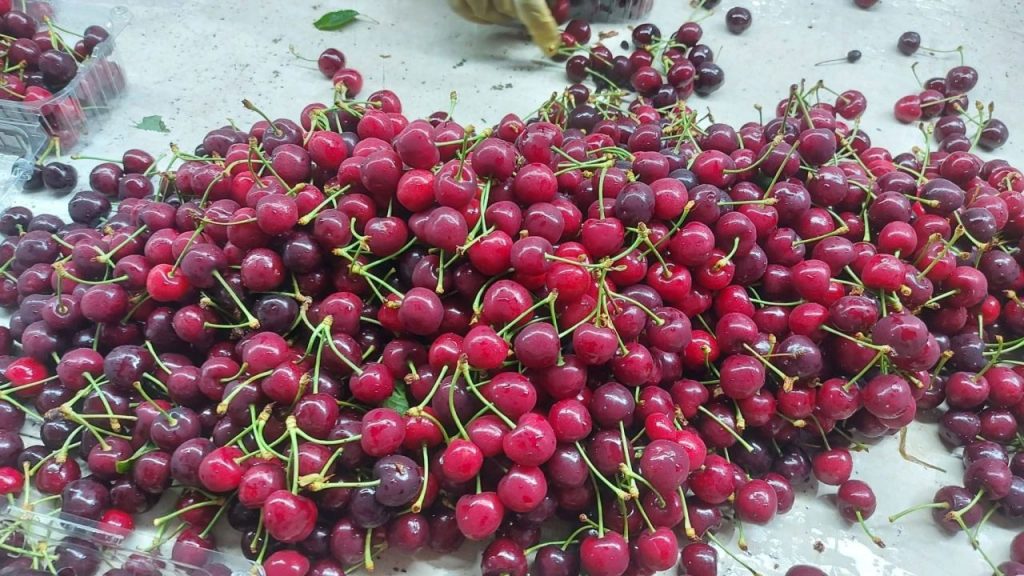
Harvested plums
Plums Seedlings in Kenya: Price, Planting, Costs and Profitability Guide
Plums Seedlings give Kenyan farmers a way into a fruit market that pays well and keeps paying for years. Local plums sell for KSh 300 to KSh 350 per kilogram when they are in season. Imported plums sell for KSh 2,199 to KSh 2,889 per kilogram in supermarkets. That price gap shows what is missing in the local market. Not enough farmers grow plums.
This guide covers what you need before you order Plums Seedlings in Kenya. It explains the crop, the varieties, where plums grow, how to plant them, what it costs to produce, what you can harvest per tree and per acre, and what prices you can expect. It gives you the numbers to plan a commercial plum orchard.
Fruit Africa Veriplant supplies Plums Seedlings at KSh 600 each. Cherry plum seedlings cost KSh 1,500. Santa Rosa plum seedlings cost KSh 1,500. Shiro plum seedlings cost KSh 800. Methley plum seedlings cost KSh 800. Mariposa plum seedlings cost KSh 800. The rest of this guide explains everything that comes after that order.
What Are Plums Seedlings?
Plum belongs to the Rosaceae family, the same family as peaches, cherries and apricots. The cultivated plum grown in Kenya is mainly Japanese plum, Prunus salicina, and European plum, Prunus domestica. Japanese plums dominate fresh markets because they produce juicy, sweet fruit. European plums are better suited for processing and drying into prunes.
Plums Seedlings are propagated by grafting. A selected fruiting variety is joined to a rootstock. This gives you a tree with known fruit quality and a root system suited to your soil. Seed-grown plum trees take longer to fruit and produce variable quality. Grafted trees start producing in three to four years and carry uniform fruit.
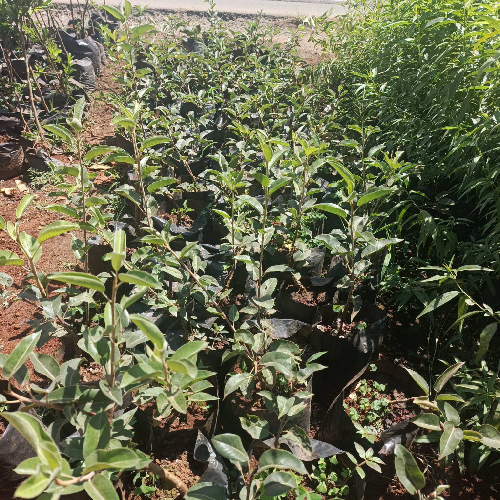
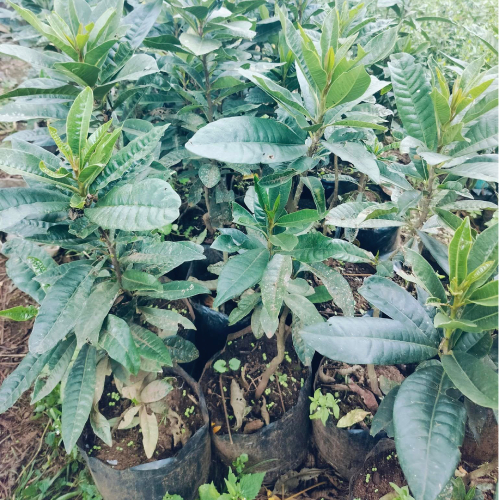
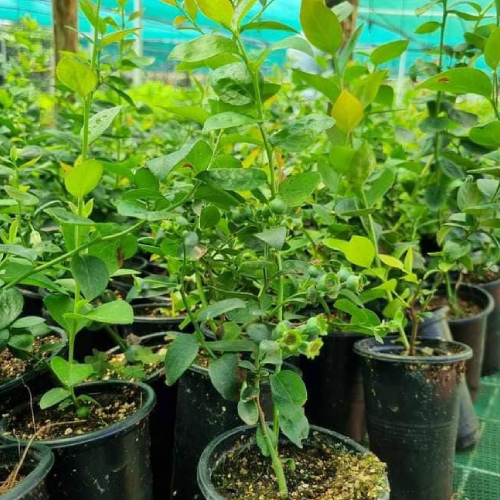
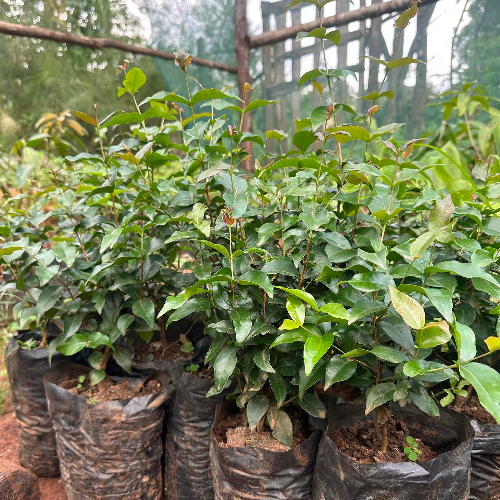
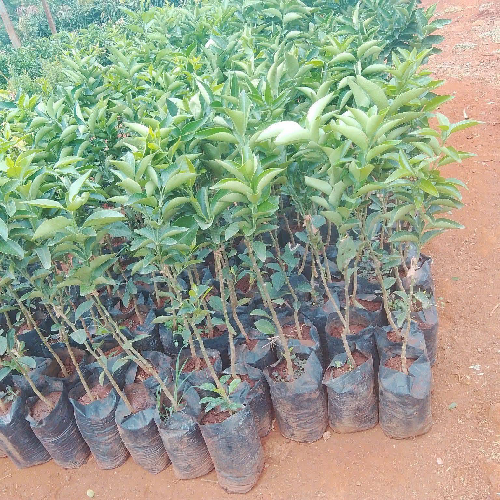
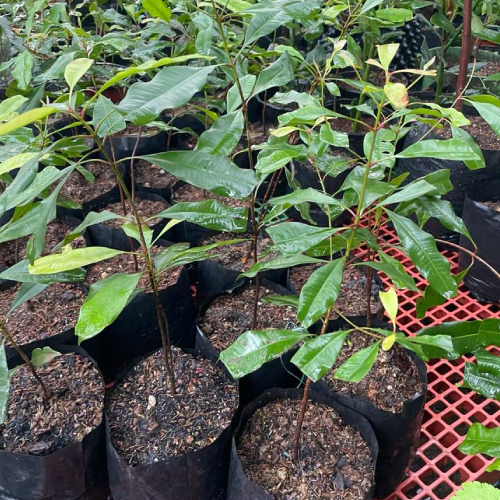
A good Plums Seedling has a clean, healed graft union, healthy roots, and a straight stem with no damage. The leaves should be green and free of spots or curling. When you buy from a reliable nursery, you get planting material selected for fruit quality and yield. That is the foundation of a commercial orchard.
Plums Seedlings at Fruit Africa Veriplant in Kenya
Plums Seedlings Price in Kenya
Fruit Africa Veriplant supplies Plums Seedlings at KSh 600 each. Other varieties carry different prices.
The total amount you spend on seedlings depends on how many trees you need. A one-acre plot at 5 metres by 5 metres spacing holds about 160 trees. At KSh 600 per seedling, that comes to KSh 96,000 for planting material alone. At KSh 1,500 per seedling, the cost rises to KSh 240,000. At KSh 800 per seedling, the cost is KSh 128,000.
Other Kenyan nurseries sell plum seedlings at KSh 350 to KSh 500 each. The price varies with variety, nursery reputation and the size of the seedling. Fruit Africa Veriplant prices reflect the quality of the planting material and the varieties on offer.
Seedling cost is only one part of what you will spend. Land preparation, manure, fertiliser, irrigation, labour, staking, and crop protection all add to the total investment. Budget for the full establishment cost before you place your order.
When comparing Plums Seedlings from different nurseries, look at the graft union, the roots, and the leaves. A cheap seedling that fails to establish costs more than a healthy one that grows well. Ask about the variety and the mother trees the scions came from.
Variety
Price per Seedling
Standard Plums Seedlings
KSh 600
Shiro
KSh 800
Methley
KSh 800
Mariposa
KSh 800
Cherry Plum
KSh 1,500
Santa Rosa
KSh 1,500
Table 1: Plums Seedlings prices at Fruit Africa Veriplant.
Why Grow Plums in Kenya?
Plums are not as common as mangoes or avocados in Kenya. That is exactly why they are worth growing. Local supply is small. Most plums in supermarkets come from South Africa and Europe. When local plums are out of season, imported plums fill the shelves at high prices.
The price gap tells the story. Local plums sell for KSh 300 to KSh 350 per kilogram in open-air markets and local grocers. Imported plums sell for KSh 2,199 to KSh 2,889 per kilogram in supermarkets. The farmer who grows local plums can supply a market that currently depends on imports for much of the year.
Plums also produce for decades. A well-managed plum orchard can keep producing for 15 to 20 years or more. Once established, your main costs are pruning, fertiliser and pest control. The tree keeps producing year after year.
The fruit has multiple uses. Plums are eaten fresh, dried into prunes, processed into jam, juice, wine and other products. This gives farmers more than one market to target.
Plums also spread your harvest season. Different varieties mature at different times. Beauty ripens early. Santa Rosa and Methley ripen in the middle of the season. Satsuma and other late varieties ripen later. By planting several varieties, you can supply the market over a longer period and avoid price drops when everyone harvests at once.
Plum Varieties for Kenyan Conditions
Plum varieties differ in chilling requirements, fruit characteristics and market appeal. Chilling requirement refers to the number of cold hours a tree needs during dormancy to break dormancy properly and flower well. This is the most important factor in variety selection for Kenya.
Santa Rosa
Santa Rosa is one of the most widely grown plums in Kenya. The tree is self-fertile, meaning it does not need another variety nearby to produce fruit. It starts bearing in three to four years. Supermarkets and exporters prefer Santa Rosa because the fruit looks good on the shelf and stays fresh longer during transport. The fruit is large with red skin and yellow flesh.
Methley
Methley needs only 350 to 450 chill hours, so it works in slightly warmer areas where Santa Rosa might struggle. The fruit is smaller than Santa Rosa with reddish-purple skin and sweet red flesh that is very juicy. Methley produces heavier crops than Santa Rosa, meaning more total fruit per tree, but the individual fruits are smaller. Local markets and home processors like this variety because the fruit is very sweet and the trees are reliable producers.
Shiro
Shiro produces yellow-skinned fruit with sweet, juicy flesh. The tree is productive and adapts to a range of conditions. Shiro is popular in local markets and for fresh consumption.
Mariposa
Mariposa produces large, sweet fruit with red skin and yellow flesh. The tree performs well in Kenyan highlands. The fruit is valued for fresh eating and local market sales.
Cherry Plum
Cherry plum is used as a rootstock to control tree size and support high-density planting. The fruit is smaller than standard plums but sweet and useful for processing. Cherry plum seedlings are priced higher because of their role in orchard establishment.
Other Varieties
Beauty is an early season variety that needs only 300 to 400 chill hours, so it works in areas with milder winters. The fruit ripens earlier than other varieties, so farmers can get their fruit to market before the main season starts and capture premium prices. Satsuma needs 500 to 600 chill hours, so it only grows well in the coldest areas like Timau and Kinangop. Kelsey and Harry are also grown in Kenya.
The best variety for your farm depends on your altitude, your market and your access to pollinators. Before ordering Plums Seedlings, find out the chilling hours your area receives and match that to the variety you choose.
Where Plums Grow in Kenya
Plums perform best in cool highland areas. The traditional growing zones in Kenya include Kiambu, Nyeri, Murang’a, Nakuru, Kericho, Meru, and parts of the Rift Valley. The highlands of Central Kenya offer some of the best conditions.
Elevation matters. Most plum varieties do well between 1,500 and 2,500 metres above sea level. At lower elevations, temperatures are warmer and chilling hours are fewer. Low-chill varieties like Methley and Beauty perform in these conditions, but high-chill varieties often fail to flower properly.
Temperature is the main driver. Plum trees need a period of cold during dormancy. Without enough chilling, buds do not break evenly, flowering is poor and fruit set suffers. Plums grow best in temperatures of about 15°C to 28°C. If you are unsure about the chilling hours in your area, look at what other temperate fruits grow nearby.
Rainfall and irrigation matter during the growing season. Plums need consistent moisture, especially during flowering and fruit development. The crop requires annual rainfall of 800 to 1,500 millimetres. In highland areas with reliable rainfall, irrigation is needed mainly during dry spells. In drier zones, irrigation becomes essential.
Before you order Plums Seedlings, assess your site honestly. Not every part of Kenya suits commercial plum production. A warm, dry lowland farm can grow plum trees, but the yield and fruit quality will not justify the investment.
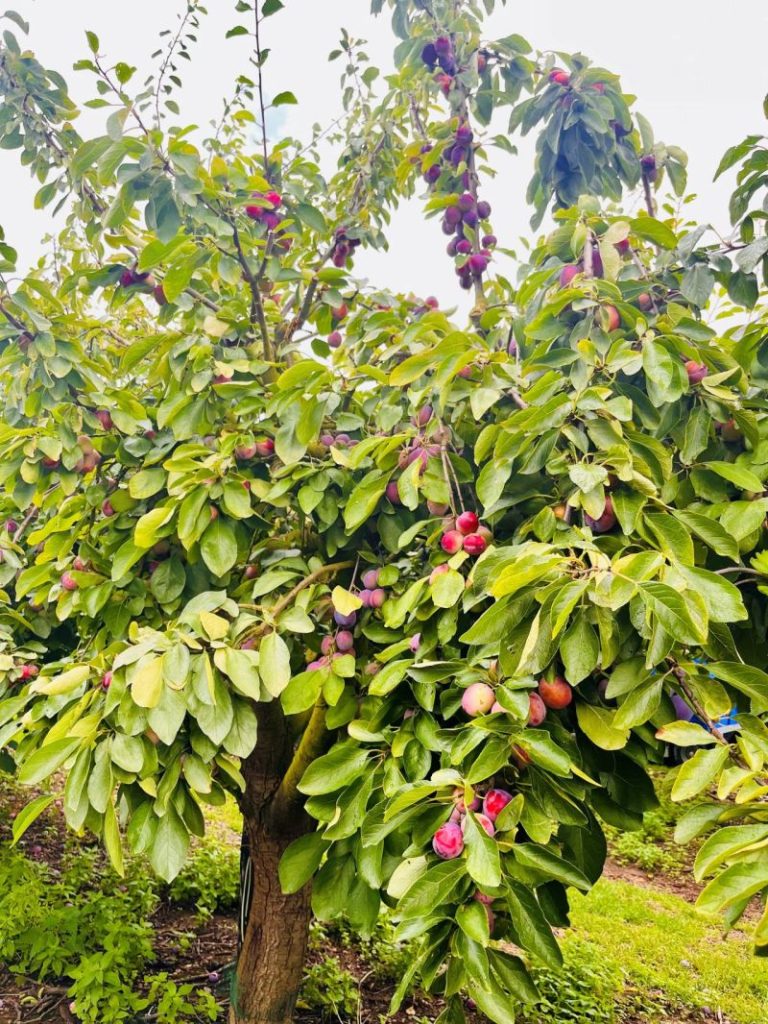
Plum Tree
Soil Requirements for Plum Trees
Plum trees tolerate a range of soils but perform best in deep, well-drained loams. Soil depth matters because plum roots need space to spread. Shallow soils over hardpan or rock restrict root growth and make trees more vulnerable to drought stress.
Drainage is critical. Plum trees do not tolerate waterlogging. A site that stays wet for days after rain suffocates roots and encourages root diseases. Good drainage and soil depth determine whether your trees develop well.
Soil texture affects water and nutrient holding. Sandy soils drain quickly but dry out fast. Clay soils hold water but become waterlogged. Loamy soils, with a balance of sand, silt and clay, offer the best conditions. Organic matter improves any soil by improving structure, water holding and nutrient availability.
Soil pH for plums should fall between 5.5 and 6.5. Very acidic or very alkaline soils lock up nutrients and reduce tree performance. A soil test tells you where your soil stands and what amendments you need.
Do not guess about your soil. A soil test before planting costs far less than correcting problems in an established orchard. Test for pH, organic matter, phosphorus, potassium and drainage. One fertiliser programme does not fit every farm.
Spacing Plums Seedlings
Spacing decides how many trees you plant, how they grow and how you manage the orchard. For plums in Kenya, two systems are common.
The 5 metre by 5 metre system gives each tree 5 metres between it and the next tree in the row, and 5 metres between rows. This spacing suits moderate-vigour varieties and farmers who want good air movement and light without heavy pruning. Each tree develops a full canopy without crowding. Spraying, harvesting and machinery access are easier because there is more room to move.
The 4 metre by 5 metre system tightens the in-row spacing while keeping 5 metres between rows. This allows more trees per acre and earlier returns per unit area. The trees fill their space sooner. You need to manage canopy size more actively through pruning to prevent trees from shading each other.
Plums are commonly planted at 5 metres by 5 metres in Kenya. Some farmers use 4 metres by 4 metres for smaller varieties or when using dwarf rootstocks.
How Many Trees Per Acre
One acre equals about 4,047 square metres.
At 5 × 5 metre spacing:
Each tree takes 5 × 5 = 25 square metres. 4,047 ÷ 25 = 161.8 trees per acre.
At 4 × 5 metre spacing:
Each tree takes 4 × 5 = 20 square metres. 4,047 ÷ 20 = 202.3 trees per acre.
At 4 × 4 metre spacing:
Each tree takes 4 × 4 = 16 square metres. 4,047 ÷ 16 = 252.9 trees per acre.
These figures assume the whole acre is planted. In reality, roads, boundaries, drainage channels, buildings, water tanks and other farm structures reduce the plantable area. A practical orchard holds between 160 and 250 trees per acre depending on layout.
Spacing affects orchard management in several ways. Wider spacing means fewer trees. Seedling cost per acre is lower, but production per acre in the early years is also lower. Tighter spacing increases tree numbers and early yield potential. It also requires more pruning and closer disease watching.
Your choice depends on your budget, your management capacity and your market timeline.
Planting Plums Seedlings
Planting is straightforward if you prepare properly. Rushed planting leads to poor establishment and losses you cannot recover.
Start with land preparation. Clear the site of perennial weeds, old crop residues and any obstacles. If the soil is compacted, break it up.
Mark the planting positions using pegs and a measuring tape. Follow your chosen spacing accurately. Crooked rows make every later operation, from spraying to harvesting, harder.
Dig planting holes about 60 centimetres wide and 60 centimetres deep. Keep topsoil and subsoil separate as you dig. Mix the topsoil with well-decomposed manure before backfilling. Manure improves soil fertility and water holding around the young roots.
Handle the seedling carefully. Keep the roots moist during transport and planting. Exposure to sun and wind dries roots quickly and reduces survival. If you cannot plant immediately, heel the seedlings into moist soil or keep them in a shaded area with roots covered.
Place the seedling in the hole with the roots spread naturally. The most important detail is the graft union. It must stay above the soil surface after planting. Place the graft union 10 to 15 centimetres above soil level. If you bury the graft union, the scion produces roots of its own, and the tree loses the benefits of the rootstock. The graft union also rots if buried.
Backfill with the topsoil and manure mix, firming gently to remove air pockets. Water immediately after planting. Stake young trees if wind is a problem. Mulch around the base with dry grass or straw, keeping the mulch a few centimetres away from the trunk. Protect young seedlings from livestock.
Plant at the start of the rains or under irrigation. The long rains in March to May or the short rains in October to November give the best planting conditions.
Plums Harvest
First-Year Orchard Management
The first year decides the tree’s shape and future productivity. What you do in these months sets the pattern for years.
Watering is critical during establishment. Young trees have small root systems and cannot reach deep soil moisture. In dry weather, water regularly. Keep the root zone moist but not waterlogged.
Weeding keeps competition away from young trees. Weeds compete for water and nutrients. They also harbour pests. Keep a clean circle around each tree by hand weeding or by keeping mulch in place.
Training starts in the first year. Remove any shoots that come from the rootstock below the graft union. These rootstock shoots grow fast and compete with the scion. Select a strong central leader and remove shoots that would create a weak structure.
Pruning in the first year is limited. The goal is to build a framework, not to produce fruit. Remove damaged or broken branches. Do not over-prune. Leaves feed the growing tree.
Watch for pests and diseases from the start. Young trees are vulnerable. Check leaves, stems and growing tips often. Early detection makes management easier.
Pruning and Canopy Management
Pruning shapes the tree, controls its size and lets light and air into the canopy. For plums, the goal is a structure that carries heavy crops without breaking and lets you manage the orchard well.
Formative pruning in the early years builds the main framework. Choose three to five well-spaced branches to form the permanent structure. Remove branches that grow inward, cross each other or grow too low.
As the tree matures, pruning focuses on keeping the structure and removing unwanted growth. Remove dead, diseased or damaged branches quickly. Water sprouts, the fast upright shoots that grow from main branches, should be removed unless you need them to fill a gap in the canopy.
Light penetration matters. Shaded branches produce less fruit and are more prone to disease. Air movement lowers humidity in the canopy and reduces disease pressure. A well-pruned canopy also makes spraying more effective.
Pruning timing matters. In Kenya’s highland areas, light pruning can be done after harvest. Heavy pruning should be done when the tree is dormant or during a less active growth period to reduce stress. Avoid pruning during flowering or when the tree is setting fruit.
Water and Irrigation
Plums need steady moisture for good growth and fruit development. Water stress during flowering reduces fruit set. Stress during fruit development reduces size and quality.
In highland areas with reliable rainfall, irrigation is needed only during dry spells. In drier zones, irrigation is essential. Drip irrigation is efficient because it delivers water to the root zone with little loss to evaporation.
Young trees need more frequent watering because their roots are shallow. As trees mature, roots go deeper and the trees handle dry spells better. Plums need about 800 to 1,500 millimetres of well-distributed rainfall through the year for good production.
Overwatering is a common mistake. Plum trees do not like wet feet. If the soil stays saturated, roots cannot breathe and root diseases develop. Mulching helps hold soil moisture and reduces how often you irrigate.
Fertilizer and Nutrition
Plum trees need a balanced supply of nutrients. The main ones are nitrogen, phosphorus and potassium. Calcium, magnesium and micronutrients also matter.
Nitrogen supports leaf growth and tree vigour. Phosphorus supports root development and flowering. Potassium supports fruit quality, size and storage life. Calcium strengthens cell walls. Magnesium supports photosynthesis.
Fertilizer decisions should follow soil analysis, tree age, growth rate and crop load. A young tree needs nutrients for growth. A mature, fruiting tree needs more potassium and balanced nutrition for fruit production.
Age of Tree (Years)
Well-Rotted Manure (kg)
Urea (g)
SSP (g)
MOP (g)
1 to 3
10 to 20
100 to 300
200 to 600
150 to 450
4 to 6
25 to 35
400 to 600
800 to 1,200
600 to 900
7 to 9
40 to 60
700 to 900
1,400 to 1,800
1,050 to 1,350
10 and above
60
1,000
2,000
1,500
Table 2: General fertilizer guide for plum trees in Kenya. Rates vary by soil type and tree condition.
Do not apply fertilizer blindly. Too much fertilizer causes too much leaf growth, poor fruit quality and waste. Too little fertilizer limits yield and tree health. The right rate depends on your soil and your trees.
Pollination and Fruit Set
Some plum varieties are self-fertile and set fruit without a pollinizer. Santa Rosa is self-fertile. Others need cross-pollination from a compatible variety that flowers at the same time. Methley is partly self-fertile but produces better with a partner.
Before you order Plums Seedlings, find out whether the variety you choose needs a pollinizer. If it does, plant a compatible variety nearby. Bees carry pollen between flowers. Avoid spraying insecticides during flowering because these products kill bees.
Fruit drop can happen after flowering, especially on young trees. Some drop is normal. Heavy drop can point to water stress, poor nutrition or pest problems. Keep the tree healthy and the soil moisture steady.
Pests and Diseases
Plum trees face pest and disease pressure in Kenya. The problems vary by location, variety and season. Monitoring is your first line of defence.
Aphids are common pests. They cluster on young shoots and the undersides of leaves. They suck sap and cause leaves to curl. Honeydew from aphids attracts ants and leads to sooty mould.
Fruit flies damage ripening fruit. Traps help monitor populations. Orchard sanitation, removing fallen fruit and destroying it, reduces breeding sites.
Scale insects attach to branches and stems. Heavy infestations reduce tree vigour. Pruning and approved insecticides help control them.
Plum curculio and other beetles feed on fruit. Monitor the orchard during fruit development. Remove affected fruit and use approved control measures when needed.
Brown rot is a fungal disease that affects flowers and fruit. It appears in wet conditions. Good air movement through pruning reduces pressure. Approved fungicides help when needed.
Bacterial spot and bacterial canker affect leaves, twigs and fruit. Prune out infected wood and clean tools between cuts. Copper-based sprays help in some cases.
Where pesticide use is needed, choose products registered for the crop and pest. Follow the label instructions exactly. Ask agricultural extension officers or licensed agrochemical dealers when you are unsure.
Yield: What to Expect Per Tree and Per Acre
Plum yields depend on tree age, variety, pollination, water, nutrition, pruning and pest and disease management. There is no fixed yield you can promise, but realistic ranges help you plan.
A grafted plum tree starts producing in three to four years. A young tree produces a few fruits in the third year. A five-year-old tree produces 10 to 20 kilograms. A mature tree produces 50 to 100 kilograms or more, depending on variety and management.
For commercial planning, one acre of well-managed plums holds 160 to 200 trees. With each mature tree producing 50 kilograms per year, a farmer harvests 8,000 to 10,000 kilograms per acre. At 100 kilograms per tree, production rises to 16,000 to 20,000 kilograms.
At 5 × 5 metre spacing, 160 trees per acre at 50 kilograms per tree gives 8,000 kilograms per acre. At 100 kilograms per tree, it gives 16,000 kilograms. At 4 × 4 metre spacing, 250 trees per acre at 50 kilograms gives 12,500 kilograms. At 100 kilograms, it gives 25,000 kilograms.
These are examples, not promises. Your actual yield depends on how well you manage the orchard.
Cost of Production Per Acre
This section shows what it costs to establish and maintain one acre of plum trees at the 5 × 5 metre spacing with 160 trees. Figures use an average seedling price of KSh 800 to account for a mix of varieties.
Item
Quantity
Unit Cost (KSh)
Total Cost (KSh)
Plums Seedlings (mixed varieties)
160
800
128,000
Land preparation
1 acre
15,000
15,000
Planting holes (labour)
160 holes
50
8,000
Well-rotted manure
6 tonnes
3,000
18,000
Planting labour
160 trees
30
4,800
Staking materials
160 stakes
50
8,000
Mulching material
1 acre
8,000
8,000
Total Establishment Cost
189,800
Table 3: Estimated establishment costs for one acre of plums at 5 × 5 metre spacing. Costs vary by location and labour rates.
If you plant only standard Plums Seedlings at KSh 600 each, the seedling cost drops to KSh 96,000 and the total establishment cost falls to about KSh 157,800. If you plant only Santa Rosa or Cherry plum at KSh 1,500 each, the seedling cost rises to KSh 240,000 and the total establishment cost rises to about KSh 301,800.
Annual Maintenance Costs (Years 2 to 5)
Item
Annual Cost (KSh)
Fertilizer and manure
25,000
Irrigation (water and labour)
15,000
Weeding and cultivation
12,000
Pruning and training
10,000
Pest and disease management
15,000
General labour
10,000
Total Annual Maintenance
87,000
Table 4: Estimated annual maintenance costs during the establishment years.
Total Investment Before First Big Harvest
Year
Cost (KSh)
Year 1
189,800
Year 2
87,000
Year 3
87,000
Year 4
87,000
Total Investment by Year 4
450,800
Table 5: Total investment before the orchard reaches significant production.
Market Prices for Plums in Kenya
Plum prices in Kenya change depending on where you sell and whether local fruit is in season. The table below shows the range you can expect.
Market Channel
Price per Kilogram
Local wholesale or farmgate
KSh 100 to KSh 250
Open-air markets and local grocers
KSh 300 to KSh 350
Nairobi supermarkets and specialized delivery
KSh 250 to KSh 800
Imported plums at Naivas
About KSh 2,199
Imported plums at Carrefour
About KSh 2,599
Premium imported plums at Zucchini Greengrocers
About KSh 2,889
Table 6: Plum prices in different Kenyan market channels.
Local plums are highly seasonal. The season peaks between mid-December and early March. Prices fluctuate through the year because of this. When local plums are out of season, supermarkets import them and prices rise sharply.
The farmer gets less than the retail price. Transport, packaging, cold chain, market fees and middlemen margins all take a share between the farm and the consumer. When you plan your income, use the price you can actually get, not the supermarket shelf price.
Fruit quality matters. Clean, well-graded fruit sells faster and at better prices than mixed, damaged fruit.
Revenue Per Acre
Revenue depends on how much fruit you produce and the price you get. The table below shows gross revenue at different yields and prices. Gross revenue is the money you receive before subtracting your costs.
Production
At KSh 150/kg
At KSh 300/kg
At KSh 500/kg
8,000 kg
KSh 1,200,000
KSh 2,400,000
KSh 4,000,000
10,000 kg
KSh 1,500,000
KSh 3,000,000
KSh 5,000,000
16,000 kg
KSh 2,400,000
KSh 4,800,000
KSh 8,000,000
20,000 kg
KSh 3,000,000
KSh 6,000,000
KSh 10,000,000
Table 7: Gross revenue per acre at different yields and prices.
These are gross figures, not profit. You still need to subtract the cost of production, harvesting, packaging, transport and marketing.
Profit Per Acre
Profit is what remains after you subtract your costs from your revenue. Using the estimated annual maintenance cost of KSh 87,000 once the trees are mature, the table below shows what is left at different yields and prices.
Production
At KSh 150/kg
At KSh 300/kg
At KSh 500/kg
8,000 kg
KSh 1,113,000
KSh 2,313,000
KSh 3,913,000
10,000 kg
KSh 1,413,000
KSh 2,913,000
KSh 4,913,000
16,000 kg
KSh 2,313,000
KSh 4,713,000
KSh 7,913,000
20,000 kg
KSh 2,913,000
KSh 5,913,000
KSh 9,913,000
Table 8: Estimated profit per acre at different yields and prices once trees are mature.
The table shows why yield and price both matter. At low yield and low price, profit is smaller. At high yield and high price, profit is large. Focus on both production and marketing.
Break-Even Price
Break-even price is the price you need per kilogram to cover your costs. It shows how much room you have before you start losing money.
Using an annual maintenance cost of KSh 87,000:
At 8,000 kg, the break-even price is KSh 87,000 divided by 8,000, which equals about KSh 11 per kilogram.
At 10,000 kg, the break-even price is KSh 87,000 divided by 10,000, which equals about KSh 9 per kilogram.
At 16,000 kg, the break-even price is KSh 87,000 divided by 16,000, which equals about KSh 5 per kilogram.
At 20,000 kg, the break-even price is KSh 87,000 divided by 20,000, which equals about KSh 4 per kilogram.
The lesson is clear. Plum prices in Kenya are high enough to give good margins even at moderate yields. The main investment is the establishment cost in the first four years. Once the trees produce, the yearly costs are modest compared to the value of the crop.
Planning a Plum Enterprise
A good plum plan starts with the market, not the seedlings. Before you order Plums Seedlings, answer these questions.
Who will buy your fruit? Do you have a buyer lined up, or will you look for one at harvest? What price can you get from that buyer? How much fruit can you move through that channel?
How much will it cost you to produce? Add up seedlings, land preparation, manure, fertiliser, irrigation, labour, pest control, harvesting, packaging and transport. That total tells you what you need to earn.
How much fruit can your land produce? Use the plant population and yield figures in this guide. Be realistic. Do not plan on the highest yield if you are new to the crop.
Once you have those answers, you can decide how many acres to plant and which market to target. Start small if you are new to plums. Learn the crop on a quarter acre or half acre. Expand once you know how the crop performs on your farm and where you can sell the fruit.
Selling Plums in Kenya
Different markets pay different prices. Choose the one that fits your volume, your location and your capacity to deliver.
Farmgate sales are the simplest. A trader comes to your farm, buys the fruit and takes it away. You do not worry about transport or marketing. The price is lower, but your work is less.
Wholesale markets move large volumes. You take the fruit to a market and sell to traders there. Prices are moderate. You need transport and time.
Local retail and open-air markets pay more than wholesale. You sell directly to consumers or small shopkeepers. This takes more time and effort. You also need to grade and package the fruit well.
Supermarkets and online retail pay the highest prices, but the requirements are strict. Fruit must meet size and quality standards. Packaging must be right. Payment can take 30 to 90 days. Rejection rates are higher. Only supply supermarkets if you can meet their standards consistently.
Hotels and restaurants are another option. They buy quality fruit and pay fair prices. Build relationships with chefs and buyers. Deliver on time and keep quality high.
Plums and Export Markets
Kenya exports small quantities of plums. Export markets pay higher prices than local markets, but the requirements are strict. Fruit must meet quality, size, packaging and phytosanitary standards. Exporters need certification and logistics arrangements.
Do not plan your farm around export prices unless you have a confirmed buyer and the systems in place to meet their requirements. Export is not a simple market to enter. It takes planning, investment and relationships.
Health and Nutrition of Plums
Plums are a nutritious fruit. They contain vitamin C, vitamin A, dietary fibre and antioxidants. The fruit is sweet when ripe and can be eaten fresh, dried or cooked.
Dried plums, known as prunes, are high in fibre and are used to support digestion. Fresh plums have a high water content and are low in calories.
Do not make medical claims about plums. They are a nutritious fruit, but they are not a medicine. Talk about their nutritional qualities, not their ability to treat disease.
Common Mistakes to Avoid
Many farmers lose money on plums because of avoidable mistakes. Learn from them before you plant.
The biggest mistake is planting before finding a market. Plums are not as common as mangoes or avocados. The market is smaller. If you plant a large acreage without a buyer, you may struggle to sell the fruit. Find your market first.
Another mistake is using supermarket prices to plan your income. The supermarket price is not your price. Subtract transport, packaging, cold chain, market fees and middlemen margins. Plan with the price you can actually get.
Poor irrigation management causes problems. Both too little water and too much water hurt the crop. Keep moisture steady.
Overcrowding the orchard makes disease and pest control harder. Choose a spacing that matches your management capacity.
Treating yield figures as guarantees is another mistake. Yields depend on your soil, water, nutrition, pest control and the weather. Plan on conservative figures and improve from there.
Why Quality Plums Seedlings Matter
The planting material you start with determines what you harvest. Weak seedlings establish poorly. They grow slowly and produce less fruit. Diseased seedlings carry problems into your field that spread to healthy plants.
Healthy Plums Seedlings establish quickly. They grow strong and produce fruit within three to four years. They carry the genetic potential for good yield and good fruit quality. Starting with quality planting material saves you time, money and frustration.
Buy from a nursery that selects mother plants for fruit quality. Ask about the variety and the source of the scions. Check the graft union, roots, stem and leaves before you buy. A little extra care at the buying stage pays off through the life of the orchard.
Plums Seedlings for Commercial Farms
Commercial farmers need larger quantities of Plums Seedlings and careful planning. The number of seedlings depends on the acreage and spacing.
At 5 metres by 5 metres, one acre needs about 160 seedlings. Two acres need about 320. Five acres need about 800.
At KSh 600 per seedling, the cost is KSh 96,000 for one acre, KSh 192,000 for two acres and KSh 480,000 for five acres.
At KSh 800 per seedling, the cost is KSh 128,000 for one acre, KSh 256,000 for two acres and KSh 640,000 for five acres.
At KSh 1,500 per seedling, the cost is KSh 240,000 for one acre, KSh 480,000 for two acres and KSh 1,200,000 for five acres.
Order your seedlings early so the nursery can prepare them for your planting date. Prepare your land before the seedlings arrive. Have irrigation ready. Have labour arranged. Planning the whole operation avoids delays and losses.
Where to Get Plums Seedlings in Kenya
Fruit Africa Veriplant supplies Plums Seedlings at KSh 600 each. Cherry plum and Santa Rosa cost KSh 1,500 each. Shiro, Methley and Mariposa cost KSh 800 each. The nursery serves farmers, commercial growers and orchard projects across Kenya.
When you enquire, give your farm size, spacing, variety preference and planting date. That helps the team prepare the right number of seedlings and arrange delivery.
Frequently Asked Questions About Plums Seedlings
How much do Plums Seedlings cost in Kenya?
Plums Seedlings from Fruit Africa Veriplant cost KSh 600 each. Cherry plum and Santa Rosa seedlings cost KSh 1,500 each. Shiro, Methley and Mariposa seedlings cost KSh 800 each. The total cost depends on how many trees you need for your land. A one-acre plot at 5 metres by 5 metres spacing needs about 160 seedlings.
How many Plums Seedlings do I need for one acre?
At 5 metres by 5 metres spacing, one acre holds about 160 planting positions. At 4 metres by 5 metres spacing, one acre holds about 200 positions. At 4 metres by 4 metres spacing, one acre holds about 250 positions. The actual number you plant is lower because roads, paths and drainage take up space.
What is the best spacing for Plums Seedlings?
The best spacing depends on your variety, your management capacity and your budget. The 5 metres by 5 metres spacing gives trees plenty of room and makes management easier. The 4 metres by 4 metres spacing suits smaller varieties or dwarf rootstocks. Choose the spacing that matches your resources and your market.
How long do Plums Seedlings take to produce fruit?
Grafted plum trees start producing fruit in three to four years after planting. Seed-grown trees take longer. The tree keeps producing for 15 to 20 years or more if you manage it well. Pruning, feeding and pest control keep the trees productive.
Where can Plums Seedlings grow in Kenya?
Plums grow in cool highland areas between 1,500 and 2,500 metres above sea level. The best temperatures range between 15°C and 28°C. The tree needs a period of cold during dormancy. Regions like Kiambu, Nyeri, Murang’a, Nakuru and Meru are suitable.
What type of soil is best for Plums Seedlings?
Deep, well-drained loam and sandy loam soils are best. The soil should hold moisture without staying wet. The ideal pH is between 5.5 and 6.5. Add well-decomposed manure before planting to improve soil structure and fertility. Test your soil before planting so you know what amendments you need.
How much water do Plums Seedlings need?
Plums need steady moisture through the season. Young trees need frequent light watering. Mature trees need deeper watering less often. Drip irrigation works well because it delivers water to the roots without wetting the leaves. Mulching helps hold soil moisture and reduce how often you irrigate.
What fertiliser should I use on Plums Seedlings?
Start with a soil test. Plums need nitrogen for growth, phosphorus for roots and flowering, and potassium for fruit quality. Mix well-decomposed manure into the soil at planting. Apply nitrogen in split doses as the tree grows. Shift to potassium when flowering starts. Avoid too much nitrogen, which gives you leaves instead of fruit.
Do Plums Seedlings need pollination?
Some plum varieties are self-fertile and set fruit without a pollinizer. Santa Rosa is self-fertile. Others need cross-pollination from a compatible variety that flowers at the same time. Ask about the variety you buy and whether it needs a pollinizer. If it does, plant a compatible variety nearby.
What pests attack Plum trees?
Aphids, fruit flies and scale insects are the most common pests. Aphids cluster on young shoots and cause leaf curling. Fruit flies damage ripening fruit. Scale insects attach to branches. Scout your orchard every week and act early when you see pests.
What diseases affect Plum trees?
Brown rot, bacterial spot and bacterial canker are the main diseases. Brown rot affects flowers and fruit in wet conditions. Bacterial spot and canker affect leaves and twigs. Good drainage, clean planting material and field hygiene reduce disease pressure. Prune to open the canopy and improve airflow.
How much can one acre of Plums produce?
At 160 trees per acre and 50 kilograms per tree, production is 8,000 kilograms per acre. At 100 kilograms per tree, production is 16,000 kilograms. At 250 trees per acre, production is 12,500 kilograms at 50 kilograms per tree and 25,000 kilograms at 100 kilograms per tree. Your actual yield depends on your soil, water, nutrition, pest control and weather.
What is the price of Plums per kilogram in Kenya?
Local plums sell for KSh 300 to KSh 350 per kilogram in open-air markets and local grocers. Nairobi supermarkets and specialized delivery outlets sell for KSh 250 to KSh 800 per kilogram. Imported plums sell for KSh 2,199 to KSh 2,889 per kilogram in supermarkets. Prices change with season, quality and location.
How profitable is Plum farming in Kenya?
Profit depends on yield and price. At 8,000 kilograms per acre and a price of KSh 300 per kilogram, gross revenue is KSh 2,400,000. Subtract your production cost and you have your profit. Plum prices in Kenya are high enough to give good margins even at moderate yields. The main investment is the establishment cost in the first four years.
How much does it cost to establish one acre of Plums?
The estimated cost is about KSh 189,800 for one acre at 160 trees with mixed varieties at an average of KSh 800 per seedling. This covers seedlings, land preparation, manure, labour, staking and mulching. Annual maintenance runs about KSh 87,000 in the establishment years. Your actual cost depends on your location and what you already own.
Can Plums Seedlings be grown organically?
Yes. Organic production avoids synthetic fertilisers and pesticides. Use compost, manure and approved organic inputs. Control pests with neem oil, insecticidal soap and biological controls. Organic production can attract premium prices if you find the right market. It also requires careful management to keep pests and diseases under control.
Do Plums Seedlings need staking?
Young plum trees benefit from staking if wind is a problem. A stake placed beside the seedling and tied loosely with a soft material prevents the tree from rocking and damaging new roots. Remove the stake once the tree is established and can stand on its own.
Can I grow Plums Seedlings in a greenhouse?
Plums grow best in open field conditions. They are temperate trees that need cool conditions and a dormancy period. Greenhouse production does not suit plums because the tree needs natural chilling. Plant in the open field where the tree can get the cold it needs.
How do I know when Plums fruit is ready to harvest?
Plum fruit is ready when it reaches full colour for its variety and softens slightly when pressed. The fruit should come off the branch easily with a gentle twist. Use clean hands or secateurs to pick the fruit, leaving a short stalk. Handle the fruit gently to avoid bruising.
Where can I buy Plums Seedlings in Kenya?
Fruit Africa Veriplant supplies Plums Seedlings at KSh 600 each. Cherry plum and Santa Rosa cost KSh 1,500 each. Shiro, Methley and Mariposa cost KSh 800 each. Call 0714 994 444. Send a WhatsApp message through https://wa.link/di12my. Email sales@fruitafrica.org. Use the contact page at https://fruitafrica.org/contact-us/. Request a quotation at https://fruitafrica.org/request-for-quotation/. Give your farm size, spacing, variety preference and planting date when you enquire.
Order Plums Seedlings from Fruit Africa Veriplant
Plums Seedlings give you a fruit crop that produces for decades and sells at good prices. The crop needs steady moisture, well-drained soil, balanced nutrition and regular care. If you manage it well, it pays back within a few years and continues for 15 to 20 years or more.
Before you order, plan your market. Know who will buy your fruit and what price they will pay. Use the yield and cost figures in this guide to build your budget. Start with a smaller plot if you are new to the crop. Learn how plums perform on your farm. Expand once you have records.
Choose your varieties carefully. Santa Rosa is self-fertile and popular in supermarkets. Methley handles warmer areas and produces heavy crops. Shiro, Mariposa and other varieties offer different fruit and different harvest times. Mix your varieties so you can supply the market over a longer season and reduce your risk.
Order your Plums Seedlings early so the nursery can prepare them for your planting date. Prepare your land before the seedlings arrive. Have irrigation ready and labour arranged.
Fruit Africa Veriplant supplies Plums Seedlings at KSh 600 each. Cherry plum and Santa Rosa cost KSh 1,500 each. Shiro, Methley and Mariposa cost KSh 800 each. To order, call 0714 994 444, send a WhatsApp message through https://wa.link/di12my, email sales@fruitafrica.org, or submit your requirements through https://fruitafrica.org/request-for-quotation/.
Start with healthy Plums Seedlings and give your plum enterprise the best chance to produce well.
Additional information
VARIETIES
Local Plums, Cherry plum, Santa Rosa, Shiro, Methley, Mariposa
Reviews
There are no reviews yet.
Be the first to review “Plums Seedlings” Cancel reply

Reviews
There are no reviews yet.