Best soil for apricot trees, growing apricots in Kenyan highlands, drainage tests, apricot spacing and soil requirements, with altitude and pH targets.
Where to Plant Apricots in Kenya: Altitude Brackets (1,200 m to 2,700 m), Soil pH (6.0 to 7.5), and Drainage Masterclass
The Best Soil for Apricot Trees
The best soil for apricot trees is deep, well-drained sandy loam or loam, with a pH between 6.0 and 7.5. The soil should be at least one metre deep. Water poured into a one-metre pit should drain away within six hours. Apricots do not tolerate waterlogged clay. Their roots rot, and the trees ooze gum and die.
For growing apricots in Kenyan highlands, look between 1,200 and 2,700 metres above sea level. The safest part of that range is about 1,600 to 2,200 metres. Below it, nights are too warm. Above it, frost at flowering is the main danger. Plant on a gentle slope and not in a hollow.
For apricot spacing and soil requirements together, standard trees need about 5 m by 5 m to 6 m by 6 m, which is about 112 to 162 trees per acre. Closer spacing is possible with training, but it needs better soil and more care.
Quick guide to soil and site
| Factor | Target | Why it matters |
|---|---|---|
| Altitude | 1,200 m to 2,700 m, best at 1,600 m to 2,200 m | Sets night temperature and frost risk |
| Soil texture | Sandy loam or loam | Lets water drain and air reach the roots |
| Soil depth | At least 1 m, ideally 1.2 m to 1.5 m | Deep roots survive dry spells |
| Soil pH | 6.0 to 7.5 | Keeps nutrients available |
| Drainage | A one-metre pit empties in 6 hours or less | Stone fruit roots rot in wet soil |
| Soils to avoid | Waterlogged clay, shallow soil over rock, salty soil | Cause root rot, gum flow and weak trees |
| Slope | Gentle slope, not a hollow | Cold air flows away from the trees |
| Spacing | 5 m by 5 m to 6 m by 6 m for standard trees | Gives each tree room for roots and light |
These are working targets from extension guides and research. Chill and frost also matter, and we cover them in our guide to apricot farming in Kenya. Here we focus on where to plant and what the ground must be like.
Why Soil and Site Decide Whether Apricots Succeed
Most people think apricots fail because of climate. Often the real cause is the soil.
Apricot roots need air. In wet soil, the air is pushed out. The roots cannot breathe, and they start to rot. Fungi that cause root and crown rot then move in. The tree grows slowly, the leaves turn yellow, and it may die in the first or second wet season.
Heavy, cold clay causes a second problem called gummosis. The tree leaks sticky gum from the bark. Research from Croatia notes that apricots on heavy clay and cold soils suffer from gummosis and are damaged more often by frost. Nursery guides in the United States say the same thing in a simple way. Many puzzling apricot failures trace back to soil and drainage, not to the variety or the climate.
One more point. No rootstock can fix a bad site. Some rootstocks cope better with wet soil than others, and we cover them later. But a nursery guide puts it plainly. A tolerant rootstock is not a substitute for ground that drains well.
This is why we suggest you test the soil and the drainage before you buy a single tree.
Altitude Brackets for Apricots in Kenya: 1,200 m to 2,700 m
Altitude matters because it controls night temperature. Air gets about 6.5 degrees Celsius cooler for every 1,000 metres you climb. Apricots need cool nights to break dormancy, but they cannot take hard frost when they flower.
Kenya has a system of agro-ecological zones. The Upper Highland zone is about 2,200 to 2,800 metres. The Lower Highland zone is about 1,800 to 2,400 metres. The Upper Midland zone is about 1,300 to 1,900 metres, and the Lower Midland zone is about 800 to 1,500 metres. The numbers differ a little between sources, so treat the edges as soft.
The table below turns these zones into brackets for apricots.
| Altitude bracket | Zone | What to expect | Apricot outlook |
|---|---|---|---|
| 2,400 m to 2,700 m | Upper Highland | Cold nights, frost, mist and heavy rain | High risk. Only sheltered slopes with very good drainage. Flat land here often stays wet |
| 2,000 m to 2,400 m | Upper part of Lower Highland | Many cold nights, some frost in low spots | Good chill. Choose slopes, and avoid hollows |
| 1,600 m to 2,000 m | Lower Highland and upper Upper Midland | Cool nights, mild days, less frost | The best balance for most low-chill varieties |
| 1,200 m to 1,600 m | Upper Midland and Lower Midland | Warmer nights, less chill, hotter days | Trial only. Use the lowest-chill varieties and check your own temperatures |
2,400 m to 2,700 m: cold and wet
This is the top of the range. Nights are cold, and frost is common. The air is often misty and the rainfall is high. Apricots bloom early, so the flowers are easily lost to frost. Wet weather at flowering also stops bees from flying and spreads brown rot.
Soils here are often rich and dark, but they can stay wet. On flat plateaus, water can stand on the surface in the rainy season. If you plant here, choose a sloping site and plan strong drainage.
2,000 m to 2,400 m: cold nights, but check for frost
This bracket gives plenty of chill. The risk is frost in low spots. A slope a few metres higher can be several degrees warmer on a still, clear night than the valley floor below it. Walk the land at dawn after a cold night if you can. Frost marks show you where the cold air collects.
1,600 m to 2,000 m: the best balance
Here the nights are cool enough for low-chill apricots, and frost is less common. The soils in many parts of this bracket, such as the deep red soils of the central highlands, drain well. This is where we would start a trial block.
1,200 m to 1,600 m: trial only
Nights are warmer here, so chill is limited. The days can be hot. Use the lowest-chill varieties, and plant only a small block until you have your own temperature records. Soils in these areas can be lighter or shallower, and they dry out faster. Mulch and drip irrigation are needed.
The brackets are a guide. A cool, sheltered, well-drained spot at a lower altitude can beat a poor, frosty site at a higher one. Measure your own farm.
Soils of the Kenyan Highlands and What They Mean for Apricots
Kenya has many soil types. A farm on one side of a ridge can have a very different soil from one on the other side. The table lists the soils you are most likely to meet when growing apricots in Kenyan highlands.
| Soil type | Where it is common | Good points | Watch out for |
|---|---|---|---|
| Nitisols, deep red soils | Central highlands such as Nyeri, Meru, Kiambu and Murang’a | Deep, drain well, easy for roots | Often acidic, so lime is usually needed |
| Andosols, volcanic ash soils | Higher slopes of Mount Kenya and the Aberdares, and parts of Nyandarua | Light, fertile, hold water well | Can bind phosphorus. Can be very wet at high altitude |
| Dark loams such as Phaeozems | Parts of Nyandarua | Fertile and often well structured | Check drainage on flat ground |
| Black cotton soil, also called Vertisols | Parts of the Rift Valley, plateaus and lowlands | Rich in nutrients | Heavy clay. Sticky and waterlogged when wet, and cracks when dry. Poor for apricots unless planted on mounds |
| Light sandy or gravelly soils | Drier plateaus and hills | Drain fast and warm up quickly | Hold little water or food. Need mulch, compost and drip irrigation |
| Shallow soils over rock or murram | Slopes and ridges | Drain freely | Not deep enough for roots. Avoid for apricots |
The soil names come from published studies of the Kenyan highlands, and the exact soil on your plot may differ. A soil test and a pit tell you more than a map.
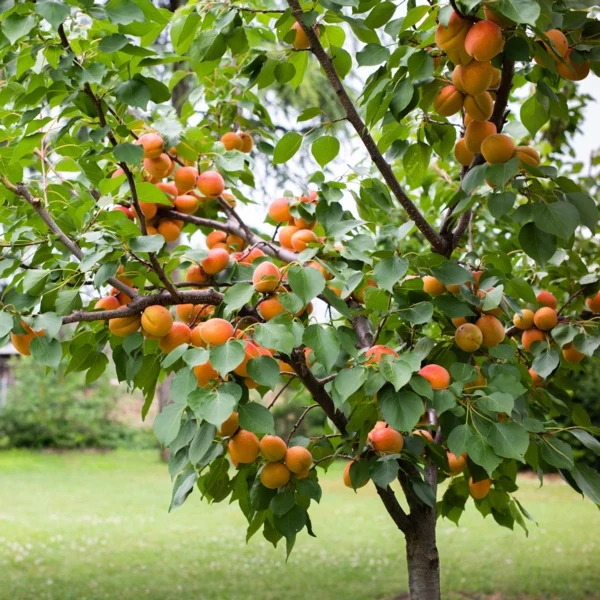
What Makes the Best Soil for Apricot Trees
Texture: sandy loam or loam
Texture is how much sand, silt and clay the soil has. Apricots do best in sandy loam or loam. These soils hold enough water and food, and they let extra water drain away. Heavy clay holds too much water. Pure sand holds too little. Extension guides in the United States and Europe agree on this point.
If your soil is somewhere in between, you can improve it. Add compost or well-decomposed manure over a wide area, not only in the planting hole. Organic matter helps sandy soil hold water and helps clay soil open up.
Depth: at least one metre
Apricot roots go deep. A research source from Croatia says apricots need soil that lets roots reach 120 to 150 centimetres. Aim for at least one metre of workable soil. A hard layer or rock closer to the surface will limit the tree. Dig a pit and look. If you hit a hard layer at 40 centimetres, break it up with a subsoiler, or choose another site.
Structure and organic matter
Good soil crumbles in your hand. It has small cracks and holes. Compacted soil is hard and stays wet. Soil rich in organic matter holds water and food, and it supports the living things that keep roots healthy. Add compost or manure before planting, and keep mulch on the soil afterward.
The right pH: 6.0 to 7.5
Soil pH tells you how acid or alkaline the soil is. A pH of 7 is neutral. Lower is acid. Higher is alkaline. For apricots, we use a working range of 6.0 to 7.5.
Sources differ a little. One extension guide gives 6.0 to 7.0. Another gives 6.5 to 7.5, and a nursery guide says the best pH depends on the rootstock. It gives about 7.0 to 7.2 for peach roots and about 6.3 to 6.8 for plum roots. The safe middle is about 6.5 to 7.0.
Most highland soils in Kenya are on the acid side. A soil test will tell you. If the pH is below 6.0, add agricultural lime. The lab will say how much, because it depends on the soil. Spread the lime several months before planting and mix it into the top layer.
If the pH is above 7.5, the leaves can turn pale because the tree cannot take up iron. This is more likely in some dry areas. Do not add lime there. Ask your lab and extension officer for advice.
Salt: a hidden problem in dry areas
Stone fruit are known to be sensitive to salty soil and water. In dry areas, borehole water can be salty. Salt burns leaf edges and weakens roots. If you plan to irrigate from a borehole, have the water tested before you plant. Ask the lab for pH and salt (electrical conductivity).
How to Test Your Soil Before You Plant
A soil test costs very little compared with a failed orchard. Do it three to four months before planting. That gives you time to add lime and fix drainage.
Step 1: Take a good sample
Walk across the planting area in a zigzag. At about 10 to 15 spots, dig a small hole 20 to 30 centimetres deep. Take a slice of soil from the side of each hole. Mix all the slices in a clean bucket. Put about half a kilogram of the mix in a clean bag and label it. If one part of the farm looks different, such as a wetter patch or a slope, sample it separately.
Also take a second sample from 30 to 60 centimetres deep. Apricot roots go deeper than the top layer, and the lower soil can be very different.
Step 2: Ask for the right tests
Ask the laboratory for these results.
| Test | What it tells you | What you want to see |
|---|---|---|
| Soil pH | How acid or alkaline the soil is | 6.0 to 7.5 |
| Texture | The share of sand, silt and clay | Sandy loam or loam |
| Organic matter | How much humus the soil holds | Medium to high |
| Phosphorus, potassium, calcium, magnesium | The main plant foods | Not low. The lab will advise |
| Salt (electrical conductivity) | Whether the soil is salty | Low |
| Lime requirement | How much lime to add if the pH is low | The lab will give a figure |
Step 3: Do two quick hand tests
The lab gives the final answer, but you can learn a lot at home.
For the ribbon test, take a handful of damp soil and squeeze it between your thumb and finger to make a ribbon. If it will not hold together, the soil is sandy. If it makes a short ribbon that breaks, it is probably loam or sandy loam. If it makes a long, smooth ribbon that holds well, it is heavy clay.
For the jar test, put a cup of soil in a tall jar and fill it with water. Shake it well and leave it for a day. The sand settles first, then silt, then clay. Measure each layer. A good apricot soil has a big sand and silt layer and a smaller clay layer.
Drainage Guide: How to Test and Fix It
Drainage is the most important soil factor for apricots. We keep it simple. If water does not leave the soil quickly, the site is wrong, or it must be fixed before planting.
Test 1: The quick hole test
Dig a hole about 30 centimetres deep and wide. Fill it with water and let it drain. Fill it a second time and time how long it takes to empty. Extension guides say it should drain in about an hour. If it takes much longer, the soil is too wet for apricots.
Test 2: The deep pit test
Dig a pit one metre deep in at least three places across the site. Fill each with water. If the water has not drained away after six hours, the site has a drainage problem.
Do both tests in the rainy season, or after a good soaking. Dry soil drains faster than wet soil, and a test done in the dry season will make a poor site look good.
Read the pit wall
Look at the soil on the side of your pit. Grey or blue-grey soil, or soil with orange and grey blotches, tells you that water stands here for long periods. A smell like rotten eggs is a bad sign. A hard, compact layer at 30 to 50 centimetres will hold water above it and stop roots from going deeper.
Read the land
Walk the land after heavy rain. If water stands in puddles for days, the drainage is poor. Sedges and reeds growing in patches also point to wet soil. Soil that is sticky and slippery when wet, and cracks wide when dry, is black cotton soil, which is heavy clay.
How to fix drainage
Some problems can be fixed, and some cannot. If the water table is high or the clay is deep and heavy, choose another site. If the problem is moderate, use these steps.
First, plant on raised mounds or ridges. Make each mound 40 to 50 centimetres high and about a metre wide, using good topsoil. Plant the tree on top. The roots then sit above the wet layer.
Second, dig open drains. On a slope, cut a drain across the hill above the orchard to catch water running down. Between rows, shallow drains carry extra water away.
Third, break up any hard layer. Use a subsoiler to loosen the soil to at least 60 centimetres, in dry weather.
Fourth, add organic matter over a wide area. Compost and manure help clay soil open up.
Fifth, use a rootstock that copes with wet soil. We explain this below.
One common mistake to avoid
Do not dig a deep hole in heavy clay and fill it with good soil. The hole becomes a pot. Rain water runs into it from the clay around and has nowhere to go. The roots sit in a pool and rot. Plant on a mound instead, or choose a better site.
Rootstocks and wet soil
Apricots are grafted onto rootstocks. The rootstock decides how well the tree handles the soil. The table below uses information from nursery and university sources.
| Rootstock | Type | Soil notes |
|---|---|---|
| Lovell | Peach | Likes well-drained loam. Does best at a pH of about 7.0 to 7.2 |
| Nemaguard | Peach | Does well in sandy loam and loam. Resists root-knot nematodes |
| St. Julien A | Plum | Smaller tree. Handles heavier soil better. Best at a pH of about 6.3 to 6.8 |
| Marianna 2624 | Plum | Semi-dwarf. Tolerates heavy, wet soil where other rootstocks may rot |
| Myrobalan 29C | Plum | Strong tree. Adapts to many soils. Resists root-knot nematodes |
Plum rootstocks suit heavier and wetter soil better than peach or apricot roots. But a plum rootstock only helps. Nursery guides say clearly that no rootstock makes a poorly drained site good for apricots. Ask your nursery which rootstock each variety is on and why.
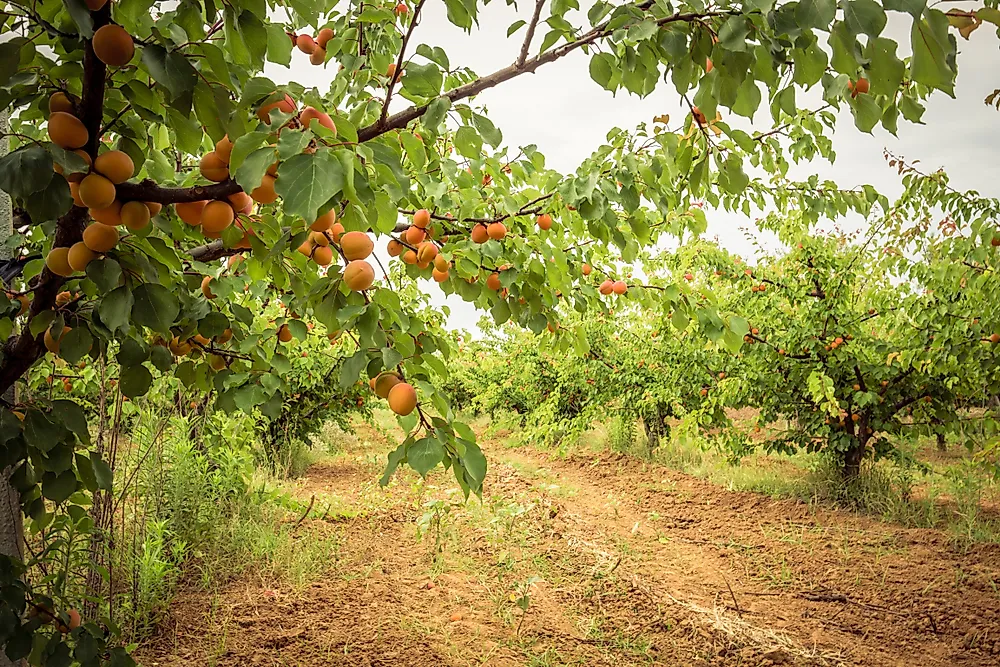
Apricot Spacing and Soil Requirements: How Far Apart to Plant
Spacing and soil work together. Good soil grows big trees, and big trees need room.
How big do apricot trees get?
A standard apricot tree grows about 4.5 to 7.5 metres tall and about 6 metres wide. A dwarf tree is much smaller, at about 2.5 to 3 metres tall and wide. Kenyan guides suggest spacings from 5 metres to 8 metres between trees. Intensive orchards in Croatia plant 3.5 to 4 metres between rows and 2 to 3 metres within rows, with careful pruning and training.
Spacing and trees per acre
| Spacing | Trees per acre | Best for |
|---|---|---|
| 6 m by 6 m | About 112 | Standard trees on deep, fertile soil |
| 5 m by 6 m | About 135 | Standard trees on average soil |
| 5 m by 5 m | About 162 | Moderate vigour, or soils that are less deep |
| 4 m by 3 m | About 337 | Trained trees, with careful pruning and good water |
| 3.5 m by 2 m | About 578 | Intensive orchards. Needs skilled training. Little Kenyan experience |
One acre is 4,047 square metres. Tree counts are rounded.
What decides your spacing
Four things decide how far apart to plant.
The first is soil depth and richness. Trees on deep, rich soil grow big and need more room. Trees on shallow or poor soil stay smaller. But planting very close on poor soil does not fix a poor site. The trees then compete for the same little water and food.
The second is the rootstock. Vigorous rootstocks need more room than restrained ones.
The third is water. In dry areas, wider spacing gives each tree more soil to draw from.
The fourth is how you will train and pick. Close planting needs a trained, open tree shape and skilled workers. If you are new to apricots, start with a wider spacing and a small block.
Rows and slope
On sloping land, run the rows along the contour so rain water does not run down the rows. On flat land, rows from north to south give even sunlight. Leave a clear path at the end of each row for work and for cold air to flow out.
Planting hole and graft union
Dig each hole about 60 centimetres wide and deep. Keep the topsoil and the subsoil in separate heaps. Mix the topsoil with about 20 kilograms of well-decomposed manure, and add phosphate as your soil test advises. Put the mix back around the roots. Keep the graft union, the healed bump on the lower stem, about 10 centimetres above the soil. A buried union can lead to rot and to roots growing from the top part of the tree. Stake the tree, water it with about 20 litres, and spread mulch around it, keeping the mulch away from the stem.
Plant at the start of the rains. In most highland areas that is March and April, or October and November.
Frost, Slope and Wind: Choosing the Spot on Your Farm
Apricots flower early, and the flowers can be damaged by frost at about -2 degrees Celsius. Cold air is heavy. At night, it flows downhill and collects in low spots, like water in a bowl. So plant on a gentle slope and not at the bottom of a valley. A site near the top of a gentle hill is ideal.
Do not build a solid wall or hedge across the bottom of a slope. It will hold the cold air in. Leave gaps so the air can flow out.
Apricots need full sun, at least six to eight hours a day. Plant a windbreak on the windward side, because strong wind scars fruit and dries the soil.
Land Preparation Plan: Four Months Before Planting
- Four months before: take soil samples, test the drainage, test your irrigation water, and check frost spots at dawn.
- Three months before: add lime if the soil test says so, and dig or build drains. Order your certified grafted seedlings and name the varieties and rootstock.
- Two months before: clear the land, plough, and subsoil to loosen hard layers.
- One month before: mark the rows, dig the holes or build the mounds, and mix in manure and phosphate.
- At the start of the rains: plant the trees, stake them, water them and mulch them.
Common Mistakes When Choosing a Site and Soil
The first mistake is planting in waterlogged clay because the land is cheap or flat. It is the most common reason apricots die.
The second is skipping the soil test. Acid soil and poor drainage are easy to fix before planting and very hard to fix afterward.
The third is testing drainage in the dry season. Test it in the rains.
The fourth is planting in a frost hollow. Cold air collects there, and one frost at bloom can ruin a year.
The fifth is digging a deep hole in heavy clay. Use a mound instead.
The sixth is trusting a rootstock to fix a bad site. It cannot.
The seventh is using salty borehole water without a test. The last is planting a whole farm at once. Start with a small trial block and learn how your soil and climate behave.
Frequently Asked Questions
What is the best soil for apricot trees?
Deep, well-drained sandy loam or loam, with a pH of about 6.0 to 7.5, and at least one metre of workable soil. Water in a one-metre pit should drain within six hours.
What soil pH do apricots need?
About 6.0 to 7.5. Some guides give 6.0 to 7.0 and others 6.5 to 7.5, and the best pH can depend on the rootstock. A pH of about 6.5 to 7.0 is a safe target. Add lime if your soil test shows a pH below 6.0.
Can apricots grow in clay soil?
Not well. Heavy clay holds water, and apricot roots rot in wet soil. If you must plant on clay, use raised mounds 40 to 50 centimetres high, a plum rootstock and open drains. A well-drained site is much better.
How do I test drainage for apricot trees?
Dig a hole 30 centimetres deep, fill it with water twice, and time the second drain. It should empty in about an hour. Then dig a one-metre pit and fill it with water. It should empty within six hours. Do both tests in the rainy season.
What altitude is best for growing apricots in Kenyan highlands?
The range is about 1,200 to 2,700 metres, and the safest part is about 1,600 to 2,200 metres. Below that, nights are too warm. Above it, frost at flowering is the main risk. Check your own farm with a temperature logger.
How far apart should apricot trees be planted?
Standard trees are planted about 5 metres by 5 metres to 6 metres by 6 metres, which is about 112 to 162 trees per acre. Closer spacing is possible with training and good soil, but it needs more skill.
Can I grow apricots in black cotton soil?
It is risky. Black cotton soil is heavy clay that gets sticky and waterlogged when wet and cracks when dry. If you try, plant on tall mounds, add drains, and choose a plum rootstock. A lighter soil is a safer choice.
Which rootstock is best for wet soil?
Plum rootstocks such as Marianna 2624, Myrobalan 29C and St. Julien A handle wet soil better than peach rootstocks. But no rootstock can make a badly drained site good, so fix the drainage first.
Should I add lime before planting apricots?
Only if your soil test shows a pH below about 6.0. Use the amount the lab advises. Spread it several months before planting, and mix it into the top layer.
How deep should the soil be for apricots?
At least one metre. A research source from Croatia says apricots do best where roots can go 120 to 150 centimetres deep. Break up any hard layer, or choose a deeper site.
Talk to Us Before You Plant
At Fruit Africa Veriplant we supply KEPHIS-inspected grafted fruit tree planting stock from our nursery distribution bases in Murang’a, Nairobi and Embu. Tell us your county, your altitude, your soil test result and how your land drains. Ask us about low-chill apricot varieties, rootstocks that suit your soil, and current availability. We can give you a written quote that names the variety and the rootstock.
Contact Our Agronomy Team Today:
- Head Office Location: Ruiru, Kiambu County, Kenya
- Nursery Distribution Hubs: Murang’a, Nairobi, and Embu
- Phone Direct: +254 714 994 444
- WhatsApp Assistance: Message us on WhatsApp
- Official Email: sales@fruitafrica.org
- Official Website: www.fruitafrica.org
- Request a Quotation: fruitafrica.org/request-for-quotation/
Summary
Where you plant matters as much as what you plant. The best soil for apricot trees is deep, well-drained sandy loam or loam, with a pH of 6.0 to 7.5. Waterlogged clay is the main enemy. Test your drainage in the rains, fix it with mounds and drains if it is a moderate problem, and walk away from a site that stays wet.
For growing apricots in Kenyan highlands, use altitude as a first filter, with the best range at about 1,600 to 2,200 metres and trial plantings down to 1,200 metres. Plant on a gentle slope, away from frost hollows. For apricot spacing and soil requirements, give standard trees 5 to 6 metres each way, and plant closer only when you have deep soil and the skills to train the trees.
Test the soil, test the drainage, plant a small trial block of certified grafted trees, and expand when your own records say yes.