- Protect your agribusiness from fake grafted seedlings in Kenya. Use this KEPHIS and HCD verification guide from Fruit Africa Veriplant to inspect nurseries.
How to Spot Fake Grafted Seedlings in Kenya: KEPHIS & HCD Verification Checklist for Commercial Farmers
A commercial fruit farmer in Murang’a, Nyeri, or Eldoret invests hundreds of thousands of shillings preparing land, installing drip lines, digging holes, purchasing organic manure, and hiring field labor. Two years later, when the orchard should be flushing with its first heavy harvest of Hass avocados, Pixie oranges, or tissue culture bananas, trouble strikes. The trees bloom weakly, produce small unmarketable wild fruits, develop severe root rot, or fail to fruit altogether.
Upon technical inspection, the devastating truth emerges: the farmer bought unverified, fake grafted seedlings from an uncertified roadside nursery operator.
The spread of fake, substandard, or disease-ridden grafted fruit seedlings is one of the largest silent threats facing commercial agriculture in Kenya. As thousands of smallholders, agribusiness investors, and land buyers enter commercial fruit farming, unregulated roadside seedling vendors have flooded the market. These uncertified sellers cut corners by grafting scions onto wild, diseased rootstocks, using mislabeled variety material, or selling non-grafted rootstock suckers as certified trees.
Buying fake seedlings leads to delayed yields, stunted growth, orchard-wide disease outbreaks, and total financial loss. Protecting your farm investment requires mastering the physical, biological, and legal verification checks established by the Kenya Plant Health Inspectorate Service (KEPHIS) and the Horticultural Crops Directorate (HCD).
This comprehensive guide, prepared by the agronomy team at Fruit Africa Veriplant Nurseries, provides a step-by-step field verification checklist to help you identify, inspect, and purchase true-to-type, certified grafted fruit seedlings in Kenya.
The Scale of the Fake Seedling Problem in Kenya
Commercial fruit production—whether growing Hass avocados for export, Pixie oranges for domestic wholesale, or grafted macadamia for processing—depends entirely on the genetic purity and health of the initial planting material.
When you purchase a grafted seedling, you are buying two distinct biological systems joined together:
                  THE GRAFTED SEEDLING ANATOMY

          [ SCION ] ─── Top portion providing true-to-type
                         fruit variety & yield characteristics
             │
      ( Graft Union ) ─ Smooth, fully healed biological join
             │
        [ ROOTSTOCK ] ─ Bottom root portion providing disease
                         resistance, soil adaptability & vigor
-
The Scion: The upper portion clipped from a high-yielding, verified mother tree that determines fruit variety, skin texture, sizing, and eating quality.
-
The Rootstock: The lower root system grown from certified seed or tissue culture that provides soil adaptability, drought tolerance, and resistance to soil-borne pathogens like Phytophthora root rot.
Uncertified nursery operators exploit unsuspecting farmers by selling planting material that fails on both biological levels.
                  CERTIFIED vs. FAKE SEEDLING IMPACT

  CERTIFIED SEEDLINGS (Veriplant)      FAKE / UNVERIFIED SEEDLINGS
  - True-to-type Hass / Pixie          - Wild / Reverted unproductive fruit
  - Certified Phytophthora-free        - Latent root rot & virus infections
  - Smooth, fully healed graft union   - Brittle, cracked, or fake graft joints
  - Early, heavy commercial yields     - Total orchard failure after 3-5 years
The Hidden Costs of Planting Fake Grafted Seedlings
When a farmer buys cheap, uncertified fruit seedlings, the initial purchase price seems attractive. However, the true cost of planting fake seedlings emerges over the three to five years required for a commercial orchard to mature.
                      THE REAL COST OF FAKE SEEDLINGS

  YEAR 1 ──> Land preparation, drip irrigation setup & cheap seedling planting
  YEAR 2 ──> Intensive weeding, fertilizer, labor, and water application
  YEAR 3 ──> Delayed flowering; trees display wild vegetative growth
  YEAR 4 ──> Off-type, wild, or diseased fruit emerges; export rejection
  YEAR 5 ──> Total loss: Uprooting trees, clearing land, restarting from scratch
-
Loss of Time: Fruit trees require 2 to 4 years to begin commercial bearing. Discovering that your orchard consists of wild, unproductive fruit after three years means losing three full years of potential farm income.
-
Wasted Capital: The money spent on nursery stock represents less than 15% of total orchard establishment costs. Land clearance, hole digging, organic manure, synthetic fertilizers, drip irrigation, fencing, and labor are completely wasted if the trees must be uprooted.
-
Soil Contamination: Uncertified nurseries often raise seedlings in unsterilized topsoil contaminated with Phytophthora cinnamomi (root rot), bacterial wilt, or root-knot nematodes. Planting diseased nursery bags introduces soil pathogens that infect your farm land permanently.
-
Export Market Rejection: Export buyers maintain strict specifications regarding fruit variety, skin texture, oil content, and dry matter percentage. Off-type or wild avocados and oranges will be rejected at the packhouse gate.
How Roadside Vendors Fake Grafted Seedlings
Understanding the tricks used by unregulated seedling vendors helps you spot substandard planting material before making a purchase.
                      COMMON SEEDLING SCAMS IN KENYA

  1. THE FALSE SCION CUT      2. ROOTSTOCK SUCKER SALES    3. UNSTERILIZED DIRT BAGS
  Cutting a shallow notch     Selling un-grafted wild      Potting seedlings in raw,
  on a wild stem to mimic     rootstock shoots as genuine  diseased topsoil that rots
  a real graft union.         grafted seedlings.           roots in the field.
1. The False Scion Notch
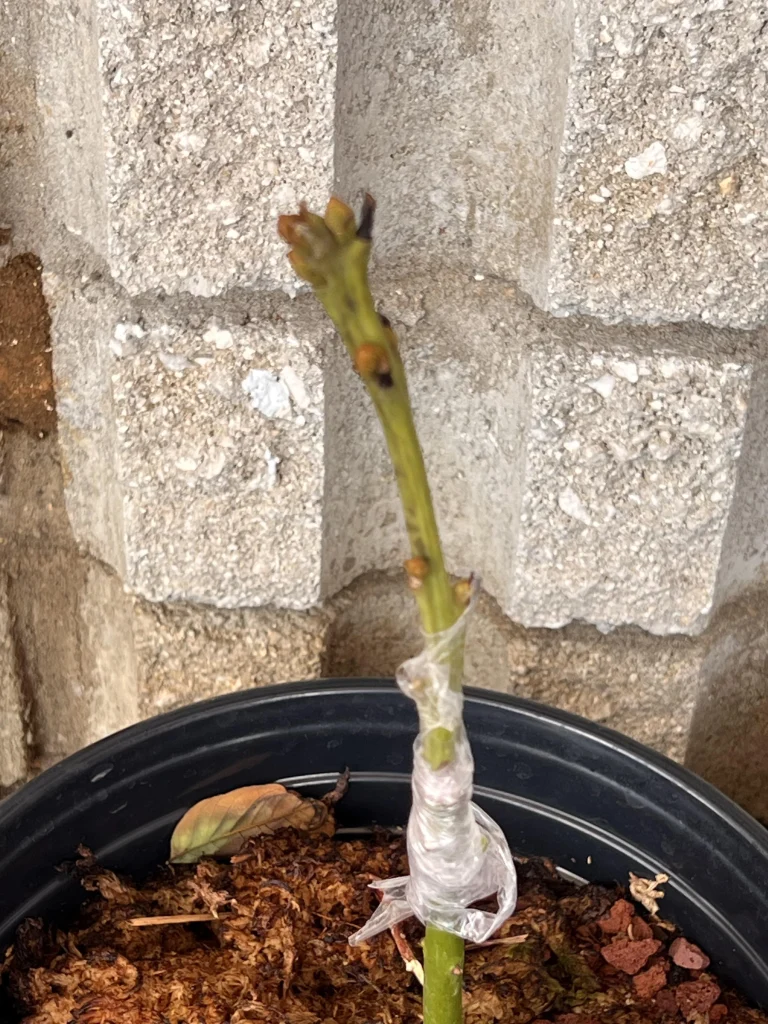
Unscrupulous vendors use a razor blade to cut a superficial notch or horizontal scar into the stem of a wild seedling, wrapping it tightly with plastic grafting tape. To an untrained buyer, the plastic tape makes the plant look like a freshly grafted seedling. When planted, the tape degrades to reveal an un-grafted wild tree.
2. Selling Rootstock Suckers
When a grafted plant experiences stress in the nursery, the wild rootstock below the graft union often produces vigorous side shoots (suckers). Uncertified vendors cut off the original dead scion and allow the wild rootstock sucker to grow, selling it as a premium grafted variety.
3. Mislabeling Variety Material
Visual identification between young seedling leaves is difficult for non-agronomists. Unregulated vendors frequently label local green-skin avocado seedlings as “Hass,” or standard yellow lemons as “Pixie Oranges.” The farmer only discovers the deception years later when the tree bears fruit.
4. Potting in Contaminated Topsoil
To save money, roadside operators dig raw topsoil from nearby riverbanks or forests to fill nursery bags. This unsterilized soil harbors fungal spores, weed seeds, and nematodes that slowly destroy the seedling’s root system once planted out in the orchard.
Physical Verification Checklist: How to Inspect a Grafted Seedling
When visiting any nursery, perform a physical inspection of individual seedlings using this agronomy checklist:
               PHYSICAL SEEDLING INSPECTION CHECKLIST

  [ ] Graft Union Height   ──> Must be 15cm to 25cm above soil level
  [ ] Joint Healing        ──> Smooth, fully calloused tissue connection
  [ ] Stem Thickness       ──> Pencil-thick (8mm - 12mm) sturdy main stem
  [ ] Foliage Appearance   ──> Deep glossy green; zero leaf mottling/curling
  [ ] Root Ball Health     ──> White feeder root tips; zero taproot spiraling
  [ ] Sun Hardening        ──> Outdoor-hardened; not soft shade-house growth
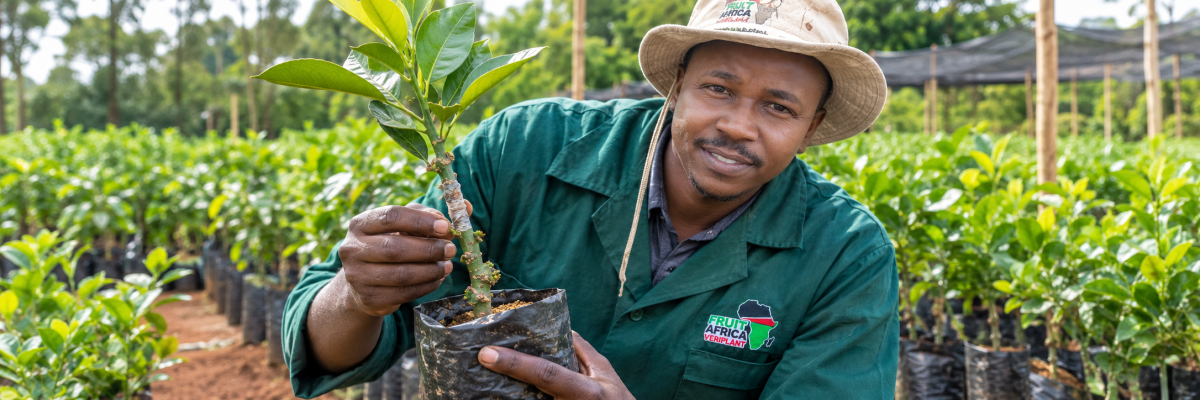
1. Inspect the Graft Union (The Healing Joint)
The graft union is the junction point where the scion and rootstock meet.
-
Height Above Soil: The graft union must be located at least 15 to 25 centimeters above the top of the nursery bag soil line. Graft unions placed too low allow soil-borne fungal spores to splash onto the scion tissue during rain, causing collar rot.
-
Completeness of Healing: The join must be completely healed, swollen, and sealed with smooth bark callous tissue. If you see open cracks, active sap bleeding, or loose grafting tape hiding a dry gap, reject the seedling.
-
Graft Angle: A healthy graft union should show a smooth, straight union (wedge/cleft graft or side-veneer graft) that can support the weight of future branches.
        HEALTHY GRAFT UNION                 REJECT / FAKE GRAFT

            /-------\                            /-------\
           |  SCION  |                          |  SCION  |
            \       /                            \       /
        -----|-----|-----                    -----|-----|-----
             |     |                              |  X  | Open crack /
         (=== UNION ===) Fully healed            (=== tape ===) unhealed join
             |     |    callous                   |  X  | Placed < 10cm
             |ROOT-|                              |ROOT-| from soil line
        =====|STOCK|===== Soil Line         ======|STOCK|===== Soil Line
2. Evaluate Stem Diameter and Wood Maturity
-
Reject thin, spindly, succulent seedlings that wobble under their own weight.
-
Choose seedlings with a sturdy, pencil-thick stem diameter (8 to 12 millimeters) at the graft base.
-
The lower rootstock stem should display mature, brownish bark rather than soft, watery green tissue.
3. Check Leaf Canopy and Foliage Health
-
Color and Gloss: Mature leaves should display a deep, uniform glossy green color. Pale yellow, interveinal chlorosis, or mottled reddish leaves indicate root suffocation or micronutrient deficiencies.
-
Pest Damage: Inspect the undersides of young leaves for thrips, red spider mites, scale insects, or aphids. Distorted, curled, or “cup-shaped” young leaves indicate active thrips feeding.
4. Inspect Root System Health
Request the nursery operator to slide one or two sample seedlings out of their potting bags so you can inspect the root ball structure.
         HEALTHY ROOT SYSTEM                 ROOT-BOUND / DISEASED

         ===================                 ===================
         |                 |                 |                 |
         | Crisp white     |                 | Black, decaying |
         | feeder root     |                 | root threads    |
         | tips visible    |                 |                 |
         |                 |                 | Thick taproot   |
         | Soil holds      |                 | spiraling at    |
         | firm shape      |                 | bag bottom      |
         |_________________|                 |_________________|
-
Root Tip Color: Healthy, actively growing feeder roots are crisp, firm, and creamy-white to light tan. Black, mushy, soft, or foul-smelling roots indicate Phytophthora root rot or waterlogging.
-
Taproot Architecture: The primary taproot should grow straight down without spiraling tightly into a knot at the bottom of the bag. A “pot-bound” seedling with a coiled taproot will fail to establish a deep, stable root system when planted in the field, leading to wind-throw in later years.
5. Verify Outdoor Sun-Hardening
Seedlings grown under heavy dark shade cloth develop soft, succulent leaves and tender stems. If moved directly from a dark shade house into direct field sunlight, these seedlings suffer severe sunburn shock, defoliation, and high mortality rates. Ensure seedlings have been properly hardened outdoors under partial to full sunlight for at least 4 to 6 weeks before purchase.
Regulatory Verification: KEPHIS & HCD Certification Standards
Beyond physical inspection, verify the nursery’s legal regulatory documentation. Kenya maintains strict agricultural laws governing seedling production to protect commercial growers.
                     REGULATORY VERIFICATION STEPS

  STEP 1: Request HCD Nursery Registration Certificate
  STEP 2: Request KEPHIS Plant Health Inspection Certificate
  STEP 3: Verify Scion Mother Block Traceability
  STEP 4: Match Official Nursery Operator Details
1. Horticultural Crops Directorate (HCD) Registration
Under Kenyan law, every commercial fruit nursery must be registered, audited, and licensed annually by the Horticultural Crops Directorate (HCD).
-
Ask to See the HCD License: A legitimate nursery displays its valid, current-year HCD Registration Certificate in its main office.
-
Check the Business Name: Ensure the name on the certificate matches the nursery operating the facility.
-
Verify Category: Confirm the license authorizes the nursery to produce and sell specific fruit crops (e.g., avocado, citrus, macadamia, mango).
2. Kenya Plant Health Inspectorate Service (KEPHIS) Inspection
KEPHIS is the national plant health regulatory agency responsible for inspecting nurseries for pests, diseases, and seed quality.
-
Phytosanitary Clearance: KEPHIS inspectors regularly sample soil, water, and leaf tissues from registered nurseries to test for seed-borne and soil-borne pathogens.
-
Plant Passports / Movement Permits: When purchasing large orders for commercial planting, request an official KEPHIS Plant Movement Permit. This document certifies that the specific batch of seedlings has been inspected and declared free from quarantine pests like Phytophthora, citrus greening disease (Huanglongbing), and bacterial wilt.
Verifying Scion Mother Blocks: Where Do the Scions Come From?
A certified nursery does not collect grafting scions randomly from roadside trees. They maintain or partner with inspected Mother Blocks—isolated, high-health orchards of mature, true-to-type trees used exclusively for scion wood harvesting.
       CERTIFIED MOTHER BLOCK TRACEABILITY PIPELINE

  [ Inspected Mother Block ] ──> Healthy, verified scions harvested
            │
            v
  [ Certified Rootstock ]   ──> Disease-free seed/tissue culture root
            │
            v
  [ Controlled Grafting ]   ──> Trained agronomists manage graft union
            │
            v
  [ Veriplant Nursery ]     ──> Fully hardened, certified seedling
When inspecting a fruit nursery, ask the nursery manager:
- “Can I see your scion mother block?”
- “Where do you source your Hass or Pixie grafting wood?”
- “Are your scion mother trees indexed for viral and bacterial diseases?”
A professional nursery will gladly walk you through their mother block or provide documentation proving the origin of their scion material. If a nursery manager cannot explain where their grafting scions come from, walk away.
Seedling Comparison: Certified Nursery vs. Uncertified Vendor
| Verification Parameter | Certified Nursery (e.g., Fruit Africa Veriplant) | Uncertified Roadside Vendor |
| HCD Registration | Valid, current-year certificate on display | None or expired documentation |
| KEPHIS Inspection | Regularly inspected and phytosanitary certified | Uninspected; high risk of soil pathogens |
| Graft Union Quality | Fully healed, smooth, 15cm–25cm above bag | Low, cracked, or fake plastic-wrapped joint |
| Potting Media | Sterilized potting mix free of soil pathogens | Raw, unsterilized topsoil or riverbank dirt |
| Mother Block Traceability | Verified, disease-indexed scion mother trees | Unknown scion sources harvested from random trees |
| Root System | Straight taproot, healthy white feeder tips | Pot-bound, spiraled taproots, or decaying roots |
| Variety Guarantee | 100% true-to-type commercial varieties | High risk of wild, off-type, or mislabeled trees |
| Agronomy Support | Professional technical advice & after-sale support | Zero post-sale technical support |
Variety-Specific Spotting Guides
1. Hass Avocado Seedlings
-
Scion Leaves: Young Hass leaves display a distinct copper-bronze or reddish tint when flushing, maturing into a dark, leathery green with an anise-like aroma when crushed.
-
Graft Base: Smooth graft union situated well above the soil bag. Beware of wild seedling suckers growing from below the graft union—these must be pruned cleanly.
-
Rootstock Health: Rootstocks raised from certified seeds or tissue culture resist root rot. Ensure the potting medium is light, porous, and well-drained.
2. Pixie Orange (Citrus) Seedlings
-
Scion Characteristics: Genuine Pixie orange scions feature dark green, slightly cupped leaves with winged petioles. Stems should be thornless or carry small, soft thorns compared to wild lemon rootstocks.
-
Rootstock Type: Ensure the rootstock used is C-35, Rough Lemon, or Carrizo citrange suitable for your soil type and elevation.
-
Disease Signs: Inspect leaves closely for yellow shoots or asymmetrical leaf chlorosis, which indicate Citrus Greening Disease (HLB). Never buy citrus seedlings from uncertified zones.
3. Grafted Macadamia Seedlings
-
Varieties: Confirm commercial varieties such as 695, 816, 741, or 344.
-
Graft Union: Macadamia wood is hard and slow to heal. Verify that the graft joint is fully unified without open bark splits.
-
Leaf Margin: Young macadamia leaves feature spiny, serrated edges. Reject seedlings displaying pale, chlorotic leaves caused by iron or phosphorus lockup.
What to Do Before Buying Grafted Seedlings: A Farmer’s Action Plan
Follow this procedure when procuring fruit seedlings for commercial planting:
                  COMMERCIAL PROCUREMENT ROADMAP

  1. CALCULATE REQUIREMENTS ──> Spacing, hole counts & 5% replacement buffer
  2. AUDIT THE NURSERY       ──> Inspect HCD/KEPHIS certs & physical seedlings
  3. ORDER IN ADVANCE        ──> Book certified batches 2 to 3 months early
  4. TRANSPORT SAFELY        ──> Use covered, ventilated trucks; prevent wind-burn
  5. FIELD HARDENING         ──> Rest seedlings in shade 3-5 days before planting
-
Calculate Exact Field Numbers: Determine your spacing and total tree population (e.g., Hass avocado at 5m x 5m = 160 trees per acre). Add a 5% buffer for field replacements.
-
Conduct a Physical Nursery Audit: Visit the nursery site in person. Perform physical, root, and regulatory inspections on the seedling batch.
-
Book Orders Early: Reputable nurseries raise seedlings under structured production cycles. Book your order 2 to 3 months before the onset of the rain season to secure fully hardened stock.
-
Arrange Safe Transportation: Transport seedlings in covered, well-ventilated vehicles. Uncovered pickup trucks allow high-speed wind to strip leaf moisture, causing severe desiccation and transplant shock.
-
Acclimate Before Planting: Upon arrival at the farm, place seedlings in a shaded, protected area, water them thoroughly, and allow them to rest for 3 to 5 days before field planting.
Start Your Orchard With Fruit Africa Veriplant Nurseries
Building a profitable, commercial fruit orchard begins with planting certified, high-health, true-to-type seedlings.
Fruit Africa Veriplant Nurseries operates certified, modern nursery hubs across Kenya, serving commercial growers, smallholders, and agribusiness investors with inspected planting material.
                  FRUIT AFRICA VERIPLANT NURSERY HUBS

  [ MURANG'A HUB ]    [ EMBU HUB ]    [ NAIROBI HUB ]    [ KIAMBU HUB ]
  Serving Central     Serving Eastern  Headquarters &     Serving Kiambu
  Highlands Region    & Mount Kenya    Distribution       & Rift Valley
Why Commercial Farmers Partner With Fruit Africa Veriplant
-
100% Certified Trueness-to-Type: All scions are harvested directly from inspected, high-yielding mother blocks to guarantee varietal purity.
-
KEPHIS & HCD Compliant: Our nurseries operate under strict regulatory supervision, delivering disease-free, phytosanitary-certified planting stock.
-
Advanced Root Architecture: Seedlings are raised in porous, sterilized potting media, ensuring straight, well-branched root systems without spiraling.
-
Fully Sun-Hardened: Every seedling batch undergoes outdoor sun-hardening to ensure high field survival rates after transplanting.
-
Comprehensive Agronomy Support: Our team of experienced agronomists provides technical guidance covering land preparation, hole preparation, planting techniques, nutrition, irrigation, and orchard management.
Contact Fruit Africa Veriplant Nurseries
To tour our nursery hubs, inspect seedling batches, or place commercial orders, reach out to our technical team:
- Website: www.fruitafrica.org
- Email: info@fruitafrica.org
- Phone / WhatsApp: 0714-994444
- Nursery Locations: Murang’a | Embu | Nairobi | Kiambu
Frequently Asked Questions (FAQs)
1. How can I tell if a grafted seedling is fake?
Check the graft union. A genuine grafted seedling has a smooth, fully healed, swollen join located 15cm to 25cm above the soil line. Fake seedlings often feature low, plastic-wrapped notch cuts, open unhealed cracks, or un-grafted wild rootstock suckers sold as commercial varieties.
2. What happens if I plant uncertified grafted seedlings?
Uncertified seedlings often turn out to be wild, unproductive trees that produce low-quality fruit unsuitable for export. They also carry high risks of soil-borne diseases like Phytophthora root rot, which can permanently infect your farm soil.
3. What regulatory certificates should a fruit nursery possess in Kenya?
A legitimate nursery must possess a valid, current-year Registration Certificate from the Horticultural Crops Directorate (HCD) and a Plant Health Inspection Certificate / Movement Permit from the Kenya Plant Health Inspectorate Service (KEPHIS).
4. How high above the bag should the graft union be located?
The graft union should be situated 15 to 25 centimeters above the top of the potting bag soil line. This height prevents soil-borne fungal pathogens from splashing onto the scion tissue during rain.
5. Why do seedling roots spiral at the bottom of the nursery bag?
Root spiraling (pot-bound roots) occurs when a seedling is kept in a small nursery bag for too long. The taproot hits the bottom and coils continuously. If planted in the field, spiraled roots fail to anchor the tree, making it vulnerable to blowing over in strong winds.
6. What is a scion mother block?
A scion mother block is an isolated, inspected orchard of mature, high-yielding, true-to-type fruit trees used exclusively as a source for harvesting clean grafting wood (scions).
7. How long should seedlings be hardened before field planting?
Seedlings should undergo outdoor sun-hardening under partial to full sunlight for at least 4 to 6 weeks to prepare them for direct field sunlight and weather conditions.
8. Where are Fruit Africa Veriplant Nurseries located?
Fruit Africa Veriplant operates nursery hubs in Murang’a, Embu, Nairobi, and Kiambu. You can reach our agronomy team via 0714-994444 or info@fruitafrica.org.
9. Which grafted fruit seedlings does Fruit Africa Veriplant supply?
Fruit Africa Veriplant supplies certified grafted Hass avocados, Pixie oranges, tissue culture bananas, macadamia, mangoes, passion fruit, dragon fruit, and exotic fruit varieties.
10. How do I transport grafted seedlings safely to my farm?
Transport seedlings in covered, well-ventilated vehicles to shield them from high-speed wind. Water the seedlings thoroughly before loading and rest them in a shaded spot on your farm for 3 to 5 days before field planting.
Key Takeaways for Commercial Farmers
-
Inspect Before You Buy: Perform physical checks on the graft union, stem thickness, leaf foliage, and root tip health before purchasing any seedling.
-
Demand Official Licenses: Buy planting stock exclusively from nurseries holding valid HCD registration and KEPHIS phytosanitary inspection certificates.
-
Avoid Roadside Vendors: Roadside vendors carry high risks of fake graft unions, unsterilized soil pathogens, and mislabeled varieties.
-
Prioritize Root Architecture: Ensure roots are crisp, white, and free from taproot spiraling at the bottom of the bag.
-
Partner With Trusted Nurseries: Source your certified planting stock from Fruit Africa Veriplant Nurseries to guarantee 100% trueness-to-type, disease-free seedlings, and professional agronomy support.