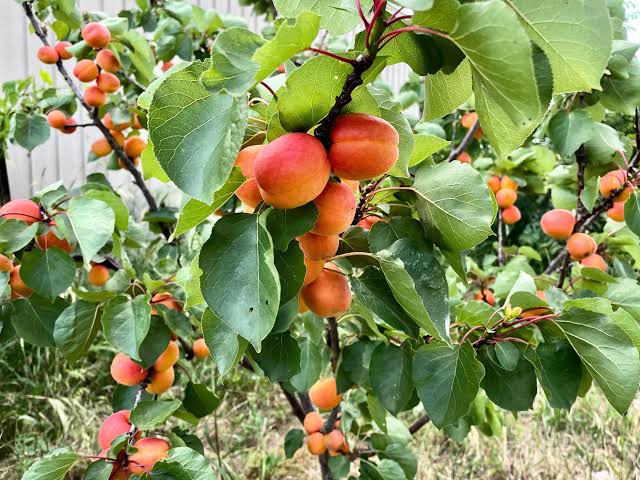

Apricot farming in Kenya explained: chill-hour needs, low-chill apricot varieties for East Africa, apricot fruit farming climate and highland microclimates.
Unlocking Apricot Farming in Kenya: How Low-Chill Varieties Overcome Tropical Climate Barriers
Can Apricots Grow in Kenya?
Yes, but only in the right places. Apricot farming in Kenya works where the trees get enough cool nights to break fruit-bud dormancy, where there is no frost while the trees flower, and where spring and harvest are not too wet. Standard apricot varieties need roughly 600 to 900 or more chill hours a year. The low-chill apricot varieties for East Africa, such as Gold Kist, Katy and Royal Rosa, are reported to need about 250 to 500 hours below 7 degrees Celsius, although published figures differ from one source to the next. In Kenya that points to cool highland sites and a few carefully chosen microclimates, not to the whole country.
The climate is the main barrier. Kenya has no winter, the days are warm even at altitude, and warm afternoons can cancel part of the chill that a cold night has earned. Low-chill varieties, careful site choice, and good orchard management can overcome these barriers, but not every farm can be made to work. This guide explains the science, gives the numbers, and shows how to test a site before you plant.
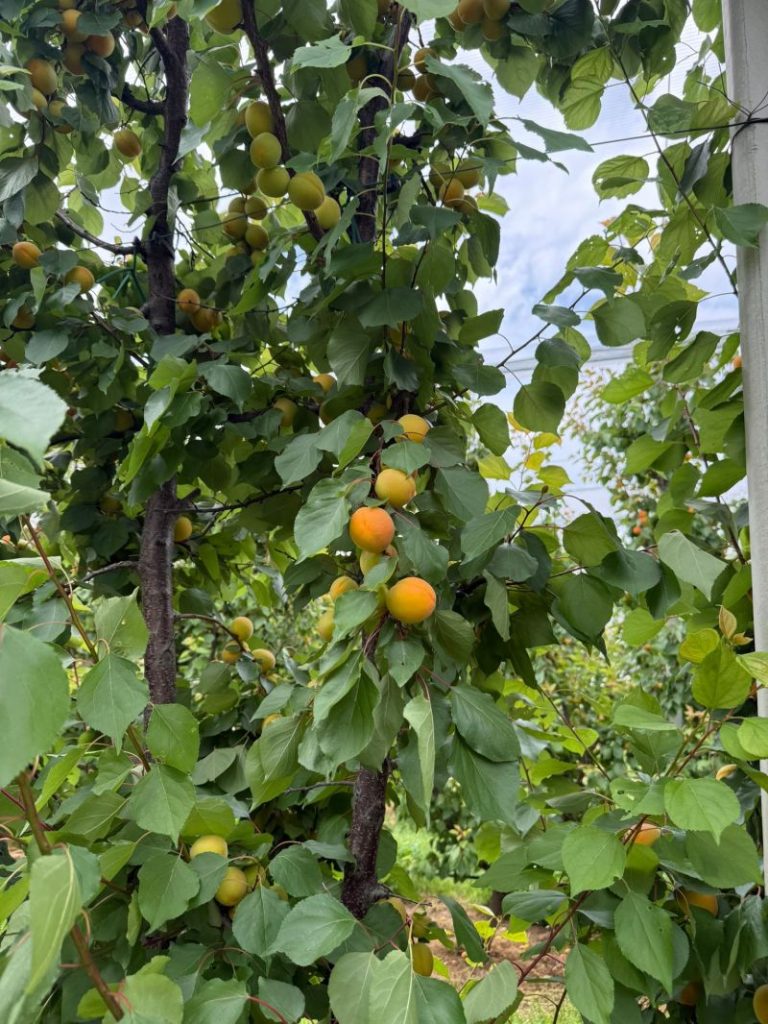
An apricot tree growing well
Apricot climate needs at a glance
| Requirement | Working target | Why it matters |
|---|---|---|
| Chill, standard varieties | About 600 to 900 hours or more | Needed to release dormancy in fruit buds |
| Chill, low-chill varieties | About 250 to 500 hours below 7 degrees Celsius | Figures differ between sources and between counting methods |
| Most effective chill temperature | About 4 to 8 degrees Celsius | Cold nights in the highlands supply this |
| Chill cancelled by | Afternoons above about 18 degrees Celsius | Warm days reduce net chill |
| Heat damage to flower buds | Spells above about 30 degrees Celsius after partial chill | Can cause deformed flowers and poor fruit set |
| Frost | None during bloom | Open apricot flowers are damaged at about -2 degrees Celsius |
| Altitude in Kenya | Mostly above 1,500 m, with selected cooler sites lower | Altitude sets night temperature |
| Weather at bloom and harvest | Dry and mild | Wet weather spreads brown rot and limits bee activity |
| Soil | Deep, well drained, pH about 6.0 to 7.5 | Stone fruit roots rot in wet soil |
These are working targets drawn from research and extension sources. We found no published commercial apricot chill records for Kenya or the rest of East Africa, so treat every planting as a trial until your own records say otherwise.
Why Kenya Is a Hard Place for Apricots
Apricots come from the cool, dry mountain regions of Central Asia, and the main commercial areas in the world have clear winters. Kenya differs in five ways, and each one is a barrier that a farmer has to manage.
The first is the lack of a winter. Kenya sits on the equator. Temperature changes with height above sea level and not with the season. A tree at 2,000 metres feels cool nights all year, but not a long, cold winter with a clear start and end.
The second is warm days. Even in the highlands, afternoons often reach the low or mid twenties. Research on stone fruit shows that temperatures above about 18 degrees Celsius, repeating in a daily cycle, cancel part of the chill gained overnight. So a cold night followed by a warm afternoon gives less net chill than the night alone suggests.
The third is strong sun. On bright days, buds and bark can be 3 to 5 degrees warmer than the shade air temperature recorded by a weather station. That means the buds on your trees may be warmer than your thermometer says.
The fourth is early and uncertain bloom. Apricots flower earlier than most other fruit trees, and the flowers are tender. Where there is frost, a single cold night at bloom can destroy a crop. Where there is no clear winter, flowering can come at any time chill is complete, including in the wet season.
The fifth is humidity and rain. Apricots do best in dry weather at bloom and harvest. Wet, humid conditions favour brown rot, shot hole and bacterial canker, and they stop bees from flying.
There is a sixth point that is less known. Research in Israel shows that flower buds of stone fruit are very sensitive to heat spells in the weeks after partial chilling. Temperatures above about 30 degrees Celsius can damage the flower parts, causing double styles, short styles or no styles at all. This is a different problem from lack of chill, and it can reduce fruit set even when chill is enough. This risk matters more in the warmer, lower parts of Kenya.
The Science of Apricot Fruit-Bud Dormancy
Dormancy has three stages
When scientists talk about dormancy, they mean a block that stops buds from growing even in warm, favourable weather. They divide it into three stages.
Paradormancy is a block caused by another part of the tree. A growing shoot tip, for example, can stop the buds below it from opening. Pruning the tip releases them.
Endodormancy is the deep rest. The block is inside the bud. Warmth, water and sunlight will not open it. Only a certain amount of cool weather will. This is where chill is counted.
Ecodormancy is the last stage. The bud is ready to open but the weather is still too cold. When warmth arrives, the bud swells and bursts.
The order matters. First the tree needs cool temperatures to finish endodormancy. Then it needs warmth to open its buds. In a temperate climate the two come in sequence. In a tropical climate they overlap, which is why timing becomes unpredictable.
Flower buds and leaf buds behave differently
In stone fruit, leaf buds and flower buds respond to different signals. Leaf buds are mainly controlled by day length. In peach research, they enter endodormancy as days shorten, whatever the temperature. Flower buds respond mainly to temperature, and they only enter the deep rest after a cool spell. This difference explains why a tree can grow leaves normally and still fail to flower well.
In apricot, research has shown that a stage of pollen development called male meiosis happens at about the time endodormancy ends, and scientists use it as a marker. The point for a farmer is simple. Flower buds hold developing pollen and flower parts, and they depend on enough chill to develop normally.
What happens when chill is not enough
When buds do not receive enough chill, endodormancy is not fully released. The trees show delayed bud burst, erratic and sparse flowering, weak leaf cover and a poor crop. A tree like this is often blamed on pests or soil, so farmers in warm areas should learn to recognise it. If an apricot tree grows well but flowers weakly or unevenly, suspect chill first.
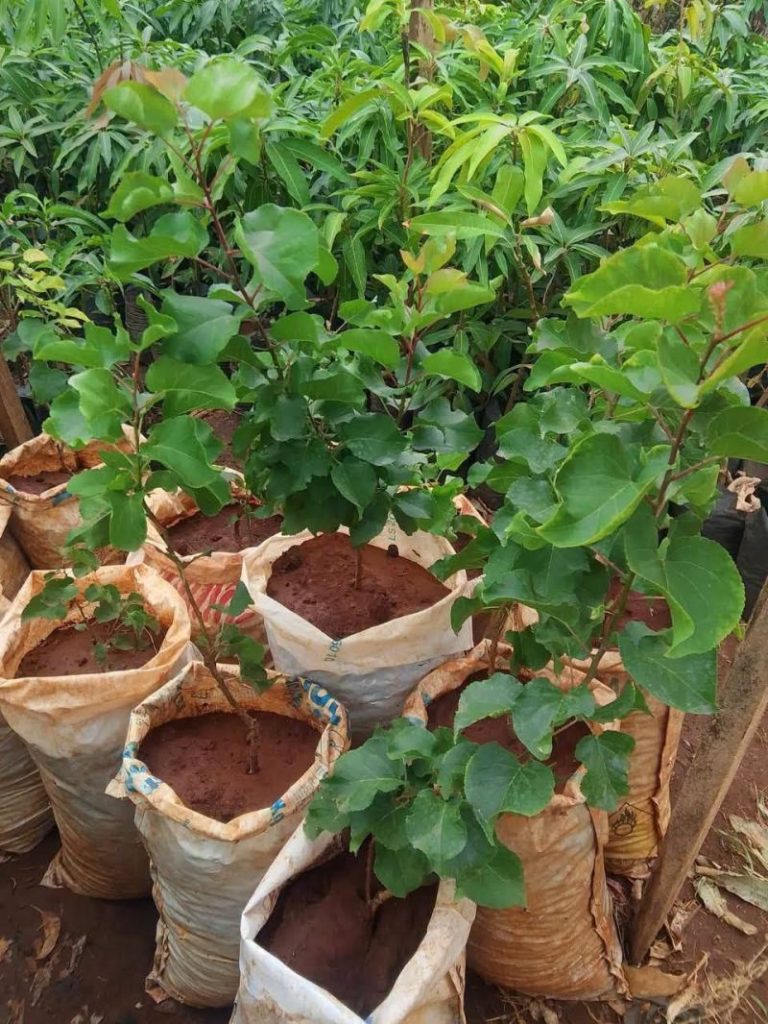
Grafted apricot seedlings at Fruit Africa Veriplant
Chill Hours Explained: What 300 to 500 Hours Below 7 Degrees Means
The simple method
The oldest and simplest method counts every hour at or below 7.2 degrees Celsius (45 degrees Fahrenheit) as one chill hour. Some versions count only hours between 0 and 7.2 degrees. When a nursery says that Gold Kist needs about 300 hours, it almost always means this simple method. That is what we mean by 300 to 500 hours below 7 degrees.
Why a better model exists
The simple method treats every cool hour the same and ignores heat. Research has shown that this is not how buds work. Studies on peach, and later on apricot and other stone fruit, produced three common models.
| Model | How it counts | Strength | Weakness |
|---|---|---|---|
| Chilling hours | One hour for each hour below 7.2 degrees Celsius | Simple, and most variety figures use it | Ignores the effect of warm hours |
| Utah model | Weights each hour, and subtracts for warm hours | Includes heat cancelling chill | Developed in a cold climate, and less reliable in mild winters |
| Dynamic model | Counts chill portions in two steps | Researchers rate it the most accurate, and it gave the most consistent results across years for apricot cultivars | Needs hourly temperatures and software |
In the Dynamic Model, cold first builds up an unstable product inside the bud. If enough builds up, it turns into a permanent chill portion. Warm temperatures can destroy the unstable product before it locks in, but once a portion has formed, heat cannot remove it. As a guide, one chill portion forms after about 28 hours at 6 degrees Celsius.
What temperatures do
The table below summarises how temperature acts on a dormant stone fruit bud, based on research in Israel on peach, which is a close relative of apricot.
| Temperature | Effect on a dormant bud |
|---|---|
| Below -2 degrees Celsius | Not effective for chill |
| -2 to 13 degrees Celsius | Effective, with the most chill at about 4 to 8 degrees |
| 13 to 16 degrees Celsius | Does not break dormancy alone, but can add to chill that has already built up |
| Above 18 degrees Celsius | In a daily cycle, cancels earlier chill |
| Above 30 degrees Celsius after partial chill | Can damage flower parts in stone fruit |
One more rule is useful. When high temperatures last longer than a day, the chill that has already locked in cannot be undone. So several cold nights in a row followed by a warm spell leave the earlier chill intact.
How big are apricot chill requirements?
Requirements vary widely. Commonly used classes call apricots with up to about 350 chill hours low chill, those with about 350 to 600 medium chill, and those with 600 to 900 or more high chill. A study of Iranian cultivars measured chilling requirements of about 41 to 63 chill portions in the Dynamic Model, and about 700 to 900 chilling hours for the one cultivar, Noori, where hours were reported. These are high-chill types. Low-chill apricots such as Gold Kist and Katy need far less, and are the ones that matter for Kenya.
Because published figures are drawn from different places and methods, they differ a lot. Arizona extension lists Gold Kist at about 300 hours and Katy at about 400. Other sources give Katy 200 to 350 and Royal Rosa 300 to 500. Treat any single number as an approximate guide. The real requirement of a variety also changes from year to year and from bud to bud.
Nights Versus Days: The Kenyan Highland Puzzle
In Kenya, altitude does most of the work. Air cools by about 6.5 degrees Celsius for every 1,000 metres you climb, and the cooling is strongest at night. At a typical highland farm the night drops into the single digits or low teens, and the afternoon climbs into the low or mid twenties.
For an apricot bud this is a mixed signal. The cold night is effective, particularly if it falls near 4 to 8 degrees. The warm afternoon, if it passes about 18 degrees in a repeating cycle, takes part of that gain back. The Dynamic Model captures this. If the afternoon heat arrives before the night’s chill has locked into a portion, part of it is lost. If the cold lasts long enough to lock in, it stays.
Three practical points follow.
First, cloud and mist help. In cool, cloudy months, daytime highs are lower, so less chill is lost and the same night gives more net chill.
Second, a shade temperature is not a bud temperature. In bright sun, buds can be 3 to 5 degrees warmer than the air. A site with strong afternoon sun may lose more chill than a logger suggests, and a site with afternoon cloud may lose less.
Third, chill in Kenya is spread out. A cold country gets one solid block of winter. A highland site gets cool nights over many months with warm spells in between. This is a weaker, less clear signal, and it is why low-chill varieties are needed. We explain the same idea for apples in our guide to low chill apple varieties in Kenya.
Highland Microclimates Where Fruit-Bud Dormancy Can Be Broken
A county is too large a unit for an apricot grower. Climate varies over a few hundred metres, with slope, aspect, cold-air drainage and cloud cover. We use the following working classification of microclimate types. It is built from the science above and from the agro-ecological zone data for Kenya, and not from measured apricot records, so treat each type as a candidate site that needs a logger and a trial block.
| Microclimate type | Chill potential | Main risk | Advice |
|---|---|---|---|
| Upper slopes and plateaus, about 2,000 to 2,700 m, such as the upper Aberdare and Mount Kenya slopes, the Kinangop and Ol’kalou plateaus, and the Mau and Cherangani highlands | High. Many cold nights | Frost at bloom, wet and misty weather, brown rot | Use slopes with good air drainage, later-blooming varieties and a plan for frost |
| Mid-highland slopes, about 1,800 to 2,200 m, such as upper Nyeri, Limuru, upper Kiambu, Nandi and the edges of the Laikipia plateau | Moderate to good | Occasional frost, humidity | Best balance of chill and safety. A good place for low-chill varieties |
| Cold-air basins and valley shelves | Very high, because cold air collects | Frequent frost at bloom | Avoid for apricots unless you can protect flowers |
| Rain-shadow plateaus with cool nights and dry springs, such as parts of Laikipia | Moderate | Water supply, wind | Dry air helps against brown rot. Needs drip irrigation and wind shelter |
| Warmer midland hills, about 1,300 to 1,800 m, such as higher parts of Machakos, Embu and lower Meru | Low to marginal | Too little chill, heat spells at flower-bud stage | Only the lowest-chill varieties, on a small trial block |
| Lowlands and coast, below about 1,300 m | Very low | No chill, heat and humidity | Not advised for commercial planting |
The classification shows why one-line guides disagree. Some Kenyan sources say that apricots need highlands of 1,800 to 2,800 metres. Others say they thrive in warm, dry places such as Machakos and Kajiado. Both can be partly right. A cool, dry, sheltered site at a lower altitude can work with a low-chill variety, while a warm midland site with the wrong variety will not. The only way to tell is to measure the site.
A report in the Kenyan press describes a farmer in Machakos growing apricots on a small scale and facing market challenges, and other reports suggest limited apricot growing in many regions. We have not found documented commercial yield or chill records for any of these. For that reason we describe the warmer hills as a trial zone only.
Low-Chill Apricot Varieties for East Africa
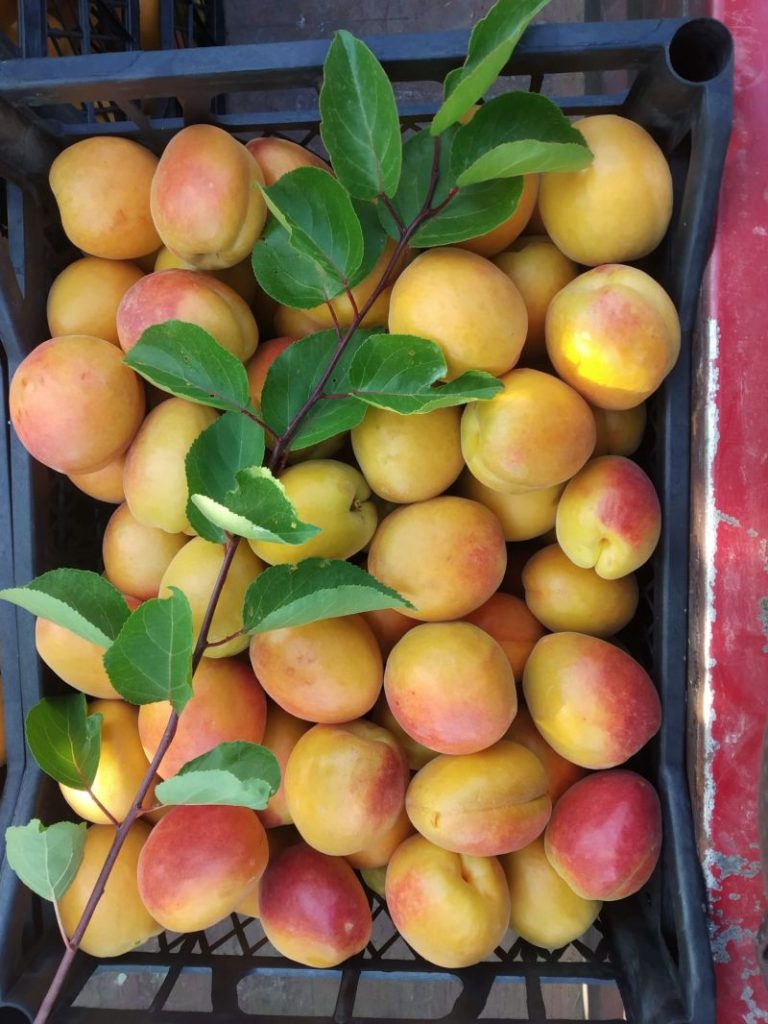
Breeders in the United States, Israel, Australia and other warm-winter countries have selected apricots that bloom and fruit with far less cold than traditional varieties. These are the low-chill apricot varieties that matter most for East Africa. The table summarises what the sources report. Chill figures are ranges, and they differ between sources.
| Variety | Reported chill (hours below about 7 degrees Celsius) | Notes |
|---|---|---|
| Gold Kist | About 300 in extension guides, with other sources ranging from 150 to 700 | Large orange freestone fruit, early, heavy bearing, self-fruitful |
| Katy | About 250 to 500, with most sources between 250 and 400 | Very early bloom and harvest, large freestone, mild flavour, self-fruitful, higher frost risk because it blooms so early |
| Royal Rosa | About 300 to 500 | Vigorous, bears young, sweet and low in acid, described as more disease tolerant than other apricots, self-fruitful |
| Blenheim (Royal) | About 400 | Aromatic and well loved, early to bloom, a medium-chill choice for the cooler end of the range |
| Newcastle | No reliable figure found | Named in Kenyan guides as early and firm. Ask for field results |
| Moorpark, Tilton, Bulida, Gold Cot and Rival | No consistent figures found | Named in Kenyan guides. Chill needs are not clearly published, so treat them as unproven for warm sites |
In the table, ripening dates are not listed because they come from northern-hemisphere orchards. In Kenya, ripening depends on when your trees flower.
How to choose among them
Start with the lowest-chill types, which are Gold Kist, Katy and Royal Rosa. They are the ones with the best record in warm-winter areas, and all three are described as self-fruitful. Self-fruitful means a tree can set fruit with its own pollen, but we still suggest two varieties that bloom together, because a second variety usually gives a heavier and more even set, and it spreads your risk if one variety blooms into bad weather.
Add one medium-chill variety such as Blenheim to the coolest corner of your trial block, to see whether your site can carry it. Keep records, because a variety that works on your farm is worth more than any figure in a table.
What low-chill breeding fixes and what it does not
A low chill variety is not a no-chill variety. It still needs cool nights, and in the hot lowlands it will still fail. Low-chill apricots also tend to share some side effects. They bloom early, which exposes the flowers to frost where frost occurs. They ripen early. Some have smaller or less flavourful fruit than the best high-chill types. These are the costs of adapting to a mild climate, and a farmer should plan for them.
Breeding also does not protect against heat spells. A variety that needs only 300 chill hours can still lose flowers to a run of very hot days in the weeks before bloom.
Helping the Tree: Horticultural Tools That Work
Research in Israel, where growers have grown stone fruit in mild winters for decades, describes a set of tools to make up for a shortfall in chill. They work to a limit. In general they can make up a part of the gap and not all of it. We list them in the order we would try them.
1. Control vigour
The buds on very vigorous shoots need more chill than the buds on moderate shoots. So a calm, moderate tree gets by with less cold. You can reduce vigour by avoiding heavy nitrogen feeding, controlling irrigation, and using rootstocks that restrain the tree. In practice, a fast-growing young apricot given lots of nitrogen and water may flower poorly in a marginal site, while a steadier tree flowers better.
2. Bend branches
On an upright tree, the buds at the tips need less chill than the buds along the sides. With partial chill, the tip buds open first and then stop the side buds from opening, a problem called apical dominance. Bending branches toward horizontal lets the side buds break. This matters most for young trees.
3. Shade and cooling
Shade lowers bud temperature and, in peach research, reduced the chill required. A coat of white paint on the trunk and main branches can reduce heat on bark. Intermittent overhead sprinkling on warm afternoons has been shown to cool buds sharply and avoid the chill-cancelling effect of heat. In the humid highlands this carries a cost, because wet leaves and blossoms invite brown rot and other diseases, so use it with caution, if at all.
4. Prune at the right time
Prune after harvest, in dry weather, so that cuts heal before the wet season. Avoid heavy pruning in the weeks before flowering, because it can push buds to open too early and expose them to frost or rain.
5. Dormancy-breaking chemicals
Spray products that push buds to open have been used for decades. Research shows that, at best, they can make up for about a third of the chill requirement. They only work if at least two-thirds of the chill has already been received, and they must be applied before the buds swell, because flower buds are the most sensitive part of the tree. Several of the older compounds are toxic to people, and some are no longer allowed. Dormancy-breaking sprays are not a way to grow a high-chill variety in a warm place. Use only products registered in Kenya, follow the label, and take advice from your county extension officer, KEPHIS or the Pest Control Products Board before you use any of them. We do not give doses in this article.
6. Dormancy avoidance
In the frost-free tropics, growers sometimes skip chill altogether. They remove the leaves by hand or by chemical defoliation, and then irrigate. This triggers a new cycle of growth and flowering before the tree enters deep rest. The method works without regard for the chill requirement and can shorten the cycle to six or eight months, so that trees give more than one crop a year. It works best with low-chill varieties, and it only suits places where frost does not occur. Fruit quality can suffer because the tree has few leaves when it flowers.
The method is well documented for peach and apple. We have found little published evidence for apricot, so in Kenya it is a trial method, and it is unsuitable in the frost-prone upper highlands.
Apricot Fruit Farming Kenya Climate Requirements in Detail
The sections above explain the chill. These sections cover the rest of the climate that an apricot orchard needs.
Altitude and temperature
Most successful apricot sites in Kenya will lie above about 1,500 metres, because the nights below that are usually too warm to give enough chill. Kenyan guides give ranges such as 1,200 to 2,000 metres, 1,500 metres and above, and 1,800 to 2,800 metres. The spread shows that altitude alone is not a reliable guide. Use it to choose which farms are worth testing, then let a logger decide.
During the growing season, apricots do best with warm, sunny days and cool nights. Very hot spells can damage flower buds before bloom and scorch fruit before harvest.
Frost
Frost is the biggest weather risk in the upper zones. Open apricot flowers can be damaged at about -2 degrees Celsius, and apricots bloom earlier than most other fruit, so they meet frost more often. Plant on a slope and not in a hollow, because cold air is heavy and collects in low places. Avoid planting at the foot of a slope with a barrier that traps cold air. Keep the ground between the rows short and firm, because bare, moist soil holds more heat overnight. If frost is regular at your site, choose another crop or another site.
Rain, humidity and the dry spell at bloom
Apricots do not need much rain. They need dry weather when they flower and when they ripen. Rain at flowering stops bees from flying, washes away pollen and spreads brown rot to the blossoms. Rain near harvest splits fruit and spreads rot. Sites in the rain shadow of the mountains, such as parts of Laikipia, can suit apricots because the air is drier, as long as irrigation fills the dry months.
Wet, misty highland slopes with long periods of leaf wetness need much more disease control. If your site is damp most of the year, you should be cautious about planting apricots at all.
Sunshine, wind and hail
Apricots need full sun for good fruit colour and sugar. Strong wind scars fruit and dries the soil, so plant a windbreak on the windward side, leaving gaps for cold air to drain on frost-prone slopes. Hail can strike in the highlands and on the plateaus, and a single storm can ruin the crop. Price hail netting and insurance for larger blocks.
Soil and drainage
Apricots like a deep, well-drained loam with a pH of about 6.0 to 7.5. Stone fruit roots rot quickly in wet soil, so drainage matters more for apricots than for many other crops. Dig a pit a metre deep in a few places and fill each with water. If the water has not drained away in six hours, the site is poor. Fix it with drainage channels or plant on raised beds 40 to 50 centimetres high. Test the soil in a laboratory before planting, and add lime if the pH is below about 6.0.
Water and irrigation
Apricots need water during fruit growth, and fruit size and yield suffer without it. Plan for drip irrigation and a reliable water source, especially in drier zones such as Laikipia and Machakos. Keep the leaves dry to cut disease. Water steadily from flowering through fruit growth, and ease off as harvest approaches so that fruit does not split. Mulch the tree rows to cut evaporation.
Humidity-driven diseases
The main diseases of apricots are brown rot of blossoms and fruit, shot hole, bacterial canker and gummosis, which is a flow of gum from the bark. All are worse in wet, humid weather. Prune to an open shape, remove dead and diseased wood, clear fallen fruit and leaves, and use only fungicides and bactericides that are registered for stone fruit in Kenya. Stone fruit leaves can be damaged by copper sprays in the growing season, so follow the label closely. Fruit flies and birds are the common pests, and aphids can attack young growth.
Grafted Apricot Seedlings, Rootstock and Buying Right
Apricots must be grafted or budded onto a rootstock. A tree grown from an apricot stone does not come true to its parent, so its fruit, size and bearing vary. In a warm-site trial, an unknown seedling has an unknown chill need, which makes a failed trial hard to explain.
Rootstocks matter more for apricots than many farmers realise. Peach seedling rootstocks such as Nemaguard suit well-drained soils and resist root-knot nematodes. Myrobalan plum rootstocks tolerate heavier or wetter soil better. Not every apricot variety is compatible with every rootstock, so ask your nursery which rootstock each variety is on and why.
Before you pay, check the graft union, which should be a healed bump on the lower stem, usually 10 to 20 centimetres above the soil. Ask for the variety name, the rootstock, and the KEPHIS inspection certificate, as we explain in our guide on grafted apple seedlings in Kenya. A seedling with a smooth, straight stem and no graft mark may be grown from seed, and its variety cannot be confirmed.
How to Test Your Farm Before You Plant: A Simple Trial Plan
Because no one has published reliable chill records for Kenyan apricot sites, the safest approach is to collect your own. The plan below takes one to three seasons and costs far less than a failed orchard.
Step 1: Measure the temperature
Place a small temperature data logger that records every hour in a shaded, ventilated box at tree height. If your farm has several slopes or levels, use one logger in each: an upper site, a middle site and a low site. Run them for at least a full year. If a weather station is close, ask for its hourly record too.
Then count the chill. Count the hours at or below 7 degrees Celsius for the simple method, and if you can, use a Dynamic Model calculator to count chill portions. Free tools and spreadsheets exist for both. Compare the totals with the chill figures of the varieties you are considering. Remember that the logger records shade air, and buds in bright sun can be 3 to 5 degrees warmer.
Step 2: Plant a small trial block
Plant 20 to 30 grafted trees of two or three low-chill varieties, with about eight to ten of each. Add a few trees of one medium-chill variety on the coolest part of the block as a test. Use certified trees, and write the variety and rootstock of every tree on a map.
Step 3: Keep records
| What to record | When | Why it matters |
|---|---|---|
| Date of bud swell, first flower and full bloom | Every season | Shows whether chill was enough and whether bloom is even |
| Percentage of flowers that set fruit | After petal fall | Poor set points to frost, rain, heat or weak flowers |
| Frost nights and rainfall at bloom | During bloom | Explains a poor crop |
| Hourly temperatures, summarised as chill hours and portions | All year | Links the weather to the result |
| Leafing: how quickly and evenly leaves come out | After bloom | Weak or late leafing suggests a chill shortfall |
| Diseases and spray dates | Throughout | Shows which sprays work |
| Harvest date, yield per tree and fruit size | At harvest | Gives you real yield figures |
Step 4: Decide
After two or three seasons you will know which varieties flowered evenly, set fruit and survived the weather on which part of your farm. If one variety did well, plant more of it. If bloom was weak and uneven, try a lower-chill variety or a cooler part of the farm, or stop. If frost was the problem, change the slope or the crop.
Common Mistakes in Apricot Farming in Kenya
The first mistake is relying on altitude alone. A guide that says apricots need 1,800 metres, or one that says they thrive in warm dry areas, tells you little about your own farm. Measure it.
The second is planting in a frost hollow because the land is flat and the soil is good. Cold air collects there, and a single night at bloom can ruin a year.
The third is buying trees with no graft union, no variety name and no papers. Seed-grown trees are a gamble, and a failed trial with unknown trees teaches you nothing.
The fourth is planting in the wrong season for flowering. Where bloom meets the long rains, flowers rot and bees stay home. The fifth is overfeeding young trees with nitrogen, which raises vigour and the chill requirement. The sixth is ignoring heat spells before bloom. The seventh is using sprays that are not registered for stone fruit, or copper at the wrong time.
The last is planting a whole farm at once. Start small, learn the climate, and expand only when your own records say yes.
Apricot Farming in Kenya: Low-Chill Varieties and Climate
Frequently Asked Questions About Apricot Farming in Kenya
Can apricots grow in Kenya?
Yes, in cool highland sites and some cooler microclimates, with low-chill varieties and good orchard management. They will not do well in hot, humid lowlands or in places with regular frost at bloom. Test your own site with a temperature logger and a small trial block before you plant widely.
How many chill hours do apricots need?
Standard apricots need about 600 to 900 hours or more below about 7 degrees Celsius. Low-chill varieties such as Gold Kist, Katy and Royal Rosa are reported to need about 250 to 500 hours. Sources differ, so treat each figure as a guide and not an exact limit.
What are the best low-chill apricot varieties for East Africa?
Gold Kist, Katy and Royal Rosa have the best record in warm-winter areas, and Blenheim is a medium-chill option for cooler sites. Kenyan guides also name Newcastle, Moorpark, Tilton, Bulida, Gold Cot and Rival, but we found no reliable chill figures for them. Ask for field results before you buy.
What altitude is best for apricots in Kenya?
Most good sites lie above about 1,500 metres, and Kenyan guides quote ranges from 1,200 to 2,800 metres. Altitude is only a guide. The real test is how many cool nights your site gets and how often it frosts at bloom, so measure both.
Can apricots grow in warm areas such as Machakos?
Possibly, in the higher, cooler hills and with the lowest-chill varieties on drip irrigation. A farmer in Machakos has been reported to grow apricots on a small scale. Nights are warmer there, chill is limited, and heat spells can harm flower buds, so treat it as a trial zone.
Do apricots need frost?
No. Apricots need cool temperatures, not freezing ones. The most effective chill comes at about 4 to 8 degrees Celsius. Frost is not required, and frost at flowering can destroy the crop.
What temperature breaks apricot dormancy?
Temperatures from about -2 to 13 degrees Celsius contribute chill, with the strongest effect at about 4 to 8 degrees. Afternoons above about 18 degrees can cancel part of the chill gained overnight, and one chill portion forms after roughly 28 hours at 6 degrees.
Why does my apricot tree grow leaves but not flower well?
The usual cause is too little chill for that variety, which gives delayed, uneven and sparse flowering. Other causes are heat spells before bloom that damage flower parts, frost that killed the buds, and too much nitrogen. Check your temperature records and the variety’s chill need.
How long before a grafted apricot tree bears fruit?
Kenyan guides report first fruit in the second or third year after planting for grafted trees, with commercial crops from about year four. A tree grown from a stone takes longer and gives unpredictable fruit. Record your own results.
What soil pH do apricots need?
About 6.0 to 7.5, in a deep, well-drained loam. Stone fruit roots rot in wet soil, so test drainage before planting, and add lime if your soil test shows a pH below about 6.0.
Talk to Us About Apricot Seedlings for Your Site
At Fruit Africa Veriplant we supply KEPHIS-inspected grafted fruit tree planting stock from our nursery distribution bases in Murang’a, Nairobi and Embu. Tell us your county, your altitude and your planned trial size, and ask us about low-chill apricot varieties, rootstocks and current availability. We can give you a written quote that names the variety and the rootstock.
Why Source Certified Seedlings from Fruit Africa Veriplant?
Selecting the right agro-ecological zone is only half the equation; success requires certified, true-to-type planting stock. At Fruit Africa Veriplant, we propagate true low-chill scions grafted onto virus-free, clonally propagated rootstocks (M9 and MM106).
The Veriplant Nursery Guarantee:
-
KEPHIS Certification: All nursery stock undergoes rigorous phytosanitary screening for viral, bacterial, and nematode pathogens.
-
True-to-Type Lineage: Our scion wood is sourced directly from verified mother trees, eliminating variety confusion.
-
Agronomic Field Support: We offer on-site soil testing, orchard layout design, drip system planning, and long-term crop management training.
Contact Our Agronomy Team Today:
- Head Office Location: Ruiru, Kiambu County, Kenya
- Nursery Distribution Hubs: Murang’a, Nairobi, and Embu
- Phone Direct: +254 714 994 444
- WhatsApp Assistance: Message us on WhatsApp
- Official Email: sales@fruitafrica.org
- Official Website: www.fruitafrica.org
- Request a Quotation: fruitafrica.org/request-for-quotation/
Summary
Apricot farming in Kenya is possible, but it is a site-specific crop and not a countrywide one. Apricot fruit farming in Kenya depends on climate: enough cool nights to release fruit-bud dormancy, afternoons that do not cancel the chill, no frost at bloom, no long heat spells before flowering, dry weather at bloom and harvest, and deep, well-drained soil.
Low-chill apricot varieties for East Africa, such as Gold Kist, Katy and Royal Rosa, need roughly 250 to 500 hours below 7 degrees Celsius, against 600 to 900 or more for standard types. That makes them possible on cool highland slopes and in a few cooler microclimates, but not in the hot lowlands. Horticultural tools such as vigour control, branch bending and good timing can help at the margin, while chemical dormancy breakers can cover at most about a third of the need.
Measure your own site with a logger, plant a small block of certified grafted trees, keep records for two or three seasons, and expand only when your own data show that the trees flower, set fruit and sell.