Soursop Seedlings give you a fruit crop that produces for decades and a leaf crop that taps into a growing health market. The tree needs warm weather, well-drained soil and modest care. If you manage it well, it pays back within a few years and continues for 20 to 30 years or more.
Buy Soursop Seedlings in Kenya at KSh 500 each. Complete guide to soursop farming, the soursop leaf craze, health benefits, custard apple comparison, costs and fruit prices.
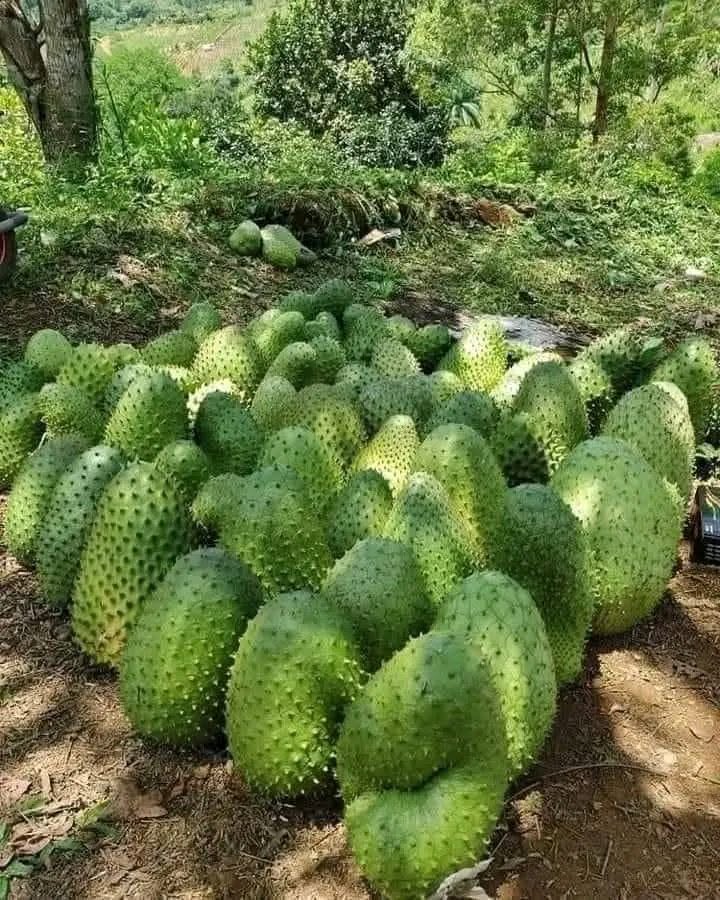
soursop harvest
Soursop Seedlings give Kenyan farmers a way into a fruit tree that produces for decades, feeds a growing health market, and now has a second income stream from its leaves. A kilogram of fresh soursop sells for KSh 200 to KSh 500 depending on the vendor and season. Dried soursop leaf powder sells for KSh 1,000 to KSh 1,500 per kilogram. The fruit is rare in Kenyan markets. The leaf trade is even newer. Together they make soursop worth serious attention for farmers in warm areas.
This guide covers what you need before you order Soursop Seedlings in Kenya. It explains the crop, where it grows, how to plant it, how to care for it, what you can harvest from the fruit and the leaves, and what prices you can expect. It also explains the soursop leaf craze that is changing how farmers look at this tree, and it clears up the confusion between soursop, custard apple and sugar apple that many Kenyans share.
Fruit Africa Veriplant supplies Soursop Seedlings at KSh 500 each. The rest of this guide explains everything that comes after that order.
What Are Soursop Seedlings?
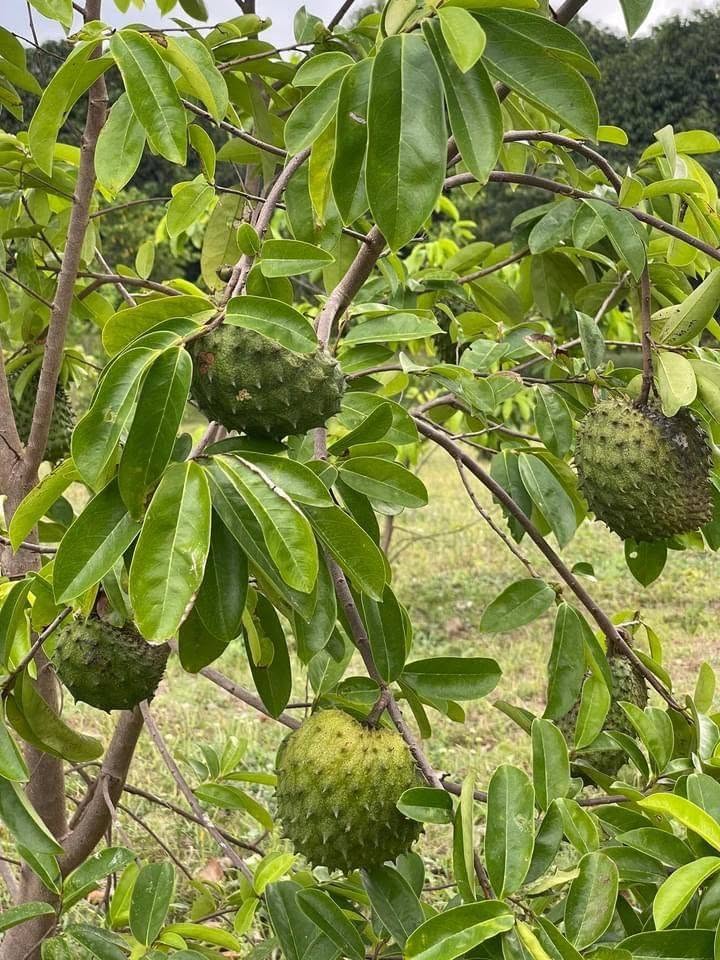
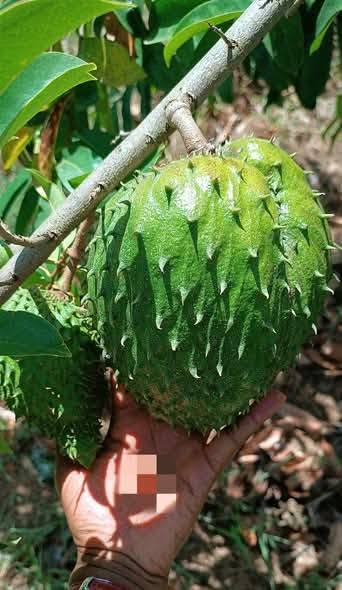
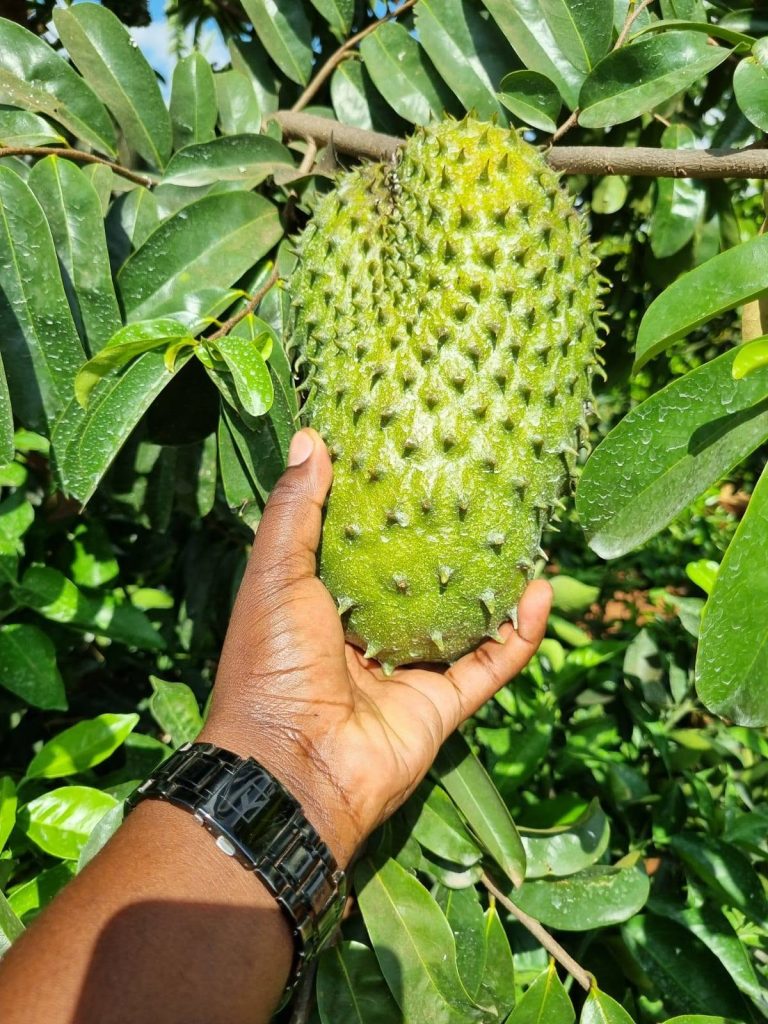
Soursop belongs to the genus Annona and the species Annona muricata. The tree is a small evergreen that reaches 6 to 8 metres. The leaves are glossy, oval and dark green. The flowers are large, yellow-green and fragrant. The fruit is heart-shaped or oval, covered in soft spines, and weighs 2 to 6 kilograms. Inside, the flesh is white, juicy and aromatic, with a taste that combines strawberry, pineapple and cream. The fruit contains many black seeds.
Soursop Seedlings are grown from seed or from grafting. Seed-grown trees take three to four years to fruit. Grafted trees fruit earlier and carry uniform fruit quality. The tree is a heavy bearer once established and produces for 20 to 30 years or more. It handles warm, humid conditions and grows well in coastal and lowland areas of Kenya.
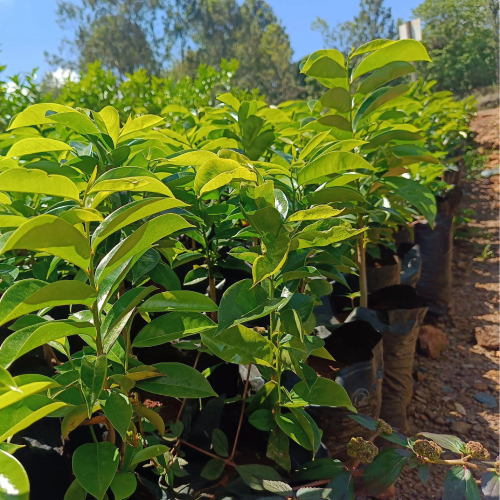
A good Soursop Seedling has healthy roots, a firm stem and clean leaves. The plant should show no signs of disease, no yellowing and no pest damage. When you buy from a reliable nursery, you get planting material selected for fruit quality and yield. That is the foundation of a productive orchard.
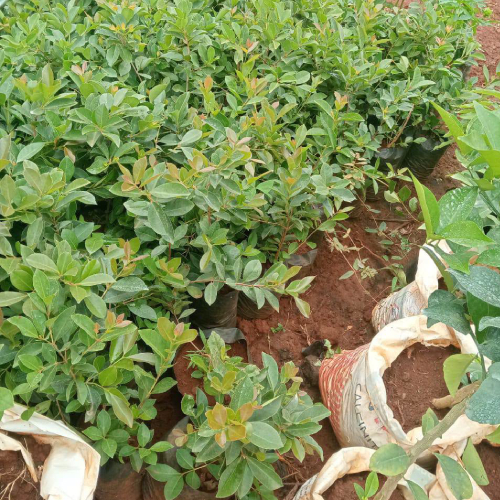
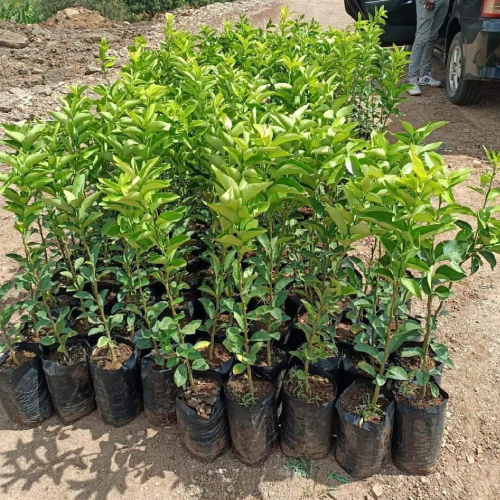
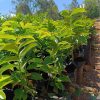
Soursop Seedlings at Fruit Africa Veriplant nursery
Soursop Seedlings Price in Kenya
Fruit Africa Veriplant supplies Soursop Seedlings at KSh 500 each.
Other Kenyan nurseries sell soursop seedlings at KSh 300 to KSh 500 each. One Meru nursery sells soursop seedlings at KSh 300 and has about 2,000 seedlings in stock. Another supplier sells certified grafted seedlings at KSh 500 each. Fruit Africa Veriplant prices sit within that range.
The total amount you spend on seedlings depends on how many trees you need. A one-acre plot at 5 metres by 5 metres spacing holds about 150 trees. At KSh 500 per seedling, that comes to KSh 75,000 for planting material alone. At 6 metres by 6 metres spacing, one acre holds about 110 trees. At KSh 500 each, seedling cost comes to KSh 55,000.
Seedling cost is only one part of what you will spend. Land preparation, manure, fertiliser, irrigation, labour and crop protection all add to the total investment. Budget for the full establishment cost before you place your order.
When comparing Soursop Seedlings from different nurseries, look at the roots, the stem and the leaves. Ask whether the seedlings are grafted or seed-grown. A cheap seedling that fails to establish costs more than a healthy one that grows well.
Why Grow Soursop in Kenya?
Soursop is not grown commercially in Kenya. It appears as a homestead tree in coastal areas and warm lowland regions. Farmers rarely plant it for market. The fruit is eaten at home, not sold in shops. That is the current situation.
That situation also creates opportunity. The fruit is rare in commercial markets. Supermarkets rarely stock it. Open-air markets seldom see it. Demand exists among consumers who know the fruit, but supply is almost zero. A farmer who plants Soursop Seedlings today can be among the first to supply a market that has not yet formed.
The tree produces two crops for the farmer. The fruit is the first crop. The leaves are the second. The leaf market has grown fast in recent years as demand for herbal teas and natural remedies has risen. A farmer with a mature soursop orchard can harvest fruit for sale and leaves for drying, powdering and sale to health shops, herbalists and online buyers.
The tree is easy to manage. It handles warm, humid conditions and produces for 20 to 30 years. Once established, your main costs are pruning, fertiliser and pest control. The tree keeps producing year after year.
The fruit has multiple uses. Soursop is eaten fresh. It is made into juice, ice cream, sorbet and smoothies. The leaves are dried and sold as tea or powder. The fruit and leaves both have a place in the growing health food market.
The Soursop Leaf Craze: A New Income Stream for Kenyan Farmers
In recent years, a new market has grown around soursop leaves. The leaves were once a by-product of the tree. Farmers pruned them and left them on the ground. Today, the leaves are harvested, dried, powdered and sold as a health product. The demand comes from consumers looking for natural remedies and herbal teas. It also comes from a belief, spread widely online, that soursop leaves have powerful healing properties.
The leaf craze has changed the economics of soursop farming. A farmer who plants Soursop Seedlings for fruit now has a second income stream. The leaves can be harvested without killing the tree. Pruning, which the tree needs anyway, produces leaf material for drying. The dried leaves are sold to processors, herbal shops and online buyers.
What Is Driving the Demand?
The demand for soursop leaves comes from several directions. Herbal tea drinkers buy dried soursop leaves to brew at home. Health shops stock soursop leaf tea and capsules. Online sellers, including Jumia and other platforms, list soursop leaf powder at KSh 1,300 for 200 grams. That works out to KSh 6,500 per kilogram at retail. Farmers who sell directly to processors or consumers can earn good money from leaf production.
The leaves are also used in traditional medicine across Africa and the Caribbean. In Kenya, herbalists and traditional healers have used soursop leaves for generations. The modern demand builds on that tradition and adds a commercial layer.
How Farmers Can Tap the Leaf Market
A farmer with mature soursop trees can harvest leaves two to three times per year. The best leaves are mature, dark green and free of disease. Harvest by hand or with clean secateurs. Do not strip the tree bare. Leave enough leaves for the tree to continue photosynthesising and producing fruit.
After harvest, dry the leaves in the shade. Direct sun bleaches the leaves and reduces quality. Shade drying takes three to five days. Once dry, the leaves are crisp and break easily. Store them in dry, ventilated bags away from moisture and sunlight.
Farmers can sell dried leaves whole or process them into powder. Whole dried leaves sell for less than powder. Powder requires a grinder and packaging. The extra work brings a higher price. A farmer who sells powder directly to consumers or health shops earns more than one who sells dried leaves to a middleman.
The leaf market is still developing in Kenya. Prices vary. But the direction is clear. Demand is growing, and supply is thin. Farmers who plant Soursop Seedlings today can be ready to supply the leaf market when their trees mature.
Health Benefits of Soursop Leaves and Fruit
Soursop has a long history of use in traditional medicine. The leaves, fruit, seeds and bark have all been used for different purposes. Modern research has explored some of these uses. Here is what is known and what is not.
Soursop Leaves
Soursop leaves are the most widely used part of the plant in traditional medicine. They are brewed as tea and taken for relaxation, colds, fever and inflammation. In some traditions, the leaves are used to lower blood pressure, ease digestive problems and support sleep.
Modern research has looked at the compounds in soursop leaves. The leaves contain flavonoids, phenolics and acetogenins. These compounds have shown antioxidant, anti-inflammatory, antimicrobial and metabolic effects in laboratory studies. Some studies suggest that soursop leaf extract can help lower blood sugar levels and improve insulin sensitivity in animals. Other studies have looked at the effect of soursop leaf decoction on blood pressure in humans, with some showing reductions after one to two weeks of consumption.
The leaves are also the focus of much of the cancer research around soursop. Laboratory studies have found that soursop leaf extracts can affect cancer cells. The acetogenins in the leaves are believed to interfere with cancer cell growth. However, there is no strong evidence from human studies that soursop leaves treat cancer. The research is still at the laboratory stage.
Soursop Fruit
The fruit is nutritious. It is low in calories and high in fibre, vitamins and minerals. It contains vitamin C, potassium, magnesium and antioxidants. The fruit is eaten fresh, juiced or used in desserts.
In traditional medicine, soursop fruit pulp was used to aid digestion and manage hypertension and diabetes. Modern research has looked at the fruit’s antioxidant and anti-inflammatory properties. Some studies suggest that compounds in the fruit may help protect the digestive tract and reduce inflammation.
The fruit is also a source of natural sugars, which give it its sweet taste. People watching their sugar intake should eat it in moderation.
What to Be Careful About
Soursop is not a medicine. It is a nutritious fruit and a plant with useful compounds. But claims that it cures cancer, diabetes or any other disease are not supported by human evidence. Some compounds in soursop, including annonacin, may have negative effects on the nervous system when consumed in large amounts over long periods. Soursop may also interfere with certain medications, including chemotherapy drugs.
Farmers selling soursop leaves and fruit should market them as food and herbal products, not as medicine. Do not make medical claims. Let the buyer decide how to use the product. Talk about nutrition and traditional use, not cure.
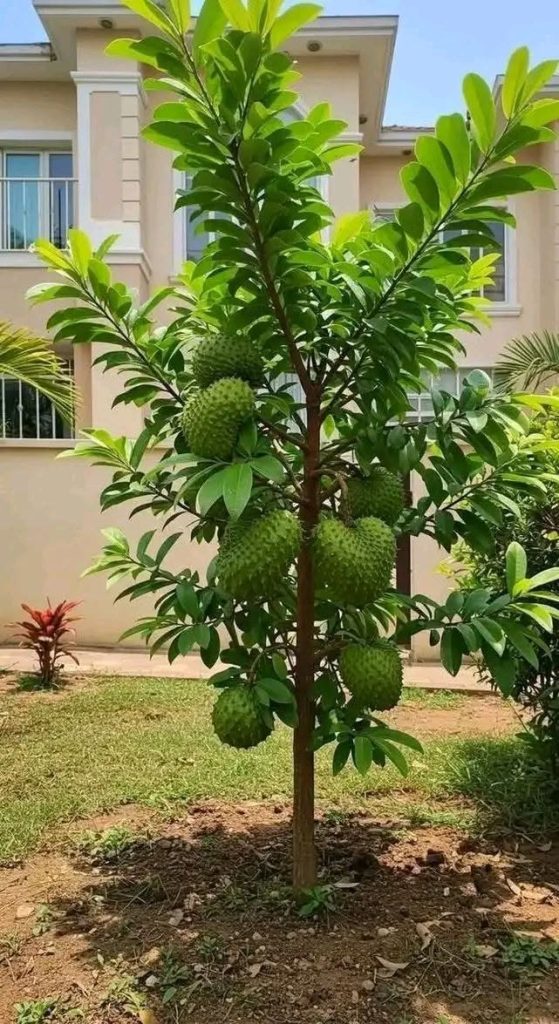
A young soursop tree
Soursop, Custard Apple and Sugar Apple: Clearing Up the Confusion
Many Kenyans confuse soursop, custard apple and sugar apple. They are related. They belong to the same plant family, Annonaceae, and the same genus, Annona. But they are different fruits with different tastes, textures and uses. Knowing the difference helps farmers choose the right tree and helps buyers know what they are purchasing.
Soursop (Annona muricata)
Soursop is the largest of the three. The fruit weighs 2 to 6 kilograms. The skin is green and covered in soft, curved spines. The flesh is white, juicy and fibrous. The taste is a mix of strawberry, pineapple and cream, with a tangy edge. Soursop is eaten fresh, but it is most commonly used for juice, ice cream and smoothies because the flesh is fibrous and juicy. The leaves are widely used for tea and herbal remedies. The tree grows best in warm, humid tropical lowlands.
Custard Apple (Annona reticulata)
Custard apple is smaller than soursop. The fruit weighs 200 to 500 grams. The skin is reddish-brown or yellow-brown when ripe, with a scaly, net-like pattern. The flesh is creamy and sweet, with a taste that reminds people of custard. It is eaten fresh. The fruit is fragile and does not travel well, so it is usually sold close to where it is grown. The tree is smaller than soursop and handles cooler conditions better.
Sugar Apple (Annona squamosa)
Sugar apple is also smaller than soursop. The fruit weighs 100 to 300 grams. The skin is green with knobby, segmented scales that separate as the fruit ripens. The flesh is white, sweet and aromatic, with a taste that is often described as the sweetest of the three. It is eaten fresh. The seeds are black and hard. Sugar apple is sometimes called sweetsop. The tree is small and suits home gardens and small orchards.
How to Tell Them Apart
Feature
Soursop
Custard Apple
Sugar Apple
Fruit size
2 to 6 kg
200 to 500 g
100 to 300 g
Skin
Green, soft spines
Reddish-brown, scaly
Green, knobby segments
Flesh
White, juicy, fibrous
Creamy, sweet
White, sweet, aromatic
Taste
Tangy, strawberry-pineapple
Custard-like
Very sweet
Best use
Juice, ice cream
Fresh eating
Fresh eating
Leaf use
Tea, herbal remedies
Limited
Limited
Table 1: Comparison of soursop, custard apple and sugar apple.
The confusion matters for farmers because the trees have different requirements and different markets. Soursop is the one with the growing leaf market and the juice market. Custard apple and sugar apple are fresh-eating fruits with smaller markets. If you want to enter the health product market, soursop is the tree to plant. If you want a sweet fruit for local sale, custard apple or sugar apple may suit you.
Where Soursop Grows in Kenya
Soursop grows in warm, humid tropical climates. It does well from sea level up to about 1,200 metres. The tree performs best in temperatures between 25°C and 30°C. It tolerates heat and humidity. Frost is the enemy. If your area experiences cold snaps, this crop is not for you.
Suitable growing regions in Kenya include Coastal Kenya (Mombasa, Kilifi, Kwale, Lamu), Western Kenya (Kisumu, Siaya, Kakamega), and lower altitude areas of Central and Eastern Kenya. The tree suits warm lowland areas with moderate rainfall.
Rainfall matters. Soursop needs about 1,000 to 1,500 millimetres of rainfall per year. It handles short dry spells once established. But consistent moisture during the first two years is crucial. In drier areas, irrigation is essential during establishment and fruit development.
Before you order Soursop Seedlings, assess your site honestly. Soursop suits warm, frost-free areas. A cold highland farm will not give you the yields and fruit quality that justify the investment.
a young soursop tree in a home compound
Soil Requirements for Soursop Trees
Soursop trees tolerate a range of soils but perform best in deep, well-drained loamy soils rich in organic matter. The soil should be slightly acidic, with a pH between 6.0 and 6.5.
Drainage is critical. Soursop trees do not tolerate waterlogging. A site that stays wet for days after rain suffocates roots and encourages root rot. Improve drainage before planting if your land collects water.
Soil texture affects water and nutrient holding. Sandy soils drain quickly but dry out fast. Clay soils hold water but become waterlogged. Loamy soils, with a balance of sand, silt and clay, offer the best conditions. Organic matter improves any soil by improving structure, water holding and nutrient availability.
Do not guess about your soil. A soil test before planting costs far less than correcting problems in an established orchard. Test for pH, organic matter, phosphorus, potassium and drainage. One fertiliser programme does not fit every farm.
Spacing Soursop Seedlings
Spacing decides how many trees you plant, how they grow and how you manage the orchard. For soursop in Kenya, the standard spacing is 5 metres by 5 metres. This gives each tree 25 square metres. One acre holds about 150 trees at this spacing.
A wider spacing of 6 metres by 6 metres gives each tree 36 square metres. One acre holds about 110 trees. This spacing suits farmers who want more room for the tree canopy and easier access for harvesting.
A tighter spacing of 4 metres by 5 metres gives about 200 trees per acre. This spacing requires regular pruning to manage tree size and maintain airflow.
How Many Trees Per Acre
One acre equals about 4,047 square metres.
At 5 × 5 metre spacing:
Each tree takes 5 × 5 = 25 square metres. 4,047 ÷ 25 = 161.8 trees per acre.
At 6 × 6 metre spacing:
Each tree takes 6 × 6 = 36 square metres. 4,047 ÷ 36 = 112.4 trees per acre.
At 4 × 5 metre spacing:
Each tree takes 4 × 5 = 20 square metres. 4,047 ÷ 20 = 202.3 trees per acre.
These figures assume the whole acre is planted. In reality, roads, boundaries, drainage channels and buildings reduce the plantable area. A practical orchard holds between 110 and 200 trees per acre depending on layout.
Your choice depends on your budget, your management capacity and your market timeline.
Planting Soursop Seedlings
Planting is straightforward if you prepare properly. Rushed planting leads to poor establishment and losses you cannot recover.
Start with land preparation. Clear the site of perennial weeds, old crop residues and any obstacles. Plough the land deeply to break up compacted soil. Harrow to create a fine tilth.
Mark the planting positions using pegs and a measuring tape. Follow your chosen spacing accurately. Crooked rows make every later operation harder.
Dig planting holes about 60 centimetres wide and 60 centimetres deep. Keep topsoil and subsoil separate as you dig. Mix the topsoil with well-decomposed manure or compost. Manure improves soil fertility and water holding around the young roots.
Handle the seedling carefully. Keep the roots moist during transport and planting. Exposure to sun and wind dries roots quickly and reduces survival. If you cannot plant immediately, heel the seedlings into moist soil or keep them in a shaded area with roots covered.
Place the seedling in the hole with the roots spread naturally. The plant should sit at the same depth it was growing in the nursery container. Do not bury the stem deeper than it was. Backfill with the topsoil and manure mix, firming gently to remove air pockets. Water immediately after planting.
Stake young trees if wind is a problem. Mulch around the base with dry grass or straw, keeping the mulch a few centimetres away from the trunk. Protect young seedlings from livestock.
Plant at the start of the rains or under irrigation. The long rains in March to May or the short rains in October to November give the best planting conditions.
First-Year Orchard Management
The first year decides the tree’s shape and future productivity. What you do in these months sets the pattern for years.
Watering is critical during establishment. Young trees have small root systems and cannot reach deep soil moisture. In dry weather, water regularly. The goal is to keep the root zone moist but not waterlogged. Soursop tolerates some dryness, but young trees establish faster with steady moisture.
Weeding keeps competition away from young trees. Weeds compete for water and nutrients. They also harbour pests. Keep a clean circle around each tree by hand weeding or by keeping mulch in place.
Training starts in the first year. Remove any shoots that come from the base of the plant. Select a strong central leader and remove shoots that would create a weak structure. The goal is a well-shaped crown with three to four main branches.
Pruning in the first year is limited. The goal is to build a framework, not to produce fruit. Remove damaged or broken branches. Do not over-prune. Leaves feed the growing tree.
Watch for pests and diseases from the start. Young trees are vulnerable. Check leaves, stems and growing tips often. Early detection makes management easier.
Pruning and Canopy Management
Soursop trees naturally form a conical shape. They adapt well to a central leader system. The fruits grow on lateral branches and hang down, which makes harvesting easier.
Formative pruning in the early years builds the main framework. Choose three to four well-spaced branches to form the permanent structure. Remove branches that grow inward, cross each other or grow too low.
As the tree matures, pruning focuses on keeping the structure and removing unwanted growth. Remove dead, diseased or damaged branches quickly. Remove water sprouts, the fast upright shoots that grow from main branches, unless you need them to fill a gap.
Pruning also produces leaf material for the soursop leaf market. The leaves you remove during normal pruning can be dried and sold. This turns a routine orchard task into an income opportunity.
Light penetration matters. A dense canopy blocks light and air. Shaded branches produce less fruit and are more prone to disease. Open the canopy enough to let light and air through, but do not strip the tree bare.
Pruning timing matters. In Kenya’s warm areas, prune after harvest. Avoid pruning during flowering or when the tree is setting fruit.
Water and Irrigation
Soursop trees need steady moisture for good growth and fruit development. Water stress during flowering reduces fruit set. Stress during fruit development reduces size and quality.
In areas with reliable rainfall, irrigation is needed mainly during dry spells. In drier zones, irrigation is essential. Drip irrigation is efficient because it delivers water to the root zone with little loss to evaporation.
Young trees need more frequent watering because their roots are shallow. As trees mature, roots go deeper and the trees handle dry spells better. Soursop needs about 1,000 to 1,500 millimetres of rainfall through the year for good production.
Overwatering is a common mistake. Soursop does not like soil that stays saturated. If the soil stays wet for weeks, roots cannot breathe and root rot develops. Mulching helps hold soil moisture and reduces how often you irrigate.
Soursop Fruit on a branch
Fertilizer and Nutrition
Soursop trees need a balanced supply of nutrients. The main ones are nitrogen, phosphorus and potassium. Calcium, magnesium and micronutrients also matter.
Nitrogen supports leaf growth and tree vigour. Phosphorus supports root development and flowering. Potassium supports fruit quality, size and sweetness.
Fertilizer decisions should follow soil analysis, tree age, growth rate and crop load. A young tree needs nutrients for growth. A mature, fruiting tree needs more potassium and balanced nutrition for fruit production.
Apply manure or compost twice yearly, at the beginning of the long rains and the short rains. For mature trees, a balanced NPK fertilizer supports flowering and fruiting. Split applications through the rainy season feed the tree steadily without pushing too much leafy growth at once.
Age of Tree (Years)
Well-Rotted Manure (kg)
NPK 10:10:10 (g)
1 to 2
10 to 15
100 to 200
3 to 5
15 to 20
200 to 300
6 and above
20 to 30
300 to 400
Table 2: General fertilizer guide for soursop trees in Kenya. Rates vary by soil type and tree condition.
Do not apply fertilizer blindly. Too much fertilizer causes too much leaf growth, poor fruit quality and waste. Too little fertilizer limits yield and tree health. The right rate depends on your soil and your trees.
Pollination and Fruit Set
Soursop flowers contain both male and female parts. The flowers have a unique habit. The female part is receptive before the male part releases pollen. This means the flower cannot pollinate itself on the same day. Pollination depends on insects, particularly beetles, moving pollen from older flowers to newly opened ones.
This makes pollination uncertain in some areas. Farmers can help by maintaining a healthy population of beetles and other pollinators in the orchard. Avoid broad-spectrum insecticides during flowering. Provide habitat for beneficial insects.
Fruit drop can happen after flowering, especially on young trees. Some drop is normal. Heavy drop can point to poor pollination, water stress or nutrition problems. Keep the tree healthy and the soil moisture steady.
Hand pollination is possible for small orchards. It involves collecting pollen from mature flowers and transferring it to newly opened flowers. This increases fruit set but takes time and labour.
Pests and Diseases
Soursop trees face pest and disease pressure in Kenya. The problems vary by location and season. Monitoring is your first line of defence.
Aphids are common pests. They cluster on young shoots and the undersides of leaves. They suck sap and cause leaves to curl. Honeydew from aphids attracts ants and leads to sooty mould.
Mealybugs feed on stems and fruit. They produce honeydew and can lead to sooty mould. Control with neem oil or insecticidal soap.
Scale insects attach to branches and stems. Heavy infestations reduce tree vigour. Pruning and approved insecticides help control them.
Fruit flies attack ripening fruit. Traps help monitor populations. Orchard sanitation, removing fallen fruit and destroying it, reduces breeding sites.
The soursop seed borer attacks the seeds inside the fruit. The larvae feed on the seeds and damage the flesh. Remove affected fruit and destroy it.
Anthracnose causes dark spots on leaves and fruit. It appears in wet conditions. Good air movement through pruning reduces pressure. Copper-based fungicides help when needed.
Root rot develops in poorly drained soils. The roots turn brown and soft. The tree wilts and dies. Improve drainage before planting. Avoid overwatering.
Where pesticide use is needed, choose products registered for the crop and pest. Follow the label instructions exactly. Ask agricultural extension officers or licensed agrochemical dealers when you are unsure.
Yield: What to Expect Per Tree and Per Acre
Soursop yields depend on tree age, variety, pollination, water, nutrition and management. There is no fixed yield you can promise, but realistic ranges help you plan.
A soursop tree starts producing in three to four years after planting. A young tree produces a few fruits in the third or fourth year. A mature tree produces 30 to 50 kilograms of fruit per year. Some trees produce more, some less, depending on conditions. The fruit weighs 2 to 6 kilograms each.
For commercial planning, one acre of well-managed soursop holds 110 to 200 trees depending on spacing. At 150 trees per acre and 30 kilograms per tree, production is 4,500 kilograms per acre. At 50 kilograms per tree, production is 7,500 kilograms. At 110 trees per acre and 40 kilograms per tree, production is 4,400 kilograms. At 200 trees per acre and 30 kilograms per tree, production is 6,000 kilograms.
These are examples, not promises. Your actual yield depends on how well you manage the orchard.
The leaf harvest adds to the income. A mature orchard can produce leaves for drying two to three times per year. The leaf yield depends on tree size and pruning intensity. A farmer who manages the leaf harvest alongside the fruit harvest earns from both.
Cost of Production Per Acre
This section shows what it costs to establish and maintain one acre of soursop trees at the 5 × 5 metre spacing with 150 trees.
Item
Quantity
Unit Cost (KSh)
Total Cost (KSh)
Soursop Seedlings
150
500
75,000
Land preparation
1 acre
20,000
20,000
Planting holes (labour)
150 holes
50
7,500
Well-rotted manure
5 tonnes
3,000
15,000
Planting labour
150 trees
30
4,500
Staking materials
150 stakes
50
7,500
Mulching material
1 acre
8,000
8,000
Drip irrigation setup
1 acre
40,000
40,000
Total Establishment Cost
177,500
Table 3: Estimated establishment costs for one acre of soursop at 5 × 5 metre spacing. Costs vary by location and labour rates.
At 6 × 6 metre spacing with 110 trees, seedling cost drops to KSh 55,000 and total establishment cost falls to about KSh 152,500. At 4 × 5 metre spacing with 200 trees, seedling cost rises to KSh 100,000 and total establishment cost rises to about KSh 212,500.
Annual Maintenance Costs (Years 2 to 5)
Item
Annual Cost (KSh)
Fertilizer and manure
20,000
Irrigation (water and labour)
12,000
Weeding and cultivation
12,000
Pruning and training
8,000
Pest and disease management
12,000
General labour
10,000
Total Annual Maintenance
74,000
Table 4: Estimated annual maintenance costs during the establishment years.
Total Investment Before First Big Harvest
Year
Cost (KSh)
Year 1
177,500
Year 2
74,000
Year 3
74,000
Year 4
74,000
Total Investment by Year 4
399,500
Table 5: Total investment before the orchard reaches significant production.
Market Prices for Soursop in Kenya
Soursop prices in Kenya vary depending on where you sell and the quality of the fruit. The table below shows the range you can expect.
Market Channel
Price per Kilogram
Local vendor or farmgate
KSh 200 to KSh 500
Supermarkets and online groceries
KSh 349 to KSh 370
Premium retail
KSh 500 to KSh 700
Dried soursop leaf powder
KSh 1,000 to KSh 1,500
Table 6: Soursop prices in different Kenyan market channels.
As of October 2026, Fruit Africa Veriplant observed fresh soursop fruit selling at KSh 200 to KSh 500 per kilogram depending on the vendor, season and fruit quality. Supermarkets and online groceries sell fresh soursop at KSh 349 to KSh 370 per kilogram. Premium retail outlets sell at KSh 500 to KSh 700 per kilogram. Dried soursop leaf powder sells for KSh 1,000 to KSh 1,500 per kilogram.
The farmer gets less than the retail price. Transport, packaging, cold chain, market fees and middlemen margins all take a share between the farm and the consumer. When you plan your income, use the price you can actually get, not the supermarket shelf price.
soursop fruit
Revenue Per Acre
Revenue depends on how much fruit you produce and the price you get. The table below shows gross revenue at different yields and prices. Gross revenue is the money you receive before subtracting your costs.
Production
At KSh 250/kg
At KSh 400/kg
At KSh 600/kg
4,500 kg
KSh 1,125,000
KSh 1,800,000
KSh 2,700,000
6,000 kg
KSh 1,500,000
KSh 2,400,000
KSh 3,600,000
7,500 kg
KSh 1,875,000
KSh 3,000,000
KSh 4,500,000
Table 7: Gross revenue per acre at different yields and prices.
These are gross figures, not profit. You still need to subtract the cost of production, harvesting, packaging, transport and marketing. The leaf income adds to these figures. A farmer who sells dried leaves earns extra income on top of the fruit revenue.
Profit Per Acre
Profit is what remains after you subtract your costs from your revenue. Using the estimated annual maintenance cost of KSh 74,000 once the trees are mature, the table below shows what is left at different yields and prices.
Production
At KSh 250/kg
At KSh 400/kg
At KSh 600/kg
4,500 kg
KSh 1,051,000
KSh 1,726,000
KSh 2,626,000
6,000 kg
KSh 1,426,000
KSh 2,326,000
KSh 3,526,000
7,500 kg
KSh 1,801,000
KSh 2,926,000
KSh 4,426,000
Table 8: Estimated profit per acre at different yields and prices once trees are mature.
The table shows why yield and price both matter. At low yield and low price, profit is smaller. At high yield and high price, profit is large. Focus on both production and marketing. The leaf income adds to these figures.
Break-Even Price
Break-even price is the price you need per kilogram to cover your costs. It shows how much room you have before you start losing money.
Using an annual maintenance cost of KSh 74,000:
At 4,500 kg, the break-even price is KSh 74,000 divided by 4,500, which equals about KSh 17 per kilogram.
At 6,000 kg, the break-even price is KSh 74,000 divided by 6,000, which equals about KSh 13 per kilogram.
At 7,500 kg, the break-even price is KSh 74,000 divided by 7,500, which equals about KSh 10 per kilogram.
The main investment is the establishment cost in the first four years. Once the trees produce, the yearly costs are modest compared to the potential value of the crop.
Planning a Soursop Enterprise
A good soursop plan starts with the market, not the seedlings. Before you order Soursop Seedlings, answer these questions.
Who will buy your fruit? Soursop is not sold in most markets. You need to find buyers before you plant. Think about supermarkets, hotels, juice makers, health food shops and specialty fruit shops. Talk to them. Find out if they would buy soursop and at what price.
Who will buy your leaves? The leaf market is growing. Look for herbalists, health shops, tea processors and online buyers. Find out what price they pay for dried leaves or powder.
How much will it cost you to produce? Add up seedlings, land preparation, manure, fertiliser, irrigation, labour, pest control, harvesting, packaging and transport. That total tells you what you need to earn.
How much fruit and leaf can your land produce? Use the plant population and yield figures in this guide. Be realistic. Do not plan on the highest yield if you are new to the crop.
Once you have those answers, you can decide how many acres to plant and which market to target. Start small if you are new to soursop. Learn the crop on a quarter acre or half acre. Expand once you know how the crop performs on your farm and where you can sell the fruit and leaves.
Selling Soursop in Kenya
Soursop is not a commodity fruit. You cannot take it to the market and expect a ready buyer. You need to build the market.
Supermarkets and health food stores sell exotic fruits. They serve customers who look for something different. Soursop fits that space. High-end outlets stock soursop when they can find it.
Hotels and restaurants are a good starting point. Chefs like unusual fruits for desserts, juices and garnishes. Talk to them. Let them taste the fruit. If they like it, they may buy regularly.
Juice makers and processors are another option. Soursop makes excellent juice, ice cream and smoothies. A processor who makes fresh juices or frozen desserts might buy your fruit.
Health shops and herbalists buy dried soursop leaves. They sell the leaves as tea or powder. Talk to them about your leaf harvest. Find out what price they pay and what quality they expect.
Direct sales to consumers work if you are near a town or city. Farmers’ markets, food fairs and online sales can move small volumes at good prices. But direct selling takes time and effort.
Farmgate sales to traders are the simplest, but the price is lower. A trader who knows the fruit might buy in bulk. But few traders know soursop, so you may need to educate them.
Soursop and Export Markets
Kenya exports small quantities of soursop. Export markets pay higher prices than local markets, but the requirements are strict. Fruit must meet quality, size, packaging and phytosanitary standards. Exporters need certification and logistics arrangements.
Do not plan your farm around export prices unless you have a confirmed buyer and the systems in place to meet their requirements. Export is not a simple market to enter. It takes planning, investment and relationships.
Common Mistakes to Avoid
Many farmers lose money on soursop because of avoidable mistakes. Learn from them before you plant.
The biggest mistake is planting before finding a market. Soursop is not sold in most markets. If you plant a large acreage without a buyer, you may struggle to sell the fruit. Find your market first.
Another mistake is expecting supermarket prices. The supermarket price is not your price. Subtract transport, packaging, market fees and middlemen margins. Plan with the price you can actually get.
Poor irrigation management causes problems. Both too little water and too much water hurt the crop. Soursop tolerates dryness but does not like waterlogged soil.
Overcrowding the orchard makes management harder. Choose a spacing that matches your management capacity.
Treating yield figures as guarantees is another mistake. Yields depend on your soil, water, nutrition, pest control and the weather. Plan on conservative figures and improve from there.
Marketing soursop leaves as a medicine is a mistake. Do not make medical claims. Sell the leaves as a food product and herbal tea ingredient. Let the buyer decide how to use them.
Why Quality Soursop Seedlings Matter
The planting material you start with determines what you harvest. Weak seedlings establish poorly. They grow slowly and produce less fruit. Diseased seedlings carry problems into your field that spread to healthy plants.
Healthy Soursop Seedlings establish quickly. They grow strong and produce fruit within three to four years. They carry the genetic potential for good yield and good fruit quality. Starting with quality planting material saves you time, money and frustration.
Buy from a nursery that selects mother plants for fruit quality. Ask about the source of the seedlings. Check the roots, stem and leaves before you buy. A little extra care at the buying stage pays off through the life of the orchard.
Soursop Seedlings for Commercial Farms
Commercial farmers need larger quantities of Soursop Seedlings and careful planning. The number of seedlings depends on the acreage and spacing.
At 5 metres by 5 metres, one acre needs about 150 seedlings. Two acres need about 300. Five acres need about 750. At KSh 500 per seedling, the cost is KSh 75,000 for one acre, KSh 150,000 for two acres and KSh 375,000 for five acres.
At 6 metres by 6 metres, one acre needs about 110 seedlings. Two acres need about 220. Five acres need about 550. At KSh 500 per seedling, the cost is KSh 55,000 for one acre, KSh 110,000 for two acres and KSh 275,000 for five acres.
At 4 metres by 5 metres, one acre needs about 200 seedlings. Two acres need about 400. Five acres need about 1,000. At KSh 500 per seedling, the cost is KSh 100,000 for one acre, KSh 200,000 for two acres and KSh 500,000 for five acres.
Order your seedlings early so the nursery can prepare them for your planting date. Prepare your land before the seedlings arrive. Have irrigation ready. Have labour arranged. Planning the whole operation avoids delays and losses.
Where to Get Soursop Seedlings in Kenya
Fruit Africa Veriplant supplies Soursop Seedlings at KSh 500 each. The nursery serves farmers, commercial growers and orchard projects across Kenya.
When you enquire, give your farm size, spacing and planting date. That helps the team prepare the right number of seedlings and arrange delivery.
Frequently Asked Questions About Soursop Seedlings
FAQ 1.How much do Soursop Seedlings cost in Kenya?
Soursop Seedlings from Fruit Africa Veriplant cost KSh 500 each. Other Kenyan nurseries sell at KSh 300 to KSh 500 each. The total cost depends on how many trees you need for your land. A one-acre plot at 5 metres by 5 metres spacing needs about 150 seedlings, which comes to KSh 75,000. Add the cost of land preparation, manure, irrigation, labour and crop protection when you plan your budget.
FAQ 2.How many Soursop Seedlings do I need for one acre?
At 5 metres by 5 metres spacing, one acre holds about 150 planting positions. At 6 metres by 6 metres spacing, one acre holds about 110 positions. At 4 metres by 5 metres spacing, one acre holds about 200 positions. The actual number you plant is lower because roads, paths and drainage take up space.
FAQ 3.What is the best spacing for Soursop Seedlings?
The best spacing depends on your management capacity and your budget. The 5 metres by 5 metres spacing is the standard for Kenyan conditions and gives about 150 trees per acre. The 6 metres by 6 metres spacing gives trees more room and makes management easier. The 4 metres by 5 metres spacing gives more trees per acre but needs more pruning. Choose the spacing that matches your resources and your market.
FAQ 4.How long do Soursop Seedlings take to produce fruit?
Soursop trees start producing fruit in three to four years after planting. Seed-grown trees take longer. Grafted trees fruit earlier. The tree keeps producing for 20 to 30 years or more if you manage it well. Pruning, feeding and pest control keep the trees productive.
FAQ 5.Where can Soursop Seedlings grow in Kenya?
Soursop grows in warm, humid tropical areas from sea level up to about 1,200 metres. The best temperatures range between 25°C and 30°C. Regions like Mombasa, Kilifi, Kwale, Lamu, Kisumu, Siaya and lower altitude areas of Central and Eastern Kenya are suitable. The tree tolerates heat and humidity but is sensitive to frost.
FAQ 6.What type of soil is best for Soursop Seedlings?
Deep, well-drained loamy soils rich in organic matter are best. The soil should be slightly acidic, with a pH between 6.0 and 6.5. Add well-decomposed manure before planting. Test your soil before planting so you know what amendments you need. Avoid waterlogged or heavy clay soils, which cause root rot.
FAQ 7.How much water do Soursop Seedlings need?
Soursop needs 1,000 to 1,500 millimetres of rainfall per year. In drier areas, irrigation is essential during establishment and fruit development. Young trees need regular watering during dry spells. Mature trees handle short droughts but produce better with steady moisture. Drip irrigation works well. Mulching helps hold soil moisture.
FAQ 8.What fertiliser should I use on Soursop Seedlings?
Start with a soil test. Soursop needs nitrogen for growth, phosphorus for roots and flowering, and potassium for fruit quality. Mix well-decomposed manure into the soil at planting. Apply manure or compost twice yearly. For mature trees, a balanced NPK fertilizer supports flowering and fruiting. Split applications through the rainy season feed the tree steadily.
FAQ 9.What is the soursop leaf craze about?
The soursop leaf craze is the growing demand for soursop leaves as a health product. Consumers buy dried soursop leaves for tea and herbal remedies. Health shops and online sellers stock soursop leaf powder. The demand comes from a belief that soursop leaves have healing properties, though scientific evidence for many claims is still limited. Farmers can harvest leaves during normal pruning, dry them and sell them as an extra income stream alongside the fruit.
FAQ 10.What are the health benefits of soursop leaves?
Soursop leaves contain antioxidants, flavonoids and acetogenins. Traditional medicine uses soursop leaf tea for relaxation, colds, fever and inflammation. Some studies suggest the leaves may help lower blood sugar and blood pressure. Laboratory studies show that soursop leaf extracts can affect cancer cells. However, there is no strong evidence from human studies that soursop leaves treat cancer or any other disease. Market soursop leaves as a food and herbal product, not as medicine.
FAQ 11.What is the difference between soursop, custard apple and sugar apple?
Soursop, custard apple and sugar apple are related fruits in the Annona family. Soursop is the largest, weighing 2 to 6 kilograms, with green spiny skin and tangy white flesh used for juice and ice cream. Custard apple weighs 200 to 500 grams, with reddish-brown scaly skin and creamy sweet flesh. Sugar apple weighs 100 to 300 grams, with green knobby skin and very sweet white flesh. Soursop is the one with the growing leaf market.
FAQ 12.What pests attack Soursop trees?
Aphids, mealybugs, scale insects, fruit flies and the soursop seed borer are the most common pests. Aphids cluster on young shoots. Mealybugs and scale insects attach to stems and fruit. Fruit flies and seed borers damage ripening fruit. Scout your orchard every week and act early when you see pests.
FAQ 13.What diseases affect Soursop trees?
Anthracnose and root rot are the main diseases. Anthracnose causes dark spots on leaves and fruit in wet conditions. Root rot develops in poorly drained soils. Good drainage, clean planting material and field hygiene reduce disease pressure. Prune to open the canopy and improve airflow.
FAQ 14.How much can one acre of Soursop produce?
At 150 trees per acre and 30 kilograms per tree, production is 4,500 kilograms per acre. At 50 kilograms per tree, production is 7,500 kilograms. At 110 trees per acre and 40 kilograms per tree, production is 4,400 kilograms. At 200 trees per acre and 30 kilograms per tree, production is 6,000 kilograms. Your actual yield depends on your soil, water, nutrition, pollination and weather.
FAQ 15.What is the price of Soursop in Kenya?
Fresh soursop fruit sells for KSh 200 to KSh 500 per kilogram depending on the vendor, season and fruit quality. Supermarkets and online groceries sell at KSh 349 to KSh 370 per kilogram. Premium retail outlets sell at KSh 500 to KSh 700 per kilogram. Dried soursop leaf powder sells for KSh 1,000 to KSh 1,500 per kilogram.
FAQ 16.How profitable is Soursop farming in Kenya?
Profit depends on yield and price. At 6,000 kilograms per acre and a price of KSh 400 per kilogram, gross revenue is KSh 2,400,000. Subtract your production cost and you have your profit. The leaf income adds to these figures. The main investment is the establishment cost in the first four years. Soursop prices in Kenya are high enough to give good margins.
FAQ 17.How much does it cost to establish one acre of Soursop?
The estimated cost is about KSh 177,500 for one acre at 150 trees. This covers seedlings, land preparation, manure, labour, staking, mulching and drip irrigation. Annual maintenance runs about KSh 74,000 in the establishment years. Your actual cost depends on your location and what you already own.
FAQ 18.Can Soursop Seedlings be grown organically?
Yes. Organic production avoids synthetic fertilisers and pesticides. Use compost, manure and approved organic inputs. Control pests with neem oil, insecticidal soap and biological controls. Organic production can attract premium prices if you find the right market. It also requires careful management to keep pests and diseases under control.
FAQ 19.How do I know when Soursop fruit is ready to harvest?
Soursop fruit is ready when it reaches full size and the skin turns slightly yellowish-green. The fruit should be firm but give slightly when pressed. Harvest carefully because the fruit bruises easily. Let the fruit ripen at room temperature for a few days before eating or processing. The skin may darken, but the flesh remains good.
FAQ 20.Where can I buy Soursop Seedlings in Kenya?
Order Soursop Seedlings from Fruit Africa Veriplant
Soursop Seedlings give you a fruit crop that produces for decades and a leaf crop that taps into a growing health market. The tree needs warm weather, well-drained soil and modest care. If you manage it well, it pays back within a few years and continues for 20 to 30 years or more.
The market for soursop fruit and leaves is developing. That is the opportunity. Before you order, find your buyers. Talk to supermarkets, hotels, juice makers, health shops and herbalists. Let them taste the fruit. Show them the dried leaves. Find out if they will buy and at what price. If you cannot find buyers, start with a small plot and build the market as you grow.
Soursop is not a crop for every farmer. It suits farmers in warm areas who want a low-maintenance tree that produces something different. It suits farmers who are willing to build a market rather than sell into an existing one. It suits farmers who see the value in a tree that gives both fruit and leaves. If that describes you, soursop is worth trying.
Order your Soursop Seedlings early so the nursery can prepare them for your planting date. Prepare your land before the seedlings arrive. Have irrigation ready and labour arranged.




Reviews
There are no reviews yet.