

Description
- Custard apple seedlings in Kenya cost around KSh 350. This guide covers spacing, trees per acre, planting, yield, costs and profit for farmers growing Matomoko.
Custard Apple Seedlings in Kenya: Price, Spacing, Planting, Yield and Profit Guide
Custard apple seedlings in Kenya sell for about KSh 350 each. Farmers here know the fruit as Matomoko. The tree grows in most warm parts of the country, though it performs best where moisture is reliable and frost does not occur. Seedlings raised from selected mother trees fruit earlier than ordinary seed-raised trees.
Spacing depends on your management plan, but most farmers use between 4 by 5 metres and 6 by 5 metres. This article explains where to buy good seedlings, how to plant them, how to manage the trees, what yield to expect, and what profit one acre can give you.

Custard Apple Fruits Hanging by a Branch
Custard Apple Seedlings Price in Kenya
A custard apple seedling in Kenya costs around KSh 350. Prices vary between nurseries depending on seedling age, rootstock quality, and the type being sold. Some nurseries charge more for seedlings from selected mother trees. Others sell cheaper seedlings of unknown background.
The price gap between selected and ordinary seedlings is small. You might pay KSh 200 for an ordinary seedling and KSh 350 for one from a known mother tree. The extra KSh 150 buys you two to three years of waiting time.
Trees from selected mother trees start fruiting earlier, and fruit quality is more predictable because the parent tree was known. Ordinary seedlings vary. One tree gives large sweet fruit, the next gives small fruit with poor flavour. For commercial growing, seedlings from known mother trees are the better investment.
Some farmers ask whether they can raise their own seedlings from seed to save money. You can, but the results are unpredictable. Custard apple seed loses viability quickly, and seedling trees take four to five years to fruit. By the time you discover that half your trees produce poor fruit, you have lost years. Buying good seedlings from a reliable nursery is money well spent.
Where to Buy Custard Apple Seedlings in Kenya
Custard apple seedlings are available from specialist fruit nurseries in several parts of Kenya. The coastal region has nurseries that stock the crop, and you can also find suppliers in the lake basin and in central Kenya. Fruit Africa Veriplant supplies custard apple seedlings and can advise on the best planting material for your area.
When you visit a nursery, do not just look at the price. Ask about the mother tree. A serious nursery will know where the seed or planting material came from, what the mother tree looks like, and what fruit it produces. If the nursery owner cannot answer these questions, you are buying a gamble.
Check the age of the seedling. A good seedling is usually six to twelve months old and about knee-high. Younger seedlings are more fragile and take longer to establish. Older seedlings that have stayed in the nursery too long may have coiled roots that struggle to spread in the field.
Look at the leaves. Healthy custard apple leaves are green and well-formed. Yellowing leaves suggest nutrient problems. Spotted or curled leaves suggest pests or disease. Do not buy seedlings that look stressed.
Fruit Africa Veriplant
Phone: 0714 994 444
WhatsApp: https://wa.link/di12my
Email: sales@fruitafrica.org
Contact Us: https://fruitafrica.org/contact-us/
Request for Quotation: https://fruitafrica.org/request-for-quotation/
What Is Custard Apple?
Custard apple is a small tree that produces one of the sweetest fruits in the tropics. The scientific name for the common type is Annona reticulata, though sugar apple (Annona squamosa) is also grown in Kenya and sometimes sold under the same name. The tree grows three to eight metres tall with spreading branches and long green leaves.
The fruit has a distinctive shape. Some look like hearts. Others look like cones. The skin has a scaly pattern that feels rough. As the fruit ripens, the skin turns from green to yellow-green or yellow-brown. Inside, the flesh is white and soft, like custard. It sits in segments, and each segment contains a black seed. The seed is not edible.
The taste is sweet with a light acidity. The aroma is strong and pleasant. People who taste custard apple for the first time usually enjoy it because the sugar content is high and the flesh is smooth. Children and older people can eat it without trouble.
Custard apple has grown in Kenya for many years. You find trees in the coastal region, in eastern Kenya, in the lake basin, and in central Kenya. Most trees sit in home compounds, but a few farmers have started planting the crop commercially. The fruit sells well in local markets and supermarkets, and demand is growing as more consumers discover it.
Custard Apple Species and Common Names
The naming of custard apple and its relatives causes confusion in Kenyan markets. The fruit sold as Matomoko is usually Annona reticulata, known in English as custard apple or bullock’s heart. But the name Matomoko is also used for sugar apple, which is Annona squamosa. The two species look similar and taste similar, but they are not the same tree.
Annona reticulata has larger fruit with a more irregular shape. The skin is smoother and the flesh has a milder flavour. Annona squamosa, the sugar apple or sweetsop, has smaller fruit with pronounced scales. When the fruit ripens, the scales separate and expose the flesh. The taste is sweeter and more aromatic.
For a farmer, the difference matters when you buy seedlings. If you want fruit for the fresh market, either species works. If you want fruit for processing or for specific buyers, confirm which species you are planting. Ask the nursery for the scientific name. If they cannot provide it, find another supplier.
How Custard Apple Seedlings Are Raised
Custard apple is raised from seed. The seed is extracted from ripe fruit and planted fresh because it loses viability quickly. Germination takes two to four weeks. The seedlings are raised in nursery beds or polybags until they are large enough to plant out.
The mother tree matters. Seed from a tree that produces large, sweet fruit gives seedlings with a better chance of producing good fruit. Seed from an ordinary tree gives mixed results. A serious nursery selects seed from known mother trees and keeps records of where the seed came from.
Seedlings are raised under partial shade in the nursery. Direct sun on young seedlings causes stress. The nursery medium must drain well but hold moisture. Watering is done regularly but not to the point of waterlogging. The seedlings are hardened before sale by gradual exposure to more sunlight and less frequent watering.
At Fruit Africa Veriplant, custard apple seedlings are raised with care. The mother trees are selected for fruit quality and yield. The seedlings are monitored until they are ready for the field.
How to Choose Good Custard Apple Seedlings
Choosing the right seedling is one of the most important decisions you make. A poor seedling costs you years of waiting and management with no return. A good seedling gives you a strong start.
Check the root system first. If the seedling is in a polybag, ask the nursery to remove one from the bag so you can inspect the roots. The roots should be white or light brown, not black or mushy. The root ball should hold together when you lift the seedling. If the roots are circling the bottom of the bag in a tight coil, the seedling has stayed in the nursery too long. Root-bound seedlings struggle to spread in the field.
Look at the stem. It should be firm and straight, not weak or bent. A thin, leggy stem suggests the seedling was grown in too much shade or too close to other seedlings.
Check the leaves. Healthy custard apple leaves are green, glossy, and well-formed. Yellowing leaves suggest nutrient deficiency. Spotted leaves suggest disease. Curled leaves suggest pest damage or water stress.
Ask about seedling age. A seedling ready for planting is usually six to twelve months old. Younger seedlings are fragile and need more care. Older seedlings may be root-bound.
Ask about the mother tree. A good nursery knows which tree supplied the seed. They can tell you about the fruit size, flavour, and yield of that tree. If they cannot, they are not serious about quality.
Where Custard Apple Grows in Kenya
Custard apple grows in many parts of Kenya. The tree tolerates a range of conditions, but it performs best in warm areas with reliable moisture.
The coastal region suits the crop. Kilifi, Kwale, and Lamu have the heat and humidity that custard apple enjoys. The lake basin also works well. Kisumu, Siaya, and Homa Bay have the rainfall and warmth the tree needs.
Central Kenya can support custard apple in areas below 1,500 metres. Murang’a, Thika, and parts of Nyeri have suitable conditions. The tree does not tolerate frost, so highland areas above 1,800 metres are not suitable.
Eastern Kenya has potential in areas with irrigation. The tree needs water, especially during flowering and fruit development. Dry areas without irrigation are risky.
The tree also grows in the Rift Valley in areas with warm temperatures. Baringo and parts of Nakuru have suitable microclimates.
Before you plant, check your area. If you experience frost, custard apple is not for you. If your area is hot and dry with no irrigation, the tree will struggle. If you have warm temperatures, reliable moisture, and well-drained soil, custard apple can do well.
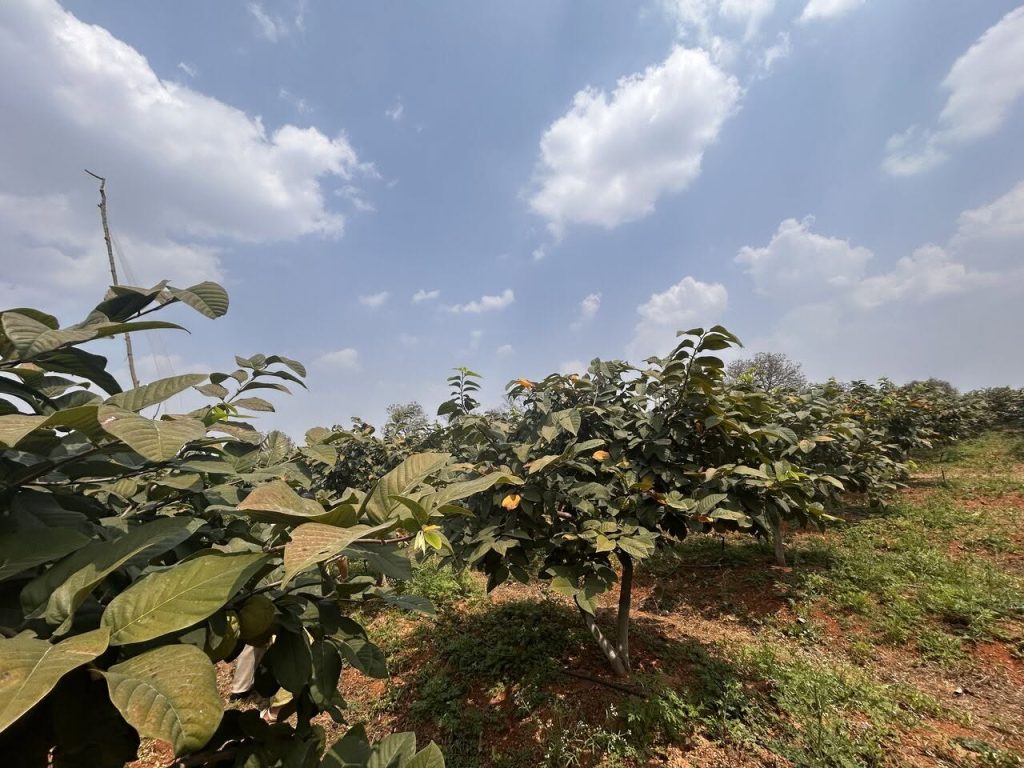
Custard Apple Farm from Fruit Africa Veriplant Nursery
Custard Apple Climate and Soil Requirements
Custard apple needs warmth. The tree grows best at temperatures between 23 and 27 degrees Celsius. It tolerates 7 degrees at the low end and 34 degrees at the high end. Below 7 degrees, the tree suffers. Frost kills young trees and damages mature ones.
Rainfall should range from 600 to 2,200 millimetres per year. The optimal range is 1,200 to 1,400 millimetres. The tree does not tolerate drought. If your area has a long dry season, you need irrigation. Custard apple also dislikes waterlogged soil. Roots rot when they sit in water.
Soil should be well-drained. The tree grows in sand, loam, and red soil. Soil pH from 5.0 to 8.0 suits the tree. That range is wider than mango or avocado. Heavy clay that holds water does not work. Low spots where water collects after rain do not work.
The tree prefers full sun but tolerates partial shade when young. Young seedlings benefit from light shade during the first months after planting. Mature trees need full sun for good fruit production.
Custard Apple Spacing and Trees Per Acre
Spacing is a decision that affects the orchard for decades. Get it wrong, and you live with the consequences.
The mathematical calculation for trees per acre is simple. One acre is about 4,047 square metres. Divide that by the area each tree occupies at your chosen spacing.
At 4 metres by 5 metres, each tree occupies 20 square metres. 4,047 divided by 20 gives about 202 trees. That is the theoretical maximum before you allow for roads, boundaries, and turning space. In practice, you fit fewer. A realistic figure for 4 by 5 metre spacing is around 180 to 200 trees per acre.
- At 5 metres by 5 metres, each tree occupies 25 square metres. 4,047 divided by 25 gives about 162 trees. After allowing for access paths, you might fit 140 to 150 trees.
- At 6 metres by 5 metres, each tree occupies 30 square metres. 4,047 divided by 30 gives about 135 trees. Practical planting gives around 120 to 130 trees.
- At 6 metres by 6 metres, each tree occupies 36 square metres. 4,047 divided by 36 gives about 112 trees. Practical planting gives around 100 to 110 trees.
- At 8 metres by 5 metres, each tree occupies 40 square metres. 4,047 divided by 40 gives about 101 trees. Practical planting gives around 90 to 100 trees.
The spacing you choose depends on several factors. Tree vigour matters. A vigorous variety with a large canopy needs wider spacing. A compact variety can be planted closer. Soil fertility also matters. Rich soil produces larger trees, so wider spacing helps. Poor soil produces smaller trees, so closer spacing works.
Irrigation affects spacing. If you have reliable irrigation, trees grow larger and need more room. If you rely on rainfall, trees stay smaller and you can plant closer.
Your management plan also matters. If you plan to prune regularly and keep trees small, you can plant closer. If you want large trees with minimal pruning, go wider. Your harvesting method matters too. If you plan to use machinery or carts in the orchard, you need wider rows.
Finally, consider the market. If you are selling fresh fruit, you want large, well-coloured fruit. Wider spacing gives trees more light and nutrients, which improves fruit size. If you are selling to processors who do not care about fruit size, closer spacing gives you more fruit per acre.
| Spacing | Theoretical trees per acre | Practical trees per acre | Management notes |
|---|---|---|---|
| 4 x 5 m | 202 | 180-200 | Close spacing, good for compact varieties, needs regular pruning |
| 5 x 5 m | 162 | 140-150 | Balanced spacing, suitable for most farmers |
| 6 x 5 m | 135 | 120-130 | Good air movement, easier management |
| 6 x 6 m | 112 | 100-110 | Wider spacing, suits vigorous varieties |
| 8 x 5 m | 101 | 90-100 | Very wide, suits large trees and mechanised orchards |
Land Preparation and Planting Holes
Good land preparation gives your seedlings a strong start. The work you do before planting determines how well the trees establish.
Start by clearing the land. Remove weeds, bushes, and old crop residues. Custard apple has shallow roots and does not compete well with grass and weeds. If you leave weeds, they will take water and nutrients from your young trees.
Plough the land once to loosen the soil. If you have a hardpan close to the surface, break it so roots can push down. Custard apple roots need to spread, and compacted soil stops them.
Test your soil before planting. A soil test tells you the pH and nutrient status. If the pH is below 5.0, you may need lime. If phosphorus is low, you may need to add rock phosphate. Do not guess. A soil test costs little and saves money on unnecessary inputs.
Dig planting holes. The size depends on the seedling and the soil. For most conditions, holes 60 centimetres wide and 60 centimetres deep work well. If your soil is heavy clay, dig wider holes to give roots more room. If your soil is sandy, the standard size is fine.
Mix the topsoil you removed with well-rotted manure. Use 10 to 20 kilograms of manure per hole. Do not use fresh manure. Fresh manure burns roots and attracts pests. Well-rotted manure is dark, crumbly, and smells earthy.
If your soil test shows high acidity, add lime to the hole and mix it with the soil. Lime raises pH and provides calcium. Do not add lime unless the soil test says you need it. Too much lime causes other problems.
How to Plant Custard Apple Seedlings
Plant at the start of the rains if you rely on rainfall. If you have irrigation, you can plant any time, but avoid the hottest and driest months.
Water the seedling well before removing it from the bag. This keeps the root ball intact. Cut the bag open carefully. Do not pull the seedling out by the stem. Support the root ball with your hand and slide the bag off.
Place the seedling in the hole so the top of the root ball sits level with the surrounding soil. Do not bury the stem deeper than it was in the nursery. Deep planting causes stem rot and slows growth.
Fill the hole with the soil and manure mix. Press gently around the root ball to remove air pockets. Do not stamp on the soil. Hard soil stops roots from breathing and water from draining.
Water the seedling immediately after planting. A good soak settles the soil and gives the roots moisture. Apply mulch around the base of the tree, leaving a gap of a few centimetres between the mulch and the stem. Mulch touching the stem causes rot. Mulch conserves moisture, suppresses weeds, and keeps soil temperature stable.
If your area experiences strong winds, stake the seedling for the first year. A stake keeps the tree upright and prevents root disturbance. Remove the stake after the first year when the roots have established.
Watering Custard Apple Trees
Custard apple needs water, especially during the first year and during flowering and fruit development.
Young trees need consistent moisture. The roots are shallow and dry out quickly. Check the soil around the base of the tree. If the top few centimetres are dry, water. In hot weather, you may need to water every two to three days. In cooler weather, less often. The key is to check the soil, not follow a fixed schedule.
Mature trees also need water, but they can tolerate short dry periods better than young trees. The critical period is flowering and fruit development. Water stress during this time causes fruit drop and small fruit. If you have irrigation, water regularly during this period. If you rely on rainfall, hope for rain, or find a way to irrigate.
Drip irrigation is the best method for custard apple. It delivers water slowly to the root zone, keeps moisture consistent, and reduces water waste. If you use furrow or flood irrigation, do not let water sit around the base of the tree. Custard apple roots rot in waterlogged soil.
Mulch helps conserve moisture. A layer of dry grass, straw, or crop residues around the base of the tree reduces evaporation from the soil. Mulch also suppresses weeds and adds organic matter as it decomposes.
Watch for signs of water stress. Wilting leaves, yellowing leaves, and fruit drop are signs that the tree needs water. Watch for signs of overwatering too. Yellowing leaves, root rot, and stunted growth can mean the soil is too wet. Adjust your watering based on what the tree shows you.
Fertilizer and Nutrient Management
Custard apple does not need heavy fertilizer, but it responds to good nutrition. The key is to feed the tree what it needs, when it needs it.
Start with organic matter. Manure and compost improve soil structure, water-holding capacity, and nutrient availability. Apply manure around the drip line once or twice a year. Do not pile manure against the trunk. Keep it a few centimetres away to prevent rot.
For young trees, apply small amounts of fertilizer after the first three months. The manure in the planting hole carries the seedling through the first months. After that, apply a balanced fertilizer at low rates. A handful of compound fertilizer around the drip line every two to three months is enough. Do not over-fertilize young trees. Too much nitrogen encourages leafy growth at the expense of root development.
For mature trees, fertilizer needs increase when the tree starts fruiting. Potassium and phosphorus support flowering and fruit development. Apply a fertilizer blend with higher potassium during the fruiting season. Nitrogen supports leafy growth, but too much nitrogen reduces fruit quality. Balance is important.
Watch the leaves for signs of deficiency. Yellow leaves suggest nitrogen shortage. Purple-tinged leaves suggest phosphorus shortage. Yellowing between the veins suggests magnesium or iron shortage. Small fruit with poor colour suggests potassium shortage. If you see these signs, adjust your fertilizer programme. A leaf tissue test can tell you exactly what the tree needs, but visual observation is a good starting point.
Do not fertilize during the dry season when the tree is not growing. Fertilizer applied when the tree is dormant is wasted or worse, it burns roots. Fertilize when the tree is actively growing and producing new leaves.
Pruning and Canopy Management
Pruning shapes the tree, improves airflow, and makes harvesting easier. Without pruning, custard apple grows into a dense bush with fruit hidden inside the canopy.
Start training young trees early. The goal is an open-centred tree with three to four main branches. Remove branches that grow inward, cross each other, or rub against each other. These branches create wounds that invite disease.
As the tree matures, continue removing dead, diseased, and crossing branches. Open the canopy so light reaches the inner branches and air moves through. Good airflow reduces fungal diseases. Light penetration improves fruit colour and sugar content.
Control tree height. A tree that grows too tall is difficult to harvest. Keep trees at two to three metres by cutting back the central leader and upper branches. This also makes spraying and pruning easier.
Prune after harvest, not before. Custard apple flowers on new growth. If you prune too early, you remove the wood that would carry the next crop. Wait until the harvest is finished, then prune to shape the tree and encourage new growth.
Remove and destroy diseased prunings. Do not leave them in the orchard. They harbour pests and diseases that can infect healthy trees.
Custard Apple Flowering and Pollination
Custard apple flowers are unusual. They are greenish-yellow, with three fleshy petals. The flowers have both male and female parts, but they mature at different times. This timing difference makes pollination tricky.
The flowers produce a strong scent that attracts beetles and other insects. These insects carry pollen from flower to flower. But natural pollination is often poor. Only a small percentage of flowers set fruit. Many flowers drop without setting.
Several factors affect pollination. High temperatures and low humidity reduce pollen viability. Rain during flowering washes pollen away. Wind dries out the pollen. If your area experiences these conditions during flowering, fruit set will be low.
You can improve fruit set by encouraging pollinators. Avoid spraying insecticides during flowering. Plant flowering plants near the orchard to attract bees and beetles. If natural pollination is poor, hand pollination can help. Use a small brush to transfer pollen from one flower to another. Hand pollination is labour-intensive, but it can increase fruit set significantly.
Fruit drop is common in custard apple. The tree sets more fruit than it can carry, and it drops the excess. Some fruit drop is normal. But excessive drop can be caused by water stress, nutrient deficiency, or poor pollination. If your tree drops most of its fruit, check your watering and nutrition, and consider hand pollination.
Custard Apple Pests and Diseases
Custard apple has few serious pests, but the ones that appear cause real damage.
Fruit flies are the worst problem. They lay eggs on the fruit skin. The eggs hatch into larvae that eat the flesh inside. The fruit rots and falls. Fruit flies are attracted to ripe fruit, so harvest on time. Do not leave overripe fruit on the tree or on the ground. Use fruit fly traps to monitor and reduce populations. Bagging fruit as it swells can protect it from flies. A paper bag or cloth bag tied around the fruit keeps the flies off.
Mealybugs and scale insects feed on leaves and young shoots. They produce honeydew, which attracts ants and sooty mould. Small numbers do little damage, but large numbers weaken the tree. Prune out heavily infested branches. Control ants, because they protect mealybugs from natural enemies. If you need to spray, use insecticidal soap or horticultural oil. These are safer than harsh chemicals.
Root rot is the most dangerous disease. It strikes in poorly drained soil. The tree wilts, leaves turn yellow and drop, and the roots turn black and mushy. Once root rot sets in, saving the tree is difficult. Prevention is the only reliable strategy. Plant in well-drained soil. Do not overwater. Do not plant in low spots where water collects.
Anthracnose appears in wet weather. Dark spots form on leaves and fruit. The spots spread and cause fruit rot. Prune for airflow to reduce humidity in the canopy. Remove and destroy infected fruit. If the problem is severe, apply a copper-based fungicide according to label instructions.
How Long Custard Apple Takes to Fruit
Trees from selected mother trees fruit in two to three years. Ordinary seed-raised trees take four to five years.
The exact timing depends on several factors. Tree health matters. A healthy tree with good nutrition and water fruits earlier. A stressed tree delays fruiting. Climate matters. Warm temperatures speed up growth and fruiting. Cool temperatures slow it down. Management matters. A tree that is pruned, fertilized, and watered correctly fruits earlier than a neglected tree.
Do not expect a full crop in the first fruiting year. A tree may produce ten to twenty fruits in year three. The yield increases each year until the tree reaches maturity at year five to seven. From then on, the tree gives a steady crop each year for twenty to thirty years.
Custard Apple Yield Per Tree
Yield per tree varies widely. The species and variety matter. Some varieties are heavy bearers. Others produce less. Tree age matters. A young tree produces less than a mature tree. Management matters most. A well-managed tree produces more than a neglected one.
Under good conditions, healthy trees can produce up to 45 kilograms per year. Under average management, a mature tree might produce 20 to 40 kilograms per year. Under poor management, yields drop to 10 to 20 kilograms.
Yield also varies by season. Custard apple tends to bear heavily one year and lightly the next. This alternate bearing pattern is common in many fruit trees. Plan for it. Do not assume every year will be a heavy crop year.
Custard Apple Yield Per Acre
Yield per acre depends on the number of trees and the yield per tree. If you plant 150 trees per acre and each tree produces 30 kilograms, you get 4,500 kilograms per acre. That is 4.5 tonnes. If each tree produces 40 kilograms, you get 6,000 kilograms, or 6 tonnes.
These figures are for mature trees in full production. Young trees produce less. In year three, you might get a few hundred kilograms per acre. In year four, one to two tonnes. In year five, three to four tonnes. From year six onward, the orchard reaches full production.
Some farmers plant denser and get higher yields per acre. But denser planting means more trees to manage, more competition for water and nutrients, and more disease pressure. Higher density does not automatically mean higher profit. The extra costs of management may eat the extra revenue.
Harvesting Custard Apple
Custard apple must ripen on the tree. Fruit picked hard and green does not ripen well. It stays hard, or it ripens unevenly, with poor flavour.
How do you know when the fruit is ready? The skin colour changes from green to yellow-green or yellow-brown. The gaps between the scales widen. The fruit feels slightly soft when you press it gently. Some varieties split open when ripe, which is a sign of full maturity.
Harvest by hand or with clippers. Turn the fruit gently. If it comes away easily, it is ready. Do not pull hard. Pulling tears the stem and opens the fruit to rot. Leave a short piece of stem attached. This helps the fruit keep longer.
Ripe fruit softens quickly. If you leave it on the tree too long, it falls. Fruit on the ground is still edible if it is not damaged, but it does not sell well. Check the trees every day during the harvest season.
Post-Harvest Handling and Storage
Custard apple is a delicate fruit. It bruises easily and has a short shelf life. How you handle it after harvest determines how much you can sell and at what price.
Sort the fruit immediately after harvest. Remove damaged, diseased, and overripe fruit. Separate the fruit by size and ripeness. Uniform fruit sells for a better price than mixed fruit.
Do not pile fruit deep. The weight of the fruit on top bruises the fruit below. Use shallow containers. Line the containers with soft material to cushion the fruit. Do not drop fruit into containers. Place it gently.
Store fruit in a cool, shaded place. Direct sun heats the fruit and speeds ripening. A ventilated room or shed works well. Do not store fruit in sealed plastic bags. The fruit needs air circulation.
Custard apple shelf life is short. Ripe fruit stays good for two to three days at room temperature. Refrigeration extends shelf life, but custard apple is sensitive to cold. Temperatures below 12 degrees Celsius cause chilling injury. If you have a cool room or refrigerator, store fruit at around 12 degrees Celsius. This can extend shelf life to one or two weeks.
Transport fruit carefully. Pack containers so they do not shift during transport. Use a vehicle with good suspension. Rough roads bruise fruit. If you are transporting a long distance, use a refrigerated vehicle if possible. If not, transport in the coolest part of the day.
Post-harvest losses are a major problem in custard apple. Fruit flies, bruising, and over-ripening cause losses. Good handling reduces these losses. Sell fruit as soon as possible after harvest. Do not hold fruit hoping for a better price. The fruit may rot before the price improves.
Custard Apple Market in Kenya
The market for custard apple in Kenya is growing. More consumers know the fruit. More supermarkets stock it. But the market is still developing, and you need to find your buyers before you plant a large orchard.
Farm-gate buyers collect fruit from the farm. They pay KSh 80 to KSh 130 per kilogram, depending on the season and fruit quality. Prices are higher in the off-season when supply is low. Prices are lower during peak harvest when many farmers are selling at the same time.
Local markets are the most common outlet for small-scale farmers. You sell fruit by the piece or by the kilogram. One fruit sells for KSh 50 to KSh 80 in a busy market. If you have a good location and fresh fruit, you can sell your harvest in a day.
Supermarkets and high-end retail pay more. Prices run from KSh 200 to KSh 250 per kilogram and above. Individual fruits in Nairobi shops sell for up to KSh 300 each. But supermarkets want uniform fruit size, good appearance, and steady supply. If you cannot deliver consistent quality and volume, they will not buy from you.
Online grocery platforms sell custard apple at prices close to supermarket rates. They list individual rates around KSh 249 per kilogram. If you can supply these platforms, you get a good price, but you need packaging and delivery systems.
Processors buy fruit for juice, jam, and ice cream. They pay less per kilogram than fresh market buyers, but they buy in bulk. One order can take hundreds of kilograms. If you have fruit that does not meet fresh market standards, processors are an option.
Export is the highest-value market, but also the most demanding. The Middle East and Europe buy custard apple. Export requires phytosanitary compliance, cold storage, and packaging that meets international standards. Small farmers cannot export alone. Cooperatives or companies handle export.
How to Sell Custard Apple
Selling custard apple requires planning. You cannot wait until harvest and then look for buyers. Start finding buyers before you plant.
Visit local markets. Talk to fruit vendors. Ask what they pay and what quality they want. Visit supermarkets and ask to speak to the produce manager. Ask what quantities they buy and what price they pay. Talk to hotels and restaurants that serve fruit platters or desserts. They may buy directly from you.
Understand the difference between retail price and farm-gate price. The supermarket sells custard apple at KSh 200 to KSh 250 per kilogram. That does not mean you get that price. The supermarket deducts transport, packaging, spoilage, and its own margin. Your farm-gate price is lower, often much lower. Do not expect to receive the retail price.
If you want a higher price, you need to add value or sell directly to consumers. Selling at a farmers’ market or through a WhatsApp group gives you a better price than selling to a wholesaler. But it takes time and effort. You are trading your time for a better price.
Build relationships with buyers. A buyer who trusts you and knows your fruit quality will pay a fair price and buy from you regularly. Do not chase the highest price one time and disappear. Build a reputation for quality and reliability.
Custard Apple Value Addition
Value addition turns custard apple into products that last longer and sell for more. But value addition requires investment, skill, and market planning.
Custard apple pulp is the starting point for most products. To make pulp, you harvest ripe fruit, wash it, peel it, and remove the seeds. The flesh is blended or pressed into a smooth pulp. The pulp can be frozen or processed further.
Custard apple juice is popular. The pulp is diluted with water, sweetened if needed, and bottled. The juice needs to be pasteurized or preserved to keep it safe. Juice has a short shelf life unless it is refrigerated or treated.
Jam and jelly are made by cooking the pulp with sugar and pectin. The sugar preserves the fruit, and the product lasts for months in sealed jars. Jam and jelly sell well in local markets and supermarkets.
Ice cream and yoghurt are made by mixing custard apple pulp into the base. The fruit flavour blends well with dairy. These products need refrigeration and a cold chain to reach consumers.
Dried custard apple is another option. The fruit is sliced and dried in the sun or in a dehydrator. Dried fruit lasts for months and is easy to transport. The market for dried fruit is smaller than for fresh fruit, but it exists.
Value addition requires food safety and hygiene. You need a clean workspace, clean equipment, and safe packaging. If you are selling to supermarkets or processors, you may need certifications. Start small and learn the process before investing in large-scale processing.
Cost of Establishing Custard Apple Per Acre
Establishment costs depend on your choices. The following figures are estimates. Your actual costs will vary based on local prices, labour rates, and the inputs you choose.
Seedlings are the largest single cost. If you plant 150 trees per acre and pay KSh 350 per seedling, seedling cost is KSh 52,500. If you plant 200 trees, seedling cost is KSh 70,000. If you buy cheaper seedlings at KSh 200, the cost is lower, but you may get trees with variable quality.
Land preparation includes ploughing, harrowing, and digging holes. If you hire labour, budget KSh 15,000 to KSh 25,000 per acre.
Manure and compost cost money if you buy them. If you have livestock, you may have manure available. If you buy, budget KSh 10,000 to KSh 20,000 per acre.
Fertilizer for the first year costs KSh 10,000 to KSh 15,000. You need less fertilizer in the first year than in later years.
Irrigation infrastructure is a major cost if you install drip lines. A drip system costs KSh 60,000 to KSh 100,000 per acre, depending on the system. If you water by hand, you save this cost but spend more on labour.
Labour for planting, watering, weeding, and applying manure in the first year costs KSh 30,000 to KSh 50,000.
Fencing to keep out livestock costs KSh 20,000 to KSh 50,000 depending on materials.
Tools and equipment cost KSh 10,000 to KSh 20,000 if you need to buy them.
First-year total. If you do everything, the first year costs about KSh 200,000 to KSh 300,000 per acre. Some farmers spend more when they add dense planting and full irrigation. You can reduce the cost if you skip irrigation and rely on rain, but that raises your risk.
From year two onward, yearly maintenance runs KSh 50,000 to KSh 80,000. That covers fertilizer, pest control, pruning, and harvest labour.
Custard Apple Farming Profit Per Acre
Let us work through the numbers. Spacing 6 by 5 metres, about 130 trees per acre.
Yield assumptions:
- Year three: 5 kilograms per tree, 130 trees = 650 kilograms
- Year four: 15 kilograms per tree, 130 trees = 1,950 kilograms
- Year five: 25 kilograms per tree, 130 trees = 3,250 kilograms
- Year six onward: 35 kilograms per tree, 130 trees = 4,550 kilograms
Price assumption:
-
Farm-gate price at KSh 100 per kilogram. This sits in the middle of the KSh 80 to KSh 130 range.
-
If you sell through supermarkets or retail, you get more, but you handle packaging, transport, and buyer relationships.
Revenue at farm-gate price KSh 100:
- Year three: 650 x 100 = KSh 65,000
- Year four: 1,950 x 100 = KSh 195,000
- Year five: 3,250 x 100 = KSh 325,000
- Year six onward: 4,550 x 100 = KSh 455,000
Costs:
-
First year: KSh 250,000
-
Year two to year three maintenance: KSh 60,000 per year, so KSh 120,000 over two years
-
Year three harvest labour: KSh 20,000
Year three revenue is KSh 65,000. Costs for that year, including maintenance and harvest, come to KSh 80,000. Net loss is KSh 15,000. You have not recovered the first two years of investment.
Year four revenue is KSh 195,000. Costs KSh 80,000. Net gain KSh 115,000. By this year, total investment stands at KSh 450,000. Total revenue collected stands at KSh 260,000. You are still behind.
Year five revenue is KSh 325,000. Costs KSh 80,000. Net gain KSh 245,000. Cumulative revenue reaches KSh 585,000. Cumulative costs reach KSh 530,000. You start to recover your money.
From year six onward, the orchard gives KSh 375,000 net per year at these assumptions.
Conservative and higher scenarios:
| Scenario | Trees per acre | Yield per tree | Yield per acre | Price (KSh/kg) | Annual revenue (KSh) |
|---|---|---|---|---|---|
| Conservative | 130 | 25 kg | 3,250 kg | 80 | 260,000 |
| Moderate | 130 | 35 kg | 4,550 kg | 100 | 455,000 |
| Higher | 200 | 35 kg | 7,000 kg | 130 | 910,000 |
These figures are planning scenarios, not guaranteed returns. Actual yields depend on management, weather, and pest pressure. Actual prices depend on the market and the season. Use these numbers to think through the economics, not to predict your exact income.
If you sell through supermarkets at KSh 200 and above:
Supermarket prices double the farm-gate figure. Even after transport and packaging take their share, net income rises well above farm-gate sales. But supermarket supply is not easy. You need steady volumes, good packaging, and a relationship with the buyer.
Is Custard Apple Farming Commercially Viable in Kenya?
Custard apple farming can be viable in Kenya, but it is not a guaranteed money-maker. Several factors determine whether you succeed.
The advantages are real. The fruit has a growing market. Supermarkets stock it. Consumers like it. The tree suits small farms and does not need the heavy management that mango or avocado require. Value addition through juice, jam, and pulp offers additional income.
The challenges are also real. The market is still developing. Not every supermarket buys custard apple. Not every consumer knows the fruit. You may need to create demand in your area. The fruit is perishable. It bruises easily and has a short shelf life. You need to sell quickly after harvest or process the fruit.
Pollination can be unreliable. Fruit set is often poor without hand pollination. That adds labour. Pests, especially fruit flies, cause losses. Root rot kills trees in poorly drained soil.
Commercial success requires careful planning. Choose the right site. Use good seedlings from known mother trees. Manage water and nutrition. Control pests. Find buyers before you plant a large orchard. Start small and expand as you learn.
Growing Custard Apple on a Small Farm
Custard apple suits small farms. The tree does not need much space, and the management is manageable for one person.
If you have 10 trees, you can produce enough fruit for your family and sell the surplus to neighbours or at the local market. Ten trees at 20 kilograms per tree gives 200 kilograms. At KSh 100 per kilogram, that is KSh 20,000. Not a fortune, but useful income.
If you have 50 trees, you can supply a local market or a few regular customers. Fifty trees at 30 kilograms per tree gives 1,500 kilograms. At KSh 100 per kilogram, that is KSh 150,000.
If you have 100 trees, you have a small commercial orchard. One hundred trees at 35 kilograms per tree gives 3,500 kilograms. At KSh 100 per kilogram, that is KSh 350,000.
If you have half an acre at 6 by 5 metre spacing, you fit about 65 trees. At 35 kilograms per tree, that is 2,275 kilograms. At KSh 100 per kilogram, that is KSh 227,500.
One acre at 6 by 5 metre spacing gives about 130 trees. At 35 kilograms per tree, that is 4,550 kilograms. At KSh 100 per kilogram, that is KSh 455,000.
These are mature orchard figures. The first three years give little or no income. Plan for that.
Growing Custard Apple in Containers
Custard apple can be grown in containers, but the tree stays small and the fruit production is limited. This suits home gardeners who want fresh fruit, not commercial growers.
Use a deep container, at least 60 centimetres deep and 50 centimetres wide. The taproot needs room to grow down. A shallow container restricts root development and stunts the tree.
Use a potting mix that drains well. Mix garden soil with compost and sand or perlite. The medium should hold moisture but not stay soggy.
Place the container in full sun. Custard apple needs light for good growth and fruit production. A balcony or courtyard with at least six hours of direct sun works.
Water regularly. Container soil dries faster than field soil. Check the soil daily during hot weather. Water when the top few centimetres are dry.
Fertilize lightly. Container plants need regular feeding because nutrients leach out with watering. Use a balanced liquid fertilizer every two to four weeks during the growing season.
Prune to keep the tree compact. Remove dead or crossing branches. Control height so the tree does not outgrow its space.
Expect limited fruit. A container-grown custard apple may produce a few fruits per year, or none at all if conditions are not right. Do not expect commercial yields from a container.
Custard Apple Nutrition and Health Benefits
Custard apple flesh tastes good and carries useful nutrition. It contains vitamin C, which supports normal immune function. It has B vitamins that help the body turn food into energy. It provides potassium, magnesium, and calcium. It also gives dietary fibre, which supports digestion.
The flesh contains natural plant compounds, including antioxidants, in the same way most fresh fruit does. Eating a variety of fruit supports general health. The seed is toxic and should not be eaten. The flesh is safe.
Custard apple is food, not medicine. It does not cure disease or replace treatment from a doctor. Claims that it lowers blood pressure, treats diabetes, or fights cancer do not have enough evidence behind them. If you are sick, see a doctor. Do not rely on fruit.
For a farmer, nutrition is a selling point. You can tell buyers the fruit is sweet, aromatic, and nutritious. Children and older people enjoy it. But do not market it as a medicine. Sell it honestly as good fruit, and your business will last.
Buying Custard Apple Seedlings for Export
International buyers who want custard apple seedlings from Fruit Africa Veriplant can request a quotation by email or WhatsApp. Provide the number of seedlings, the preferred type, the destination country, the destination city, and any planting material requirements.
Fruit Africa Veriplant replies with details on freight, documentation, logistics, and estimated timeframe. Freight prices and delivery times depend on destination and order size. There is no flat rate. Phytosanitary requirements and import permits vary by country. Confirm the rules in your destination before ordering.
Fruit Africa Veriplant
Phone: 0714 994 444
WhatsApp: https://wa.link/di12my
Email: sales@fruitafrica.org
Contact Us: https://fruitafrica.org/contact-us/
Request for Quotation: https://fruitafrica.org/request-for-quotation/
Frequently Asked Questions About Custard Apple Seedlings
1. How much do custard apple seedlings cost in Kenya?
Custard apple seedlings cost around KSh 350 each. Prices vary by nursery, seedling age, and the source of planting material. Confirm the price before ordering.
2. Where can I buy custard apple seedlings in Kenya?
Fruit Africa Veriplant supplies custard apple seedlings. Contact them for current stock and price. Specialist fruit nurseries in the coastal region, lake basin, and central Kenya also carry the crop.
3. How long do custard apple seedlings take to fruit?
Seedlings from selected mother trees fruit in two to three years. Ordinary seed-raised trees take four to five years.
4. What spacing should I use for custard apple?
Spacing depends on your management. Common choices are 4 by 5 metres, 5 by 5 metres, 6 by 5 metres, and 6 by 6 metres. Wider spacing suits vigorous trees and mechanised orchards.
5. How many custard apple trees fit on one acre?
At 4 by 5 metres, about 180 to 200 trees. At 5 by 5 metres, about 140 to 150 trees. At 6 by 5 metres, about 120 to 130 trees. At 6 by 6 metres, about 100 to 110 trees.
6. How much fruit does one custard apple tree give?
A mature tree under good management gives 20 to 45 kilograms per year. Under poor management, yields drop to 10 to 20 kilograms.
7. How much fruit does one acre of custard apple give?
A mature orchard gives 4 to 6 tonnes per acre under average management. Higher yields are possible with good management and denser planting.
8. What is the farm-gate price for custard apple in Kenya?
Farm-gate price runs from KSh 80 to KSh 130 per kilogram. Prices rise in the off-season and fall during peak harvest.
9. What do supermarkets pay for custard apple?
Supermarkets and retail shops sell custard apple at KSh 200 to KSh 250 per kilogram and above. Individual fruits in Nairobi shops sell for up to KSh 300 each. The farmer does not receive the retail price.
10. When is custard apple ready to harvest?
When the skin turns from green to yellow-green or yellow-brown, the gaps between the scales widen, and the fruit feels slightly soft.
11. How long does custard apple stay fresh after harvest?
Ripe fruit softens in two to three days. Cold storage at around 12 degrees Celsius extends shelf life to one or two weeks.
12. What fertilizer does custard apple need?
Use manure at planting. After three months, apply small amounts of compound fertilizer. Mature trees need potassium and phosphorus for fruit development. Avoid excessive nitrogen.
13. How often should I water custard apple trees?
Young trees need water every two to three days in hot weather. Mature trees need water during flowering and fruit fill. Check the soil and adjust based on conditions.
14. What pests attack custard apple?
Fruit flies cause the most damage. Mealybugs, scale insects, and whiteflies also appear. Root rot is the main disease risk in wet soils.
15. Can custard apple grow in containers?
Yes, but the tree stays small and gives few fruits. Use a deep container, well-drained soil, and full sun. Do not expect commercial yields.
16. Can custard apple grow on a small farm?
Yes. Ten trees give fruit for the family and some surplus. Fifty trees give useful income. One hundred trees give a small commercial orchard.
17. Is custard apple farming profitable in Kenya?
A mature orchard can give KSh 300,000 to KSh 500,000 net per acre per year at farm-gate prices under good management. The first three years give little or no income. Plan for that gap.
18. How long before custard apple farming pays back?
The orchard starts recovering investment in year five and gives steady profit from year six onward. Payback depends on costs and prices.
19. What is custard apple called in Kenya?
Custard apple is known locally as Matomoko. The sugar apple type is also sold under the same name in some markets.
20. Can I export custard apple seedlings from Kenya?
Yes. Fruit Africa Veriplant supplies international buyers. Provide the number of seedlings, type, destination country, destination city, and any planting material requirements. Request a quotation through the contacts above.
Final Advice on Custard Apple Seedlings
Custard apple is not a new crop in Kenya, but commercial growing has only started in recent years. Seedlings cost around KSh 350 each. Spacing at 6 by 5 metres gives about 130 trees per acre. Trees from selected mother trees fruit in two to three years. A mature tree gives 20 to 45 kilograms. One acre gives 4 to 6 tonnes in full production.
Work out the money before you plant. First-year costs run KSh 200,000 to KSh 300,000. Income starts in year three and becomes steady in year six. You need another source of money during the wait.
The market exists. Farm-gate price runs KSh 80 to KSh 130 per kilogram. Supermarkets pay KSh 200 and above. But you must find buyers, keep fruit quality high, and sell ripe fruit within two or three days.
Start with one acre. Manage the trees well. Sell the fruit well. Learn from the first harvest. Then expand.
Fruit Africa Veriplant supplies custard apple seedlings. Contact us for price, stock, and delivery.
Fruit Africa Veriplant
Phone: 0714 994 444
WhatsApp: https://wa.link/di12my
Email: sales@fruitafrica.org
Contact Us: https://fruitafrica.org/contact-us/
Request for Quotation: https://fruitafrica.org/request-for-quotation/



Reviews
There are no reviews yet.