
Description
Cherry Guava Seedlings in Kenya: Price, Varieties, Planting and Profit
Looking for cherry guava seedlings in Kenya? This fruit is also called strawberry guava. It is one of the sweetest guava varieties you can grow. The fruit has a red skin when ripe and the flesh is juicy with a strawberry-like flavour. Farmers who want a hardy tree that does not need much attention are looking at this fruit.
Fruit Africa Veriplant is a trusted source of high-quality cherry guava seedlings in Kenya. With locations in Murang’a, Nairobi, and Embu, the nursery serves farmers across the country. They offer KEPHIS-certified seedlings that are well-hardened and ready for transplanting. Contact Fruit Africa Veriplant at +254714994444 or sales@fruitafrica.org for genuine, high-quality seedlings.
At Fruit Africa Veriplant, our cherry guava seedlings are priced at Ksh400 each. This price reflects the superior quality of our seedlings and the extensive care we put into producing each plant. We understand that farmers invest money into their farms, and we want to give them seedlings that will reward them with high yields and quality fruit for many years.
What Are Cherry Guavas?
Cherry guava is a small tree that stays green all year. It belongs to the same family as the common guava you see everywhere. The tree came from Brazil but it has settled well in Kenyan soils. It grows between 3 and 6 meters tall and produces small round fruits about 2 to 4 centimetres wide.
The fruit has smooth skin that turns red when ripe. There is also a yellow type but the red one is more common. The flesh is juicy and sweet with a taste that reminds people of strawberries. The fruit has many small seeds inside that you can eat.
The tree is tough. It grows in many soil types as long as water does not stay around the roots. It can handle short dry periods and it tolerates cold better than the common guava. This is why farmers in many parts of Kenya can grow it.
Cherry guava trees also have attractive bark that peels off in thin layers. The leaves are glossy and dark green. The tree produces white flowers that are fragrant and attract bees. These flowers later turn into the small red fruits.
Cherry Guava Seedlings in Kenya
Cherry guava seedlings in Kenya are becoming more common. Farmers are starting to grow this fruit and sell it. More people are asking for cherry guava seedlings in Kenya because they have heard about the good prices this fruit fetches.
When you buy cherry guava seedlings in Kenya, always check for KEPHIS certification. This tells you the seedlings are clean and free from diseases. Also look at the roots. They should be white or light brown, not dark or rotten. The seedlings should be hardened before you take them to the field.
Fruit Africa Veriplant has good cherry guava seedlings in Kenya. Our seedlings come from elite mother trees that produce well. This means your trees will have good genetics from the start. They will produce more fruit and stay healthier.
Our seedlings are grown in clean conditions. They are free from pests and diseases. They are also uniform, which means all your trees will grow at the same rate. This makes management easier because you can do everything at the same time.
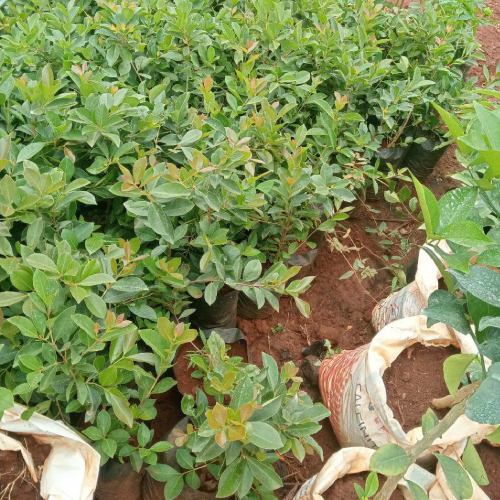
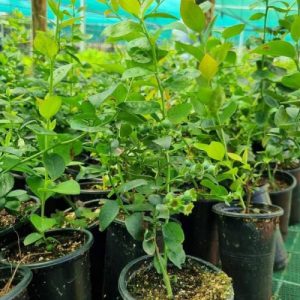
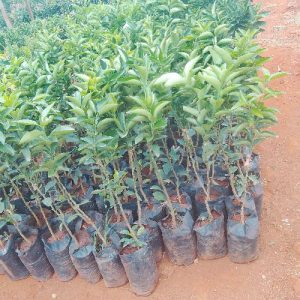
The seedlings we sell are about 6 to 12 months old. They are ready for transplanting. The root system is well developed. The stem is straight and strong. The leaves are green and healthy.
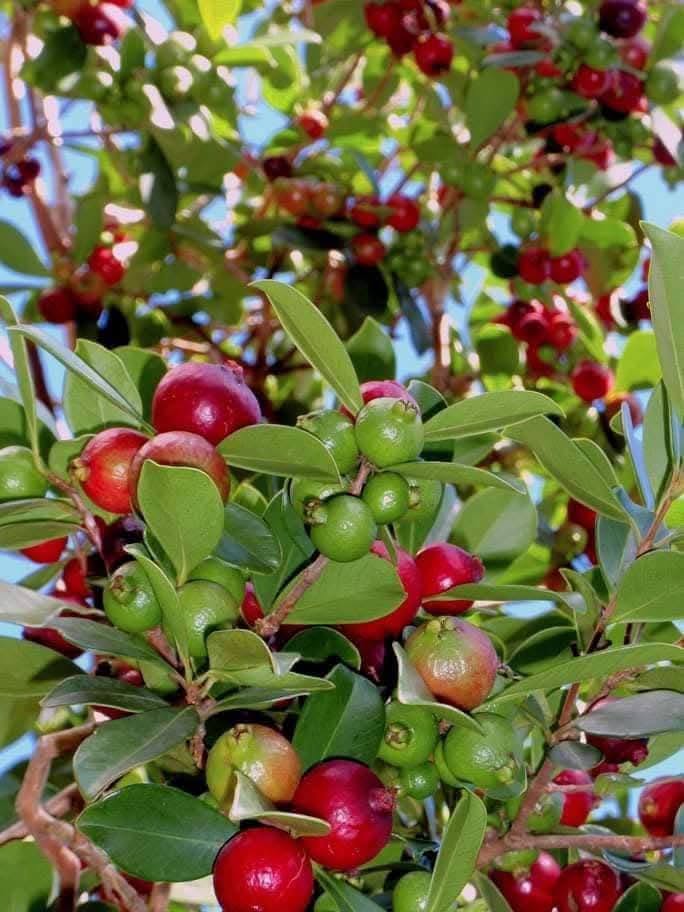
Cherry Guava Fruits on a Tree
Cherry Guava Seedlings Price in Kenya
The price of cherry guava seedlings in Kenya depends on the nursery you buy from. At Fruit Africa Veriplant, our cherry guava seedlings are priced at Ksh400 each. This is a fair price for KEPHIS-certified seedlings that are well-rooted and hardened.
| Item | Details |
|---|---|
| Crop | Cherry Guava |
| Seedling price | Ksh 400 |
| Available varieties | Red Cherry Guava, Yellow Cherry Guava |
| Suitable areas | Central, Rift Valley, Eastern, Coastal, Western |
| Soil pH | 5.5 to 7.0 |
| Recommended spacing | 4m x 4m |
| Population per acre | 250 trees |
| Irrigation | Recommended during dry periods |
| First production | 2 to 3 years after planting |
When you compare cherry guava seedlings price in Kenya, think about quality. Cheap seedlings may not be certified. They may have poor genetics. This leads to low yields and more disease problems. The cherry guava seedlings price in Kenya from Fruit Africa Veriplant gives you value for money.
Our cherry guava seedlings price in Kenya is Ksh400 each. This is for well-rooted, hardened, KEPHIS-certified seedlings. We deliver to farmers across the country. Contact us for bulk pricing.
If you buy 500 or more seedlings, we give a discount. Call us to discuss your order. We also offer delivery to your farm. The delivery cost depends on your location.
Cherry Guava Spacing and Population Per Acre
Spacing is important for cherry guava farming. The recommended spacing is 4 metres between rows and 4 metres between plants. This gives you about 250 trees per acre.
The calculation is simple. One acre has about 4,047 square metres. At 4 by 4, each tree gets 16 square metres. Divide 4,047 by 16 and you get approximately 250 trees.
Some farmers use closer spacing of 3 metres by 3 metres. This gives about 450 trees per acre. The trees will compete more for water and nutrients. You need to manage them more carefully.
Wider spacing of 5 metres by 5 metres gives about 160 trees per acre. This gives each tree more room but you have fewer trees.
| Spacing | Population per Acre | Suitability |
|---|---|---|
| 4m x 4m | 250 trees | Standard recommendation |
| 3m x 3m | 450 trees | High density |
| 5m x 5m | 160 trees | Wider spacing |
The spacing you choose affects your yield. Closer spacing gives more trees but each tree produces less fruit. Wider spacing gives fewer trees but each tree produces more fruit. The total production is often similar.
Where Cherry Guavas Grow Best in Kenya
Cherry guavas grow in many parts of Kenya. They do not need special conditions. They adapt to different climates and soils.
Central Kenya: Kiambu, Murang’a, Nyeri, Kirinyaga. These places have good weather for cherry guavas. The altitude is between 1,200 and 2,000 meters. The temperatures are moderate.
Rift Valley: Nakuru, Laikipia, Kericho, Nandi. The weather here is also good for this tree. These areas have cool nights and warm days.
Eastern Regions: Embu, Meru, Machakos, Makueni. These areas have warm temperatures. The rainfall is adequate in most parts.
Coastal Kenya: Kilifi, Kwale, Mombasa. The warm, humid weather suits the tree. The tree grows well at low altitudes.
Western Kenya: Kakamega, Bungoma, Kisii, parts of Kisumu. These areas have good rainfall and warm temperatures.
The tree can also grow in other areas. If you are not sure whether your area is suitable, talk to an agricultural officer. They can advise you.
Climate Requirements
Cherry guavas like warm weather. The best temperature is between 18 and 28 degrees Celsius. The tree can handle short periods of cool weather but frost will kill it.
Rainfall should be between 900 and 1,500 mm per year. The tree can handle short dry periods but it produces better with regular water. If you live in a dry area, you will need to irrigate.
The tree also needs sunlight. Plant it in an open area where it gets full sun. Shade will reduce fruit production.
Altitude Requirements
The best altitude for cherry guavas is 1,200 to 2,400 meters above sea level. The tree can grow at lower and higher elevations as long as the weather is not too cold or too hot.
At higher altitudes, the fruit may take longer to ripen. At lower altitudes, the tree may need more water. Choose a location that suits your area.
Soil Requirements
Cherry guava trees grow in many soil types. Sandy soil, loamy soil, and clay soil all work as long as water drains away. The best soil pH is between 5.5 and 7.0. Add manure or compost to improve the soil. Avoid areas where water stays after rain because the trees will rot.
Test your soil before planting. This helps you know what the soil needs. You can take a soil sample to the Kenya Agricultural and Livestock Research Organization (KALRO) or Farmers Trend Virtual Agrovet for testing.
Land Preparation
Clear the land first. Remove weeds, rocks, and anything else that could get in the way. Plough the land to break up the soil. Make sure water can drain away.
Test your soil before planting. This tells you the pH and nutrient levels. You can then add what the soil needs.
If the soil is too acidic, add lime. If the soil is too alkaline, add sulphur. Follow the recommendations from the soil test.
Cherry Guava Planting Hole Size
Dig holes that are 60 centimetres deep, 60 centimetres wide, and 60 centimetres long. This gives the roots room to spread. Mix the topsoil with 20 kilograms of manure. Put this mixture back into the hole before planting.
The hole should be ready before the rainy season starts. This gives the soil time to settle.
How to Plant Cherry Guava Seedlings
Plant the seedlings at the same depth they were in the nursery. Firm the soil around the roots. Water immediately after planting. Put mulch around the plant to keep the soil moist.
Remove the plastic bag carefully. Do not break the root ball. If the roots are circling, loosen them gently.
Best Time to Plant
The best time to plant cherry guavas is during the rainy season. March to May or October to November are good times. The rain gives the seedlings water to establish themselves. If you have irrigation, you can plant anytime.
Avoid planting during the dry season. The seedlings will struggle without water.
Irrigation Requirements
Young trees need regular water for the first two years. Water every 3 to 4 days during dry spells. Give each tree 15 to 20 litres of water. Mature trees can handle dry periods but they produce better with water during flowering and fruit development. Drip irrigation saves water and works well.
If you are using a hose or bucket, water slowly. Let the water soak into the soil. Do not flood the area.
Fertilizer Requirements
Apply fertilizer twice a year. Do it at the start of the rainy season and again three months later.
For young trees (years 1 to 2): Apply 100 grams of CAN per tree each time. Add 10 kilograms of manure per tree per year.
For mature trees (year 3 onwards): Apply 200 to 250 grams of NPK 17:17:17 per tree each time during the rainy seasons. Add 20 to 30 kilograms of manure per tree per year. Potassium helps with fruit quality.
Spread the fertilizer around the tree. Do not put it directly on the stem. Water after applying fertilizer.
Mulching
Put organic mulch around the base of the tree. Use wood chips, dry grass, or coffee husks. Mulch keeps moisture in the soil. It also stops weeds from growing. As it breaks down, it adds nutrients to the soil. Keep the mulch away from the stem to prevent rot.
Apply mulch twice a year. Add more when it breaks down.
Weed Control
Weeds compete with your trees for water and nutrients. They also bring pests and diseases. Keep the area around trees weed-free for the first two years. Mature orchards need weeding every 2 to 3 months.
You can weed by hand or use a hoe. Be careful not to damage the shallow roots. Mulching also helps control weeds.
Pruning
Pruning shapes the tree and encourages new growth. It also improves air circulation and light penetration. Prune every year during the dry season. Remove dead, diseased, or crossing branches. Thin the canopy to let light in. Keep the tree height at 2.5 to 3 metres for easy harvesting.
Use sharp pruning tools. Clean them between trees to prevent disease spread.
Pests and Diseases
Common Pests
Fruit Flies: These are the biggest problem for cherry guava farmers. They lay eggs in the fruit. The fruit becomes damaged and cannot be sold. Use pheromone traps. Keep the orchard clean.
Aphids: These small insects attack young shoots and leaves. They cause leaves to curl and growth to stop. Use neem oil or insecticidal soap.
Whiteflies: These small insects feed on the underside of leaves. They can spread diseases. Use yellow sticky traps or insecticides.
Scale Insects: These insects feed on plant sap. They weaken the tree. Use horticultural oil or insecticides.
Common Diseases
Guava Wilt: This is a soil-borne disease. It causes the tree to wilt and die. Use resistant varieties. Practice crop rotation.
Root Rot: This happens when the soil stays too wet. Improve drainage. Do not overwater.
Cherry Guava Maturity and Harvest
When Trees Bear Fruit
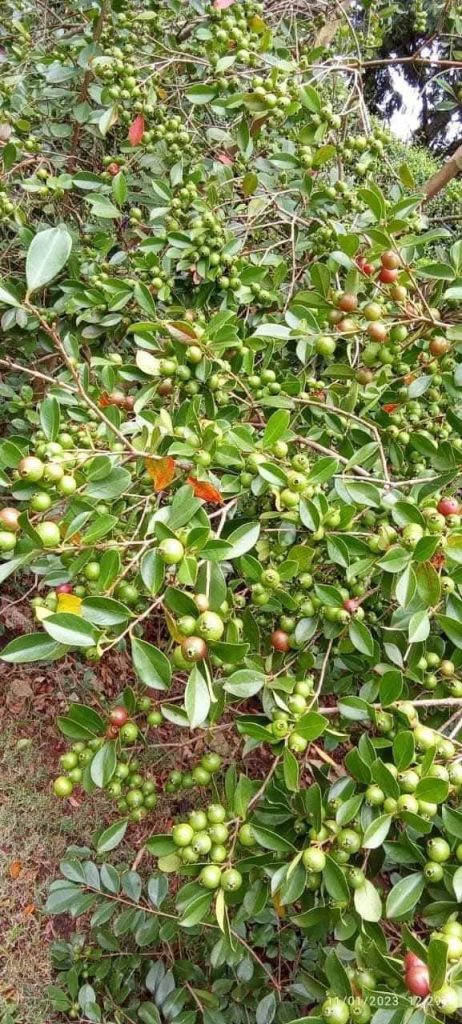
Cherry guava trees start bearing fruit in 2 to 3 years. Full production comes in 6 to 7 years. The tree produces fruit several times a year depending on weather and care.
How to Know When Fruit Is Ready
The fruit is ready when the skin turns red or purple. It should give slightly when you press it. Harvest with scissors or by hand. Handle the fruit carefully because it bruises easily.
Cherry Guava Yield Per Tree
| Year | Expected Yield per Tree (kg) |
|---|---|
| Year 3 | 10 to 15 kg |
| Year 4 | 15 to 20 kg |
| Year 5 | 20 to 25 kg |
| Year 6 | 25 to 30 kg |
| Year 7+ | 30 to 35 kg |
A well-managed tree at peak production yields 30 to 50 kilograms per year.
Cherry Guava Yield Per Acre
At 250 trees per acre, a well-managed farm can produce 7,500 to 12,500 kilograms of fruit per acre per year at peak production. Good management can push this to 8,000 to 10,000 kilograms per acre.
Cherry Guava Farming Cost Per Acre
| Item | Estimated Cost (KES) |
|---|---|
| Seedlings (250 at Ksh400 each) | 100,000 |
| Land Preparation | 20,000 – 50,000 |
| Soil Testing | 5,000 – 10,000 |
| Manure and Compost | 20,000 – 30,000 |
| Planting Labour | 10,000 – 20,000 |
| Irrigation Equipment | 30,000 – 50,000 |
| Mulching Material | 10,000 – 15,000 |
| Fertilizer (first year) | 15,000 – 25,000 |
| Pest and Disease Control | 10,000 – 20,000 |
| Total Establishment Cost | 220,000 – 320,000 |
Cherry Guava Farming Profit Per Acre
| Scenario | Yield (kg) | Price (KES/kg) | Revenue (KES) | Costs (KES) | Profit (KES) |
|---|---|---|---|---|---|
| Low | 7,500 | 150 | 1,125,000 | 220,000 | 905,000 |
| Average | 9,000 | 200 | 1,800,000 | 270,000 | 1,530,000 |
| High | 12,500 | 250 | 3,125,000 | 320,000 | 2,805,000 |
Cherry Guava Market in Kenya
The cherry guava market in Kenya is growing. There are opportunities in many places.
Fresh Fruit: You can sell fresh fruits in local markets and supermarkets. The red colour attracts customers.
Juice and Smoothies: Cherry guava makes good juice. The sweet flavour mixes well with other fruits.
Jams and Preserves: The fruit works well in jams, jellies, and sauces. Processors buy large amounts.
Value-Added Products: You can make chutneys and preserves. These products sell at higher prices.
Export Potential: There is growing demand in Europe and the Middle East.
How to Find Buyers
Approach supermarkets with samples of your fruit. Show them what you have. Give them your contact details.
Hotels and restaurants like exotic fruits. Approach them directly. They often buy in bulk.
Join farmer groups. Cooperatives can help you find buyers. They also help with aggregation.
Use online platforms. There are places where farmers connect with buyers.
Frequently Asked Questions
What is the price of cherry guava seedlings in Kenya? The price is Ksh400 each from Fruit Africa Veriplant.
Where can I buy cherry guava seedlings in Kenya? You can buy from Fruit Africa Veriplant in Murang’a, Nairobi, and Embu. Call +254714994444 or email sales@fruitafrica.org.
How many cherry guava seedlings do I need for one acre? You need about 250 at 4m by 4m spacing.
What is the spacing for cherry guava seedlings? Use 4 metres between rows and 4 metres between plants.
Which areas in Kenya are best for cherry guava? Central, Rift Valley, Eastern, Coastal, and Western regions.
How long do cherry guava seedlings take to mature? They start bearing fruit in 2 to 3 years. Full production comes in 6 to 7 years.
What soil pH do cherry guava seedlings need? They need pH between 5.5 and 7.0.
Are cherry guava seedlings profitable in Kenya? Yes. A well-managed farm can earn Ksh1.1 million to Ksh3.1 million per acre per year.
What is another name for cherry guava? It is also called strawberry guava.
Can cherry guava grow in hot areas? Yes, it grows well in warm areas.
Get Cherry Guava Seedlings in Kenya
Ready to start your cherry guava farm? Get cherry guava seedlings in Kenya from Fruit Africa Veriplant. We offer KEPHIS-certified seedlings that are well-rooted, hardened, and ready for transplanting. Our seedlings are priced at Ksh400 each. We deliver to farmers across the country.
Contact Fruit Africa Veriplant at +254714994444 or sales@fruitafrica.org to place your order.


Reviews
There are no reviews yet.