
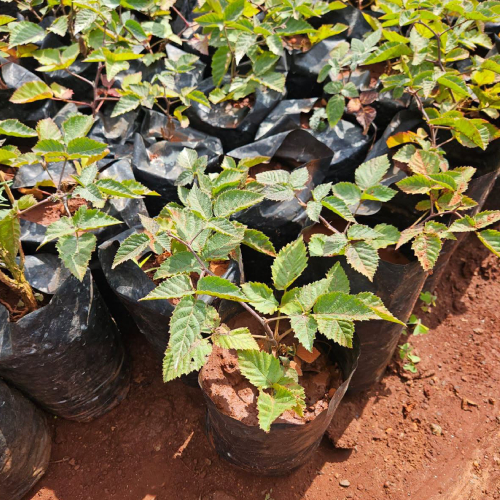
Description
Blackberry Seedlings in Kenya: Complete Guide to Planting, Spacing, Yield, Markets and Profitability
Blackberries can give farmers good returns when grown in the right conditions and sold to the right market. The crop does particularly well in cool areas with fertile, well-drained soils and reliable water.
In Kenya, most commercial fruit farmers are familiar with avocados, mangoes, oranges, bananas and passion fruit. Blackberries are less common, but the fruit already has a market among supermarkets, hotels, restaurants, bakeries, juice businesses and consumers looking for fresh berries.
The challenge is that blackberries are highly perishable. A farmer cannot treat them like maize, beans or even some of the harder-skinned fruits that can stay in storage for days without much loss. Harvesting, handling, cooling, packaging and transport have a direct bearing on what the farmer earns.
The other issue is planting material. Anyone planning a commercial blackberry farm needs healthy, properly propagated seedlings of known type. Buying random plants and hoping they will perform is an expensive gamble, particularly when establishing a high-density orchard.
For farmers searching for Blackberry Seedlings in Kenya, the starting point should therefore be the planting material, followed by the suitability of the farm and the availability of a market.
This guide explains how to grow blackberries in Kenya, from selecting seedlings and preparing the land to spacing, trellising, pruning, harvesting, marketing and calculating the potential returns.
Why farmers are considering blackberries
The biggest attraction of blackberries is their value in the fresh-fruit market.
Unlike common fruits that are produced in very large quantities, berries are often sold in smaller packs and through specialised outlets. A farmer who has a reliable supply of good-quality fruit can therefore target buyers willing to pay a premium for fresh produce.
Blackberries also allow intensive use of land. A farmer does not need a large farm to establish a commercial block. The crop can be considered on a small acreage, provided the farmer has enough labour, water and a suitable market.
There is also room for value addition. Fresh blackberries can be used in jams, sauces, juices, desserts, cakes, yoghurt products and smoothies.
That said, the crop should not be sold to farmers as a guaranteed quick-money venture.
The cost of establishing a blackberry farm can be high, especially where the farmer uses intensive spacing and has to install irrigation and a trellis system. The fruit also needs careful handling once harvested.
The farmer who gets production right but has no dependable buyer can still struggle to make money.
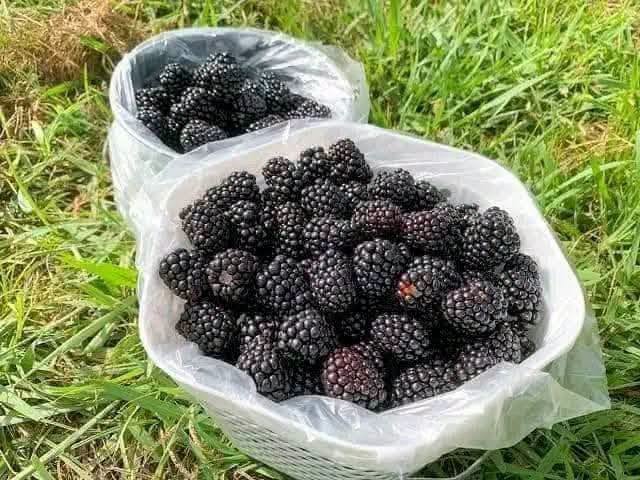
Blackberry Fruits in Kenya
Blackberry Seedlings in Kenya: what to look for before buying
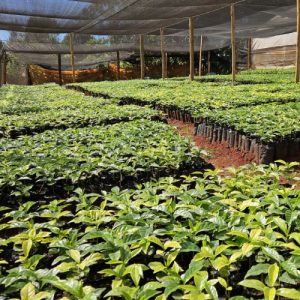
A commercial blackberry plantation starts at the nursery.
The quality of the seedlings determines the uniformity of the field and gives the farmer an indication of what to expect from the crop later.
When buying Blackberry Seedlings in Kenya, ask the nursery where the planting material came from, how it was propagated and what variety or type is being supplied.
This is particularly important where a farmer intends to establish hundreds or thousands of plants.
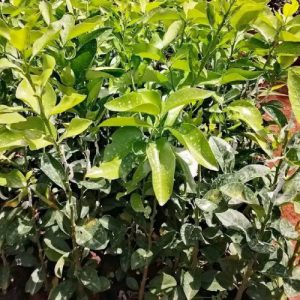
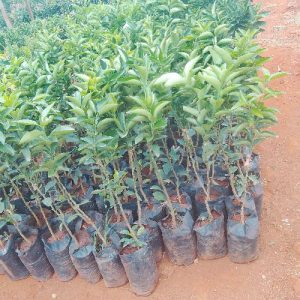
Seedlings should be well rooted and hardened before they are planted in the field. The leaves should be healthy and the plants should not show obvious signs of pest attack or disease.
Avoid seedlings that are severely root-bound, weak, badly wilted or carrying suspicious spots on the leaves and stems.
The roots should also hold together well when the seedling is removed from its container. A strong root ball gives the plant a better chance of establishing quickly after transplanting.
Farmers should keep records of the source of their seedlings, particularly when establishing a commercial orchard. It makes it easier to trace planting material and maintain consistency when replacing plants or expanding the farm later.
How much do blackberry seedlings cost in Kenya?
The price depends on the nursery, variety, propagation method and quantity ordered.
Fruit Africa currently lists blackberry seedlings at KSh 500 each, subject to availability and confirmation at the time of purchase.
At that price, a farmer buying 500 seedlings would spend KSh 250,000 on planting material alone. A farmer buying 1,600 seedlings would spend about KSh 800,000.
This is why spacing deserves careful thought before an order is placed.
Planting more trees per acre increases the initial cost of seedlings. It also means more plants to feed, prune, irrigate and harvest.
A farmer should not decide on the number of seedlings first and then try to fit them into the farm. The better approach is to determine the production system, draw the field layout and then calculate the number of plants required.
Where do blackberries grow in Kenya?
The crop favours areas with moderate temperatures, good soils and adequate moisture.
Suitable conditions can be found in parts of the Kenyan highlands. Potential areas include sections of Kiambu, Murang’a, Nyeri, Kirinyaga, Embu, Meru, Nakuru, Nyandarua, Uasin Gishu, Kericho and Trans Nzoia.
The county alone, however, does not determine whether a farm is suitable.
A farmer in the upper parts of a county can have completely different conditions from another farmer in a lower and warmer section of the same county.
Before planting, look at the actual farm.
A suitable site should have good drainage, fertile soil, moderate temperatures and access to water. The farm should also have reasonable road access because harvested berries need to reach the buyer while still fresh.
Climate requirements
Blackberries prefer moderate temperatures and can struggle where heat is excessive.
Temperature affects vegetative growth, flowering, fruit development and water requirements. In hotter areas, irrigation becomes particularly important because plants can lose moisture quickly.
Cold conditions also need to be considered when selecting planting material because different blackberry types may respond differently to temperature.
Rather than relying on a single temperature figure, farmers should consider the general climate of the area and whether other crops with similar climatic requirements perform well there.
A small trial block can be useful where there is uncertainty about the suitability of a new location.
Soil requirements
Blackberries perform best in fertile, well-drained soils.
A slightly acidic soil is generally suitable, with a pH around 5.5 to 6.5 often considered favourable.
The most important point is drainage.
A blackberry plant may tolerate a short period of excess moisture, but a root zone that stays wet for long periods creates problems. Roots require oxygen, and poorly drained soil can encourage root diseases and weaken the plants.
Sandy loam and other well-structured soils can work well where fertility is adequate.
Heavy soils are not automatically unsuitable, but they require good management. Where water stands in the field after rain, drainage should be addressed before planting.
A soil test is worth the cost before establishing a commercial plantation. It gives the farmer information on pH and nutrient levels and helps avoid unnecessary fertiliser applications.
Preparing land for blackberry farming in Kenya
Land preparation should begin before the seedlings arrive.
Remove perennial weeds and unwanted vegetation. Clear stones, roots and other obstacles that could interfere with planting and field operations.
Where the soil is compacted, prepare it properly so that the young roots can establish.
Drainage should be dealt with at this stage. It is much easier to correct a drainage problem before planting than after hundreds of seedlings are already in the ground.
Mark the rows carefully.
Straight, properly spaced rows make it easier to install the trellis, lay irrigation lines, weed between plants and move workers through the plantation during pruning and harvesting.
Planting holes for blackberries
Holes of about 45 cm by 45 cm by 45 cm can be used when preparing the field, depending on the soil and the size of the planting material.
Separate topsoil from subsoil when digging.
The topsoil can be mixed with well-decomposed manure or compost before it is returned to the hole.
Fresh manure should not be placed directly against the roots of a young plant. It can cause root injury and create other problems during establishment.
Where a soil test identifies acidity or nutrient deficiencies, correct these according to the recommendations rather than applying large amounts of amendments blindly.
Blackberry spacing in Kenya
Spacing determines the number of plants that can be established and affects the way the plantation will be managed for years.
A spacing of 2.5 metres between rows and 1 metre between plants can be used as a commercial starting point for some blackberry production systems.
At this spacing, one acre theoretically accommodates about 1,619 planting positions.
The actual number will be lower once space is allowed for paths, boundaries, irrigation infrastructure and other farm requirements.
The right spacing can also vary with the variety and its growth habit.
A vigorous blackberry that produces long canes may require more room than a more compact type. Trellis design and pruning practices also affect the amount of space required.
Do not automatically assume that the highest possible plant population will produce the highest profit.
More plants mean a larger seedling bill and higher recurring costs. The farmer also has to manage more canes and harvest more fruit.
The aim should be to find a plant population that balances production with the cost and practicality of managing the farm.
How to plant blackberry seedlings
Planting should be done when the soil has adequate moisture.
Water the seedlings before removing them from their containers. This reduces stress and helps keep the root ball intact.
Place the seedling in the hole at approximately the same depth at which it was growing in the nursery. Avoid burying the crown too deeply.
Backfill with the prepared soil and firm it gently around the plant.
Water immediately after planting.
A layer of organic mulch can then be placed around the plant to reduce evaporation and suppress weeds. Leave some space around the crown rather than pressing mulch directly against the stem.
When should blackberries be planted?
For rain-fed establishment, planting at the beginning of a reliable rainy period is generally more practical because the young plants have moisture available while their roots establish.
In many parts of Kenya, farmers can take advantage of the March-May long rains or the October-December short rains.
The exact planting date depends on the local rainfall pattern.
Farmers with reliable irrigation have greater flexibility. They can plant outside the rainy season provided the soil moisture and other growing conditions are suitable.
Trellising: a major part of blackberry farming
A blackberry plantation without a proper support system quickly becomes difficult to manage.
As the canes grow, they can become long and heavy. Fruit-bearing canes can bend towards the ground, making harvesting difficult and exposing fruit to dirt, pests and disease.
A trellis keeps the canes organised.
A basic system consists of strong posts and wires arranged to support the canes as they develop. The exact design depends on the blackberry variety and the training system being used.
End posts need to be particularly strong because they carry the tension from the wires.
Trellising also improves access to the crop. Workers can move along the rows more easily, inspect the plants and harvest fruit without fighting through a mass of tangled canes.
The cost of the trellis should be included in the establishment budget from the beginning.
Training the canes
Training starts when the plants begin producing longer shoots.
The objective is to keep the productive canes organised and separate enough to allow light and air into the canopy.
Do not wait until the plantation has become tangled before installing support.
Training practices depend on the variety and production system, so farmers should follow recommendations for the specific blackberry type they plant.
Pruning blackberries
Pruning is one of the most important jobs on a mature blackberry farm.
The plants produce different types of canes, and the farmer needs to distinguish between young growth and canes that have already produced fruit.
Old or unproductive canes are removed to create room for new productive growth.
Dead and diseased material should also be removed.
A well-pruned plant has better airflow and is easier to spray, inspect and harvest.
Pruning also controls the size and shape of the plant. Without regular pruning, the plantation can become overcrowded, reducing access and increasing humidity within the canopy.
Farmers should learn the fruiting habit of their particular variety before adopting a pruning programme.
Weed management
Weeds compete with blackberry plants for water and nutrients, particularly while the plants are young.
The area around the plants should be kept reasonably clean.
Mulching is useful because it reduces weed emergence while conserving soil moisture.
Where hand weeding is used, avoid digging deeply around the plants. Blackberry roots can be damaged by aggressive cultivation close to the base of the plant.
Weed control between rows can be done mechanically or manually depending on the farm size and available equipment.
Mulching
Mulching is useful in blackberry production, especially during periods when soil moisture is limited.
Farmers can use suitable organic materials such as dry grass, clean crop residues, composted materials or coffee husks.
A good mulch layer reduces evaporation and can moderate soil temperature.
As organic mulch decomposes, it also contributes organic matter to the soil.
However, mulch should not be allowed to remain tightly packed against the crown because excessive moisture around the plant base can create problems.
Fertiliser and manure requirements
Blackberries require adequate nutrients to support vegetative growth, flowering and fruit development.
The exact fertiliser programme should depend on soil fertility, crop age and plant performance.
Nitrogen is needed for vegetative growth, while potassium plays an important role in plant development and fruit production. Phosphorus is involved in root development and other plant processes.
Organic manure or compost can improve soil structure and contribute nutrients.
A blanket fertiliser programme is less reliable than one based on soil testing.
Farmers should also avoid excessive nitrogen. A plant covered in lush leaves is not necessarily a highly productive plant. Too much nitrogen can encourage vegetative growth at the expense of balanced crop development.
Irrigation for blackberries
Reliable water can make a major difference to blackberry production.
The crop needs adequate moisture during establishment and throughout active growth. Water stress during flowering and fruit development can reduce plant performance and affect berry size and quality.
Drip irrigation is suitable for commercial production because it allows water to be delivered close to the root zone.
The amount and frequency of irrigation depend on the soil, weather, plant size and rainfall.
A sandy soil may require more frequent irrigation than a heavier soil because it holds less water.
During periods of heavy rainfall, irrigation should be reduced or stopped where the soil is already adequately moist.
The objective is to maintain a healthy root-zone moisture level, not to keep the field permanently wet.
Pests that affect blackberries
Pest problems vary with location and season.
Aphids can attack young shoots and tender leaves. Heavy infestations may distort new growth.
Thrips can damage flowers and young fruit, affecting appearance and quality.
Spider mites can become troublesome under hot and dry conditions. They feed on plant tissue and can weaken the crop when populations build up.
Fruit flies are another concern because they can damage ripe fruit.
Birds may also eat ripe berries, particularly as the crop approaches peak maturity.
Regular scouting is more useful than waiting until damage is obvious.
Walk through the plantation and inspect young shoots, leaves, flowers and fruit. Early detection gives the farmer more options for managing a problem.
Any pesticide used on the crop should be registered for the intended use and applied according to its label and applicable Kenyan regulations, particularly where fruit is being sold for fresh consumption or export.
Blackberry diseases
Humidity, poor airflow and excessive moisture can create favourable conditions for disease.
Botrytis, commonly associated with grey mould, can affect fruit, particularly under humid conditions.
Powdery mildew can appear as a white growth on affected plant surfaces.
Anthracnose can affect leaves and canes.
Root diseases are often more difficult to manage because symptoms become visible only after the root system has already been damaged.
The best defence begins with the farm itself.
Good drainage, correct spacing, pruning, sanitation and careful irrigation reduce the conditions that allow many diseases to spread.
Diseased plant material should not simply be left in the plantation. Remove and dispose of it appropriately.
Where chemical control is necessary, use registered products and observe the recommended rates, pre-harvest intervals and other label requirements.
How long do blackberry seedlings take to produce?
Farmers often want to know how quickly they can expect the first harvest after buying seedlings.
There is no single answer for every farm.
The time to first fruit depends on the type of planting material, variety, age and size of the seedling, growing conditions and management.
A well-established seedling can begin producing earlier than a young plant that first has to build a strong framework.
For financial planning, farmers should avoid assuming that every newly planted seedling will produce a commercial crop within a few months.
The first objective should be establishment.
Once the plants are growing strongly, the farmer can concentrate on training, pruning and preparing for production.
Blackberry flowering and fruit development
Blackberry production is closely tied to the plant’s growth cycle.
Good nutrition and adequate water support flowering and fruit development, but they cannot compensate for a poor site or unsuitable planting material.
Pollinators also play a role in fruit development. Although many blackberry types are self-fertile, bees and other pollinating insects can improve pollination.
Farmers should therefore avoid unnecessary spraying during periods when pollinators are active.
When are blackberries ready for harvest?
The fruit passes through several colour stages before reaching full maturity.
Ripe blackberries develop their characteristic deep colour and become softer as they mature.
The farmer needs to strike a balance.
Fruit harvested too early may not have developed its full flavour. Fruit left on the plant for too long becomes soft and more difficult to transport.
The intended market also matters. Fruit being sold locally for immediate consumption can be handled differently from fruit that has to travel a longer distance.
Harvesting blackberries
Blackberries require careful harvesting because the fruit bruises easily.
Pick ripe fruit gently and avoid squeezing the berries.
Use clean, shallow containers rather than deep sacks or containers that place too much weight on the fruit at the bottom.
Harvesting should preferably be done during the cooler hours of the day.
The frequency of harvesting depends on how quickly fruit is ripening. During periods of heavy production, farmers may need to harvest every few days.
Regular picking also prevents overripe fruit from remaining on the plants and attracting pests.
Post-harvest handling
This is where many new blackberry farmers underestimate the work involved.
Blackberries are highly perishable. They do not have the same shelf life as mangoes, oranges or avocados.
The fruit should be protected from heat and rough handling immediately after picking.
Remove damaged or mouldy berries.
Use packaging that allows the fruit to remain presentable and prevents crushing.
Where the market requires premium fresh fruit, cold-chain management becomes increasingly important.
The farmer should know the buyer’s packaging and delivery requirements before the first commercial harvest.
There is little value in producing high-quality fruit if the berries arrive at the market leaking juice, crushed or already deteriorating.
Blackberry yield per acre in Kenya
Yield is one of the most abused figures in discussions about high-value crops.
You may come across claims that an acre of blackberries can produce very large quantities of fruit. Such figures may be possible under particular varieties and management systems, but they should not be treated as guaranteed yields for every Kenyan farm.
Production depends on:
- Variety
- Plant population
- Age of the plantation
- Climate
- Soil fertility
- Irrigation
- Trellising
- Pruning
- Pest and disease control
- Harvest management
A mature, well-managed plantation can produce considerably more than a young block.
The best way to prepare a farm budget is to work with three yield assumptions: conservative, expected and optimistic.
This prevents the farmer from building a business case around a yield that may be difficult to achieve.
How much can one acre of blackberries make?
Selling price is just as important as yield.
For illustration, assume a farmer harvests 5,000 kg from an acre during the year.
At KSh 300 per kg, gross sales would be:
5,000 kg × KSh 300 = KSh 1.5 million
At KSh 500 per kg:
5,000 kg × KSh 500 = KSh 2.5 million
At KSh 700 per kg:
5,000 kg × KSh 700 = KSh 3.5 million
These figures represent gross revenue.
They are not profit.
The farmer still has to pay for labour, irrigation, fertiliser, crop protection, pruning, harvesting, packaging, transport, replacements and other operating costs.
This distinction is important because a high selling price does not automatically mean a high profit margin.
What determines the price of blackberries?
There is no single price that every blackberry farmer in Kenya receives.
Price can change according to:
- Market
- Season
- Quality
- Berry size
- Packaging
- Quantity supplied
- Distance to market
- Buyer
- Direct or wholesale sales
A supermarket retail price should not be used as the farmer’s farm-gate price.
The same applies to prices advertised on social media.
Before planting on a large scale, speak to potential buyers and establish what they actually pay farmers or suppliers, what quality they require and how much they can take.
Costs of establishing a blackberry farm
The cost of establishment depends heavily on plant population and the level of infrastructure.
For example, at approximately 1,600 plants per acre and a seedling price of KSh 500, the seedlings alone would cost about:
KSh 800,000
The farmer must then budget for the rest of the enterprise.
| Establishment item | What determines the cost |
|---|---|
| Seedlings | Number of plants and nursery price |
| Land preparation | Farm size, soil and existing vegetation |
| Manure or compost | Soil condition and local availability |
| Planting labour | Local labour rates |
| Trellis | Type of posts, wire and design |
| Irrigation | Water source, acreage and system |
| Fertiliser | Soil fertility and crop requirements |
| Crop protection | Pest and disease pressure |
| Weed control | Labour and farm conditions |
| Replacement seedlings | Survival and establishment |
| Harvest containers | Type and target market |
| Packaging | Buyer and market requirements |
| Transport | Distance and volume |
The trellis and irrigation system should be treated as capital investments rather than afterthoughts.
Blackberry farming profitability
The profitability of the crop depends on the relationship between production costs and sales.
A farmer who produces 5,000 kg and receives KSh 500 per kg has gross sales of KSh 2.5 million.
If the farmer spends KSh 1 million on production and marketing costs during the relevant period, the balance is KSh 1.5 million before accounting for other business costs and capital recovery.
This is why farmers need their own budgets.
The cost of land differs from one location to another. Labour rates differ. Irrigation costs differ. Trellis materials differ. Most importantly, selling prices differ.
A profitability figure copied from another farm may therefore have little relevance to your own operation.
How to improve blackberry farm returns
The farmer has several ways of improving the economics of the enterprise.
One is to reduce unnecessary production costs without compromising crop quality.
Another is to reduce post-harvest losses.
A farmer who produces 1,000 kg but loses 200 kg before reaching the buyer effectively sells only 800 kg.
Market selection is equally important.
Selling directly to consumers or specialised buyers may produce a better price than selling through several intermediaries, although direct marketing requires more work.
Consistent supply can also strengthen a farmer’s position with institutional buyers.
A buyer who needs 100 kg every week is more valuable to a commercial farmer than a buyer who purchases 500 kg once and disappears for several months.
Where can farmers sell blackberries in Kenya?
The market can be divided into fresh consumption and processing.
Fresh fruit can be supplied to supermarkets, hotels, restaurants, bakeries, smoothie shops and direct consumers.
Processors may purchase fruit for jams, juices, sauces and other products.
Direct farm sales can also work where the farm is near a sizeable population or where the farmer has developed an online customer base.
The right market depends on the volume produced.
A small farmer may find direct sales easier.
A larger commercial grower may need contracts or supply arrangements with institutional buyers.
Blackberries for hotels and restaurants
Hotels and restaurants can be attractive customers because berries are used in desserts, breakfast dishes, smoothies, cakes and other preparations.
The challenge is consistency.
A buyer who orders 20 kg today may want the same quantity every week. The farmer needs to know whether the crop can supply that demand throughout the production season.
Quality also matters. Damaged, leaking or overripe berries are difficult for food businesses to use.
Processing blackberries
Processing provides an alternative market for fruit that does not fit the premium fresh market, although the price offered by processors may be lower.
Possible products include:
- Jam
- Juice
- Sauces
- Yoghurt preparations
- Bakery fillings
- Desserts
Processing can help reduce dependence on a single fresh-fruit market.
However, farmers should not establish a processing operation without understanding the required licences, food safety standards, equipment and market.
Exporting Kenyan blackberries
Export markets can offer attractive opportunities, but fresh berry exports require a much higher level of organisation.
The farmer needs reliable production, good harvesting practices, suitable packaging, traceability, food-safety compliance and a dependable cold chain.
Phytosanitary and destination-market requirements must also be observed.
Exporting is therefore not simply a matter of finding a buyer overseas and sending boxes of fruit.
Farmers interested in export production should work with an experienced exporter or market partner and understand the requirements before planting specifically for that market.
Blackberry farming and other high-value fruits
Blackberries have an advantage in terms of value per unit of land, but they also come with a demanding management system.
Avocado farmers may wait longer for substantial production but have a fruit that is considerably easier to handle after harvest.
Mangoes have established domestic and processing markets.
Passion fruit can provide regular harvests but comes with its own disease and management challenges.
Blackberries therefore suit a farmer who is prepared to manage an intensive crop and sell a highly perishable product.
The question is not whether blackberries are better than every other fruit.
The question is whether they fit your farm, capital, skills and market.
Common mistakes farmers make
The first mistake is buying seedlings before studying the market.
The second is choosing a high plant population simply because it promises a large harvest.
The third is planting in poorly drained soil.
Another common mistake is postponing trellis installation until the plants are already too large.
Poor pruning also causes problems. An overcrowded plantation becomes difficult to spray, inspect and harvest.
Some farmers also concentrate heavily on fertiliser while ignoring irrigation, drainage and pruning. Nutrition is important, but no fertiliser programme can compensate for poor farm management.
The final mistake is using optimistic figures when calculating profitability.
A sensible business plan should still make sense when the selling price falls or production is lower than expected.
A practical plan for a farmer starting with blackberries
A farmer who is new to blackberries does not necessarily need to establish an entire acre immediately.
A smaller demonstration block can provide useful information about how the crop behaves under local conditions.
Use the first block to learn:
- How the seedlings establish
- How quickly the plants grow
- How much water they require
- How the trellis performs
- How much labour pruning requires
- Which pests appear
- When the fruit starts ripening
- Which buyers are interested
- What price the market actually offers
The experience from a small block can then guide expansion.
This approach reduces the risk of committing a large amount of capital before the farmer understands the crop.
Buying Blackberry Seedlings in Kenya from Fruit Africa
Farmers looking for Blackberry Seedlings in Kenya can source planting material through Fruit Africa.
Fruit Africa works with reputable fruit nurseries in Kenya and helps farmers access fruit planting material for farms across the country.
The company focuses on connecting farmers with reliable nursery sources rather than encouraging farmers to buy planting material simply because it is cheap.
Blackberry seedlings are currently available at about KSh 500 each, subject to availability and confirmation at the time of ordering.
For farmers establishing commercial blocks, Fruit Africa can also assist with arranging delivery.
Farmers should provide the number of seedlings required, their location and their preferred delivery arrangements when making an enquiry.
Fruit Africa contact details
Phone: 0714 994 444
Email: sales@fruitafrica.org
Website: fruitafrica.org
Frequently Asked Questions About Blackberry Seedlings in Kenya
How much are Blackberry Seedlings in Kenya?
Prices vary between nurseries and according to planting material. Fruit Africa currently offers blackberry seedlings at about KSh 500 each, subject to availability.
How many blackberry plants can fit on an acre?
At 2.5 metres between rows and 1 metre between plants, an acre has approximately 1,619 theoretical planting positions. The actual number should account for paths, boundaries and other farm infrastructure.
What is the best spacing for blackberries?
A 2.5 m × 1 m arrangement can be used for some commercial production systems. The final spacing should take into account the variety, cane growth, trellis and pruning system.
Which areas are suitable for blackberry farming in Kenya?
Cooler parts of the Kenyan highlands may provide suitable conditions. Parts of Central Kenya, the Rift Valley and Eastern highlands can be considered, provided the individual farm has suitable soil, temperature, drainage and water.
Do blackberries need irrigation?
Irrigation is useful where rainfall is insufficient or unreliable. Consistent soil moisture is particularly important during establishment, flowering and fruit development.
Do blackberries need a trellis?
Commercial plantations generally benefit from a trellis because the canes become long and heavy. A support system keeps the plants organised and makes harvesting easier.
How long do blackberries take to mature?
The timing varies according to the variety and planting material. Farmers should not rely on a single number of months because seedling age, climate and management affect the time to first harvest.
Are blackberries profitable in Kenya?
They can be profitable when production conditions and markets are favourable. Profit depends on yield, selling price, establishment costs, labour, irrigation, crop protection, harvesting, packaging and transport.
What soil is best for blackberries?
Blackberries prefer fertile, well-drained soil with good organic matter. Slightly acidic conditions are generally suitable. A soil test is recommended before planting.
What pests attack blackberries?
Potential pests include aphids, thrips, spider mites, fruit flies and birds. Regular field scouting helps identify problems early.
What diseases affect blackberries?
Diseases can include Botrytis fruit rot, powdery mildew, anthracnose and root diseases. Good drainage, pruning, sanitation and proper irrigation management help reduce disease pressure.
Are blackberries self-pollinating?
Many blackberry types are self-fertile and do not require a separate pollinising variety. Bees and other pollinators can still contribute to effective pollination and fruit development.
Can blackberries be grown in a small farm?
Yes. Their intensive production system makes them suitable for smaller farms, provided the farmer can manage irrigation, trellising, pruning, harvesting and marketing.
The bottom line for blackberry farmers
Blackberry farming deserves attention from farmers looking for a high-value horticultural crop, but it is not a crop to enter on the strength of a price advertisement or a promise of huge returns.
The farm comes first.
If the soil drains poorly, the farmer has no reliable water and the market is several hours away without proper post-harvest handling, expensive seedlings will not solve the problem.
If the site is suitable, the planting material is reliable, the plants are properly spaced and supported, and the farmer has a clear route to market, blackberries can become a worthwhile enterprise.
The best starting point is a realistic production and marketing plan.
Know how many plants the land can carry. Know the cost of the trellis and irrigation. Know who will buy the fruit. Establish what price the buyer actually pays. Then calculate the returns using a conservative yield.
For farmers who need reliable Blackberry Seedlings in Kenya, Fruit Africa can help with sourcing and delivery.
Fruit Africa
0714 994 444
sales@fruitafrica.org
fruitafrica.org


Reviews
There are no reviews yet.