
Description
Buy Grafted Tree Tomato Seedlings in Kenya. Complete guide to tamarillo farming, Red Oratia and Rothame varieties, spacing, costs, yield per acre and farmgate prices.
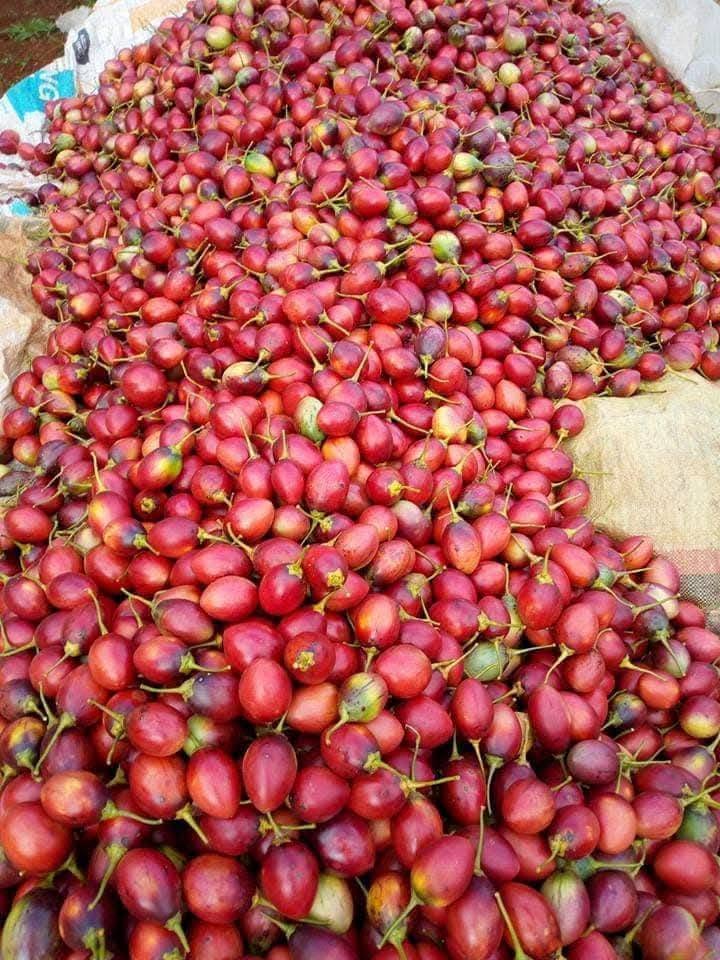
Grafted Tree Tomato Seedlings in Kenya: Price, Planting, Costs and Profitability Guide
Grafted Tree Tomato Seedlings are the planting material Kenyan farmers search for when they want tree tomato, also called tamarillo, to start paying within the same year.
A seedling grown from seed will sit in your shamba for two to three years before it gives you the first fruit. A grafted one starts bearing at eight months. A seedling from seed has no defence against nematodes, the tiny worms in the soil that attack tree tomato roots and kill the tree before it reaches full production.
A grafted one sits on muthakwa rootstock, a wild tree that grows in almost any soil in Kenya and holds off nematodes. When you plant a grafted tree tomato seedling, you are not just planting a tree. You are buying time, buying resistance and buying years of production you would otherwise lose.
Tree tomato is not a new crop in Kenya. Farmers in Nyeri, Murang’a, Meru, Nakuru, Nyandarua and Kisii have grown it for years. The fruit is sold in local markets, supermarkets, hotels and through brokers. Some farmers export it. A kilogram sells for KSh 80 to KSh 100 at the farmgate. In local markets, it sells for KSh 100 to KSh 150 per kilogram. When supply is low, the price climbs higher. Tree tomato is one of the few fruits in Kenya that bears throughout the year, which means a steady income instead of one harvest season.
But not every farmer plants grafted seedlings. Some still prefer non-grafted seedlings, also called seed-grown or open-pollinated seedlings. They cost less at the nursery. Some farmers have grown tree tomato from seed for decades and are comfortable with the method. Others do not know the difference between grafted and non-grafted planting material. This guide explains both. It shows what grafted seedlings give you, what non-grafted seedlings give you, and why the choice matters for your money.
This article covers everything you need before you order grafted tree tomato seedlings in Kenya. It explains what tree tomato is, the varieties that perform well in Kenya, the two most planted varieties Red Oratia and Rothame, where the crop grows, how to plant it, how to care for it, what it costs, what you can harvest per tree and per acre, and what prices you can expect. It also compares grafted and non-grafted seedlings so you can make the right choice for your farm.
Fruit Africa Veriplant supplies grafted tree tomato seedlings. Everything after this point explains what happens once you have the seedlings in your hands.
What Are Grafted Tree Tomato Seedlings?
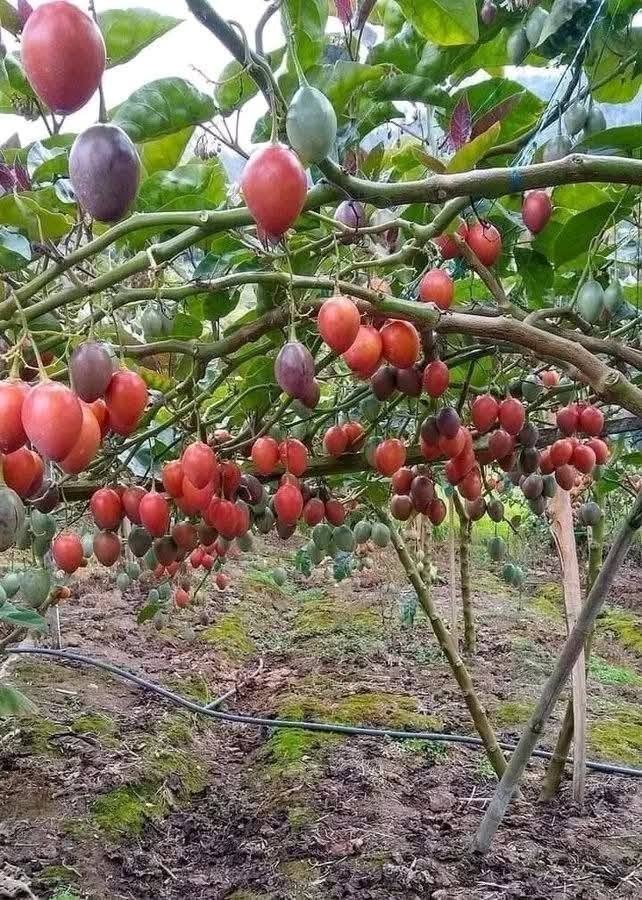
Tree tomato belongs to the same plant family as tomatoes, potatoes and eggplants. The scientific name is Solanum betaceum. The tree grows as a small shrub or small tree, reaching 3 to 5.5 metres. The leaves are large, green and slightly fuzzy. The flowers are pink or white. The fruit is egg-shaped, about 5 to 10 centimetres long. The skin can be deep purple, red, orange or yellow depending on the variety. The flesh is juicy and sweet-tart, with small black seeds in the centre.
Tree tomato is eaten fresh as a fruit. You do not cook it like a normal tomato. You cut it in half and scoop out the flesh with a spoon. It is also used in juices, jams, sauces and desserts.
Grafted tree tomato seedlings are produced by joining two plants. The top part, called the scion, comes from a selected fruiting variety like Red Oratia or Rothame. It carries the fruit quality and taste. The bottom part, called the rootstock, provides the root system. In Kenya, the rootstock used for tree tomato is muthakwa, a wild tree that grows in almost any condition and resists nematodes.
The graft union is the join between the scion and the rootstock. When done properly, the tree carries the fruit of the scion and the strong roots of the rootstock. The tree grows taller and stronger, carries a bigger crop, resists nematodes and lives longer than a seedling grown from seed.
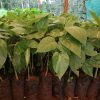
A good grafted tree tomato seedling has a clean, healed graft union, healthy roots, and a straight stem. The leaves should be green and free of spots or curling. When you buy from a reliable nursery, you get planting material that resists nematodes and carries the genetic potential for high yield.
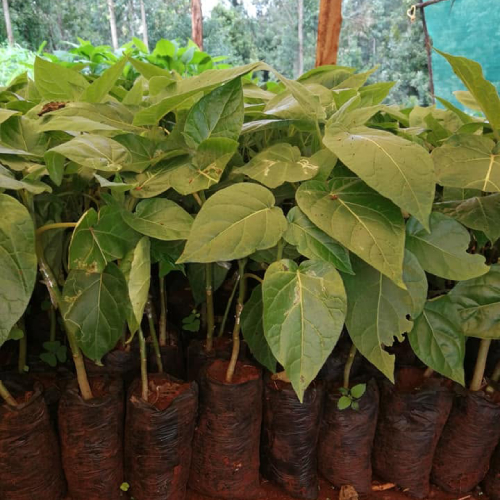
Why Grafting Tree Tomato Matters
Nematodes are the biggest threat to tree tomato in Kenya. These tiny worms live in the soil and attack the roots. They enter the root, feed on it, and cause swellings called galls. The roots stop taking up water and nutrients. The tree wilts, yellows, and dies. In most Kenyan soils, especially where tomatoes, potatoes or eggplants have grown before, nematodes are present. A tree tomato seedling grown from seed has no defence against them. It may survive one season, sometimes two, but it rarely reaches full production.
Muthakwa rootstock changes this. Muthakwa is a wild tree that grows in almost any soil in Kenya, from the coast to the highlands. Its roots resist nematodes. When you graft a Red Oratia or Rothame scion onto muthakwa rootstock, the tree carries the resistance of the rootstock and the fruit of the scion. The tree grows taller, lives longer, and produces more fruit over its lifetime.
Grafting also speeds up fruiting. A grafted tree tomato starts producing at eight months. A seedling grown from seed takes two to three years. For a farmer who needs income sooner, that difference matters.
Finally, grafting gives you known variety. When you buy a grafted Red Oratia seedling, you know what fruit you will get. When you buy a seedling from seed, you do not know what the fruit will look like, how it will taste, or how it will yield. For a commercial orchard, that uncertainty is a problem.
Non-Grafted Tree Tomato Seedlings: What They Offer
Some farmers still prefer non-grafted tree tomato seedlings. They have reasons.
The first reason is cost. A non-grafted seedling costs less at the nursery. A farmer who needs 1,200 seedlings for one acre can save money upfront by buying seed-grown seedlings.
The second reason is habit. Some farmers have grown tree tomato from seed for decades. Their parents grew it from seed. They know how to manage it. They do not see the need to change.
The third reason is availability. Grafted seedlings are not available everywhere. Some farmers plant what they can find.
Non-grafted seedlings have a place. If you are planting a few trees for home use, they work. If you are experimenting with the crop for the first time, they work. But if you are planting for commercial production, especially on a large scale, the money you save on seedlings will come back as lost production. The tree starts later, lives shorter, and yields less. When you count the cost over seven years, the grafted seedling is cheaper.
This is why we recommend grafted seedlings for commercial orchards. The extra cost at the nursery pays back many times over in the life of the tree.
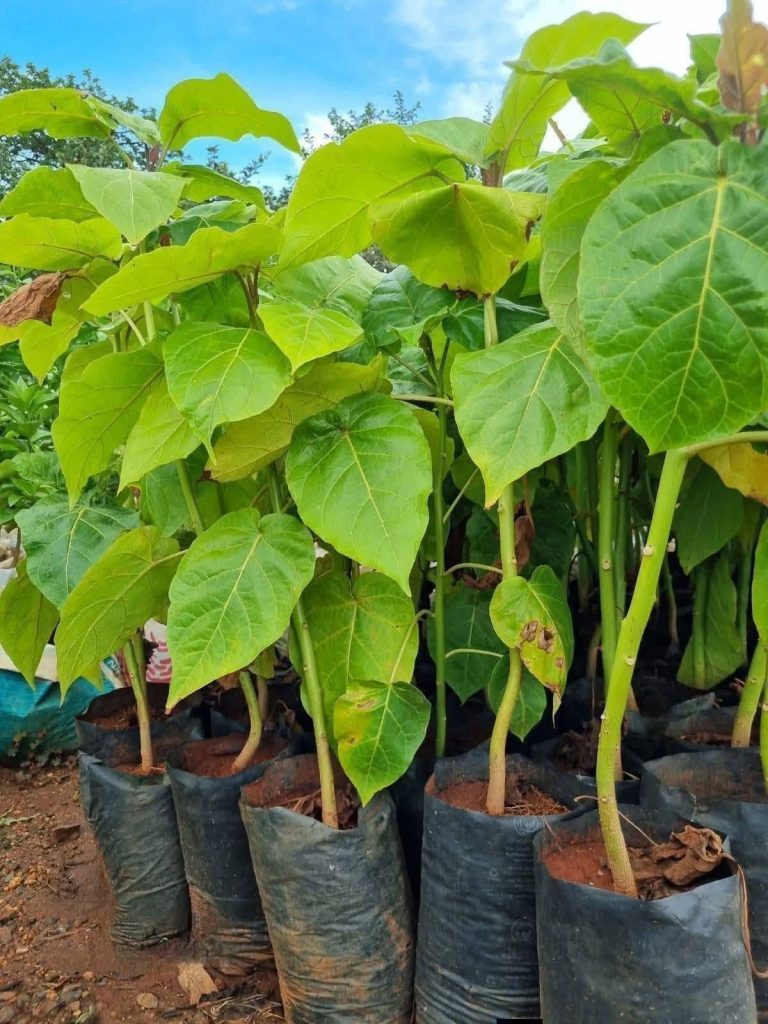
Tree Tomato Varieties for Kenyan Conditions
Tree tomato varieties differ in fruit colour, taste, maturity and disease resistance. Six main varieties are grown in Kenya. Two of them stand out for commercial production. Red Oratia and Rothame.
Red Oratia
Red Oratia is one of the most widely grown varieties in Kenya. The fruit is deep red or purple, with sweet-tart flesh. The tree is productive and the fruit stores well. Red Oratia is the variety most commonly used for grafting with muthakwa rootstock. It fruits in eight months when grafted. About 97 percent of the fruit is edible, with few seeds.
Red Oratia suits farmers who want a reliable variety for local markets and supermarkets. The fruit looks good on the shelf. It travels well. It processes well into juice and jam.
Rothame
Rothame is the other commercial variety favoured by Kenyan farmers. The fruit is red, similar in appearance to Red Oratia, but with a slightly different flavour profile. Rothame trees are vigorous and productive. They adapt well to different altitudes. The fruit is firm and handles transport well.
Rothame suits farmers who want a dependable variety that performs across a range of conditions. Some farmers say Rothame tastes slightly sweeter than Red Oratia. Others prefer Red Oratia for its deeper colour. The choice between them often comes down to the market you are selling into and what your buyers prefer.
Both varieties graft well onto muthakwa rootstock. Both start fruiting at eight months when grafted. Both produce for seven to ten years under good management.
Ruby Red
Ruby Red is fast-maturing and resistant to pests and diseases. The fruit is red with a sweet-tart flavour. The tree performs well in Kenyan highlands. Ruby Red suits farmers who want a reliable variety for local markets.
Ecuadorian Orange
Ecuadorian Orange produces orange-skinned fruit with sweet, mild flesh. The tree is productive and handles a range of conditions. The fruit is popular in fresh markets.
Gold Mine
Gold Mine produces golden-yellow fruit with sweet flesh. The tree is vigorous and productive. The fruit is popular among consumers who prefer a milder taste.
Inca Gold
Inca Gold produces large, golden-orange fruit. The flesh is sweet and juicy. The tree is productive and suits commercial orchards.
Other Varieties
Other varieties include Solid Gold and Yellow. They differ in fruit colour, taste and maturity. The best variety for your farm depends on your market and your altitude.
For commercial production, most Kenyan farmers plant Red Oratia or Rothame. Both are grafted onto muthakwa rootstock. Both sell well in local markets, supermarkets and through brokers. If you are starting out, talk to the nursery about which variety suits your area and your buyers.
Grafted Tree Tomato Seedlings Price in Kenya
Fruit Africa Veriplant supplies grafted tree tomato seedlings. Prices depend on the variety and the source.
In Kenya, grafted tree tomato seedlings are sold at different prices. Some nurseries sell at KSh 50 each. Some sell at KSh 60 each. Some sell at KSh 80 each. Some greenhouse-raised grafted seedlings sell at KSh 200 each. The price difference reflects the quality of the graft, the variety and whether the seedling was raised in a controlled environment.
A grafted seedling that carries nematode resistance and fruits in eight months is worth more than a seedling grown from seed. A seedling from seed may cost less at the nursery, but it costs you more in the long run. You wait two to three years for the first fruit. The tree often dies early because nematodes attack the roots. You spend money on pest control and replanting.
The total amount you spend on seedlings depends on how many trees you need. One acre holds 1,100 to 1,200 trees at 6 feet by 6 feet spacing. At KSh 80 per seedling, 1,200 seedlings cost KSh 96,000. At KSh 100 per seedling, the cost is KSh 120,000. At KSh 200 per seedling, the cost is KSh 240,000.
Seedling cost is only one part of what you will spend. Land preparation, manure, fertiliser, irrigation, labour and crop protection all add to the total investment. Budget for the full establishment cost before you place your order.
| Seedling Price | 1,100 Trees | 1,200 Trees |
|---|---|---|
| KSh 50 | KSh 55,000 | KSh 60,000 |
| KSh 80 | KSh 88,000 | KSh 96,000 |
| KSh 100 | KSh 110,000 | KSh 120,000 |
| KSh 200 | KSh 220,000 | KSh 240,000 |
Table 1: Grafted tree tomato seedling cost for one acre at 6 feet by 6 feet spacing.
Why Grow Grafted Tree Tomato in Kenya?
Tree tomato is not new in Kenya. Farmers in Murang’a, Nyeri, Nyandarua, Nakuru and Meru have grown it for years. Some have grown it for decades. The fruit is sold in local markets, supermarkets, hotels and through brokers. Some farmers export the fruit.
The price makes it worth growing. Farmgate price runs from KSh 80 to KSh 100 per kilogram. Market price runs from KSh 100 to KSh 150 per kilogram. When demand is high and supply is low, the price goes up to KSh 180 per kilogram.
The tree produces for years. A well-managed orchard keeps producing for seven to ten years. Once the trees are established, your main costs are pruning, fertiliser and pest control. The tree keeps producing year after year.
Tree tomato also produces fast. Grafted varieties start fruiting in eight months. Seed-grown varieties take two to three years. For a farmer who needs income sooner, grafted seedlings are the better choice.
The fruit has multiple uses. Tree tomatoes are eaten fresh, juiced, or processed into jam, sauces and desserts. This gives you more than one market to sell into.
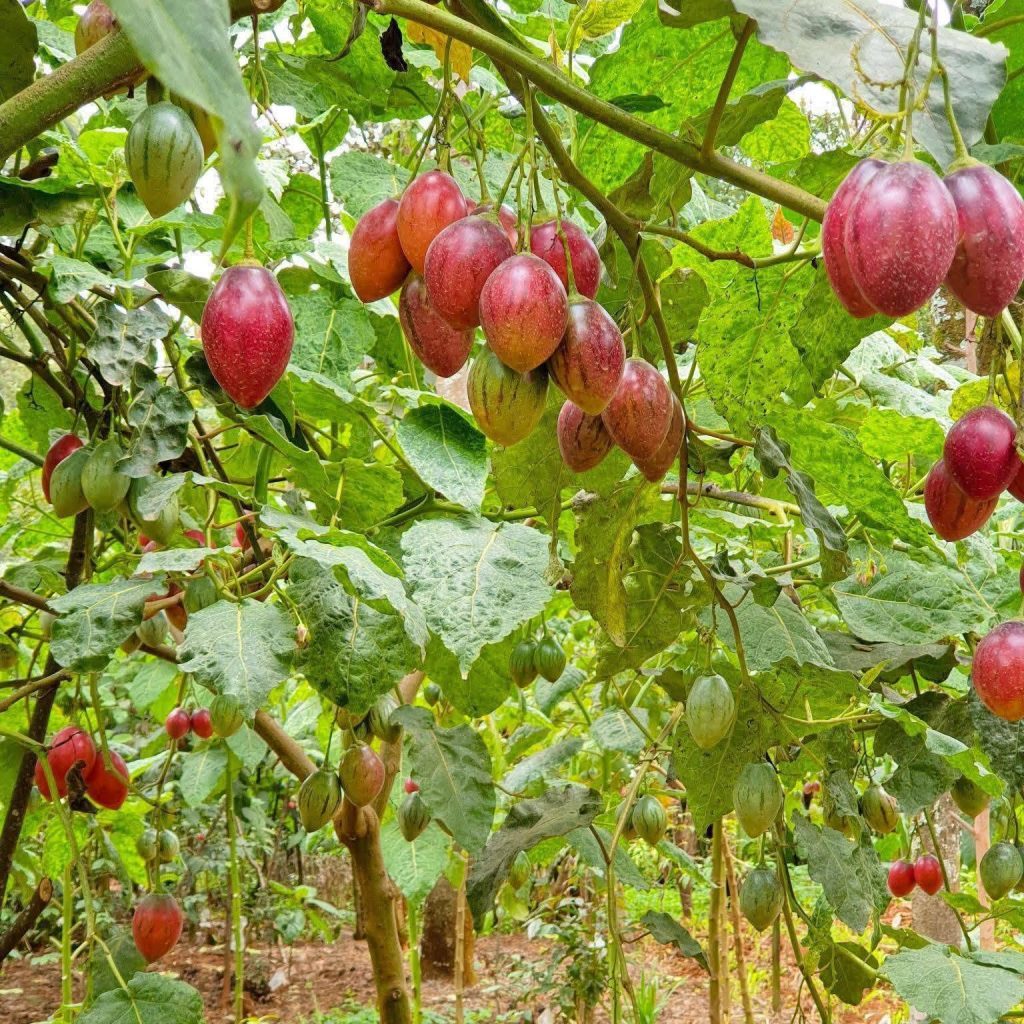
Where Tree Tomato Grows in Kenya
Tree tomato grows in cool highland areas. It likes temperatures between 15°C and 25°C. It does not tolerate frost or drought stress. Rainfall between 600 and 4,000 millimetres is suitable, but the tree needs consistent moisture.
Suitable growing regions in Kenya include Nyeri, Murang’a, Meru, Nakuru, Nyandarua, Narok, Kiambu, Kirinyaga, Uasin Gishu and Kisii. The highlands of Central Kenya and the Rift Valley offer some of the best conditions.
The tree can also grow in lowland areas such as Migori, Homa Bay, Rongo and Siaya, provided there is irrigation. However, the tree performs best in cooler highland conditions.
Before you order grafted tree tomato seedlings, look at your farm honestly. Tree tomato suits cool, frost-free areas with reliable moisture. A hot, dry lowland farm can grow the crop with irrigation, but the yield and fruit quality will not match the highlands.
Soil Requirements for Tree Tomato
Tree tomato grows best in light, deep, fertile soils. The soil must drain well because the plants do not tolerate waterlogging. Waterlogged soil suffocates roots and encourages root rot.
Soil pH should fall between 5.0 and 8.5. The tree tolerates a wide range of pH but performs best in slightly acidic to neutral soils.
A soil test before planting tells you where your soil stands. Test for pH, organic matter, phosphorus, potassium and drainage. Use the results to plan your land preparation and amendments. Do not guess about your soil.
Organic matter improves any soil. Well-decomposed manure or compost adds nutrients and improves soil structure. Mix it into the planting holes before you transplant the seedlings.
Spacing Grafted Tree Tomato Seedlings
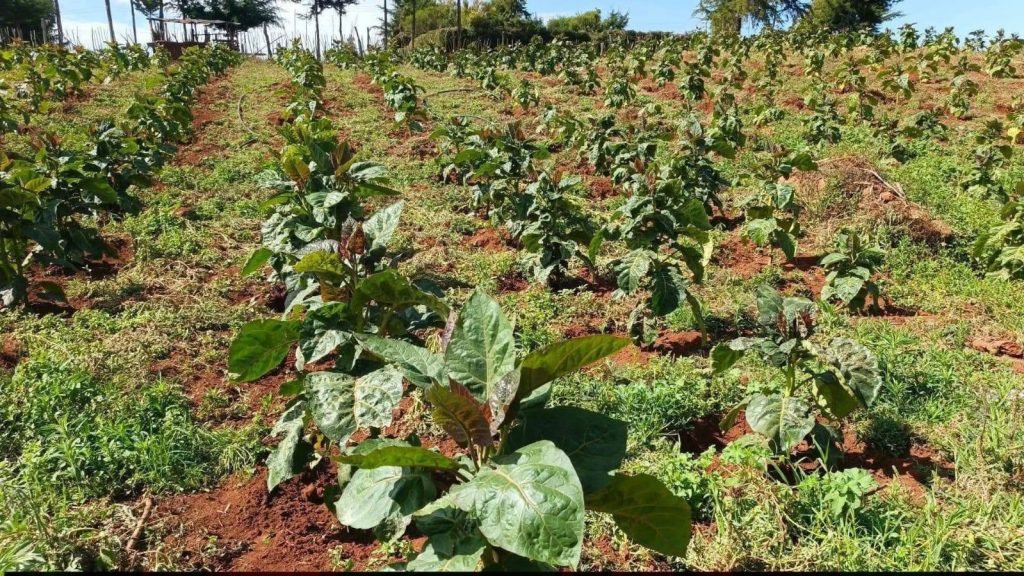
Spacing decides how many trees you plant, how they grow and how you manage the orchard. For grafted tree tomato in Kenya, plant at 6 feet by 6 feet. This gives each tree about 1.8 metres by 1.8 metres.
One acre holds about 1,100 to 1,200 trees at this spacing. This spacing suits farmers who want a dense orchard with high total production. The trees fill their space as they mature. You need to prune to keep them from shading each other and to maintain airflow.
Some farmers use wider spacing. At 3 metres by 3 metres, one acre holds about 540 trees. This wider spacing gives trees more room and makes management easier. It also means fewer trees and lower total production per acre.
Some farmers use 2 metres by 2 metres, which gives about 1,000 trees per acre. This is close to the 6 by 6 feet recommendation.
How Many Trees Per Acre
One acre equals about 4,047 square metres.
At 6 feet by 6 feet spacing (1.8 metres by 1.8 metres):
Each tree takes 1.8 × 1.8 = 3.24 square metres.
4,047 ÷ 3.24 = 1,249 trees per acre.
At 2 metres by 2 metres spacing:
Each tree takes 2 × 2 = 4 square metres.
4,047 ÷ 4 = 1,012 trees per acre.
At 3 metres by 3 metres spacing:
Each tree takes 3 × 3 = 9 square metres.
4,047 ÷ 9 = 450 trees per acre.
These figures assume the whole acre is planted. In reality, roads, boundaries, drainage channels and other farm structures reduce the plantable area. A practical orchard holds between 1,000 and 1,200 trees per acre at 6 by 6 feet spacing.
Your choice depends on your budget, your management capacity and your market timeline.
Planting Grafted Tree Tomato Seedlings
Planting is straightforward if you prepare properly. Rushed planting leads to poor establishment and losses you cannot recover.
Start with land preparation. Clear the site of perennial weeds, old crop residues and any obstacles. If the soil is compacted, break it up.
Dig planting holes about 30 to 45 centimetres deep and 60 centimetres wide. Keep topsoil and subsoil separate as you dig. Mix the topsoil with well-decomposed manure. Add a phosphorus-rich starter fertiliser if your soil test shows the need. Mix everything well before you put it back into the hole.
Handle the seedling carefully. Keep the roots moist during transport and planting. Exposure to sun and wind dries roots quickly and reduces survival. If you cannot plant immediately, heel the seedlings into moist soil or keep them in a shaded area with roots covered.
Place the seedling in the hole with the roots spread naturally. The most important detail is the graft union. It must stay above the soil surface after planting. If you bury the graft union, the scion produces roots of its own, and the tree loses the benefits of the rootstock. Position the union about 10 centimetres above the final soil level.
Backfill with the topsoil and manure mix, firming gently to remove air pockets. Water immediately after planting. Stake young trees if wind is a problem. Mulch around the base with dry grass or straw, keeping the mulch a few centimetres away from the trunk. Protect young seedlings from livestock.
Plant at the start of the rains or under irrigation. The long rains in March to May or the short rains in October to November give the best planting conditions.
First-Year Orchard Management
The first year decides the tree’s shape and future productivity. What you do in these months sets the pattern for years.
Watering is critical during establishment. Young trees have small root systems and cannot reach deep soil moisture. In dry weather, water regularly. Apply about five litres of water per tree, at least four times a week in dry conditions. The goal is to keep the root zone moist but not waterlogged.
Weeding keeps competition away from young trees. Weeds compete for water and nutrients. They also harbour pests. Keep a clean circle around each tree by hand weeding or by keeping mulch in place. Mulching prevents weed germination and is chemical-free.
Training starts in the first year. Remove any shoots that come from the rootstock below the graft union. Select a strong central leader and remove shoots that would create a weak structure. The tree tomato grows with a single upright trunk and lateral branches.
Pruning begins when the tree reaches 90 to 120 centimetres in height. Remove lower branches to encourage the tree to grow upward and form a good canopy. Yearly pruning thereafter removes branches that have already borne fruit, because fruits are produced on new growth.
Watch for pests and diseases from the start. Young trees are vulnerable. Check leaves, stems and growing tips often. Early detection makes management easier.
Pruning and Canopy Management
Tree tomato trees grow fast and produce fruit on new growth. Pruning is essential to keep the tree productive and manageable.
Formative pruning in the early years builds the main framework. Choose three to five well-spaced branches to form the permanent structure. Remove branches that grow inward, cross each other or grow too low. Keep the centre of the tree open to allow light and air.
As the tree matures, pruning focuses on removing branches that have already produced fruit. Tree tomato fruits are produced on new growth, so old branches become less productive. Remove them to encourage new growth and more fruit. Remove dead, diseased or damaged branches promptly.
Light penetration matters. Shaded branches produce less fruit and are more prone to disease. Air movement lowers humidity in the canopy and reduces disease pressure. A well-pruned canopy also makes spraying more effective.
Pruning timing matters. In Kenya’s highland areas, light pruning can be done after harvest. Heavy pruning should be done when the tree is dormant or during a less active growth period to reduce stress.
Water and Irrigation
Tree tomato needs consistent moisture for good growth and fruit development. Water stress during flowering reduces fruit set. Stress during fruit development reduces size and quality.
In highland areas with reliable rainfall, irrigation is needed mainly during dry spells. In drier zones, irrigation is essential. Drip irrigation is efficient because it delivers water to the root zone with little loss to evaporation. Bucket irrigation also works for small orchards.
Young trees need more frequent watering because their roots are shallow. Apply about five litres per tree four times a week in dry conditions. As trees mature, roots go deeper and the trees handle dry spells better.
Overwatering is a common mistake. Tree tomato does not like wet feet. If the soil stays saturated, roots cannot breathe and root rot develops. Mulching helps hold soil moisture and reduces how often you irrigate.
Fertilizer and Nutrition
Tree tomato needs a balanced supply of nutrients. The main ones are nitrogen, phosphorus and potassium. Calcium, magnesium and micronutrients also matter.
At planting, mix one bucket of well-decomposed manure with the topsoil in each hole. Add 200 grams of diammonium phosphate (DAP) at the base of each tree. Manure improves soil fertility and water holding. DAP supports root development and early growth.
After two weeks of planting, apply NPK fertiliser to support faster growth and root development. Apply CAN fertiliser three times through the growing season. Spray the plants with foliar feeds to ensure faster and stronger growth, and during flowering to boost flower production and reduce flower drop.
| Age of Tree | Well-Rotted Manure | DAP | NPK | CAN |
|---|---|---|---|---|
| At planting | 1 bucket per hole | 200g per tree | – | – |
| 2 weeks after planting | – | – | Apply per instructions | – |
| Through season | – | – | – | 3 applications |
Table 2: General fertilizer guide for grafted tree tomato in Kenya. Rates vary by soil type and tree condition.
Do not apply fertilizer blindly. Too much fertilizer causes too much leaf growth, poor fruit quality and waste. Too little fertilizer limits yield and tree health. The right rate depends on your soil and your trees. A soil test before planting tells you what your soil needs.
Pests and Diseases
Tree tomato faces pest and disease pressure in Kenya. The problems vary by location, variety and season. Monitoring is your first line of defence.
Aphids are common pests. They cluster on young shoots and the undersides of leaves. They suck sap and cause leaves to curl. Honeydew from aphids attracts ants and leads to sooty mould. Aphids also spread viruses.
Whiteflies feed on the undersides of leaves. They also spread plant viruses. A heavy whitefly population weakens the tree and can carry disease from one tree to another. Some farmers control whiteflies with cow milk, fresh or fermented, at early stages before they become widespread.
Spider mites thrive in hot, dry weather. They cause fine webbing on the undersides of leaves and yellow speckling on the upper surface. Heavy infestations turn leaves bronze and cause them to drop. Red spider mites are a major production challenge for tree tomato in Kenya.
Fruit flies damage ripening fruit. The female lays eggs in the fruit, and the larvae develop inside. Damaged fruit drops or rots. Traps help monitor populations. Orchard sanitation, removing fallen fruit and destroying it, reduces breeding sites. Some farmers spray pesticides every ten days to keep fruit flies away.
Powdery mildew is a fungal disease that affects leaves, causing them to fall off. It is a common problem for tree tomato. Good air movement through pruning reduces pressure. Copper oxychloride can control the disease.
Where pesticide use is needed, choose products registered for the crop and pest. Follow the label instructions exactly. Some farmers use botanical pesticides made from sodom apple, Mexican marigold, tigonia, garlic, rice husks and tobacco. These are locally available and reduce production costs.
Yield: What to Expect Per Tree and Per Acre
Tree tomato yields depend on tree age, variety, grafting, water, nutrition and management. There is no fixed yield you can promise, but realistic ranges help you plan.
A grafted tree tomato starts producing in eight months. A young tree produces 5 kilograms in the second year. Production increases as the tree matures. By year five, a well-managed tree produces 20 kilograms or more. Some grafted varieties yield up to 100 kilograms per tree annually.
For commercial planning, one acre of well-managed grafted tree tomato holds 1,000 to 1,200 trees. At 1,200 trees per acre and 10 kilograms per tree, production is 12,000 kilograms per acre. At 20 kilograms per tree, production is 24,000 kilograms. A well-managed acre can produce 20 to 30 tonnes per year.
At 1,000 trees per acre and 15 kilograms per tree, production is 15,000 kilograms. At 25 kilograms per tree, production is 25,000 kilograms.
These are examples, not promises. Your actual yield depends on how well you manage the orchard.
Cost of Production Per Acre
This section shows what it costs to establish and maintain one acre of grafted tree tomato at 6 feet by 6 feet spacing with 1,200 trees.
| Item | Quantity | Unit Cost (KSh) | Total Cost (KSh) |
|---|---|---|---|
| Grafted Tree Tomato Seedlings | 1,200 | 80 | 96,000 |
| Land preparation | 1 acre | 15,000 | 15,000 |
| Planting holes (labour) | 1,200 holes | 20 | 24,000 |
| Well-decomposed manure | 8 tonnes | 3,000 | 24,000 |
| DAP fertiliser | 240 kg | 130 | 31,200 |
| NPK fertiliser | 100 kg | 120 | 12,000 |
| CAN fertiliser | 100 kg | 100 | 10,000 |
| Planting labour | 1,200 trees | 20 | 24,000 |
| Mulching material | 1 acre | 10,000 | 10,000 |
| Drip irrigation setup | 1 acre | 50,000 | 50,000 |
| Pest and disease control | 1 acre | 20,000 | 20,000 |
| Total Establishment Cost | 316,200 |
Table 3: Estimated establishment costs for one acre of grafted tree tomato at 6 × 6 feet spacing. Costs vary by location and labour rates.
At KSh 100 per seedling, the seedling cost rises to KSh 120,000 and the total establishment cost rises to about KSh 340,200. At KSh 50 per seedling, the cost drops to KSh 60,000 and the total falls to about KSh 280,200.
Annual Maintenance Costs (Years 2 to 5)
| Item | Annual Cost (KSh) |
|---|---|
| Fertilizer and manure | 20,000 |
| Irrigation (water and labour) | 15,000 |
| Weeding and cultivation | 15,000 |
| Pruning and training | 10,000 |
| Pest and disease management | 15,000 |
| General labour | 20,000 |
| Total Annual Maintenance | 95,000 |
Table 4: Estimated annual maintenance costs during the production years.
Market Prices for Tree Tomato in Kenya
Tree tomato prices in Kenya change depending on where you sell. As of October 2026, Fruit Africa Veriplant observed the following prices.
| Market Channel | Price per Kilogram |
|---|---|
| Farmgate | KSh 80 to KSh 100 |
| Local markets and brokers | KSh 100 to KSh 150 |
| High demand periods | Up to KSh 180 |
| Retail markets | KSh 200 |
Table 5: Tree tomato prices in different Kenyan market channels, October 2026.
Farmgate price runs from KSh 80 to KSh 100 per kilogram. Market price runs from KSh 100 to KSh 150 per kilogram. When demand is high and supply is low, the price goes up to KSh 180 per kilogram. At Othaya market, a kilo sells for KSh 200 at retail.
You get less than the retail price. Transport, packaging, market fees and middlemen margins take a share between the farm and the consumer. When you plan your income, use the price you can actually get, not the supermarket shelf price.
Revenue Per Acre
Revenue depends on how much fruit you produce and the price you get. The table below shows gross revenue at different yields and prices. Gross revenue is the money you receive before subtracting your costs.
| Production | At KSh 80/kg | At KSh 100/kg | At KSh 150/kg |
|---|---|---|---|
| 12,000 kg | KSh 960,000 | KSh 1,200,000 | KSh 1,800,000 |
| 18,000 kg | KSh 1,440,000 | KSh 1,800,000 | KSh 2,700,000 |
| 24,000 kg | KSh 1,920,000 | KSh 2,400,000 | KSh 3,600,000 |
| 30,000 kg | KSh 2,400,000 | KSh 3,000,000 | KSh 4,500,000 |
Table 6: Gross revenue per acre at different yields and prices.
These are gross figures, not profit. You still need to subtract the cost of production, harvesting, packaging, transport and marketing.
Profit Per Acre
Profit is what remains after you subtract your costs from your revenue. Using the estimated annual maintenance cost of KSh 95,000 once the trees are mature, the table below shows what is left at different yields and prices.
| Production | At KSh 80/kg | At KSh 100/kg | At KSh 150/kg |
|---|---|---|---|
| 12,000 kg | KSh 865,000 | KSh 1,105,000 | KSh 1,705,000 |
| 18,000 kg | KSh 1,345,000 | KSh 1,705,000 | KSh 2,605,000 |
| 24,000 kg | KSh 1,825,000 | KSh 2,305,000 | KSh 3,505,000 |
| 30,000 kg | KSh 2,305,000 | KSh 2,905,000 | KSh 4,405,000 |
Table 7: Estimated profit per acre at different yields and prices once trees are mature.
The table shows why yield and price both matter. At low yield and low price, profit is smaller. At high yield and high price, profit is large. Focus on both production and marketing.
Break-Even Price
Break-even price is the price you need per kilogram to cover your costs. It shows how much room you have before you start losing money.
Using an annual maintenance cost of KSh 95,000:
At 12,000 kg, the break-even price is KSh 95,000 divided by 12,000, which equals about KSh 8 per kilogram.
At 18,000 kg, the break-even price is KSh 95,000 divided by 18,000, which equals about KSh 5 per kilogram.
At 24,000 kg, the break-even price is KSh 95,000 divided by 24,000, which equals about KSh 4 per kilogram.
At 30,000 kg, the break-even price is KSh 95,000 divided by 30,000, which equals about KSh 3 per kilogram.
The main investment is the establishment cost in the first year. Once the trees produce, the yearly costs are modest compared to the value of the crop. Tree tomato prices in Kenya are high enough to give good margins even at moderate yields.
Planning a Tree Tomato Enterprise
A good tree tomato plan starts with the market, not the seedlings. Before you order grafted tree tomato seedlings, answer these questions.
Who will buy your fruit? Do you have a buyer lined up, or will you look for one at harvest? What price can you get from that buyer? How much fruit can you move through that channel?
How much will it cost you to produce? Add up seedlings, land preparation, manure, fertiliser, irrigation, labour, pest control, harvesting, packaging and transport. That total tells you what you need to earn.
How much fruit can your land produce? Use the plant population and yield figures in this guide. Be realistic. Do not plan on the highest yield if you are new to the crop.
Once you have those answers, you can decide how many acres to plant and which market to target. Start small if you are new to tree tomato. Learn the crop on a quarter acre or half acre. Expand once you know how the crop performs on your farm and where you can sell the fruit.
Selling Tree Tomato in Kenya
Different markets pay different prices. Choose the one that fits your volume, your location and your capacity to deliver.
Farmgate sales are the simplest. A broker comes to your farm, buys the fruit and takes it away. You do not worry about transport or marketing. The price is lower, but your work is less. Many tree tomato farmers sell to brokers who come to the farm.
Local markets and open-air markets pay more than farmgate. You take the fruit to a market and sell to traders or consumers. Prices are moderate. You need transport and time.
Supermarkets and online retail pay the highest prices, but the requirements are strict. Fruit must meet size and quality standards. Packaging must be right. Payment can take 30 to 90 days. Rejection rates are higher. Only supply supermarkets if you can meet their standards consistently.
Hotels and restaurants are another option. They buy quality fruit and pay fair prices. Build relationships with chefs and buyers. Deliver on time and keep quality high.
Grafted Tree Tomato and Export Markets
Kenya exports small quantities of tree tomato. Export markets pay higher prices than local markets, but the requirements are strict. Fruit must meet quality, size, packaging and phytosanitary standards. Exporters need certification and logistics arrangements.
Do not plan your farm around export prices unless you have a confirmed buyer and the systems in place to meet their requirements. Export is not a simple market to enter. It takes planning, investment and relationships.
Health and Nutrition of Tree Tomato
Tree tomato is a nutritious fruit. It is rich in vitamins A and C, dietary fibre and antioxidants. The fruit is sweet-tart when ripe and can be eaten fresh, juiced or processed.
The fruit is low in calories and high in fibre. It is popular among health-conscious consumers.
Do not make medical claims about tree tomato. It is a nutritious fruit, but it is not a medicine. Talk about its nutritional qualities, not its ability to treat disease.
Common Mistakes to Avoid
Many farmers lose money on tree tomato because of avoidable mistakes. Learn from them before you plant.
The biggest mistake is planting before finding a market. Tree tomato is not as common as mangoes or avocados. The market is smaller. If you plant a large acreage without a buyer, you may struggle to sell the fruit. Find your market first.
Another mistake is using seed-grown seedlings instead of grafted seedlings. Seed-grown trees take two to three years to fruit. They have no nematode resistance. They produce less fruit and have a shorter lifespan. Grafted seedlings cost more, but they pay back through earlier fruiting, higher yields and longer tree life.
Poor irrigation management causes problems. Both too little water and too much water hurt the crop. Tree tomato does not tolerate waterlogging.
Overcrowding the orchard makes disease and pest control harder. Choose a spacing that matches your management capacity. The 6 by 6 feet spacing gives 1,100 to 1,200 trees per acre. If you cannot manage that many trees, use wider spacing.
Treating yield figures as guarantees is another mistake. Yields depend on your soil, water, nutrition, pest control and the weather. Plan on conservative figures and improve from there.
Why Quality Grafted Tree Tomato Seedlings Matter
The planting material you start with determines what you harvest. Weak seedlings establish poorly. They grow slowly and produce less fruit. Seedlings without nematode resistance fail early in soils where nematodes are present.
Healthy grafted tree tomato seedlings establish quickly. They grow strong and produce fruit within eight months. They carry resistance to nematodes and the genetic potential for high yield. Starting with quality planting material saves you time, money and frustration.
Buy from a nursery that grafts with muthakwa rootstock. Muthakwa resists nematodes and has a taproot that reaches deep for water and nutrients. The grafted tree grows taller, stronger and carries a bigger crop. Ask about the variety and the rootstock before you buy.
Grafted Tree Tomato Seedlings for Commercial Farms
Commercial farmers need larger quantities of grafted tree tomato seedlings and careful planning. The number of seedlings depends on the acreage and spacing.
At 6 feet by 6 feet, one acre needs about 1,100 to 1,200 seedlings. Two acres need about 2,200 to 2,400. Five acres need about 5,500 to 6,000.
At KSh 80 per seedling, the cost is KSh 88,000 to KSh 96,000 for one acre, KSh 176,000 to KSh 192,000 for two acres and KSh 440,000 to KSh 480,000 for five acres.
At KSh 100 per seedling, the cost is KSh 110,000 to KSh 120,000 for one acre, KSh 220,000 to KSh 240,000 for two acres and KSh 550,000 to KSh 600,000 for five acres.
Order your seedlings early so the nursery can prepare them for your planting date. Prepare your land before the seedlings arrive. Have irrigation ready. Have labour arranged. Planning the whole operation avoids delays and losses.
Where to Get Grafted Tree Tomato Seedlings in Kenya
Fruit Africa Veriplant supplies grafted tree tomato seedlings. The nursery serves farmers, commercial growers and orchard projects across Kenya.
To order, call 0714 994 444. Send a WhatsApp message through https://wa.me/254714994444. Email sales@fruitafrica.org. Use the contact page at https://fruitafrica.org/contact-us/. Request a quotation at https://fruitafrica.org/request-for-quotation/.
When you enquire, give your farm size, spacing and planting date. That helps the team prepare the right number of seedlings and arrange delivery.
Frequently Asked Questions About Grafted Tree Tomato Seedlings
FAQ 1. How much do grafted tree tomato seedlings cost in Kenya?
Grafted tree tomato seedlings from Fruit Africa Veriplant are available. Other Kenyan nurseries sell grafted seedlings at KSh 50 to KSh 200 each depending on the variety and the source. A grafted seedling that carries nematode resistance and fruits in eight months is worth more than a seedling grown from seed. At KSh 80 per seedling, one acre at 1,200 trees costs KSh 96,000 for planting material alone.
FAQ 2. How many grafted tree tomato seedlings do I need for one acre?
At 6 feet by 6 feet spacing, one acre holds about 1,100 to 1,200 planting positions. At 2 metres by 2 metres spacing, one acre holds about 1,000 positions. At 3 metres by 3 metres spacing, one acre holds about 450 positions. The actual number you plant is lower because roads, paths and drainage take up space.
FAQ 3. What is the best spacing for grafted tree tomato seedlings?
The recommended spacing for grafted tree tomato in Kenya is 6 feet by 6 feet. This gives about 1,100 to 1,200 trees per acre and suits farmers who want a dense orchard with high total production. Some farmers use wider spacing of 2 or 3 metres, which gives fewer trees but easier management. Choose the spacing that matches your resources and your market.
FAQ 4. How long do grafted tree tomato seedlings take to produce fruit?
Grafted tree tomato trees start producing fruit in eight months. Seed-grown trees take two to three years. The tree keeps producing for seven to ten years or more if you manage it well. Pruning, feeding and pest control keep the trees productive. The tree bears fruit throughout the year once mature.
FAQ 5. Where can grafted tree tomato seedlings grow in Kenya?
Tree tomato grows in cool highland areas with temperatures between 15°C and 25°C. It does not tolerate frost or drought stress. Suitable regions include Nyeri, Murang’a, Meru, Nakuru, Nyandarua, Narok, Kiambu, Kirinyaga, Uasin Gishu and Kisii. The tree can also grow in lowland areas with irrigation.
FAQ 6. What type of soil is best for grafted tree tomato seedlings?
Light, deep, fertile soils that drain well are best. The soil must not become waterlogged. The ideal pH is between 5.0 and 8.5. Add well-decomposed manure before planting. Test your soil before planting so you know what amendments you need.
FAQ 7. How much water do grafted tree tomato seedlings need?
Tree tomato needs consistent moisture. In dry conditions, apply about five litres of water per tree four times a week. Young trees need more frequent watering because their roots are shallow. Mature trees handle dry spells better but still need steady moisture during flowering and fruit development. Drip irrigation works well.
FAQ 8. What fertiliser should I use on grafted tree tomato seedlings?
At planting, mix one bucket of well-decomposed manure into the topsoil in each hole. Add 200 grams of DAP at the base of each tree. After two weeks, apply NPK fertiliser. Apply CAN three times through the growing season. Spray with foliar feeds during flowering to boost flower production and reduce flower drop. Follow the rates on the product label.
FAQ 9. What is the difference between grafted and non-grafted tree tomato seedlings?
A grafted tree tomato seedling is two plants joined into one. The top part carries the fruit variety like Red Oratia or Rothame. The bottom part is muthakwa rootstock, which resists nematodes. A non-grafted seedling is grown from seed. It has no nematode resistance. It takes two to three years to fruit. It produces less fruit and has a shorter lifespan. Grafted seedlings cost more at the nursery but pay back through earlier fruiting, higher yields and longer tree life.
FAQ 10. Should I plant Red Oratia or Rothame?
Both Red Oratia and Rothame perform well in Kenya. Red Oratia is the most widely grown variety. The fruit is deep red or purple, sweet-tart, stores well and sells in local markets and supermarkets. Rothame is the other commercial variety. The fruit is red and slightly sweeter. The tree is vigorous and productive. Both graft well onto muthakwa rootstock. Both start fruiting at eight months. The choice between them depends on your market and what your buyers prefer.
FAQ 11. What is muthakwa rootstock?
Muthakwa is a wild tree that grows in almost any soil in Kenya. Its roots resist nematodes, the tiny worms that attack tree tomato roots and kill the tree. When you graft a Red Oratia or Rothame scion onto muthakwa rootstock, the tree carries the resistance of the rootstock and the fruit of the scion. The grafted tree grows taller, lives longer and produces more fruit over its lifetime.
FAQ 12. What pests attack tree tomato in Kenya?
Aphids, whiteflies, spider mites and fruit flies are the main pests. Aphids cluster on young shoots and spread viruses. Whiteflies feed on leaves and spread viruses. Spider mites thrive in hot, dry weather and cause yellow speckling on leaves. Fruit flies damage ripening fruit. Scout your orchard every week and act early when you see pests.
FAQ 13. What diseases affect tree tomato in Kenya?
Powdery mildew is a common fungal disease that causes leaves to fall off. It is controlled with good airflow through pruning and copper oxychloride when needed. Root rot develops in poorly drained soils. Nematodes are the biggest threat, which is why grafted seedlings on muthakwa rootstock are recommended. Good drainage, clean planting material and field hygiene reduce disease pressure.
FAQ 14. How much can one acre of grafted tree tomato produce?
At 1,200 trees per acre and 10 kilograms per tree, production is 12,000 kilograms per acre. At 20 kilograms per tree, production is 24,000 kilograms. A well-managed acre can produce 20 to 30 tonnes per year. Your actual yield depends on your soil, water, nutrition, pest control and weather.
FAQ 15. What is the price of tree tomato in Kenya?
Farmgate price runs from KSh 80 to KSh 100 per kilogram. Local market price runs from KSh 100 to KSh 150 per kilogram. When demand is high, the price reaches KSh 180 per kilogram. At retail markets, a kilo sells for KSh 200. Prices change with season, quality and location.
FAQ 16. How profitable is grafted tree tomato farming in Kenya?
Profit depends on yield and price. At 18,000 kilograms per acre and a price of KSh 100 per kilogram, gross revenue is KSh 1,800,000. Subtract your production cost and you have your profit. Tree tomato prices in Kenya are high enough to give good margins even at moderate yields. The main investment is the establishment cost in the first year.
FAQ 17. How much does it cost to establish one acre of grafted tree tomato?
The estimated cost is about KSh 316,200 for one acre at 1,200 trees. This covers seedlings, land preparation, manure, fertiliser, labour, mulching and drip irrigation. Annual maintenance runs about KSh 95,000 in the production years. Your actual cost depends on your location and what you already own.
FAQ 18. Can grafted tree tomato seedlings be grown organically?
Yes. Organic production avoids synthetic fertilisers and pesticides. Use compost, manure and approved organic inputs. Control pests with neem oil, insecticidal soap and botanical pesticides made from sodom apple, Mexican marigold, tigonia, garlic, rice husks and tobacco. Organic production can attract premium prices if you find the right market.
FAQ 19. Do grafted tree tomato seedlings need staking?
Young grafted tree tomato trees benefit from staking if wind is a problem. A stake placed beside the seedling and tied loosely with a soft material prevents the tree from rocking and damaging new roots. Remove the stake once the tree is established and can stand on its own. Tree tomato branches are brittle and can break under a heavy crop, so support helps in exposed sites.
FAQ 20. Where can I buy grafted tree tomato seedlings in Kenya?
Fruit Africa Veriplant supplies grafted tree tomato seedlings. Call 0714 994 444. Send a WhatsApp message through https://wa.me/254714994444. Email sales@fruitafrica.org. Use the contact page at https://fruitafrica.org/contact-us/. Request a quotation at https://fruitafrica.org/request-for-quotation/. Give your farm size, spacing and planting date when you enquire.
Order Grafted Tree Tomato Seedlings from Fruit Africa Veriplant
Grafted tree tomato seedlings give you a fruit crop that starts paying in eight months and keeps paying for seven to ten years. The tree needs cool weather, well-drained soil, steady moisture and regular care. If you manage it well, it pays back within the first year and continues for years.
The choice between grafted and non-grafted seedlings matters. Some farmers still prefer non-grafted seedlings because they cost less or because they have grown them for years. That works for home gardens and small plots. For a commercial orchard, grafted seedlings are the better choice. The nematode resistance of muthakwa rootstock keeps the tree alive. The eight-month fruiting keeps your money moving. The longer tree life gives you more years of production.
Red Oratia and Rothame are the two varieties most Kenyan farmers plant. Red Oratia is the most widely grown, with deep red fruit that stores and travels well. Rothame is the other commercial favourite, with vigorous trees and slightly sweeter fruit. Both graft well onto muthakwa rootstock. Choose the one your market prefers.
Before you order, plan your market. Talk to brokers, supermarkets, hotels and juice makers. Find out what they buy and at what price. Use the yield and cost figures in this guide to build your budget. Start small if you are new to the crop. Learn how tree tomato performs on your farm. Expand once you have records.
Order your grafted tree tomato seedlings early so the nursery can prepare them for your planting date. Prepare your land before the seedlings arrive. Have irrigation ready and labour arranged. Keep the graft union above the soil when you plant. Protect the young trees from livestock. Water them through dry spells. Watch for pests and diseases from the start.
Fruit Africa Veriplant supplies grafted tree tomato seedlings. To order, call 0714 994 444, send a WhatsApp message through https://wa.me/254714994444, email sales@fruitafrica.org, or submit your requirements through https://fruitafrica.org/request-for-quotation/.
Start with healthy grafted tree tomato seedlings and give your tree tomato enterprise the best chance to produce well.


Reviews
There are no reviews yet.