Learn how to start commercial almond farming in Kenya with Fruit Africa Veriplant. Discover grafted seedling choices, pricing, spacing, yield, and market options.
Quick Reference Summary for Kenyan Almond Farmers
| Parameter | Specifications for Commercial Success in Kenya |
| Average Seedling Price | KSh 800 to KSh 2,500 per KEPHIS-certified grafted seedling |
| Recommended Scion Varieties | Nonpareil, Carmel, Mission, Texas Mission, Tuono (Self-Fertile) |
| Target Altitude Range | 1,200 m to 2,200 m above sea level |
| Optimal Rainfall Range | 500 mm to 800 mm per year (supplemented by drip irrigation) |
| Target Soil Specifications | Deep sandy loam or loam; pH 6.0 to 7.5; zero waterlogging tolerance |
| Standard Planting Spacing | 6 m x 6 m (112 trees per acre) or 5 m x 5 m (160 trees per acre) |
| Time to First Yield | 3 years (Grafted) vs. 6 to 8 years (Un-grafted seedling) |
| Peak Yield Per Mature Tree | 12 kg to 25 kg in-shell nuts (4 kg to 10 kg clean kernels) |
| Average Market Price | KSh 800 to KSh 1,200 per kg of clean kernels |
Introduction to Almond Farming in Kenya
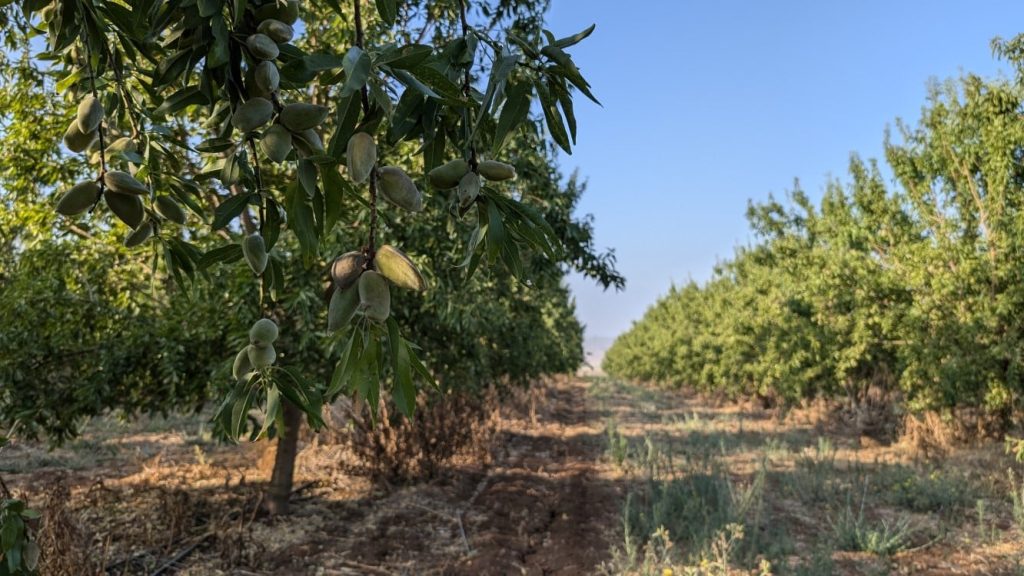
Almond farming is becoming a valuable agribusiness option for Kenyan farmers who want to move away from traditional cash crops like coffee and tea. For many years, Kenya has relied heavily on imported nuts to supply local supermarkets, bakeries, food processing companies, and hotels in cities like Nairobi, Mombasa, Nakuru, and Eldoret. Planting local commercial orchards helps fill this market gap while giving farmers high long term profits.
Fruit Africa Veriplant works closely with farmers across the country to supply genuine, grafted almond seedlings that produce strong yields. Switching from basic crop farming to commercial nut production needs good planning, proper climate selection, and top quality planting materials. When you manage an almond orchard properly, it stays productive and brings in steady annual income for thirty to forty years.
Kenyan Market Potential and Price Realities
The economic demand for almonds in East Africa is driven by rising incomes and a growing urban population looking for healthy food options. Almonds are rich in good fats, plant protein, dietary fiber, and essential vitamins. This makes them popular with health conscious buyers.
Beyond selling raw or roasted nuts, local food companies use processed almonds to make cakes, pastries, snacks, and plant based milk products. The cosmetics industry also buys almond oil to make soaps and skin creams, which creates extra market opportunities for smaller or secondary nuts.
Even with strong demand, farmers must understand how local markets work to make good money. Farmgate prices change depending on nut quality, dryness, and how you sell your crop. Farmers who dry their nuts properly and sell directly to processors or organized buyers earn far more than those who sell in a hurry to informal brokers. Fruit Africa Veriplant helps growers by supplying certified grafted seedlings and offering practical technical support from planting day until harvest.
Ecological Requirements and Climate Suitability in Kenya
Almond trees originally came from dry Mediterranean climates, but modern varieties grow very well in high altitude zones across Kenya. To get good harvests, your farm location must match the climate needs of the crop.
Almonds are deciduous trees that need a brief cool period during dormancy, known as chilling hours, to break buds evenly and produce heavy flowers in spring. In Kenya, these conditions are found in areas situated between 1,200 meters and 2,200 meters above sea level. Suitable zones include parts of the Rift Valley, Laikipia, Nyeri, Meru, Embu, Machakos highlands, Nyandarua, and Uasin Gishu.
Daytime temperatures during the main growing season should stay between 15°C and 32°C. Extreme heat above 40°C during nut growth can burn the hulls and dry out the kernels inside. At the same time, severe cold or frost during flowering can damage flower buds and lower your seasonal harvest.
Rainfall is another vital factor to check before planting. Almond trees grow best in places receiving 500 mm to 800 mm of rain per year, provided the heavy rains do not fall during the flowering months. Heavy rain and fog while trees are blooming stop bees from flying and spread fungal flower diseases. Setting up your orchard on well drained land with good wind movement helps morning dew and rain dry off quickly.
Botany, Scion Varieties, and Rootstock Types
Growing almond trees directly from raw seeds is a costly mistake. Trees grown from seed show unpredictable growth, take six to eight years to bear fruit, and often produce bitter nuts. They also lack natural defense against common soil diseases.
Modern commercial orchards use grafted seedlings. Grafting joins a high yielding sweet almond scion onto a strong, disease resistant rootstock. At Fruit Africa Veriplant, we graft quality scions onto tough rootstocks like GF 677 and Nemaguard. These rootstocks protect the tree against root knot nematodes in light soils, anchor roots deep into the ground to find water, and resist root rot diseases.
Choosing the right scion variety depends on your local weather and how you plan to manage pollination. Nonpareil is the most famous global variety because it has a soft shell, smooth kernel, and high market value. However, Nonpareil needs a secondary pollinizer variety planted next to it to set fruit.
Varieties like Carmel and Mission serve as excellent cross pollinizers while offering strong tree growth and consistent annual harvests. For farmers who want a simple setup, self fertile varieties like Tuono do not need partner trees to set fruit. This makes Tuono an ideal choice for smaller farms. Grafted almond trees from certified nurseries begin producing fruit in their third year after planting.
Variety Comparison Matrix for Commercial Farmers
| Variety Name | Shell Type | Kernel Quality | Pollination Need | Best Growing Conditions in Kenya |
| Nonpareil | Soft / Paper shell | Premium grade, smooth skin | Requires pollinizer (Carmel/Mission) | High altitude, low humidity zones |
| Carmel | Soft shell | High quality medium kernel | Excellent pollinizer for Nonpareil | Medium to high altitude regions |
| Mission (Texas) | Hard shell | Strong flavor, high oil content | Late bloomer, good cross pollinizer | Semi-arid and drier highlands |
| Tuono | Hard shell | Medium quality, disease resistant | Self-fertile (No pollinizer needed) | Smallholder farms, variable climates |
Soil Science, pH Calibration, and Land Preparation
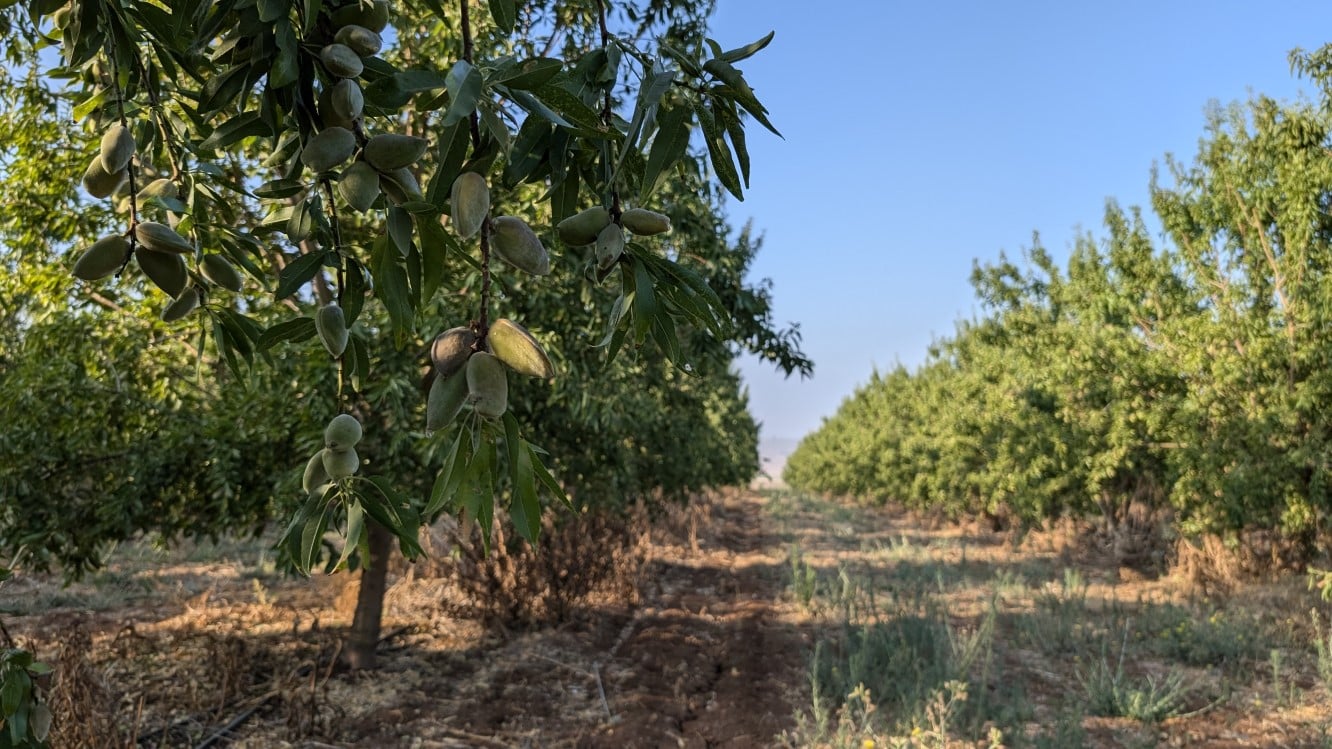
Almond roots grow deep into the ground and need plenty of soil oxygen, which means land preparation is a vital first step. The best soil for almond trees is deep, well drained sandy loam or loam with a pH level between 6.0 and 7.5.
Soils that hold standing water after rain cause root rot and suffocate the tree. Before buying seedlings or digging holes, get a laboratory soil test done to check your soil pH, organic matter levels, and plant nutrients. If your soil test shows an acidic pH below 5.5, apply agricultural lime evenly across the field a few months before planting to bring the pH up into a safe range.
Land preparation starts by clearing bushes, old tree stumps, and tough weeds. Plow the land deeply to break up any hard pan subsoil layers that might stop roots from growing downward. On sloping land, build contour terraces to stop topsoil from washing away during heavy downpours.
Checking soil drainage is simple and essential. Dig a hole one meter deep on your farm and fill it completely with water. If the water takes longer than six hours to drain away completely, the land needs drainage trenches or raised soil mounds at least 40 to 50 centimeters high so tree roots stay out of waterlogged soil.
Orchard Layout, Tree Spacing, and Hole Preparation
Planning a clean orchard layout makes farm work, spraying, tractor movement, and harvesting much easier over the years. Your spacing choice depends on your soil depth, water supply, and equipment plans.
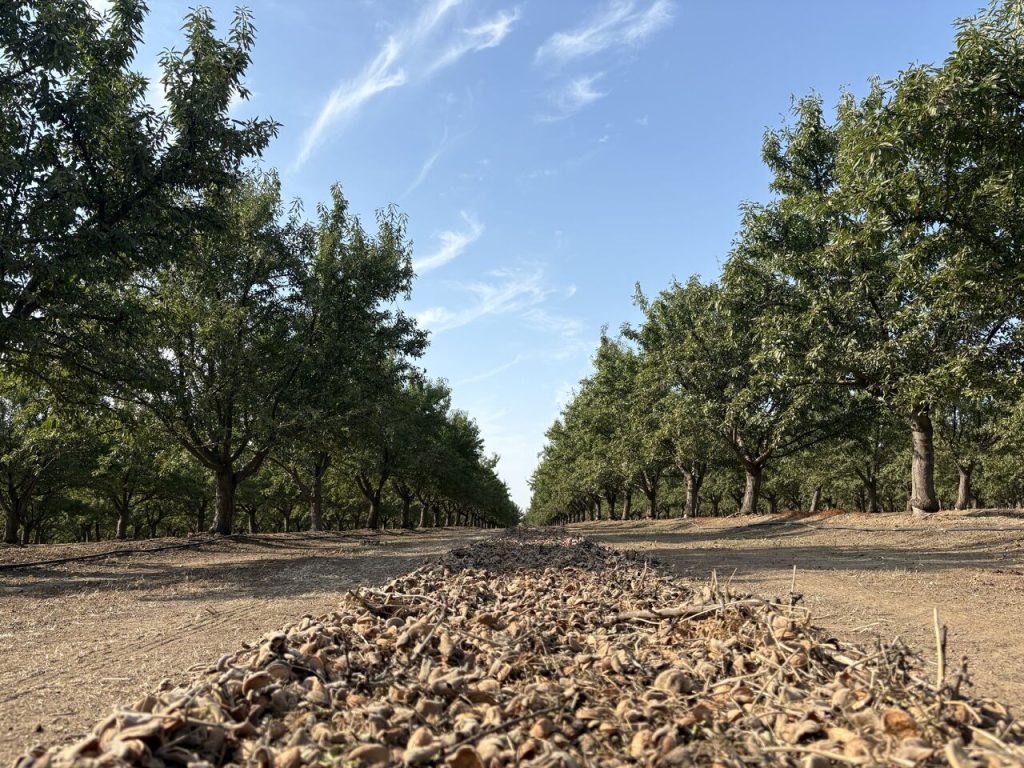
Standard commercial spacing uses 6 meters by 6 meters, which allows about 112 trees per acre. Intensive irrigated farms can use 5 meters by 5 meters to plant 160 trees per acre. In drier regions with limited irrigation water, wider spacing of 7 meters by 7 meters fits 82 trees per acre, giving each tree more soil area to pull moisture from during dry months.
When planting varieties that need cross pollination, you must arrange your rows in a set pattern. A common setup is planting three rows of your main variety like Nonpareil followed by one row of a pollinizer like Carmel or Mission. This arrangement allows honeybees to carry pollen easily between compatible trees.
Mark out your planting grid using pegs and string lines before digging. Dig holes measuring 60 cm wide, 60 cm long, and 60 cm deep. Keep topsoil in one pile and subsoil in a separate pile. Mix the topsoil with 20 kg of well rotted manure, 250 grams of double superphosphate or bone meal, and 50 grams of a bio fungicide like Trichoderma. Loosen the bottom of the hole with a fork before backfilling.
Tree Density and Spacing Matrix
| Spacing Distance | Trees Per Acre | Tree Canopy Area | Ideal Farm Management Type |
| 7 m x 7 m | 82 trees | 49 m² | Semi-arid zones, low water access |
| 6 m x 6 m | 112 trees | 36 m² | Standard commercial orchard |
| 5 m x 5 m | 160 trees | 25 m² | Intensive, fully irrigated orchard |
Step by Step Planting and Establishment Protocol
Planting young almond trees requires careful handling to prevent root damage and transplant shock. The best time to plant in Kenya is at the start of the long rains in March and April or the short rains in October and November. Farms with reliable drip irrigation systems can plant at any month of the year.
Remove the seedling from its nursery bag carefully so the soil around the roots stays intact. Inspect the roots to make sure they are not twisted tightly inside the bag.
Pay close attention to planting depth. The graft union, which appears as a visible bump near the bottom of the main stem, must stay 8 to 10 centimeters above the top of the soil line. Burying the graft union under soil causes the upper stem to rot and allows soil fungi to attack and kill the tree.
Place the seedling upright in the hole and backfill the amended topsoil in layers. Press the soil down gently around the root ball with your hands to remove air pockets without crushing the soil tight.
Drive a straight wooden stake into the ground next to the stem and tie the seedling to it loosely using soft fabric or nursery tape. Water the seedling immediately with 20 liters of water to settle the soil. Spread a 10 cm layer of dry grass or straw mulch around the tree basin to hold soil moisture, leaving a clear 10 cm gap between the mulch and the tree stem to prevent bark rot.
Seedling Costs and Purchasing Guidance
Buying high quality grafted seedlings is the most important decision you will make for your orchard. Seedling prices in Kenya range from KSh 800 to KSh 2,500 per plant depending on the seedling age, rootstock type, stem thickness, and order quantity.
Lower priced seedlings are usually younger plants that need extra nursery care before field planting. Older, hardened seedlings with thick stems cost more upfront but establish faster and suffer fewer field losses.
Always buy your planting materials from reputable nurseries that provide clean scion stock and disease free rootstocks. Cheap, uncertified seedlings often carry hidden root problems, viral diseases, or incorrect variety labels that cost you years of wasted time and money. Fruit Africa Veriplant provides verified grafted almond stock backed by practical agronomic support to ensure your farm gets off to a strong start.
Irrigation Management and Water Needs
While mature almond trees can survive dry spells once their roots go deep, getting high nut yields requires steady irrigation. Relying only on unpredictable rain leads to small nuts, empty shells, and early nut drop.
Water needs change depending on the age of the tree and the growth stage. The highest demand for water happens during kernel development when the nut meat fills inside the shell. Lacking water during this period lowers your final harvest weight and kernel quality. Reduce watering slightly as harvest approaches so hulls can split open naturally on the tree.
Drip irrigation is the most efficient system for almond orchards. It delivers water straight to the root zone with very little evaporation or weed growth.
Young trees in their first year need 10 to 15 liters of water two to three times a week depending on weather conditions. As trees grow into bearing age by year four, weekly water needs increase to 40 to 80 liters per tree during dry months. Checking soil moisture regularly using hand tests or soil meters prevents both overwatering and underwatering.
Fertilizer Schedule and Soil Nutrition
A balanced fertilizer plan replenishes the nutrients pulled from the soil by growing trees and annual harvests. Organic matter forms the base of good soil health. Mature trees benefit from 30 to 40 kilograms of well rotted farmyard manure applied once a year around the drip line.
Inorganic fertilizer choices should be based on your tree age and regular soil tests. Young trees need balanced amounts of nitrogen, phosphorus, and potassium to build strong branches and a wide canopy.
When trees start bearing heavy crops, their need for potassium increases significantly. Potassium helps manage water movement inside the tree, improves kernel filling, and hardens the shell. Apply nitrogen in split amounts, giving the first portion just before spring buds open and the second portion after fruit set.
Micronutrients like zinc, boron, and calcium are also essential for healthy crop growth. Boron deficiency leads to poor flower setting, flower drop, and defective kernels. Applying foliar sprays containing boron just before flowering helps improve fruit set. Avoid heavy nitrogen applications late in the season, as this causes weak shoot growth that suffers during dry spells.
Annual Nutrition and Fertilizer Schedule
| Tree Age | Organic Manure (kg/tree/yr) | Inorganic Fertilizer Types | Key Foliar Sprays |
| Year 1 | 15 kg | NPK 17:17:17 (150 g split in 3 applications) | Zinc + Boron spray in spring |
| Year 2 | 20 kg | NPK 17:17:17 (300 g) + CAN (100 g) | Calcium + Magnesium twice yearly |
| Year 3 | 30 kg | NPK 15:15:15 (500 g) + MOP (200 g) | Boron spray at 10% flowering |
| Year 4+ | 40 kg | NPK 10:26:10 (1 kg) + Potassium Nitrate (400 g) | Full micronutrient suite post-harvest |
Pruning Systems and Canopy Maintenance
Pruning young almond trees forms a strong branch structure that can hold heavy nut loads without breaking. It also allows sunlight to reach inner leaves and fruit spurs.
The open center or vase shape is the standard training method for almond orchards. At planting time, cut the main stem back to a height of 70 to 80 centimeters to encourage side branches to grow. During the first dry season, select three to four strong main branches pointing in different directions around the trunk to form your main frame, and remove competing central stems.
Annual pruning on mature trees involves cutting out dead, diseased, crossing, or shading branches. Remove fast growing vertical water shoots that steal light from inner bearing wood.
Prune during the dry, dormant season when tree growth stops. Seal large cut surfaces with protective tree paint to keep out fungal spores. Clean your pruning tools with disinfectant between trees to avoid spreading wood diseases across the orchard.
Pollination Management and Bee Hives
Managing pollination is mandatory if you plant self incompatible varieties like Nonpareil. Almond pollen is heavy and sticky, meaning wind alone cannot carry it between trees. Honeybees do almost all the pollination work in commercial orchards.
Placing active honeybee hives inside the orchard is essential for a good harvest. Rent or setup two to three active beehives per acre about three days before the first almond blossoms open. Space hives evenly along the edges of your orchard block where bees can fly easily.
Never spray harmful chemical insecticides while trees are blooming. Spraying insecticides during bloom kills bees and damages your fruit set. If you must apply crop protection products during the flowering period, use bee safe organic options and spray late in the evening after bees have returned to their hives.
Integrated Pest Management (IPM)
Protecting your orchard against pests requires a combination of good field sanitation, monitoring, and targeted pest control methods.
Peach twig borer is a major insect pest that tunnels into soft spring shoots, causing shoot dieback. Later in the season, larvae attack developing nuts. Installing pheromone traps helps you track moth numbers so you can spray biological controls like Bacillus thuringiensis at the right time.
Navel orangeworm is another serious pest whose caterpillars feed on kernels inside split hulls near harvest time. Controlling this pest relies on clean field sanitation. Remove and burn all old mummy nuts left hanging on branches after harvest, as these nuts serve as winter breeding grounds for pests.
Spider mites can also multiply during hot, dry weather, causing leaves to turn brown and drop early. Keeping cover crops between your tree rows gives shelter to beneficial predator insects that feed on spider mites naturally.
Integrated Disease Management
Fungal and bacterial diseases can reduce tree health and crop yield if left unchecked. Bacterial canker causes dark gum to ooze from main trunks and leads to branch dieback. You can prevent this disease by planting on resistant rootstocks, avoiding excess nitrogen, and painting tree trunks with copper infused whitewash.
Shot hole fungus causes small reddish spots on leaves that dry up and drop out, leaving small round holes in the foliage. Severe infections cause early leaf drop and weaken the tree. Prevent shot hole fungus by applying protective copper sprays at leaf drop in autumn and again at early bud swell in spring.
Root rot caused by Phytophthora fungi occurs mainly in wet, poorly drained soils. The best defense is planting on well drained land, keeping graft unions high above the soil line, and avoiding overwatering around the base of the trunk.
Major Pests and Diseases Quick Guide
| Problem | Type | Main Symptoms | Recommended Control Practice |
| Peach Twig Borer | Insect | Tunneling in tender shoots, damaged nuts | Bt sprays, pheromone monitoring traps |
| Navel Orangeworm | Insect | Caterpillars inside split hulls | Destroy all winter mummy nuts |
| Spider Mites | Insect | Leaf stippling and early leaf drop | Preserve cover crops, apply miticides |
| Bacterial Canker | Disease | Dark gum oozing from trunk, dieback | Copper whitewash, resistant rootstocks |
| Shot Hole Fungus | Disease | Small round holes in leaves, leaf drop | Copper sprays at leaf fall and bud swell |
| Root Rot | Disease | Yellow leaves, collar rot, dying tree | High graft unions, well-drained soil |
Harvesting, Hulling, and Sun Drying
Harvesting at the right time ensures you get high kernel recovery and clean nuts. Harvesting starts when 75% to 90% of the hulls split open naturally on the tree, showing the brown nut shell inside.
Leaving mature nuts on the tree for too long increases the risk of bird damage, insect attack, and mold. Harvest by spreading clean tarpaulins under the tree canopy and gently striking the main branches with flexible poles to knock the nuts down.
Remove the outer green hulls within 24 hours of harvest. Leaving hulls on wet nuts causes dark shell staining, bitter flavors, and mold growth.
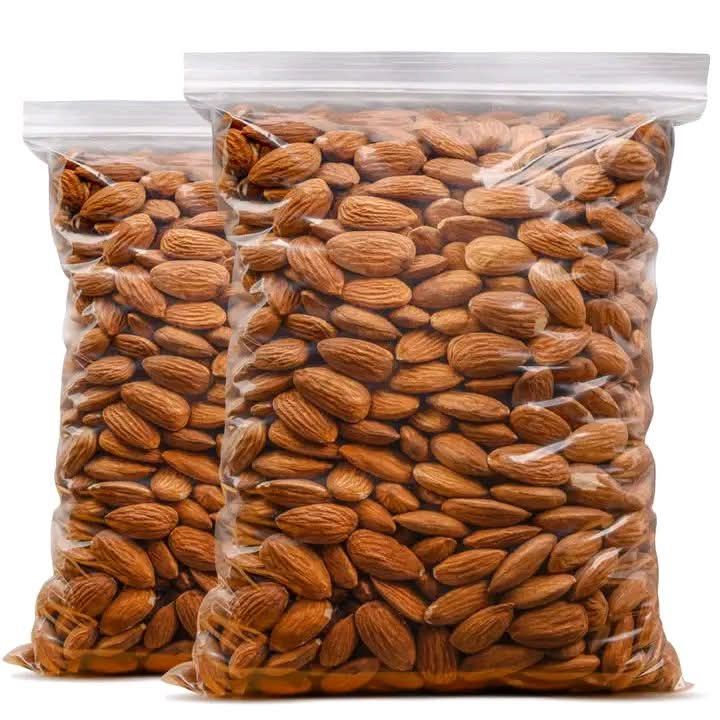
After de-hulling, spread the in-shell nuts in thin layers on raised mesh trays under direct sun or inside a ventilated solar dryer. Dry the nuts until the kernel moisture content drops below 6%. You can test this easily by bending a sample kernel; a fully dry kernel breaks with a sharp snap rather than bending softly.
Post Harvest Storage and Quality Control
Proper storage protects your harvested nuts from insects, moisture, and spoilage while you arrange sales. Store clean, dry in-shell nuts in new jute or woven sacks elevated on wooden pallets away from concrete floors.
Keep your storage room cool, dry, well ventilated, and fully sealed against rats and mice. Never store nuts near fuels, chemicals, or strong smelling produce, as almond kernels absorb surrounding odors quickly.
Sorting your harvest by size, shell cleanliness, and kernel quality helps you negotiate higher prices with buyers. Sourcing certified grafted seedlings from Fruit Africa Veriplant gives you uniform nut size and good kernel recovery, making your final product more attractive to commercial buyers.
10 Year Cost and Financial Analysis per Acre
Starting a one acre commercial almond orchard requires initial capital, but it builds a long term profitable business. The financial breakdown below shows estimated costs and income projections over a ten year period for an orchard with 112 trees per acre (using 6m by 6m spacing) and an average of 100 bearing trees.
Establishment Costs in Year 1
| Setup Expense Item | Calculation / Quantity | Total Cost (KSh) |
| Grafted Seedlings (Fruit Africa Veriplant) | 112 trees @ KSh 1,200 average | KSh 134,400 |
| Land Clearing & Deep Plowing | Mechanical contractor rate | KSh 18,000 |
| Hole Digging & Soil Preparation | 112 holes @ KSh 120 | KSh 13,440 |
| Manure & Planting Fertilizers | 2.2 tonnes decomposed manure + DAP | KSh 22,000 |
| Drip Irrigation System Line | Micro-drip kit per acre | KSh 65,000 |
| Labor, Planting & Mulching | Casual labor setup | KSh 12,000 |
| Total Year 1 Setup Investment | KSh 264,840 |
10 Year Revenue Trajectory
During years one and two, trees focus entirely on growing branches and roots, producing zero crop income. Farmers can intercrop short season legumes like dry beans or green grams between rows to earn extra income and cover early weeding costs.
By year three, trees yield a small initial harvest of about 2.5 kg of in-shell nuts per tree (yielding 100 kg of clean kernels per acre). At an average market price of KSh 900 per kg of processed kernels, gross revenue reaches KSh 90,000 against operating costs of KSh 35,000, bringing a net profit of KSh 55,000.
In year four, tree yields increase to 6 kg per tree (240 kg kernels per acre), generating KSh 216,000 gross revenue against KSh 45,000 operating costs, leaving KSh 171,000 net profit.
By year five, production reaches 12 kg per tree (480 kg kernels per acre). At KSh 1,000 per kg, gross income rises to KSh 480,000 against KSh 60,000 costs, yielding KSh 420,000 net profit.
In year six, yields climb to 18 kg per tree (720 kg kernels per acre), producing KSh 720,000 gross revenue against KSh 75,000 costs, leaving KSh 645,000 net profit.
From year seven onward, mature trees achieve full production of 22 kg per tree (880 kg kernels per acre). At KSh 1,000 per kg, gross income reaches KSh 880,000 annually. After subtracting annual maintenance costs of KSh 85,000, your net annual profit settles at roughly KSh 795,000 per acre.
10-Year Orchard Cash Flow Matrix (1 Acre)
| Year | Yield Per Tree (In-shell) | Total Kernel Yield / Acre | Price Per kg (Kernels) | Gross Revenue (KSh) | Operating Cost (KSh) | Net Annual Profit (KSh) |
| Year 1 | 0 kg | 0 kg | — | KSh 0 | KSh 264,840 | -KSh 264,840 |
| Year 2 | 0 kg | 0 kg | — | KSh 0 | KSh 25,000 | -KSh 25,000 |
| Year 3 | 2.5 kg | 100 kg | KSh 900 | KSh 90,000 | KSh 35,000 | +KSh 55,000 |
| Year 4 | 6.0 kg | 240 kg | KSh 900 | KSh 216,000 | KSh 45,000 | +KSh 171,000 |
| Year 5 | 12.0 kg | 480 kg | KSh 1,000 | KSh 480,000 | KSh 60,000 | +KSh 420,000 |
| Year 6 | 18.0 kg | 720 kg | KSh 1,000 | KSh 720,000 | KSh 75,000 | +KSh 645,000 |
| Year 7+ | 22.0 kg | 880 kg | KSh 1,000 | KSh 880,000 | KSh 85,000 | +KSh 795,000 |
Common Mistakes to Avoid in Almond Farming
Many new farmers lose money by making basic mistakes during site selection and early orchard setup.
-
Planting in poorly drained soils: Almond roots rot quickly in standing water. Always check soil drainage before planting.
-
Burying the graft union: Placing the graft bump below ground level causes bark rot and stem disease.
-
Buying uncertified seedlings: Using cheap, seed grown plants leads to poor yields, late fruiting, and bad nut quality.
-
Ignoring cross pollination: Planting a single self incompatible variety like Nonpareil without partner trees leads to zero fruit set.
-
Skimping on drying: Storing damp nuts causes mold growth and destroys nut value.
Why Choose Fruit Africa Veriplant Seedlings
Fruit Africa Veriplant is committed to helping farmers across Kenya establish profitable commercial fruit orchards. We supply true to type grafted almond seedlings produced under strict quality controls.
Our team inspects mother trees regularly to ensure scions are healthy, productive, and free from disease. We also harden all young seedlings in open nursery conditions so they adapt quickly when planted on your farm. Whether you need a small batch of trees for a trial block or thousands of seedlings for a large commercial project, we provide planting materials and agronomy support to help you succeed.
Contact Us Today
- Head Office: Ruiru, Kiambu County, Kenya
- Nursery Hubs: Murang’a, Nairobi, and Embu
- Phone Call: +254 714 994 444
- WhatsApp Chat: Message us on WhatsApp
- Email: sales@fruitafrica.org
- Website: www.fruitafrica.org
- Request a Quote: fruitafrica.org/request-for-quotation/