
Description
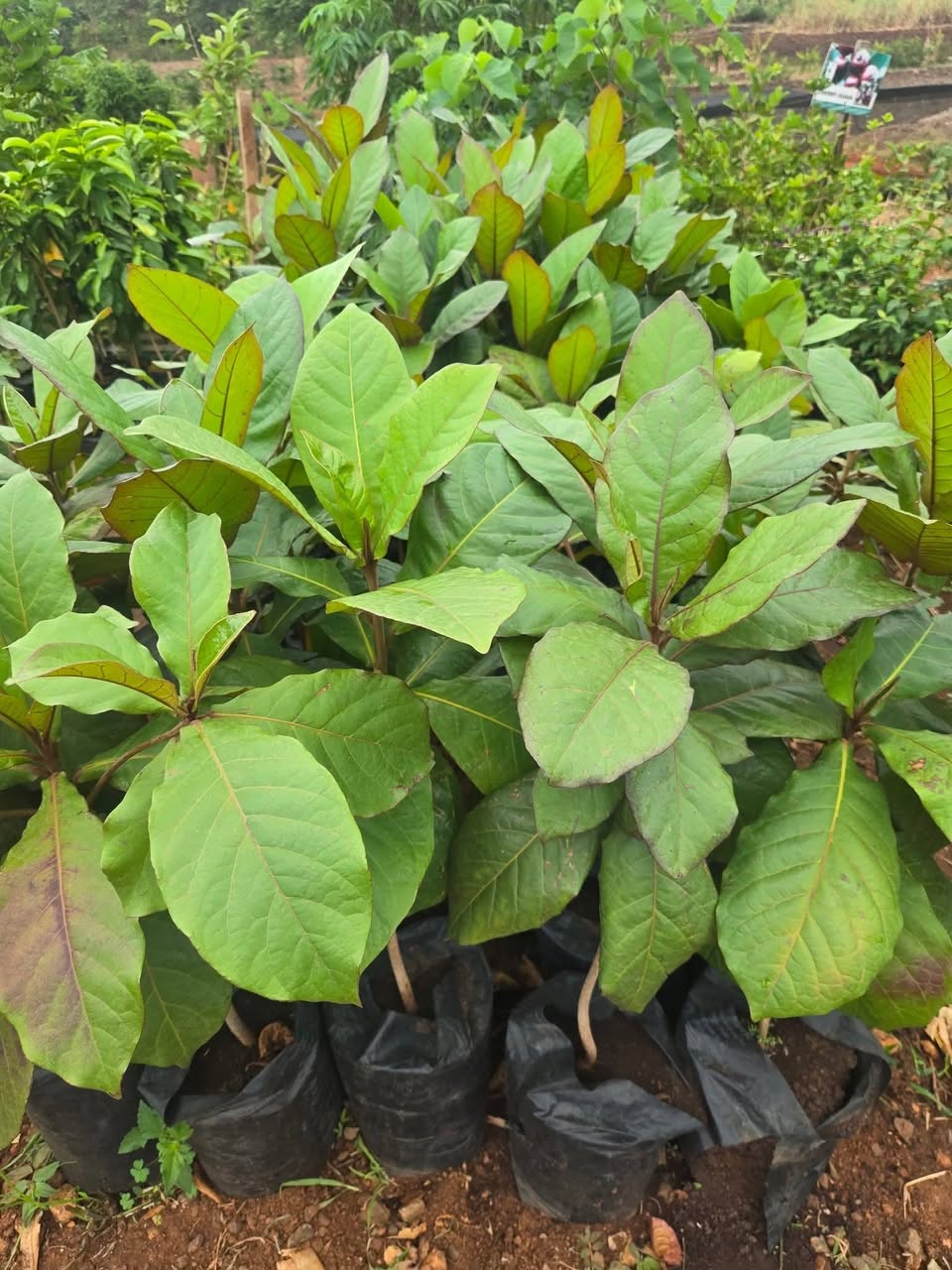
Almond Seedlings in Kenya: Complete Guide to Planting, Spacing, Yield and Profitability
Almond farming in Kenya is picking up. Farmers are looking for crops that give good money and do not need replanting every year. Almond trees are a long-term investment. They produce for more than 25 years if well managed. The crop has several good things going for it. It lives long, gives high returns, and there is growing demand from people who want healthy food. Almonds also do well in some dry areas of Kenya.
People are eating more healthy foods and plant-based products. Almonds are full of protein, healthy fats, calcium, magnesium, antioxidants and Vitamin E. People eat them as snacks. They are also used in food processing, cosmetics, and wellness products. For Kenyan farmers who want a business that lasts, almond farming offers a good chance to build wealth and improve farm production.
Fruit Africa Nurseries is a trusted source of high-quality almond seedlings in Kenya. With locations in Murang’a, Nairobi, and Embu, the nursery serves farmers across the country. They offer KEPHIS-certified seedlings that are well-hardened and ready for transplanting. Contact Fruit Africa Nurseries at +254714994444 or sales@fruitafrica.org for genuine, high-quality seedlings.
What Are Almonds?
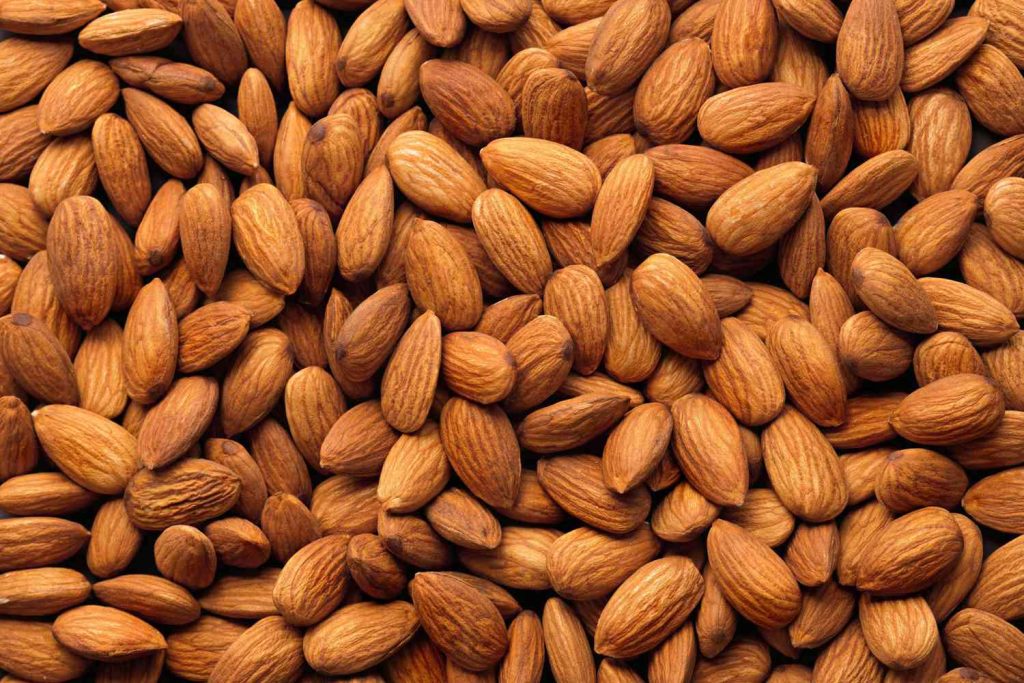
We call the almond a nut, but it is actually the seed of the almond fruit. The almond tree is related to apricot, cherry and peach trees. The almond fruit is fleshy and pink. It has a stone-like seed inside which yields almonds. Almond trees produce white or pink flowers before leaves appear. The flowers last 2 to 3 weeks and need cross-pollination. Almond fruits have a hard shell that covers the edible kernel.
There are two main types. Sweet almonds are eaten raw or processed. Bitter almonds are used for oil or flavouring. The almonds you buy in the supermarket are sweet almonds. They are removed from their shells and ready to eat. Shelled almonds are oval, off-white in colour, and covered by a thin brownish skin. They have a soft texture and a creamy, sweet taste. They add crunch to dishes or are eaten on their own.
Bitter almonds are not eaten because they may contain toxic substances. But the oil from bitter almonds, after the toxins are removed, is very valuable. It is used for medicine and cosmetics. It is also used as a flavouring agent.
Why Choose Almond Seedlings from Fruit Africa Nurseries?
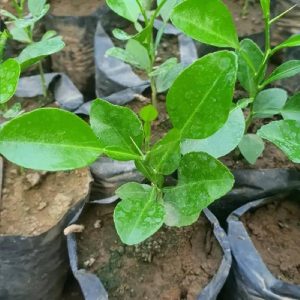
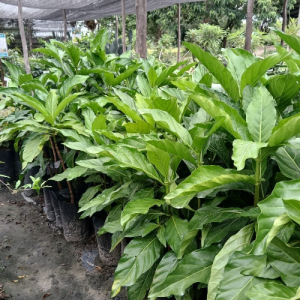
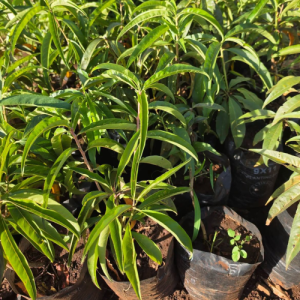
Fruit Africa Nurseries provides high-quality almond seedlings. Each seedling is well-developed, giving the tree a strong foundation and faster growth. The seedlings are certified and hardened, ready to transplant. They have a high survival rate and give farmers confidence in their investment.
At Fruit Africa Nurseries, they value farmers and their success. That is why they offer affordable pricing for superior quality seedlings.
Almond Varieties Available at Fruit Africa Nurseries
Nonpareil
Nonpareil is the most popular almond variety worldwide. It produces large, flat, and smooth nuts. The shell is thin and easy to crack. The kernel is light in colour and has a sweet flavour. Nonpareil is the preferred variety for the export market because of its quality and appearance.
The tree is vigorous and productive. It blooms early and needs cross-pollination with another variety. It performs well in areas with warm days and cool nights. Nonpareil is widely grown in California and is now being introduced to Kenya with good success.
Carmel
Carmel is another popular almond variety. It produces medium to large nuts with a hard shell. The kernel is plump and has a good flavour. Carmel is a good pollinizer for Nonpareil because its bloom time overlaps.
The tree is strong and productive. It is resistant to some diseases and pests. Carmel is suitable for both fresh consumption and processing. It is grown alongside Nonpareil in many orchards.
Butte
Butte is a productive almond variety with a hard shell. The kernel is long and narrow with a good flavour. Butte is often used as a pollinizer for other varieties. It has a late bloom time, which helps avoid frost damage.
The tree is vigorous and reliable. It produces consistent yields under good management. Butte is suitable for areas with cooler temperatures.
Padre
Padre is a late-blooming almond variety. It produces large nuts with a hard shell. The kernel is plump and has a sweet flavour. Padre is a good pollinizer for Nonpareil and other early-blooming varieties.
The tree is productive and disease-resistant. It is suitable for areas with late frosts. Padre is grown in many parts of California and is being introduced to Kenya.
Sonora
Sonora is an early-blooming almond variety. It produces large, thin-shelled nuts. The kernel is light in colour and has a sweet flavour. Sonora is a good pollinizer for Nonpareil.
The tree is vigorous and productive. It is suitable for warm areas with early springs. Sonora is becoming popular among Kenyan almond farmers.
Comparing Almond Varieties
| Feature | Nonpareil | Carmel | Butte | Padre | Sonora |
|---|---|---|---|---|---|
| Nut Size | Large | Medium-Large | Medium | Large | Large |
| Shell Type | Thin | Hard | Hard | Hard | Thin |
| Bloom Time | Early | Mid | Late | Late | Early |
| Kernel Colour | Light | Light | Light | Light | Light |
| Flavour | Sweet | Good | Good | Sweet | Sweet |
| Pollinizer | Needs cross | Good pollinizer | Good pollinizer | Good pollinizer | Good pollinizer |
| Best Use | Export, fresh | Processing | Processing | Fresh, processing | Fresh, export |
| Disease Resistance | Moderate | Good | Good | Good | Moderate |
Ecological Requirements for Almonds
Climate Requirements
Almond trees need a Mediterranean climate. This means warm, dry summers and cool, wet winters. The trees need a period of cold dormancy to break bud and flower properly. This is called chilling requirement. Almonds need 300 to 500 hours of cold temperatures below 7 degrees Celsius.
Almond trees do not like high humidity. It encourages diseases. They need well-drained soils and good air circulation. Almonds are drought-tolerant but need water during the growing season for good yields.
In Kenya, almonds do well in areas with moderate temperatures and low humidity. They are suitable for parts of Central Kenya, the Rift Valley, and some semi-arid areas.
Temperature Requirements
Almonds need temperatures between 15 and 30 degrees Celsius during the growing season. They can tolerate hot summers but need cool nights for good nut development. Winter temperatures should be cool enough to meet the chilling requirement.
Frost during bloom is a major threat. Almond flowers are sensitive to frost. Areas with late frosts should choose late-blooming varieties like Butte or Padre.
Soil Requirements
Almonds need deep, well-drained soils. They do not tolerate waterlogged soils. The soil pH should be between 6.0 and 7.5. Sandy loam soils are ideal. The soil should be fertile and rich in organic matter.
Almonds have a deep root system. They can access water and nutrients from deep in the soil. This makes them drought-tolerant once established.
Rainfall and Irrigation
Almonds need 500 to 800 millimetres of water per year. In areas with lower rainfall, irrigation is needed. Drip irrigation is the most efficient system. It delivers water directly to the root zone.
Irrigation is most important during flowering, fruit set, and nut development. Water stress during these stages reduces yields and nut quality.
Best Counties for Almond Farming in Kenya
Central Kenya
Central Kenya has suitable conditions for almond farming. Counties like Kiambu, Murang’a, Nyeri, and Kirinyaga have moderate temperatures and good soils. The altitude and climate are favourable. These areas have good access to markets and services.
Rift Valley
Parts of the Rift Valley are suitable for almond farming. Nakuru, Laikipia, and parts of Kericho have the right conditions. The cooler temperatures help meet the chilling requirement. The soils are generally good.
Semi-Arid Areas
Almonds can grow in semi-arid areas with irrigation. Counties like Machakos, Makueni, and Kitui have suitable temperatures. Irrigation is needed to supplement rainfall. These areas have good market access.
Eastern Kenya
Parts of Eastern Kenya are suitable for almond farming. Meru and Embu have moderate temperatures and good soils. The altitude and climate are favourable. These areas are close to major markets.
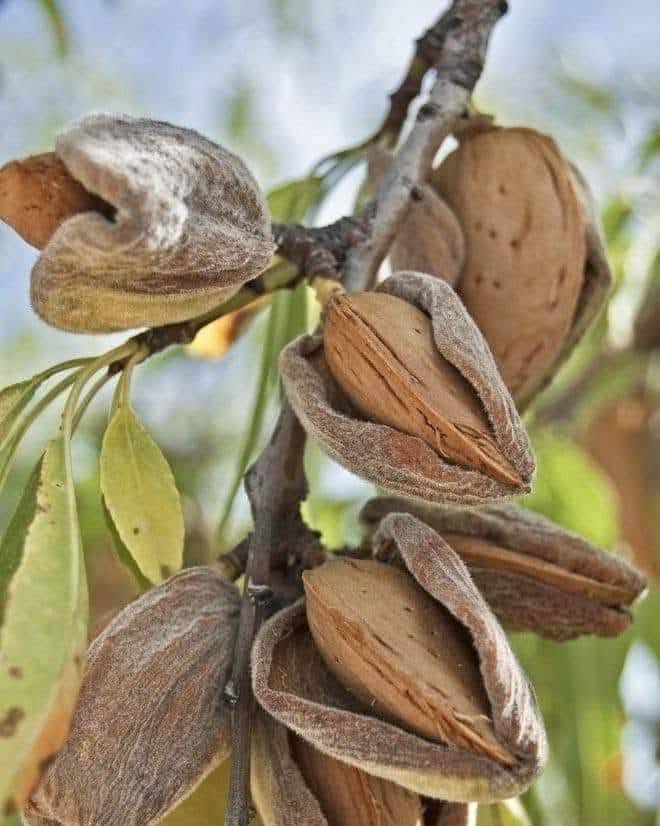
A branch from an almond tree
How to Plant Almond Seedlings
Land Preparation
Clear the land of weeds and debris. Plough the land to break up the soil. Remove any rocks or roots that could interfere with planting. Prepare the field for planting.
Hole Preparation
Dig holes that are 2 feet by 2 feet by 2 feet. Separate the topsoil from the subsoil. Mix the topsoil with 20 kilograms of well-decomposed manure. Add 200 grams of DAP fertilizer. Mix everything well and put it back into the hole.
Spacing
The recommended spacing for almond trees is 6 metres by 6 metres. This gives approximately 112 trees per acre. Wider spacing allows the trees to grow fully and produce well. Closer spacing requires more intensive management.
Planting
Plant the seedlings at the same depth as they were in the nursery. Firm the soil around the roots. Water immediately after planting. Mulch around the tree to conserve moisture.
Planting Time
The best time to plant almond seedlings is at the start of the rainy season. This allows the trees to establish before the dry season. In areas with irrigation, planting can be done year-round.
Pollination Requirements
Almonds are not self-pollinating. You need at least two different varieties that bloom at the same time. The recommended ratio is 80% main variety and 20% pollinizer. Nonpareil is commonly planted with Carmel or Sonora as pollinizers.
Bees are needed for pollination. Farmers should place beehives in the orchard during bloom. This improves fruit set and yields.
Almond Tree Management Practices
Weed Control
Almond orchards should be kept weed-free. Weeds compete with the trees for water and nutrients. They also harbour pests and diseases. Mulching helps suppress weeds. Mechanical weeding is also effective.
Pruning
Pruning is important for almond production. It maintains the shape of the tree and promotes new growth. It improves light penetration and air circulation. It also removes diseased or damaged branches.
Almond trees are trained to an open centre system. This allows light to reach all parts of the tree. Pruning is done annually after harvest. Remove any shoots growing below the base of the tree.
Nutrition
Almond trees need adequate nutrition for good production. Nitrogen is important for growth. Phosphorus is important for root development. Potassium is important for nut development.
Apply fertilizer based on soil analysis. A typical program includes nitrogen, phosphorus, and potassium. Organic manure is also important. Apply manure annually around the base of the tree.
Irrigation
Irrigation is important for almond production. Almonds need water during the growing season. The most critical periods are flowering, fruit set, and nut development.
Drip irrigation is the most efficient system. It delivers water directly to the root zone. It reduces water waste and disease risk. Maintain consistent moisture for good yields.
Mulching
Mulching is essential for almond production. It conserves soil moisture and suppresses weeds. It also provides nutrients as it decomposes. Apply dry grass or other organic mulch around the tree.
Pests and Diseases of Almonds
Common Pests
Almonds are affected by several pests. The major pests include navel orangeworm, peach twig borer, mites, aphids, and scale insects. Farmers should monitor their orchards regularly. Take action when pests are detected.
Navel orangeworm is the most serious pest. It attacks the nuts and causes damage. Good orchard sanitation is important. Remove and destroy infested nuts.
Common Diseases
Almonds are affected by several diseases. The major diseases include brown rot, leaf curl, shot hole, and gummosis. Good management practices reduce disease pressure. Use resistant varieties when available.
Brown rot affects flowers and fruits. It causes fruit rot and reduces yields. Fungicide applications may be needed. Good air circulation reduces disease pressure.
Disease Management
To control gummosis, remove the diseased bark and allow the area to dry out. For leaf curl, apply copper sprays in autumn. For shot hole, apply fungicides during wet periods.
Clean cultivation and pruning reduce disease pressure. Remove and destroy infected plant parts. This prevents the spread of diseases.
Pest Control
Monitor your orchard regularly for pests. Use cultural controls like pruning and sanitation. Apply chemical controls when necessary. Follow the recommended rates and timing.
Biopest control is a good option. It reduces chemical use and protects the environment. Use beneficial insects and natural predators.
Almond Maturity and Harvest
Maturity Timeline
Almond trees start bearing fruit in 3 to 5 years. Full production is reached in 6 to 8 years. The trees continue to produce for more than 25 years.
The profitability of the trees starts at around 5 years. Production increases every year as the trees grow. The highest yield is attained in the 8th to 10th year.
Flowering
Almond trees bloom in early spring. The flowers appear before the leaves. The flowers need cross-pollination to set fruit. Bees are the primary pollinators.
Fruit Development
After pollination, the fruit develops over several months. The fruit matures in late summer to early autumn. The hull splits open to reveal the shell. The shell contains the kernel.
Harvesting
Almonds are harvested when the hull splits open. The nuts are shaken from the tree onto the ground. They are left to dry in the sun. They are then swept into rows and collected.
Mechanical harvesters are used in commercial orchards. The nuts are cleaned and processed. They are shelled and the kernels are sorted by size and quality.
Profitability of Almond Farming
Revenue per Tree
A mature almond tree produces 10 to 15 kilograms of kernels per year. At a farm gate price of Ksh500 to Ksh800 per kilogram, each tree earns Ksh5,000 to Ksh12,000 per year.
Revenue per Acre
At 112 trees per acre, an acre of almonds produces 1,120 to 1,680 kilograms of kernels per year. At Ksh500 to Ksh800 per kilogram, gross revenue is Ksh560,000 to Ksh1,344,000 per acre per year.
Cost of Starting Almond Farming
| Item | Estimated Cost (KES) |
|---|---|
| Seedlings (112 at Ksh400 each) | 44,800 |
| Land Preparation | 20,000 – 40,000 |
| Manure and Compost | 20,000 – 30,000 |
| Planting Labour | 10,000 – 20,000 |
| Irrigation Equipment (if needed) | 30,000 – 50,000 |
| Total | 124,800 – 184,800 |
Where to Buy Almond Seedlings
Fruit Africa Nurseries is a trusted source of high-quality almond seedlings in Kenya. With locations in Murang’a, Nairobi, and Embu, the nursery serves farmers across the country.
The company offers KEPHIS-certified seedlings that are well-hardened and ready for transplanting. They have superior quality and exceptional productivity.
At Fruit Africa Nurseries, they value farmers and their success. That is why they offer affordable pricing for quality seedlings.
Contact Fruit Africa Nurseries at +254714994444 or sales@fruitafrica.org to place your order or get more information about their products and services.
Frequently Asked Questions
What is an almond? Almond is the seed of the almond fruit. The almond tree is related to apricot, cherry and peach trees.
How much do almond seedlings cost? Fruit Africa Nurseries offers quality almond seedlings at affordable prices. Contact them for current pricing.
How many trees fit on one acre? At a spacing of 6m by 6m, approximately 112 trees fit per acre.
How long does it take for almonds to mature? Almond trees start bearing fruit in 3 to 5 years. Full production is reached in 6 to 8 years.
How much can I earn from one acre? A well-managed acre can produce Ksh560,000 to Ksh1.34 million annually at current market prices.
What is the best soil for almonds? Almonds need deep, well-drained soils with pH between 6.0 and 7.5. Sandy loam soils are ideal.
Can almonds grow in dry areas? Yes, with irrigation. Almonds are drought-tolerant but need water during the growing season.
What is the spacing for almonds? The recommended spacing is 6 metres by 6 metres. This gives approximately 112 trees per acre.
How do I control pests on almonds? Monitor your orchard regularly. Use cultural controls like pruning and sanitation. Apply chemical controls when necessary.
How do I control diseases on almonds? Use clean planting material. Practice good sanitation. Apply fungicides when necessary.
Do almonds need cross-pollination? Yes. Almonds are not self-pollinating. You need at least two different varieties that bloom at the same time.
What are the best almond varieties for Kenya? Nonpareil, Carmel, Butte, Padre, and Sonora are suitable for Kenya. Nonpareil is the most popular for export.
How long does an almond tree live? Almond trees can produce for more than 25 years under proper management.
Do almonds need irrigation? Irrigation is recommended during dry periods. The trees need consistent moisture for good yields.
What is the best time to plant almonds? The best time is at the start of the rainy season. In areas with irrigation, planting can be done year-round.
Final Checklist
- Select the right location with suitable soil and climate conditions.
- Buy almond seedlings from Fruit Africa Nurseries.
- Prepare the land with proper planting holes and organic matter.
- Plant at the start of the rainy season.
- Space correctly (6m by 6m).
- Water regularly during the establishment phase.
- Apply fertilizer and manure based on soil analysis.
- Control weeds through mulching.
- Prune annually to maintain tree shape.
- Monitor for pests and diseases regularly.
- Harvest when the hull splits open.
- Market your almonds to processors, exporters, or local buyers.



Reviews
There are no reviews yet.