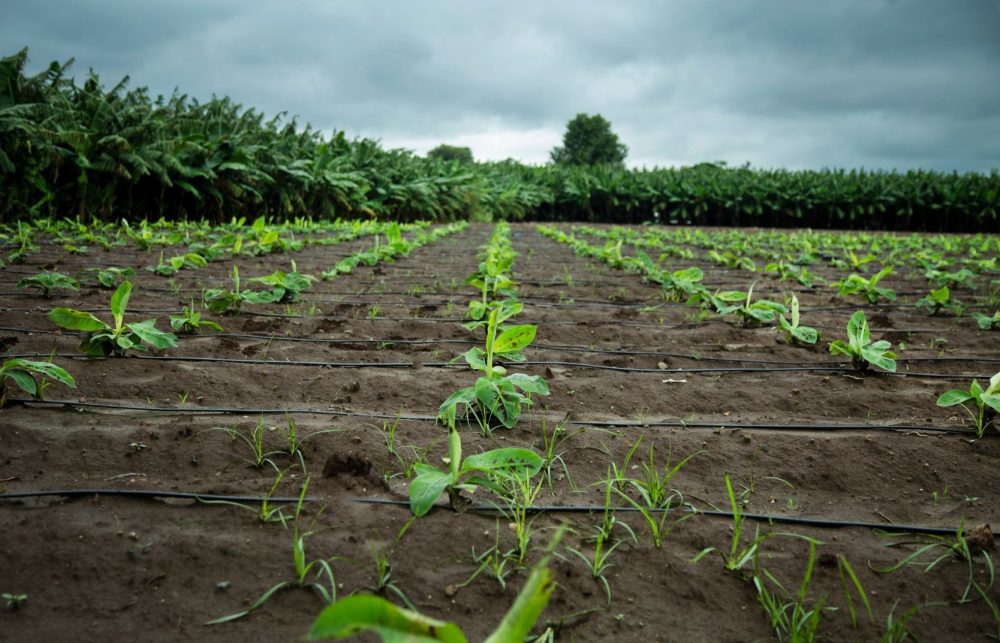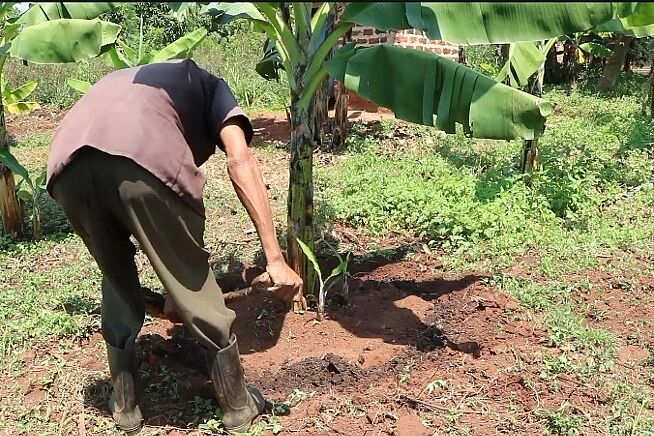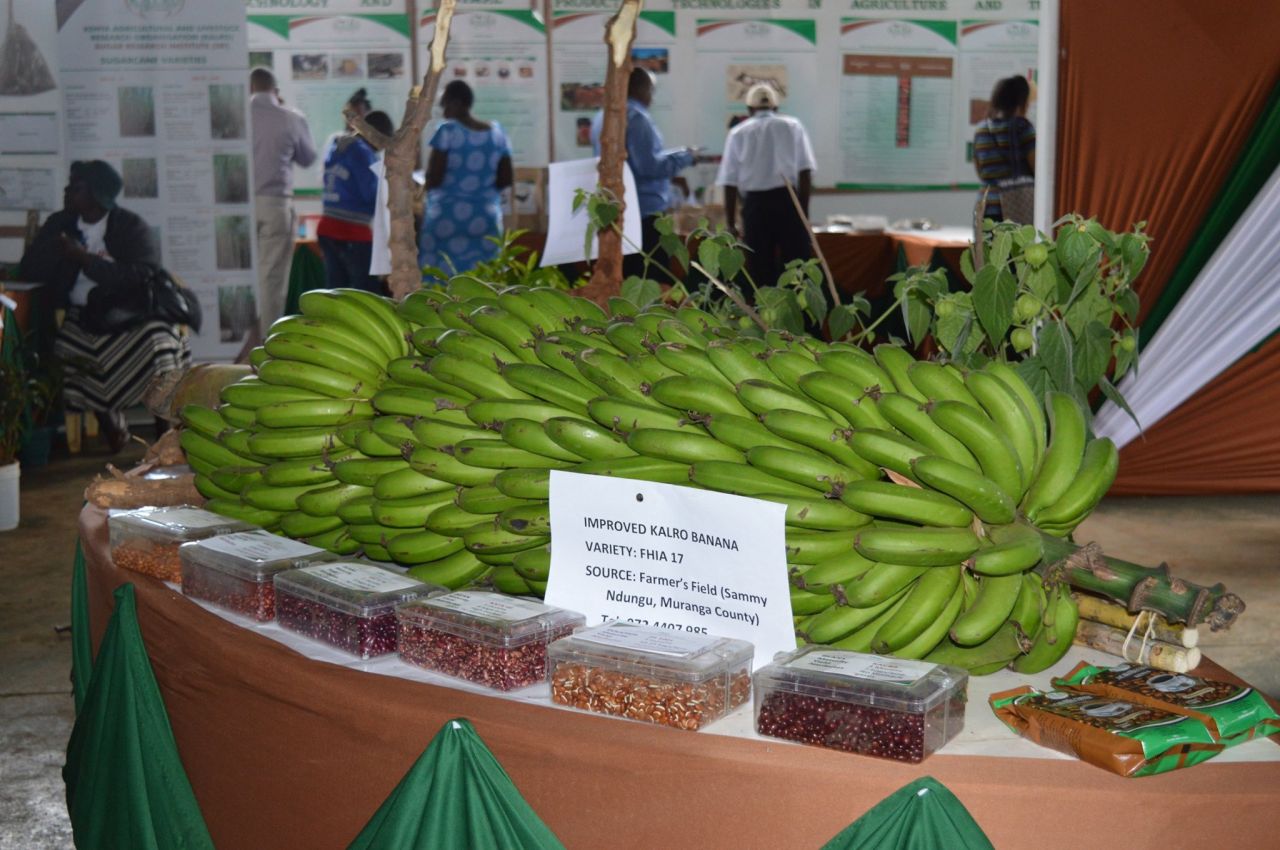

Best banana varieties in Kenya compared by market, bunch weight, maturity, disease response and growing conditions. Find the right type for your farm.
Best Banana Varieties in Kenya: Grand Naine, Williams, FHIA-17 and Ng’ombe for Your Market
By John Matemo, Director, Fruit Africa Veriplant
The best banana varieties in Kenya are the ones your buyer pays for and your land grows well. A hotel kitchen in Nairobi wants ripe, evenly yellow fingers. A trader on the Kisii road wants a heavy green bunch priced by weight. A family in Kirinyaga wants matoke for the pot and a few bunches for the market. No single variety serves all three, and a wrong pick shows itself only after two years of work.
Kenyan buyers clasify bananas into three groups. Dessert bananas, also called ripening bananas, are eaten ripe. Grand Naine and Williams belong here. Cooking bananas are peeled green and then boiled, mashed, roasted or fried. Ng’ombe and Uganda Green belong here. Dual-purpose bananas go either way, and FHIA-17 is the best known example. The groups overlap and the names change from one county to the next, so where some documentations disagree about a variety, you will see both statements side by side.
We are Fruit Africa Veriplant. We grow fruit seedlings in our nurseries and serve farmers through our nurseries in Murang’a, Nairobi and Embu, with our head office in Ruiru, Kiambu County. Farmers normally ask us one question every week: which banana do I plant? Our answer always starts with your buyer and ends with your soil, your water and your budget.
Banana Varieties in Kenya at a Glance
| Banana variety | Main use | Best market | Main consideration |
|---|---|---|---|
| Grand Naine | Dessert | Supermarkets, hotels, fresh fruit | Uniform fruit, needs props |
| Williams | Dessert | Fresh fruit buyers | Confirm shelf life once ripe |
| Giant Cavendish | Dessert | Fresh market and export | Tall plant, needs support |
| Dwarf Cavendish | Dessert | Fresh fruit market | Short plant, confirm the planting material |
| Valery | Dessert | Established local buyers | Confirm local demand |
| Ng’ombe | Cooking and dual-purpose | Matoke, flour and crisps | Strong demand in parts of western Kenya |
| Uganda Green | Cooking | Matoke buyers | Confirm local performance |
| Kiganda | Cooking | Central and Eastern markets | Confirm the planting material |
| Muraru | Dual-purpose | Traditional local markets | Confirm maturity and buyer preference |
| FHIA-17 | Dessert and cooking | Fresh fruit and processing | Test buyer acceptance, manage plant height |
Each variety has its section below with bunch weight, months to harvest, disease response and shelf life.
Types of Banana Varieties Grown in Kenya
Banana is a large crop in Kenya. The 2026 Economic Survey from the Kenya National Bureau of Statistics (KNBS) puts the area under banana at 80,286 hectares in 2025, with production of 2.1 million tonnes. These are provisional figures. A 2021 report in The Standard, quoting TechnoServe, said about 60 percent of national production is green cooking banana and about 40 percent is dessert banana. The same report quoted an FAO source naming Kisii, Nyamira, Bungoma and Kakamega as the largest green banana producers.
Farmers have long planted for a different split. A 2010 survey in Eastern and Central provinces found dessert types made up over 80 percent of farmer preferences, driven by demand in urban markets. The same survey found demand for cooking bananas high, with supply limited and costly where the bananas were on sale. Dessert growers compete on quality and steady delivery because so many farmers grow the same fruit. Cooking banana growers face thinner competition in many areas, and compete mainly on supply.
The survey also listed Muraru, Mutahato, Nyahobe, Mbiri, Kibunda and Kiganda as cooking varieties disappearing in nearly all the areas surveyed, even as demand for them rose. This is a survey from 2010, so read the finding as history and check today’s market with buyers in your own area. A clean, uniform block of a local cooking type stood in thin company then, and the buyers you speak to will tell you whether the same holds now.
Botanists group bananas with letters. Cavendish types and Gros Michel belong to the AAA group. FHIA-17 is an AAAA hybrid, bred in Honduras from four sets of chromosomes. You do not need the letters to buy seedlings, but you will meet them in disease reports. Two AAA types still respond to one wilt strain in opposite ways. Cavendish clones resist Fusarium race 1, and Gros Michel falls to race 1.
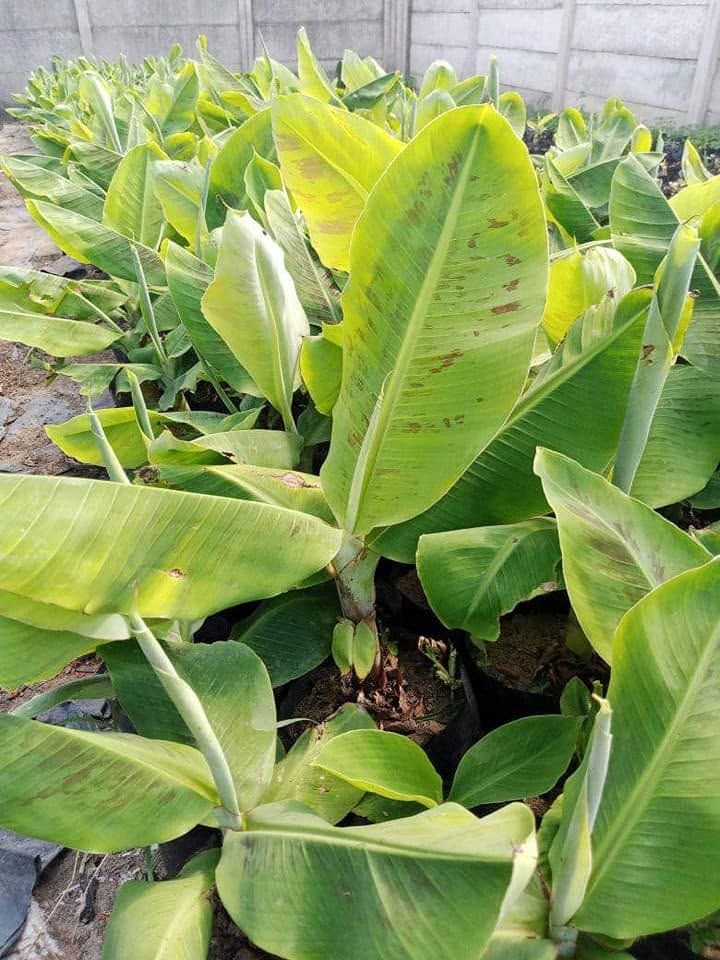
Tissue Culture Banana Seedlings at Fruit Africa Veriplant
How Buyers Judge a Banana Variety
Buyers rarely ask for a variety by the botanical name. They ask about the bunch, the fruit and the delivery.
Bunch weight comes first, because most Kenyan bananas sell by the bunch or by weight. A 2021 report in The Standard gave farm-gate prices of KSh 600 to 700 for a bunch of about 70 kg and KSh 250 for a bunch of about 30 kg, which works out to about KSh 8 to 10 per kg. Roadside retail prices in the same report were KSh 700 for a 60 kg bunch and KSh 300 for a 30 kg bunch. In these figures the heavier bunch fetched slightly more per kilogram.
Finger quality follows. Dessert buyers want well-spaced, evenly sized fingers with a clean peel. The Kenyan variety pamphlet describes Grand Naine as having well-spaced fingers and Williams as having medium to long fingers. Cooking buyers want a firm, starchy finger which peels clean.
Shelf life matters because a trader holds fruit for days before the sale, and a ripe banana which softens early earns nothing. Transport matters in the same way. Most Kenyan farmers move bananas as whole bunches, and knocks on the road bruise the fruit. The Ministry of Agriculture manual for model farmer groups, which we call the Ministry manual in this article, advises removing the hands from the bunch and packing them in reusable plastic crates.
Consistency is the last test, and the test decides whether a buyer returns. A hotel or supermarket orders a weekly volume and wants the same variety, the same size and the same colour every week. Then comes your own question. Does the plant last in your field? A variety which wilts, snaps in the wind or needs props you have no money for ruins even a good price. Every variety below is weighed against all of these tests.
Best Dessert Banana Varieties in Kenya
Dessert bananas serve supermarkets, hotels, schools, juice sellers, kiosks and household shoppers. Five Cavendish-type varieties lead the commercial list in the Kenyan variety pamphlet: Grand Naine, Williams, Giant Cavendish, Dwarf Cavendish and Valery. The table gives what the pamphlet states for each one. The Ministry manual adds more detail, which appears under each variety.
| Variety | Bunch weight | Months to bunch | Fusarium wilt rating in Kenyan documents | Shelf life |
|---|---|---|---|---|
| Grand Naine | 30 to 45 kg | 18 to 22 | No rating stated in the pamphlet | Good, per the Ministry manual |
| Williams | 30 kg | 18 to 24 | Resistant to Fusarium races 1 and 2 | Long in the pamphlet, short once ripe in the Ministry manual |
| Giant Cavendish | 30 kg | 18 to 24 | Tolerant to Panama disease | Long |
| Dwarf Cavendish | 30 kg | 18 to 24 | Resistant to Fusarium wilt, race not named | Long |
| Valery | Up to 30 kg | 18 to 24 | Tolerant to Panama wilt | Long |
Fusarium ratings differ by variety, by pathogen race and by source. A variety described as tolerant to one race is not automatically resistant to another, and a rating which names no race tells you little about a new strain. The KEPHIS surveillance report of 17 July 2026 recorded no detection of Tropical Race 4 (TR4) or banana bunchy top virus in Kenya to date. Keep watching official plant health updates, and bring in planting material only from sources with a traceable record.
Grand Naine
Grand Naine leads the tissue culture plantings in the largest recent Kenyan banana programme. Official Kenyan documents write the name Grand Nain, and both names mean the same Cavendish type. The pamphlet gives a bunch weight of 30 to 45 kg after 18 to 22 months, a sweet flavour, well-spaced fingers and an altitude range of 0 to 1,700 metres.
Rainfall in the listing runs from 900 to 1,800 mm a year, and the soil is deep and well drained with a pH of 5 to 6.5. The Ministry manual calls Grand Naine tolerant of environmental stress, with good shelf life, and says the plants need props. The pamphlet gives 13 tonnes an acre, which is what 444 plants at 30 kg each produce.
The best Kenyan evidence for Grand Naine comes from Taveta. The Danida Market Development Partnership distributed 476,035 tissue culture seedlings from 2020 to 2025, and 96.6 percent were Grand Naine. Yield rose 27 percent, from about 18.59 to 23.56 tonnes an acre. The Taita Taveta organic banana cluster holds a premium export arrangement running to 2034. Training, credit and buyers came with the seedlings, so the result belongs to the whole package and not to the variety alone.
Plant Grand Naine when your buyer wants uniform yellow Cavendish fruit, your block has irrigation or reliable rain, and you will prop the plants. The pamphlet gives no Fusarium rating for Grand Naine. The disease section below sets out what researchers say about Cavendish types and TR4.
Williams
Williams gives large bunches. The pamphlet states 30 kg a bunch after 18 to 24 months, medium to long fingers, excellent taste and resistance to Fusarium races 1 and 2. Williams also withstands dry periods and meets high market demand, says the pamphlet. The Ministry manual praises the flavour and the large bunches.
The two Kenyan documents disagree on shelf life. The pamphlet says long, and firm after ripening. The Ministry manual says short once ripe. Settle this with your own buyer before you plant a large block. Ripen a few bunches from the nursery’s source, hold them the way your trader holds fruit, and count the days before the fingers go soft.
Choose Williams when your buyer values flavour and ripens the fruit within days, or when your field has a race 1 history and you want a variety with a stated rating for race 1. A rating for race 1 gives no promise against TR4.
Giant Cavendish
Giant Cavendish is tall with a strong pseudostem. The pamphlet gives 30 kg a bunch after 18 to 24 months, medium to long fingers, long shelf life and good taste with high market demand. The variety tolerates Panama disease and drought, the pamphlet says. The Ministry manual lists Giant Cavendish among the varieties resistant to Fusarium wilt. Both documents say the plant needs props and falls to black Sigatoka. The Standard recommended Giant Cavendish for the export market in 2022.
Height costs money. A tall plant needs more props, and wind takes more of them down. Giant Cavendish earns a place where drought is the main worry, the block has shelter from wind and you have labour for props. Ask your agricultural officer for a black Sigatoka plan before you order, because this variety has no tolerance to the disease.
Dwarf Cavendish
Dwarf Cavendish stands about 2 metres tall. The pamphlet gives a bunch of 30 kg after 18 to 24 months, long shelf life, good flavour and high market demand. Resistance to Fusarium wilt is stated without a race, and the pamphlet adds resistance to wind damage. The variety performs well under unreliable rainfall. A short plant needs fewer props and loses fewer plants to wind.
One Kenyan pamphlet writes the name Lakatan beside Dwarf Cavendish. International references treat Lakatan as a separate cultivar, so ask your nursery in writing which plant is on your invoice before you order. The Ministry manual describes a short Cavendish type, Chinese Dwarf, which needs no props, grows at altitudes up to 2,100 metres, resists Panama disease and falls to cigar-end rot and black Sigatoka. Check with the nursery whether the plants they supply match this description.
Dwarf Cavendish fits windy ground, cool highland sites and farms short of labour for props. Short varieties take the closest spacing in the Ministry manual, at 3 by 3 metres.
Valery
Valery is tall with a strong pseudostem. The pamphlet gives bunches of up to 30 kg after 18 to 24 months, a sweet flavour, long shelf life and tolerance to Panama wilt. Valery suits highland conditions and responds well to irrigation, according to the pamphlet. Valery makes sense where a local buyer already knows the variety. The pamphlet gives fewer market notes for Valery than for Williams or Giant Cavendish, so speak to your buyer before you commit a large block.
Mbogoya, Apple banana and Kampala: sweet fruit with a wilt problem
Many Kenyan buyers love the sweet taste of Mbogoya, Apple banana and Kampala. Mbogoya, written Bogoya in Uganda, is a Gros Michel type, a dessert banana of the AAA group, according to the FAO. The FAO paper reports Uganda sends Bogoya to Kenya, and puts Uganda’s dessert banana exports to Kenya at 5,000 tonnes. The same paper names Fusarium wilt and bacterial wilt as major threats to Bogoya.
The Kenyan Fusarium factsheet rates Apple banana, Gros Michel and Kampala as highly susceptible. Stellenbosch University lists sweet dessert varieties such as Gros Michel and Sukali Ndizi among the highly susceptible types for race 1. A 2010 survey found Kampala had strong market demand in Meru and Kirinyaga.
Keep susceptible types off land with a wilt history. If your buyer pays a premium for the sweet taste, plant a clean seedling in a clean field and accept the risk, because one infected stool ends the block. A buyer who accepts a Cavendish type lets you lower the risk by planting Williams or Grand Naine.
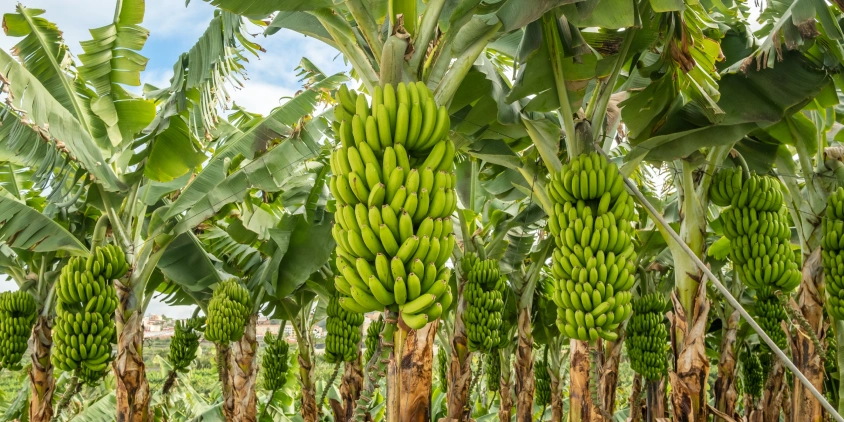
Best Banana Varieties in Kenya: 10 Choices for Different Markets
Best Cooking and Dual-Purpose Banana Varieties in Kenya
Cooking bananas feed households, hotels, hostels, institutions and the open-air markets of the highlands. Dual-purpose bananas give you a second route to market, because you sell the fruit ripe one week and green the next. The table lists what the Kenyan documents and the breeder state for each variety.
| Variety | Use | Time to harvest | Stated traits |
|---|---|---|---|
| Ng’ombe | Dual-purpose in the Kenyan cooking brochure, cooking in The Standard | Early maturing, period not stated | Uniform growth, long fingers, starchy texture, suits matoke, flour, chips and crisps |
| Uganda Green | Cooking | Early maturing, period not stated | 18 tonnes an acre in the brochure, resistant to Panama disease, cigar disease and end rot |
| Kiganda | Cooking | Flowers about 8 months after planting, harvest about 4 months later | Faster maturity, disease resistance and less need for props, per one Kirinyaga farmer |
| Muraru | Dual-purpose in The Standard, traditional cooking type in a 2010 survey | Not stated | Local type, disappearing in surveyed areas |
| FHIA-17 | Dessert and cooking | 18 to 24 months in the Kenyan brochure | Bunch of 35 to 50 kg per FHIA, race-specific wilt ratings explained below |
Ng’ombe
Ng’ombe leads the plantings in Kisii and Nyamira. A 2021 study of 90 smallholders in Kisii, Nyamira and Embu counties found Ng’ombe with about 90 percent of respondents in Kisii and 73.3 percent in Nyamira. Farmers in the sample said they chose a cultivar for the availability of planting material, the suitability to the region, the productivity and the market demand.
The Kenyan cooking brochure calls Ng’ombe a dual-purpose banana, early maturing, uniform in growth and long in the finger. The fruit has a starchy texture which suits matoke and flour, and fries to a golden yellow for chips and crisps. The skin is partly green and turns yellow when ripe. The Standard lists Ng’ombe among the cooking bananas, and a 2021 report in the paper named Ng’ombe and Gros Michel in a story on a new market for Kenyan green bananas in South Korea.
Ng’ombe fits the highlands, the bunch sellers and the farmers who process flour and chips. In the 2021 study only 10 percent of Kisii respondents and 3.3 percent of Nyamira respondents grew tissue culture bananas, and more than half in each county said they lacked awareness of tissue culture. A clean, uniform Ng’ombe block therefore stands out among old stools in those counties. Ask the nursery for the laboratory and the batch before you order.
Uganda Green
Uganda Green is a cooking banana harvested green, peeled and cooked, often mashed or pounded into matoke. The Kenyan brochure calls the variety early maturing and high yielding, at 18 tonnes an acre. Uganda Green resists Panama disease, cigar disease and end rot and suits highland conditions and irrigation, the brochure says. The brochure describes the variety as a choice for farmers who want low maintenance.
A resistance claim in a brochure still needs a check in the field. The brochure does not name a Fusarium race, so read the Panama disease rating as covering only the strain now present in Kenya. Uganda Green belongs on farms where buyers ask for matoke by name and where you want a variety with stated resistance to three common problems.
Kiganda
Kiganda is a Kenyan cooking banana grown in the Central and Eastern highlands. A Kirinyaga farmer, Cyrus Muriithi, switched to Kiganda after about two years of Kampala and Nyoro Cavendish bananas, which he grew for eating as fruit. He chose Kiganda for faster maturity, resistance to diseases and less dependence on props. His plants flower about eight months after planting, and the bunches are ready for harvest about four months later. The variety grows from 0 to 1,800 metres above sea level in 1,000 to 2,000 mm of rain a year.
These are one farmer’s observations, reported in The Standard in 2020, and they come with no trial data. They still point to something worth testing on a small block: a cooking banana which bunches in about a year. A 2010 survey in Eastern and Central provinces listed Kiganda, also called Githumo, among the traditional cooking varieties which were disappearing. A farmer who plants Kiganda sells into a market with few suppliers. Ask your nursery whether clean seedlings of the type exist before you plan a large block.
Muraru
Muraru appears in two Kenyan documents with two descriptions. The Standard lists Muraru as a dual-purpose banana, and the 2010 survey lists Muraru among the traditional cooking varieties disappearing in nearly all the areas surveyed. Both agree on one point. Muraru is a local type with steady demand and a shrinking supply.
Bunch weight and maturity differ from farm to farm, and the documents give no figures. Judge Muraru on a farm which already grows the type. Weigh a handful of bunches, note the months from planting to harvest and ask the grower where the buyers come from. Then decide whether the type earns a place in your block.
FHIA Banana Varieties and Their Uses in Kenya
FHIA stands for the Fundación Hondureña de Investigación Agrícola, a Honduran research foundation which breeds banana hybrids for resistance to disease. The Ministry manual lists FHIA-17, FHIA-18, FHIA-23 and FHIA-25 as resistant to black Sigatoka, with an average bunch of about 50 kg, and says these hybrids need support.
FHIA-17
FHIA released FHIA-17 in 1989 as a hybrid of the AAAA group. The foundation gives these facts. The bunch weighs 35 to 50 kg and carries 170 to 220 fingers in 10 to 12 hands, and each finger weighs 170 to 260 g. The plant stands 3.0 to 3.5 metres tall and grows vigorously. Flowering comes 270 to 360 days after planting, and the bunch takes 84 to 112 days from emergence to harvest.
ProMusa, the international banana knowledge platform, gives a wider spread from field trials in several countries. Mean bunch weights in the trials ran from 21.5 to 53.4 kg. Planting to flowering took 270 to 557 days, and planting to harvest took 464 to 742 days. Bunch weight and cycle both depend on the site, and your own farm will land somewhere inside the range.
The disease ratings need a careful read. FHIA’s own fact sheet calls FHIA-17 resistant to Fusarium wilt without naming a race. ProMusa is stricter and splits the rating by strain. The platform rates FHIA-17 as susceptible but highly tolerant to Fusarium race 1, and susceptible but highly tolerant to tropical race 4. For subtropical race 4 the rating is susceptible, and more than a third of plants became infected in Australian field trials. The plant still takes the disease, and a tolerant plant loses less yield than a fully susceptible banana.
On leaf diseases, ProMusa rates FHIA-17 resistant to black leaf streak, the disease Kenyan farmers call black Sigatoka, and tolerant to Sigatoka leaf spot, the milder yellow form. On pests, ProMusa rates the hybrid tolerant to the banana weevil and susceptible to the burrowing nematode Radopholus similis. FHIA calls the plant moderately resistant to nematodes, so the sources differ. Nematodes remain a live risk on FHIA-17, so plant clean material in clean soil.
The fruit serves two markets. Eaten ripe, the fruit has a flavour which resembles Gros Michel more than Cavendish, and the pulp browns less than Cavendish pulp, which suits fruit salads. Cooked green, the fruit holds shape and texture and turns white outside and golden inside. Ripe fruit makes a purée for children. The green fruit has a long green life and good packing characteristics under non-extreme conditions.
The Kenyan brochure gives the variety 18 to 24 months to harvest, long shelf life, an altitude range of 0 to 1,800 metres and 1,000 to 2,000 mm of rain. FHIA gives 0 to 1,200 metres, about 2,000 mm of rain and a mean temperature near 28 degrees Celsius, and says FHIA-17 tolerates cold better than Cavendish. Where the two ranges differ, use the narrower one until a nursery or an agricultural officer confirms the figure for your site. FHIA recommends well-drained loam soil.
A Kenyan field trial over three crop cycles tested improved cultivars and named FHIA-17, FHIA-18 and FHIA-25 as the most promising for commercial production. FHIA-17 gave the heaviest bunches in the second crop cycle. The authors said the cultivars need further evaluation in other zones, so read the result as a good sign and not as a guarantee for your county.
FHIA-17 suits the farmer who wants one plant for two sales channels, or who farms where black Sigatoka pressure is high and a spray programme is out of reach. Three cautions apply. The plant is tall, so props and shelter from wind are part of the cost. The ripe flavour differs from Cavendish, so test the fruit with your buyer before you plant a block. And a variety described as susceptible but tolerant still needs the same field hygiene as any other banana.
NARITA hybrids
Researchers at Kenyatta University, working with IITA and Uganda’s NARO, multiply and test NARITA hybrids in Kenya under the Climate Smart Banana project. IITA reported in 2021 the hybrids are high yielding and resistant to black Sigatoka, and banana farmers in Kirinyaga, Embu and Murang’a counties are to receive disease-resistant, high-yielding varieties for evaluation. The report gives no bunch weights or cooking tests for Kenya. Ask your county agricultural officer about release dates, and plant only material with KEPHIS certification.
How Each Variety Responds to Disease and Pests
Variety choice changes your disease risk and never removes the risk. A rating describes one variety against one named strain, so before you believe a rating, find out the strain, the reporter and the kind of site.
Fusarium wilt, strain by strain
Fusarium wilt is a soil fungus, and the strains differ. Researchers at Stellenbosch University describe Cavendish clones as immune to Fusarium race 1, and certain African cooking bananas as immune to race 1 as well. The same source names sweet dessert varieties such as Gros Michel, Sukali Ndizi and Pisang Awak as highly susceptible to race 1. TR4 is a different strain. The source warns TR4 will destroy the dessert varieties grown commercially today, and says nobody knows yet whether African cooking and juicing bananas resist TR4.
KEPHIS reported on 17 July 2026 no detection of either TR4 or banana bunchy top virus in Kenya to date, with surveillance in Taveta, Meru, Embu, Kirinyaga, Bungoma, Kisii and Migori. When a Kenyan brochure says a variety resists Panama disease, the rating describes the strain now present in the country. Where a brochure names a race, as the pamphlet does for Williams, the rating covers the named race alone. Where a brochure names none, you have a general statement and nothing more.
The FHIA-17 case shows why this matters. The words resistant to Fusarium wilt sound like a full guarantee. The race-by-race rating says the plant takes the infection, loses less than a fully susceptible banana and still needs a clean field.
Banana bacterial wilt
Banana bacterial wilt (BXW) ignores variety. Researchers from Bioversity International and IITA report every banana cultivar is affected, and losses reach 100 percent. The bacterium enters through wounds, travels on tools for up to a week and moves from plant to plant on insects visiting the male bud. Removing the male bud with a forked stick, dipping tools in bleach and using clean planting material protect every variety in this article. No chemical controls BXW. The Ministry manual adds a warning sign: premature or uneven ripening of fruit points to the disease, so a bunch which ripens in patches on the plant is a reason to call an officer and not a reason to harvest early.
Leaf diseases
Black Sigatoka separates the varieties more clearly. The pamphlet and the Ministry manual both say Giant Cavendish falls to black Sigatoka, and the Ministry manual says Chinese Dwarf does too. The Ministry manual lists FHIA-17, FHIA-18, FHIA-23 and FHIA-25 as resistant, ProMusa rates FHIA-17 resistant to black leaf streak, which is the scientific name for the same disease, and IITA describes the NARITA hybrids as resistant. Yellow Sigatoka, which scientists call Sigatoka leaf spot, is milder, and ProMusa rates FHIA-17 tolerant to yellow Sigatoka. A farm with high leaf disease pressure and no spray programme gains most from these ratings. The Ministry manual lists mancozeb and thiophanate-methyl as sprays and dates the list to the 2018 registration, so check current registrations with the Pest Control Products Board before you buy.
Nematodes, weevils, thrips and cigar-end rot
Nematodes and weevils follow the soil and the planting material more than the variety. The Ministry manual calls the burrowing nematode the most damaging banana pest, with losses above 70 percent, and recommends clean planting material and green manure from Tithonia or Mexican marigold. ProMusa rates FHIA-17 susceptible to the burrowing nematode and tolerant to the weevil, while FHIA calls the hybrid moderately resistant to nematodes. A Kirinyaga study found the nematode species differ from one agro-ecological zone to the next. In the western Kenya trial, untreated infested suckers lost 53.1 percent of the yield, so a clean start matters in every variety. Ask a plant clinic which nematode species lives on your land before you choose a variety for nematode reasons.
Thrips mark the fingers with silvery patches which turn brown and crack, and buyers reject marked fruit. The Ministry manual advises removing the male flower and bagging the bunch. Cigar-end rot hits Chinese Dwarf in particular, according to the same manual, and the advice is to remove the male bud when the bud sits 15 cm below the last hand.
What tissue culture changes
Properly produced tissue culture seedlings reduce the risk of carrying pests and diseases through planting material. Their quality depends on the laboratory process, the inspection, the handling and the hardening. A tissue culture seedling carries the same rating as the mother variety, so the seedling improves your starting point and leaves the rating alone. Farmers must still manage soil-borne disease, contaminated tools and every other source of infection after planting. A susceptible variety planted as a seedling into infested soil falls sick the way a sucker does.
Banana Bunch Weight, Spacing and Yield per Acre
Bunch weight alone misleads. A heavy bunch on a tall plant needs a wide spacing, and a lighter bunch on a short plant allows a close one. The Ministry manual ties spacing to the height of the variety. Short varieties go at 3 by 3 metres, which gives 444 plants an acre. Medium varieties go at 3 by 4 metres, which gives 333. Tall varieties go at 4 by 4 metres, which gives 250.
The table shows what each pairing gives if every plant carries one bunch of the stated weight, priced at KSh 10 per kg, the top of the KSh 8 to 10 range in the 2021 farm-gate report. Read the table as an illustration and not as a forecast.
| Pairing in the illustration | Plants per acre | Bunch weight | Fruit per acre | Gross sales at KSh 10 per kg |
|---|---|---|---|---|
| Short variety at 3 by 3 metres | 444 | 30 kg | 13,320 kg | KSh 133,200 |
| Grand Naine at 3 by 3 metres | 444 | 45 kg | 19,980 kg | KSh 199,800 |
| Tall variety at 4 by 4 metres | 250 | 30 kg | 7,500 kg | KSh 75,000 |
| FHIA-17 at 4 by 4 metres | 250 | 35 kg | 8,750 kg | KSh 87,500 |
| FHIA-17 at 4 by 4 metres | 250 | 50 kg | 12,500 kg | KSh 125,000 |
A 30 kg bunch on a short plant at 444 plants an acre gives 13.3 tonnes, which matches the 13 tonnes an acre the pamphlet states for the dessert varieties. Spacing moves the total as much as bunch weight does, so a tall variety with a 50 kg bunch gives less fruit an acre than a short variety with a 30 kg bunch. All the figures are gross sales. Manure, fertiliser, water, labour, props, harvest and transport come out before you count any profit, and a tall variety adds the cost of props.
Why FHIA-17 has two plant populations
You will see two spacings for FHIA-17, and they describe two different ways of farming. FHIA recommends 1,600 plants per hectare, about 647 plants an acre, which is a high-density system. The 4 by 4 metre spacing in the table follows the Ministry manual for tall varieties and gives 250 plants an acre. The dense system asks for more water, closer feeding, tighter desuckering and more props per acre, and the grower manages the block as a high-input crop. The wider spacing suits a farm with less labour and less water. Production figures from the two systems do not sit side by side, so agree the spacing with an agronomist before you order, and order seedlings for the system you will farm.
The average Kenyan yield
Three figures circulate for the average Kenyan banana yield. The Ministry manual puts the average at 6 tonnes an acre and says good management reaches 20. Dividing the 2025 KNBS output by the area KNBS records gives about 26 tonnes a hectare, which is about 10.6 tonnes an acre. A 2025 study of Taveta farms quotes a national average of 11.8 tonnes an acre against a potential of 35. These come from different years, sources and methods, so read them as one range. The average Kenyan field gives roughly 6 to 12 tonnes an acre. Taveta farmers in the Danida programme reached 23.56 tonnes an acre with Grand Naine after training, credit and buyers came with the seedlings. Your water, soil, spacing, disease record and care decide where you land between those figures.
Seedling Cost for One Acre at Each Spacing
Spacing sets the number of seedlings you buy, and the number sets the first bill. Farmers in the 2025 Taveta study paid KSh 90 to 150 for a tissue culture seedling. Across this range, an acre of 444 plants at 3 by 3 metres costs KSh 39,960 to 66,600 in seedlings. An acre of 333 plants at 3 by 4 metres costs KSh 29,970 to 49,950, and an acre of 250 plants at 4 by 4 metres costs KSh 22,500 to 37,500. A high-density FHIA-17 block of 647 plants an acre costs KSh 58,230 to 97,050.
Seedlings are one line in the budget. Holes, manure, TSP, props, water and labour add to the bill, and the props line grows with the height of the variety. Order a few seedlings above your count to replace plants lost in the first weeks. Our price per plant comes in a written quotation which names the variety, so you compare like with like when you ask more than one nursery.
Props, Desuckering and Care by Plant Height
Plant height decides your workload in the second year, so settle on a height before you order seedlings.
The Ministry manual says Grand Nain, Williams, Valery, Giant Cavendish and the FHIA series need props, and describes the support as a V-shaped pole placed under the bunch with care to avoid injuring the fruit. Chinese Dwarf needs none. A tall block of 250 plants an acre therefore carries a props bill in poles and in labour, and the bill comes due when the bunches are heaviest and the long rains are on the way.
Desuckering matters for every height. The Ministry manual advises keeping three suckers per stool, one bearing plant, one half-grown and one newly sprouting. Start two months after planting and repeat every 45 days until flowering. Surplus suckers are cut or pegged in the growing point to stop them sprouting. The routine keeps one plant bearing, one following and one coming, so the stool crops in turns instead of all at once.
Mulch heavily, weed with care because banana roots lie shallow, and keep each pseudostem to about seven leaves by removing dry leaves hanging from the stem at least twice a year. After harvest, cut the pseudostem at ground level and chop the stem into small pieces to deter weevils. In drier areas the Ministry manual supplements rain with 40 to 60 litres per plant a week, split into two applications of 20 litres, and calls water critical at flowering.
A tall, heavy variety on windy ground collects all these jobs at once. A short variety trims the list. Weigh this against the price premium your buyer pays before you pick the bigger bunch.
Shelf Life, Packing and Transport Durability
A banana earns the price at the buyer’s door, so ask how each variety survives the journey. The Kenyan documents give a few clear facts. The pamphlet states long shelf life for Giant Cavendish, Dwarf Cavendish, Valery and Williams. The Ministry manual says mature Grand Naine fruit keeps well and says Williams keeps for a short time once ripe. FHIA says the green fruit of FHIA-17 has a long green life and good packing characteristics, and the Kenyan brochure gives the variety long shelf life.
Harvest at the stage your buyer specifies. The Ministry manual lists the signs of maturity. The fingers change from angular to rounded, the peel shifts from deep green to light green or yellow, and the pulp changes from cream to orange yellow. A dessert buyer who ripens fruit in a chamber wants mature green fruit, and a cooking buyer wants firm green fruit. For tall varieties the manual advises cutting the pseudostem halfway so the bunch comes down gently and stays off the ground.
Most Kenyan farmers move bananas as whole bunches, and the Ministry manual warns the knocks cause bruising. Remove the hands from the bunch and pack them in reusable plastic crates. Cut with a clean tool, carry the bunch gently, keep the fruit in shade and avoid dragging bunches along the ground. Sort out fingers with thrips marks, rust or heavy latex staining before they reach the buyer.
The losses are large. The Star reported in June 2025 about 40 percent of the bananas produced in the Nyamira region are lost after harvest. A variety with long shelf life gives you more days to find a buyer, and a crate and a shaded collection point give you more days again. Group marketing helps further, as the market section shows.
Altitude, Rainfall and Temperature: Matching a Variety to Your Site
A variety which suits the market still fails on the wrong site. The Kenyan documents give altitude and rainfall ranges for most varieties. The ranges are wide because they describe where a variety grows and say nothing about where the variety grows best.
The dessert pamphlet gives Grand Naine an altitude range of 0 to 1,700 metres, and gives Williams, Giant Cavendish, Dwarf Cavendish and Valery 0 to 1,800 metres. For rainfall the pamphlet lists 900 to 1,800 mm for Grand Naine and 1,000 to 2,000 mm for most of the others. The Ministry manual says Chinese Dwarf grows at altitudes up to 2,100 metres. The Kenyan cooking brochure gives FHIA-17 0 to 1,800 metres with 1,000 to 2,000 mm of rain, and a Kirinyaga farmer’s report gives Kiganda the same range. FHIA itself gives FHIA-17 0 to 1,200 metres, about 2,000 mm of well-distributed rain and a mean temperature near 28 degrees Celsius.
Find your altitude on the farm and not in the ward, because a ward spans hundreds of metres. When two sources differ, use the narrower range. Then ask a neighbour who grows the variety how many months passed from planting to the first bunch. Altitude, temperature, water and care all move the time to bunch, and your neighbour’s answer tells you more than a leaflet.
Water decides the rest. The Ministry manual says bananas need at least 1,000 mm of rain a year. Most farms in the 2025 Taveta study irrigated, and Grand Naine did well with water. The pamphlet says Williams withstands dry periods, Giant Cavendish tolerates drought and Dwarf Cavendish performs under unreliable rainfall. These statements describe tolerance and do not promise independence from water, because a young plant dries out fast in the first months whatever the variety. Secure the water before you order seedlings. For the soil, Grand Naine asks for deep, well-drained ground with a pH of 5 to 6.5, and FHIA asks for well-drained loam for FHIA-17.
Wind decides the height you choose. Tall plants carrying heavy bunches topple, so Giant Cavendish, Valery and FHIA-17 need props and shelter. Dwarf Cavendish stands about 2 metres tall and resists wind damage. Watch how the wind moves across your block in a windy week before you commit to a tall variety.
Choosing Banana Varieties Based on Market Demand
Start with the buyer and work back to the seedling. Five channels cover most Kenyan banana sales, and each favours different varieties.
Roadside and open-air markets
Travellers, hawkers and household shoppers buy green bananas by the bunch. In Magwagwa ward in Nyamira County, the Rikuruma banana bulking and marketing centre formed in 2015 with 41 farmers. Members had sold to middlemen at KSh 150 to 200 a bunch, and group marketing lifted the price to KSh 500 to 1,000 a bunch, according to a 2018 report. Buyers were mostly travellers heading to Nairobi, Kisumu, Nakuru and other towns, and the group sold 200 to 300 bunches a day.
This channel favours heavy bunches of a cooking type such as Ng’ombe, because the buyer judges the bunch by size and the price follows the weight. Plant a variety your neighbours also grow, join a group and agree on days and volumes, so the buyers come to you.
Urban dessert markets
Supermarkets, hotels, schools and juice sellers want ripe, evenly yellow fruit, week after week. Grand Naine and Williams lead this channel. Giant Cavendish and Dwarf Cavendish follow, and Valery serves buyers who already know the variety. Agree the variety, the weekly volume, the delivery point and the price in writing before you plant. Keep one variety and one age in each block so the fruit ripens inside a narrow window.
Cooking banana buyers
Households, hostels and hotel kitchens in the towns buy green cooking bananas for matoke and other dishes. The 2010 survey found demand for cooking bananas high and supply limited and costly where the bananas were available. Ng’ombe, Uganda Green and Kiganda serve this channel. A cooking buyer wants firm, starchy, clean-peeling fingers, so find out what the buyer peels and cooks before you choose.
Processing: flour, chips, crisps and purée
Processing adds value to fruit which misses the fresh market. The Kenyan cooking brochure says Ng’ombe suits matoke and flour and fries to a golden yellow for chips and crisps. FHIA says ripe FHIA-17 fruit makes a purée and resists browning in fruit salads. The Star reported in 2025 on Nyamira farmers who sell banana flour, wine and donuts, and on a cooperative which buys raw bananas from local farmers. Find out the weekly volume the processor needs, and confirm the variety before you plant a block for this channel. The Ministry manual lists flour, juice, purée, chips, jam, sweets, vinegar and wine among the processing options.
Export and organic channels
Export demands the most from a variety and from a farmer. The Standard reported in 2021 a new market in South Korea for Kenyan green bananas, and named Ng’ombe and Gros Michel in the report. Exporters need a phytosanitary certificate through KEPHIS, and the same report said Kenya exported 100 tonnes of green bananas across 2016 and 2017 combined, against 411,000 tonnes from Côte d’Ivoire in 2019 alone. The Taveta organic cluster, built around Grand Naine, holds a premium arrangement for 28,000 tonnes of organic bananas running to 2034. Join an organised group with a buyer in place before you plant for export, as the Taveta farmers did.
Questions to put to your buyer
Call the buyer before you order a single seedling. Find out which variety the buyer wants and in which form, ripe or green, and the weekly volume in bunches or kilograms. Learn how many weeks of the year the buyer wants supply, whether the buyer pays by the bunch or by the kilogram and who holds the scale. Settle where the buyer collects and who pays for transport.
Then ask what the buyer sends back. A buyer who rejects scarred peel, short fingers or green-and-yellow mixed bunches has told you what to grow and how to handle the crop. Ask how many days the buyer holds fruit before the sale, because those days are the shelf life you count. Ask when the buyer pays, since a trader who pays in two weeks and a cooperative which pays in six change your cash plan. Write the answers in your farm notebook and put the same questions to a second buyer. The gap between the two answers shows you where the market stands.
Popular Banana Varieties by County in Kenya
Kenyan counties lean toward different varieties, and the local habit is worth reading before you choose. The studies below are small and old, so they show what farmers grew when researchers visited and say nothing certain about demand today.
In the 2021 survey sample of 90 smallholders, Ng’ombe led in Kisii and Nyamira, and Israel was the leading cultivar in Embu, with 96 percent of respondents. Embu also had the highest share of tissue culture growers in the sample, at 36 percent. The 2010 survey in Eastern and Central provinces found Israel the leading cultivar in Murang’a, with over 60 percent of plantations, and found Kampala ahead in market demand in Meru and Kirinyaga. The same survey noted Grand Naine was popular in Embu mainly because of promotion by non-governmental organisations, and not because of Fusarium pressure. Promotion brings seedlings to a county, and buyers decide whether the fruit sells, so check your local buyer before you follow a neighbour’s planting.
In Kisii and Nyamira, the 2021 sample favoured Ng’ombe, and a clean tissue culture block gives you a quality edge over stools of unknown age. In Kirinyaga, the Kiganda grower described above shows a cooking type finding a place beside the fruit types, and IITA’s 2021 report names Kirinyaga, Embu and Murang’a as the counties receiving NARITA hybrids for evaluation. In Murang’a and Embu, where Israel and Kampala led in the surveys, ask the nursery about Williams and Grand Naine for dessert buyers and about FHIA-17 for the farm which wants a second channel.
In Taita Taveta, irrigated Grand Naine is the proven choice, because the Danida programme built the seedlings, training and buyers around the variety. In Bungoma and Kakamega, which the FAO source names among the largest green banana producers, treat BXW as the main risk. The first Kenyan cases appeared in 2006 in Teso, Bungoma and Busia, and the disease reached Mumias and Butere in 2007. Whatever the variety, keep a strict male bud and tool routine, and take no suckers from strangers.
Planning Your Harvest Calendar and Cash Flow
Months to the first bunch decide when your money starts. The Cavendish dessert varieties need 18 to 24 months in the pamphlet, and FHIA reports flowering 270 to 360 days after planting for FHIA-17, with ProMusa reporting trials from 464 to 742 days from planting to harvest. A Kirinyaga farmer reports Kiganda ripening for harvest about 12 months after planting. The Ministry manual says harvesting starts 9 to 18 months after planting, with full production in two to three years. Use each figure as a planning range, and confirm the time for your altitude before you promise a buyer a date.
Plan the gap. A farmer who plants only dessert bananas waits well over a year for the first sale. Fund the gap with an intercrop, with other farm income or with credit you repay after the first harvest. Farmers in the Taveta programme took certified seedlings on credit and repaid after harvest, and those who intercropped with beans, maize and vegetables earned an additional 45 percent from sales, according to The Star. Check any credit offer for the repayment date, because a repayment due before the first bunch puts the loan in trouble from the start.
Stagger the planting if you sell to a buyer who wants a weekly volume. Plants put in on the same day ripen in the same few weeks, and a glut follows a long gap. Divide the farm into blocks, plant one block every month or two and keep one variety and one age in each block. Agree the first delivery date with the buyer when the first block shows the male bud.
Cooking bananas give you a different calendar. A cooking variety which bunches in about a year starts the income earlier. Mix a block of a fast cooking type with a larger dessert block and the cash arrives in two waves.
Test Two Varieties on a Small Block First
A leaflet tells you what a variety did on someone else’s farm. A small block tells you how the variety behaves on yours. Before you plant an acre, plant 50 or 100 seedlings each of two varieties side by side, on similar soil, with the same water and the same manure.
Write down the planting date for each block. Note the date the first plant in each block flowers and the date you cut the first bunch. Weigh the first twenty bunches of each variety on a scale, and write down the weights. Count the plants which fall over, the plants which sicken and the props you used. Ripen a few bunches the way your buyer ripens fruit and count the days before the fingers go soft. Take a hand of each to the buyer and ask for a price.
After one full cycle you hold your own numbers for bunch weight, months to harvest, losses and price. These numbers carry more weight than any brochure, and they protect the larger planting which follows. A farmer who tests Williams against Grand Naine, or Ng’ombe against Kiganda, spends a small sum and learns which variety fits the farm and the buyer. The delay is real, since the test takes a year or more, so run the test beside a block of the variety you already trust and stagger the larger planting after the test.
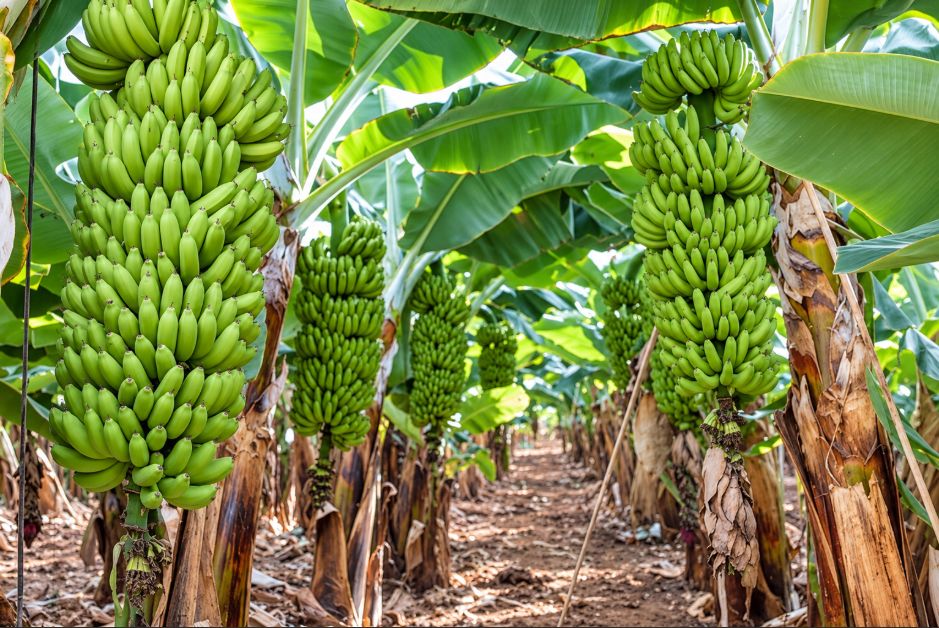
Tissue Culture Banana Farming in Kenya
Growing More Than One Variety on One Farm
Many farms end up with two or three varieties, and the arrangement works when every variety gets a separate block. A dessert block of Grand Naine and a cooking block of Ng’ombe do not compete for the same buyer, so a slow week in one market leaves the other market untouched. Two varieties also spread the risk from wind, from a leaf disease which favours one type and from a price drop in one channel.
Keep the blocks apart. Plants of different heights and ages shade one another, ask for different spacing and ripen in different weeks, and a mixed block makes every job harder, from props to harvest. A short variety planted behind a tall one loses light. Give each block a separate planting date, a separate spacing and a separate page in your farm notebook, so you read the results by variety.
Keep the number of varieties small while you learn. Each extra variety adds a buyer to find, a spacing to remember and a disease rating to read. Two well-run blocks earn more than five untidy ones.
Three Farm Examples: Choosing a Variety Step by Step
These three examples are illustrations built from the facts in this article. They are not real farms.
A one-acre farm in Nyamira with roadside buyers
The farmer sells green bananas to travellers and to traders on the road to Kisumu and Nairobi. Cooking buyers dominate the area, and Ng’ombe leads the local plantings. The farmer picks Ng’ombe, joins a bulking group and plants a clean tissue culture block with the variety name, the batch and the laboratory on the invoice. Group marketing in Magwagwa ward lifted bunch prices, as the market section shows, so the farmer agrees the days and the volumes with the group before the first bunch. A corner of the block is set aside for bunches headed to flour or crisps, because the cooking brochure says Ng’ombe suits both.
A two-acre irrigated farm near Nairobi with hotel and supermarket buyers
The farmer has borehole water, a road which carries lorries in all weather and two buyers who want ripe, evenly yellow fruit every week. The main block is Grand Naine and a smaller block is Williams. The farmer ripens a few bunches of each and holds them the way the buyer does, because the two Kenyan documents disagree on the shelf life of ripe Williams. An agronomist confirms the spacing, the plants get props early and the planting is staggered by block, so the buyer receives a weekly volume.
A half-acre farm in Kirinyaga for the household and the local market
The farmer wants food for the family and a second income, with a little cash for seedlings. A cooking block of Kiganda goes in first, because a Kirinyaga grower reports bunches about a year after planting and less need for props. A smaller FHIA-17 block follows, and the farmer tests the ripe fruit with a local buyer for flavour and cooks the green fruit at home. The county agricultural officer is asked about the NARITA hybrids IITA reported for Kirinyaga, Embu and Murang’a, and about release dates. A neighbour offers suckers, and the farmer declines, because a clean seedling beats a free sucker of unknown origin.
Where to Buy Tissue Culture Banana Seedlings in Kenya
Properly produced tissue culture banana seedlings reduce the risk of bringing fungus, bacteria, nematodes and weevil grubs into your field on the planting material. A sucker from a neighbour’s stool carries whatever the stool carries. Field hygiene then protects the seedling from the soil, the tools and the neighbours. Our guide on tissue culture banana farming in Kenya covers the clean start in full, and this section covers the variety side of the purchase.
Demand for clean planting material is high and supply is thin. The 2021 study listed limited access to disease-free planting materials among the main constraints, and the 2010 survey found over 75 percent of farmers knew about tissue culture and fewer than 20 percent had adopted the method, mainly because of the seedling cost. Farmers in the 2025 Taveta study paid KSh 90 to 150 for a seedling.
Check the variety, because tissue culture sometimes produces off-types and mixed batches. Ask the nursery for the variety name on the invoice, the batch number and the laboratory name. Ask to see a photograph of the mother plants and find out which varieties the laboratory multiplies. When the seedlings arrive, compare the leaves and the pseudostem with the nursery’s description. Cavendish types resemble one another, so report any plant which looks different before the plant reaches the field.
Supply differs by variety and by laboratory, so ask whether clean seedlings exist for the one you want. For Kiganda, Muraru or Ng’ombe, ask the nursery in writing which laboratory holds the variety and whether the plants carry KEPHIS certification, and agree a delivery date. IITA also promotes macropropagation, where farmers raise plantlets from pieces of stem in humidity chambers, and boiling water treatment as a simple way to sanitise suckers when seedlings are out of reach.
Match the spacing to the height of the variety, as the Ministry manual advises. The manual asks for seedlings about 30 cm tall with at least five healthy leaves. Dig holes 60 by 60 by 60 cm, or 90 by 90 by 90 cm in dry areas, keep the topsoil and subsoil apart and mix the topsoil with 20 to 30 kg of well-decomposed manure and 200 g of TSP. Refill with topsoil first and let the hole settle for two weeks before you transplant. Plant 30 cm deep for anchorage and mulch heavily. In rain-fed areas, plant at the onset of the rains, and with irrigation you plant at any time of year. Keep a farm file with the quotation, the invoice, the batch number and the planting date.
Common Mistakes When Choosing a Banana Variety
Many problems start before a single seedling is in the ground. Farmers pick a variety first and look for a buyer afterwards, and a banana nobody buys earns nothing whatever the disease rating says. Others trust one bunch weight from a leaflet. The weight came from a good site, and your soil, water and care decide the weight on your farm.
Height catches many people. A tall banana wants props, wide spacing and shelter from wind, and a farmer who skips these loses plants in the first storm after the bunches fill. Disease ratings are the next trap. A rating for Fusarium race 1 says nothing about TR4, and a rating with no race named leaves you guessing.
Sweet types such as Gros Michel, Apple banana and Kampala look like a bargain at the market, and planted on land with a wilt history they fail. Mixed blocks cause trouble of their own. Plants of different varieties and ages ripen in different weeks, and a buyer who wants a steady volume of one variety loses patience quickly. Some farmers follow a neighbour’s choice without asking the neighbour’s buyer. Others buy seedlings with no variety name, no batch and no invoice, and so have nobody to question when the plants turn out wrong. The last mistake is the costliest. A clean seedling of the best variety still falls sick in a dirty field, so skip field hygiene and the seedling price is wasted.
Where Fruit Africa Veriplant Fits In
We do not run a tissue culture laboratory. We buy laboratory plantlets from KEPHIS-certified laboratories, harden them in our nurseries and supply the seedlings to farmers across Kenya through our hubs in Murang’a, Nairobi and Embu. For every order we record the laboratory, the variety and the batch, and we give you an invoice.
Send us your county, your altitude, your water source, your buyer, the number of acres and your planting date. Our agronomy team uses these details to suggest a variety, work out the number of seedlings and set the delivery schedule. Tell us which varieties you want, and we confirm which ones we hold in the nursery and which we place on order. We do not diagnose disease in a laboratory, we do not certify planting material and we do not promise a fixed yield or a fixed price for your bananas. For a diagnosis, take samples to a plant clinic or ask your county agricultural officer. Request a quotation at fruitafrica.org/request-for-quotation, and we quote the price per plant in writing.
Frequently Asked Questions About the Best Banana Varieties in Kenya
What are the best banana varieties in Kenya?
The best variety is the one your buyer pays for and your land supports. Dessert buyers lean toward Grand Naine and Williams, with Giant Cavendish, Dwarf Cavendish and Valery behind. Cooking buyers lean toward Ng’ombe, Uganda Green and Kiganda. Farmers who want two channels look at FHIA-17 and Muraru, which sell ripe or cooked. Name your buyer first and the variety follows.
Which banana variety is best for commercial farming?
Grand Naine made up 96.6 percent of the seedlings in the Taveta programme, where most farms irrigate and the programme linked farmers to buyers. In Kisii and Nyamira, Ng’ombe leads the plantings. The right commercial choice follows your buyer and your water, so agree the variety, the volume and the price in writing before you plant.
Which banana varieties are suitable for cooking?
Ng’ombe, Uganda Green and Kiganda serve cooking buyers. Ng’ombe leads in Kisii and Nyamira, and the Kenyan brochure says the fruit suits matoke, flour, chips and crisps. The brochure says Uganda Green is high yielding and resists Panama disease, cigar disease and end rot. A Kirinyaga farmer reports Kiganda bunches about a year after planting. Pick the variety your local cooking buyers already ask for.
Which banana variety produces the biggest bunches?
FHIA reports 35 to 50 kg for FHIA-17, and the Ministry manual gives an average of about 50 kg for the FHIA hybrids. Grand Naine reaches 30 to 45 kg in the pamphlet, and Williams, Giant Cavendish and Dwarf Cavendish give about 30 kg. Trial means for FHIA-17 ran from 21.5 to 53.4 kg across several countries, so your soil, water and care decide the weight on your farm.
How long do different banana varieties take to mature?
The pamphlet gives Grand Naine 18 to 22 months, and gives Williams, Giant Cavendish, Dwarf Cavendish and Valery 18 to 24 months. FHIA reports flowering 270 to 360 days after planting for FHIA-17, and ProMusa reports trials from 464 to 742 days from planting to harvest. One Kirinyaga farmer reports Kiganda bunches about 12 months after planting. Altitude, water, planting material and care move every figure.
Which banana varieties tolerate Fusarium wilt?
Ratings differ by variety, race and source. The pamphlet states resistance to races 1 and 2 for Williams, and resistance with no race named for Dwarf Cavendish. No rating appears for Grand Naine. ProMusa rates FHIA-17 susceptible but highly tolerant to race 1 and to tropical race 4, and susceptible to subtropical race 4. KEPHIS reported no detection of TR4 in Kenya to date, in the update of 17 July 2026. Field hygiene and clean planting material matter for every variety.
How many banana plants fit on one acre?
The Ministry manual sets 444 plants at 3 by 3 metres for short varieties, 333 at 3 by 4 metres for medium varieties and 250 at 4 by 4 metres for tall varieties. FHIA recommends a high-density system of 1,600 plants per hectare for FHIA-17, about 647 an acre, which asks for more water, feeding and labour. Settle the spacing with an agronomist before you order.
Which banana variety suits highland areas?
Dwarf Cavendish suits cool, windy highlands, and the Ministry manual says the short Chinese Dwarf type grows up to 2,100 metres. The pamphlet says Valery suits highland conditions, and the Kenyan brochure says Uganda Green does too. Ng’ombe leads the plantings in Kisii. FHIA gives FHIA-17 a narrower range of 0 to 1,200 metres than the Kenyan brochure does, so confirm your altitude against the nursery’s figure.
Where do farmers buy tissue culture banana seedlings in Kenya?
Buy from a nursery which gives you the variety name, the batch number and the laboratory name on the invoice, and which tells you whether the plants carry KEPHIS certification. We supply tissue culture banana seedlings through our hubs in Murang’a, Nairobi and Embu, and we confirm which varieties we hold and which we place on order. Avoid suckers of unknown origin.
Is FHIA-17 suitable for cooking and dessert markets?
Yes, with a test first. Eaten ripe, the fruit tastes closer to Gros Michel than Cavendish, and the pulp browns less in fruit salads. Cooked green, the fruit holds shape and turns golden inside. The plant is tall and needs props. ProMusa rates FHIA-17 susceptible but highly tolerant to Fusarium race 1 and tropical race 4, and susceptible to the burrowing nematode. Test the fruit with your buyer before you plant a large block.
Final Advice for Farmers
A banana block pays when the buyer, the variety and the field agree with one another. Settle the buyer first, with a written variety, volume and price. Pick the variety which fits your buyer, your altitude and your water, and read every disease rating for the strain named. Buy a clean seedling with the variety name, the batch and the laboratory on the invoice, and protect the block with clean tools, clean boots and no suckers from other farms.
The numbers show why the choice matters. A 30 kg bunch from a short plant at 444 plants an acre gives 13.3 tonnes, and a Taveta farmer with Grand Naine, training, credit and buyers reached 23.56 tonnes an acre. Farmers in Nyamira who sold as a group lifted the price of a bunch from KSh 150 to 200 to KSh 500 to 1,000. About 40 percent of the crop in the Nyamira region is lost after harvest, so shelf life, crates and a buyer lined up before the cut protect your income as much as the variety does.
This week, call two buyers and put your questions to them. Check your field history and your altitude. Ask your county agricultural officer which varieties do well in your ward. Then send us your county, your altitude, your water source and your buyer, and our agronomy team will help you choose the variety and plan the first-year work for traceable tissue culture banana seedlings.
Sources and References
- KALRO, Selected commercial banana dessert varieties, pamphlet: https://kalro.org/navcdp/docs/banana/SELECTED%20COMMERCIAL%20BANANA%20DESSERT%20VARIETIES%20Pamphlet.pdf
- KALRO, Selected commercial banana cooking varieties, brochure: https://kalro.org/navcdp/docs/banana/SELECTED%20COMMERCIAL%20BANANA%20COOKING%20VARIETIES%20Brochure.pdf
- KALRO, Integrated pest management of major banana diseases, Fusarium wilt factsheet, 2024: https://kalro.org/navcdp/docs/banana/INTEGRATED%20PEST%20MANAGEMENT%20OF%20MAJOR%20BANANA%20DISEASES%20Fusarium%20Wilt%20%20factsheet.pdf
- Fundación Hondureña de Investigación Agrícola (FHIA), FHIA-17 fact sheet: https://fhia.org.hn/wp-content/uploads/2025/01/fhia-17.pdf
- ProMusa, FHIA-17 cultivar profile: https://www.promusa.org/FHIA-17
- Ministry of Agriculture, Livestock and Fisheries, banana production training materials for model farmer groups, 2016: https://www.jica.go.jp/project/english/kenya/015/materials/c8h0vm0000f7o8cj-att/materials_18.pdf and https://www.jica.go.jp/project/english/kenya/015/materials/c8h0vm0000f7o8cj-att/materials_03.pdf
- KEPHIS, KEPHIS enhances surveillance of banana pests using APP digital tools, 17 July 2026: https://kephis.go.ke/kephis-enhances-surveillance-banana-pests-using-app-digital-tools
- Kenya National Bureau of Statistics, Economic Survey 2026, banana area and production for 2025 (figures from Table 7.20 as reported by Streamline Feed): https://www.knbs.or.ke/reports/2026-economic-survey/ and https://streamlinefeed.co.ke/news/what-kephis-july-survey-means-banana-growers
- Wahome C.N., Maingi J.M., Ombori O., Kimiti J.M. and Njeru E.M., Banana production trends, cultivar diversity, and tissue culture technologies uptake in Kenya, International Journal of Agronomy, 2021: https://ir-library.ku.ac.ke/handle/123456789/26411
- Kasyoka M.R., Mwangi M., Mbaka J., Kori N., Gitonga N. and Muasya R., Preferred banana varieties and their seed systems in Eastern and Central provinces of Kenya, Second RUFORUM Biennial Meeting, 2010: https://news.mak.ac.ug/wp-content/uploads/2010/10/Kasyoka.pdf
- Introduction and evaluation of improved banana cultivars for agronomic and yield characteristics in Kenya, African Crop Science Journal: https://ajol.info/index.php/acsj/article/view/54333
- FAO, Case study on the economic significance of non-Cavendish banana varieties in Uganda, Committee on Commodity Problems, 2011: https://fao.org/docrep/meeting/022/ma801E.pdf
- Stellenbosch University, Threat of Fusarium wilt to African bananas: https://www.sun.ac.za/english/faculty/agri/plant-pathology/ac4tr4/Pages/Threat-of-Fusarium-Wilt-to-African-Bananas.aspx
- Blomme G., Ocimati W., Tinzaara W., Karamura E., Beed F., Nakato V. and Tripathi L., Controlling banana Xanthomonas wilt in East and Central Africa, European Journal of Plant Pathology 139, 2014 (Bioversity International and IITA): https://www.africamuseum.be/publication_docs/blomme2014.pdf
- Ngode L., Cultural management of banana weevil Cosmopolites sordidus Germar for improved banana field in western Kenya, 2012: https://ir-library.ku.ac.ke/handle/123456789/3710
- IITA and CGIAR, NARITA hybrids cross borders for farmers’ evaluation in Kenya, 9 September 2021: https://www.cgiar.org/news-events/news/narita-hybrids-cross-borders-for-farmers-evaluation-in-kenya
- IITA and CGIAR, Healthy banana and plantain planting material for Africa: https://www.cgiar.org/innovations/healthy-banana-and-plantain-planting-material-for-africa
- Wasilwa L.W. and colleagues, Evaluation of farmer practices in high density banana production, agronomic aspects in Taveta County Kenya, IJRSI, July 2025: https://rsisinternational.org/journals/ijrsi/articles/evaluation-of-farmer-practices-in-high-density-banana-production-agronomic-aspects-in-taveta-county-kenya/
- The Star, Taveta banana farmers turn despair into a multi-million shilling industry, 25 October 2025: https://www.the-star.co.ke/news/2025-10-25-taveta-banana-farmers-turn-despair-into-a-multi-million-shilling-industry
- FreshPlaza, Kenya’s Taveta banana project drives export growth, 28 October 2025: https://www.freshplaza.com/latin-america/article/9779227/kenya-s-taveta-banana-project-drives-export-growth/
- The Star, From waste to wealth: banana farmers in Nyamira earn more through value addition, 3 June 2025: https://www.the-star.co.ke/news/2025-06-03-from-waste-to-wealth-farmers-strike-a-fortune-with-bananas-in-nyamira
- The Standard, Steps to cut through the crowded banana market, 2 April 2022: https://www.standardmedia.co.ke/amp/counties/article/2001442054/steps-to-cut-through-the-crowded-banana-market
- The Standard, New banana export market excites farmers, 2021: https://www.standardmedia.co.ke/farmkenya/article/2001412668/new-banana-export-market-excites-farmers
- The Standard, Kirinyaga farmer reaps big from cultivating Kiganda banana variety, as published by FreshPlaza, 7 September 2020: https://www.freshplaza.com/africa/article/9247469/central-kenyan-farmer-reaps-big-from-kiganda-banana-variety/
- FarmBiz Africa, Nyamira group excels in banana marketing, 23 January 2018: https://farmbizafrica.com/nyamira-farmers-earn-more-from-group-marketing-of-bananas/
- Fruit Africa Veriplant: https://www.fruitafrica.org
Contact Our Agronomy Team Today
- Head Office Location: Ruiru, Kiambu County, Kenya
- Nursery Distribution Hubs: Murang’a, Nairobi and Embu
- Phone Direct: +254 714 994 444
- WhatsApp Assistance: Message us on WhatsApp
- Official Email: sales@fruitafrica.org
- Official Website: www.fruitafrica.org
- Request a Quotation: fruitafrica.org/request-for-quotation/