
- Avocado dry matter testing in Kenya explained: the 24% Hass export threshold, EU standards, AFA and KEPHIS checks and a step by step maturity test.
Avocado Dry Matter Testing in Kenya: 24% Hass Rule and 7 Costly Mistakes
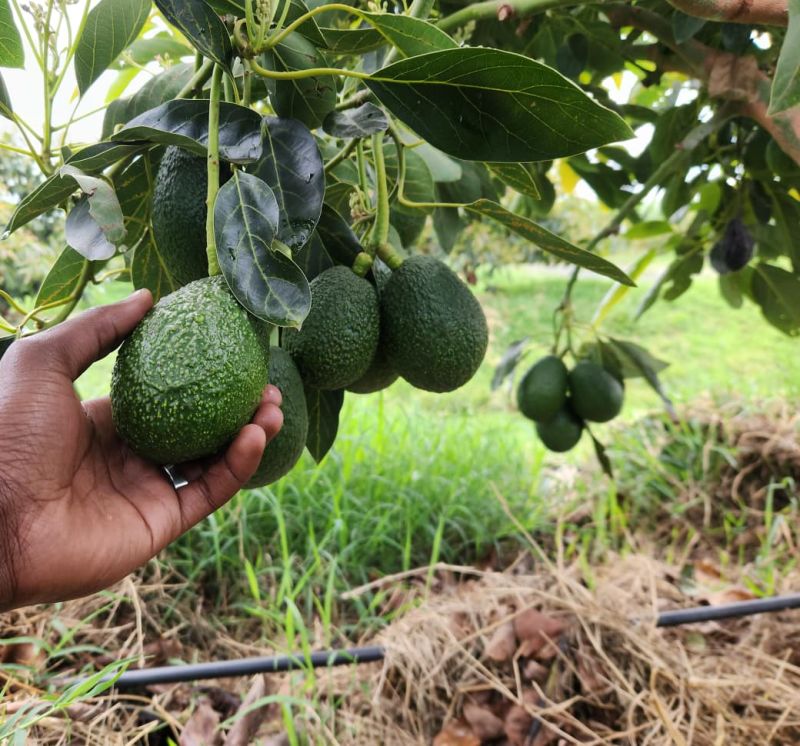
Avocado dry matter testing in Kenya decides whether a Hass harvest earns export prices or gets turned back at the packhouse. The Horticultural Crops Directorate, known as HCD, recommends a minimum of 24 percent dry matter for Hass and Fuerte avocados meant for export. Under Kenya’s 24% Hass export threshold, fruit testing at 23 percent does not meet the minimum maturity requirement, no matter how good the fruit looks on the tree.
Many farmers pick by the calendar, by skin colour or by the price a broker quotes this week. None of these measures maturity. Dry matter does. This guide shows how Hass avocado farming in Kenya connects to the 24 percent threshold, how the threshold compares with the international standard, what KEPHIS and HCD check at each stage and how to run a dry matter test with sound sampling.
The guide also covers the EU export requirements for Kenyan avocados, including the current EU regulation, plant health, pesticide residues and export documents. Kenya’s 24 percent figure is a national export threshold and not an EU law. The international minimum for Hass, which EU buyers use as a reference, is 21 percent. Fruit Africa Veriplant grows and sells grafted Hass seedlings from nurseries in Murang’a, Nairobi and Embu, and our agronomy team in Ruiru advises orchard owners on harvest timing. What follows draws on the AFA and COLEAD Good Practice Guide for the avocado value chain, on CBI market information, on the UNECE standard and on recent AFA notices.
What the 24% Rule Means for Hass Avocado Farming in Kenya
Dry matter is what remains of the fruit after the water is removed. You weigh a sample of flesh, dry the sample to a constant weight, weigh the dried sample and divide the dry weight by the fresh weight. A result of 24 percent means solids make up 24 percent of the fresh flesh weight. The AFA guide gives the same figure in another form: 76 percent moisture equals 24 percent dry matter.
Avocado gives few outside signs of maturity. Hass skin colour on the tree tells you little, because the skin darkens as the fruit ripens after harvest. Inside the fruit, the water share falls and the oil share rises as the fruit matures. A mature fruit ripens evenly and tastes rich and nutty. An immature fruit shrivels, turns rubbery or ripens with watery, bitter flesh. Buyers reject such fruit.
Kenya’s export threshold and the international standard
Two different numbers circulate in Kenya, and farmers often mix them up. The first is the international maturity standard, UNECE FFV-42. The second is the maturity HCD recommends for export from Kenya. The table below separates them.
| Reference | Hass | Fuerte | Other varieties | Source |
|---|---|---|---|---|
| International minimum, UNECE FFV-42 | 21% | 20% (also Pinkerton, Reed, Edranol) | 19% | UNECE standard, CBI |
| Dry matter many European ripeners prefer | 23% | Not stated | Not stated | CBI market information |
| HCD recommended export maturity in Kenya | 24% | 24% | Check current HCD guidance | AFA and COLEAD Good Practice Guide |
The international standard sets the lowest dry matter at which a fruit continues ripening to a satisfactory stage. Kenya’s export maturity sits above the floor. A Hass fruit at 24 percent meets the international minimum of 21 percent and also clears the 23 percent many European ripeners prefer. The higher Kenyan figure protects fruit on a long sea journey and protects the name of Kenyan avocados in markets where Peru and Mexico also compete.
A minimum, not a target
A reading of exactly 24.0 percent leaves no room for sampling and method variation. Two testers who use different sampling plans, different sample sizes or different microwave ovens obtain different results from the same orchard. Fruit from different trees also differ. Plan your harvest with a margin above the minimum, and learn which method your packhouse uses so your results stay comparable with theirs.
Dry matter varies by variety, region and season
The AFA guide states dry matter increases as the fruit matures and depends on variety, season and region. A warm, low-altitude block reaches a given reading earlier than a cool, high-altitude block. A block which flowered late reaches the line late. A dry year and a wet year give different timelines. This is why a calendar date never replaces a test. Test every block separately, and test again whenever weather or flowering differs from the previous season.
Key facts for Hass growers
| Item | Figure or date | Source |
|---|---|---|
| HCD recommended export maturity, Hass and Fuerte | 24% dry matter | AFA and COLEAD Good Practice Guide |
| International minimum for Hass | 21% dry matter | UNECE FFV-42 |
| Preferred by many European ripeners for Hass | 23% dry matter | CBI |
| Minimum fruit weight in the international standard | 123 g, or 80 g for Hass | CBI |
| Sea export harvesting opened for the 2025 to 2026 season | April 2, 2026 | AFA notice reported by FreshPlaza |
| Sea export harvesting closed | From October 30, 2026 | AFA notice reported by FreshPlaza |
Why Early Harvesting Causes Rejections
Fruit picked below the maturity line does not finish development after harvest. The fruit travels to a packhouse, then to a port, then on a sea journey of several weeks, and finally to a ripening room in Europe or the Middle East. Immature fruit fails at the last step. Trade reports on the 2025 and 2026 seasons describe the pattern: fruit harvested with low oil content fails to ripen to the required standard, and the buyer rejects the lot.
Failure shows in different forms. Some fruit stays hard for days and then softens in patches. Some fruit shrivels near the stem. Some fruit ripens to pale, watery flesh with a bitter taste. A shopper who buys one such avocado often avoids the same origin for weeks, and supermarkets stock Peruvian and Mexican fruit as alternatives.
Rejection costs you in three ways. You lose the price of the rejected fruit. Your exporter loses the consignment and risks the export licence. Kenya loses buyer trust, which takes years to rebuild and a few bad shipments to damage. Farmers who understand this chain treat the dry matter result as part of the price of the crop.
Brokers and mixed lots
Brokers often collect fruit from many smallholder farms. Industry reports describe some brokers who mix mature and immature batches to meet early demand. According to the AFA guide, HCD clears a lot with a clearance letter when the lot conforms, and rejects the entire lot when the lot does not conform. A single immature batch placed in a mixed lot therefore puts every farmer in the lot at risk. If you sell through a broker, ask for the dry matter result of your own fruit before the fruit leaves your gate, and keep your own record.
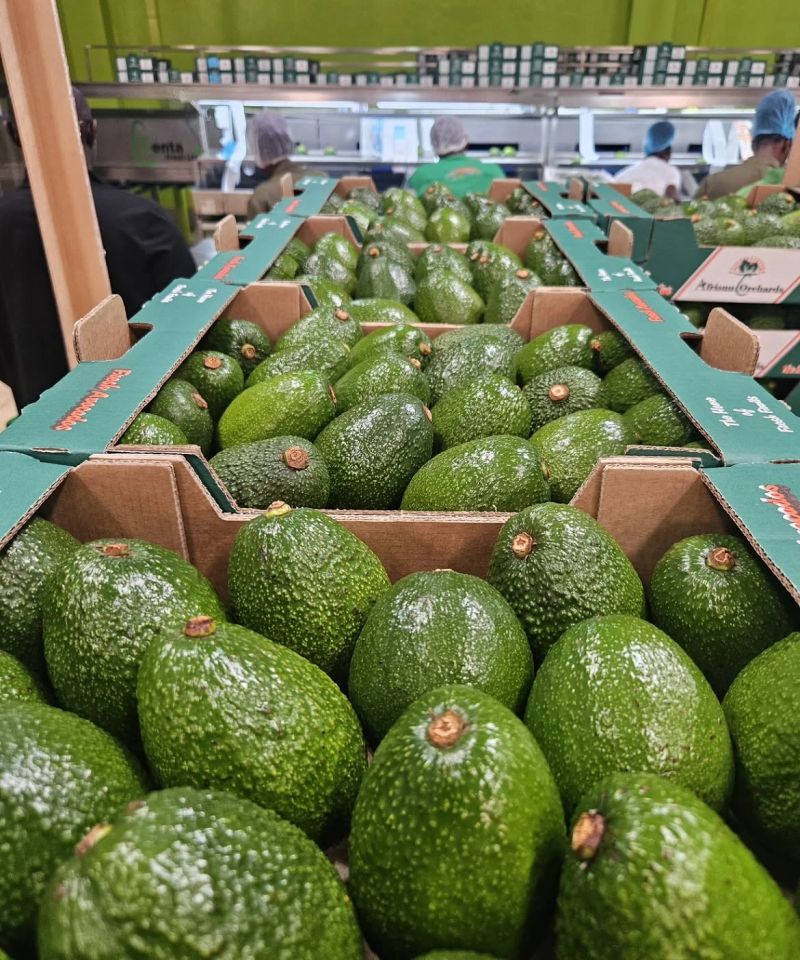
Avocados headed for export market
7 Mistakes Which Cause Kenyan Avocado Farmers to Fail the Dry Matter Test
Most rejections trace back to a short list of repeated mistakes. Each one starts on the farm, and each one has a practical fix.
1. Picking by calendar
Many farmers pick in the same week every year. Dry matter follows flowering date, altitude, temperature and rainfall, so the right week shifts between seasons and between blocks. The 2026 season showed this clearly. AFA surveyed maturity in March 2026, judged mature fruit in major production zones insufficient and extended the restriction on sea shipments before opening the season on April 2.
2. Picking by price
Early fruit sells at a higher price because few farmers have fruit ready. Brokers know this and push farmers to pick early. The extra shillings in the first week disappear when the lot fails. Price pressure on immature fruit is one reason AFA banned Fuerte and Hass exports in late 2021 and still surveys maturity before each opening.
3. Judging by skin colour and fruit size
Hass does not darken on the tree in a way you read as maturity. Colour change starts after harvest, during ripening. Size also misleads. A large fruit from a young, heavily watered tree often holds less dry matter than a medium fruit from a mature tree. Neither colour nor size replaces a test.
4. Testing too few fruit or too few trees
One fruit from one tree describes one fruit. The AFA guide states a single test is not enough and asks for samples from several trees. A farmer who tests a single fruit, finds 25 percent and harvests the block relies on the best fruit in the orchard.
5. Sampling only the easy fruit
Fruit near the gate, near the road or on low branches differs from fruit in the middle of the block and from fruit in shaded parts of the canopy. The AFA guide advises sampling from shady parts of the tree and choosing the least mature or ripe-looking fruit. This approach gives a cautious result. Sample across the whole block and record where each fruit came from.
6. Poor preparation and weighing
Errors enter the test at several points. Skin or seed coat stays in the sample. The scale reads only to the nearest gram. The fresh sample loses moisture while waiting on the table. The drying stops before the weight is constant. With a sample of about 5 grams, a small weighing error moves the result by a full percentage point. Method discipline decides whether a fruit passes at 24 percent.
7. Keeping no records
Without dated results you do not see the trend, and without the trend you have no way to predict the harvest week. Exporters ask for traceability, and AFA now links shipments to registered suppliers. A farmer with no records has no way to show how the harvest date was chosen.
EU Export Requirements for Kenyan Avocados
The EU export requirements for Kenyan avocados fall into four groups. Maturity covers the fruit. Plant health covers pests. Food safety covers pesticide residues. Paperwork covers licences and certificates. A shipment must satisfy all four groups, and a failure in one group stops the consignment.
Maturity rules in the EU market
Commission Delegated Regulation (EU) 2023/2429 now governs marketing standards for fresh fruit and vegetables in the EU. The regulation repealed Implementing Regulation (EU) No 543/2011 and has applied since 1 January 2025. Article 2 makes the requirements of Article 76(1) of Regulation (EU) No 1308/2013 the general marketing standard. A holder who shows the produce meets an applicable UNECE standard is treated as conforming to the general marketing standard. For avocados, the UNECE standard FFV-42 remains the technical reference for quality and maturity, and CBI points exporters to FFV-42 and to the Codex avocado standard.
FFV-42 sets the minimum dry matter, measured by drying to constant weight, at 21 percent for Hass, 20 percent for Fuerte, Pinkerton, Reed and Edranol and 19 percent for other varieties. Antillean varieties are allowed a lower figure. The standard also asks for firm, carefully picked fruit, developed enough to continue ripening to completion. Check the regulation and the standard text before each season, because EU texts are revised from time to time.
Notice the gap between the legal reference and the market. The reference minimum for Hass is 21 percent, yet CBI reports most European importers and ripeners treat 23 percent as the ideal maturity level for Hass. CBI also stresses uniformity. A parcel shows the same maturity from the first carton to the last, so one weak batch in a mixed lot is a problem even when the lot average looks fine.
Why Kenya sets the export threshold above the international minimum
Kenya’s 24 percent figure is a national export measure which sits above the international minimum for two practical reasons. First, fruit travels a long distance by sea, so a margin above 21 percent protects against fruit which tests acceptably at harvest and ripens badly weeks later. Second, Kenya has a history of immature fruit reaching markets, and a higher floor protects the reputation of every exporter. A grower who meets 24 percent meets the international minimum and the 23 percent preference of most European ripeners with room to spare.
Size, weight and packaging
Maturity is only one part of grading. CBI expresses preferred European sizes per 4 kg box. A size code roughly matches the number of fruit in the box, so a lower code means heavier fruit. CBI reports buyers prefer Hass in size codes 16 to 18, and sometimes 20. The table below shows the weight range for each code from CBI’s summary of the standard.
| Size code | Fruit weight range (g) | Note |
|---|---|---|
| 14 | 258 to 313 | Preferred mainly for Fuerte, codes 14 to 16 |
| 16 | 227 to 274 | Preferred for Hass |
| 18 | 203 to 243 | Preferred for Hass |
| 20 | 184 to 217 | Accepted for Hass by some buyers |
| 22 | 165 to 196 | |
| 24 | 151 to 175 | |
| 32 | 80 to 123 | Hass only |
The standard sets a minimum fruit weight of 123 grams, or 80 grams for Hass. CBI also notes the weight difference between the smallest and largest fruit in a package is kept within 25 grams, and buyers expect uniform sizes on each pallet. Use new, clean packaging which protects the fruit. Common formats are 4 kg cardboard boxes and 10 kg crates. Your exporter or packhouse decides the format, so ask before harvest.
What European ripeners look for beyond the dry matter number
Importers in Europe buy avocados green and ripen them in controlled rooms. A ripener needs every fruit in a pallet to ripen on the same days, because shops expect ready fruit on a fixed date. Uneven maturity gives uneven ripening, so the ripener sorts, delays and complains. The supplier loses the next order.
Condition and handling count as well. A fruit with perfect dry matter and a deep scratch still loses grade. Handle the fruit with the same care you give the test.
Plant health certificates
Plant health inspection takes place in the producing country. According to CBI, each shipment needs a phytosanitary certificate confirming the fruit was inspected, is free from quarantine pests and meets EU plant health rules under Regulation (EU) 2019/2072. In Kenya, KEPHIS issues the phytosanitary certificate. The AFA guide also states export fruit must come from sites and facilities approved and registered each year by KEPHIS, and KEPHIS inspects consignments at the port of exit.
Pesticide residues and farm standards
EU maximum residue levels, known as MRLs, apply to avocados. Produce above the limits is withdrawn from the market. For substances without a specific limit, CBI reports a default of 0.01 mg/kg. Germany, the Netherlands and Austria often apply stricter limits, and supermarkets apply the strictest. Use only products registered by the Pest Control Products Board, respect the pre-harvest interval printed on each label and keep a dated spray record for every block.
Buyers almost always ask for certification. GLOBALG.A.P. is the common farm standard for European supermarkets, and integrated pest management forms part of the standard. For packhouses, BRCGS or IFS are common, and both are recognised by GFSI. Your exporter will tell you which certificates the buyer needs from your farm.
Documents behind an avocado export
| Document | Issued by | Purpose |
|---|---|---|
| Export licence | HCD, Agriculture and Food Authority | Permission to export fresh produce |
| Phytosanitary certificate | KEPHIS | Confirms the consignment meets plant health requirements of the destination |
| Certificate of conformity for EU consignments | KEPHIS | Confirms the consignment meets set quality requirements |
| Laboratory test report and clearance letter | HCD | Records maturity test results and authorises a conforming lot |
| Farm certificate such as GLOBALG.A.P. | Accredited certification body | Food safety standard required by most European supermarkets |
| Spray and harvest records | Farm and exporter | Shows residues stay within limits and supports traceability |
A smallholder does not hold every document, but your exporter needs facts from you to hold them. Spray records, harvest dates, block maps and dry matter results feed the exporter’s file. A farmer with clean records sells to better exporters.
How the 24 Percent Rule Developed
The rule did not appear overnight. Kenya tightened maturity control after several seasons in which immature fruit reached the market. The table below lists the main steps from public reports of AFA and HCD announcements.
| Date | Event |
|---|---|
| November 15, 2021 | AFA places a first ban on exports of Fuerte and Hass because of immature fruit |
| January 2022 | AFA declares an indefinite ban on both varieties |
| March 2022 | Exports resume, Fuerte on March 4 and Hass on March 18 |
| 2022 | HCD announces a minimum of 24 percent dry matter for Hass and Fuerte, up from 21 percent for Hass and 20 percent for Fuerte |
| 2022 onward | HCD orders inspection of all export avocados and suspends exporters found shipping immature fruit |
| March 24, 2023 | The 2023 harvesting season opens, with a warning against picking immature fruit |
| March 1 to 6, 2026 | AFA surveys maturity and volumes in major production zones |
| April 2, 2026 | Sea export harvesting opens for the 2025 to 2026 season |
| October 28, 2026 | AFA issues a notice closing sea export harvesting |
| October 30, 2026 | Sea export closure takes effect |
Each step moved control closer to the farm. Early rules governed exporters at the port. Newer rules reach packhouses, transport vehicles and the list of suppliers behind each shipment. The April 2026 opening followed the AFA maturity survey and applied to the 2025 to 2026 season only. The date is not a permanent national harvest date, and AFA sets opening and closing dates again each season after reviewing maturity and volumes.
Latest AFA Notice on Kenya’s Avocado Export Season: Sea Exports Close From 30 October 2026
AFA issued a notice on 28 October 2026 closing harvesting for sea exports of avocados from 30 October 2026. FreshPlaza reported the notice on 29 October and linked the closure to low harvest volumes. Read the points below as a summary and check the full AFA notice before you act.
The closure covers Hass, Fuerte, Pinkerton and Jumbo avocados. Exports of these varieties by air remain permitted. HCD inspects all avocado export consignments, and exporters must provide traceability documentation for each shipment. AFA states permits are not issued for non-compliant consignments and violators risk losing their export licences.
Oil processing is affected as well. Harvesting avocados for oil processing is suspended during the closure. Processors holding avocado oil stocks meant for export must ask HCD for verification by 2 November 2026, and only stocks cleared by the deadline are exported. Importing avocado fruit for oil processing is prohibited during the closure.
What the closure means for your farm
Do not harvest for sea export once the closure takes effect. Ask your exporter whether air freight is open for your fruit, and keep every test result and delivery record, because inspection and traceability apply to air consignments too. Follow later AFA notices, since AFA sets the reopening after another maturity survey. Use the closed months to prune, repair irrigation, service your testing equipment and record the flowering dates of each block. These records shorten your planning for the next season.
What KEPHIS and HCD Check Before Your Fruit Leaves Kenya
Two agencies control the path from orchard to ship. KEPHIS, the Kenya Plant Health Inspectorate Service, handles plant health. HCD, the Horticultural Crops Directorate of AFA, handles licensing, maturity and market conduct. The stages below combine the AFA guide with recent AFA notices.
Stage 1: Field survey and season notices
Each year AFA surveys production zones before allowing export harvesting. In March 2026 the survey ran from March 1 to 6. The Authority judged mature fruit in the major zones insufficient to open the season, extended the restriction on sea shipments and opened harvesting on April 2 after maturity improved. The opening date is a regional picture. Your own orchard sometimes sits below the regional average, so your own dry matter test decides when you pick.
Stage 2: Registration and traceability
Export fruit must come from sites and facilities approved and registered each year by KEPHIS, and packhouses must keep a defined traceability system. For 2026, AFA also asked exporters to submit lists of registered Horticultural Produce Marketing Agents or suppliers by March 30, 2026, to link each shipment to the origin and harvest timing. Unregistered fruit has no route to export.
Stage 3: Packhouse inspection
The AFA guide states HCD audits exporter packhouses and pre-authorises them for basic dry matter and oil tests. HCD randomly picks samples for each fruit size and sends them to the HCD confirmatory laboratory. HCD inspectors also visit fields and packhouses with quality meters for non-destructive dry matter and oil checks. According to the March 2026 AFA notice as reported by FreshPlaza, mandatory packhouse inspections for fresh export avocados began on April 7, 2026, and exporters apply at least three days before shipment. Check the current AFA notice for the exact scope.
Stage 4: Port and airport checks
HCD inspectors at the Jomo Kenyatta International Airport cargo terminal verify oil content and reject consignments below the maturity threshold. KEPHIS inspects consignments at the port of exit, and for air freight a KEPHIS inspector samples at the clearing agent facility. Rejection in Nairobi costs far less than rejection in Rotterdam, because the fruit still has a route to the local market, to processing or to another buyer.
Stage 5: Transport and handling
AFA requires crates for transport. Exporters who use open trucks, pickups or Probox vehicles risk licence revocation. Fruit in sacks bruises, heats up and loses the quality your test proved. Use rigid crates from the first harvest basket.
Stage 6: The outcome
When a lot conforms, HCD sends a clearance letter to the exporter. When a lot does not conform, the entire lot is rejected. HCD has also suspended exporters over immature fruit in the past, so exporters now avoid farms with a record of failed lots.
| Stage | Agency | What is checked | What you do |
|---|---|---|---|
| Field survey | AFA | Regional maturity and volumes | Read the season notice and run your own test |
| Registration | KEPHIS and AFA | Farms, packhouses, marketing agents | Register through your exporter and keep block records |
| Packhouse inspection | HCD | Dry matter, oil, traceability | Deliver tested fruit in crates with a harvest date |
| Port or airport check | HCD and KEPHIS | Maturity, plant health, documents | Keep a margin above the threshold |
| Outcome | HCD | Clearance letter or lot rejection | Keep your own results to settle disputes |
False Codling Moth and Pest Management in Kenyan Avocado Orchards
The false codling moth, Thaumatotibia leucotreta, is native to sub-Saharan Africa and attacks avocado, citrus and other crops. The EU has regulated the moth as a quarantine pest since 2017, and the most visible interceptions have been on cut roses from East Africa. EU measures differ by commodity, so do not assume the rules for one crop apply to avocado. Ask KEPHIS which pest measures apply to your consignments and your destination market. Inspectors at destination apply the requirements of the destination market to each consignment.
On the farm, pest management protects fruit quality whatever the market. The AFA guide lists field checks for the use of insect traps for false codling moth and fruit flies. For false codling moth, the guide recommends weekly monitoring with pheromone traps placed at 1.5 metres in the tree, at least 20 metres from the block edge, at one trap per hectare or fewer, with the weekly catch recorded to build a pest calendar. Control options in the guide include orchard sanitation, mating disruption, attract-and-kill and biological products applied early in the season to match egg laying. The moth pupates in the soil under the tree, which is why sanitation matters.
For fruit flies, the guide recommends McPhail traps at one per hectare, weekly records and bait sprays when thresholds are crossed. The guide lists a tolerance of zero for fruit flies. In both cases, collect and bury fallen and culled fruit at least twice a week. A clean orchard lowers pest pressure and protects the market access your dry matter work earns.
Why Avocado Dry Matter Testing in Kenya Matters Before Every Harvest
HCD tests fruit at the packhouse and again at the airport or port, so every batch faces a maturity test before the batch leaves Kenya. Your own test moves the check to the orchard, where a failed result costs nothing. A fruit which fails in your orchard stays on the tree and gains a few more days. A fruit which fails at the packhouse costs transport, labour and inspection fees, and a lot which fails at the port costs the whole consignment.
Your own results also support the conversation with your exporter. A dated record of dry matter by block shows when each block reached the threshold and which method you used. The record helps you agree a harvest date, defend your fruit after a dispute and spot trends across seasons.
How to Test Avocado Dry Matter in Kenya
Two published methods guide this section. The AFA and COLEAD Good Practice Guide describes a microwave method using a finely chopped sample of about 5 grams. The UC Davis postharvest centre describes a method using two opposite cores from the widest point of each fruit, about 3 to 5 grams in total. The two methods differ in sample preparation, sample size and drying schedule. Microwave ovens also differ in real power, so no single drying time suits every oven.
Ask your exporter or packhouse which method they use, and compare a few of your results with a laboratory result before you rely on your own test for harvest decisions. Your exporter and HCD inspectors have the final word on the official result. Use your test to decide when to book an inspection, and not to replace one. The steps below follow the AFA guide where the guide gives detail and mark Fruit Africa’s own recommendations separately.
Step 1: Build a fair sample
The AFA guide gives these sampling rules. Take samples from several trees, because a single test is not enough. Sample in the morning, when fruit holds the most water. Take fruit from shady parts of the tree and choose the least mature or ripe-looking fruit. Wrap samples in plastic to prevent moisture loss. Measure at the midpoint, the widest diameter of the fruit, and use the same place on every fruit.
The guide does not state a number of fruit. Fruit Africa’s agronomy team recommends 15 fruit from at least 10 trees per block, spread across the block and across low and high branches. Skip damaged or oddly small fruit. Label the sample with the block name, the date and the time. This sampling plan is our recommendation and is not an AFA requirement.
Test each block separately. A block planted in a different year, on a different slope or with a different irrigation setup matures on a separate schedule. One average for the whole farm hides the early blocks and the late blocks.
Individual fruit or pooled sample
Decide before you start whether you test each fruit separately or test a pooled sample, and write the choice in your log. The two approaches give different information.
Testing each fruit separately shows the spread across the block and exposes the weakest fruit. The approach takes more time and needs more drying runs. The UC Davis core method suits this approach. A pooled sample combines flesh from several fruit into one chopped sample and gives one average for the block. The pooled approach saves time, yet hides the weak fruit, so a block with one early group of trees and one late group reads as a comfortable average. The AFA guide describes a chopped sample, which behaves like a pooled sample when you combine wedges from several fruit.
Fruit Africa recommends individual testing for the first tests of a season and pooled testing for quick follow-up checks, provided you note the approach each time. Never compare an individual result with a pooled result from another week as though they were the same measurement.
Step 2: Prepare the flesh
The AFA guide cuts the fruit through the seed, takes wedges of about one eighth of the fruit, peels them, removes the seed and the seed coat and chops the flesh finely in a food processor. The target is a fresh weight of about 5 grams, within 0.3 grams on either side, with the exact weight recorded.
The UC Davis method takes two plugs from opposite sides of the fruit at the widest point, removes the peel and all seed material including the seed coat, and yields about 3 to 5 grams for a Hass fruit of about 220 grams. For either method, weigh the sample promptly, because the sample starts losing water at once. Use glass or ceramic dishes in the microwave and avoid plastic dishes, which warp. Handle the flesh as little as possible with bare hands, because skin oils change the weight.
Step 3: Choose your drying method
| Method | Sample | Drying schedule | Strength | Limit |
|---|---|---|---|---|
| Microwave, AFA guide | About 5 g chopped flesh, within 0.3 g either side | Suggested start of 40% power for 15 minutes, then shorter intervals with weighing until no further weight loss | Fast and cheap, works on a farm | Oven power varies, so confirm settings with your packhouse |
| Microwave, UC Davis | Two opposite cores, 3 to 5 g | About 30% power for about 30 minutes, then 5 minute intervals until two weighings match | Tests each fruit separately | Low-maturity fruit burns easily, so watch the sample |
| Food dehydrator, UC Davis | Two opposite cores | 3 days, then 24 hour intervals until constant weight | Gentle drying, little burning | Takes 3 to 4 days |
| Near infrared meter | Whole fruit, no cutting | Seconds per fruit | Scans many fruit, used by HCD inspectors | Costly, needs checking against a drying test |
| Accredited laboratory | Fruit submitted to the lab | Gravimetric method, results in a few working days | Recorded and recognised result | Fee and transport time |
The documented microwave settings come from two sources and differ, which is why you confirm settings with your packhouse. The AFA guide describes the 40 percent setting as a suggestion, and UC Davis states exact time and power depend on your microwave. Use a microwave with a rotating tray where possible, keep samples from touching one another, and stop if you smell scorching. UC Davis warns burnt samples give erroneous readings and samples with low dry matter, under about 20 percent, sometimes ignite.
The constant weight check
Drying is complete when two consecutive weighings give the same weight. Weigh, return the sample for a short interval, weigh again and repeat. Stopping early leaves water in the sample and gives a result which is too low. Write each weighing in your log, because the sequence proves the sample reached constant weight.
The calculation
Subtract the weight of the empty dish from both weighings. Divide the dry sample weight by the fresh sample weight and multiply by 100. A dish of 20 grams holding a 5 gram fresh sample which dries to 1 gram of sample gives 20 percent dry matter. The table below shows five fruit tested individually with a 5 gram sample.
| Fruit | Fresh sample weight (g) | Dry sample weight (g) | Dry matter (%) |
|---|---|---|---|
| Fruit 1 | 5.00 | 1.22 | 24.4 |
| Fruit 2 | 5.00 | 1.28 | 25.6 |
| Fruit 3 | 5.00 | 1.16 | 23.2 |
| Fruit 4 | 5.00 | 1.26 | 25.2 |
| Fruit 5 | 5.00 | 1.24 | 24.8 |
| Average of five | 24.6 |
The five fruit average 24.6 percent, yet Fruit 3 reads 23.2 percent. An average hides weak fruit, so always read the lowest fruit as well. The sample size also shows why scale quality matters. With a 5 gram sample, an error of 0.05 grams in the dry weight moves the result by one full percentage point. UC Davis asks for a scale reading to at least 0.01 gram, and a scale reading to 0.001 gram is better.
Three small errors which move the result
First, check your scale. Place a calibration weight on the pan before each testing day and confirm the reading. Second, weigh the dried sample the same way every time. Let the dish cool before you weigh, because a hot dish gives an unstable reading, and keep dried samples covered, because dried flesh takes up moisture from the air. Third, test fresh fruit. Fruit stored for several days loses water and reads higher than the same fruit on the day of picking. Test on the day you pick and note the time in your log.
Keep conditions consistent from week to week. The AFA guide advises no harvesting during rainfall and no irrigation for two days before harvest. For your tests, sample at the same time of day, from the same positions on the trees, with the same method and the same microwave. Note rain and irrigation in the log, so a surprising reading has an explanation.
Step 4: Decide when to book harvest and inspection
HCD and your packhouse decide official clearance, and no farm test replaces their result. Your own test tells you when to ask for an inspection. Fruit Africa’s agronomy team suggests an internal planning margin: treat a block as ready to book only after repeated tests read above 24 percent with room to spare, for example around 24.5 percent on the block average. This margin is Fruit Africa’s planning advice and not an AFA or HCD requirement. Ask your exporter or packhouse which margin they want.
When the lowest fruit in a sample reads under 24 percent, take a larger sample from more trees before you book. When your results move up and down between weeks, check your method and conditions before you trust either figure.
A testing calendar for one season
The calendar below is Fruit Africa’s suggested routine. Adjust the timing to your variety, altitude and exporter’s schedule.
| When | Action |
|---|---|
| About six weeks before the expected harvest | Run the first test on each block and record the result |
| Weekly while the average is below 22 percent | Repeat the test on the same day of the week |
| Average between 22 and 24 percent | Test every three or four days and tell your exporter the trend |
| Average at or above your planning margin | Confirm with a larger sample, ask your packhouse about the packhouse test and arrange crates |
| Harvest day | Pick, crate, shade and deliver within hours |
Keep a dry matter log
Write the same details on every test day. A simple notebook works, and a spreadsheet works better when several people share the task. The log lets you predict the harvest date for each block and answers questions when a buyer disputes a result.
| Log field | Example entry |
|---|---|
| Date and time | Tuesday, 8:30 am |
| Block and tree positions | Block B, 10 trees across the block |
| Method and equipment | AFA microwave method, scale to 0.01 g, microwave model noted |
| Individual or pooled | Individual, 15 fruit |
| Result | Average and lowest fruit |
| Conditions | Rain two days earlier, no irrigation for three days |
A worked example for one block
The table below shows a made-up log for one block of 80 trees. The figures are an example and not measured data. They show how a log helps you forecast the harvest week.
| Week | Average dry matter (%) | Lowest fruit (%) | Decision |
|---|---|---|---|
| 1 | 19.8 | 18.9 | Keep testing weekly |
| 2 | 20.7 | 19.6 | Keep testing weekly |
| 3 | 21.5 | 20.4 | Keep testing weekly |
| 4 | 22.4 | 21.2 | Warn your exporter of the trend |
| 5 | 23.3 | 22.5 | Test twice a week |
| 6 | 24.1 | 23.4 | Wait, the lowest fruit is under 24 percent |
| 7 | 24.8 | 24.2 | Take a larger sample and ask the packhouse about the test the packhouse uses |
| 8 | 25.2 | 24.6 | Book inspection, then harvest, crate and deliver |
The block gained about 0.8 points a week, so the log pointed to the final week early. A farmer who picked in week 6 on the average alone sent fruit with a lowest reading of 23.4 percent. The weekly gain in this example is a sample figure. Real gains slow down in cool weather and speed up in warm weather, so your own log decides.
Non-destructive meters and laboratories
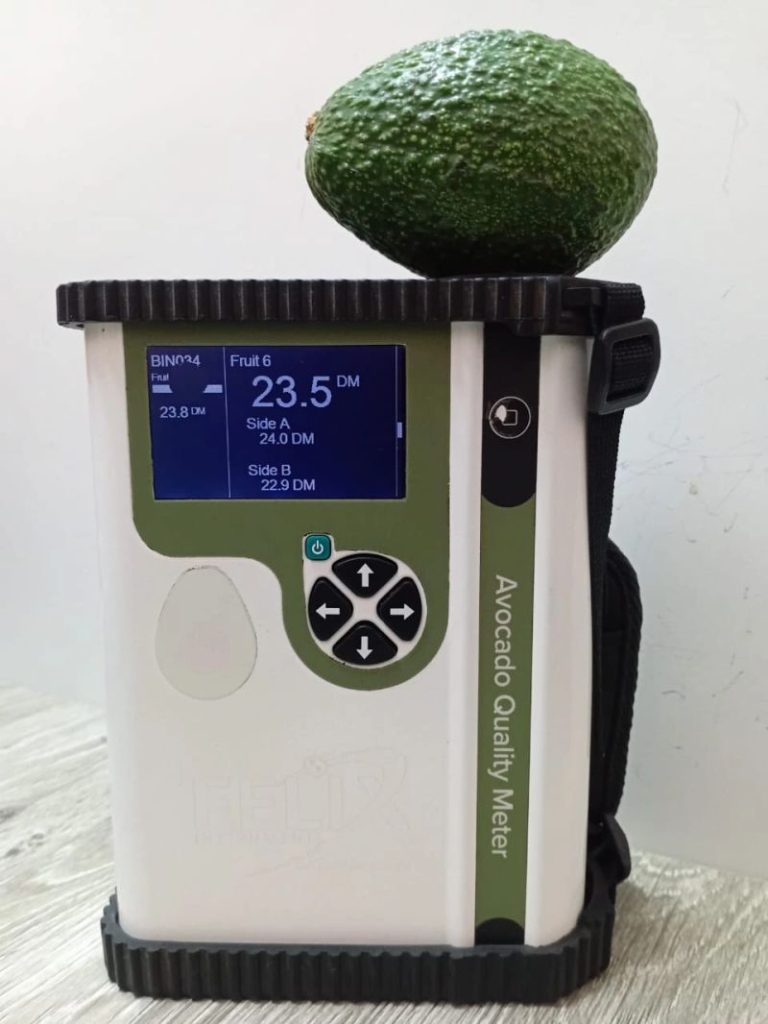
Handheld near infrared meters such as the Felix Instruments F-751 estimate dry matter through the skin in seconds and leave the fruit intact. The maker reports an accuracy within 1.15 dry matter units on a single fruit and within 0.83 units on a lot of five fruit, measured at 23 percent dry matter with four scans per fruit. These are maker figures.
A reading of 24.5 percent on a single fruit therefore points to a true value between about 23.4 and 25.7 percent. The AFA guide notes HCD inspectors use quality meters for non-destructive checks, and the guide advises morning sampling for these instruments as well. A meter helps you scan many fruit and spot early or late trees. Confirm key decisions with a drying test or a laboratory result.
Brokers, Exporters and Farmer Groups: Handling Maturity in the Sale
Most smallholders sell through brokers or registered Horticultural Produce Marketing Agents. AFA now asks exporters to link every shipment to a registered agent or supplier, so a broker without registration leaves your fruit with no route to export. Ask any buyer for registration details before you agree on a price.
Agree on the maturity test before the harvest, in writing. State which method counts, who runs the test, which minimum applies and what happens when fruit falls short. A buyer who avoids naming a minimum leaves the decision for later, and later decisions rarely favour you.
Keep a copy of your own dry matter result for each delivery. When an exporter rejects fruit, your record shows whether the fruit left your farm mature. Keep copies of the log pages, the delivery note and any message from the buyer about the harvest date. Do not let a buyer push you to pick before your own result reaches your planning margin. Early picking brings a higher price for one week, and a rejected lot brings none. If the broker insists, sell to a different buyer or wait.
Share the testing tools with a farmer group
A group of ten farmers shares one scale, one microwave and one set of dishes at a cost each farmer accepts. A scale reading to 0.01 gram costs little when you split the price. Some exporters also test fruit on request. Kakuzi offered free maturity testing to smallholder growers in earlier seasons, according to a 2023 report, so ask the exporters in your area whether a similar service exists today.
Rotate the testing duty each week and record every result in one book. Sell as a group when the farms in your area reach the threshold together. A group delivery of mature fruit in crates attracts better exporters than ten small lots of mixed quality.
The Cost of Premature Harvesting to Your Farm and to Kenya’s Name
A failed lot costs money at the farm gate, and the cost extends beyond one season. The table below uses example figures. Replace them with the prices your exporter quotes and the yields of your own trees.
| Item | Mature fruit at 25% dry matter | Immature fruit at 20% dry matter |
|---|---|---|
| Trees in the block | 100 | 100 |
| Fruit per tree in kilograms (example) | 120 | 120 |
| Total fruit in kilograms | 12,000 | 12,000 |
| Example price per kilogram | KSh 45 export grade | KSh 15 local or oil grade |
| Income | KSh 540,000 | KSh 180,000 |
| Difference | KSh 360,000 lost on one block of 100 trees | |
Add the stress on the tree. A tree stripped of immature fruit has spent water and nutrients on fruit which earns a fraction of the price of mature fruit. Add the lost contract and the lost trust of an exporter. One bad lot is enough to remove a farm from a supplier list for the season.
Premature harvesting and Kenya’s reputation
Kenya leads Africa in avocado exports and competes with Peru and Mexico for the same shoppers. Buyers choose an origin by experience, and a shopper remembers the origin label more than the farm. The 2021 export ban shows how fast damage spreads. Immature fruit reached the market, and the whole country paid with a four-month closure of Hass and Fuerte exports.
Strict maturity control builds the opposite effect. Each grower who tests and waits adds value to the Kenyan brand, and exporters who protect quality keep access to demanding markets. A Kakuzi official said in 2023 exporting immature fruit damages national avocado development efforts. Your dry matter test is a small contribution to this effort, and also a protection for your own income.
Orchard Management for Better Avocado Fruit Maturity and Quality
Testing tells you where your fruit stands. Orchard management supports healthy fruit development. No single practice guarantees a higher reading in every season, and dry matter still depends on variety, region and weather. The practices below support fruit quality and make your test results easier to read.
Start with the right seedling
Maturity targets apply to the variety you plant. A seedling sold as Hass which turns out to be a different type gives unpredictable maturity and fruit which fails the export standard. Buy grafted seedlings from a registered nursery and ask three questions. Which mother trees supplied the Hass scion wood, and does the nursery show they are genuine Hass? What rootstock carries the graft, and what does the nursery know about the rootstock source? Is the graft union sound, with clean healing and no sign of disease?
Rootstock information matters because the rootstock influences tree vigour and performance in your soil. Fruit Africa Veriplant supplies certified grafted Hass seedlings from nurseries in Murang’a, Nairobi and Embu. Certified seedlings give you a sound start and a clear variety record. They do not by themselves guarantee export compliance, which depends on orchard management, pest control, harvest timing and testing. Our agronomy team helps buyers choose varieties and plan block layouts to match harvest windows.
Feed the tree for fruit as well as leaves
Heavy nitrogen feeding pushes leaf growth. Balance nitrogen with phosphorus, potassium and calcium, and apply fertiliser according to a soil test. Boron and zinc matter for flowering and fruit set where soils lack them. A soil test each year costs little compared with one failed lot.
Manage water with care
Water stress during fruit growth hurts yield and fruit quality. Keep a steady irrigation schedule through the season, mulch the root zone to hold moisture and avoid sudden swings. Follow the AFA guide and avoid irrigating in the two days before harvest. For testing, keep your sampling conditions consistent and note irrigation and rain in the log, because conditions around sampling affect fruit water content and the reading.
Balance the crop load
A tree carrying a heavy crop shares resources among many fruit. Prune after harvest to keep light inside the canopy, remove damaged fruit early and avoid pushing a young tree to carry a large first crop.
Record flowering dates for each block
Warm, low blocks usually mature earlier than cool, high blocks, and a block which flowered late matures late. Record the flowering date for each block. The record tells you when to start testing and stops you from copying a neighbour’s harvest dates.
Control pests and keep the orchard clean
Follow the pest monitoring and sanitation steps described earlier in this guide. Remove fallen fruit twice a week, keep trap records and use only registered products within the label pre-harvest interval.
Harvest and Post-Harvest Handling After the Test Passes
A passing test protects nothing when handling damages the fruit afterwards. The AFA guide gives clear handling steps.
Harvest when the fruit is dry, and avoid harvesting during rain. Avoid harvesting in hot weather without cooling facilities. Leave a short stalk of about 1 centimetre on the fruit, because stalks longer than 10 millimetres are not allowed and a torn stem opens a path for rot. Never shake fruit off the branch and never drop fruit to the ground. Keep harvested fruit off the ground, on raised clean trays or in clean bags, and do not wrap fruit in banana leaves. Use harvest containers only for harvesting.
Move fruit quickly. The guide advises transferring fruit to the packhouse within six hours of harvest, and pre-cooling within six hours when field temperatures exceed 25 degrees Celsius. The guide links sun exposure of the top fruit layer during transport to about 5 percent food loss. Use clean, well ventilated, rigid crates. HCD forbids open trucks and pickups for export fruit, so book crate transport before harvest day.
Mark each crate with the block, the harvest date and the dry matter result. The label supports the traceability AFA demands and lets your exporter trace a problem back to a single block instead of blaming your whole farm.
Frequently Asked Questions on Avocado Dry Matter Testing in Kenya
What is the minimum dry matter for Hass avocado export from Kenya?
HCD recommends 24 percent dry matter for Hass and Fuerte intended for export, according to the AFA and COLEAD Good Practice Guide. Plan on 24 percent, and check the latest HCD and AFA notices each season.
Is the 24 percent rule an EU law?
No. The 24 percent figure is a Kenyan export measure. The international minimum for Hass in UNECE FFV-42 is 21 percent, and many European ripeners prefer 23 percent. Kenya’s figure keeps your fruit above both.
Which EU regulation applies to avocado marketing standards?
Commission Delegated Regulation (EU) 2023/2429 has applied since 1 January 2025 and replaced Implementing Regulation (EU) No 543/2011. Compliance with an applicable UNECE standard, which for avocados is FFV-42, is a route to showing conformity with the general marketing standard.
How many fruit do I test from each block?
The AFA guide asks for samples from several trees and says a single test is not enough. Fruit Africa’s agronomy team recommends 15 fruit from at least 10 trees per block. Test every block separately.
Which testing method do I use?
Use the method your exporter or packhouse uses, so your results compare with theirs. The AFA guide describes a microwave method with a chopped sample of about 5 grams, and UC Davis describes a method with opposite cores of about 3 to 5 grams. Confirm microwave settings with your packhouse.
Does my own test replace the packhouse test?
No. HCD and your packhouse decide official clearance. Your test tells you when to ask for an inspection and gives you a record for discussions with your buyer.
Do I test fruit individually or as a pooled sample?
Individual testing shows the spread across a block and exposes weak fruit. Pooled testing saves time and gives one block average. Record which approach you use each time, and never compare an individual result with a pooled result as though they were the same.
What happens when my fruit fails the dry matter check?
When a lot does not conform, HCD rejects the entire lot. Rejection at home costs less than rejection overseas, yet the exporter still loses time and risks the licence. Exporters then avoid farms with a record of failed lots.
Does Hass change colour when mature?
Not in a way you read as maturity on the tree. Hass darkens during ripening after harvest, so skin colour on the tree tells you nothing about dry matter.
When does the Kenyan avocado export season open and close?
AFA announces dates each year after a field survey of maturity and volumes. The 2025 to 2026 sea export season opened on April 2, 2026, and AFA closed sea export harvesting from October 30, 2026. Check the latest AFA notice before you plan harvest.
Are air exports allowed during the sea export closure?
According to the AFA notice of 28 October 2026 as reported by FreshPlaza, exports of Hass, Fuerte, Pinkerton and Jumbo by air remain permitted, with HCD inspection and traceability documentation for each shipment. Ask your exporter whether air freight suits your fruit.
Build Your Harvest Plan Around Tested Fruit
The 24 percent threshold asks one thing of you: pick fruit when the fruit is ready, and prove readiness with a test. Calendar dates, broker pressure and the neighbour’s harvest all fail as guides. Every rejection described in this guide began with a harvest decision made without a reliable test, and every protected shipment began with a farmer who waited for the reading.
Start with the orchard. Plant genuine, grafted Hass from a registered nursery, keep records from the first flowering and manage nutrition, water and pests for fruit quality. Test each block on a fixed routine, choose a sampling plan and write down the method. Read the lowest fruit as well as the average. Talk to your exporter about the method and the margin they expect. Book inspection after repeated results sit comfortably above the threshold, crate the fruit and deliver the lot the same day.
Read each new AFA notice, because season dates, inspection rules and closures change from one season to the next. Farmers who follow this plan sell more of their crop at export price and protect the Kenyan name in markets where the name earns the most. Our agronomy team is ready to help you plan your orchard, choose seedlings and set up your testing routine.
Contact Our Agronomy Team Today
- Head Office Location: Ruiru, Kiambu County, Kenya
- Nursery Distribution Hubs: Murang’a, Nairobi and Embu
- Phone Direct: +254 714 994 444
- WhatsApp Assistance: Message us on WhatsApp
- Official Email: sales@fruitafrica.org
- Official Website: www.fruitafrica.org
- Request a Quotation: fruitafrica.org/request-for-quotation/