- Complete commercial guide to dragon fruit farming in Kenya. Learn dryland management, concrete trellising costs per acre, step-by-step planting, and net ROI.
Dragon Fruit Farming in Kenya: Dryland Setup, Trellising Cost and Profitability
Commercial fruit growers, land investors, and agribusiness developers seeking high-value cash crops for arid and semi-arid regions are increasingly moving away from traditional rain-fed farming. Regions such as Machakos, Kitui, Makueni, Kajiado, Laikipia, Naivasha, and parts of Coastal Kenya present serious challenges for conventional fruit orchards because of prolonged dry spells, high daytime temperatures, and unpredictable seasonal rainfall patterns.
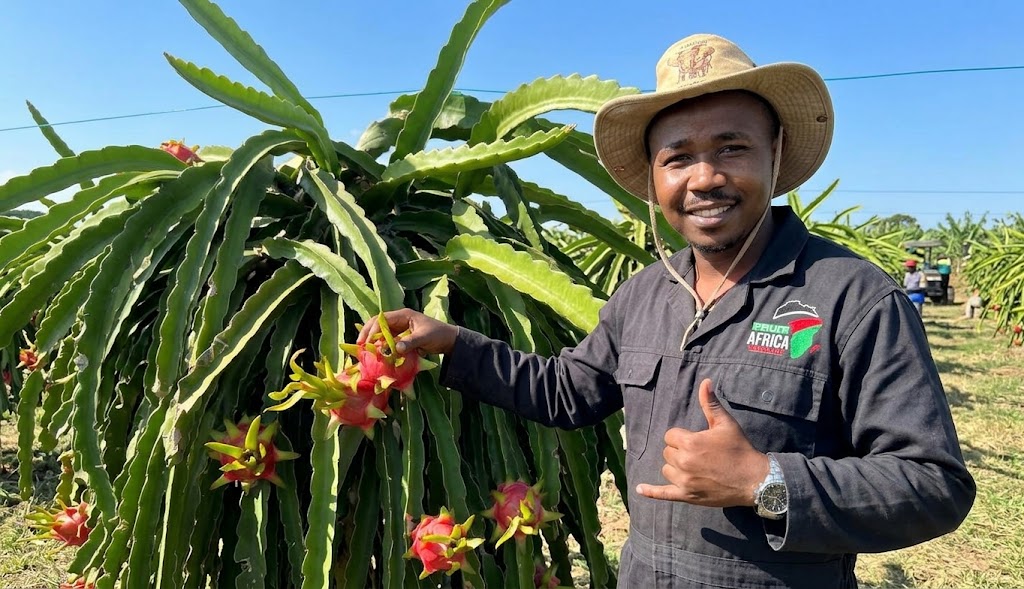
Dragon fruit (Selenicereus and Hylocereus species), commonly known as pitaya or pitahaya, has emerged as one of the most resilient and financially rewarding horticultural crops for Kenya’s drylands. Belonging to the climbing cactus family (Cactaceae), pitaya utilizes specialized physiological mechanisms to thrive in low-water environments while producing fruit that commands top market value in domestic supermarkets, high-end green-grocers, processing facilities, and international export channels.
                  DRYLAND PITAYA BIOLOGY

  [ NIGHTTIME ] ─── Stomata open to absorb CO2 (CAM Metabolism)
                         │
                         v
  [ DAYTIME ]   ─── Stomata seal shut to prevent water evaporation
                         │
                         v
  [ RESULT ]    ─── 80% higher water efficiency than avocado or citrus
Establishing a commercial dragon fruit orchard requires substantial upfront investment, particularly for robust trellising structures designed to support heavy, vine-like canopies over a 20 to 30-year operational lifespan. Understanding botanical traits, ecological requirements, nursery sourcing, step-by-step field planting, concrete trellising costs, and realistic financial returns is essential before planting your initial crop. Sourcing clean, true-to-type, well-rooted planting stock from an accredited supplier guarantees fast field establishment under semi-arid conditions.
Global Market Context and Industry Statistics
The global dragon fruit market has expanded rapidly over the past decade, driven by surging consumer demand for nutrient-dense functional foods, natural food colorings, and exotic fresh produce. The global market value is estimated to grow from under $1 billion toward multi-billion dollar valuations over the coming decade, with demand consistently outstripping supply in major importing regions across Europe, North America, and the Middle East.
Vietnam remains the dominant global producer and exporter, supplying over 70% of international trade volumes. However, rising sea-freight logistics costs and climate disruptions in Southeast Asia have prompted international buyers to seek alternative supply origins in East Africa. Kenya’s strategic geographical location, coupled with direct maritime access via the Port of Mombasa and international air-freight capacity from Nairobi, positions local growers favorably to serve high-value markets in the Gulf Cooperation Council (GCC) states and Europe.
In the Kenyan domestic market, farm-gate prices for premium fresh dragon fruit fluctuate between KES 400 and KES 800 per kilogram, while high-end retail supermarkets in Nairobi regularly price imported or locally grown fruit between KES 800 and KES 1,200 per kilogram. This premium pricing structure, combined with high per-acre fruit yields from year three onward, makes pitaya one of the highest-earning horticultural enterprises per unit of land in East Africa.
Botany, Taxonomy, and Plant Origin
Dragon fruit originated in the tropical and subtropical dry forests of Central America and Northern South America, where indigenous populations harvested wild pitaya from forest climbing vines. Spanish explorers introduced the plant to Southeast Asia in the 19th century, where it adapted rapidly to coastal and semi-arid conditions.
                  TAXONOMIC CLASSIFICATION OF DRAGON FRUIT

  Kingdom:     Plantae (Plants)
  Division:    Tracheophyta (Vascular Plants)
  Class:       Magnoliopsida (Dicotyledons)
  Order:       Caryophyllales
  Family:      Cactaceae (Cactus Family)
  Genus:       Selenicereus / Hylocereus
  Species:     S. undatus (White flesh), S. costaricensis (Red flesh),
               S. megalanthus (Yellow skin)
Botanically, dragon fruit is a semi-epiphytic, perennial climbing cactus. The plant lacks true functional leaves; instead, its long, succulent green stems (cladodes) perform all photosynthetic functions. These stems are three-angled with scalloped margins that bear small clusters of short spines at regular nodes (areoles). The stems store water in specialized mucilaginous tissues, enabling the plant to withstand months of drought without structural damage.
The plant produces two distinct root systems. The primary soil roots are shallow and fibrous, spreading laterally in the top 15cm to 30cm of soil to absorb surface water and nutrients. The second root system consists of aerial roots that emerge along the fleshy stems, anchoring the climbing vines firmly to support structures, tree trunks, or concrete posts.
Dragon fruit produces large, white, trumpet-shaped flowers measuring up to 30cm in length. The flowers are strictly nocturnal, opening at sunset, emitting a sweet fragrance to attract pollinators, and closing permanently by mid-morning the following day. Once pollination occurs, the fruit develops over 30 to 50 days into an oval, scaled berry ranging from 300g to over 800g in weight.
Why Dragon Fruit Farming Thrives in Kenyan Drylands
Dragon fruit operates using Crassulacean Acid Metabolism (CAM), a specialized biological adaptation that sets it apart from standard fruit trees such as avocado, mango, or citrus. Standard fruit crops open their leaf stomata during the daytime to absorb carbon dioxide, losing vast amounts of water through evaporation in hot weather. Pitaya opens its stomata exclusively at night when ambient temperatures drop and relative humidity rises, storing carbon dioxide internally as malic acid to drive daytime photosynthesis while keeping its pores sealed against intense heat.
This night-opening mechanism reduces total plant water consumption by up to 80% compared to conventional fruit orchards. Pitaya features thick, fleshy three-angled stems that store water, enabling the vine to endure extended dry periods without structural tissue collapse. When rains fall or drip irrigation is applied, its shallow root system rapidly absorbs surface moisture to fuel stem growth, flowering flushes, and fruit expansion.
The semi-arid climates of Ukambani, Kajiado, Laikipia, and Coastal hinterlands provide the intense, unfiltered sunlight dragon fruit requires. Full solar exposure drives flower bud differentiation, fruit sugar accumulation (Brix levels), and vibrant skin pigmentation. While hot days promote plant health, dragon fruit requires targeted soil moisture during active flowering and fruit development to prevent young fruitlets from dropping and ensure proper weight sizing.
Ecological Requirements for Optimal Performance
Achieving maximum commercial yields requires matching field selection with dragon fruit’s ideal environmental parameters:
| Parameter | Ideal Commercial Range | Extreme Tolerance Limits | Agronomic Impact |
| Elevation | 0m to 1,800m ASL | Up to 2,100m ASL | High altitude slows vegetative growth cycles. |
| Temperature | 20°C to 34°C | 10°C to 38°C | Cold shock below 10°C stunts flower emergence. |
| Annual Rainfall | 500mm to 1,200mm/year | 300mm (With Drip) | Drought-tolerant; requires water during fruiting. |
| Soil pH | 6.0 to 7.2 | 5.5 to 7.8 | Extreme pH locks iron and micronutrient availability. |
| Sunlight | 6 to 8 hours daily | Partial Shade (>38°C) | Direct sun drives Brix sugar buildup and skin color. |
| Soil Texture | Sandy Loam / Volcanic Loam | Clay (Raised Beds Only) | Poor drainage triggers fungal root rot (Phytophthora). |
Pitaya requires well-drained, porous soils rich in organic matter. Sandy loam, volcanic loam, and well-aerated red soils are ideal. Heavy, waterlogged clay soils block oxygen from the root zone, triggering rapid fungal root rot (Pythium and Phytophthora species). If planting on heavy clay soils (such as black cotton soils in parts of Kajiado or Machakos), testing soil pH through labs like CropNuts or KALRO and constructing raised mounds 30cm to 45cm high is mandatory to ensure free water drainage away from the primary root collar.
Selecting Dragon Fruit Varieties for Commercial Production
Choosing the correct commercial variety directly influences field management, labor requirements, and market acceptance.
                      PITAYA VARIETY MATRIX

  VARIETY TYPE            SELF-POLLINATION    MARKET PROFILE
  ─────────────────────────────────────────────────────────────────
  Red-Flesh / Red-Skin    Self-Fertile        High demand, sweet, rich color
  White-Flesh / Red-Skin  Self-Fertile        Mild flavor, large fruit weight
  Yellow-Skin / White     Self-Incompatible   Highest price, requires manual cross
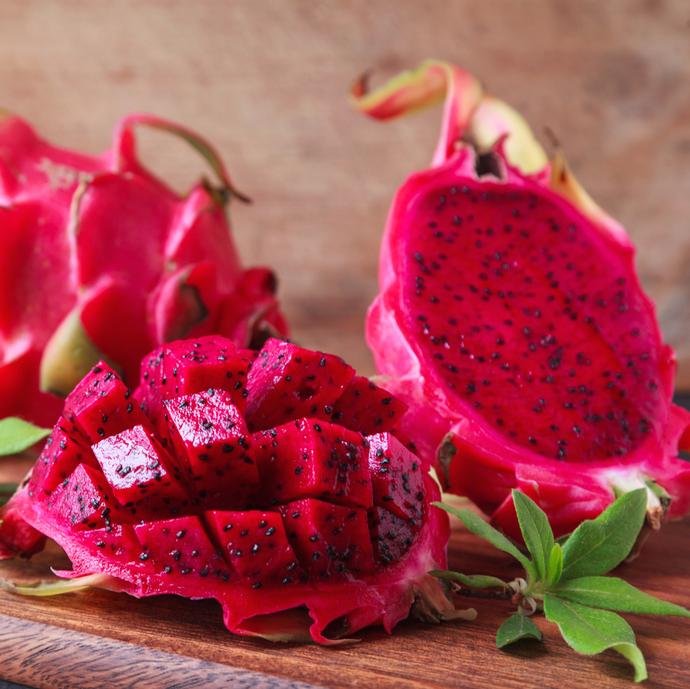
1. Self-Pollinating Red Hybrids (Moroccan Red & American Beauty)
Self-pollinating red-fleshed varieties are the absolute favorite for commercial dryland establishment across Kenya. They produce deep magenta-to-red pulp with high antioxidant levels and an average sugar rating between 16 and 18 Brix. Because they are self-fertile, pollen from the same flower successfully fertilizes the ovary without requiring labor-intensive manual night pollination.
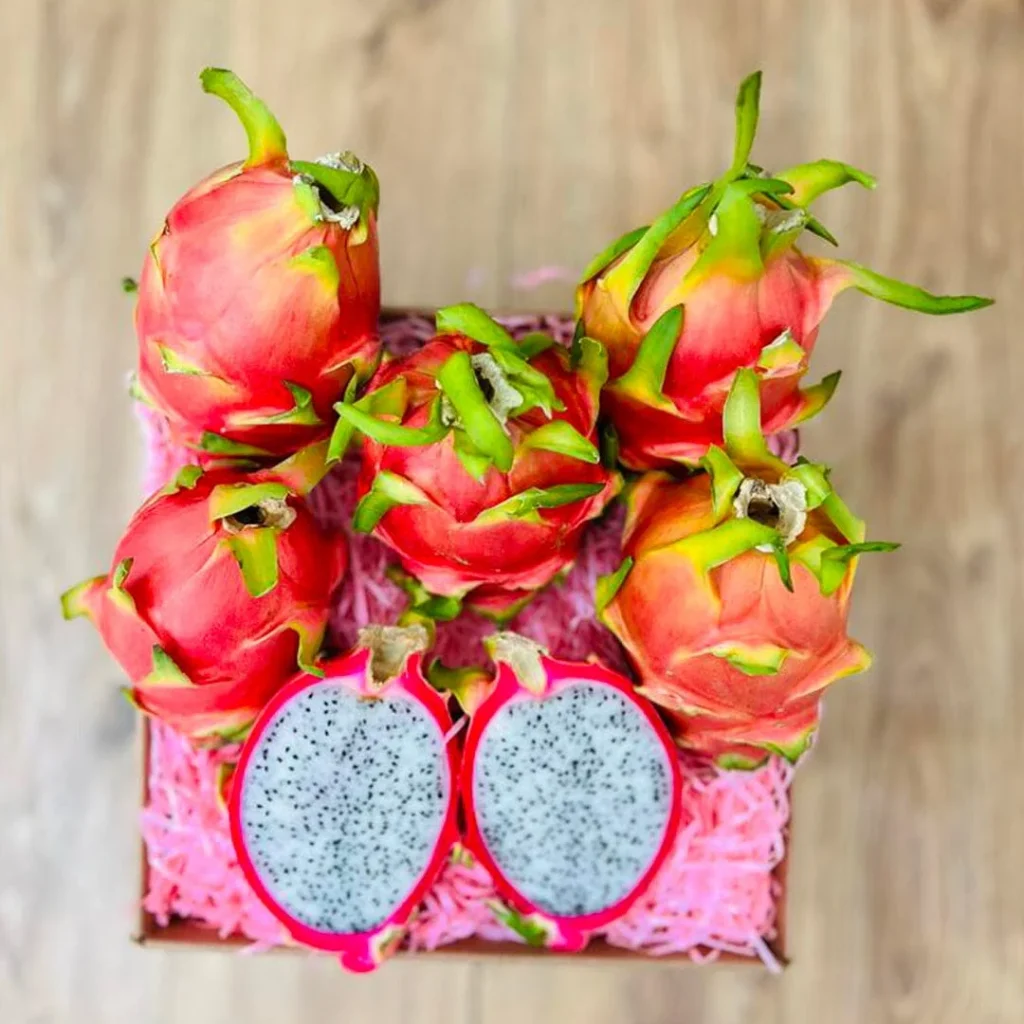
2. White-Flesh / Red-Skin Varieties (Selenicereus undatus)
White-fleshed dragon fruit produces red-skinned fruit containing bright white pulp speckled with small black seeds. The flavor profile is milder and less sweet (12 to 14 Brix) than red-fleshed varieties. The plants exhibit exceptional vegetative vigor, strong drought tolerance, and heavy natural fruit set. White-fleshed varieties serve as reliable cross-pollinators when interplanted alongside self-incompatible selections.
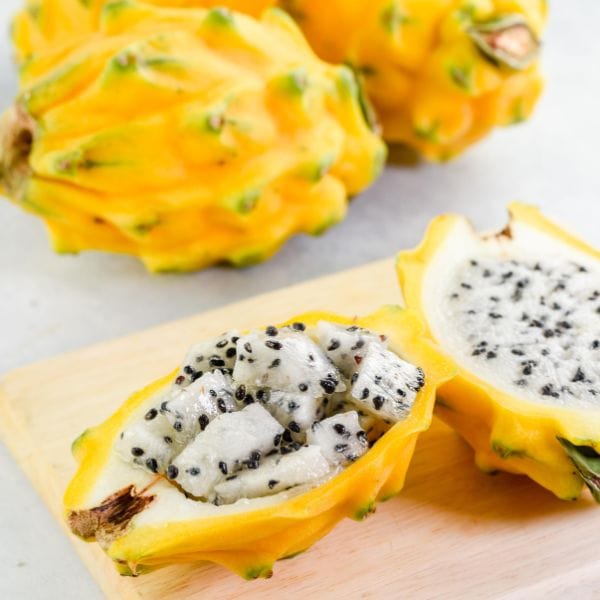
3. Yellow-Skin / White-Flesh Varieties (Selenicereus megalanthus)
Yellow dragon fruit commands top retail market prices per kilogram due to its high sugar content (18 to 22 Brix) and bright yellow skin. However, yellow pitaya stems grow more slowly, feature longer spines, and produce smaller overall fruit weights. Many yellow cultivars are self-incompatible, requiring manual hand-pollination at night when flowers open to achieve consistent fruit set.
Why Buy Rooted Seedlings Propagated via Cuttings?
While dragon fruit can technically be raised from seeds, commercial growers should never establish an orchard using un-grafted seed-raised plants. Seed-propagated pitaya undergoes wide genetic segregation, producing variable, unpredictable plants that take up to four years to flower, yield small fruit, and often display low sugar levels.
| Parameter | Rooted Seedling Cuttings | Un-cured Raw Cuttings | True Seedlings |
| Time to First Yield | 12 to 15 Months | 15 to 18 Months | 36 to 48 Months |
| Field Survival Rate | 98% to 100% | 70% to 85% (Fungal Base Rot) | Variable |
| Varietal Purity | 100% True-to-Type | 100% True-to-Type | segregated / Wild |
| Average Seedling Price | KES 300 – KES 500 | KES 200 – KES 300 | KES 100 – KES 150 |
| Mosaic Virus Risk | Zero (If certified) | High (Unscreened field wood) | Low |
Commercial orchards must be established using healthy, well-rooted seedlings propagated vegetatively from mature, high-yielding mother stems.
Fruit Africa Veriplant Nurseries specializes in supplying fully rooted, callus-cured dragon fruit seedlings propagated exclusively from selected mature stem cuttings. Supplying well-rooted seedlings in nursery bags provides distinct commercial advantages over un-rooted raw cuttings:
-
Zero Rooting Failure in the Field: Un-rooted raw cuttings planted directly into field soil frequently suffer from soil-borne fungal base rot (Bipolaris cactorum) if soil moisture is slightly too high. Pre-rooted seedlings possess an established root system ready to absorb water and nutrients immediately upon transplanting.
-
Rapid Growth Acceleration: Rooted seedlings save the farmer 2 to 3 months of nursery establishment time, shortening the timeline to first flowering and commercial harvest.
-
Guaranteed Varietal Purity: All cuttings are sourced from mother blocks of proven, high-yielding red-fleshed and white-fleshed varieties, ensuring 100% true-to-type fruit quality across your orchard.
Land Preparation and Field Layout Guide
Thorough land preparation ensures rapid root establishment and long-term structural stability for your concrete support posts.
                    ONE-ACRE CONCRETE POST LAYOUT

     Row Spacing: 3.0 Meters  |  Post Spacing in Row: 2.0 to 2.5 Meters

     (Post) ─── 2.0m ─── (Post) ─── 2.0m ─── (Post)
       │                   │                   │
       │  4 Vines / Post   │  4 Vines / Post   │  4 Vines / Post
       │                   │                   │
     ================================================= Drip Line

     (Post) ─── 2.0m ─── (Post) ─── 2.0m ─── (Post)
-
Clearing and Deep Tillage: Clear all bush, stumps, and deep-rooted perennial weeds. Deep-rip or plough the land to a depth of 45cm to break up hardpans, boost soil aeration, and enable rapid lateral root spread.
-
Disc Harrowing and Leveling: Disc-harrow the field to achieve a fine soil tilth, ensuring smooth water flow along plant rows.
-
Pegging and Spacing Alignment: Using alignment strings, measure and peg out exact post locations. Maintain 3.0 meters between rows and 2.0 meters between posts within the row. This layout accommodates approximately 500 to 660 support posts per acre, allowing space for tractor or wheelbarrow movement between rows.
-
Digging Post Holes: Dig sturdy post holes measuring 60cm x 60cm x 60cm. Set concrete posts straight using a spirit level, backfilling with soil mixed with concrete ballast and stone hardcore at the base to ensure the post remains upright under a 150kg canopy load.
-
Digging Planting Basins: Around each installed concrete post, dig four shallow planting holes (one on each face of the post), roughly 30cm wide and 30cm deep.
-
Basin Soil Enrichment: Mix the excavated topsoil thoroughly with 10kg to 15kg of well-decomposed manure or compost and 100g of rock phosphate or DAP per post position before backfilling.
Concrete Trellising Infrastructure: The Gold Standard
Because a mature dragon fruit canopy mounted on a single post weighs between 150kg and 200kg, selecting durable support structures is critical.
                     CONCRETE TRELLIS STRUCTURE

                     [ Reinforced Concrete Cross / Tire ]
                                     │
      ~~~~~~~~~~~~~~~~~~~~~~~~~~~~~~~┼~~~~~~~~~~~~~~~~~~~~~~~~~~~~~~~
                                     │
                                 Concrete
                                 Post
                             (10cm x 10cm x 2.5m)
                                     │
                                     │
      ===============================┼=============================== Ground Line
                                     │
                             (60cm Anchored Base)
Reinforced concrete posts offer the longest operational lifespan (30+ years) and withstand heavy canopy loads, strong winds, and termite attack without rotting. Posts should measure 10cm x 10cm in thickness and 2.2 to 2.5 meters in total length, with 60cm anchored into the ground, leaving 1.6 to 1.9 meters above ground level. Each post must be reinforced internally with four 8mm steel rebar rods tied with hoop wire to prevent structural snapping under heavy weight.
A top frame is attached to the post top to support hanging branches. Options include a cast-concrete cross-arm frame, a steel angle-iron ring, or a recycled vehicle tire secured via crossing rebar bolts. The frame supports the climbing vines as they crest the post, allowing them to bend downward into an umbrella-shaped fruiting canopy.
Treated timber posts offer lower initial installation costs but present long-term risks in drylands. Termite activity, soil rot at ground level, and heavy canopy weight cause wooden posts to snap or lean after 4 to 6 years, right when the orchard enters peak commercial production. Repairing a collapsed wooden post under a mature 150kg vine canopy is labor-intensive and damages the plant.
Step-by-Step Field Planting Guide
Intercropping Pro-Tip: During Year 1, while dragon fruit vines climb the concrete pillars, the 3-meter spaces between rows remain unused. Smart commercial farmers intercrop short-cycle, shallow-rooted legumes (such as beans, peas, or groundnuts) or bulb onions. Intercropping suppresses weeds, fixes soil nitrogen, and provides cash flow while waiting for the first major harvest.
Irrigation and Water Management in Semi-Arid Zones
Although pitaya survives severe dry spells, commercial fruit production requires strategic water management.
                      ANNUAL WATER MANAGEMENT

  VEGETATIVE GROWTH      FLOWER BUD INITIATION    FRUIT DEVELOPMENT
  (Apply steady drip) ──> (Stress: 2-3 wks dry) ──> (Regular deep watering)
Newly planted rooted seedlings require 2 to 4 liters of water per post twice a week for the first 3 months to promote rapid root extension into the surrounding field soil. During the vegetative phase, apply 10 to 15 liters of water per post once a week using double drip line emitters positioned near the base of each post. Water demand increases during fruit development, requiring 15 to 20 liters of water per post split across two applications per week. Inadequate water during fruit expansion results in small, split, or stunted fruit.
To trigger uniform flowering flushes in semi-arid climates, withhold irrigation for 2 to 3 weeks during hot weather. This mild water stress causes the stems to stop vegetative growth and accumulate starches. Reapplying irrigation after this stress period stimulates mass, uniform flower bud emergence along the stem ribs.
Dragon fruit roots rot quickly in standing water, making free soil drainage essential. In clay loam areas, plant posts on raised earth beds 30cm high. Apply a 10cm layer of coarse organic mulch (dry grass or sorghum stalks) around the base of each post, keeping a 10cm gap away from the fleshy stems to prevent collar rot. Mulch conserves soil moisture, moderates soil temperature, and builds organic topsoil.
Organic Fertility and Mineral Nutrition
Pitaya requires a balanced fertilizer schedule to support heavy stem biomass and continuous flowering flushes throughout the bearing season.
                  SEASONAL FERTILIZER SCHEDULE

  STAGES             INPUT REQUIREMENTS PER POST
  ─────────────────────────────────────────────────────────────────
  Pre-Season Setup   10kg - 20kg Decomposed Farmyard Manure + Rock Phosphate
  Vegetative Growth  High Nitrogen (CAN or NPK 23:23:0) in split doses
  Pre-Bloom Phase    High Phosphorus & Potassium (NPK 17:17:17 or 11:22:21)
  Fruit Development  Potassium Nitrate / Sulfate of Potash for fruit sugar
Apply 10kg to 15kg of well-decomposed cattle, goat, or poultry manure per post twice per year—once at the onset of the long rains and again before the short rains. Organic matter improves moisture retention, buffers root zone pH, and feeds soil microflora.
During Year 1 vegetative building, apply 50g to 100g of Nitrogen-rich fertilizer per post every 2 months during active growth to push vines up to the top frame. Shift away from high nitrogen once vines reach the top frame during bearing years. Apply 100g to 150g of Potassium-rich and Phosphorus-rich fertilizer per post every 3 months. Potassium drives fruit sugar accumulation, skin firmness, and fruit sizing. Apply foliar sprays containing Zinc, Boron, Calcium, and Magnesium before flower emergence to improve pollen viability, flower retention, and fruit wall strength.
Pruning Techniques: Training, Production, and Sanitation
Pruning dictates whether your orchard becomes a manageable canopy or an unproductive thicket.
                       THREE-STAGE PRUNING

  1. TRAINING PRUNING   ──> Remove side shoots; force 1-2 main stems up the post.
  2. PRODUCTION PRUNING ──> Snip main branch tips above the ring to force branching.
  3. SANITATION PRUNING ──> Cut out old, shaded, diseased, or yellowing stems.
During training pruning (Months 1 to 10), prune off all lateral side shoots emerging from the climbing cutting. Allow only 1 or 2 strong main stems to grow straight up the face of the concrete post. Tie these main stems loosely to the post using soft twine or cloth strips, avoiding thin wire that cuts into expanding stem tissues.
Production pruning (Months 10 to 18) begins once the main stems reach the top of the concrete post and pass through the support frame. Snip off the growing tips to break apical dominance, forcing the stem to branch out laterally into 4 to 6 primary hanging branches. These primary branches hang downward over the top ring, forming the umbrella structure where flowers and fruits emerge.
Sanitation and thinning pruning takes place after each harvesting season. Prune away old, yellowing, shaded, or diseased branches, removing thin shoots that crowd the inner canopy. Keeping the inner canopy open allows sunlight and airflow to penetrate, reducing fungal spore buildup and encouraging healthy new fruiting shoots on the outer canopy perimeter.
Flowering, Pollination, and Fruit Set
Pitaya flowers are nocturnal, opening for a single night before wilting the following morning.
                    FLOWERING TO HARVEST TIMELINE

  Bud Emergence   ──>   Night Blooming   ──>   Fruit Set   ──>   Harvest Maturity
  (Day 0)               (Day 20 - 25)          (Day 28)          (Day 55 - 65)
Flower buds emerge along the ribs of mature, hanging stems, developing over 20 to 25 days into large, fragrant white flowers measuring up to 30cm in length. Flowers begin opening at sunset (around 7:00 PM), reach full expansion by midnight, and close permanently by 9:00 AM the following morning.
Night-flying moths, bats, and early-morning honeybees transfer pollen from the anthers to the elevated stigma. Red-fleshed and white-fleshed self-fertile selections set fruit naturally via wind and early morning bee activity. For yellow pitaya or self-incompatible red selections, hand pollination increases fruit set and size. Using a soft paintbrush or cotton swab, collect golden pollen grains from open anthers between 8:00 PM and 11:00 PM and brush them onto the central sticky stigma pad.
Once pollination succeeds, the base of the flower swells rapidly into a young green fruitlet within 5 to 7 days. Under Kenyan climatic conditions, fruit matures from flower open to harvest readiness in 30 to 40 days during warm seasons, and up to 50 days during cooler periods.
Pest and Disease Management
Pitaya is relatively tough, but several pests and diseases require monitoring in dryland environments.
Stem Canker (Neoscytalidium dimidiatum) is a fungal disease that creates small, sunken, orange-brown spots on fleshy stems. As the disease advances, the spots merge into hard, yellow-grey crusts, causing stem rot and branch dieback. Maintain open, pruned canopies to allow airflow and avoid over-watering. Prune out heavily infected stems and burn them offsite, applying copper-based fungicides during wet weather spells to protect healthy tissue.
Anthracnose (Colletotrichum gloeosporioides) infects developing fruit skin and stems, producing dark, circular, water-soaked, sunken lesions. Maintain orchard hygiene, remove rotting plant material, and apply registered protective fungicides if rain occurs during early fruit set.
Cactus Fluted Scale and Mealybugs cluster along stem ribs and beneath fruit bracts, secreting honeydew that leads to black sooty mold growth. Spray mineral horticultural oils or neem-based organic insecticides, encouraging beneficial natural predators such as ladybird beetles.
Fruit flies, bats, and birds attack ripening fruit at night and early morning, pecking through the bright skin. Bag individual developing fruits using breathable mesh bags 10 days before harvest, or install protective overhead netting over fruit-bearing rows.
Harvesting, Grading, and Post-Harvest Quality
Determining proper harvest timing preserves shelf life and secures top market prices.
                    HARVEST MATURITY INDICATORS

  Color Shift: Green ──> 80% Full Color (Red/Yellow) ──> Harvest Window
Pitaya does not continue to ripen or accumulate sugars after being detached from the plant, making harvest at peak eating quality mandatory. Harvest when the fruit skin turns 80% to 100% red or yellow (depending on variety). For distant export markets, harvest at 50% to 70% color break. The green leaf-like scales (bracts) on the fruit skin begin to soften and turn light green-yellow at the tips, and the fruit feels slightly pliable when pressed gently between fingers.
Use clean, sharp pruning shears to cut the fruit stem cleanly off the main branch. Never pull or twist the fruit off by hand, as tearing the fruit skin at the attachment point allows fungal rot organisms to enter the flesh. Place harvested fruit gently into padded plastic field crates and grade by weight class: Grade 1 (450g to 700g+), Grade 2 (300g to 445g), and Grade 3 (under 300g). Store harvested fruit in a cool, dry area at 8°C to 12°C with 85% to 90% relative humidity. Properly handled pitaya maintains fresh quality for 14 to 21 days.
Financial Analysis: Setup Capital & Yield Breakdown
Establishing a commercial dragon fruit orchard requires substantial initial capital, but delivers high long-term financial returns over a 25 to 30-year operational lifespan.
One-Acre Setup Costs in Kenya (500 Concrete Posts / 2,000 Rooted Seedlings)
| Expense Item Category | Specification & Quantity | Unit Cost (KES) | Total Cost (KES) |
| Land Preparation | Deep ripping (45cm), ploughing, layout pegging | Per Acre Bulk | 25,000 |
| Concrete Support Posts | 10cm x 10cm x 2.5m steel-reinforced (500 posts) | 1,200 per post | 600,000 |
| Top Frames / Tires | Recycled tires + rebar mounting bolts (500 sets) | 250 per set | 125,000 |
| Post Installation | 60cm hole digging + concrete ballast installation | 250 per post | 125,000 |
| Rooted Seedlings | Certified rooted seedlings (2,000 plants @ 4/post) | 350 per plant | 700,000 |
| Manure & Amendments | 10 tonnes decomposed manure + Rock Phosphate | Bulk Total | 60,000 |
| Drip Irrigation System | Double-line button drippers + main line fittings | Per Acre Setup | 95,000 |
| Planting Labor & Tying | Planting, firming, initial twine tying | Bulk Labor | 25,000 |
| Total Setup Capital | Complete Commercial 1-Acre Setup | — | 1,755,000 |
Per-Acre Production Projection and Income Timeline (Years 1 to 5)
| Growth Stage / Year | Projected Yield Per Post (kg) | Total Acre Yield (kg) | Farm-Gate Price (KES/kg) | Gross Annual Income (KES) |
| Year 1 (Vegetative) | 0 kg (Canopy growth) | 0 kg | KES 0 | KES 0 |
| Year 2 (First Harvest) | 5 kg to 8 kg | 2,500 kg to 4,000 kg | KES 400 | 1,000,000 to 1,600,000 |
| Year 3 (Commercial) | 15 kg to 20 kg | 7,500 kg to 10,000 kg | KES 400 | 3,000,000 to 4,000,000 |
| Year 4 (Full Bearing) | 22 kg to 28 kg | 11,000 kg to 14,000 kg | KES 400 | 4,400,000 to 5,600,000 |
| Year 5+ (Peak Yields) | 25 kg to 32 kg+ | 12,500 kg to 16,000 kg | KES 400 | 5,000,000 to 6,400,000 |
Net Profit Calculation: Operational expenses from Year 3 onward average KES 350,000 per acre annually (covering drip irrigation power, organic manure, mineral inputs, weeding, pruning labor, harvesting, and packaging). At an average farm-gate price of KES 400/kg, net operating profit exceeds KES 4.5 million per acre annually. Full capital payback is achieved within 24 to 30 months from planting date.
Action Plan for Agribusiness Investors
Setting up a commercial dragon fruit enterprise in Kenya requires a structured approach:
-
-
Conduct soil and water testing through labs like KALRO or CropNuts to verify that soil pH ranges between 6.0 and 7.2, checking irrigation water salinity levels before setting up infrastructure.
-
Fabricate durable trellises using 10cm x 10cm steel-reinforced concrete posts rather than temporary wooden supports to secure your long-term investment.
-
Purchase certified, fully rooted seedlings propagated via mature cuttings directly from Fruit Africa Veriplant Nurseries (www.fruitafrica.org / info@fruitafrica.org / 0714-994444) to guarantee true-to-type, high-yielding commercial varieties with zero field rooting failure.
-
Install precise drip irrigation by laying double drip lines along plant rows to ensure targeted water delivery during critical flowering and fruit expansion windows.
-
Implement disciplined pruning by training vines up vertical posts systematically during Year 1 to build an umbrella canopy structure for maximum future yields.
-