
Description
- Noni fruit seedlings in Kenya cost KSh 3,500 at Fruit Africa Veriplant. Full guide to this rare exotic fruit, planting, spacing, yield and profitability.
Noni Fruit Seedlings in Kenya: Price, Planting, Yield and Profitability Guide
Noni fruit seedlings in Kenya cost KSh 3,500 each at Fruit Africa Veriplant. This is a rare fruit. You will not find it at a roadside market stall. You will not see vendors selling it from wooden crates along the highway. The ripe fruit has a strong smell and a bitter taste that most people do not enjoy eating fresh. That is why the money in this crop comes from processing, and why the seedlings cost more than most fruit trees sold in Kenya.
Noni is grown by a small number of farmers in Kenya, mostly along the coast and in selected lowland areas. The market for it is still young. But the farmers who understand this crop and what can be done with the fruit are tapping into a wellness market that pays far more per kilogram than ordinary fruits.
This guide covers everything a Kenyan farmer needs to know about noni fruit seedlings. It explains what noni is, why it matters commercially, how to plant and care for the tree, what yields to expect, how to process the fruit, and where the market opportunities lie. It also explains the challenges honestly. Noni is not a crop you plant casually.
What Is Noni Fruit?
Noni, scientifically known as Morinda citrifolia, is a tropical evergreen tree that produces a bumpy, oval fruit. The tree belongs to the coffee family, Rubiaceae. It grows naturally across Southeast Asia, the Pacific Islands, and parts of Australia. Traditional healers in Polynesia and Hawaii used noni for centuries to treat a range of complaints.
The tree is tough. It survives drought, salt spray, rocky ground, and seasonal flooding. It grows on coastlines, old lava flows, and worn-out land where other fruit trees struggle. That toughness is one reason noni has spread across tropical regions.
The fruit is the commercial product. Ripe noni fruit has a pale yellow or whitish colour and soft, watery flesh. When fully ripe, it gives off a strong smell that some people compare to fermented cheese. The taste is bitter and sharp. Very few people eat noni fresh. Almost all commercial noni is turned into juice, powder, capsules, or extracts.
That processing requirement shapes everything about noni farming. You are not growing a fruit for the fresh market. You are growing a raw material for the wellness industry.

Noni Fruit
The Botany of Noni
Understanding how the noni tree grows helps you manage it properly. This section explains the tree’s structure, its leaves, its flowers, and its fruit in simple terms.
The Tree
Noni is a small to medium-sized evergreen tree. It usually grows 3 to 6 metres tall, though some trees reach 10 metres in good conditions. The tree has a straight trunk with light grey or brownish bark. The bark is smooth when young and becomes slightly rough with age.
The tree branches early, forming a bushy canopy. The branches are brittle. They snap in strong wind, especially when loaded with fruit. That is why windbreaks matter for noni.
Noni has a deep taproot and an extensive lateral root system. The roots spread wide and help the tree survive dry periods. The roots also produce new shoots, which is one way the tree spreads naturally.
The Leaves
Noni leaves are large, glossy, and deep green. They are oval or elliptical in shape and can grow 10 to 30 centimetres long. The leaves have a prominent central vein and a smooth edge. They grow opposite each other along the branches.
The leaves are thick and leathery. They stay on the tree year-round in warm climates. The tree does not shed all its leaves at once.
Noni leaves have traditional uses in some cultures. They are used in poultices and teas. Commercially, the fruit is the main product, but the leaves also have a small market in herbal medicine.
The Flowers
Noni flowers are small and white. They grow in clusters on a fleshy stalk that emerges from the leaf axils, the point where the leaf meets the branch. Each cluster contains many tiny flowers packed tightly together.
The flowers are self-pollinating, which means the tree does not need another tree nearby to set fruit. Pollination is helped by wind and small insects. The flowering stalk eventually becomes the fruit.
Noni flowers throughout the year in warm climates. That is why the tree produces fruit continuously rather than in one short season.
The Fruit
Noni fruit is oval and roughly the size of a small potato. It is 5 to 10 centimetres long and 3 to 6 centimetres wide. The skin is green when young, turning pale yellow or white as it ripens.
The surface of the fruit is bumpy and uneven. It looks a bit like a hand grenade or a rough pinecone. Inside, the fruit is soft and watery. It contains many small seeds, sometimes over 200 per fruit.
The fruit has a strong smell when ripe. The smell comes from compounds in the flesh. This is why noni is processed rather than eaten fresh. The fruit also contains enzymes and compounds that researchers have studied for their potential health effects. Farmers do not need to understand the chemistry. They need to understand that the fruit must be processed quickly after harvest.
Why Noni Is Different from Other Fruit Crops
Most fruit farming in Kenya follows a familiar pattern. You plant the tree, harvest the fruit, and sell it fresh to a trader, supermarket, or market vendor. Noni breaks that pattern.
The fresh fruit has almost no market as a snack. The smell and taste make it unsuitable for eating. What buyers want is the processed product. Juice, powder, and extracts are where the money is.
This changes the farmer’s plan in several ways.
First, you need a buyer who processes noni or you need to process it yourself. Selling fresh noni fruit by the roadside is not a business. Selling to a wellness processor or making your own juice and powder is how you earn.
Second, the price per kilogram for fresh noni is low compared to the retail price of processed noni products. Farm-gate prices for fresh noni change with the buyer, the season, and the quality of the fruit.
Farmers may receive KSh 200 per kilogram or more depending on these factors. Some buyers pay more for clean, properly handled fruit. Others pay less for mixed or damaged fruit. The price is not fixed. Farmers should confirm current rates with local buyers before planning their production.
A bottle of noni juice selling for KSh 3,000 or more holds far more value than the raw fruit it came from. The processor captures most of that value unless the farmer processes too.
Third, noni processing needs equipment, knowledge, and sometimes certification. Drying, juicing, and powdering are not complicated, but they demand attention to hygiene and consistency.
Farmers who understand this from the start make better decisions. They plant with a processing plan in mind. They build relationships with buyers or invest in simple processing equipment. They treat noni as an industrial crop, not a fresh market fruit.
Noni Fruit Seedlings Price in Kenya
Fruit Africa Veriplant sells noni fruit seedlings at KSh 3,500 each. This is the current price.
Why do noni seedlings cost more than most fruit tree seedlings in Kenya? There are a few reasons.
Noni seedlings are not easy to find. Few Kenyan nurseries grow the crop. The limited supply keeps prices high. A seedling that is hard to find costs more than one sold by every roadside nursery.
The way noni is propagated also matters. Noni can be grown from seed, stem cuttings, or root cuttings. Seed-grown seedlings are cheaper to produce but slower to establish and changeable in quality. Cutting-grown seedlings cost more to produce but give you trees that match the mother plant. Fruit Africa Veriplant supplies healthy noni planting material suited to Kenyan conditions.
The crop’s rarity adds to the price. Noni is not a common fruit in Kenya. It is not a commodity like mango or avocado. Buyers who want noni seedlings are looking for something specific, and they expect to pay for it.
When you compare the seedling price to the possible return, the investment makes sense. A mature noni tree can produce 20 to 50 kilograms of fruit per year under good care. At a farm-gate price of KSh 200 per kilogram, that is KSh 4,000 to KSh 10,000 per tree per year. The tree produces for many years. The seedling cost is paid back once production starts.
Confirm the current price and availability before ordering. Nursery prices and stock can change.
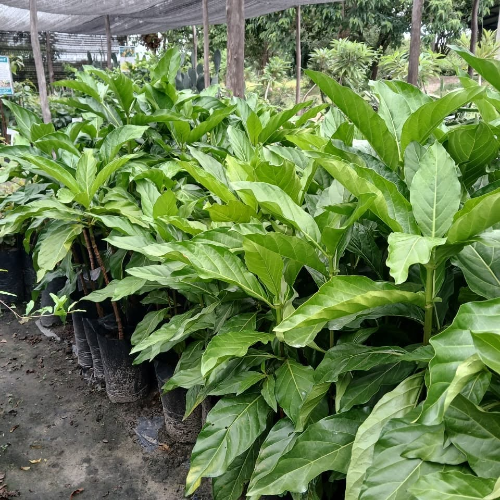
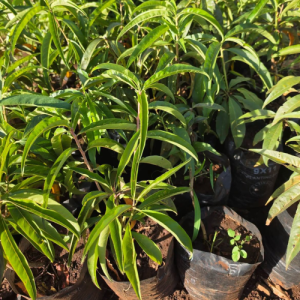
Noni Fruit Seedlings
Where to Buy Noni Fruit Seedlings in Kenya
Fruit Africa Veriplant supplies noni fruit seedlings to Kenyan farmers and orchard investors. The company works through fruitafrica.org and serves farmers in coastal counties, eastern Kenya, and other suitable lowland areas.
You can reach Fruit Africa Veriplant through these channels:
- Phone: 0714 994 444
- WhatsApp: https://wa.link/di12my
- Email: sales@fruitafrica.org
- Contact Us: https://fruitafrica.org/contact-us/
- Request for Quotation: https://fruitafrica.org/request-for-quotation/
Before buying noni seedlings from any supplier, ask a few questions. Ask where the planting material comes from. Ask whether the seedlings are grown from seed, cuttings, or root cuttings. Ask how old the seedlings are and whether they have been prepared for field conditions. Ask about the expected performance of the variety or selection.
Visit the nursery if you can. Look at the seedlings yourself. Check the leaves, the stem, and the roots. A healthy noni seedling has dark green leaves, a firm stem, and a well-formed root ball. Avoid seedlings with yellow leaves, pest damage, or mushy roots.
How Noni Is Propagated
Noni can be propagated in several ways. Each method has good points and bad points. Knowing the differences helps you choose the right planting material.
Seed Propagation
Growing noni from seed is common in many places. The fruit holds many seeds, sometimes over 200. Seeds are removed by washing and rubbing the ripe fruit against a screen or colander. The seeds are then dried and stored.
Noni seeds have a hard coat that slows germination. Without scarification, seeds can take six to twelve months to sprout. Scarifying the seed coat by nicking or rubbing it down shortens germination to three to six weeks.
Trees grown from seed are not the same as the mother tree. Because noni is cross-pollinated, seedlings differ in fruit size, yield, and quality. For commercial growing where you want the same result every time, seed-grown trees are less reliable.
Seedlings are usually kept in a nursery for nine to twelve months before going to the field.
Stem Cuttings
Stem cuttings are a better choice for commercial noni growing. Cuttings 20 to 40 centimetres long are taken from healthy, disease-free mother plants. The cuttings root in a well-drained medium under partial shade. Rooting takes about two months. The rooted cuttings are ready for transplanting four to six months later.
Cuttings produce plants that are exactly like the mother tree. If the mother tree produces well, the offspring will too. This sameness matters for commercial orchards.
One downside of cutting-grown plants is that they may be less resistant to disease than seed-grown plants. The root system may also be weaker at first. But for fruit quality and consistency, cuttings are better.
Root Cuttings and Air Layering
Noni can also be grown from root cuttings and air layering. Root cuttings involve taking sections of root from a mature plant and getting them to sprout new shoots. Air layering involves wounding a branch, wrapping it with moist material, and waiting for roots to form before cutting the branch off and planting it.
These methods are less common commercially but can be useful for multiplying a specific tree.
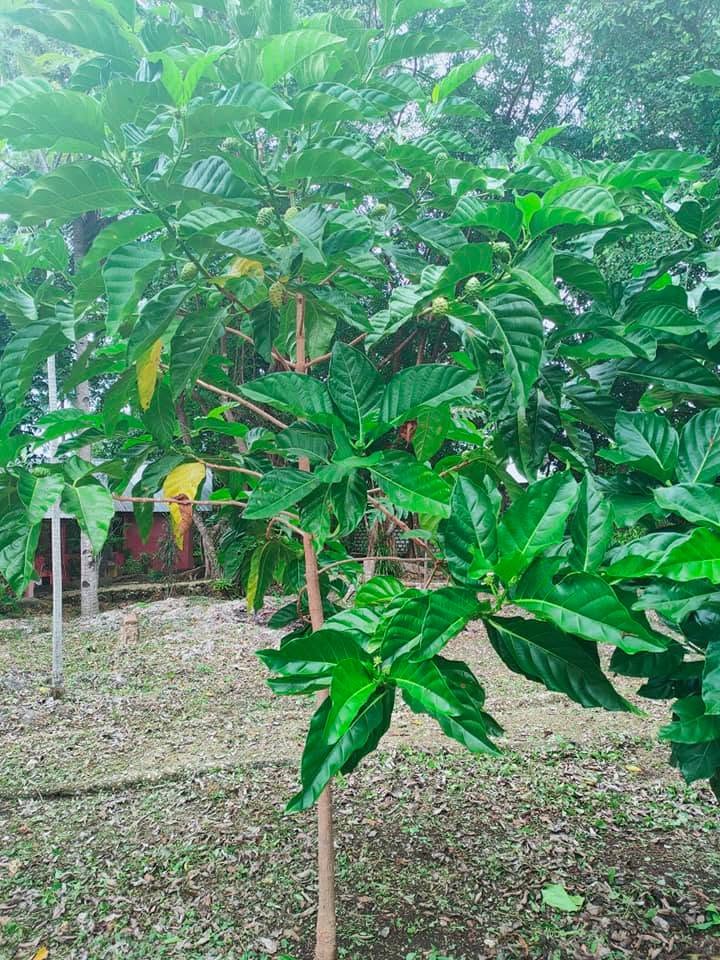
Noni Tree
Noni Varieties
Noni is not like mango or avocado, where you choose from dozens of named varieties. The species Morinda citrifolia is the main type grown for fruit. Within the species, there are differences in fruit size, yield, and juice content.
The Tahitian noni is often mentioned as producing larger fruit with more juice. This type is liked for processing in some markets. Other selections from Southeast Asia and the Pacific may behave differently under Kenyan conditions.
For Kenyan farmers, the practical approach is to get planting material from a supplier who can provide healthy, productive stock. Fruit Africa Veriplant supplies noni fruit seedlings suited to Kenyan growing conditions. Ask about the source and performance of the planting material before ordering.
Do not assume that any noni seedling will perform the same way. The quality of the mother plant matters. A tree that produces plenty of large fruit will pass those traits to its offspring when grown from cuttings.
Ecological Conditions for Noni in Kenya
Noni is a tropical crop. It does best in warm, humid conditions with enough rainfall. But it is also adaptable. The tree handles a range of soils and can survive dry periods once it is established.
Temperature. Noni grows best at temperatures between 25°C and 35°C. It does not handle frost. In Kenya, this limits production to lowland and coastal areas.
Altitude. Noni does best below 500 metres above sea level. It can survive up to 1,000 metres in sheltered spots, but growth slows and yields drop at higher altitudes. The coastal strip and lowland areas of eastern Kenya are the best fit.
Rainfall. Noni needs at least 1,500 millimetres of rain per year for good production. It handles drought once established, but irrigation improves yields.
Soil. Noni adapts to many soils, including sandy, loamy, volcanic, and rocky types. The soil must drain well. Noni handles seasonal flooding but does not do well in permanently wet conditions. Soil pH between 5.0 and 8.0 is fine, with best results around 6.0 to 7.0.
Sunlight. Noni grows in full sun to partial shade. Full sun gives higher fruit production.
Wind. Young noni plants struggle in windy places. Plant windbreaks on open sites. The tree itself is brittle and can lose branches in strong wind.
Drainage. Good drainage is a must. Noni roots rot in waterlogged soil. If your site has poor drainage, plant on raised beds or dig drainage channels.
Best Regions for Noni in Kenya
Noni grows well in Kenya’s coastal and lowland areas. The counties best suited to the crop include:
Coastal counties. Mombasa, Kwale, Kilifi, and Lamu offer the warm, humid conditions noni likes.
Eastern Kenya. Taita Taveta, especially around Voi, has suitable conditions. Parts of Kitui and Makueni with reliable rain or irrigation can also support noni.
Western Kenya. Kisumu, Siaya, and Bungoma have warm temperatures and enough rain that suit noni.
Rift Valley. Parts of Nakuru and Baringo may work where altitude and temperature allow.
Farmers outside these areas should check their own conditions before ordering seedlings. Noni does not suit highland areas where temperatures drop below 20°C often or where frost happens.
How Many Noni Trees Fit on One Acre?
Spacing for noni depends on how you plan to manage the orchard and whether you will intercrop.
Recommended spacing runs from 3 metres by 3 metres to 4 metres by 4 metres. At 4 metres by 4 metres spacing, you fit about 250 trees per acre.
At 3 metres by 3 metres spacing, you fit about 450 trees per acre. This tighter spacing needs more work and pruning to keep air moving and reduce disease.
The table below shows the spacing options.
| Spacing | Trees per Acre | Management Notes |
|---|---|---|
| 3m by 3m | About 450 | Higher density, needs regular pruning |
| 4m by 4m | About 250 | Standard for commercial orchards |
For most farmers starting out, 4 metres by 4 metres is a practical spacing. It allows good airflow between trees, makes harvesting easier, and lowers disease pressure. The calculations in this guide use 250 trees per acre as a planning figure.
How to Prepare Land for Noni Planting
Land preparation starts before the seedlings arrive. Noni is tough, but young trees settle better in well-prepared soil.
Clear the site of weeds, rocks, and debris. Noni seedlings do not compete well with strong grasses and weeds. Start with a clean site.
Plough the land to loosen the soil and mix in organic matter. Noni handles many soils, but adding compost or well-rotted manure improves fertility and drainage.
Test the soil pH and drainage before planting. If the soil is waterlogged, dig drainage channels or plan to plant on raised beds. Noni roots rot in standing water.
Step by Step: How to Prepare Planting Holes
Step one. Mark your spacing across the field using pegs and string. At 4 metres by 4 metres, measure 4 metres between each planting point in both directions.
Step two. Dig each hole 60 centimetres wide, 60 centimetres long, and 60 centimetres deep.
Step three. Keep the topsoil and subsoil in separate piles. The topsoil is the darker soil from the top layer. The subsoil is the lighter soil from below.
Step four. Mix the topsoil with 10 to 15 kilograms of well-decomposed manure or compost.
Step five. Add 125 grams of double superphosphate fertiliser if your soil test shows phosphorus shortage. Mix it well into the topsoil so there are no lumps that could burn the roots.
Step six. Put the mixed soil back into the hole until it is two-thirds full.
Step seven. Water the hole lightly to settle the soil.
Step eight. Let the hole rest for one to two weeks before planting if time allows. This lets the soil settle and the manure start to break down.
Step by Step: How to Plant Noni Fruit Seedlings
Step one. Plant at the start of the rains. In Kenya, this means March to May or October to November. If you have irrigation, you can plant at other times.
Step two. Water the seedling well before you remove it from its container. This keeps the root ball together.
Step three. Remove the seedling carefully. Cut the container away rather than pulling the seedling out by the stem. Hold the root ball with your hand.
Step four. Put the seedling in the middle of the hole. The root collar, where the stem meets the roots, should sit at ground level. Do not bury the stem deeper than it was in the nursery.
Step five. Fill the hole with the amended soil. Press gently to remove air pockets. Do not pack the soil hard with your foot.
Step six. Water right away. Give each seedling 15 to 20 litres of water.
Step seven. Apply mulch around the base of the tree. Keep the mulch a few centimetres away from the trunk. Mulch holds moisture, stops weeds, and keeps the soil temperature steady.
Step eight. Stake young trees on windy sites. Drive a stake into the ground near the trunk without hitting the root ball. Tie the tree loosely with soft material that will not cut the bark.
Step nine. Check the seedlings every week for the first month. Look for pests, disease, and any sign of stress.
Caring for Noni Trees
Noni is a low-maintenance crop compared to many fruit trees. But it still needs some care for good production.
Watering
Young noni seedlings need steady moisture. Water every two to three days during dry spells for the first six to eight weeks. Once established, noni handles drought, but irrigation during dry periods improves fruit production.
Mature trees do well with deep watering every seven to ten days during dry spells. Drip irrigation is efficient and puts water right at the root zone.
Fertiliser
Noni responds well to organic matter. Apply 5 to 10 kilograms of well-rotted manure per tree each year, spread around the drip line.
If you use manufactured fertiliser, a balanced NPK such as 10-10-10 or 14-14-14 supports healthy growth. Apply every two to three months during the growing season.
Young trees need more frequent feeding while they establish. As trees mature, they need less frequent application but still respond to yearly organic matter.
Do not over-fertilise. Too much nitrogen pushes leaf growth at the expense of fruit.
Pruning
Noni does not need heavy pruning. Remove dead, damaged, or diseased branches as they appear.
Prune for shape to keep an open canopy that lets light in and air move through. In mature trees, thinning crowded branches improves fruit quality and lowers disease pressure.
Some farmers prune back branches during the first and second years instead of harvesting. This pruning gives a bushier plant with more branches, which later produces more fruit.
Keep trees at a height you can manage. Noni can grow tall if left alone, making harvest hard.
Weed Management
Keep the area around young trees free of weeds that take water and nutrients. Mulching with organic material such as straw, coconut husk, or dried grass holds moisture and stops weeds.
Hand weed near the trunk to avoid damaging shallow roots. Between rows, mechanical cultivation is fine.
Pests and Diseases Affecting Noni
Noni is fairly resistant to pests compared to many fruit crops. But a few problems can affect production.
Fruit flies. Fruit flies lay eggs in ripening fruit, causing larvae to hatch inside. Control methods include bait traps, neem oil sprays, and bagging individual fruits with paper or mesh bags.
Mealybugs. These show up as white cottony masses on leaves and stems. They can be controlled with insecticidal soap or neem oil.
Scale insects. These form hard shells on stems and leaves. Remove them by hand for light infestations. Use horticultural oil sprays for heavier outbreaks.
Noni borer. Larvae tunnel into stems, causing branches to die back. Prune and destroy affected branches. Insecticide may be needed for bad infestations.
Root rot. This is the most serious disease affecting noni. It causes yellow leaves, wilting, and eventually tree death. Prevention is the only reliable cure. Plant only in well-drained soil and do not over-water. Once root rot appears, affected trees rarely recover.
Leaf spot. Dark spots on leaves. Remove infected leaves and apply copper-based fungicides if the problem spreads.
Powdery mildew. White fungal growth on leaves, especially in humid conditions with poor air movement. Sulfur sprays or neem oil control mild outbreaks.
Anthracnose. Sunken lesions on fruits and leaves. Prevention involves good orchard cleanliness and fungicide applications during wet conditions.
For chemical control, use only products registered for the crop and follow the label instructions. Respect pre-harvest intervals. Use protective equipment.
How Long Does Noni Take to Produce Fruit?
Noni is a fast-bearing fruit tree. Under good care, trees begin fruiting about 9 to 12 months after transplanting.
The first fruits are small and few. Some farmers choose to skip harvest during the first and second years and prune the branches instead. This pruning gives a bushier plant with more fruiting branches and produces more fruit later.
Commercial production begins in the third year. From that point, the tree produces fruit all year round in good conditions.
This year-round production is a plus. Unlike seasonal fruits that give one crop per year, noni gives a steady supply. That steady supply supports regular processing and cash flow.
Noni Yield Per Tree and Per Acre
Yield from noni changes with tree age, care, and growing conditions.
A mature noni tree can produce 20 to 50 kilograms of fruit per year under good care. Some reports put yields higher, at 50 to 100 kilograms per tree under the best conditions.
At 250 trees per acre and 20 kilograms per tree, one acre produces 5,000 kilograms of fruit per year. At 50 kilograms per tree, it produces 12,500 kilograms.
The table below shows planning scenarios at 250 trees per acre.
| Scenario | Yield per Tree | Total Yield at 250 Trees |
|---|---|---|
| Low | 20 kg | 5,000 kg |
| Middle | 35 kg | 8,750 kg |
| High | 50 kg | 12,500 kg |
These are planning figures. Actual results change with site, care, and tree age.
Noni fruit production may slow during cooler months, but the tree keeps producing year-round in suitable climates.

Ready to eat noni fruit
Harvesting Noni Fruit
Harvest noni when the fruit turns from green to yellowish-white and softens a little. The fruit keeps ripening after picking, so harvest at the right stage for what you plan to do with it.
For fresh use or quick processing, harvest when fully ripe. For shipping or storage, harvest a little before full ripeness.
Harvest by hand, twisting gently to free the fruit from the stem. Handle with care to avoid bruising, which speeds up spoiling.
Fresh noni fruit lasts only one to two weeks at room temperature. Cold storage extends shelf life but does not stop spoiling. Process or deliver the fruit quickly after harvest.
Processing Noni Fruit
Processing is where noni earns its value. Fresh noni sells for a modest farm-gate price. Processed noni products sell for far more.
Noni juice. The most common product. Juice is taken from ripe fruit by pressing or letting the fruit drip and ferment. The juice is often mixed with other fruit juices to improve taste. Noni juice retails for KSh 1,500 to KSh 3,000 per litre in Kenyan shops. Imported organic noni juice in Kenya sells for over KSh 3,800 for a 946ml bottle. Some specialised wellness juices retail even higher, from KSh 7,000 up to over KSh 24,000 depending on brand and bottle size.
Dried noni powder. Slice fruit and dry at low temperatures, then grind into powder. Dried noni powder retails at KSh 800 to KSh 1,500 per kilogram for local buyers.
Noni capsules and supplements. These need more equipment and certification but offer the highest margins. Capsules are made from dried and powdered noni.
Noni extract. Concentrated extract is used in supplements and cosmetics. Production needs specialised equipment.
For farmers without processing capacity, selling fresh fruit to wellness product makers is the simplest channel. Learning to process opens much higher returns.
Market Opportunities for Noni in Kenya
The noni market in Kenya is still young. That gives early movers a chance.
Supply is limited while demand from wellness buyers grows. Local herbal markets and processors drive demand. Global markets in Europe, the US, and Asia tap into a large nutraceutical industry.
Possible buyers include wellness product processors, herbal medicine makers, juice makers, direct household buyers, and seedling buyers who want to plant trees.
Some farmers start by supplying local communities or processing small amounts of juice for direct sale. As word spreads, demand grows through referrals and repeat customers.
Farm diversification also lowers risk. Many growers mix noni within other orchards rather than planting the whole farm with it at once.
The biggest challenge for many growers is not production but awareness and market building. Noni is not a fruit that sells itself. Farmers need to teach buyers about the product and its uses.
Cost of Production Per Acre
Establishment costs for noni depend on seedling price, land preparation, labour, and inputs.
At KSh 3,500 per seedling and 250 trees per acre at 4m by 4m spacing, seedling cost is KSh 875,000.
Other cost categories to add to your budget:
| Cost Category | Notes |
|---|---|
| Seedlings | 250 trees at KSh 3,500 |
| Land preparation | Clearing, ploughing, harrowing |
| Planting holes | Labour for digging and preparation |
| Manure and compost | 10-15 kg per hole |
| Planting fertiliser | Based on soil test |
| Irrigation | System setup if needed |
| Labour | Planting, weeding, pruning |
| Mulching | Materials and labour |
| Pest and disease management | Monitoring and control |
| Harvesting | Labour and containers |
| Processing | If value addition is planned |
| Transport | Farm to buyer |
Noni establishment costs are higher than many crops because of the seedling price. But the tree produces for many years, and the returns from processed products can be large.
Profitability Per Acre: A Planning Model
Profitability depends on yield, price, and whether you sell fresh or processed.
Fresh fruit at KSh 200 per kilogram and 5,000 kilograms per acre gives KSh 1,000,000 in gross revenue. At 12,500 kilograms, gross revenue is KSh 2,500,000.
Processed products give higher returns. Noni juice at KSh 1,500 per litre and 60 percent juice extraction from fruit weight, 5,000 kilograms of fruit gives about 3,000 litres of juice. At KSh 1,500 per litre, gross revenue is KSh 4,500,000. Processing costs, packaging, and marketing reduce the net return.
The table below shows gross revenue scenarios.
| Scenario | Yield | Fresh Price | Gross Revenue (Fresh) |
|---|---|---|---|
| Low | 5,000 kg | KSh 200/kg | KSh 1,000,000 |
| Middle | 8,750 kg | KSh 200/kg | KSh 1,750,000 |
| High | 12,500 kg | KSh 200/kg | KSh 2,500,000 |
These are gross revenue figures. Net income requires deducting operating costs, harvesting labour, processing costs, packaging, transport, and marketing.
Noni is not a crop for farmers who need quick returns. The seedling cost is high, and the market needs building. But for farmers in suitable areas who can process the fruit or reach processors, noni offers a long-term income stream from a rare and valuable crop.
Common Mistakes in Noni Farming
Planting noni in poorly drained soil is a mistake. Noni roots rot in waterlogged conditions. If your soil holds water, fix drainage before planting or plant on raised beds.
Buying seedlings without checking the source is another mistake. Noni seedlings differ in quality. Get planting material from a supplier who can provide healthy, productive stock.
Expecting to sell fresh noni by the roadside is a planning mistake. The fruit has no fresh market to speak of. Plan for processing or find a processor before planting.
Neglecting the market is a third mistake. Noni is a niche product. Farmers who find buyers before planting have a better chance than those who plant first and look for buyers later.
Frequently Asked Questions About Noni Fruit Seedlings
1. How much do noni fruit seedlings cost in Kenya?
Fruit Africa Veriplant sells noni fruit seedlings at KSh 3,500 each. Confirm the current price and availability before ordering.
2. Where can I buy noni fruit seedlings in Kenya?
Fruit Africa Veriplant supplies noni fruit seedlings. Contact through phone, WhatsApp, or email. For orchard-scale orders, request a quotation with your location, acreage, and planting date.
3. What is noni fruit?
Noni (Morinda citrifolia) is a tropical fruit with a strong smell and bitter taste. It is valued for its health and processing potential, not for fresh eating.
4. Why is noni so expensive?
Noni seedlings cost more because the crop is rare in Kenya, supply is limited, and the seedlings are hard to grow in large numbers.
5. How long do noni trees take to fruit?
Noni trees begin fruiting about 9 to 12 months after transplanting. Commercial production begins in the third year.
6. How many noni trees fit on one acre?
At 4 metres by 4 metres spacing, about 250 trees per acre. At 3 metres by 3 metres, about 450 trees.
7. What climate does noni need?
Noni needs temperatures of 25°C to 35°C, rainfall of at least 1,500 millimetres per year, and altitudes below 500 metres.
8. What soil is best for noni?
Noni adapts to many soils but prefers well-drained loamy or sandy soils with a pH of 5.0 to 8.0.
9. How much fruit does a noni tree produce?
A mature noni tree can produce 20 to 50 kilograms of fruit per year under good care.
10. Can I sell noni fruit fresh?
Fresh noni has little market appeal because of its smell and taste. Most noni is processed into juice, powder, or extracts.
11. How do I process noni fruit?
Noni can be processed into juice, dried powder, capsules, or extracts. Juice and powder are the most common products for small-scale processors.
12. What is the market price for noni in Kenya?
Farm-gate prices for fresh noni change with the buyer, season, and fruit quality. Farmers may receive KSh 200 per kilogram or more. Processed noni juice retails for KSh 1,500 to KSh 3,000 per litre in local shops, with imported and specialised brands selling for much higher prices.
13. Is noni farming profitable in Kenya?
Profitability depends on yield, price, and whether you sell fresh or processed. Processing raises returns but needs equipment and market building.
14. What pests affect noni?
Fruit flies, mealybugs, scale insects, and the noni borer are the main pests. Root rot is the most serious disease.
15. How do I order noni fruit seedlings from Fruit Africa Veriplant?
Contact Fruit Africa Veriplant through phone, WhatsApp, or email. Give your location, acreage, number of seedlings needed, and planting date. Request a current quotation.
Final Advice for Farmers Considering Noni Fruit Seedlings
Noni is not an ordinary fruit crop. It is a rare fruit with a market in Kenya that is still being built. The seedlings cost a lot. The fresh fruit has little appeal. The money is in processing.
Before ordering noni fruit seedlings, confirm three things. First, that your climate suits the crop. Noni needs warmth, humidity, and good drainage. Second, that you have a plan for processing or a buyer for fresh fruit. Third, that you understand the investment needed. At KSh 3,500 per seedling, a quarter-acre planting costs over KSh 200,000 in seedlings alone.
Noni suits farmers in coastal and lowland areas who are ready to build the market. It suits farmers who can process the fruit into juice or powder. It suits farmers who take a long-term view.
If you are in a suitable area and ready to invest the time and money, noni offers a rare chance. The crop is not widely grown in Kenya. Competition is low. Demand for wellness products is growing.
Fruit Africa Veriplant supplies noni fruit seedlings at KSh 3,500 each. Contact the company to confirm current availability and delivery arrangements.
Fruit Africa Veriplant
Phone: 0714 994 444
WhatsApp: https://wa.link/di12my
Email: sales@fruitafrica.org
Contact Us: https://fruitafrica.org/contact-us/
Request for Quotation: https://fruitafrica.org/request-for-quotation/




Reviews
There are no reviews yet.