
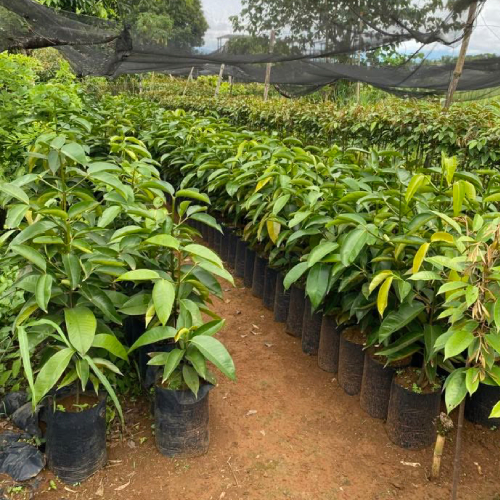
Description
- Mangosteen seedlings in Kenya cost from Sh6,500. This guide covers where to buy, how to plant, spacing, costs and the real market picture for Kenyan farmers.
Mangosteen Seedlings in Kenya: Price, Varieties, Planting, Yield and Farming Guide
You have probably seen the fruit in a Nairobi specialty shop, dark purple, sitting in a small tray with a price tag that makes you stop and look twice. Maybe you tasted it once at a hotel in Mombasa and never forgot it.
Now you are thinking about planting mangosteen seedlings on your own land. Before you commit money to this crop, you need to understand exactly what you are buying, how long you will wait, and whether your farm gives the tree what it needs. This guide walks through the full picture for Kenyan farmers considering mangosteen seedlings.
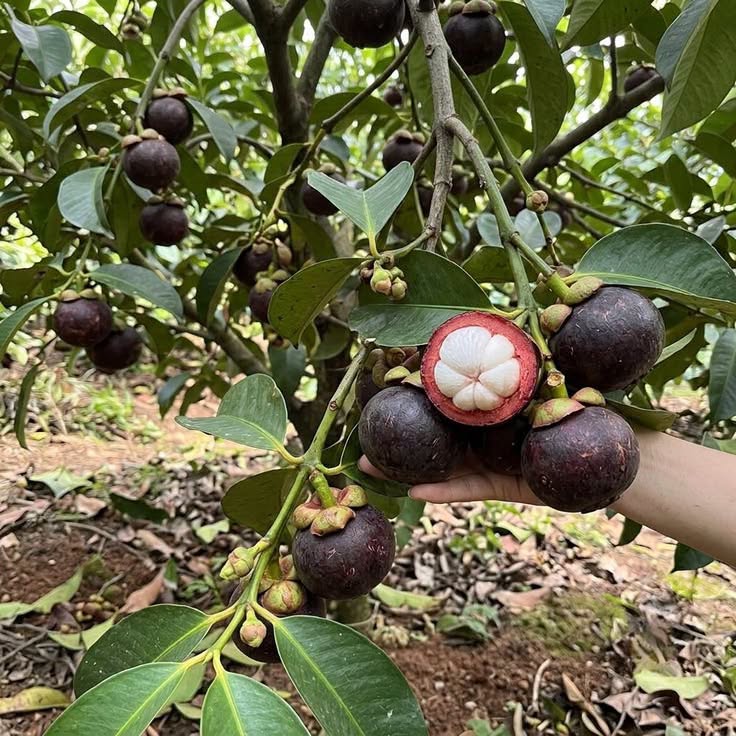
A mangosteen tree with ripe fruits
Mangosteen Seedlings in Kenya
Mangosteen seedlings are among the most expensive fruit tree seedlings sold in Kenya today. A single mangosteen seedling costs from Sh6,500. That is not a market average spread across several nurseries. It is the current asking price from Kenyan suppliers who stock this crop.
Compare that to a mango seedling at Sh150 to Sh600, an avocado seedling under Sh500, or a jackfruit seedling around Sh500, and you begin to understand why this crop sits in its own category.
The price reflects scarcity more than anything else. Few Kenyan nurseries raise mangosteen seedlings. The propagation process is slow and demanding. The tree takes years to reach transplanting size. And the wait for fruit stretches across a decade or more. Each of these factors feeds into the price you pay at the nursery gate.
Mangosteen Seedlings Price in Kenya
The current price for a mangosteen seedling in Kenya stands at Sh6,500. Some Kenyan nurseries like Farmers Trend Limited have previously listed mangosteen seedlings at Sh8,500, and others at Sh10,000, before settling at the present figure. Prices shift with seedling age, batch size, and the nursery’s cost of production. Always confirm the current price directly with your supplier before placing an order.
Why does a single seedling cost more than a dozen avocado seedlings combined? Three reasons explain the gap.
- Propagation difficulty tops the list. Mangosteen seed loses viability quickly after extraction from the fruit. It must be planted fresh, and the nursery process demands careful shade management, consistent moisture, and patient handling over many months. Failure rates during propagation run higher than with easier crops.
- Import dependence for planting material adds another layer of cost. Since few mature Kenyan mother trees exist to supply seed, some nurseries source genetic material from outside the country. Freight, documentation, and import charges all pass through to the final seedling price.
- Low production volume keeps prices elevated. A nursery producing a small batch of specialty seedlings cannot spread fixed costs across the large volumes that bring down per-unit prices for common fruit trees. When you buy a mangosteen seedling, you are paying for a product made in small quantities with high input costs.
Where to Buy Mangosteen Seedlings in Kenya
A handful of Kenyan nurseries and agricultural suppliers stock mangosteen seedlings. Supply is thin, and the crop is not available in the same volumes as mango, avocado, or citrus. Fruit Africa Veriplant supplies mangosteen seedlings directly to Kenyan farmers and international buyers.
What matters more than the nursery name is whether the seedling you are buying is genuinely Garcinia mangostana. Mangosteen has a distinctive leaf structure, and a legitimate supplier should know the mother tree. Ask where the seed came from. Ask how old the seedling is. Ask what medium it was raised in and whether it has been hardened for field conditions. A nursery that cannot answer these questions clearly is not a mangosteen nursery.
Before you order, visit the nursery if distance allows. If you cannot visit, request current photos of the actual seedlings in the batch. A generic photo from the internet tells you nothing about what you are buying.
Fruit Africa Veriplant does not publish a fixed public price for mangosteen seedlings. Request the current price directly through the contacts below. Prices shift with nursery batch, seedling age, and order volume, so a fresh quote is the only reliable figure.
Fruit Africa Veriplant
Phone: 0714 994 444
WhatsApp: https://wa.link/di12my
Email: sales@fruitafrica.org
Contact Us: https://fruitafrica.org/contact-us/
Request for Quotation: https://fruitafrica.org/request-for-quotation/
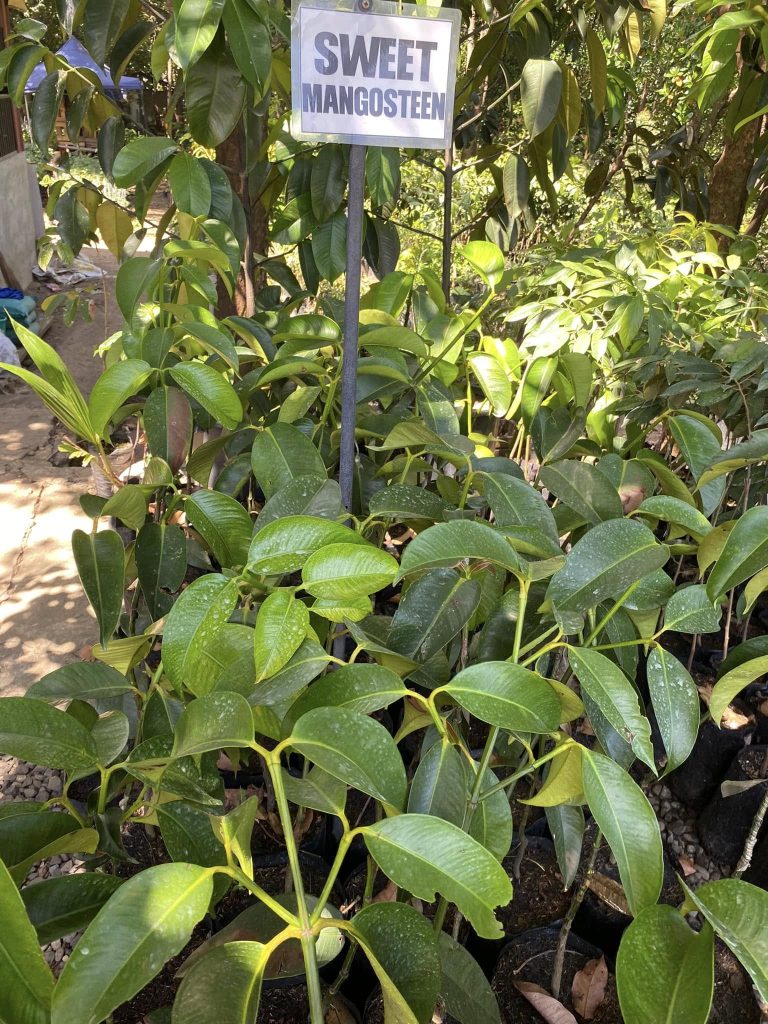
Mangosteen Seedlings
What Is Mangosteen?
Mangosteen is a tropical evergreen tree with the scientific name Garcinia mangostana. It produces a fruit with a thick, deep purple rind and white segmented flesh inside. The taste is sweet with a light tang, and food writers across Asia have described it as among the finest of any tropical fruit. People in Southeast Asia call it the Queen of Fruits, and the nickname has followed it into every market where it appears.
The tree grows slowly. In its native range across Indonesia, Malaysia, and Thailand, it can reach 6 to 25 meters over many years. It has a weak root system with a long taproot and poor lateral branching. The roots lack the fine root hairs that help most fruit trees absorb water and nutrients efficiently. That biological detail is not academic. It explains why mangosteen seedlings die so easily when handled roughly, planted in the wrong soil, or left to dry out.
The fruit itself has a rind that contains xanthones, a class of plant compounds with antioxidant properties. Alpha-mangostin and gamma-mangostin rank among the most studied xanthones found in the fruit. Traditional medicine across Southeast Asia has used mangosteen rind for generations, applying preparations to wounds, skin infections, and digestive complaints. This traditional use predates modern scientific study by centuries.
Mangosteen Varieties
Mangosteen is not like mango or avocado, where you choose between dozens of named commercial varieties with documented performance. The crop has very few formally named commercial varieties, and Kenyan farmers mostly work with seed-raised planting material from selected mother trees.
Seedling mangosteen. This is the most common type available in Kenya. Seed-raised trees are vigorous and long-lived, and they adapt to local conditions. The trade-off is variation. Fruit size, yield, and even flavor differ from tree to tree. Fruiting also takes longer, typically 8 to 15 years from seed.
Local selections. Some Kenyan nurseries supply planting material from trees already growing in coastal or lake basin environments. These selections often show better adaptation to local conditions, but supply remains limited.
If a supplier claims to have a named mangosteen variety with specific yield guarantees, ask for documentation. Mangosteen does not have the variety infrastructure that mango or avocado has.
How Fruit Africa Veriplant Propagates Mangosteen Seedlings
Mangosteen propagation is not a copy of what works for other fruit crops. The seeds lose viability quickly after extraction from the fruit, which means they must be planted fresh. This single fact rules out the casual approach of buying seeds in bulk and storing them for months. The propagation section below explains how Fruit Africa Veriplant raises mangosteen seedlings, from mother tree selection through to packing and delivery.
Selecting Planting Material
Mother tree selection is the starting point. Fruit from healthy, productive trees with desirable fruit size and flavor provides the seed. The seed itself is not a true seed in the reproductive sense for many mangosteen types. It is often apomictic, meaning it develops without fertilization and produces a seedling that is genetically identical to the mother tree. This is why seedling mangosteen can still produce acceptable fruit.
Propagation
Fresh seed goes into a nursery medium that drains well and holds moisture without staying saturated. The seed is planted shallow, and germination takes several weeks. During this period, the nursery bed or container stays under partial shade. Direct sun on germinating mangosteen seed and young seedlings causes stress that the plant does not recover from easily.
Nursery Management
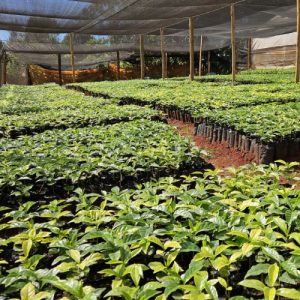
Mangosteen seedlings in the nursery need consistent moisture, not flooding. The shade requirement is significant. Young seedlings perform best under 40 to 60 percent shade during establishment. This is not a crop you raise in an open, full-sun nursery bed alongside pawpaw seedlings. The light regime matters.
Root Development
The mangosteen seedling develops a long taproot early. This taproot can be longer than the above-ground seedling within the first couple of years. The container used in the nursery must accommodate this vertical root growth. Shallow polybags produce seedlings with deformed taproots, and those seedlings rarely establish well in the field. If you receive a mangosteen seedling in a shallow bag, inspect the root system before planting. A coiled or bent taproot is a problem.
Hardening
Before a seedling leaves the nursery, it needs gradual exposure to more sunlight and less frequent watering. This hardening process prepares the plant for field conditions. A seedling moved directly from a shaded, heavily watered nursery bed to an open field will suffer. The shock can kill it or set it back by a year.
Quality Inspection
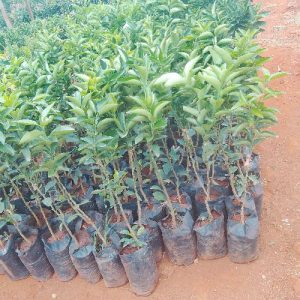
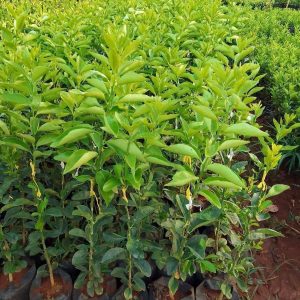
A quality mangosteen seedling has dark green, glossy leaves and a stem that is firm, not leggy. The leaves should not show yellowing, spotting, or insect damage. The root ball should hold together when the polybag is removed, but the roots should not be circling tightly at the bottom.
Packing and Delivery
Mangosteen seedlings travel poorly if handled roughly. The root ball must stay intact. Fruit Africa Veriplant packs seedlings so that the root zone is protected during transport. If you are collecting seedlings yourself, do not stack them in the boot of a car where they will be crushed. Keep them upright and shaded.
How to Choose Healthy Mangosteen Seedlings
Size is the worst indicator of seedling quality. A tall seedling in a small bag is often a stressed seedling that has stretched toward light. Here is what to look for instead.
Check the leaves. Healthy mangosteen leaves are thick, dark green, and glossy. Pale or yellow leaves suggest nutrient deficiency or root problems. Spotted leaves suggest disease. Curled leaves suggest pest damage or moisture stress.
Check the stem. The stem should be firm and upright. A thin, weak stem that bends easily under its own weight will struggle in the field.
Check the roots if possible. Ask the nursery to remove one seedling from its bag as a sample. The root ball should hold together. The taproot should go straight down, not coil around the bottom of the bag. Brown or mushy roots mean the seedling stayed too wet.
Ask about seedling age. A mangosteen seedling ready for transplanting is typically 1.5 to 2 years old and about 30 centimeters tall. A seedling that is only a few months old is not ready for the field.
Where Mangosteen Grows Best in Kenya
Mangosteen needs heat, humidity, and consistent moisture. In Kenya, that limits commercial production to specific zones.
The coastal counties are the strongest candidates: Kilifi, Kwale, Mombasa, and Lamu. These areas have the humidity and warmth the crop requires.
Western Kenya around the Lake Victoria basin also has suitable microclimates: Kakamega, Vihiga, Kisumu, Siaya, and Homa Bay. The altitude in these areas is low enough and the rainfall pattern supports tropical fruit growth.
Selected microclimates in Taita Taveta and parts of central Kenya such as Murang’a and Thika work for farmers able to supplement natural rainfall with reliable irrigation. This is a marginal proposition at best. Mangosteen does not tolerate drought, and irrigation must be consistent for years, not just during establishment.
If your farm sits above 800 meters, mangosteen is a difficult bet. Frost kills it. Cold stress weakens it. The crop does not forgive altitude mistakes.
Comparison to mangosteen’s native range. Indonesia, Malaysia, and Thailand all sit squarely within the tropics, with year-round humidity and rainfall patterns closely matching what mangosteen evolved to expect.
Kenya’s climate diversity means only a fraction of the country replicates these native conditions closely enough for the tree to thrive. This explains why the crop concentrates so heavily around the coast and the lake basin rather than spreading across the country the way hardier fruits such as mango or avocado have done.
Mangosteen Climate Requirements
Temperature is the first filter. Mangosteen performs at 25°C to 35°C. Below 4°C, the tree suffers damage. Above 38°C, it also struggles. Kenyan highland areas with cold nights are unsuitable.
Rainfall matters. The crop needs 1,500 to 2,500 millimeters annually, though some sources cite a range extending to 3,000 millimeters in the wettest tropical zones. The number itself is less important than the distribution. Mangosteen does not tolerate long dry spells. If your area has a pronounced dry season lasting more than a few weeks, you need irrigation.
Humidity supports growth, flowering, and fruit development. Coastal Kenya has this. Some inland areas do not. Low humidity during flowering reduces fruit set.
Altitude matters. Mangosteen grows best from sea level to about 800 meters. It can survive slightly higher in warm microclimates, but commercial production above 800 meters is risky.
Mangosteen Soil Requirements
Mangosteen prefers deep, well-drained loamy soil rich in organic matter. Soil pH should fall between 5.5 and 6.8, landing on the slightly acidic side of neutral.
Drainage is non-negotiable. Mangosteen roots cannot sit in waterlogged soil. The tree has some tolerance for high water tables in its native range, and mangosteen on Bengkalis Island in Indonesia developed air channels in its roots to survive flooded conditions. That adaptation is not universal, and Kenyan soils with poor drainage kill mangosteen seedlings through root rot.
Avoid limestone soils. Mangosteen is not adapted to them. Heavy clay that holds water is also a problem. If your soil stays sticky and wet for days after rain, mangosteen is the wrong crop unless you install drainage.
How Many Mangosteen Trees Fit on One Acre?
The answer depends entirely on the spacing you choose, and mangosteen spacing is wider than most farmers expect.
- At 5 meters by 5 meters, you fit approximately 150 trees per acre. This is the tighter end of the range.
- At 6 meters by 6 meters, you fit approximately 110 trees per acre.
- At 8 meters by 8 meters, you fit approximately 60 trees per acre.
- At 10 meters by 10 meters, you fit approximately 40 trees per acre.
These numbers come from straightforward arithmetic. One acre is about 4,047 square meters. At 5m by 5m spacing, each tree occupies 25 square meters. 4,047 divided by 25 gives roughly 162 trees, which is rounded to 150 to account for access paths and boundaries.
The wider spacings exist because mangosteen canopies grow large over decades. A mature tree needs air movement around it, light penetration, and access for harvesting. Crowding trees increases disease pressure and makes management difficult.
Mangosteen Spacing
Spacing is a decision that affects the orchard for the next 50 years. Get it wrong, and you live with the consequences.
Closer spacing means more trees per acre and higher potential yield per acre once trees mature. It also means faster canopy closure, more competition for water and nutrients, and greater difficulty moving through the orchard for weeding, spraying, and harvesting. Disease pressure rises when air cannot move between trees.
Wider spacing means fewer trees per acre and lower total yield potential. But each tree has more room to develop a full canopy, access to light is better, and management is easier. The cost per tree in terms of land is higher, but the cost per tree in terms of management is lower.
A practical approach for Kenyan farmers: if you have reliable irrigation and plan to manage intensively, 6m by 6m is a reasonable middle ground. If you are planting on rain-fed land with less intensive management, go wider. Do not copy a neighbor’s spacing without understanding why they chose it. Their soil, rainfall, and management capacity are not yours.
How to Prepare Land for Mangosteen
Start by clearing the land of competing vegetation. Mangosteen seedlings do not compete well with established weeds and grasses. Deep ploughing helps break compacted soil layers and improves root penetration. If your soil has a hardpan layer within the first meter, mangosteen roots will struggle.
A soil test before planting tells you two things: the pH and the nutrient status. If the pH is below 5.0, lime may be needed, but apply it well before planting and based on the test recommendation. If drainage is a concern, address it during land preparation, not after the trees are in the ground.
Windbreaks matter more for mangosteen than for many fruit crops. The tree has brittle branches and does not tolerate strong winds. Coastal farms benefit from windbreak trees or hedges on the windward side.
How to Prepare Mangosteen Planting Holes
Planting holes should be dug at least 60 centimeters by 60 centimeters by 60 centimeters. Some sources recommend 1 meter by 1 meter by 1 meter. The larger hole gives the taproot room to grow straight without obstruction.
Mix the topsoil you removed from the hole with well-decomposed manure. Twenty kilograms of compost or manure per hole is a common recommendation. Add rock phosphate if your soil test shows phosphorus deficiency. Five hundred grams per hole appears in some recommendations.
Do not fill the hole with raw manure and plant immediately. The manure needs to be decomposed. Fresh manure burns roots.
How to Plant Mangosteen Seedlings
Plant at the beginning of the rainy season if you are relying on rainfall. If you have irrigation, the timing is more flexible, but avoid planting during the hottest, driest months.
Water the seedling thoroughly before removing it from the polybag. This keeps the root ball intact. Remove the polybag carefully. Do not pull the seedling out by the stem. Support the root ball with your hand and slide the bag off.
Place the seedling in the hole so that the top of the root ball sits level with the surrounding soil. Do not bury the stem deeper than it was in the nursery.
Fill the hole with the soil-manure mix, firming gently as you go. Do not compact the soil with your foot. You want the soil to hold the roots without crushing them.
Water immediately after planting. A thorough watering settles the soil around the roots and removes air pockets.
Apply mulch around the base of the seedling, keeping it a few centimeters away from the stem. Mulch touching the stem causes rot.
Mangosteen Watering Requirements
Young mangosteen seedlings need consistent moisture. The root system is weak, and the plant cannot tolerate drying out. In the first year, water regularly, especially during dry spells. Drip irrigation is efficient and keeps moisture consistent without waterlogging.
Mature trees need irrigation during dry periods, especially from flowering through fruit development. Water stress during fruit development causes fruit cracking, which reduces marketability.
How much water? The exact amount depends on your soil type, evaporation rate, and rainfall. The principle is more useful than a fixed number: the soil around the root zone should stay moist but not saturated. If you can squeeze a handful of soil and it drips water, it is too wet. If it crumbles and dust falls off, it is too dry.
Short dry periods of two to three weeks trigger flowering in some mangosteen production systems. This is a management tool for experienced growers, not something to experiment with on young trees.
Mangosteen Manure and Fertilizer Requirements
Organic matter is the foundation of mangosteen nutrition. Compost and well-decomposed manure improve soil structure, water-holding capacity, and nutrient availability. Apply manure annually around the drip line.
For young trees in the first three years, focus on organic manure and micronutrients. Do not push nitrogen. Excessive nitrogen encourages vegetative growth at the expense of root development and future fruiting.
For mature trees, a balanced fertilizer program supports fruit development. Potassium plays a role in fruit quality. A fertilizer blend such as NPK 12:12:17 with magnesium supplementation appears in commercial recommendations.
Do not fertilize on a fixed calendar without considering your soil test and the tree’s appearance. Yellowing leaves, poor growth, and small fruit are signals. Address the specific deficiency rather than applying a generic blend.
Mangosteen Mulching and Weed Management
Mulch is not optional for mangosteen. A layer of organic mulch 10 to 15 centimeters thick around the base of the tree conserves moisture, suppresses weeds, moderates soil temperature, and adds organic matter as it decomposes.
Keep mulch away from direct contact with the trunk. A gap of a few centimeters prevents stem rot.
Weed control matters most during the first three years. Weeds compete for water and nutrients that young mangosteen seedlings need. Hand weeding or careful mechanical cultivation is safer than herbicides near the shallow root zone. If you use herbicides, keep them away from the trunk and follow label directions.
Mature mangosteen trees develop a canopy that suppresses many weeds naturally, but the area around the trunk still needs management for access and to reduce competition.
Mangosteen Training and Pruning
Mangosteen pruning is minimal compared to crops like mango or avocado. The tree naturally develops a pyramidal or rounded canopy. Pruning focuses on removing dead, diseased, or crossing branches. This improves air movement through the canopy and reduces disease pressure.
Do not prune heavily. Mangosteen does not respond to aggressive pruning the way some fruit trees do. Remove what needs to be removed and leave the rest.
Mangosteen Pests and Diseases
Mangosteen does not have a long list of devastating pests in Kenya, but the ones that appear cause real damage. Documented pest and disease patterns for mangosteen in Kenya remain thin, since so few trees have reached maturity locally. General tropical horticulture references point to the following concerns.
Mealybugs and scale insects feed on leaves and young shoots. Ants often farm these insects, so ant control is part of mealybug management. Monitor the undersides of leaves and the stem junctions.
Fruit borers damage developing fruit. Regular monitoring and removal of infested fruit reduces the population.
Leaf miners attack young leaves, leaving visible trails. Severe infestations slow seedling growth.
Root rot is the most serious disease threat, especially in poorly drained soils. The pathogen thrives when roots stay wet. Good drainage, careful watering, and avoiding planting in low spots are the primary controls. Once root rot establishes, it is difficult to reverse.
Anthracnose causes dark lesions on leaves and fruit. It spreads in humid conditions with poor air movement. Pruning for airflow and removing infected plant material helps.
Fruit cracking is a physiological disorder rather than a disease. Irregular water supply causes the fruit to crack, usually during a dry period followed by heavy rain or irrigation. Consistent moisture during fruit development and calcium supplementation reduce the problem.
How Long Does Mangosteen Take to Produce Fruit?
This is the question that determines whether mangosteen fits your farm plan.
Seed-raised mangosteen trees take 8 to 15 years to begin fruiting in Kenya. Some sources say 6 to 8 years for first fruit, with full commercial production at 10 to 12 years.
The waiting period is not a flaw in the crop. It is the crop. If you need income within three years, mangosteen is not your answer. If you are planting for the next generation of your farm, the timeline makes more sense.
Intercropping with bananas, papayas, or short-term vegetables provides income during the establishment years. This is a practical strategy, not a compromise. The intercrop also provides shade for young mangosteen seedlings, which reduces stress.
Mangosteen Yield Per Tree
A mature mangosteen tree produces 200 to 500 fruits per season in typical conditions. Some sources report yields up to 800 fruits per tree under optimal management, and individual trees have reportedly yielded over 1,000 fruits in an exceptional season.
Fruit weight varies. Common figures range from 80 to 150 grams per fruit. Using 100 grams as a working average, a tree producing 300 fruits yields about 30 kilograms.
Mangosteen also tends toward alternate bearing, meaning trees often produce a strong crop one year followed by a lighter crop the next. Plan your cash flow around this pattern.
At 5 meters by 5 meters spacing with 150 trees per acre, and a conservative 15 kilograms per tree, that is 2,250 kilograms per acre. At 25 kilograms per tree, it is 3,750 kilograms. At 40 kilograms per tree, it is 6,000 kilograms.
These are mature orchard figures. Early production in years 8 to 10 is significantly lower. Full production builds gradually.
Mangosteen Harvesting
Harvest when the fruit turns deep purple and reaches full size. The rind should give slightly when pressed. Do not harvest green fruit hoping it will ripen well off the tree. Mangosteen does not ripen like a banana or avocado.
Harvest by hand or with clippers. Do not pull the fruit from the branch, because the stem end can tear and create an entry point for rot.
Handle fruit gently. Bruising leads to rapid deterioration. Mangosteen has a relatively short shelf life, two to four weeks under ideal conditions. Sort fruit immediately after harvest, removing damaged or diseased specimens.
Store in a cool, ventilated place. For export, cold storage extends shelf life, but the fruit is sensitive to chilling injury below certain temperatures.
Post-harvest handling difficulty is a real risk. The delicate white flesh bruises easily during handling and transport. Farmers without cold chain infrastructure or nearby premium buyers risk losing fruit value quickly after harvest.
How to Sell Mangosteen Fruit in Kenya
Mangosteen is a premium fruit in Kenya, which means the market is niche. You will not sell it by the roadside the way you sell mangoes.
High-end supermarkets in Nairobi, Mombasa, and Kisumu stock exotic fruits. Mangosteen fetches Sh300 to Sh600 per kilogram in Kenyan specialty markets. Some Nairobi outlets catering to niche or premium grocery shoppers report prices toward Sh800 to Sh1,500 per kilogram for imported fruit. The volumes are low, but the prices are high.
Hotels and restaurants catering to tourists and affluent locals buy mangosteen for fruit platters and desserts. This is a consistent but small market.
Specialty fruit vendors and farmers’ markets in urban areas attract customers willing to pay premium prices for unusual fruits.
Direct-to-consumer sales through WhatsApp groups, social media, or farm-gate sales work if you can reach the right audience.
Processors use mangosteen for juice, jam, and dried products. The rind contains xanthones used in nutraceutical and cosmetic products. Processing is an option for fruit that does not meet fresh market standards, but the local processing sector for mangosteen is not developed.
Export is the highest-value channel. International markets pay Sh1,000 to Sh2,000 per kilogram in premium export channels. Middle East, European, and Asian markets buy mangosteen. Export requires phytosanitary compliance, cold chain logistics, and volumes that most small Kenyan farms cannot supply alone. Cooperatives or aggregators are necessary for smallholder export participation.
The marketing lesson is simple. Find your buyer before you plant 150 trees. A premium fruit without a market is just an expensive hobby.
Mangosteen Farming Cost Per Acre
Establishment costs for mangosteen are higher than most fruit crops because of seedling price and shade requirements. At Sh6,500 per seedling and 40 trees per acre at 8m by 8m spacing, seedling cost alone is Sh260,000. At 110 trees per acre at 6m by 6m spacing, seedling cost is Sh715,000. That is before land preparation, manure, planting labor, irrigation, or fencing.
A 10-year cumulative investment estimate from one Kenyan source puts the total at approximately Sh1,000,000 to Sh1,400,000 per acre. These figures are estimates, not quotations. Your actual costs depend on seedling price, labor rates, irrigation infrastructure, fencing needs, and how much land preparation your site requires.
The table below organizes the cost categories. Fill in your own figures based on local quotes.
| Cost Category | Notes |
|---|---|
| Seedlings | Multiply number of trees by current seedling price |
| Land preparation | Ploughing, harrowing, drainage work |
| Planting holes | Labor for digging and filling |
| Manure and compost | 20 kg per hole at minimum |
| Rock phosphate | If soil test indicates need |
| Irrigation system | Drip or micro-sprinkler installation |
| Mulch material | Straw, grass, or other organic material |
| Fencing | Protection from livestock and wildlife |
| Labor | Planting, watering, weeding for first year |
| Tools | Hoes, pruning shears, watering cans |
Mangosteen Farming Profit Per Acre
Profitability depends on yield, price, and the number of years you wait. Industry marketing materials cite potential revenue between Sh300,000 and Sh6 million per acre annually at full production, based on yields of 1 to 3 tonnes per acre and the price ranges above. Treat the upper end of this range with significant skepticism, since no confirmed Kenyan commercial orchard has reached full production to validate these figures under local conditions.
A mature orchard at 40 trees per acre with 25 kilograms per tree and a farm-gate price of Sh600 per kilogram generates approximately Sh600,000 in gross revenue. At 40 trees per acre with 40 kilograms per tree and Sh1,000 per kilogram, gross revenue reaches Sh1,600,000. At 110 trees per acre with 25 kilograms per tree and Sh800 per kilogram, gross revenue reaches Sh2,200,000.
These are gross figures. Subtract annual operating costs: labor, fertilizer, irrigation, pest management, harvesting, and marketing. The surplus is your profit.
The 10-year cumulative picture from one Kenyan source shows a net negative position until year 9, turning positive around year 10, and accumulating significantly from year 11 onward. That timeline is the reality of mangosteen farming. The orchard does not pay you back quickly. It pays you back patiently.
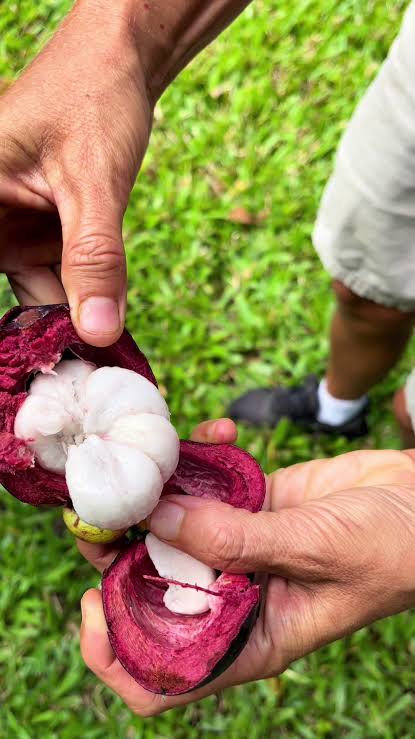
Mangosteen Fruit Ready to Eat
Example Mangosteen Profitability Calculation
Assume 40 trees per acre at 8m by 8m spacing. Assume mature yield of 25 kilograms per tree. Total yield: 1,000 kilograms per acre.
Assume farm-gate price of Sh600 per kilogram. Gross revenue: Sh600,000 per acre per year.
Assume annual operating costs of Sh200,000 per acre for labor, inputs, irrigation, and harvesting. Estimated surplus: Sh400,000 per acre per year.
Now change the spacing to 6m by 6m with 110 trees per acre. Assume mature yield of 25 kilograms per tree. Total yield: 2,750 kilograms per acre.
Assume farm-gate price of Sh600 per kilogram. Gross revenue: Sh1,650,000 per acre per year.
Assume annual operating costs of Sh400,000 per acre. Estimated surplus: Sh1,250,000 per acre per year.
Now change the yield to 15 kilograms per tree at 110 trees per acre. Total yield: 1,650 kilograms. Gross revenue at Sh600 per kilogram: Sh990,000. Surplus after Sh400,000 operating costs: Sh590,000.
These scenarios show that profitability swings widely with spacing, yield, and price. The assumptions behind every number matter. If you cannot achieve the yield or the price, the profit changes. Do not treat the highest scenario as normal.
Common Mistakes When Growing Mangosteen in Kenya
Planting mangosteen seedlings in the wrong climate is the most expensive mistake. The seedling may survive, but it will not thrive. You will spend years watering and caring for a tree that will never produce well.
Planting in poorly drained soil is the second mistake. Mangosteen roots rot when they stay wet. If your soil holds water after rain, fix the drainage before planting or choose a different crop.
Buying seedlings based only on size is a third mistake. A tall seedling in a small bag is often a stressed seedling. Look at the roots, the leaves, and the stem.
Establishing a large orchard without considering the time before production is a planning mistake. Mangosteen takes 8 to 15 years to fruit. If you have cash flow needs in the first five years, plan for intercrops or off-farm income.
Copying another farmer’s spacing without understanding their context is a mistake. Wider spacing is safer for a crop that grows as large as mangosteen.
Relying on rainfall alone in areas with unreliable precipitation is a mistake. Mangosteen needs consistent moisture. If your rainfall pattern has dry gaps, irrigation is necessary.
Selecting seedlings without confirming the species is a mistake. Garcinia mangostana is the true mangosteen. Related Garcinia species exist and are sometimes sold under the same local name. Confirm the identity.
Can Mangosteen Be Grown in Containers?
Mangosteen can be grown in containers, but the tree will not reach its full potential. The long taproot needs deep soil. A standard pot restricts root development, and the tree stays small. Container growing is possible for a home gardener who wants the novelty of a mangosteen tree, but do not expect commercial yields.
If you attempt container growing, use a deep container, not a wide shallow one. The medium must drain well but hold moisture. Partial shade is necessary. The tree will need consistent watering because container soil dries faster than field soil.
Can Mangosteen Be Grown on a Small Farm?
Yes, but the economics are different. On a small farm with 10 to 20 trees, the management is manageable. The investment is smaller. The waiting period is the same. A few mangosteen trees in a suitable coastal or lake basin backyard produce enough fruit for household use and some local sales.
The challenge on a small farm is the opportunity cost of the land. If that land could grow bananas or vegetables that produce income within a year, mangosteen is a long-term bet. If you have space that is not needed for quick-income crops, mangosteen is a reasonable addition.
Can Mangosteen Be Grown Commercially in Kenya?
Commercial mangosteen farming in Kenya is possible in the right locations with the right capital. The crop is rare locally, and imports from Thailand and Malaysia fill some of the demand. That gap is an opportunity for Kenyan farmers who can produce consistent quality.
The constraints are real: high seedling cost, long wait for production, strict climate and soil requirements, and a niche market. Commercial success requires matching all these factors. A commercial orchard in Kilifi or Busia with irrigation, good drainage, and a marketing plan has a different outlook than a dryland farm in Machakos.
No confirmed commercial mangosteen orchard currently operates at scale in Kenya. Existing plantings remain scattered and largely experimental. A farmer who succeeds with mangosteen faces almost no domestic competition and steps into a market currently served entirely by imports. The lack of local growers also means no proven Kenyan playbook exists for pest management, harvest timing, or realistic yield expectations under local conditions.
Buying Mangosteen Seedlings for Export
International buyers looking for mangosteen seedlings from Fruit Africa Veriplant should request a quotation through email or WhatsApp. The buyer should provide the number of seedlings needed, preferred variety or propagation type, destination country, destination city, and any relevant planting material requirements.
Fruit Africa Veriplant responds with details covering freight, documentation, logistics, and estimated timeframe. Specific freight prices and delivery times are quoted based on the destination and order size. Do not assume a standard rate.
Fruit Africa Veriplant
Phone: 0714 994 444
WhatsApp: https://wa.link/di12my
Email: sales@fruitafrica.org
Contact Us: https://fruitafrica.org/contact-us/
Request for Quotation: https://fruitafrica.org/request-for-quotation/
Frequently Asked Questions About Mangosteen Seedlings
1. How much do mangosteen seedlings cost in Kenya?
A mangosteen seedling currently costs from Sh6,500 in Kenya. Prices vary by nursery and batch. Request a current quote before ordering.
2. Where can I buy mangosteen seedlings in Kenya?
Fruit Africa Veriplant supplies mangosteen seedlings directly to Kenyan farmers and international buyers. Contact through WhatsApp on 0714 994 444 or email sales@fruitafrica.org for current availability.
3. Are mangosteen seedlings available in Kenya?
Supply is limited because few Kenyan nurseries raise this crop. Fruit Africa Veriplant and a handful of specialist suppliers stock mangosteen seedlings. Confirm availability before travelling to a nursery.
4. What is the difference between seedling and grafted mangosteen?
Mangosteen in Kenya is raised from seed. Seedling mangosteen produces a tree that takes longer to fruit and shows some variation in fruit quality. Grafted mangosteen is not widely available locally.
5. How long do mangosteen seedlings take to fruit?
Seed-raised mangosteen takes 8 to 15 years to begin fruiting in Kenya. Some sources say 6 to 8 years for first fruit, with full commercial production at 10 to 12 years.
6. What spacing should I use for mangosteen?
Spacing ranges from 5m by 5m (approximately 150 trees per acre) to 10m by 10m (approximately 40 trees per acre). Wider spacing suits rain-fed orchards and less intensive management.
7. How many mangosteen trees fit on one acre?
At 6m by 6m, approximately 110 trees per acre. At 5m by 5m, approximately 150 trees. At 8m by 8m, approximately 60 trees. At 10m by 10m, approximately 40 trees.
8. What climate does mangosteen need?
Mangosteen needs temperatures of 25°C to 35°C, annual rainfall of 1,500 to 2,500 millimeters, and high humidity. It does not tolerate frost.
9. What soil is best for mangosteen?
Deep, well-drained loamy soil rich in organic matter with a pH of 5.5 to 6.8. Drainage is critical. Waterlogged soil kills mangosteen.
10. How do I prepare a planting hole for mangosteen?
Dig a hole at least 60cm by 60cm by 60cm. Mix topsoil with 20 kilograms of decomposed manure and 500 grams of rock phosphate if needed.
11. How often should I water mangosteen seedlings?
Young seedlings need consistent moisture. Water regularly during dry spells. Drip irrigation keeps moisture consistent without waterlogging. Mature trees need irrigation from flowering through fruit development.
12. What fertilizer does mangosteen need?
Young trees benefit from organic manure and micronutrients. Mature trees need balanced fertilizer with potassium and magnesium. Avoid excessive nitrogen.
13. What pests attack mangosteen in Kenya?
Mealybugs, scale insects, fruit borers, and leaf miners are the main pests. Ant control helps manage mealybugs. Regular monitoring reduces damage.
14. What diseases affect mangosteen?
Root rot is the most serious, especially in poorly drained soil. Anthracnose affects leaves and fruit in humid conditions. Fruit cracking is a physiological disorder linked to irregular watering.
15. How much fruit does a mature mangosteen tree produce?
A mature tree produces 200 to 500 fruits per season in typical conditions, with some trees yielding up to 800 fruits under optimal management. Alternate bearing is common.
16. When should I harvest mangosteen?
Harvest when the fruit turns deep purple and reaches full size. The rind should give slightly when pressed. Do not harvest green fruit expecting it to ripen off the tree.
17. How do I sell mangosteen fruit in Kenya?
High-end supermarkets, hotels, specialty fruit vendors, and direct-to-consumer sales are the main channels. Export offers the highest prices but requires phytosanitary compliance and cold chain logistics.
18. Is mangosteen farming profitable in Kenya?
No documented commercial Kenyan orchard currently confirms real profitability figures. Industry marketing materials cite high revenue potential per acre, but treat these figures cautiously given the absence of proven local results and the extended payback period involved.
19. Can mangosteen be grown in containers?
Yes, but the tree will not reach full potential. The long taproot needs deep soil. Use a deep container, partial shade, and consistent watering. Do not expect commercial yields.
20. Can I export mangosteen seedlings from Kenya?
Yes. Fruit Africa Veriplant supplies international buyers. Provide the number of seedlings, preferred variety, destination country, destination city, and any planting material requirements. Request a quotation through the contacts above.
Final Guide to Buying Mangosteen Seedlings in Kenya
Buying mangosteen seedlings is not like buying avocado or mango seedlings. The price is higher. The supply is thinner. The wait for fruit is longer. And the tree demands specific conditions that most Kenyan farms do not naturally provide.
Before you order, confirm your climate. If you are not in a coastal county or the Lake Victoria basin, check whether your microclimate genuinely matches what mangosteen needs. Check your soil drainage. If water sits on your land after rain, fix that problem before planting. Check your water source. Mangosteen needs consistent moisture for years, not just during establishment.
When you buy, inspect the seedling. Look at the leaves, the stem, and the roots. Ask about seedling age and how it was raised. Do not buy based on height alone.
Plan for the wait. Eight to fifteen years is a long time. Intercrop with bananas or papayas to generate income during the establishment years. Keep records of what you plant, when you plant it, and how the trees perform.
Find your market before you plant a large orchard. Mangosteen is a premium fruit with a niche market. A few trees for household use and local sales are a different proposition from 110 trees intended for commercial production.
Fruit Africa Veriplant supplies mangosteen seedlings to Kenyan farmers and international buyers. Request a current quotation for pricing, availability, and delivery details.
Fruit Africa Veriplant
Phone: 0714 994 444
WhatsApp: https://wa.link/di12my
Email: sales@fruitafrica.org
Contact Us: https://fruitafrica.org/contact-us/
Request for Quotation: https://fruitafrica.org/request-for-quotation/




Reviews
There are no reviews yet.