
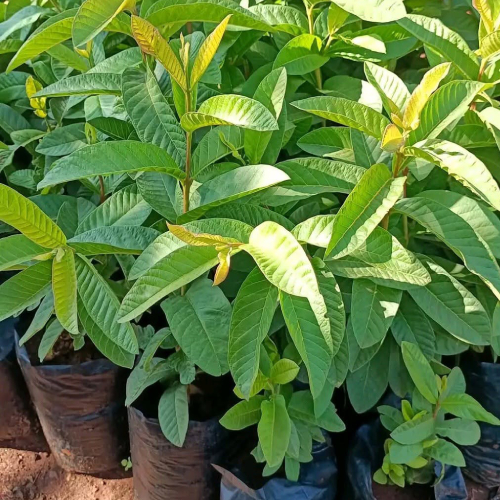
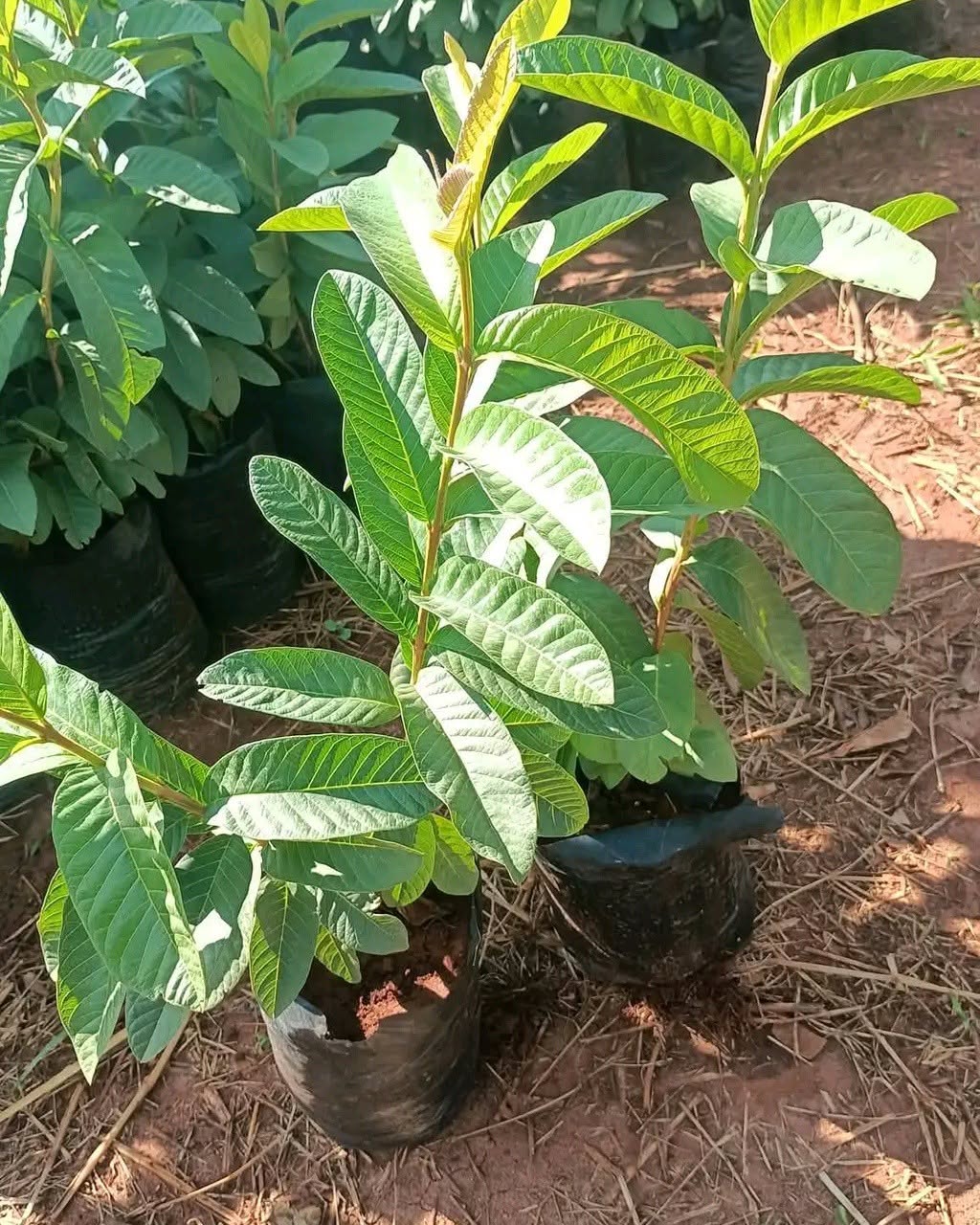
Description
Guava Seedlings in Kenya: Price, Varieties, Spacing and Farming Guide
You are searching for guava seedlings in Kenya. You want to know the price, the varieties available, where they grow, how many you need per acre, and how to order. Here are the answers before we go deeper.
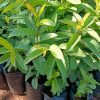
Guava seedlings from Fruit Africa Veriplant cost Ksh 150 each. We stock white guava and red guava. We deliver countrywide. You call or WhatsApp 0714 994 444 to order or to ask for guidance.
The recommended spacing is 5 metres between rows and 5 metres between trees. That gives about 160 trees per acre. You plant at the start of the rains or anytime you have reliable irrigation.
Guava grows in most counties in Kenya. It performs best in warm areas with moderate rainfall. Rooted seedlings start fruiting in 2 to 3 years. Full production comes in the fourth year. A mature tree produces 50 to 60 kilograms per year and keeps producing for 20 to 30 years.
Now let us get into the details you need before you buy.
Guava Seedlings Price in Kenya
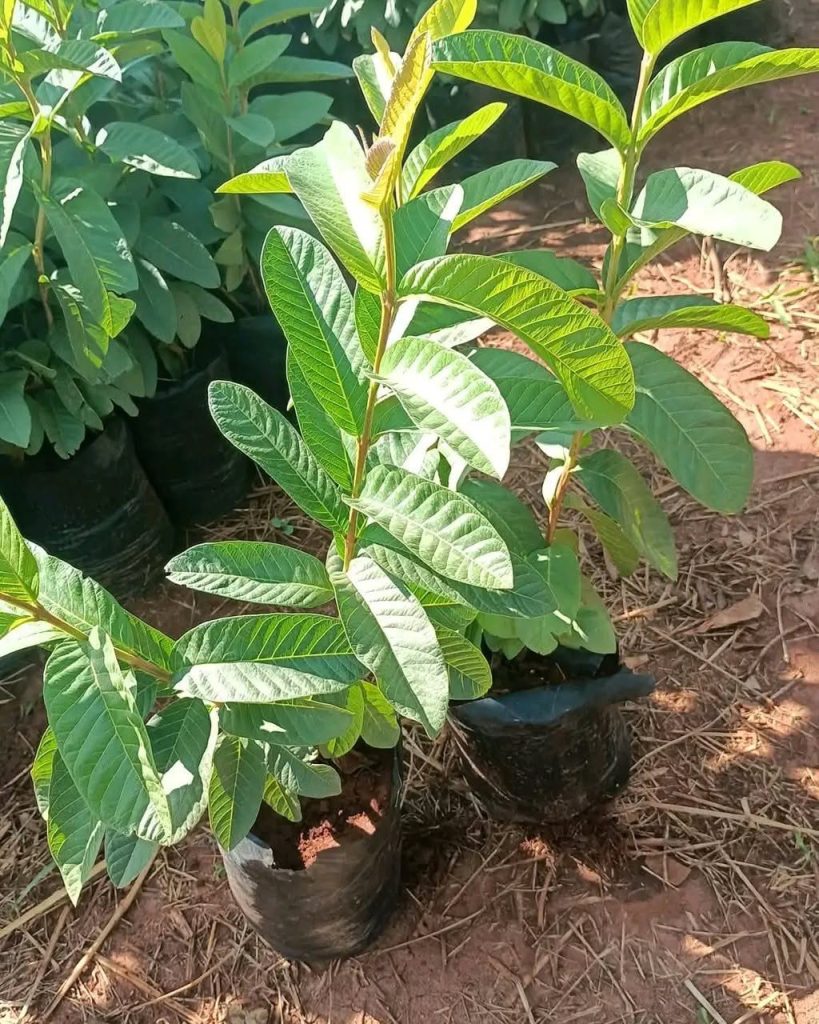
Guava seedlings from Fruit Africa Veriplant cost Ksh 150 per rooted seedling. That price covers seedlings that are already rooted, hardened, and ready for field planting.
| Item | Details |
|---|---|
| Crop | Guava |
| Seedling price | Ksh 150 each |
| Varieties stocked | White guava, red guava |
| Seedling type | Rooted and hardened |
| Availability | Countrywide delivery in Kenya |
| International orders | Request for quote by email or WhatsApp |
| Contact | 0714 994 444 or sales@fruitafrica.org |
A rooted seedling is not the same as a seed. A guava seed germinates quickly and needs no treatment, but seed-grown trees produce variable fruit. You do not know what you are getting until the tree fruits. Rooted seedlings are genetically identical to the mother plant. You know the fruit colour, size and taste before you plant.
We keep the price flat at Ksh 150 whether you buy five seedlings or five hundred. The only change comes when you buy in bulk. Call us to discuss quantities above 500 seedlings.
Where to Buy Guava Seedlings in Kenya
You buy guava seedlings directly from Fruit Africa Veriplant. We operate from Murang’a, Nairobi and Embu. We deliver to farmers across Kenya.
You can collect from our nurseries. You can also arrange delivery to your farm. Delivery cost depends on your location and the number of seedlings. We pack the seedlings to survive the journey. We keep the roots moist and the stems protected.
If you are in Nairobi, Murang’a or Embu, collection is straightforward. If you are in Meru, Laikipia, Naivasha, Makueni, Kajiado or the coast, we arrange transport to your nearest town. Call us on 0714 994 444 to confirm delivery times and costs.
For farmers searching for guava seedlings near me, the answer is simple. We serve the whole country from our three locations. The distance does not stop us from getting healthy seedlings to your farm.
What Are Guava Seedlings?
Your guava seedlings are young guava trees raised from selected mother trees. The mother trees produce high quality fruit with good colour, sweetness and size. We choose them because they carry the characteristics you want in your orchard.
Guava belongs to the genus Psidium. It is a hardy tropical fruit tree widely grown in Kenya. Local guava landraces dominate production because farmers propagate them easily from seed or cuttings. These types vary in fruit colour, size, and taste. Improved selections produce larger fruits, fewer seeds, and better uniformity.
Guava trees grow vigorously. They tolerate a wide range of rainfall conditions and perform well in both humid and semi-arid zones. They adapt to many soil types, including loamy, sandy, and even slightly saline soils.
Your guava seedlings need full sun and good drainage from the early growth stage. The site determines how the tree develops, how much fruit it produces, and how easy it is to harvest.
Rooted Guava Seedlings vs Seed-Grown Trees
This is one of the first decisions you make. Many first time farmers get confused here.
Seed-grown guava trees are cheap. The seeds germinate quickly and need no treatment. But seed propagation produces variable plants. You do not know the fruit colour, size or taste until the tree starts bearing. This takes years. By then, you have invested time, water and labour in a tree that may not give you what you want.
Rooted seedlings are cuttings or air-layered plants that have already developed a healthy root system. This is what Fruit Africa Veriplant sells. When you buy a rooted seedling, you skip the variability. The plant is genetically identical to the mother tree. You know the fruit quality before you plant.
Rooted seedlings are cleaner. They grow in a controlled environment away from field pests and soil borne diseases. They are more uniform, so your farm grows evenly. They are easier to plant and establish. You know the source mother plant, so you know the variety and fruit quality you are buying.
Guava Varieties Available at Fruit Africa Veriplant
Not every guava variety performs the same way under Kenyan conditions. Colour, flavour, seed content, and market appeal matter for the fresh fruit market and for processing. Here are the varieties we stock.
White Guava
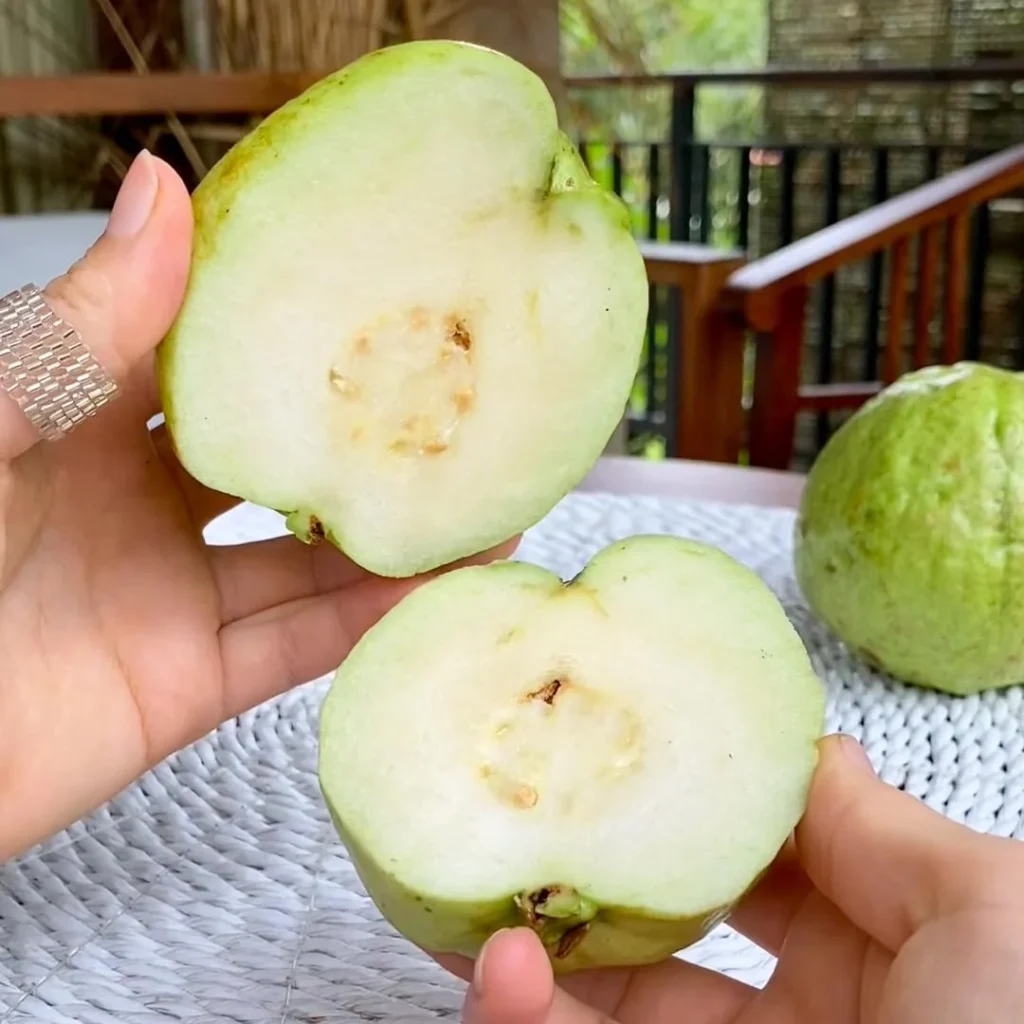
White guava produces fruit with pale green to light yellow skin and white or cream-coloured flesh. The flavour is sweet and mild. The fruit is juicy and aromatic. White guava is the most common type in Kenyan markets. It performs well in most guava growing areas. If you want a reliable variety with a proven market, white guava is a strong choice.
Red Guava
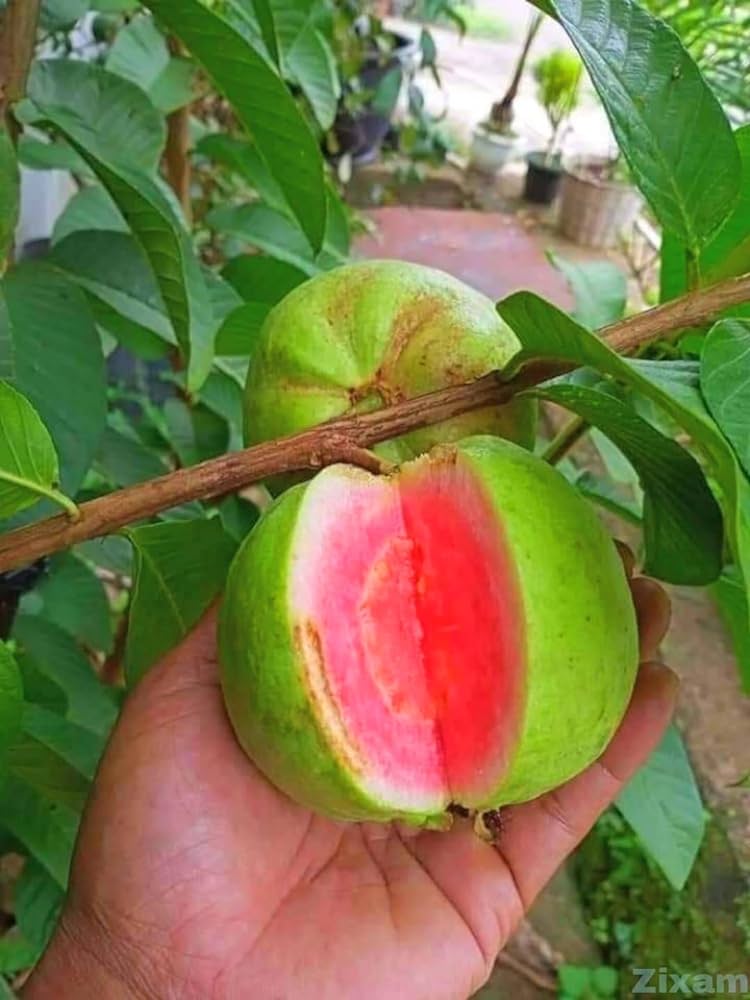
Red guava produces fruit with pink to deep red flesh. The flavour is sweet and slightly tangy. The colour is attractive and appeals to consumers looking for something different. Red guava often fetches higher prices in urban markets because of its striking appearance. The fruit is rich in antioxidants. If you target the premium fresh fruit market or the health conscious consumer, red guava is worth planting.
How to Choose a Variety
Start with white guava for your first planting. It is reliable and has a proven market. Once you gain experience, add red guava to spread your harvest and appeal to different buyers. You can also plant both varieties together. This spreads your risk and gives you fruit for different market segments.
Guava Varieties Comparison
| Variety | Flesh Colour | Flavour | Market | Best Suited Farmer |
|---|---|---|---|---|
| White Guava | White to cream | Sweet, mild | Fresh market, processing | First time growers |
| Red Guava | Pink to deep red | Sweet, tangy | Premium fresh market | Farmers targeting high value buyers |
Best Areas for Growing Guava in Kenya
Guava grows well in tropical and subtropical climates. It performs best at temperatures between 20°C and 30°C. It also grows from sea level up to about 2,000 metres above sea level.
Guava tolerates a wide range of rainfall conditions. It performs well in both humid and semi-arid zones. It produces higher yields under moderate and well-distributed rainfall.
The crop adapts to many soil types, including loamy, sandy, and even slightly saline soils. It prefers well-drained soils with a pH range of about 5.0 to 7.5. Poor drainage reduces growth and increases disease risk.
Guava grows in most counties across Kenya. The main guava growing areas include Homa Bay, Kisii, Kakamega, Bungoma, Meru, Embu, Makueni, Kitui, Machakos, and parts of the coast. Homa Bay County produces the largest share of Kenya’s guava, with South Kanyamwa contributing the biggest volume.
If you are unsure whether your farm is suitable, call us on 0714 994 444 and describe your location, soil and water source. We will tell you honestly whether guava will do well there.
A simple test. If the area grows mangoes, pawpaws or avocados without much fuss, and it rarely floods, guava will probably be happy there too.
Climate Requirements
You need to understand exactly what a guava tree wants from its environment. Get these details right and your seedlings establish faster and grow into stronger, more productive trees.
Temperature
Guava is a warm climate plant. It grows best where daytime temperatures sit between 20°C and 30°C during the growing season. It handles short spells above that. Prolonged heat above 35°C causes fruit drop and sunburn on the fruit. Guava cannot handle prolonged cold. Anything below 5°C slows growth sharply. Frost kills young trees outright. This is why the warm lowland and mid altitude counties, rather than Kenya’s cold highlands, are best for commercial guava farming.
Rainfall
Guava needs moderate rainfall, ideally between 1,000mm and 2,000mm a year. It tolerates lower rainfall once established. It produces higher yields under well-distributed rainfall. If you live in a dry area, you need irrigation during flowering and fruit development.
Sunlight
Full, unfiltered sun is important. Guava needs at least six to eight hours of direct sunlight a day to flower and fruit well. The trees need sunlight for photosynthesis. The fruit needs sunlight to develop proper sugar content and colour. Trees in shade produce fewer fruits with lower sugar content. Choose your planting site with sunlight as the priority. Avoid areas shaded by buildings, hills, or larger trees.
Soil Requirements
Guava adapts to a wide range of soil textures, including loamy, sandy, and even slightly saline soils. It prefers well-drained soils with a pH range of about 5.0 to 7.5.
Soil Type
In soil with low fertility or compact clay, mix in some organic compost before planting. Guava likes the soil to hold some moisture, especially when the fruits are developing. It does not like soil that stays constantly soggy or wet.
Soil pH
Guava prefers slightly acidic to neutral soil with a pH of 5.0 to 7.5. Strongly acidic soils below pH 5.0 lock up nutrients and lead to poor tree growth. If your soil pH is low, adjust it with agricultural lime before planting.
Drainage
Good drainage is non negotiable. Guava does not like wet feet. Waterlogging increases the risk of root rot and weakens the tree’s resistance to disease. If your soil is heavy clay or holds water for long periods after rain, you need raised planting mounds or extra sand and organic matter worked into each planting hole.
Soil Testing
Do a soil test before planting. It tells you the pH, nutrient levels and organic matter content. It costs between Ksh 3,000 and Ksh 8,000 depending on the laboratory. The money you spend on a soil test saves you from guessing on fertilizer and lime.
The formula for great ecological conditions. Warm, sunny, free draining soil, and a slightly acidic to neutral pH. Match those and a guava tree rewards you with years of production.
How Many Guava Seedlings Do You Need Per Acre?
This is one of the most important calculations before you order. The number depends on your spacing.
At our recommended spacing of 5 metres by 5 metres, one acre takes about 160 trees. One acre is approximately 4,047 square metres. At 5 metres by 5 metres, each tree gets 25 square metres. Divide 4,047 by 25 and you get approximately 162 trees.
Some farmers use closer spacing of 4 metres by 4 metres. This gives about 250 trees per acre. Closer spacing increases early yields but requires more intensive management. Wider spacing of 6 metres by 6 metres gives about 112 trees per acre.
| Spacing | Approximate Trees Per Acre |
|---|---|
| 4m x 4m | 250 trees |
| 5m x 5m | 160 trees |
| 6m x 6m | 112 trees |
The final number depends on your orchard layout. Headlands, access paths and other infrastructure reduce the plant population. Order slightly more than your calculated figure to cover any seedling that fails to establish.
Seedling Cost Calculator
At Ksh 150 per seedling, here is what you pay.
| Seedlings | Cost | Approximate Area |
|---|---|---|
| 100 | Ksh 15,000 | 0.62 acre |
| 160 | Ksh 24,000 | 1 acre |
| 250 | Ksh 37,500 | 1.56 acres |
| 500 | Ksh 75,000 | 3.12 acres |
| 1,000 | Ksh 150,000 | 6.25 acres |
Call us on 0714 994 444 with your acreage and we will confirm your order quantity.
Guava Spacing in Kenya
Your guava seedlings need correct spacing from the day you plant them. Spacing determines how much sunlight each tree gets, how air moves through the orchard, and how easy it is for you to walk between rows for pruning, spraying and harvesting.
We recommend 5 metres between rows and 5 metres between trees for most Kenyan farmers. It gives you a good balance between tree population, airflow, and ease of movement through the farm. Planting too densely makes it hard to walk between the rows. Pruning, spraying and harvesting become difficult.
If you plant at 4 metres by 4 metres, you get more trees per acre. The higher density demands more careful management. You need more pruning, more spraying and more labour. Start with the standard spacing and adjust after you gain experience.
How to Plant Guava Seedlings
Once your seedlings arrive, timing and technique matter. This is what you should do.
Step 1: Choose the Site
Pick a spot with full sun exposure, at least six to eight hours a day, and soil that drains well. Avoid low lying areas that flood after heavy rain. Guava needs good air circulation. Avoid sites surrounded by tall trees or buildings that block wind movement.
Step 2: Prepare the Planting Holes
Dig holes that are 60 centimetres deep, 60 centimetres wide, and 60 centimetres long. Mix the topsoil with 20 kilograms of well decomposed manure. Add 200 grams of DAP or NPK 17:17:17 per hole. Put this mixture back into the hole before planting.
Step 3: Plant at the Right Depth
Place the seedling in the hole so the base of the stem sits at the same soil level it was growing at in the nursery bag. Planting too deep causes the stem to rot. Planting too shallow exposes roots to drying out.
Step 4: Water Immediately After Planting
Give a generous first watering to settle the soil around the roots and remove air pockets.
Step 5: Mulch Around the Base
A layer of dry grass, straw or wood chips around the base, kept a little away from the stem itself, helps retain moisture and suppress weeds.
The best planting window in most of Kenya is just before or during the onset of the rains, so the young roots get help establishing before the dry heat sets in fully. With reliable irrigation, you plant guava at almost any time of year.
What to Do When Your Guava Seedlings Arrive
So your seedlings have arrived. This is what you should do next.
Open the package in a shaded area. Do not leave the seedlings in direct sun inside the packaging.
Inspect the plants. Check the stems, roots and leaves. Look for damage during transport.
Keep the roots moist. If you are not planting immediately, water the root zone and keep the seedlings in a shaded place.
Prepare your planting holes beforehand. Have the manure, fertilizer and water ready before you open the package.
Plant promptly. Do not hold the seedlings for more than a few days. The longer you wait, the more stress the plants suffer.
Water immediately after planting. Give each tree a generous first watering.
Protect young trees from livestock. Goats, cattle and sheep eat young guava leaves. Fence your orchard or keep animals away.
Call us on 0714 994 444 if you have questions when your seedlings arrive. We guide you through the first days after planting.
Watering Guava Trees
Guava trees are drought tolerant once established. Young seedlings are a different story. For the first year, consistent watering is critical to build a strong root system.
Watering Schedule for Young Trees
Water twice a week during establishment, adjusting for rainfall. Once established, reduce frequency but water deeply, allowing the soil to dry out somewhat between sessions. Deep, infrequent watering encourages roots to grow downward in search of moisture.
Irrigation Methods
Drip irrigation is ideal for guava. It delivers water directly to the root zone without wasting it on evaporation. A good drip system for an acre costs about Ksh 80,000 to Ksh 150,000. It pays back through water savings and better tree health.
During dry periods, irrigation increases productivity, especially in young orchards. Mulching helps conserve soil moisture and suppress weeds.
Fertilizer and Manure Requirements
Your fertilizer decisions should follow a soil test. Do not apply fixed rates blindly. The soil test tells you what your soil lacks.
Apply well rotted manure or compost around the base twice a year, particularly at the start and towards the end of the rainy season.
For young trees, apply 100 grams of CAN per tree each time. For mature trees, apply 200 to 250 grams of NPK 17:17:17 per tree each time during the rainy seasons.
Add 20 to 30 kilograms of manure per tree per year. Potassium helps with fruit quality. Spread the fertilizer around the tree. Do not put it directly on the stem. Water after applying fertilizer.
Avoid over fertilising with nitrogen alone. It pushes leafy growth at the expense of fruiting.
Training and Pruning Guava Trees
Guava trees grow vigorously and require regular management. Farmers prune trees to shape the canopy and improve fruit production. They also remove crowded branches to enhance airflow and reduce disease pressure.
First Year Training
Allow the tree to establish. Remove shoots that grow from the base of the trunk. Select three to four strong branches to form the main framework. Remove weak or crossing branches.
Second Year Training
Continue shaping the canopy. Remove crowded branches. Open the centre of the tree so sunlight reaches the inner branches. This improves fruit production and reduces disease.
Mature Tree Pruning
Prune every year after harvest. Remove dead, diseased and crossing branches. Thin the canopy to let light in. Keep the tree height manageable for easy harvesting. Use sharp pruning tools. Clean them between trees to prevent disease spread.
Flowering, Fruit Set and Crop Development
Guava flowers appear on new growth. The tree produces white flowers with fluffy stamens. Flowering happens several times a year depending on the variety and the weather. Fruit set follows. The fruit grows and ripens over 3 to 4 months.
Some varieties produce fruit throughout the year. Others have distinct seasons. Guava produces fruit twice a year in many parts of Kenya. The main harvest comes when the fruit reaches full maturity but remains firm.
How Long Do Guava Trees Take to Fruit?
Your guava seedlings are fast to establish. Rooted seedlings start producing fruit in 2 to 3 years after planting. Full production comes in the fourth year.
Once mature, a guava tree produces 50 to 60 kilograms of fruit per year. The tree keeps producing for 20 to 30 years.
First Year to Sixth Year Timeline
| Year | What Happens |
|---|---|
| Year 1 | Establishment, root development, training, irrigation, weed control |
| Year 2 | Early fruiting, canopy development, pruning, disease management |
| Year 3 | Break-even, higher production, market development |
| Year 4 | Full commercial production |
| Year 5 | Mature orchard management |
| Year 6+ | Peak production |
This gives you a realistic picture of what happens after you buy guava seedlings.
Guava Pests and Diseases
Guava trees are hardy. They are not invincible. Watch out for these problems.
Common Pests
| Pest | Symptoms | When It Appears | Prevention and Management |
|---|---|---|---|
| Fruit flies | Larvae inside ripening fruit | During ripening | Use pheromone traps, harvest on time, keep orchard clean |
| Aphids | Curled leaves, stunted shoots | Young growth stages | Use a registered product approved for guava. Follow the label rate and pre-harvest interval |
| Scale insects | White cottony masses on stems | Warm dry periods | Remove affected shoots, use approved products |
| Thrips | Scarred fruit, distorted leaves | Flowering and fruiting | Use approved products, keep orchard clean |
Common Diseases
| Disease | Symptoms | When It Appears | Prevention and Management |
|---|---|---|---|
| Anthracnose | Dark lesions on leaves and fruit | Wet humid conditions | Copper based sprays, open canopy, good air circulation |
| Fruit rot | Soft brown spots on fruit | Warm humid weather | Approved fungicides, orchard sanitation |
| Wilt | Yellowing leaves, tree decline | Waterlogged soils | Improve drainage, avoid overwatering |
Use registered products approved for guava. Follow the label rate and the pre-harvest interval. Do not present one treatment as universally suitable. Ask us for guidance on your specific disease problem. Call 0714 994 444.
The single biggest protection against most of these problems is starting with clean, healthy planting material. Avoid uncertified seedlings from unknown sources. Rooted seedlings from a trusted nursery matter.
Harvesting Guava in Kenya
Harvest timing affects flavour, shelf life and market price. Pick too early and the fruit lacks sweetness. Pick too late and the fruit spoils quickly.
How to Identify Mature Fruit
Check skin colour. White guava turns pale green to light yellow. Red guava develops a deeper pink to red colour. The fruit gives slightly when pressed. The aroma becomes stronger. These signs tell you the fruit is ready.
Harvest Timing
Harvest in the cool hours of the morning. Handle the fruit gently. Guava bruises easily. Place the fruit into clean crates. Do not pile too many fruits on top of each other.
Sorting and Grading
Sort the fruit. Remove damaged, diseased or overripe fruits. Grade by size and colour. Uniform fruit fetches better prices.
Packaging and Transport
Pack guava in ventilated crates. Do not overfill. Keep the fruit in a cool, shaded place before transport. Deliver to the market as soon as possible. Guava loses quality fast in the heat.
Where to Sell Guava in Kenya
Your market determines your variety, your volume and your harvest schedule. Find your buyer before you plant.
| Market Channel | What Buyers Want |
|---|---|
| Supermarkets | Uniform fruit, good colour, consistent supply |
| Fruit shops | Good flavour, fair price, regular delivery |
| Hotels and restaurants | Premium quality, reliable volumes |
| Wholesalers | Large volumes, competitive price |
| Open air markets | Fresh fruit, fair price, quick turnover |
| Direct farm sales | Fresh fruit, customer relationship, premium price |
| Juice processors | Any variety, volume matters more than appearance |
| Institutional buyers | Consistent volume, fair price, reliable delivery |
Talk to buyers before you plant. Ask what variety they want, what colour, what fruit size, what packaging they require, how much they buy each week, and what price they pay.
Find Your Market Before Planting Guava
This is practical advice. Identify your target buyer. Find out the expected price. Ask about fruit colour and size. Confirm packaging requirements. Agree on weekly volume. Plan your harvest period to match demand. Check transport distance. Agree on payment terms.
Planting without a market is gambling. Planting with a confirmed buyer is business.
Can You Intercrop With Guava?
You do not sit idle waiting for your guava trees to fruit. Guava is planted with wide spacing between rows. You have plenty of room between rows for shorter season crops, especially drought tolerant ones suited to the same conditions, such as beans, groundnuts, vegetables or beekeeping alongside the trees for extra honey income. This approach improves land use and gives you a mixed income while the trees mature.
Cost of Establishing Guava Per Acre
This is the part most farmers want to see. How much does it cost to plant?
Establishment Cost Per Acre
| Item | Estimated Cost (KES) |
|---|---|
| Guava seedlings (160 at Ksh 150 each) | 24,000 |
| Land Preparation | 20,000 to 40,000 |
| Soil Testing | 3,000 to 8,000 |
| Manure and Compost | 20,000 to 30,000 |
| Planting Labour | 10,000 to 20,000 |
| Irrigation Equipment | 80,000 to 150,000 |
| Mulching Material | 10,000 to 15,000 |
| Fertilizer (first year) | 15,000 to 25,000 |
| Pest and Disease Control | 10,000 to 20,000 |
| Total First Year Investment | 192,000 to 332,000 |
Annual Operating Cost After Establishment
| Item | Estimated Cost (KES) |
|---|---|
| Water and irrigation maintenance | 30,000 |
| Manure and fertilizer | 40,000 |
| Pest and disease control | 25,000 |
| Pruning and training labour | 30,000 |
| Harvesting labour | 40,000 |
| Packaging and transport | 50,000 |
| Total Annual Operating Cost | 215,000 |
Guava Yield and Income Per Acre
Let us put realistic numbers on the table. We show three yield scenarios and three price levels. This gives you a more honest picture than one optimistic projection.
Conservative Scenario
| Item | Amount |
|---|---|
| Yield per acre | 8,000 kg |
| Farm gate price | Ksh 60 per kg |
| Gross revenue | Ksh 480,000 |
| Annual operating cost | Ksh 215,000 |
| Estimated operating surplus | Ksh 265,000 |
Moderate Scenario
| Item | Amount |
|---|---|
| Yield per acre | 12,000 kg |
| Farm gate price | Ksh 80 per kg |
| Gross revenue | Ksh 960,000 |
| Annual operating cost | Ksh 215,000 |
| Estimated operating surplus | Ksh 745,000 |
High Performing Scenario
| Item | Amount |
|---|---|
| Yield per acre | 16,000 kg |
| Farm gate price | Ksh 100 per kg |
| Gross revenue | Ksh 1,600,000 |
| Annual operating cost | Ksh 250,000 |
| Estimated operating surplus | Ksh 1,350,000 |
At a farm gate price of Ksh 80 per kilogram, a mature acre producing 12 tonnes earns Ksh 960,000 a year. At premium prices of Ksh 100 per kilogram, the same acre earns Ksh 1.6 million. At conservative yields of 8 tonnes per acre, you earn Ksh 480,000 a year.
The operating surplus is not the same as profit. It does not account for land cost, depreciation of irrigation equipment, finance costs, management costs, post-harvest losses, market commissions, taxes where applicable, or replacement seedlings. Treat these figures as an operating surplus before other costs.
Break-Even Calculation
If your farm sells guava at Ksh 80 per kilogram and your annual operating costs are Ksh 215,000, your operating break-even quantity is about 2,688 kilograms. That covers your running costs only.
To recover your first-year establishment investment of about Ksh 192,000 to Ksh 332,000, you need to sell more. At Ksh 80 per kilogram, you need to sell about 2,400 to 4,150 kilograms just to recover the establishment cost. Add the annual operating cost and the full payback quantity rises.
Your full investment payback comes in the second or third year if your yields and prices hold. From year four onwards, the orchard generates strong returns. The trees keep producing for 20 to 30 years.
These are estimates. Actual results depend on variety, management, water availability and market access.
Common Mistakes When Growing Guava
We speak to dozens of farmers every month. The same mistakes come up again and again.
- Buying seedlings from roadside sellers with no knowledge of the variety.
- Planting without a soil test.
- Planting in poorly drained soil.
- Using the wrong spacing.
- Underwatering during establishment.
- Overfertilising with nitrogen.
- Skipping pruning.
- Ignoring fruit fly control.
- Harvesting too early or too late.
- Planting without a confirmed market.
- Every one of these mistakes is avoidable with the right planting material and guidance at the start.
How Fruit Africa Veriplant Propagates Guava Seedlings
Fruit Africa Veriplant follows a careful process to produce high quality rooted guava seedlings. Every seedling we sell is healthy, vigorous, and true to type.
Step 1: Mother Plant Selection
We select mother plants from trees known to produce high quality fruit with good colour, sweetness, seed content and size. These mother plants are healthy and free from disease.
Step 2: Cutting Collection
We take hardwood cuttings from the mother plants. Each cutting has at least three to four nodes. We take the cuttings from mature, healthy stems.
Step 3: Rooting
The cuttings are planted in a well drained rooting medium. They stay in a controlled environment with the right temperature and humidity to encourage root development.
Step 4: Root Development
Over several weeks, the cuttings develop a healthy root system. We monitor them closely to ensure they grow well and stay free from pests and diseases.
Step 5: Hardening
Once the roots are well developed, the seedlings are gradually exposed to outside conditions to harden them. This prepares them for field planting.
Step 6: Quality Inspection
Every seedling is inspected before it leaves our nursery. We check for a strong root system, healthy stems, and no signs of disease or pests.
Step 7: Packaging and Delivery
The seedlings are carefully packaged to protect them during transport. We deliver to farmers across the country.
How to Order Guava Seedlings
Ordering is simple for farmers in Kenya and for international buyers.
How Kenyan Farmers Order
Call or WhatsApp us on 0714 994 444 to discuss your location, farm size and the varieties available. We advise on the right number of seedlings, spacing and the best varieties for your area. Place your order and arrange delivery or collection. For any further questions, email us at sales@fruitafrica.org.
We supply farmers across Kenya, from the warm lowland counties leading the guava push to well drained pockets in other parts of the country.
How International Buyers Order
If you are ordering from outside Kenya, we serve you the same way. You send us a request for quote by email to sales@fruitafrica.org or by WhatsApp to 0714 994 444. Tell us the number of seedlings you need, the varieties you want, and your destination country and city.
We respond with a full quotation that includes the cost of the seedlings, the freight charges, the documentation required for export, the logistics arrangements, and the timeframe for delivery. We advise you on the phytosanitary certificate from KEPHIS, the export licence from the Horticultural Crops Directorate, and any import permit your country requires. We guide you on the best shipping method, whether by air or sea, depending on the number of seedlings and how fast you need them.
We handle the packing of the seedlings for long distance transport so they arrive in good condition. We keep you updated on the shipment from the moment it leaves our nursery to the moment it reaches your destination. If you need help with customs clearance at your end, we connect you with agents who understand live plant imports.
Send your request for quote today. We respond to every serious enquiry with clear numbers and clear timelines.
Why Buy From Fruit Africa Veriplant
We started Fruit Africa Veriplant because too many Kenyan farmers were being sold false hope in plastic bags. Farmers travelled long distances, paid good money, planted carefully, watered faithfully for months, only to find out their seedlings were weak, diseased, or not the right variety.
You get certainty on variety and quality when you buy guava seedlings from us. Our seedlings are rooted and propagated with care. You know what you are planting. You get a fair, transparent price of Ksh 150 per rooted seedling, with no surprise costs added later. You get guidance, not a sale.
We talk to every customer about location, water source and goals before recommending quantities and varieties. We support you through planting, training and early care. Our team understands Kenyan farming conditions, not textbook advice copied from foreign manuals.
Whether you plant five trees in your backyard in Machakos or five hundred trees in Homa Bay, or you are an international buyer importing into another country, we treat the order with the same seriousness.
Frequently Asked Questions
-
How much are guava seedlings in Kenya? Guava seedlings from Fruit Africa Veriplant cost Ksh 150 per rooted seedling.
-
Where do I buy guava seedlings? Buy directly from Fruit Africa Veriplant in Murang’a, Nairobi and Embu. We deliver countrywide. Call 0714 994 444 or email sales@fruitafrica.org.
-
How many seedlings do I need for one acre? At 5 metres by 5 metres spacing, one acre takes about 160 guava seedlings.
-
Which guava variety is best for Kenya? White guava is reliable for first-time growers. Red guava suits farmers targeting premium markets.
-
How long does a rooted guava seedling take to fruit? Rooted seedlings start producing fruit in 2 to 3 years after planting. Full production comes in the fourth year.
-
Do guava trees grow in dry areas of Kenya? Yes. Guava tolerates a wide range of rainfall conditions. It performs well in both humid and semi-arid zones. You need irrigation during establishment and fruit development.
-
Do guava trees need irrigation? Yes. Young trees need regular watering for the first year. Mature trees are drought tolerant but produce better with consistent moisture during flowering and fruiting.
-
What type of soil does guava need? Guava adapts to loamy, sandy, and slightly saline soils. It prefers well drained soil with a pH of 5.0 to 7.5.
-
How much does it cost to establish a guava farm? First year investment ranges from Ksh 192,000 to Ksh 332,000 per acre, depending on irrigation.
-
How do I order guava seedlings from Kenya? Kenyan farmers call or WhatsApp 0714 994 444. International buyers send a request for quote to sales@fruitafrica.org or WhatsApp 0714 994 444.
-
How long do guava trees produce for? A well managed guava tree produces fruit for 20 to 30 years.
-
Do guava trees produce fruit twice a year? Yes. Guava produces fruit twice a year in many parts of Kenya, depending on the variety and the weather.
-
What is the biggest pest problem for guava in Kenya? Fruit flies are the most common pest. They lay eggs in ripening fruit. Use pheromone traps and harvest on time.
-
Can I grow guava in a pot? Guava grows best in the ground. It is not well suited to pots for commercial production.
-
What is the current market price for guava in Kenya? Farm gate prices range from Ksh 50 to Ksh 100 per kilogram. Retail prices reach Ksh 100 to Ksh 150 per kilogram in urban markets.
-
Are guava seedlings profitable in Kenya? Yes. A mature acre earns between Ksh 480,000 and Ksh 1.6 million a year. Payback comes within the second or third year.
-
How do I know if my area is suitable for guava? If your area is warm, gets plenty of sunshine and has well drained soil, guava will do well. Call us on 0714 994 444 and we advise you honestly.
-
Can I intercrop with guava? Yes. Beans, groundnuts, vegetables and other short season crops grow well between guava rows while the trees establish.
-
What is the best spacing for guava in Kenya? We recommend 5 metres between rows and 5 metres between trees.
-
Do guava seedlings need full sun? Yes. Guava needs at least six to eight hours of direct sunlight a day to flower and fruit well.
Conclusion and Call to Action
If your farm has full sunlight, reliable water, good drainage and a suitable market, guava seedlings offer an option for small and commercial growers. Before ordering, confirm your spacing, irrigation plan and buyer requirements.
This is what you should do. Pick up your phone. Call Fruit Africa Veriplant on 0714 994 444. Kenyan farmers order directly by call or WhatsApp. International buyers send a request for quote to sales@fruitafrica.org or WhatsApp 0714 994 444. We respond with details on freight, documentation, logistics and timeframe. Quality rooted guava seedlings cost Ksh 150 each. White guava and red guava available. Let us get your farm growing.


Reviews
There are no reviews yet.