
Description
Cashew Nut Seedlings in Kenya: Price, Varieties, Planting and Profit
Looking for cashew nut seedlings in Kenya? Cashew nuts are becoming more popular with Kenyan farmers, especially along the coast. The nuts are tasty and sell at good prices. People eat them as snacks and use them in cooking. Farmers who want a drought-tolerant tree with good market potential are looking at this tree.
Fruit Africa Veriplant is a trusted source of high-quality cashew nut seedlings in Kenya. With locations in Murang’a, Nairobi, and Embu, the nursery serves farmers across the country. They offer KEPHIS-certified seedlings that are well-hardened and ready for transplanting. Contact Fruit Africa Veriplant at +254714994444 or sales@fruitafrica.org for genuine, high-quality seedlings.
At Fruit Africa Veriplant, our cashew nut seedlings are priced at Ksh500 each. This price reflects the superior quality of our seedlings and the extensive care we put into producing each plant. We understand that farmers invest money into their farms, and we want to give them seedlings that will reward them with high yields and quality nuts for many years.
What Are Cashew Nuts?
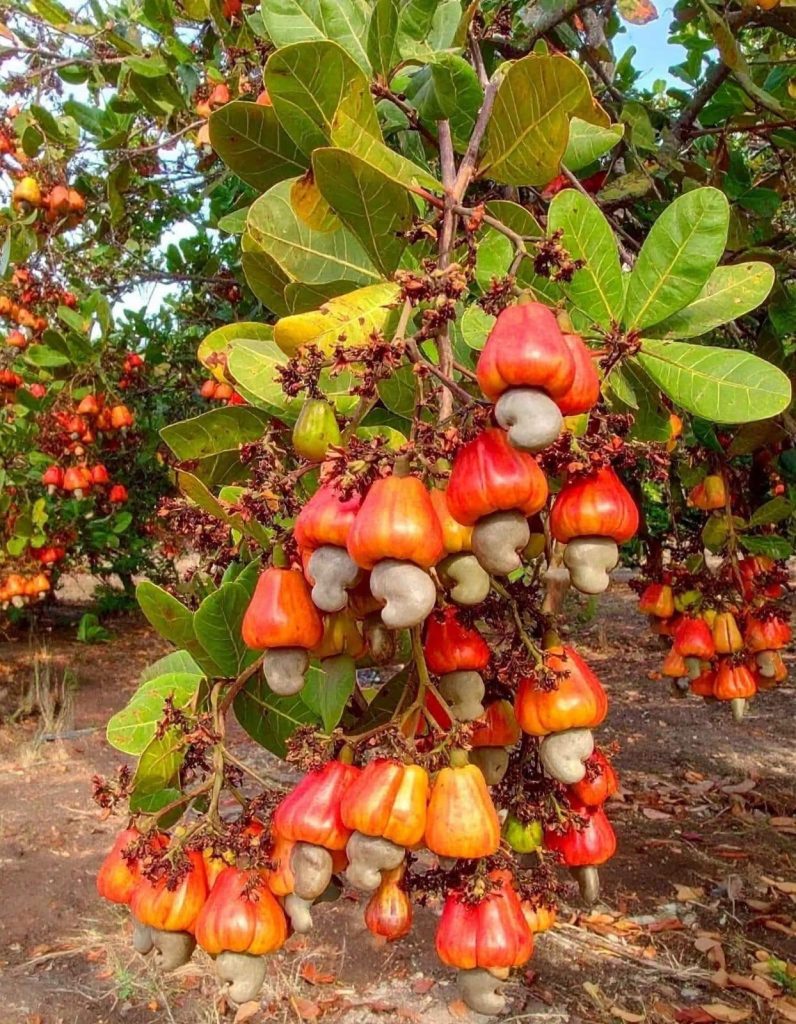
Cashew nuts come from the cashew tree. The tree is a tropical evergreen. The tree can grow 10 to 14 meters tall when fully mature. It produces two products: the cashew nut and the cashew apple.
The cashew nut is the seed that grows at the bottom of the cashew apple. The nut has a hard shell that contains a caustic oil. This oil can burn your skin. That is why farmers sell raw nuts to processors who have special equipment to remove the shell safely.
The cashew apple is the swollen fruit stalk above the nut. It is juicy and can be eaten fresh or processed into juice and wine. Most Kenyan farmers waste the cashew apple, but it can be an extra source of income.
The cashew tree is drought-tolerant once established. This makes it suitable for areas with low rainfall. It does not need much water and can survive in semi-arid conditions. This is why farmers in coastal counties are taking it up.
Cashew Nut Seedlings in Kenya
Cashew nut seedlings in Kenya are becoming more common. Farmers in coastal counties are starting to grow this tree and sell the nuts. More people are asking for cashew nut seedlings in Kenya because they have heard about the good prices this nut fetches.
When you buy cashew nut seedlings in Kenya, always check for KEPHIS certification. This tells you the seedlings are clean and free from diseases. Also look at the roots. They should be white or light brown, not dark or rotten. The seedlings should be hardened before you take them to the field.
Fruit Africa Veriplant has good cashew nut seedlings in Kenya. Our seedlings come from elite mother trees that produce well. This means your trees will have good genetics from the start. They will produce more nuts and stay healthier.
Our seedlings are grown in clean conditions. They are free from pests and diseases. They are also uniform, which means all your trees will grow at the same rate. This makes management easier because you can do everything at the same time.
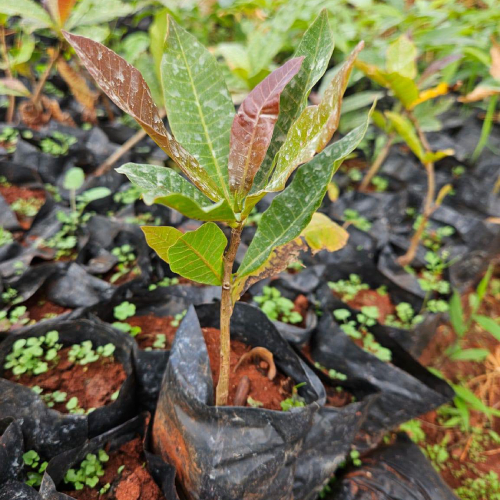
The seedlings we sell are about 6 to 12 months old. They are ready for transplanting. The root system is well developed. The stem is straight and strong. The leaves are green and healthy.
Cashew Nut Seedlings Price in Kenya
The price of cashew nut seedlings in Kenya depends on the nursery you buy from. At Fruit Africa Veriplant, our cashew nut seedlings are priced at Ksh500 each. This is a fair price for KEPHIS-certified seedlings that are well-rooted and hardened.
| Item | Details |
|---|---|
| Crop | Cashew Nut |
| Seedling price | Ksh 500 |
| Available varieties | KALRO improved varieties |
| Suitable areas | Coastal counties, warm lowland regions |
| Soil pH | 5.5 to 7.0 |
| Recommended spacing | 8m x 8m |
| Population per acre | 60 to 70 trees |
| Irrigation | Required during establishment |
| First production | 3 to 4 years after planting |
When you compare cashew nut seedlings price in Kenya, think about quality. Cheap seedlings may not be certified. They may have poor genetics. This leads to low yields and more disease problems. The cashew nut seedlings price in Kenya from Fruit Africa Veriplant gives you value for money.
Our cashew nut seedlings price in Kenya is Ksh500 each. This is for well-rooted, hardened, KEPHIS-certified seedlings. We deliver to farmers across the country. Contact us for bulk pricing.
If you buy 500 or more seedlings, we give a discount. Call us to discuss your order. We also offer after-sales support to help you get the most from your cashew nut farm.
Cashew Varieties Available in Kenya
KALRO has developed several improved cashew varieties that perform well in Kenyan conditions. These varieties are high-yielding, disease-resistant, and mature faster than older varieties.
KKorosho 81
KKorosho 81 is a high-yielding variety. It matures in about 3 years. The nuts are large and have good quality. This variety is resistant to powdery mildew, a common disease affecting cashew in coastal Kenya.
KKorosho 82
KKorosho 82 is another high-yielding variety. It also matures in about 3 years. The nuts are of good quality. It is resistant to powdery mildew. Farmers in coastal areas prefer this variety.
KKorosho 100
KKorosho 100 produces large nuts with excellent quality. It matures in about 3 years. The tree is productive and disease-resistant. This variety fetches good prices in the market.
KKorosho 75
KKorosho 75 is an early-maturing variety. It produces good quality nuts. The tree is disease-resistant. Farmers who want quick returns prefer this variety.
Other KALRO Varieties
KALRO has also developed other superior varieties including A41, A47, A81, A82, A90, A75/83, T83, and JK series. These varieties have good yield potential and are suited for different coastal areas.
Cashew Spacing and Population Per Acre
Spacing is important for cashew nut farming. The recommended spacing depends on the variety and the soil fertility.
The recommended spacing for standard planting is 8 metres between rows and 8 metres between plants. This gives you about 60 to 70 trees per acre.
For high-density planting, farmers use 5 metres by 4 metres. This gives about 200 trees per acre. High-density planting increases early production but requires more intensive management.
| Spacing | Population per Acre | Suitability |
|---|---|---|
| 8m x 8m | 60 to 70 trees | Standard recommendation |
| 7m x 7m | 80 to 90 trees | High density |
| 5m x 4m | 200 trees | High density planting |
Where Cashew Nuts Grow Best in Kenya
Cashew nuts grow best in warm, coastal areas with low to moderate rainfall. They are drought-tolerant once established.
Coastal Kenya: Kilifi, Kwale, Lamu, and parts of Taita Taveta. These areas have the warm, dry conditions that the tree needs. The temperature is consistently warm.
Lower Eastern Regions: Tharaka Nithi, Makueni, and parts of Embu. These areas also have suitable conditions for cashew farming.
The best altitude for cashew nuts is 0 to 800 meters above sea level. The tree can grow at higher elevations if the conditions are warm.
Climate Requirements
Cashew nuts like warm weather. The best temperature is between 20 and 35 degrees Celsius. The tree can handle short periods of dry weather because it is drought-tolerant.
Rainfall should be between 600 and 1,500 mm per year. The tree can handle short dry periods. If you live in a dry area, you will need to irrigate during establishment.
The tree needs full sunlight for good production. Plant it in an open area where it gets 6 to 8 hours of direct sunlight.
Soil Requirements
Cashew trees grow in many soil types. Sandy soil, loamy soil, and clay soil all work as long as water drains away. The best soil pH is between 5.5 and 7.0.
Add manure or compost to improve the soil. The tree does not need deep soil but the drainage must be good. Waterlogging will kill the tree. Avoid areas where water stays after rain because the roots will rot.
Test your soil before planting. This helps you know the pH and nutrient levels. You can then add what the soil needs.
Land Preparation
Clear the land first. Remove weeds, rocks, and anything else that could get in the way. Plough the land to break up the soil. Make sure water can drain away.
Test your soil before planting. This tells you the pH and nutrient levels. You can then add what the soil needs.
If the soil is too acidic, add lime. If the soil is too alkaline, add sulphur. Follow the recommendations from the soil test.
Cashew Planting Hole Size
Dig holes that are 60 centimetres deep, 60 centimetres wide, and 60 centimetres long. This gives the roots room to spread. Mix the topsoil with 20 kilograms of manure. Add 200 grams of DAP or NPK 17:17:17 per hole. Put this mixture back into the hole before planting.
The hole should be ready before the rainy season starts. This gives the soil time to settle.
How to Plant Cashew Seedlings
Plant the seedlings at the same depth they were in the nursery. The root collar should be at the same level as the soil surface. Firm the soil around the roots. Water immediately after planting. Put mulch around the plant to keep the soil moist.
Remove the plastic bag carefully. Do not break the root ball. If the roots are circling, loosen them gently.
Best Time to Plant
The best time to plant cashew nuts is during the rainy season. March to May or October to November are good times. The rain gives the seedlings water to establish themselves. If you have irrigation, you can plant anytime.
Avoid planting during the dry season. The seedlings will struggle without water.
Irrigation Requirements
Young trees need regular water for the first two years. Water weekly during dry spells. Give each tree 20 to 30 litres of water. Mature trees are drought-tolerant and do not need irrigation in normal conditions.
Do not irrigate during flowering, as wet conditions reduce pollination and encourage powdery mildew.
Fertilizer Requirements
Cashew is not a heavy feeder, but regular nutrient replacement improves yields, particularly on sandy coastal soils.
Apply fertilizer twice a year. Do it at the start of the rainy season and again three months later.
For young trees: Apply 100 grams of CAN per tree each time. Add 10 to 20 kilograms of manure per tree per year.
For mature trees: Apply 200 grams of NPK (15:15:15) per tree each time during the rainy seasons. Split into two applications (start of rains and mid-season). Add 10 to 20 kilograms of manure per tree per year.
Spread the fertilizer around the tree. Do not put it directly on the stem. Water after applying fertilizer.
Mulching
Put organic mulch around the base of the tree. Use wood chips, dry grass, or coffee husks. Mulch keeps moisture in the soil. It also stops weeds from growing. As it breaks down, it adds nutrients to the soil. Keep the mulch away from the stem to prevent rot.
Apply mulch twice a year. Add more when it breaks down.
Weed Control
Weeds compete with your trees for water and nutrients. They also bring pests and diseases. Keep the area around trees weed-free for the first three years. Mature orchards need regular weeding.
You can weed by hand or use a hoe. Be careful not to damage the shallow roots. Mulching also helps control weeds.
Pruning
Pruning shapes the tree and encourages new growth. It also improves air circulation and light penetration.
Young trees (years 1 to 3): Select three to four well-spaced primary branches to form a strong framework. Remove competing upright shoots. Cut back low-hanging branches that touch the ground.
Mature trees (year 4 onward): Prune after harvest before flowering begins. Remove dead, broken, and crossing branches. Open the canopy centre to allow sunlight and air movement, which reduces fungal disease.
Use sharp pruning tools. Clean them between trees to prevent disease spread.
Pests and Diseases
Common Pests
Tea Thrips: These tiny insects feed on leaves and flower stalks, causing curling and premature flower drop. Damage is most severe during flowering. Monitor regularly during dry periods. Control with neem oil or pyrethrum-based insecticides.
Stem and Root Borers: Larvae bore into the trunk and main branches, weakening trees and causing dieback. Prevention is the best approach. Keep trees healthy through proper nutrition and avoid wounding the bark during weeding. Remove and burn infested branches immediately.
Squirrel and Rodent Damage: Rodents climb trees and feed on developing nuts, particularly during dry periods. Control by keeping the orchard floor clean of fallen nuts, using metal bands around tree trunks to prevent climbing, and setting traps where damage is severe.
Common Diseases
Powdery Mildew: This fungal disease appears as white powdery patches on leaves, flowers, and young nuts. It thrives during cool, dry weather and can reduce yields significantly if untreated. Control by planting resistant varieties, ensuring proper spacing for air circulation, and applying sulphur-based fungicides when symptoms first appear.
Cashew Dieback Disease: This fungal disease causes branch dieback, reducing yields and eventually killing trees. Symptoms include blackening of branch tips, gum exudation, and wilting leaves. Management: Prune out infected branches 30 cm below visible symptoms. Burn prunings immediately. Apply copper-based fungicide after pruning. Maintain wide spacing and open canopies to reduce humidity.
Cashew Maturity and Harvest
When Trees Bear Fruit
Improved cashew varieties start bearing nuts in 3 to 4 years after planting. Full production comes in 6 to 8 years. The trees continue producing for many decades.
The main harvest season in coastal Kenya runs from October to February, depending on the timing of the dry season.
When Nuts Are Ready
Cashew nuts mature 60 to 70 days after flowering. The nut (the true fruit) develops first, followed by the swelling of the cashew apple. Harvest when the apple turns pink, red, or yellow and the nut at the tip appears grey and firm.
Collect fallen nuts and apples daily from the ground. Do not pull nuts from the tree—they are not fully mature until they drop naturally.
Drying and Storage
After harvest, separate the nut from the apple if you are not processing the apple. Spread nuts in a single layer on clean drying racks or mats. Sun-dry for 2 to 3 days until the kernels rattle inside the shell when shaken. Properly dried nuts (7-8% moisture content) store for 3 to 6 months in well-ventilated, dry conditions.
Critical warning: Do not attempt to crack the raw nut before processing. Cashew shells contain a caustic oil that burns skin and damages equipment.
Cashew Yield Per Tree
| Year | Expected Yield per Tree (kg) |
|---|---|
| Year 3-4 | 5 to 10 kg |
| Year 5-6 | 10 to 15 kg |
| Year 7+ | 20 to 30 kg |
A well-managed tree at peak production yields 20 to 30 kilograms per tree annually.
Cashew Yield Per Acre
At 65 trees per acre, a well-managed farm can produce 1,300 to 1,950 kilograms of raw cashew nuts per acre per year at peak production.
Cashew Farming Cost Per Acre
| Item | Estimated Cost (KES) |
|---|---|
| Seedlings (65 at Ksh500 each) | 32,500 |
| Land Preparation | 20,000 – 50,000 |
| Soil Testing | 5,000 – 10,000 |
| Manure and Compost | 20,000 – 30,000 |
| Planting Labour | 10,000 – 20,000 |
| Irrigation Equipment | 30,000 – 50,000 |
| Mulching Material | 10,000 – 15,000 |
| Fertilizer (first year) | 15,000 – 25,000 |
| Pest and Disease Control | 10,000 – 20,000 |
| Total Establishment Cost | 152,500 – 252,500 |
Cashew Farming Profit Per Acre
| Scenario | Yield (kg) | Price (KES/kg) | Revenue (KES) | Costs (KES) | Profit (KES) |
|---|---|---|---|---|---|
| Low | 1,300 | 80 | 104,000 | 152,500 | (48,500) |
| Average | 1,600 | 100 | 160,000 | 202,500 | (42,500) |
| High | 2,800 | 150 | 420,000 | 252,500 | 167,500 |
Cashew Market in Kenya
The cashew market in Kenya has opportunities in local processing and export.
Local Processing: Processors in Kilifi, Kwale, and Mombasa are actively seeking raw nuts. Some companies have processing capacity but currently process less than capacity due to lack of raw material. Farmers can access these markets through contract farming.
Farm-Gate Prices: Farm-gate prices for raw, sun-dried nuts vary by season, quality, and negotiation power. Prices typically range from KSh 50 to KSh 150 per kilogram for properly dried nuts with good kernel fill.
Export Market: The export market demands high quality, consistent supply, and certification.
How to Find Buyers
Approach processors with samples of your nuts. Show them what you have. Give them your contact details.
Join farmer groups. Cooperatives can help you find buyers and negotiate better prices.
Contact processors directly for current buying prices before planting. Contract farming arrangements provide guaranteed prices and off-take, reducing market risk.
Use online platforms. There are places where farmers connect with buyers.
Frequently Asked Questions
What is the price of cashew nut seedlings in Kenya? The price is Ksh500 each from Fruit Africa Veriplant.
Where can I buy cashew nut seedlings in Kenya? You can buy from Fruit Africa Veriplant in Murang’a, Nairobi, and Embu. Call +254714994444 or email sales@fruitafrica.org.
How many cashew nut seedlings do I need for one acre? You need about 60 to 70 at 8m by 8m spacing.
What is the spacing for cashew nut seedlings? Use 8 metres between rows and 8 metres between plants.
Which areas in Kenya are best for cashew nuts? Coastal counties (Kilifi, Kwale, Lamu), and parts of Lower Eastern.
How long do cashew nut seedlings take to mature? Improved varieties start bearing nuts in 3 to 4 years.
What soil pH do cashew nut seedlings need? They need pH between 5.5 and 7.0.
Are cashew nut seedlings profitable in Kenya? Yes, with proper management and good varieties.
What is another name for cashew? Cashew is also known as korosho in Swahili.
Can cashew grow in dry areas? Yes, cashew is drought-tolerant once established.
Get Cashew Nut Seedlings in Kenya
Ready to start your cashew nut farm? Get cashew nut seedlings in Kenya from Fruit Africa Veriplant. We offer KEPHIS-certified seedlings that are well-rooted, hardened, and ready for transplanting. Our seedlings are priced at Ksh500 each. We deliver to farmers across the country.
Contact Fruit Africa Veriplant at +254714994444 or sales@fruitafrica.org to place your order.

Reviews
There are no reviews yet.