

Description
Nectarine seedlings in Kenya at KSh 1,500 from Fruit Africa Veriplant. Compare varieties, chilling needs, planting, spacing, yield, costs, profitability and ordering.
Nectarine Seedlings in Kenya: Price, Varieties, Planting, Yield and Profit
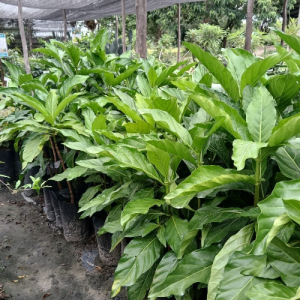
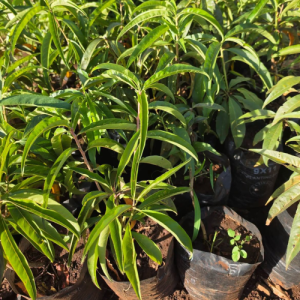
Fruit Africa Veriplant supplies grafted nectarine seedlings at KSh 1,500 each. These are low-chill selections intended for Kenyan highland conditions, where the crop can produce fruit provided the right cultivar is matched to the site.
Nectarine seedlings are not a crop you plant on a guess. The tree needs enough winter chilling to break dormancy and set fruit. A variety that suits one farm may fail on another, even within the same county, if local night temperatures and the length of the cool season do not match the cultivar’s chilling requirement.
This guide answers the questions a farmer asks before spending money on nectarine seedlings. It covers price, variety selection, chilling requirement, site suitability, trees per acre, land preparation, planting, seedling handling, irrigation, nutrition, pruning, fruit thinning, pests and diseases, yield expectations, establishment costs, profitability, and where to sell the fruit. It closes with a buying checklist, a commercial section for Fruit Africa Veriplant, and answers to common questions.
The working assumption throughout is a spacing of 6 metres by 6 metres, which gives approximately 110 to 112 trees per acre. Grafted trees can begin light fruiting in two to three years under good management. These figures are planning guides, not guarantees.
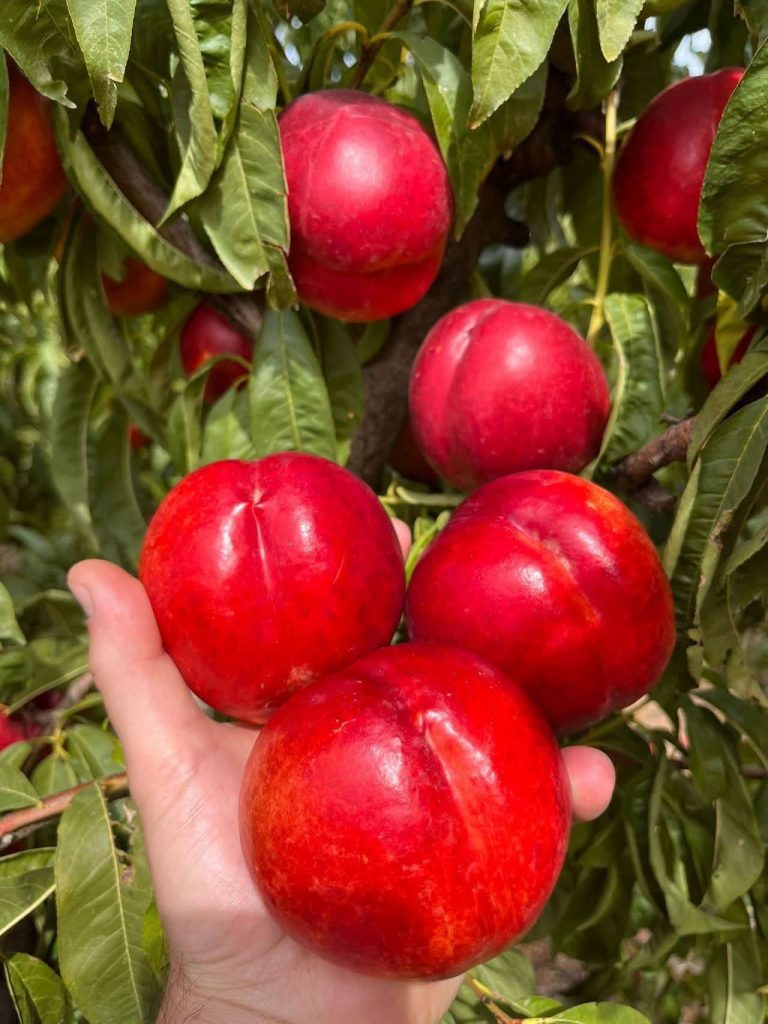
Nectarine Fruits
Why Nectarine Farming Deserves a Serious Look in Kenya
Kenya has a long history with deciduous fruit. Apples, plums, and peaches have been grown in the highlands for close to a century. Nectarines belong to that same family. They share the same basic climate needs, the same soil preferences, and much of the same management.
What has held nectarines back is not climate. It is planting material. Most nectarine varieties bred in temperate countries need a long, cold winter to break dormancy and set fruit. Kenya does not have that kind of winter. Low-chill varieties, bred to fruit with far less cold exposure, are what make nectarine farming possible here. Until recently, these varieties were hard to find in Kenyan nurseries. That is changing.
The other factor is market. Nectarines are a premium fruit. Consumers who know them are willing to pay for them. The fruit sells in supermarkets, hotels, and specialty outlets. For a highland farmer looking for a crop that can generate income from a small acreage, nectarines fit that profile.
But nectarines are not a crop you plant everywhere. The tree has specific requirements. Get the variety wrong, and you can wait years for fruit that never comes. Get the site wrong, and the tree will struggle through every season. This guide is written to help you avoid those mistakes before you spend money on seedlings.
Nectarine Seedlings Price in Kenya
Fruit Africa Veriplant currently sells grafted nectarine seedlings at KSh 1,500 each.
This is the seedling price only. It does not include orchard establishment costs such as land preparation, planting holes, manure, fertiliser, irrigation, labour, staking, mulching, pest management, harvesting, packaging, transport, or replacement trees.
Confirm the current price and availability before ordering. Nursery prices and stock can change with season and batch.
Use the following examples to estimate seedling cost for different spacings.
| Spacing | Trees per Acre | Seedling Cost at KSh 1,500 |
|---|---|---|
| 6m by 6m | About 112 | About KSh 168,000 |
| 5m by 5m | About 162 | About KSh 243,000 |
| 4m by 4m | About 253 | About KSh 379,500 |
These figures cover seedlings only. A full orchard budget must also include land preparation, planting holes, manure, fertiliser, irrigation, labour, staking, mulching, pest management, disease control, harvesting, packaging, transport, market costs, and replacement trees.
Tree population is not automatically suitable for every orchard. Spacing depends on cultivar, rootstock vigour, pruning system, soil, machinery access, and management intensity. A farmer planting at 4 metres by 4 metres must be prepared for more intensive pruning and canopy management than one planting at 6 metres by 6 metres.
The seedling is the starting point of the investment, not the whole cost. Farmers who plan an orchard budget around the seedling price alone often underestimate what it takes to bring the trees to production. Land preparation, water, labour, and pest management all add up over the first three years before the first meaningful harvest.
Where to Buy Nectarine Seedlings in Kenya
Fruit Africa Veriplant supplies grafted nectarine seedlings to Kenyan farmers and orchard investors. The company operates through fruitafrica.org and serves farmers in the highland counties where the crop is suited.
Farmers can reach Fruit Africa Veriplant through the following channels:
- Phone: 0714 994 444
- WhatsApp: https://wa.link/di12my
- Email: sales@fruitafrica.org
- Contact page: https://fruitafrica.org/contact-us/
- Request for quotation: https://fruitafrica.org/request-for-quotation/

Nectarine Seedlings at Fruit Africa Veriplant
For orchard-scale orders, provide the following information when requesting a quotation. County and farm location. Acreage you intend to plant. Number of seedlings required. Preferred cultivar. Intended planting date. Delivery location. This helps Fruit Africa Veriplant match the order to your site and planting schedule.
Before buying nectarine seedlings from any supplier, verify the cultivar. Ask for the cultivar name. Ask whether it is grafted or seed-grown. Ask for its chilling requirement. Ask whether it has been tested under Kenyan conditions. A supplier who cannot answer these questions is not a reliable source for commercial nectarine planting material.
It also helps to visit the nursery if you can. Inspect the seedlings yourself. Look at the graft union, the leaves, the stem, and the root ball. A nursery that welcomes inspection and answers questions clearly is more reliable than one that does not.
Nectarine Varieties for Kenya
Variety choice is the most important decision a nectarine farmer makes. The cultivar determines whether the tree fruits at all on your site, when it matures, what the fruit looks like, and how it sells.
Nectarine cultivars differ mainly in chilling requirement, fruit characteristics, and maturity timing. A variety bred for a temperate winter needs hundreds of chill hours. A low-chill variety bred for warm or highland tropical conditions needs far fewer.
For Kenya, the working range sits with low-chill cultivars. Fruit Africa Veriplant supplies low-chill grafted nectarine planting material. Ask for the current cultivar name, chilling requirement, and availability before ordering.
When comparing varieties, consider these characteristics.
Chilling requirement. The number of hours below roughly 7°C that the tree needs during dormancy. A variety with a high chilling requirement will not fruit reliably in most Kenyan highland zones. Confirm the chill hours before ordering.
Fruit size. Fruit size varies by cultivar. Larger fruit generally fetches a better price but may need heavier fruit thinning to reach full size.
Skin colour. Nectarines range from yellow to deep red. Red blush is often preferred in fresh markets. Yellow varieties also have buyers.
Flesh colour. Flesh can be white, yellow, or red near the stone. White-fleshed nectarines are often sweeter and lower in acid. Yellow-fleshed types are more common in commercial plantings.
Maturity timing. Early, mid-season, and late cultivars ripen at different times. A farmer planting more than one cultivar can spread harvest over a longer window and reduce pressure on labour and market.
Market use. Some cultivars are better for fresh market. Others suit processing. Confirm what the buyer wants before selecting a cultivar.
Suitability. Not every cultivar performs the same at every altitude. A cultivar that fruits well at 2,000 metres may behave differently at 1,700 metres. Match the cultivar to your site.
Stone adhesion. Some nectarines are freestone, meaning the flesh separates easily from the stone. Others are clingstone, where the flesh holds tight to the stone. Freestone types are easier to prepare for fresh consumption and processing. Clingstone types are often used for canning.
Disease tolerance. Some cultivars show better tolerance to leaf curl, brown rot, or bacterial canker than others. Where disease pressure is high, cultivar choice matters as much as spray programmes.
Do not assume any single cultivar is best for every farm. Confirm the cultivar name and chilling requirement with the supplier before ordering.
If Fruit Africa Veriplant does not confirm multiple cultivars, do not assume more than one is available. Ask what is in stock and what its chilling requirement is. Match that information to your site.
Understanding Chilling Requirement
Chilling is the most technical factor in nectarine farming and the one most often misunderstood. Get it wrong and the tree can grow for years without producing a commercial crop.
Nectarine trees enter dormancy during the cool part of the year. During dormancy, the tree needs a certain amount of cold exposure to reset its internal cycle. This cold exposure is measured in chill hours, the cumulative number of hours the tree spends below a threshold temperature, usually around 7°C.
When a tree receives enough chill, it breaks dormancy properly, flowers evenly, and sets fruit. When it does not receive enough chill, the tree may leaf out late and unevenly, flower poorly, or fail to set fruit at all. The tree can look healthy while producing nothing of commercial value.
Cultivars differ widely in chilling requirement. A traditional temperate variety may need 800 to 1,000 chill hours. A low-chill variety bred for warm climates may need far fewer. Nectarine cultivars differ widely in chilling requirement. Farmers should ask for the exact cultivar and its stated chilling requirement before ordering.
Altitude is a useful screening indicator because higher altitudes generally provide more chill hours. But altitude alone does not determine whether a site will satisfy a cultivar’s chilling requirement. Local temperature patterns, cloud cover, wind, and the length of the cool season all matter. Two farms at the same altitude in the same county can have different chill accumulation depending on their specific microclimate.
This is why farmers should confirm the specific cultivar’s chilling requirement before ordering nectarine seedlings. Compare that figure with the conditions on your own farm. Do not assume that a seedling will fruit simply because the nursery is at a similar altitude to your land.
A farmer at 2,100 metres in Nyandarua may have colder nights and more chill hours than a farmer at 2,100 metres in a different county with more cloud cover and warmer nights. The altitude figure alone does not tell you which farm will satisfy the cultivar’s chilling requirement. You need to know how cold your nights actually get and for how long.
If you are unsure about your site’s chill accumulation, talk to other farmers in your area who grow peaches or plums. Ask how their trees perform. Ask whether they get consistent flowering and fruit set. Their experience can give you a practical indication of whether your area provides enough chill for the cultivar you are considering.
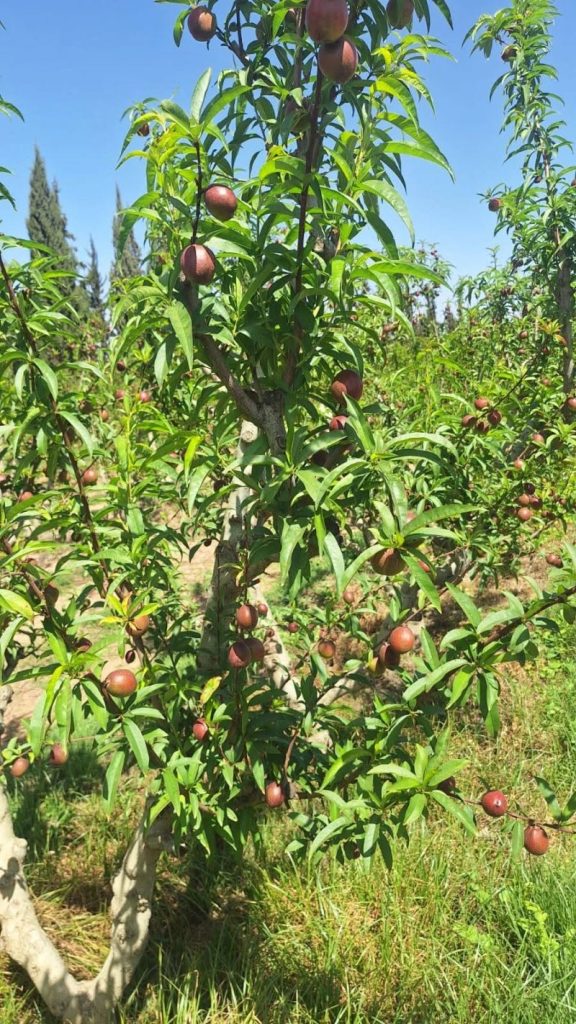
Nectarine Tree
Ecological Conditions for Nectarines in Kenya
Site suitability depends on several factors working together. Altitude is only one of them.
Altitude. Nectarines perform best in Kenyan highland areas, generally above 1,700 metres. Higher altitudes provide more chill hours but increase frost risk during flowering. Lower altitudes may not provide enough cool nights for proper fruit development. Altitude is a screening factor, not a substitute for checking the cultivar’s chilling requirement.
Night temperatures. Cool nights support sugar accumulation and fruit colour. Extended warm nights reduce fruit quality and may interfere with dormancy.
Chilling accumulation. The cumulative cold exposure the tree receives during dormancy. Confirm the cultivar’s requirement and compare it with your site.
Frost risk. Frost during flowering damages or destroys the crop. Sites with late frost risk should be avoided, or cultivars with later flowering times selected. Valleys and low-lying areas collect cold air and are more prone to frost than slopes.
Rainfall pattern. Nectarines perform best with a defined dry season that lets the tree rest and triggers flowering. Rainfall spread evenly through the year, without a distinct dry spell, tends to give poor and irregular flowering.
Soil drainage. Nectarine roots cannot tolerate standing water. Waterlogged soil leads to root rot. On sites with questionable drainage, plant on raised beds or ridges.
Soil pH. Nectarines prefer slightly acidic to neutral soil. Test before planting and correct with lime if needed.
Sunlight. Nectarines need at least six hours of direct sunlight daily. Full sun is better. Shading reduces fruit sweetness and colour.
Wind exposure. Moderate airflow reduces fungal disease pressure. Strong, sustained wind during flowering knocks blossoms and young fruit off the tree.
Irrigation availability. Reliable water supports consistent production, especially during fruit development.
Cultivar. The cultivar determines chilling requirement, maturity timing, and fruit characteristics. Match the cultivar to your site.
Site suitability varies between farms even within the same county. A farm on a slope with good air drainage may escape frost that damages a neighbouring farm in a valley. A farm with sandy soil may drain well while a nearby farm on clay struggles. Farmers should check their specific conditions before ordering nectarine seedlings.
Do not rely on county-level generalisations. Murang’a County has farms at different altitudes, with different soil types and different rainfall patterns. The same is true for Kiambu, Nyandarua, Nyeri, Embu, Meru, Nakuru, and Kericho. What matters is the specific conditions on your land.
Regions in Kenya Where Nectarines Can Be Grown
Several parts of Kenya have conditions that suit nectarines. These areas generally overlap with regions that already grow temperate fruit such as peaches, plums, and apples.
Murang’a County, particularly the higher wards toward the Aberdare foothills, combines suitable altitude and rainfall. Fruit Africa Veriplant’s nursery operations are based here.
Kiambu County, including Limuru, Tigoni, and Kikuyu, sits at an altitude that has long supported temperate fruit trees.
Nyandarua County, including Ol Kalou, Njabini, and the areas around the Aberdare range, combines high altitude with a defined dry season.
Embu County, moving up toward the slopes of Mount Kenya, offers suitable conditions. Fruit Africa Veriplant has a presence here.
Nyeri County, particularly the higher wards, offers suitable altitude and rainfall.
Meru County, in the cooler zones around Timau and the upper reaches toward Mount Kenya, has suitable conditions.
Nakuru County, including Molo and Kuresoi, and the Kericho highlands, fall within a workable altitude and rainfall band.
Parts of Elgeyo Marakwet and Uasin Gishu also have suitable microclimates.
Conditions vary within counties. A farm at 1,800 metres in one part of a county may have different night temperatures and rainfall from a farm at the same altitude in another part. Farmers outside these areas should not assume their location is unsuitable without checking altitude, temperature patterns, and rainfall directly.
If you are in a county not listed here, do not dismiss the crop without checking your own conditions. The list above covers areas with a known history of temperate fruit growing. It is not a complete map of every suitable microclimate in Kenya. A farm at the right altitude with the right rainfall pattern and the right cultivar can succeed even if it sits outside a traditional growing zone.
How Many Nectarine Trees Fit on One Acre?
Tree population depends on spacing. Wider spacing gives each tree more room to develop a full canopy and makes orchard management easier. Tighter spacing gives more trees per acre but requires more disciplined pruning.
One acre is approximately 4,047 square metres.
At 6 metres by 6 metres spacing, each tree occupies 36 square metres. 4,047 divided by 36 gives roughly 112 trees per acre.
At 5 metres by 5 metres spacing, each tree occupies 25 square metres. 4,047 divided by 25 gives roughly 162 trees per acre.
At 4 metres by 4 metres spacing, each tree occupies 16 square metres. 4,047 divided by 16 gives roughly 253 trees per acre.
| Spacing | Trees per Acre | Management Notes |
|---|---|---|
| 6m by 6m | About 112 | Standard for commercial orchards |
| 5m by 5m | About 162 | Higher density, requires pruning discipline |
| 4m by 4m | About 253 | High density, needs intensive management |
For most farmers starting out, 6 metres by 6 metres is a practical spacing. It balances tree population with airflow, access for harvesting, and long-term management. The calculations in this guide use 110 trees per acre as a planning figure.
Tighter spacing is not automatically better. A 4 metre by 4 metre planting requires strong canopy management, regular pruning, and careful attention to airflow to reduce disease pressure. Rootstock vigour, cultivar growth habit, pruning system, soil, machinery access, and management intensity all affect the right spacing for a particular orchard.
A farmer planting 253 trees per acre must be prepared to prune every year, manage the canopy actively, and monitor for disease. If that level of management is not realistic, a wider spacing is a better choice. Fewer trees that receive good management often outperform more trees that receive poor management.
How to Prepare Land for Nectarine Planting
Land preparation begins months before the seedlings arrive. Rushing this stage is one of the most common reasons young orchards struggle.
Clear the site of existing vegetation, tree stumps, and perennial weeds. Couch grass and other aggressive weeds compete with young roots if left in the soil.
Plough the land to a depth of at least 30 centimetres. Follow with harrowing to break up large clods and create a fine, workable tilth.
Take a soil sample at this stage. Have it tested for pH and basic fertility. Correcting a soil pH problem before planting is easier and cheaper than trying to fix it around an established tree. If the soil tests acidic, incorporate agricultural lime at the rate recommended by the soil test results. Work it into the top 20 to 30 centimetres of soil at least a month before planting.
Check drainage carefully. On sites with a history of waterlogging, plant on raised mounds or ridges roughly 30 to 40 centimetres high. This lifts the root zone above the water table during wet periods.
On sloped land, mark out contour lines and plant along them. Contour planting controls soil erosion and makes orchard operations more manageable.
Mark out your planting layout before digging holes. Use pegs and string lines to lay out straight rows. A well-aligned orchard is easier to spray, mulch, and harvest.

Ripe Nectarines on a Tree
How to Prepare Nectarine Planting Holes
Dig planting holes roughly 60 centimetres wide, 60 centimetres long, and 60 centimetres deep. Dig them at least two to three weeks before planting. This gives the soil time to aerate and any incorporated manure time to begin breaking down.
Separate topsoil from subsoil as you dig. Keep the darker topsoil on one side and the lighter subsoil on the other.
Mix the topsoil with well-rotted farmyard manure or compost. The quantity depends on the manure available and the soil condition. As a working guide, 40 to 60 kilograms per hole is reasonable. Add a phosphorus-rich planting fertiliser if your soil test shows phosphorus deficiency. Mix thoroughly so there are no concentrated pockets that could scorch young roots.
Where fertiliser rates depend on soil test results, follow the test recommendations rather than a fixed recipe.
Refill the hole with the amended soil mixture until it is roughly two-thirds full. Water it lightly to help it settle.
How to Plant Nectarine Seedlings
Plant at the onset of the rainy season. In Kenya, this generally means March to May or October to November. If you have irrigation, planting can be done at other times.
Water the seedling thoroughly an hour or two before planting. This makes it easier to remove the seedling from its bag without tearing roots.
Remove the seedling from its container carefully. Cut the bag away rather than pulling it off. Pulling can strip fine roots from the root ball.
Place the seedling in the centre of the hole. The graft union, the visible swelling or bend near the base of the stem, should sit clearly above the final soil line. Burying the graft union is one of the most damaging mistakes a new grower can make. Soil contact with the union can allow roots to form from the fruiting variety itself, bypassing the rootstock. It can also create an entry point for soil-borne disease.
Backfill around the roots with the reserved soil mixture. Firm gently to remove air pockets. Do not compact the soil so hard that it restricts root penetration.
Water immediately and generously. Give each newly planted tree at least 15 to 20 litres of water right after planting. This settles the soil around the roots and reduces transplant shock.
Stake the tree on windy sites. Drive a stake into the ground close to the trunk, avoiding the root ball. Tie the young tree loosely with soft ties that will not cut into the bark as the trunk thickens.
Apply organic mulch in a ring around the tree, extending to roughly the edge of the planting hole. Keep mulch a few centimetres clear of the trunk to avoid collar rot. Mulch conserves moisture, suppresses weeds, and moderates soil temperature.
Monitor the young trees weekly for the first month. Check for aphids on new shoots and for any leaf spotting that might indicate poor airflow or drainage issues.
What to Do When Nectarine Seedlings Arrive
The period between receiving your seedlings and getting them into the ground is when many well-planned orchards lose their first trees to poor handling.
Inspect every seedling as soon as it arrives. Check that the potting bag is intact and the soil is moist, not bone dry and not waterlogged. Look at the stem for the graft union and confirm it looks healed and callused rather than fresh or oozing. Check the leaves for colour and turgidity. Wilted, yellowing, or blackened leaves suggest stress during transport.
If you cannot plant immediately, place the seedlings in a shaded area. Never leave them in direct sun. Keep the growing medium moist without letting it become soggy. Planting within 24 to 48 hours of arrival gives the best results.
Water each seedling bag thoroughly an hour or two before planting. This makes it easier to slide the root ball out without tearing roots.
Once planted, resist the urge to fertilise heavily in the first few weeks. A newly transplanted tree is focused on root establishment. Pushing top growth too early with nitrogen-heavy fertiliser can outpace the root system’s ability to support it.
Watering, mulching, and pest monitoring are the priorities for the first month.
Watering Nectarine Trees
Young nectarine seedlings need consistent moisture. Water two to three times a week for the first six to eight weeks in the absence of rain. Adjust based on soil moisture and weather conditions. Reduce frequency as the root system establishes.
Once established, nectarine trees do best with deep, infrequent watering rather than frequent shallow watering. Deep watering encourages roots to grow downward in search of moisture, building a more drought-resilient tree.
Irrigation frequency depends on soil type, rainfall, tree age, canopy size, weather, irrigation method, and soil moisture. There is no single schedule that suits every farm. Check the soil around the root zone before deciding to irrigate. If the soil is moist a few centimetres below the surface, the tree likely has enough water.
Mulch reduces water loss. A good layer of organic mulch can cut irrigation frequency.
During fruit development, consistent moisture supports good fruit size and quality. Irregular watering during this period can cause fruit cracking. Once the fruit is mature and harvest is approaching, reduce irrigation slightly to concentrate sugars and improve flavour.
Manure and Fertiliser for Nectarines
Fertiliser application should follow the tree’s growth stage and soil test results rather than a fixed calendar.
In the first two years, focus on balanced nutrition to support steady vegetative growth. Apply a compound fertiliser with roughly equal nitrogen, phosphorus, and potassium two to three times during the growing season. Where soil test results are available, follow the recommended rates.
Once the tree begins fruiting, shift toward a fertiliser programme with slightly higher potassium content. Potassium plays a central role in fruit sizing and sugar development.
Fertiliser rates should be based on soil test, tree age, crop load, growth, leaf condition, and expected yield. As a general working guide, a mature fruiting tree may receive 300 to 500 grams of a balanced NPK fertiliser per year, split across two to three applications, supplemented with well-rotted manure worked into the soil around the drip line. This is a guide, not a universal prescription.
Do not fertilise on a fixed calendar without considering your soil test and the tree’s appearance. Yellowing leaves, poor growth, and small fruit are signals. Address the specific deficiency rather than applying a generic blend.
Nitrogen supports leaf and shoot growth. Phosphorus supports root development and flowering. Potassium supports fruit size, colour, and sugar content. Each nutrient plays a different role. A soil test tells you which nutrients your soil lacks and which it has in sufficient supply.
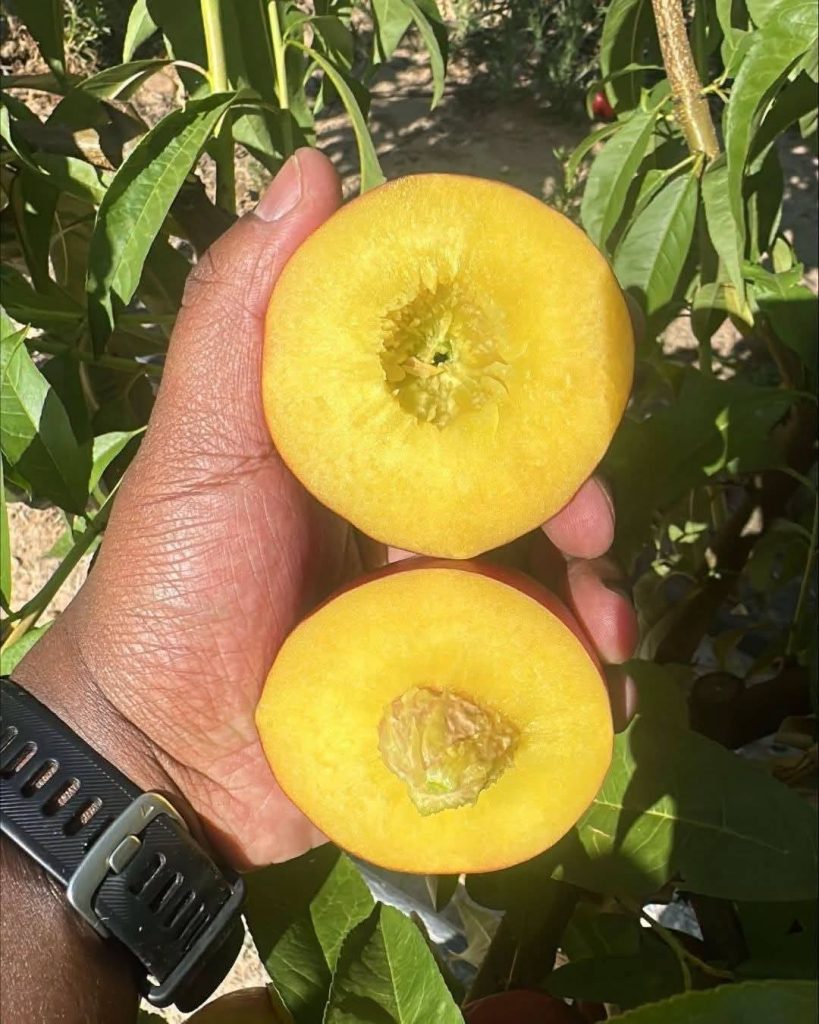
Sliced Nectarine Fruit
Pruning Nectarine Trees
Pruning is not optional for nectarines. This is where many first-time growers underestimate the work involved.
Nectarines fruit on wood that grew during the previous season. A tree left unpruned will gradually push its fruiting wood further out toward the canopy edges. This results in smaller fruit, reduced yield, and a tree that becomes harder to manage.
Prune once a year, ideally after harvest. Timing should consider local harvest and growth cycles. Remove dead, damaged, or crossing branches. Thin out crowded interior growth to let light penetrate the canopy. Cut back a portion of the previous season’s growth to encourage strong new fruiting wood for the following year.
An open, vase-shaped canopy with good light penetration to the centre of the tree is the target shape for most commercial orchards.
During the first two years, focus on training the tree. Select three to five main branches and remove competing growth. This establishes the structure that will support fruit production later.
Once the tree is mature, annual pruning maintains the balance between vegetative growth and fruiting wood. Remove water sprouts, which are vigorous vertical shoots that consume energy without producing fruit. Thin the canopy to allow light and air to reach the inner branches.
Pruning tools should be sharp and clean. Disinfect them between trees to prevent the spread of disease.
Fruit Thinning
Thinning young fruit improves the size and quality of what remains on the tree. When a heavy fruit set occurs, remove a portion of the smallest or poorly positioned fruit while they are still small. This directs the tree’s energy into fewer, larger fruit. Larger fruit typically fetch a better price and are less likely to cause branch breakage from excess weight.
Thinning also reduces the risk of alternate bearing, where a heavy crop one year is followed by a light crop the next. By reducing the fruit load, the tree conserves resources for the following season.
The timing and intensity of thinning depend on the cultivar, the tree’s age, and the market. Fruit intended for premium markets may need heavier thinning to reach the size buyers want. Fruit for processing may need less.
Pests and Diseases Affecting Nectarines
Aphids are among the most common pests on young nectarine growth. They cluster on tender new shoots and the undersides of leaves, feeding on plant sap and transmitting viral diseases between trees. Curled, distorted new leaves and a sticky honeydew residue are common signs. Regular inspection of new growth allows early intervention.
Fruit flies present a serious threat once trees begin bearing. Female flies lay eggs inside developing fruit. The resulting larvae render the fruit unmarketable. Manage fruit fly pressure through orchard sanitation, collecting and destroying fallen or damaged fruit promptly, and pheromone-based traps hung through the orchard from the point fruit begins to colour.
Mites can build up on nectarine leaves, particularly in dry, dusty conditions. They cause stippling and leaf bronzing. Monitoring and, where necessary, appropriate treatment reduce damage.
Nematodes in the soil affect root health over time. This is particularly true on sites where stone fruit has been grown previously. A soil test before planting, combined with rootstocks bred for nematode tolerance where available, reduces the risk.
Leaf curl, caused by the fungus Taphrina deformans, appears during cool, wet conditions around bud break. New leaves pucker, thicken, and take on a reddish or yellowish distortion before dropping. Once symptoms appear, no treatment reverses the damage on that leaf. Management relies on preventive fungicide application timed to bud swell.
Brown rot affects blossoms and ripening fruit, particularly during humid conditions. Flowers wilt and brown rapidly. Mature fruit develop soft, brown, spreading lesions. Good orchard airflow through proper spacing and pruning forms the backbone of management. Prompt removal of infected fruit and blossoms also helps.
Bacterial canker appears as sunken, dark lesions on branches and trunks, sometimes oozing gum. It is more likely on trees already stressed by poor drainage, mechanical injury, or nutrient deficiency. Remove and burn infected branches, cutting well back into healthy wood. Disinfect pruning tools between cuts.
For chemical control, use only products registered for the crop and follow the label instructions. Respect pre-harvest intervals. Use protective equipment. Combine chemical control with orchard sanitation, monitoring, pruning for airflow, removal of infected material, and integrated pest management.
A spray programme alone will not control pests and diseases. Orchard hygiene, airflow, and timely intervention all matter. A well-managed orchard with good airflow and clean sanitation needs fewer chemical inputs than a crowded, neglected one.
Nectarine Yield Per Tree and Per Acre
Kenyan commercial nectarine yield data is limited. The figures below are financial planning assumptions, not guaranteed yields. They help farmers model costs and returns. Actual results vary by site, cultivar, management, and season.
Yield from a nectarine orchard builds gradually.
In year one and year two after planting, expect no commercial harvest. The tree’s energy goes into building root structure, trunk strength, and canopy.
By year three, a portion of the orchard, typically the stronger trees, begins bearing lightly.
Year four generally sees a meaningful increase.
From year five onward, the orchard may reach fuller production if management has been consistent.
The table below shows planning scenarios at 110 trees per acre.
| Scenario | Yield per Tree | Total Yield at 110 Trees |
|---|---|---|
| Conservative | 10 kg | 1,100 kg |
| Middle planning | 20 kg | 2,200 kg |
| Higher management | 30 kg | 3,300 kg |
These are modelling scenarios. They are not guaranteed Kenyan yields.
A farmer must also distinguish between total fruit harvested, marketable fruit, fruit sold, and actual farmer income. Not all harvested fruit reaches the buyer in saleable condition. Sorting, grading, and rejection reduce the volume that generates revenue. If 20 percent of the harvest is rejected or unsold, the revenue is based on the remaining 80 percent.
Factors affecting yield include cultivar, rootstock, tree age, tree population, soil, water, nutrition, pruning, fruit thinning, pollination, pest control, disease management, and climate.
Cost of Production Per Acre
Establishment costs vary by labour rates, distance, manure availability, irrigation, land preparation method, seedling transport, farm location, fencing, water source, and soil amendments. The figures below are illustrative planning allowances, not actual costs for every farm.
Seedling cost is calculated from the current KSh 1,500 price. At 110 trees per acre, seedling cost is approximately KSh 165,000.
Other cost categories to include in your own budget:
| Cost Category | Notes |
|---|---|
| Seedlings | 110 trees at KSh 1,500 |
| Land preparation | Clearing, ploughing, harrowing, marking |
| Planting holes | Labour for digging and preparation |
| Manure and compost | Quantity depends on soil and availability |
| Planting fertiliser | Based on soil test |
| Irrigation | System installation if needed |
| Labour | Planting, weeding, pruning, training |
| Staking | Materials and labour |
| Mulching | Materials and labour |
| Pest and disease management | Monitoring and control |
| Harvesting | Labour and containers |
| Sorting and packaging | Market-dependent |
| Transport | Farm to buyer |
| Replacement trees | For gaps in the orchard |
| Market costs | Depending on channel |
A commercial budget for a one-acre orchard using 110 trees may fall in the range of KSh 250,000 to KSh 300,000 for first-year establishment, depending on local rates and inputs. This is an illustrative planning model, not a fixed figure.
Year two costs, with the orchard established but not yet fruiting, are lower. Year three costs rise as fruiting begins. From year four onward, annual maintenance costs settle at a level that depends on labour, inputs, and market distance.
A farmer must also budget for the costs that continue every year. These include weeding, pruning, pest management, fertiliser, harvesting, and transport. These costs do not stop once the orchard is established. They continue for the life of the tree.
Profitability Per Acre: A Sensitivity Model
Profitability depends on yield, marketable percentage, selling price, and operating costs. Gross revenue is not profit.
Use the sensitivity table below to estimate gross revenue at different yields and prices.
| Yield | Price at KSh 250/kg | Price at KSh 400/kg | Price at KSh 500/kg |
|---|---|---|---|
| 1,100 kg | KSh 275,000 | KSh 440,000 | KSh 550,000 |
| 2,200 kg | KSh 550,000 | KSh 880,000 | KSh 1,100,000 |
| 3,300 kg | KSh 825,000 | KSh 1,320,000 | KSh 1,650,000 |
KSh 400 per kilogram is an illustration for modelling. It is not a verified Kenyan farm-gate price. Farmers should check current prices with local buyers before planting.
Net income requires deducting actual annual costs. These include orchard maintenance, harvesting labour, grading, packaging, transport, irrigation, crop protection, fertiliser, market costs, rejected fruit, and other operating expenses.
Do not treat gross revenue as profit. Do not assume a specific payback period without accounting for actual yield, marketable percentage, selling price, and operating costs.
The time required to recover establishment costs depends on actual yield, marketable percentage, selling price, and operating costs.
If a farmer harvests 2,200 kilograms, sells 80 percent at KSh 400 per kilogram, and spends KSh 120,000 on annual operating costs, the calculation looks like this. Marketable fruit is 1,760 kilograms. Gross revenue is KSh 704,000. Operating surplus before establishment recovery is KSh 584,000. That surplus must then cover the establishment investment over time.
These numbers show why marketable percentage and selling price matter as much as yield. A farmer with high yield but poor market access can earn less than a farmer with moderate yield and a reliable buyer.
Where Can Farmers Sell Nectarines in Kenya?
Nectarine marketing channels in Kenya include farm-gate buyers, fruit traders, wholesale markets, supermarkets, hotels, restaurants, direct consumers, processors, and institutional buyers.
Buyer requirements differ in fruit size, colour, firmness, maturity, packaging, volume, and consistency. A supermarket may require specific grades and packaging. A hotel may buy smaller volumes of premium fruit. A wholesale market may accept a wider range of grades but pay less per kilogram.
Identify your target market before planting a large orchard. Ask potential buyers what they require. Confirm current prices. Estimate the volume they can absorb. Match your planting to realistic market capacity.
Farm-gate buyers offer convenience but usually pay less. Direct sales to consumers or hotels offer higher prices but require more work. Supermarkets offer volume but demand consistency, grading, and packaging that add cost.
A farmer with 110 trees at full production may harvest 2,200 kilograms or more. That volume needs a buyer who can absorb it. Selling 2,200 kilograms through direct consumer sales alone is difficult. A mix of channels is often more realistic.
Harvesting and Post-Harvest Handling
Harvest nectarines when they reach the right maturity for the intended market. Fruit for long-distance transport should be harvested slightly firmer than fruit for direct sale.
Handle fruit carefully to avoid bruising. Use shallow containers. Sort and grade fruit after harvest, removing damaged or diseased specimens.
Pack fruit according to buyer requirements. Transport carefully. Where cold chain is available, cool fruit after harvest to extend shelf life. Harvest maturity and eating maturity are not the same. Fruit may ripen further after harvest depending on the cultivar and maturity at picking.
Post-harvest losses reduce income. Bruised fruit sells for less or not at all. Careful handling from harvest to delivery protects the value of the crop.
Before You Buy Nectarine Seedlings
Use this checklist before committing to an order.
Know your farm altitude.
- Check local temperature conditions, especially night temperatures during the cool season.
- Confirm the cultivar.
- Confirm the cultivar’s chilling requirement.
- Test your soil.
- Check drainage.
- Confirm the seedling is grafted.
- Ask about the rootstock.
- Inspect the graft union.
- Check seedling health.
- Calculate the required number of seedlings based on your spacing.
- Calculate establishment costs.
- Confirm irrigation is available.
- Identify your target market.
- Confirm current price and delivery arrangements with the supplier.
If you cannot answer these questions, do not order yet. Ordering seedlings before confirming site suitability and market access is one of the most common reasons nectarine orchards fail to deliver a return.
Buy Grafted Nectarine Seedlings from Fruit Africa Veriplant
Fruit Africa Veriplant supplies grafted nectarine seedlings at KSh 1,500 each. The company operates through fruitafrica.org and serves farmers in the Kenyan highlands.
For orchard-scale orders, provide the following information when requesting a quotation. County. Farm location. Acreage. Number of seedlings required. Preferred cultivar. Planting date. Delivery location.
Contact Fruit Africa Veriplant through the following channels.
- Phone: 0714 994 444
- WhatsApp: https://wa.link/di12my
- Email: sales@fruitafrica.org
- Contact Us: https://fruitafrica.org/contact-us/
- Request for Quotation: https://fruitafrica.org/request-for-quotation/
Frequently Asked Questions About Nectarine Seedlings
1. How much do nectarine seedlings cost in Kenya?
Fruit Africa Veriplant sells grafted nectarine seedlings at KSh 1,500 each. Confirm the current price and availability before ordering.
2. Where can I buy nectarine seedlings in Kenya?
Fruit Africa Veriplant supplies grafted nectarine seedlings. Contact through phone, WhatsApp, or email. Orchard-scale orders can be requested through the request for quotation page.
3. Are Fruit Africa Veriplant nectarine seedlings grafted?
Yes. Fruit Africa Veriplant supplies grafted nectarine seedlings from low-chill selections.
4. Which nectarine variety should I plant in Kenya?
The right cultivar depends on your altitude, chill accumulation, and market. Confirm the cultivar name and chilling requirement with Fruit Africa Veriplant before ordering.
5. What is chilling requirement and why does it matter?
Chilling requirement is the number of hours below roughly 7°C that a nectarine tree needs during dormancy to break bud and set fruit. If a cultivar does not receive enough chill, the tree may grow but produce little or no fruit.
6. What altitude do nectarines need in Kenya?
Nectarines perform best in Kenyan highland areas, generally above 1,700 metres. Altitude is a screening factor. Local temperature patterns and the cultivar’s chilling requirement matter as much as altitude.
7. What soil do nectarine trees need?
Deep, well-drained soil with good structure, ideally sandy loam to loam, with a slightly acidic to neutral pH. Waterlogged soil kills nectarine roots.
8. How many nectarine trees fit on one acre?
At 6 metres by 6 metres, about 112 trees per acre. At 5 metres by 5 metres, about 162 trees. At 4 metres by 4 metres, about 253 trees. Higher density requires more intensive pruning and management.
9. How long do nectarine seedlings take to fruit?
Grafted seedlings begin light fruiting in two to three years under good management. Full production develops later, often from year five.
10. How much fruit does a mature nectarine tree produce?
Under good management, a mature tree may produce 10 to 30 kilograms per year. These figures are planning assumptions, not guaranteed yields. Actual results vary by site, cultivar, and management.
11. Is nectarine farming profitable in Kenya?
Profitability depends on yield, marketable percentage, price, and operating costs. Use the sensitivity model in this guide to estimate gross revenue at different yields and prices. Net income requires deducting all actual operating costs.
12. How often should I water nectarine seedlings?
Young seedlings need water two to three times a week for the first six to eight weeks in the absence of rain. Mature trees do best with deep, infrequent watering. Check soil moisture before irrigating.
13. What pests attack nectarine trees in Kenya?
Aphids, fruit flies, and mites are the main pests. Nematodes can affect root health on sites where stone fruit has been grown previously.
14. What diseases affect nectarine trees?
Leaf curl, brown rot, and bacterial canker are the main diseases. Prevention through good airflow, correct site drainage, and timely fungicide application is more effective than treating established infections.
15. How do I order nectarine seedlings from Fruit Africa Veriplant?
Contact Fruit Africa Veriplant through phone, WhatsApp, or email. For orchard-scale orders, provide your county, farm location, acreage, number of seedlings required, preferred cultivar, planting date, and delivery location. Request a current quotation before confirming the order.
Final Advice for Farmers Considering Nectarine Seedlings
Nectarine seedlings are a long-term investment. The tree can produce for many years. The cultivar you plant, the quality of the seedling, and how you manage the orchard in the first three years determine what you harvest later.
Before ordering nectarine seedlings, confirm three things. First, that your altitude and local climate suit the cultivar you intend to plant. Second, that your soil drains well and has a suitable pH. Third, that you have a market for the fruit at a price that covers your costs.
Do not plant nectarines because someone told you the fruit is expensive in supermarkets. Retail prices are not farm-gate prices. Check what local buyers pay for stone fruit before committing to an acre of trees.
Start with a manageable number of trees. Learn how the cultivar performs on your soil. Learn how the market responds to your fruit. Then expand.
Fruit Africa Veriplant supplies grafted nectarine seedlings at KSh 1,500 each. Contact the company to confirm current availability, cultivar, and delivery arrangements.
Fruit Africa Veriplant
Phone: 0714 994 444
WhatsApp: https://wa.link/di12my
Email: sales@fruitafrica.org
Contact Us: https://fruitafrica.org/contact-us/
Request for Quotation: https://fruitafrica.org/request-for-quotation/



Reviews
There are no reviews yet.