

Description
- Mulberry seedlings in Kenya cost from KSh 150 at Fruit Africa Veriplant. This guide covers varieties, planting, spacing, yield, costs and profitability for Kenyan farmers.
Mulberry Seedlings in Kenya: Price, Varieties, Spacing, Yield and Farming Guide
Mulberry seedlings in Kenya cost from KSh 150 each at Fruit Africa Veriplant. The tree gives you three commercial products: fruit, leaves for livestock, and leaves for silkworms. It establishes faster than most fruit trees in Kenya and can produce fruit earlier than mango, avocado, or citrus.
This guide explains how to choose the right mulberry seedlings, how to decide between fruit and leaf production, how to plant and manage the trees, and what costs and returns you should plan for before you spend money on a mulberry orchard.
Mulberry Seedlings in Kenya
Mulberry seedlings are not stocked by every nursery in Kenya. Most roadside nurseries focus on mango, avocado, and citrus. Mulberry seedlings are available from a smaller number of suppliers, which makes planting material harder to find than it should be for a crop with this much potential.
The crop has been grown in Kenya for years, mainly in silkworm projects and livestock fodder trials. Many farmers know mulberry as animal feed, not as a fruit crop. That view is narrow. Mulberry fruit sells in Kenyan urban markets, and the leaf market is separate but equally real.
This guide separates fruit production, leaf production for livestock, and leaf production for silkworms. Each system uses different mulberry seedlings, spacing, pruning, and management. Farmers who confuse them end up with trees that produce neither good fruit nor good leaves.
The quality of the mulberry seedlings you buy determines what you harvest for the next ten to fifteen years. A poorly raised seedling will struggle through establishment and never reach its full production potential. A well-raised seedling from a known mother plant gives you a head start that no amount of fertilizer can replace later.
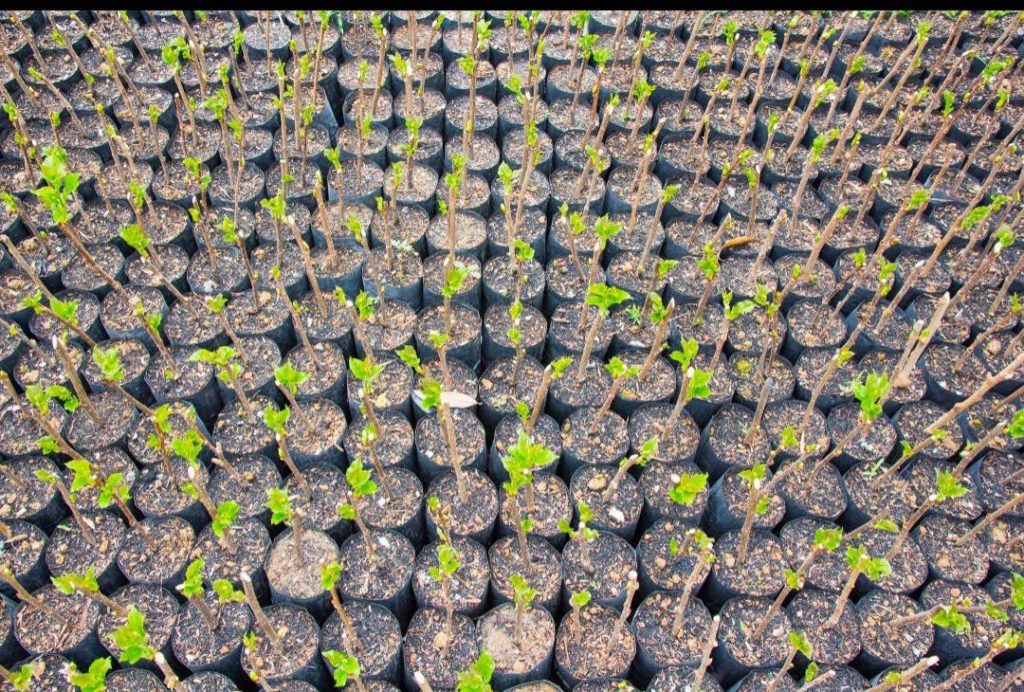
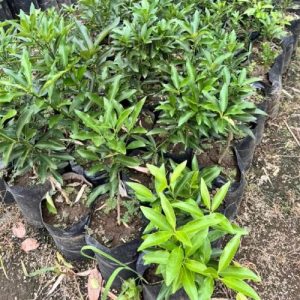
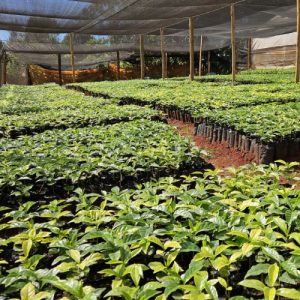
Young Mulberry Seedlings at Fruit Africa Veriplant nursery
Mulberry Seedlings Price in Kenya
Fruit Africa Veriplant lists mulberry seedlings at KSh 150 per seedling in the supplied information. Confirm the current price before ordering because nursery prices and availability can change.
Other suppliers list mulberry seedlings at KSh 200 to KSh 350 depending on nursery, seedling age, and propagation method.
Seedling price depends on several factors. A seedling that stays in the nursery longer costs more to produce. Mulberry seedlings raised from stem cuttings cost more than those raised from seed in some nurseries. Volume matters too. A farmer buying 500 mulberry seedlings will pay less per seedling than one buying 50.
At KSh 150, you are paying for planting material that is ready for the field. Compare that to the cost of replacing a tree that dies from poor planting material. The seedling price becomes one of the smaller expenses in the whole orchard budget.
Why do mulberry seedlings cost more than mango or avocado seedlings? The answer lies in propagation. Mulberry seedlings raised from stem cuttings require a mother tree, nursery space for four to six months, shade management, watering, and hardening.
The nursery cannot produce them as cheaply as mango seedlings grown from seed in large beds. The price reflects the work that went into producing a seedling that will perform in the field.
Request a current quote through the button at the end of this guide before you commit to a large order.
Where to Buy Mulberry Seedlings in Kenya
Mulberry seedlings are sold by a limited number of nurseries in Kenya. Fruit Africa Veriplant supplies mulberry seedlings directly to Kenyan farmers and international buyers from its own nursery.
Before you buy mulberry seedlings from any supplier, ask these questions.
Ask what variety they are selling. A good supplier knows the variety name or the mother plant source. If the answer is vague, the mulberry seedlings may not match your intended use.
Ask how the mulberry seedlings were propagated. Were they raised from seed, from stem cuttings, or by grafting? Each method has different implications for fruiting time and fruit quality.
Ask how old the mulberry seedlings are. A seedling ready for transplanting is usually four to six months old and 30 to 45 centimetres tall.
Ask whether the mulberry seedlings have been hardened. A seedling moved directly from a shaded nursery to open field conditions suffers transplant shock that can set it back by months.
Visit the nursery if distance allows. If you cannot visit, ask for current photos of the actual batch of mulberry seedlings. A generic internet photo tells you nothing about what you are buying.
Fruit Africa Veriplant
Phone: 0714 994 444
WhatsApp: https://wa.link/di12my
Email: sales@fruitafrica.org
Contact Us: https://fruitafrica.org/contact-us/
Request for Quotation: https://fruitafrica.org/request-for-quotation/
How to Choose Quality Mulberry Seedlings
Size is not the best indicator of mulberry seedling quality. A tall seedling in a small bag is often a stressed seedling that stretched toward light. Use this checklist instead.
Check the leaves. Healthy mulberry leaves are green and free of spots, yellowing, and insect damage. Pale leaves suggest nutrient deficiency or root problems.
Check the stem. The stem should be firm and upright. A thin, weak stem that bends easily under its own weight will struggle in the field.
Check the roots if possible. Ask the nursery to remove one seedling from its bag as a sample. The root ball should hold together. Brown or mushy roots mean the seedling stayed too wet.
Ask about seedling age. Mulberry seedlings ready for transplanting are usually four to six months old and 30 to 45 centimetres tall.
Ask about the variety and propagation method. A good supplier should know both. If you are buying for fruit production, ask for a fruit-type variety. If you are buying for leaf production, ask for a leaf-type variety.
Ask about the mother plant. For cutting-raised mulberry seedlings, the mother plant determines the genetic quality of your orchard. A supplier who knows the mother plant is more reliable than one who does not.
Inspect the graft union if the mulberry seedlings are grafted. The union should be clean and fully healed. There should be no gap, no rot, and no suckers growing from below the union.
Check the potting medium. The seedling should be growing in a medium that drains well. If the medium is waterlogged or smells sour, the roots may already be damaged.
Ask how the mulberry seedlings were transported to the nursery or sales point. Seedlings that were stacked or crushed during transport may look fine but fail after planting.
What Is Mulberry?
Mulberry is a fast-growing tree in the genus Morus. It produces sweet berries that range in colour from white to red to deep purple depending on the variety. The fruit looks like a long blackberry but grows on a tree rather than a bush.
The tree grows across a wide range of Kenyan conditions. It tolerates drought once established. It responds well to pruning. It produces fruit faster than most fruit trees.
Mulberry has two commercial products.
The fruit is eaten fresh, used in smoothies, or processed into juice, jam, wine, and dried fruit. The fresh market is growing in urban areas.
The leaves are used for livestock fodder and for silkworm rearing. Leaves are high in protein and digestible. Farmers feed them to goats, sheep, rabbits, and cattle. Silkworms feed on mulberry leaves exclusively.
Understanding which product you are targeting is the first decision in mulberry farming. Fruit production and leaf production use different mulberry seedlings, spacing, and pruning systems.

Mulberry Fruits on a tree
Mulberry Uses in Kenya
Mulberry has three main commercial uses in Kenya.
Fresh fruit. Mulberries sell in supermarkets, health food shops, hotels, and farmers’ markets. The market is small compared to mango or banana, but prices are higher. Demand is growing in urban areas.
Livestock fodder. Mulberry leaves are a high-protein forage for goats, sheep, rabbits, and cattle. Farmers with dairy animals use mulberry as a supplementary feed. The leaves can be harvested many times per year.
Silkworm rearing. Mulberry leaves are the only food source for silkworms. Kenya has a small sericulture sector. Farmers who produce leaves for silkworms tap into a niche market with steady demand when they have a buyer lined up.
Each use requires different management. A farmer who plants mulberry for fruit and then cuts the trees back for leaf production will get leaves and little fruit. Decide your objective before you plant.
Mulberry Varieties in Kenya
Several mulberry varieties are grown in Kenya. Variety names are used loosely in some nurseries, so verify what you are buying.
Ex-Limuru. Popular for fruit production. Produces many fruits and begins bearing earlier than most varieties under good conditions. Fruit is sweet and suited to the fresh market.
Ex-Thika. Produces large leaves. Suited to silkworm feeding systems and livestock fodder. If your goal is leaf production, this is a strong choice.
Ex-Embu. Performs well in dry areas. Farmers in semi-arid regions should consider this variety.
Kanva-2. Grows fast and produces high biomass for both leaves and fruits. A dual-purpose variety.
Noi Ex-Thailand. Tested under irrigation for improved performance. Less common in Kenya but shows promise.
For commercial fruit production, Ex-Limuru is a common starting point. For leaf production, Ex-Thika and Kanva-2 are used. Confirm with your nursery which variety they are selling and what it was selected for.
Do not assume one variety is best for every farm. Consider fruit size, fruit colour, sweetness, fruiting behaviour, leaf production, growth habit, response to pruning, climate adaptation, and intended market. A variety that performs well in one county may behave differently in another.
When buying mulberry seedlings, ask for the variety name in writing. If the supplier cannot provide it, consider another supplier. The variety determines your production outcome more than any other single factor.
Mulberry Propagation Methods
Mulberry can be propagated in several ways. Each method produces mulberry seedlings with different characteristics. Understanding the differences helps you buy the right seedling.
Stem Cuttings
Stem cuttings are the most common method for commercial mulberry planting material. A cutting is taken from a healthy mother tree and rooted in a nursery medium.
Cuttings produce mulberry seedlings that are genetically identical to the mother tree. If the mother tree produces good fruit, the offspring will produce similar fruit. This uniformity matters for commercial fruit production.
Cuttings root within a few weeks. The resulting seedling is ready for transplanting in four to six months. Fruit production can begin earlier than with seed-grown trees, depending on variety and management.
Advantages: genetic uniformity, earlier fruiting, known fruit characteristics.
Limitations: requires a good mother tree, more labour than seed propagation, some varieties root more easily than others.
Commercial suitability: high. This is the standard method for fruit and leaf production.
Seed Propagation
Seed propagation involves planting mulberry seed and raising the seedlings. Seeds are easy to handle and cheap to produce in large numbers.
Mulberry seedlings from seed are not genetically identical to the mother tree. Fruit size, colour, and flavour vary from tree to tree. Fruiting takes longer than with cuttings, usually three to five years.
Advantages: cheap, easy to produce in large numbers, useful for rootstock production.
Limitations: genetic variation, slower fruiting, unpredictable fruit quality.
Commercial suitability: low for fruit production, moderate for leaf production where genetic uniformity matters less.
Grafting and Other Methods
Grafting is used in some mulberry production systems, but it is not the standard method for most Kenyan mulberry planting material. Where grafting is used, it combines a selected rootstock with a scion from a known variety.
Grafting requires skill and adds cost. For most Kenyan farmers, cutting-raised mulberry seedlings are a more practical choice. Confirm with your nursery what method they use.
Fruit Mulberry vs Leaf Mulberry
This is the most important decision in mulberry farming. Fruit production and leaf production use different varieties, spacing, and management.
| Objective | Spacing | Main Product | Management |
|---|---|---|---|
| Fruit production | 3m by 3m | Fresh or processed fruit | Standard pruning, fruit harvest |
| Leaf production for fodder | 1.5m by 1.5m | Leaves for livestock | Coppicing, frequent leaf harvest |
| Leaf production for silkworms | 1m by 1m or closer | High-quality leaves | Coppicing, careful leaf management |
| Dual-purpose | 2m by 2m | Fruit and leaves | Alternating pruning cycles |
A farmer who plants for fruit and then coppices the trees for leaves will lose fruit production. A farmer who plants for leaves and then tries to harvest fruit will get small, poor-quality fruit.
Decide your objective before you plant. If you want both, plan alternating cycles or plant separate blocks for each purpose.
The mulberry seedlings you buy should match your objective. Fruit-type seedlings planted for leaf production waste genetic potential. Leaf-type seedlings planted for fruit production give disappointing fruit.
Mulberry Climate Requirements
Temperature is the first filter. Mulberry performs best at 15°C to 30°C. Growth slows below 13°C and above 40°C. Kenyan highland areas with cool nights and warm days are ideal.
Rainfall matters. Mulberry needs 600 to 1,200 millimetres annually. The tree tolerates drought once established, but fruit yields drop without water. Young trees need consistent moisture for the first two years.
Sunlight supports fruit production. Mulberry performs best in full sun to partial shade. Full sun produces sweeter fruit and higher yields.
Altitude range is wide. Mulberry grows from sea level to about 2,200 metres. This adaptability makes it suitable for more Kenyan farms than coffee or mangosteen.
Wind can damage young trees and knock fruit off branches. Plant windbreaks on exposed sites.
Microclimate matters. Two farms in the same county can have different temperatures, wind exposure, and soil moisture. A site that receives afternoon shade will perform differently from one in full sun all day. Observe your site before planting.
Best Soil for Mulberry
Mulberry prefers well-drained loamy to sandy loam soils. The ideal pH range is 5.5 to 7.5, with best performance near 6.0 to 6.8.
Soils that hold water or become waterlogged damage the root system. Mulberry tolerates a range of soil types but performs best in deep loams with good organic matter content. If your soil stays sticky and wet for days after rain, plant on raised beds or fix drainage before planting.
A soil test before planting tells you the pH and nutrient status. If the pH is below 5.5, lime may be needed. Organic matter is critical. Compost and well-decomposed manure improve soil structure, water-holding capacity, and nutrient availability.
Do not plant mulberry seedlings in shallow soils over rock or hardpan. The taproot needs depth to anchor the tree and access moisture during dry periods. A soil depth of at least 60 centimetres is preferable.
How Many Mulberry Trees Fit on One Acre?
The number of trees per acre depends on spacing, which depends on your production goal. The table below shows theoretical populations.
| Spacing | Theoretical Trees per Acre | Main Use |
|---|---|---|
| 3m by 3m | 450 | Fruit production |
| 2m by 2m | 1,012 | Dual-purpose |
| 1.5m by 1.5m | 1,799 | Leaf production |
| 1m by 1m | 4,047 | Intensive leaf production |
These numbers are theoretical. Actual planted numbers are usually lower.
One acre is about 4,047 square metres. At 3m by 3m spacing, each tree occupies 9 square metres. 4,047 divided by 9 gives 450 trees. At 2m by 2m, each tree occupies 4 square metres. 4,047 divided by 4 gives 1,012 trees. At 1.5m by 1.5m, each tree occupies 2.25 square metres. 4,047 divided by 2.25 gives 1,799 trees.
Actual field population depends on farm shape, paths, boundaries, irrigation layout, machinery access, pruning system, harvesting access, slope, wind exposure, and variety growth habit. A farmer with 450 theoretical trees may plant 400 to 420 after accounting for access paths and boundaries.
If you are buying mulberry seedlings for one acre, order 5 to 10 percent more than your target population. Some seedlings will die after transplanting. Replacements keep the orchard uniform.
Mulberry Spacing for Fruit Production
For fruit production, 3m by 3m is the standard spacing. This gives trees enough room to develop full canopies, makes harvesting easier, and reduces disease pressure through good air circulation.
Closer spacing means more trees per acre and higher potential yield per acre. It also means faster canopy closure, more competition for water and nutrients, and greater difficulty moving through the orchard. Disease pressure rises when air cannot move between trees.
Wider spacing means fewer trees per acre but easier management. Each tree has more room to develop, access to light is better, and pruning and harvesting are simpler.
A practical approach: if you have reliable irrigation and plan to manage intensively, 2.5m by 2.5m or 3m by 3m works. If you are planting on rain-fed land with less intensive management, go wider.
Do not copy a neighbour’s spacing without understanding why they chose it. Their soil, rainfall, and management capacity are not yours.
Mulberry Spacing for Leaf Production
For leaf production, spacing is much closer. Farmers growing leaves for livestock or silkworms use 1m by 1m, 1.5m by 1.5m, or even closer.
Closer spacing produces more leaf biomass per acre. The trees are managed as a hedge or coppice system rather than as individual fruit trees. Leaves are harvested repeatedly, and the trees regrow.
For silkworm production, leaf quality matters as much as quantity. Leaves must be clean, disease-free, and of the right maturity for the silkworm stage. Spacing and pruning affect leaf quality.
Leaf production systems use more mulberry seedlings per acre than fruit systems. A farmer planting one acre for leaf production at 1.5m by 1.5m spacing needs about 1,800 seedlings. At 1m by 1m, the number rises to about 4,000.
How to Prepare Land for Mulberry
Start by clearing the land of weeds, bushes, and debris. Plough to a depth of 30 centimetres, then harrow to create a fine seedbed. Deep ploughing breaks compacted soil layers and improves root penetration.
A soil test before planting tells you the pH and nutrient status. If the pH is below 5.5, lime may be needed. Apply lime well before planting based on the test recommendation. If drainage is a concern, address it during land preparation, not after the trees are in the ground.
The site should be near accessible roads for transport to markets. Avoid low-lying areas where water collects during heavy rains.
Mark your spacing before digging holes. Use pegs and string to keep rows straight. Straight rows make pruning, spraying, and harvesting easier.
Prepare the land before your mulberry seedlings arrive. Seedlings that sit in their bags for weeks after delivery lose vigour. The planting site should be ready when the seedlings arrive.
How to Prepare Planting Holes
Planting hole size depends on soil condition, seedling size, root system, soil compaction, and local practice. A common recommendation is 45cm by 45cm by 45cm. In compacted or poor soil, a larger hole gives the roots more room to establish.
Separate topsoil from subsoil. Mix the topsoil with 5 to 10 kilograms of well-decomposed manure per hole. Add phosphate fertiliser if your soil test shows phosphorus deficiency.
Do not fill the hole with raw manure and plant immediately. Fresh manure burns roots. The manure must be decomposed before use.
The objective is to give the young root system good contact with suitable soil, not simply to dig a large hole. A well-prepared hole filled with good soil gives mulberry seedlings a strong start. A large hole filled with poor soil does not.
How to Plant Mulberry Seedlings
Plant at the onset of the rainy season. In Kenya, this means March to May or October to November. This timing allows roots to establish before dry periods. If you have irrigation, planting can be done at any time.
Remove the mulberry seedling from its container carefully, keeping the root ball intact. Place the seedling in the hole so the root collar sits at ground level. Do not bury the stem deeper than it was in the nursery.
Backfill with the amended soil mixture. Firm gently to remove air pockets. Do not compact the soil with your foot.
Water thoroughly with 10 to 15 litres per plant immediately after planting.
Apply organic mulch around each plant, keeping mulch 5 to 10 centimetres away from the stem to prevent collar rot.
Stake young trees on windy sites. Protect seedlings from livestock with fencing or individual guards.
Replace dead mulberry seedlings within the first few months. A gap in the orchard reduces total yield.
Mulberry Watering and Irrigation
Young mulberry seedlings need consistent moisture. The root system is still developing, and the plant cannot tolerate drying out. In the first year, water two to three times weekly during dry spells.
Mature mulberry trees are drought-tolerant but produce better with irrigation. During dry periods, water mature trees every five to seven days. Drip irrigation is efficient because it delivers water to the root zone without wetting leaves.
The right amount of water depends on age, soil, rainfall, temperature, tree size, mulch, and production target. The principle is more useful than a fixed number. The soil around the root zone should stay moist but not saturated. If you squeeze a handful of soil and it drips water, it is too wet. If it crumbles and dust falls off, it is too dry.
Basin irrigation works for young trees. Drip irrigation is better for mature orchards. Manual watering works for small plots and container growing.
Mulch reduces water loss. A good layer of organic mulch can cut irrigation frequency by a third or more. The mulch also suppresses weeds and adds organic matter to the soil.
Mulberry Manure and Fertilizer
Organic matter is the foundation of mulberry nutrition. Compost and well-decomposed manure improve soil structure, water-holding capacity, and nutrient availability.
Apply 20 to 30 kilograms of well-decomposed manure per tree annually for mature trees. Spread around the drip line and incorporate lightly.
For fruit production, apply NPK 15:15:15 at 200 grams per tree before flowering. Potassium is important for fruit quality. Do not treat this as a universal formula. Your soil test should guide fertiliser choice and quantity.
For young trees, focus on organic manure and micronutrients. Do not push nitrogen excessively. Too much nitrogen encourages leaf growth at the expense of fruiting.
Split fertiliser applications through the season rather than applying everything at once. Irrigate after applying fertiliser to move nutrients into the root zone.
Yellowing leaves, poor growth, and small fruit are signals of deficiency or imbalance. Address the specific problem rather than applying a generic blend.
Mulberry seedlings in the nursery need less fertiliser than mature trees. Once transplanted, wait until the seedling shows new growth before applying any fertiliser. The manure in the planting hole provides enough nutrition for the first few months.
Mulching and Weed Control
Mulch is important for mulberry. A layer of organic mulch 10 to 15 centimetres thick around the base of the tree conserves moisture, suppresses weeds, moderates soil temperature, and adds organic matter as it decomposes.
Keep mulch away from direct contact with the trunk. A gap of a few centimetres prevents stem rot.
Weed control matters most during the first two years. Weeds compete for water and nutrients that young mulberry seedlings need. Hand weeding or careful mechanical cultivation is safer than herbicides near the shallow root zone.
Mature mulberry trees develop a canopy that suppresses many weeds naturally, but the area around the trunk still needs management for access and to reduce competition.
Mulberry Training and Pruning
Pruning is the most important management practice for mulberry. It determines whether your tree produces fruit or leaves. Many farmers confuse the two techniques.
Pruning for Fruit
Pruning for fruit begins with training the young tree. Remove lower branches to lift the canopy. Allow three to five main branches to develop. Remove crossing and crowded branches.
After the main harvest, prune the tree. Remove dead, diseased, and crossing branches. Thin the canopy to allow light penetration. Shorten lateral branches to encourage new fruiting wood.
The exact timing depends on your location and harvest cycle. In many Kenyan growing areas, pruning after the main harvest works well. Adjust to your local conditions rather than following a fixed calendar date.
Keep the tree at a manageable height. Tall trees are harder to harvest and spray.
Pruning for Leaves
Pruning for leaves uses coppicing. Cut the tree back to 1 metre height every three to four months. New shoots emerge rapidly. Harvest leaves every 30 to 45 days.
This technique maximises leaf production for livestock feed or silkworms. Trees managed for leaves produce little fruit.
For dual-purpose orchards, alternate between fruit pruning and leaf pruning. Prune for fruit one year. Prune for leaves the next year. This balances production and maintains tree health.
Mulberry Pests and Diseases
Mulberry is hardy but not immune to pests and diseases. Monitor regularly and act early.
Aphids feed on young leaves and shoots. They cause curling and stunted growth. They also excrete honeydew, which attracts ants and promotes sooty mould. Control involves monitoring and, if necessary, neem or soap sprays. Do not treat these as universal cures. Confirm what works on your farm.
Mealybugs feed on leaves and stems. Ants often farm these insects. Ant control is part of mealybug management.
Thrips and jassids damage leaves and reduce photosynthesis. Severe infestations slow growth.
Powdery mildew causes white powdery growth on leaves. It spreads in humid conditions with poor air movement. Pruning for airflow and removing infected plant material helps.
Leaf spot causes dark lesions on leaves. It spreads in wet conditions. Good sanitation and airflow reduce the problem.
Birds damage fruit. Netting or scare devices protect the crop.
For any pesticide use, follow label instructions. Respect pre-harvest intervals. Use protective equipment. Do not apply pesticides near harvest without checking the label.
How Long Does Mulberry Take to Fruit?
Fruiting time depends on propagation method, variety, planting material age, environment, water availability, nutrition, pruning, and transplanting stress.
Cutting-raised mulberry seedlings can produce first fruit within six to eight months under good conditions. This is not a guarantee. It is a potential outcome when everything aligns.
Seed-grown trees take three to five years to fruit. Fruit quality is variable.
First fruit is not the same as commercial production. A tree may produce a handful of fruits in the first year. Meaningful commercial production usually begins in year two. Full production develops by year three to four.
Do not plant mulberry seedlings expecting a commercial harvest in six months. Plan for first fruit in the first year and commercial production from the second year onward.

Mulberry Fruits
Mulberry Yield Per Tree
A mature mulberry tree produces 15 to 25 kilograms of fruit per year under good management. This is a planning range, not a guaranteed yield. Actual results vary with variety, age, tree density, pruning, irrigation, soil fertility, rainfall, temperature, pest pressure, disease pressure, harvest frequency, and management quality.
Some trees produce more. Some produce less. Use farm records from your own orchard to refine your expectations over time.
Mulberry Yield Per Acre
Yield per acre depends on the number of trees and yield per tree. The table below shows planning scenarios.
| Scenario | Trees per Acre | Yield per Tree | Total Yield |
|---|---|---|---|
| Conservative | 450 | 8 kg | 3,600 kg |
| Moderate | 450 | 15 kg | 6,750 kg |
| Higher management | 450 | 25 kg | 11,250 kg |
These are planning scenarios. Actual results depend on management. Do not assume the highest scenario will happen on your farm.
How to Harvest Mulberries
Harvest when the berries turn dark and juicy. Colour depends on the variety. Black mulberries turn deep purple. White mulberries turn pale yellow or white. Red mulberries turn red.
The berries should come off the branch easily when ripe. If you have to pull hard, they are not ready.
Pick every few days as berries ripen quickly. Mulberry fruiting is not uniform. Multiple harvests are necessary.
Handle fruit gently. Mulberries bruise easily and have a short shelf life. Use shallow containers to avoid crushing.
Sort fruit immediately after harvest. Remove damaged and overripe specimens.
Post-Harvest Handling
Post-harvest handling determines how much of your harvest reaches the buyer in good condition.
Harvest in the cool hours of the morning. Keep fruit out of direct sun. Move harvested fruit to shade immediately.
Sort and grade fruit before packing. Remove damaged, diseased, and overripe berries.
Pack in shallow containers. Deep containers crush the fruit at the bottom.
Cool the fruit as soon as possible. If you do not have cold storage, keep fruit in the coolest place available and deliver quickly.
Transport carefully. Rough roads damage fruit. Use cushioned containers and avoid stacking.
Fresh mulberries last three to five days under ambient conditions. Refrigerated fruit lasts up to one week. For longer storage, dry or process the fruit.
How to Sell Mulberries in Kenya
Mulberry is a niche fruit in Kenya. You will not sell it by the roadside the way you sell mangoes. The market is smaller but prices are higher.
Potential buyers include fresh fruit traders, supermarkets, health food shops, hotels, restaurants, juice processors, jam processors, dried fruit businesses, direct consumers, farmers’ markets, and online food businesses.
Do not assume any buyer will purchase from you. Demand varies by town and season. Some supermarkets require consistent supply, packaging standards, and delivery schedules. Health food shops may buy smaller volumes at higher prices. Hotels and restaurants buy for specific menu items.
Before you plant a large orchard, develop your market. Identify who will buy your fruit. Ask what quality they require. Ask about packaging. Ask about delivery days. Ask about price determination. Estimate weekly or seasonal demand. Plant according to realistic market capacity.
Farm-gate prices are usually lower than supermarket retail prices. Do not assume you will receive retail prices. A farmer selling at the farm gate receives less than a farmer selling directly to consumers. A farmer selling to a supermarket must meet packaging, delivery, and quality standards that add cost.
Mulberry Value Addition
Value addition extends shelf life and can increase returns. It also adds costs.
Dried mulberries. Drying extends shelf life to six to twelve months. Sort fruit, wash, and dry using solar or mechanical dryers. Package in moisture-proof containers. Dried mulberries sell to health food shops and online buyers. Drying requires equipment, labour, packaging, and food safety attention.
Mulberry jam. Jam uses fruit, sugar, and preservatives. A 400-gram jar retails for KSh 250 to KSh 400 depending on brand and outlet. Processing costs include jars, labels, sugar, labour, and kitchen space. Food safety rules apply if you sell to shops.
Mulberry juice. Juice requires pressing, filtering, and preservation. The market for mulberry juice in Kenya is small but developing.
Do not assume value addition automatically doubles profitability. Calculate the added costs before investing in equipment.
Mulberry for Livestock Feed
Mulberry leaves are a high-protein forage. They are digestible and palatable to goats, sheep, rabbits, and cattle.
Leaf production uses closer spacing and coppicing. Cut trees back to 1 metre every three to four months. Harvest leaves every 30 to 45 days.
Feed fresh leaves or wilt them slightly. Introduce mulberry gradually into livestock diets. Do not replace the entire ration with mulberry leaves. Actual feeding levels depend on the livestock species and total diet.
Mulberry leaves complement other feeds. They do not replace a balanced ration.
For farmers with dairy animals, mulberry leaves can supplement napier grass and commercial dairy meal. The leaves are high in protein and improve milk yield when included in the diet at appropriate levels.
Government and County Support for Silkworm Farming in Kenya
Kenya’s national and county governments have been promoting silkworm farming as a high-value alternative for smallholder farmers. If you plan to grow mulberry for leaf production rather than fruit, this support system matters.
National Government Initiatives
The national government, through KALRO, established a National Sericulture Research Centre at Kakamega and Kibos stations. The centre works with development partners to improve silk production using modern breeding techniques.
The centre trains extension officers and farmers on mulberry husbandry, silkworm rearing, and cocoon grading. Trained officers then pass the knowledge to farmers in their counties. The centre also runs direct farmer training programmes.
Kenya’s long-term development plans recognise sericulture as a priority value chain. The goal is to move smallholder farmers from subsistence production to commercial operations.
County Government Support
Several county governments have taken direct action to promote sericulture.
Siaya County has supported silk farmers through its agricultural programmes. Silk farmers in Gem Sub-County have received recognition and support from the county government. Their operations produce raw silk thread for export markets. The county has highlighted sericulture as a model for improving rural livelihoods.
Makueni County has promoted Eri silkworm farming through partnerships with social enterprises. A silk venture based in Wote operates silkworm cages and works with local women farmers who grow castor plants to feed the worms. The county’s leadership has publicly encouraged residents to take up silkworm farming as demand for silk products grows.
Kakamega County hosts the national sericulture research station and has a concentration of silkworm farmers. The county benefits from proximity to research and training facilities.
Other counties in Western Kenya, Nyanza, and the Coastal region have shown interest in sericulture as a diversification option for farmers.
Market Access and Buyer Support
Market access has improved for sericulture farmers. ICIPE buys dry cocoons from farmers and exports them. This removes the market search problem that discouraged early sericulture adopters. ICIPE also operates a training centre in Nairobi targeting women from drier regions.
Private silk enterprises also buy from farmers. Tosheka Textiles in Makueni buys cocoons and produces silk fabric. Other buyers operate in Western Kenya and along the coast.
Cocoon prices have been reported at Sh600 per kilogram for grade A dry cocoons, Sh500 for grade B, and Sh325 for grade C. Wet cocoons sell for around Sh200 per kilogram while dry ones fetch around Sh415 per kilogram. Prices vary by buyer and season, so confirm current rates before you plan your production.
Current Scale and Potential
Kenya currently has about 600 to 700 farmers involved in sericulture. Total acreage under mulberry for silkworms is estimated at around 250 acres across Western, Nyanza, Rift Valley, and Coastal regions. Annual production is less than two tonnes of dried cocoons. The national potential is estimated at over 10,000 metric tonnes.
The gap between current production and national potential is large. Farmers entering sericulture today would be supplying a market that is far from saturated.
What This Means for Mulberry Farmers
If you are considering mulberry for silkworm production, government support reduces some risks. Research infrastructure exists at KALRO Kakamega and Kibos. Training is available through extension officers and ICIPE. Market access is available through ICIPE and private buyers like Tosheka Textiles.
However, do not assume guaranteed income. Sericulture requires regular rearing cycles, careful leaf management, and consistent quality. Plan your mulberry plantation with a buyer or rearing enterprise in mind. Confirm current cocoon prices before investing.
For farmers interested in silkworm production, the starting point is mulberry leaf production. The section on mulberry for silkworm farming earlier in this guide explains the spacing, pruning, and management required.
Mulberry for Silkworm Farming
Mulberry leaves are the only food source for silkworms. Leaf quality directly affects cocoon quality.
Silkworm leaf production differs from fruit production. Trees are planted closer, coppiced regularly, and harvested frequently. Leaves must be clean, disease-free, and at the right maturity for the silkworm stage.
Kenya has a small sericulture sector. Do not assume there is a ready buyer for your leaves. Plan your market or silkworm enterprise before establishing a plantation.
If you plan to rear silkworms yourself, learn the production system before planting. Silkworm rearing requires specific conditions and careful management.
Mulberry Farming Cost Per Acre
Establishment costs for mulberry are moderate compared to crops like mangosteen or coffee. Seedling cost depends on tree population and seedling price.
At KSh 150 per seedling and 450 trees per acre at 3m by 3m spacing, seedling cost is KSh 67,500. For a leaf production system at 1.5m by 1.5m spacing with 1,800 seedlings, seedling cost is KSh 270,000.
The table below organises cost categories. Fill in your own figures based on local quotes.
| Cost | Calculation | Notes |
|---|---|---|
| Seedlings | Number x current price | Confirm before ordering |
| Land preparation | Ploughing, harrowing | Local contractor rates |
| Hole preparation | Labour | Based on hole size and number |
| Manure | 5-10 kg per hole | Local availability |
| Fertilizer | Soil-test based | Not a fixed recipe |
| Irrigation | System and installation | Drip or basin |
| Labour | Planting, weeding, pruning | First year |
| Mulch | Local material | Straw, grass, or other |
| Fencing | Where required | Protection from livestock |
| Harvesting | Labour and containers | Seasonal |
| Packaging | Market-dependent | Crates, punnets |
| Transport | Farm to buyer | Distance and volume |
| Pest management | Monitoring and control | As needed |
Mulberry Farming Profit Per Acre
Profitability depends on yield, price, and how you market your fruit. Separate gross revenue from operating surplus.
Gross revenue = Yield per acre x Selling price per kg.
Operating surplus = Gross revenue – Annual operating costs.
The table below shows profitability scenarios.
| Scenario | Trees | Yield/Tree | Total Yield | Selling Price | Gross Revenue |
|---|---|---|---|---|---|
| Conservative | 450 | 8 kg | 3,600 kg | KSh 200/kg | KSh 720,000 |
| Moderate | 450 | 15 kg | 6,750 kg | KSh 250/kg | KSh 1,687,500 |
| Higher management | 450 | 25 kg | 11,250 kg | KSh 400/kg | KSh 4,500,000 |
These scenarios are examples for planning. Do not treat the highest scenario as normal.
Annual operating costs for a mature mulberry orchard typically range from KSh 120,000 to KSh 180,000 per acre, covering fertiliser, pest control, labour, irrigation, and harvest. Value addition increases revenue but also increases costs.
In the conservative scenario, gross revenue is KSh 720,000. After operating costs of KSh 150,000, operating surplus is KSh 570,000 per acre.
In the moderate scenario, gross revenue is KSh 1,687,500. After operating costs of KSh 150,000, operating surplus is KSh 1,537,500 per acre. This assumes you achieve the yield and the price. If you sell at farm gate for KSh 200 per kilogram instead of KSh 250, gross revenue drops to KSh 1,350,000 and operating surplus drops to KSh 1,200,000.
In the higher management scenario, gross revenue is KSh 4,500,000. After operating costs of KSh 180,000, operating surplus is KSh 4,320,000 per acre. This scenario assumes high yield and strong market access. It is not typical.
Mulberry Profitability Scenarios
The scenarios below show how yield, price, and costs interact. Use them as planning tools, not promises.
Scenario 1: Conservative. 450 trees. 8 kg per tree. 3,600 kg total. Farm-gate price KSh 200 per kg. Gross revenue KSh 720,000. Operating costs KSh 150,000. Operating surplus KSh 570,000.
Scenario 2: Moderate. 450 trees. 15 kg per tree. 6,750 kg total. Farm-gate price KSh 250 per kg. Gross revenue KSh 1,687,500. Operating costs KSh 150,000. Operating surplus KSh 1,537,500.
Scenario 3: Higher management. 450 trees. 25 kg per tree. 11,250 kg total. Selling price KSh 400 per kg. Gross revenue KSh 4,500,000. Operating costs KSh 180,000. Operating surplus KSh 4,320,000.
The difference between scenarios is not just yield. It is market access. A farmer selling at farm gate for KSh 200 per kg earns far less than one selling directly to consumers at KSh 400 per kg. The higher price requires packaging, delivery, and customer relationships.
Common Mistakes in Mulberry Farming
Planting mulberry seedlings in poorly drained soil is a mistake. Mulberry roots rot when they stay wet. If your soil holds water after rain, fix drainage before planting or plant on raised beds.
Buying mulberry seedlings based only on size is another mistake. A tall seedling in a small bag is often a stressed seedling. Look at the leaves and roots.
Confusing fruit pruning with leaf pruning is a third mistake. Fruit pruning and leaf pruning use different techniques. If you prune for leaves when you want fruit, you will get leaves and little fruit.
Establishing a large orchard without a market is a planning mistake. Mulberry is a niche fruit with a short shelf life. Find your buyer before you plant 450 trees.
Relying on rainfall alone in areas with unreliable precipitation is a mistake. Mulberry needs consistent moisture for good fruit production. If your rainfall pattern has dry gaps, irrigation is necessary.
Selecting mulberry seedlings without confirming the variety is a mistake. If you are buying for fruit production, ask for a fruit-type variety. If you are buying for leaf production, ask for a leaf-type variety.
Planting mulberry seedlings too deep is a mistake. The root collar should sit at ground level. Burying the stem causes rot and stunted growth.
Ignoring transplant shock is a mistake. Mulberry seedlings moved from a shaded nursery to open field conditions need temporary shade and consistent watering for the first few weeks.
Can Mulberry Be Grown in Containers?
Mulberry can be grown in containers, but the tree will not reach its full potential. The taproot needs deep soil. A standard pot restricts root development, and the tree stays small.
Container growing is possible for a home gardener who wants fresh mulberries. Do not expect commercial yields.
Use a deep container, not a wide shallow one. The medium must drain well but hold moisture. Full sun is necessary for fruit production. Water consistently because container soil dries faster than field soil. Prune to keep the tree manageable.
Can Mulberry Be Grown on a Small Farm?
Yes. Mulberry is well suited to smallholder farming.
A farmer with a quarter acre can plant 100 to 112 trees at 3m by 3m spacing. A farmer with half an acre can plant 200 to 225 trees. A farmer with one acre can plant 400 to 450 trees.
Start small. Test the crop on a quarter acre before planting a full acre. Learn how the trees perform on your soil and how the market responds to your fruit.
Mulberry works well in integrated farming. The leaves feed livestock. The fruit sells. The trees provide shade for other crops in the early years.
Is Mulberry Farming Commercially Viable in Kenya?
Mulberry farming is commercially viable for farmers who match the crop to their market. It is not a guaranteed income.
Opportunities include multiple products from one tree, relatively fast establishment compared to slower fruit trees, growing urban demand for fresh and dried fruit, livestock fodder production, silkworm leaf production, and value addition through drying and processing.
Constraints include limited mainstream consumer familiarity, short fresh-fruit shelf life, post-harvest handling requirements, market development work, limited planting-material supply, and the need for reliable water in some areas.
Do not call mulberry a gold mine. It is a crop with real potential and real challenges. Farmers who plan their market, manage their orchard well, and control costs have a better chance of success than those who plant without a buyer.
Buying Mulberry Seedlings for Export
International buyers looking for mulberry seedlings from Fruit Africa Veriplant should request a quotation through email or WhatsApp. Requirements depend on destination country, number of plants, variety, plant condition, phytosanitary requirements, import requirements, packaging, transport method, and documentation.
Fruit Africa Veriplant responds with details covering freight, documentation, logistics, and estimated timeframe. Specific freight prices and delivery times are quoted based on the destination and order size. Do not assume a standard rate.
Why Buy Mulberry Seedlings from Fruit Africa Veriplant?
Fruit Africa Veriplant supplies mulberry seedlings to Kenyan farmers and international buyers. The seedlings are raised in our nursery and hardened for field conditions before dispatch.
We sell mulberry seedlings at KSh 150 per seedling in the supplied information. Confirm the current price before ordering because nursery prices and availability can change.
Our mulberry seedlings come from selected mother material. We can advise on variety selection based on your production goal, whether that is fruit, livestock fodder, or silkworm leaves.
Contact us to confirm availability, variety, quantity, and delivery details.
Fruit Africa Veriplant
Phone: 0714 994 444
WhatsApp: https://wa.link/di12my
Email: sales@fruitafrica.org
Contact Us: https://fruitafrica.org/contact-us/
Request for Quotation: https://fruitafrica.org/request-for-quotation/
Frequently Asked Questions About Mulberry Seedlings
1. How much are mulberry seedlings in Kenya?
Fruit Africa Veriplant lists mulberry seedlings at KSh 150 per seedling. Other suppliers list them at KSh 200 to KSh 350. Confirm the current price before ordering.
2. Where can I buy mulberry seedlings in Kenya?
Fruit Africa Veriplant supplies mulberry seedlings from its own nursery. Contact through WhatsApp on 0714 994 444 or email sales@fruitafrica.org for current availability.
3. How long does mulberry take to fruit?
Cutting-raised mulberry seedlings can produce first fruit within six to eight months under good conditions. Commercial production usually begins in year two. Seed-grown trees take three to five years.
4. How many mulberry trees fit on an acre?
At 3m by 3m, about 450 trees. At 2m by 2m, about 1,012 trees. At 1.5m by 1.5m, about 1,799 trees. Actual numbers are lower after accounting for paths and boundaries.
5. What is the best spacing for fruit mulberry?
3m by 3m is the standard spacing for fruit production. It allows full canopy development, easier harvesting, and good air circulation.
6. Which mulberry varieties are grown in Kenya?
Common varieties include Ex-Limuru, Ex-Thika, Ex-Embu, Kanva-2, and Noi Ex-Thailand. Ex-Limuru is popular for fruit. Ex-Thika is used for leaf production.
7. Are mulberry seedlings grown from cuttings?
Cutting-raised mulberry seedlings are common for commercial planting material. They are genetically identical to the mother tree and produce uniform fruit. Fruit Africa Veriplant propagates mulberry from stem cuttings.
8. Can mulberry be grown from seed?
Yes. Seed-grown trees take longer to fruit and produce variable fruit quality. Seed propagation is useful for rootstock production and leaf production where uniformity matters less.
9. What soil is suitable for mulberry?
Well-drained loamy to sandy loam soil with a pH of 5.5 to 7.5. Best performance near 6.0 to 6.8. Drainage is critical.
10. Does mulberry need irrigation?
Young trees need consistent moisture. Mature trees are drought-tolerant but produce better with irrigation during dry periods. If your rainfall has dry gaps, irrigation is necessary for good fruit production.
11. How much fruit does one mulberry tree produce?
A mature tree produces 15 to 25 kilograms per year under good management. Actual yield depends on variety, age, pruning, water, nutrition, and pest management.
12. How much can one acre of mulberry produce?
At 450 trees per acre and 15 kilograms per tree, one acre can produce about 6,750 kilograms. At 8 kilograms per tree, it is 3,600 kilograms. At 25 kilograms per tree, it is 11,250 kilograms.
13. How do I prune mulberry for fruit?
Train young trees to three to five main branches. After the main harvest, remove dead, diseased, and crossing branches. Thin the canopy and shorten laterals to encourage new fruiting wood.
14. How do I grow mulberry for livestock feed?
Plant at 1m by 1m or 1.5m by 1.5m. Coppice trees to 1 metre every three to four months. Harvest leaves every 30 to 45 days. Introduce leaves gradually into livestock diets.
15. Can mulberry leaves be used for silkworms?
Yes. Mulberry leaves are the only food source for silkworms. Leaf quality affects cocoon quality. Plan your market or silkworm enterprise before planting.
16. How do I control mulberry pests?
Monitor regularly. Aphids, mealybugs, thrips, and jassids are common. Use integrated pest management. Follow label instructions for any pesticide. Respect pre-harvest intervals.
17. How long do fresh mulberries last?
Fresh mulberries last three to five days under ambient conditions. Refrigerated fruit lasts up to one week. Drying extends shelf life to six to twelve months.
18. Where can I sell mulberries in Kenya?
Supermarkets, health food shops, hotels, restaurants, juice processors, jam processors, and direct consumers are potential buyers. Develop your market before planting a large orchard.
19. Is mulberry farming profitable in Kenya?
Profitability depends on yield, price, and costs. A moderate scenario at 450 trees, 15 kilograms per tree, and KSh 250 per kilogram gives gross revenue of KSh 1,687,500. After operating costs of KSh 150,000, operating surplus is KSh 1,537,500.
20. Can mulberry seedlings be exported from Kenya?
Yes. Fruit Africa Veriplant supplies international buyers. Provide quantity, variety, destination country, destination city, and any planting-material requirements. Request a quotation for pricing and logistics.
Final Advice for Farmers Growing Mulberry in Kenya
Mulberry is a crop that rewards planning. The tree grows fast, produces early, and gives you fruit, leaves, and fodder from the same planting. But it is not a crop you plant without a market.
Before you order mulberry seedlings, decide your objective. Are you growing for fruit, for livestock fodder, or for silkworm leaves? Each objective uses different varieties, spacing, and pruning. A farmer who plants for fruit and then cuts the trees for leaves will get leaves and little fruit.
Check your climate and soil. Mulberry is adaptable, but it needs well-drained soil and adequate moisture. If your soil holds water after rain, fix drainage before planting. If your rainfall is unreliable, plan for irrigation.
Start small. Plant a quarter acre or half acre first. Learn how the trees perform on your farm. Learn how the market responds to your fruit. Then expand.
Find your buyer before you plant a large orchard. Mulberry is a niche fruit with a short shelf life. Supermarkets, health food shops, hotels, and direct consumers are the main channels. Know which channel you will use before you invest.
Plan your pruning strategy before you plant. Fruit pruning and leaf pruning are different techniques. If you want fruit, prune for fruit. If you want leaves, prune for leaves. If you want both, alternate between the two.
Mulberry farming in Kenya has a future. The tree is adaptable, the returns are fast compared to slower fruit trees, and the market for fresh and dried mulberries is developing. Farmers who plan carefully and manage well will be positioned to supply a growing demand.
Fruit Africa Veriplant supplies mulberry seedlings to Kenyan farmers and international buyers. Request a current quotation for pricing, availability, and delivery details.
Fruit Africa Veriplant
Phone: 0714 994 444
WhatsApp: https://wa.link/di12my
Email: sales@fruitafrica.org
Contact Us: https://fruitafrica.org/contact-us/
Request for Quotation: https://fruitafrica.org/request-for-quotation/


Reviews
There are no reviews yet.