
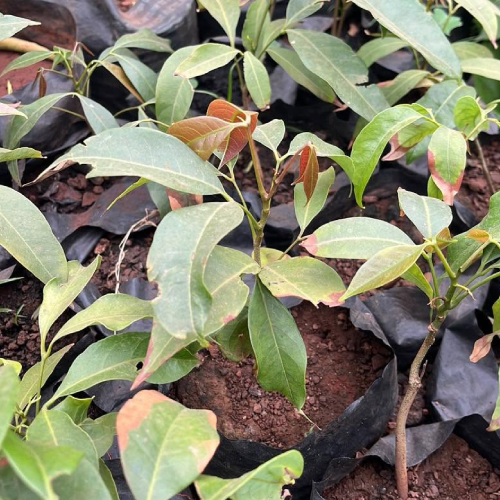
Description
- Buy lychee seedlings in Kenya at KSh 3,500 each from Fruit Africa Veriplant. Learn varieties, spacing, planting, yield, costs, and how to order countrywide or for export. Call 0714 994 444.
Lychee Seedlings in Kenya: Price, Varieties, Planting, Yield and Farming Guide
You are searching for lychee seedlings in Kenya. You want to know the price, where the tree grows, how many you need per acre, and how to order. Here are the answers before we go deeper.
Lychee seedlings from Fruit Africa Veriplant cost KSh 3,500 each. We deliver countrywide. You call or WhatsApp 0714 994 444 to order or to ask for guidance.
The recommended spacing is 6 metres between rows and 6 metres between trees. That gives about 112 trees per acre. You plant at the start of the rains or anytime you have reliable irrigation.
Lychee grows in the warm coastal and mid-altitude regions of Kenya. It performs best in Kilifi, Kwale, Mombasa, Meru, and Embu. Seedlings propagated from cuttings start fruiting in 3 to 4 years. A mature tree produces 50 to 150 kilograms per year and keeps producing for 50 to 100 years.
A 250 gram punnet of lychee in Kenya sells for KSh 600 to KSh 800 as of September 2026. Most of the lychee sold in Kenya is imported, not grown locally. Very few people have information about the crop. The market is open for farmers who take the step to plant.
Most seedlings available in Kenya are seed-grown. These are cheap but slow. They take 5 to 6 years or more to fruit. Seedlings propagated from cuttings take 3 to 4 years. Cutting-grown seedlings are the better choice for commercial planting.
Now let us get into the details you need before you buy.
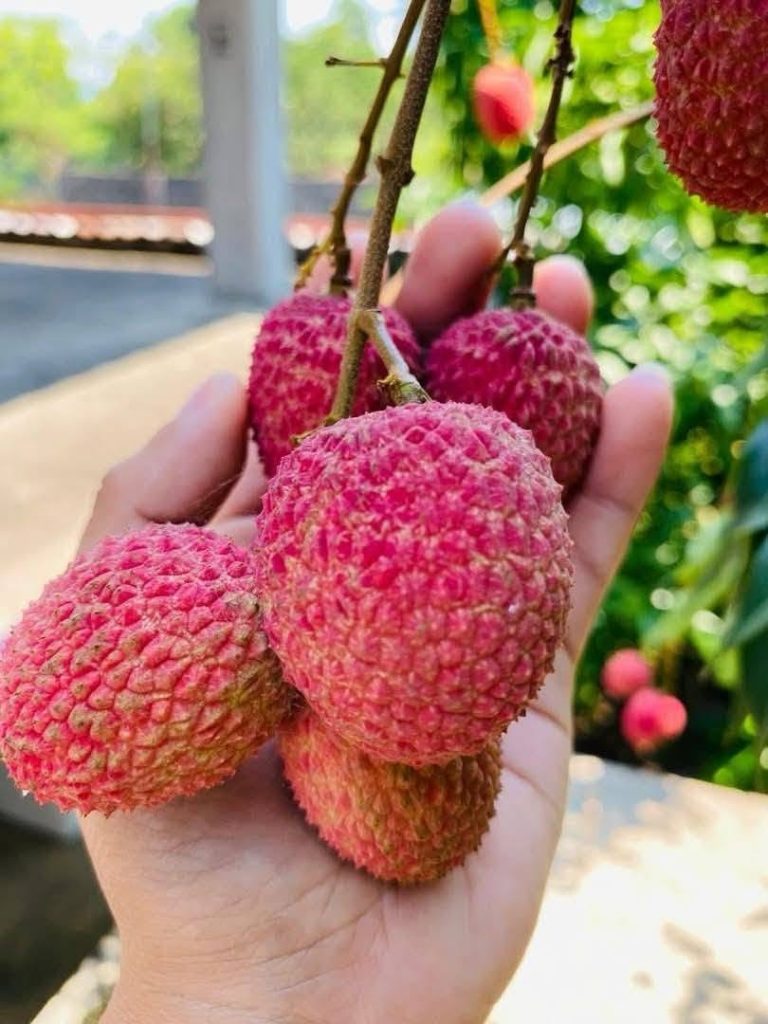
Lychee Fruits Hanging on a Tree
What Are Lychee Seedlings?
Your lychee seedlings are young lychee trees raised from selected mother trees. The mother trees produce high quality fruit with good size, sweetness and yield. We choose them because they carry the characteristics you want in your orchard.
Lychee belongs to the genus Litchi. The scientific name is Litchi chinensis. It is a relative of the soapberry family. The tree is native to southern China. It has spread to many subtropical regions of the world, including Kenya.
Lychee is also called litchi or lichee. In Kenya, it is not a common crop. Most of the fruit on supermarket shelves is imported from Mauritius, Madagascar, Réunion and South Africa. Local production is still very low. That gap between what Kenyans eat and what Kenyan farmers grow is the opportunity you have been looking for.
The tree is evergreen. It keeps its leaves throughout the year. It grows 10 to 15 meters tall. It has a dense, rounded canopy. The leaves are glossy, dark green and leathery. The tree produces small greenish-white flowers.
The fruit grows in loose clusters. It is round or oval. It is red when ripe. The skin is thin and leathery with a rough texture. Inside, the flesh is translucent, pearl-white, and juicy. It has a sweet, floral flavour. Each fruit contains a single shiny brown seed.
Lychee has a short harvest window. The fruit ripens in June to July in most parts of Kenya. The fruit has a very short shelf life without refrigeration. It deteriorates quickly after harvest. This means you need a reliable cold chain or a fast market.
Your lychee seedlings need full sun and good drainage from the early growth stage. The site determines how the tree develops, how much fruit it produces, and how easy it is to harvest.
The Current State of Lychee Farming in Kenya
Lychee farming in Kenya is still developing. Commercial orchards are few. Most farmers purchase one or two trees for their compounds. A handful have planted pilot plots of 10 to 20 trees. Very few have gone beyond that. This means the market is wide open for farmers who take the step to plant commercial orchards.
Very few people in Kenya have information about lychee. Most consumers have never tasted the fruit. Most farmers have never seen the tree. This lack of information is both a challenge and an opportunity. The challenge is that you need to learn the crop from scratch. The opportunity is that the market is not yet crowded.
Kenya imports most of the lychee sold locally. The fruit arrives from Mauritius, Madagascar, Réunion and South Africa. It is sold in high-end supermarkets and specialty fruit shops in Nairobi and other urban centres. The prices are high because the fruit is scarce. A 250 gram punnet sells for KSh 600 to KSh 800 as of September 2026.
The crop remains underutilized despite its high fruit value and nutritional quality. Farmers rarely grow it commercially. Imported fruits dominate high-end urban markets. The market is not yet saturated. The supply is low. The demand is growing. Farmers who plant lychee today are planting into a market that is still developing, which means good prices for early adopters.
The government has shown interest in the crop. Research institutions have imported plantlets of popular commercial varieties for scientific evaluation before being promoted among Kenyan farmers. The goal is to develop guidelines for litchi cultivation in Kenya and to work out seedling production protocols that will allow farmers to access high quality seedlings easily and inexpensively.
This is the context in which you are planting. The market is open. The competition is low. The returns are strong. But you need patience. Lychee is a long-term crop.
Lychee Seedlings Price in Kenya
Lychee seedlings from Fruit Africa Veriplant cost KSh 3,500 each. This is the price per rooted seedling. The seedling is hardened and ready for field planting.
Several things affect the price of lychee seedlings. The first is the propagation method. Air-layered or cutting-grown seedlings cost more to produce than seed-grown seedlings. They fruit earlier and produce consistent fruit quality. The second is the variety. Mauritius, Brewster, and other premium varieties fetch a higher price. The third is the age and size of the seedling. A larger, older seedling costs more to raise. The fourth is availability. Lychee is not a common nursery crop in Kenya. When supply is limited, prices tend to stay firm.
Most seedlings available in Kenya are seed-grown. These are cheap but slow. They take 5 to 6 years or more to fruit. The fruit quality is variable. You do not know what you are getting until the tree starts bearing. Some trees produce small, sour, or seedy fruits.
Seedlings propagated from cuttings are better. They take 3 to 4 years to fruit. They are genetically identical to the mother tree. You know the fruit quality before you plant. If you want consistent quality and faster returns, buy cutting-grown seedlings from a nursery that stands behind its planting material.
What should you check before you pay? Look at the seedling closely. Check the leaves for colour and health. Check the stem for firmness. Check for any sign of pests or disease. Ask about the mother tree. Ask whether the seedling is from seed, cutting, or air-layer. Ask how the seedling was raised. A serious nursery will answer these questions without hesitation.
Cheap planting material is not automatically better. With lychee, this matters even more than with fast crops. You will wait years to see whether the tree produces good fruit. If you save money on a seedling that turns out weak, you lose years of time. The cost of the seedling is small compared to the cost of the years you spend waiting.
When you buy from Fruit Africa Veriplant, you get a seedling that has been raised with care. You also get guidance on planting and early management. That guidance is part of what you pay for, and it helps you avoid mistakes that cost more than the seedling itself.
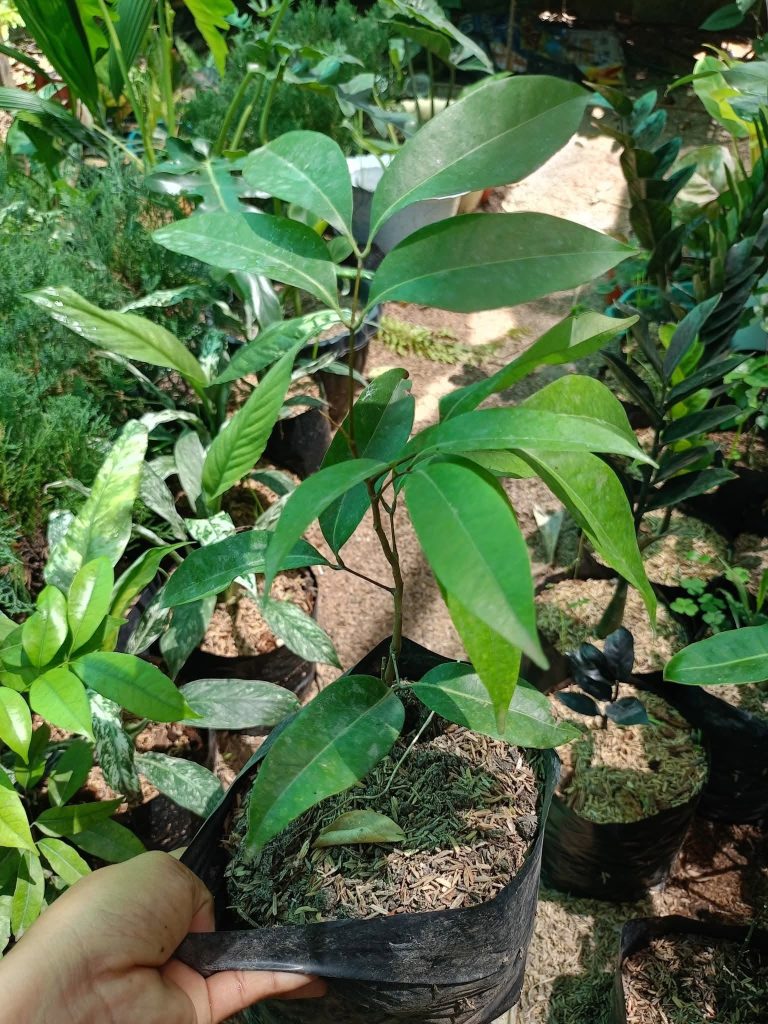
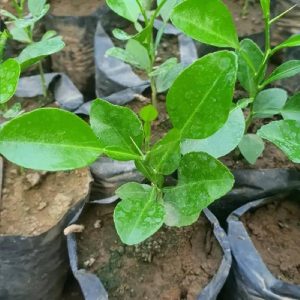
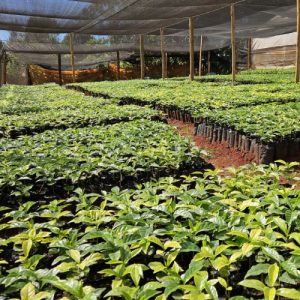
Luchee Seedling at Fruit Africa Veriplant nursery
Where to Buy Lychee Seedlings in Kenya
Fruit Africa Veriplant sells lychee seedlings in Kenya. We operate from Murang’a, Nairobi, and Embu. We serve farmers across the country.
To order, call or WhatsApp us on 0714 994 444. You can also email us at sales@fruitafrica.org. Tell us your location, the number of seedlings you need, and what you plan to do with the crop. We advise you on the right quantity and the best way to get the seedlings to you.
Local orders are handled directly. If you are near Murang’a, Nairobi, or Embu, you can collect from the nursery. If you are in another county, we arrange delivery to your nearest town. Call us to confirm the details for your area.
For international buyers, the process is different but straightforward. You send us a request for quote by email or WhatsApp. Tell us the number of seedlings you need, the variety you want, and your destination country and city. We respond with a quotation that covers the seedlings, packing, freight, documentation, and the timeline for delivery. We guide you on the plant health requirements for your country and connect you with agents who understand live plant imports.
We do not publish delivery charges because the cost depends on your location and the number of seedlings. Call us and we give you a clear figure.
Lychee Varieties
Lychee belongs to the genus Litchi. The most common type grown in Kenya is Litchi chinensis. Within this species, there are several varieties that differ in fruit size, sweetness, and maturity time.
Mauritius (Tai So)
Mauritius is the most widely grown commercial lychee variety in the world. It produces large, oval fruit with bright red skin and sweet, floral flesh. The fruit matures early to mid-season. It is the variety most Kenyan consumers recognise. If you want a reliable variety with a proven market, Mauritius is a strong choice.
Brewster
Brewster is a popular variety in Florida and other subtropical regions. It produces large, elongated fruit with deep red skin and sweet, juicy flesh. The fruit matures mid-season. It stores well. It is a good choice for farmers who want a variety with good shelf life.
Bengal
Bengal is a variety grown in Brazil and other parts of South America. It produces large fruit with red skin and sweet flesh. The tree is vigorous and productive. The fruit matures mid to late season. It is a good choice for farmers who want a high-yielding variety.
Kaimana
Kaimana is a variety developed in Hawaii. It produces large, bright red fruit with excellent flavour. The fruit matures early to mid-season. It is a premium variety with strong market demand.
How to Choose a Variety
Start with Mauritius or Brewster for commercial production. They have the best fruit size, sweetness and market acceptance. Once you gain experience, you can add other varieties.
Lychee Varieties Comparison
| Variety | Fruit Colour | Flavour | Maturity | Market |
|---|---|---|---|---|
| Mauritius | Red | Sweet, floral | Early to mid | Fresh market, export |
| Brewster | Deep Red | Sweet, juicy | Mid | Fresh market, export |
| Bengal | Red | Sweet | Mid to late | Fresh market |
| Kaimana | Bright Red | Excellent | Early to mid | Premium market |
How Fruit Africa Veriplant Propagates Lychee Seedlings
The way a seedling is raised determines how it performs in your field. At Fruit Africa Veriplant, we follow a careful process from mother tree selection to dispatch.
Mother Tree Selection
We start with mother trees. We select mother trees that produce good fruit. The fruit should be sweet. The size should be good. The tree should be healthy and productive. We do not collect material from any tree we find. We choose trees that have proved themselves over several seasons.
Propagation Method
Lychee can be propagated from seed, air layering, or cuttings. Seed-grown trees are variable and slow. They take 5 to 6 years or more to fruit. Cutting-grown and air-layered trees are genetically identical to the mother tree. They fruit earlier and produce consistent fruit quality. We prefer cutting-grown or air-layered seedlings for commercial planting.
Air-layering is a common method for lychee. The grower removes a ring of bark from a branch and wraps the area with moist soil or moss until roots form. The rooted branch is then cut off and planted. Trees from air-layers fruit in 3 to 4 years. They are true to the parent tree. Quality is consistent.
Cuttings are also used. A piece of stem is cut from a selected mother tree and planted in a rooting medium. Once roots form, the cutting is transplanted. Trees from cuttings fruit in 3 to 4 years. They are also true to the parent tree.
Nursery Management
While the seedlings grow in the nursery, we manage them carefully. We water them when they need water. We keep the nursery clean. We monitor for pests and diseases. We remove any seedling that shows signs of disease before it spreads to the others.
Hardening
We harden the seedlings before dispatch. Hardening means gradually exposing the young plants to outdoor conditions. This prepares them for the field. A seedling that has not been hardened struggles after planting. A hardened seedling settles into the soil and starts growing with less stress.
Quality Inspection
Before dispatch, we inspect each seedling. We check the root system, the stem, and the leaves. We reject any seedling that shows signs of disease, pest damage, or poor growth. Only seedlings that meet our standard leave the nursery.
Packing and Delivery
We pack the seedlings carefully for transport. The roots are kept moist and the stems are protected. We deliver to farmers across Kenya and arrange export for international buyers.
How to Choose Healthy Lychee Seedlings
When you buy lychee seedlings, look at the plant, not only at the price.
Check the root system. If you can see the roots, they should be firm and light coloured. Dark, mushy roots are a sign of rot. Roots that circle tightly around the pot are a sign that the seedling stayed too long in the nursery.
Check the stem. It should be firm and straight. The bark should be clean. Any soft patch or dark spot on the stem is a warning sign.
Check the graft union. If the seedling is grafted, the union should be well healed. There should be no gap between the scion and the rootstock. A weak graft union can break later.
Check the leaves. They should be green and firm. Yellowing leaves suggest poor nutrition or root problems. Wilting leaves suggest the seedling has been stressed. Spots on the leaves suggest disease.
Check for pests. Look under the leaves and around the stem. Scale insects, mealybugs, and aphids are common nursery pests. A few insects are easy to manage, but a heavy infestation means the seedling has been neglected.
Check the container. The potting mix should be moist, not bone dry and not flooded. The pot should be intact. A cracked pot means the root ball may have been damaged.
Do not buy a seedling simply because it is the biggest one on the table. Size matters, but health matters more. A healthy medium seedling will outperform a large unhealthy one.
Where Lychee Grows Best in Kenya
Lychee grows best in subtropical climates with warm summers and cool, dry winters. The tree needs a period of cool weather to induce flowering. It does not like frost. It does not like waterlogged soil.
In Kenya, the tree suits the coastal and mid-altitude regions. The coastal counties have suitable conditions. Parts of the eastern highlands also work. The central highlands suit the tree as well, provided the soil drains well.
Lychee farming is most suitable in Kilifi, Kwale, Mombasa, Taita Taveta, Meru, Embu, and parts of Machakos. The tree grows from about 500 to 1,500 meters above sea level. It needs temperatures between 20°C and 35°C. It needs annual rainfall of at least 1,000 millimeters. It needs well-drained soil with a pH of 5.5 to 7.5.
Do not choose a site only because the county is known for fruit farming. Look at your own farm. Check your rainfall pattern, your water source, your soil, and your temperatures. If you are not sure, call us on 0714 994 444 and describe your farm. We tell you honestly whether lychee suits your location.
Lychee Soil Requirements
Lychee prefers well-drained soil that is rich in organic matter. The tree does not like soil that stays wet for long periods. Waterlogged soil causes root rot, and root rot kills the tree.
Deep, well-drained loamy or sandy loam soils are good. Lateritic soils work well. Clay soils work if you improve drainage. Heavy clay that holds water after rain is a problem, and you need raised planting mounds or extra organic matter to fix it.
The tree tolerates a wide pH range. It grows in slightly acidic to neutral soil. The ideal pH range is 5.5 to 7.5. Strongly acidic soil locks up nutrients. Alkaline soil causes nutrient deficiencies. A soil test tells you where your soil stands.
Organic matter matters. Compost and well-rotted manure improve soil structure, hold moisture, and feed the tree slowly. Lychee responds well to organic matter.
Do a soil test before planting. It costs a small amount of money and tells you the pH, the nutrient levels, and the organic matter content. With that information, you can prepare the soil correctly instead of guessing.
Avoid sites where water collects after rain. Avoid sites where the soil is compacted and hard. Avoid sites where the topsoil has been removed. All three problems make it hard for the tree to establish.
Lychee Climate Requirements
Temperature is important. Lychee grows best at temperatures between 20°C and 35°C. It handles heat well. It does not handle frost. Young trees are especially sensitive. If your area gets frost, plant in a protected spot or choose another crop.
Rainfall is important. The tree needs at least 1,000 millimeters a year. It tolerates lower rainfall once established. Where rainfall is low or unreliable, you need irrigation. Do not assume the tree will survive a long dry season without water during establishment.
Water availability is important. The tree has a deep root system once established. Young trees need regular water. Mulching helps hold moisture. Drip irrigation delivers water where the roots can use it.
Sunlight is important. The tree needs full sun, at least 6 to 8 hours a day. Young trees benefit from light shade during the hottest part of the day, but mature trees produce best in open conditions.
Wind is important. Strong wind damages young trees and can knock fruit off the tree. A windbreak helps where wind is a problem. Young trees require wind protection because they remain sensitive to strong winds.
Lychee needs a short dry period to trigger flowering. A dry spell of 2 to 3 months can induce flowering. This is why the tree performs well in areas with distinct wet and dry seasons.
How Many Lychee Trees Fit on One Acre?
The number of trees per acre depends on the spacing you choose. The wider the spacing, the fewer the trees. The closer the spacing, the more trees you plant, but each tree has less room to grow.
At a spacing of 6 metres between rows and 6 metres between trees, each tree gets 36 square metres. One acre is about 4,047 square metres. Divide 4,047 by 36 and you get about 112 trees per acre. In practice, access paths, headlands, and other layout needs reduce the number. A workable figure is around 112 trees per acre at this spacing.
Some farmers use wider spacing of 8 metres by 8 metres. Each tree gets 64 square metres. Divide 4,047 by 64 and you get about 63 trees per acre. Wider spacing gives each tree more room. The orchard is easier to manage. The trade off is fewer trees and lower early production per acre.
Some farmers use closer spacing of 5 metres by 5 metres. Each tree gets 25 square metres. Divide 4,047 by 25 and you get about 160 trees per acre. Closer spacing gives more trees early on, but the trees crowd each other as they grow. You need more pruning and more careful management.
The right spacing depends on your variety, your soil, your water supply, and how you plan to manage the orchard. Do not copy a spacing figure without thinking about your own farm.
Spacing and Plant Population Table
| Spacing | Trees per Acre | Suitability |
|---|---|---|
| 6m x 6m | 112 | Standard commercial orchard |
| 8m x 8m | 63 | Wider spacing, easier management |
| 5m x 5m | 160 | High density, intensive management |
Lychee Spacing
Spacing is not only about how many trees fit on an acre. It affects how the orchard works for years.
Lychee grows into a large tree. It needs room for the canopy to develop. If trees are too close, branches touch, light drops, and airflow falls. Poor airflow encourages disease.
You need room to walk between the trees. You need room to prune, spray, and harvest. You need room to move mulch and manure. You need room for irrigation lines.
Weed control is easier when rows are clear. Harvesting is easier when you can reach the trunk from both sides. Pruning is easier when you can see the branch structure.
A spacing of 6 metres by 6 metres is a practical starting point for most Kenyan conditions. You can adjust it based on your soil fertility, your water supply, and your management plan.
How to Prepare Land for Lychee
Good land preparation gives the tree a strong start.
Clear the land. Remove weeds, bushes, and old crop residues. If there are tree stumps, remove them or work around them.
Test the soil. Check pH, nutrients, and organic matter. The results guide your manure and fertilizer plan.
Level the land if it slopes. You do not need a flat field, but you need even water movement. If water collects in one corner, fix it before planting.
Mark the planting positions. Use the spacing you chose. Keep rows straight so that management is easy.
Plan drainage. If your land holds water, make raised beds or mounds. Lychee does not survive in waterlogged soil.
Add organic matter. Mix compost or well-rotted manure into the planting positions. This feeds the tree and improves soil structure.
Plan water access. You need water at planting and through dry spells. Drip irrigation is efficient and works well for lychee.
Protect the site from livestock. Goats and cattle eat young trees. Fence the orchard if animals move through the area.
How to Prepare Lychee Planting Holes
Dig the planting holes before the seedlings arrive. A hole that has been dug and left to settle is better than a hole dug on planting day.
A hole of 60 centimetres by 60 centimetres by 60 centimetres works well for lychee. Separate the topsoil from the subsoil. The topsoil goes back into the hole. The subsoil goes to the side.
Mix the topsoil with 20 kilograms of well-rotted manure and 250 grams of phosphate fertilizer. Compost also works. The aim is to give the young tree a fertile pocket where its roots can grow.
Put the mixture back into the hole. Leave the hole to settle for a week or two if time allows. This gives the soil time to settle and prevents the seedling from sinking after planting.
Do not fill the hole with raw manure. Raw manure burns roots. Use only well-rotted material.
How to Plant Lychee Seedlings
Plant at the start of the rains if you can. If you have irrigation, you can plant at other times, but rain makes establishment easier.
Handle the seedling carefully. Do not throw it around. Do not drop it.
Remove the container. If the seedling is in a bag, cut the bag away. Do not pull the seedling out by the stem. You can damage the roots.
Keep the root ball intact. The root ball holds the fine roots that take up water. If it breaks apart, the seedling suffers.
Place the seedling in the hole. The base of the stem should sit at the same level as it was in the nursery. The graft union must stay above the soil level. Do not plant too deep. Do not plant too shallow.
Fill the hole with soil. Firm the soil gently around the root ball. Do not stamp on it. You want the soil to hold the seedling without squeezing the roots.
Water immediately. Give the seedling a good soaking. This settles the soil around the roots and removes air pockets.
Mulch around the base. Keep the mulch a little away from the stem. Mulch holds moisture and keeps weeds down.
Protect the seedling. A small shade structure helps in hot weather. A stake helps in windy areas. A fence or guard helps where animals are nearby.
Lychee Watering Requirements
Water is critical during establishment. Young roots are shallow and dry out quickly.
Water the seedling regularly during the first months. The exact frequency depends on your soil and weather. Sandy soil dries faster than clay soil. Hot weather dries soil faster than cool weather.
Once the tree is established, it still needs moisture. Lychee is not a dryland tree. It comes from a subtropical climate. During dry spells, water the tree deeply and less often. Deep watering encourages roots to go down. Light watering keeps roots at the surface, where they dry out fast.
During flowering and fruit development, keep the soil moist. Dry soil at this stage affects fruit size and quality. However, a short dry period of 2 to 3 months can trigger flowering. This is the balance you need to manage.
Mulch helps a lot. It slows evaporation and keeps the soil cool. It also adds organic matter as it breaks down.
Drip irrigation is the most efficient system for lychee. It delivers water directly to the root zone. It also makes it easy to apply fertilizer through the system.
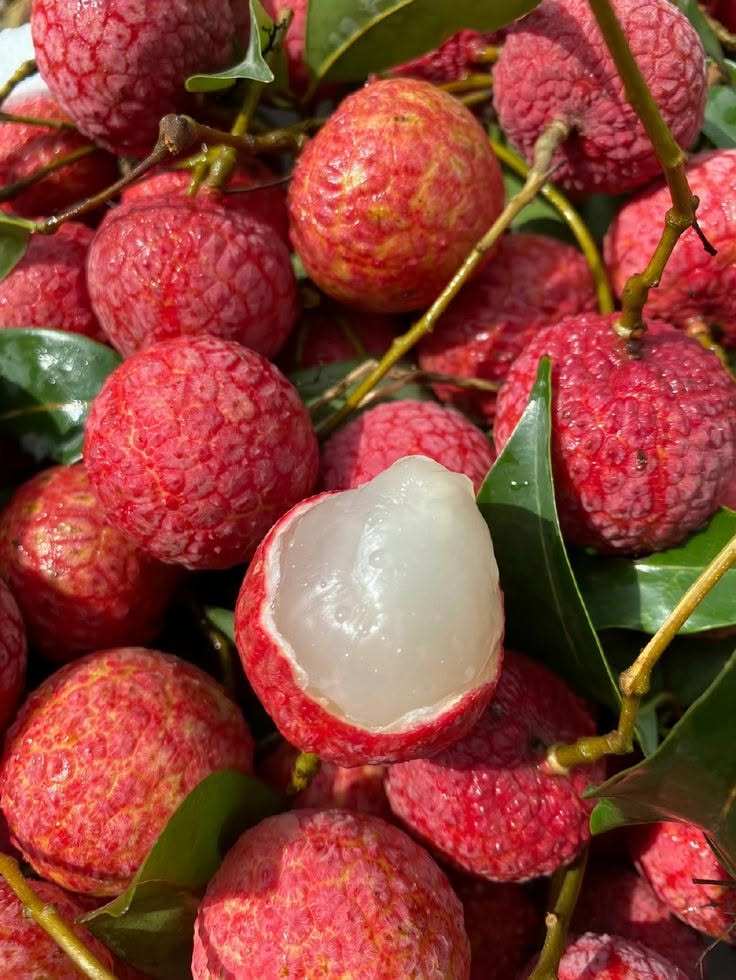
Lychee Fruits
Lychee Manure and Fertilizer Requirements
Lychee does not need heavy fertilization. The tree grows well and responds to organic matter.
Use well-rotted manure or compost. Apply it around the base of the tree. Keep it a little away from the stem. Apply 20 to 30 kilograms of manure per tree per year.
Soil testing guides your fertilizer plan. Do not apply fertilizer blindly. Excess nitrogen pushes leafy growth and reduces fruiting. Excess fertilizer also damages roots.
For young trees, apply 100 grams of CAN per tree per application. For mature trees, apply 200 to 250 grams of NPK 17:17:17 per tree per application twice per year.
Apply fertilizer twice a year, especially during flowering and after fruit set. Potassium supports fruit size and quality. Phosphorus supports root development and flowering. Nitrogen supports vegetative growth.
Avoid over-fertilizing. Lychee is a hardy tree. Too much fertilizer does not make it grow faster. It creates problems. It pushes leaf flush at the expense of flowers and fruit.
Lychee Training, Pruning and Orchard Management
Young lychee trees need training to build a strong structure. The tree grows vigorously and can become unmanageable without regular pruning.
First Year Training
Allow the tree to establish. Select three to four main branches spaced evenly around the trunk. Remove competing branches and suckers. Prune to shape the tree and remove weak branches.
Mature Tree Pruning
Prune every year after harvest. Remove dead, diseased and crossing branches. Cut back long shoots to encourage branching. Remove water shoots and unwanted suckers because they consume resources without contributing effectively to the desired canopy. The objective should be controlled canopy renewal rather than severe annual cutting.
Canopy Management
Keep the canopy open. Remove leaves that shade the fruit too much. Expose the fruit to sunlight. Good canopy management reduces disease pressure and improves fruit colour and sugar content. Pruning improves light penetration and air circulation and makes spraying, harvesting and fruit thinning easier. It also helps control tree height.
Fruit Thinning
A lychee tree can produce numerous fruits in a single cluster. Allowing every fruit to develop can result in smaller fruit and place excessive weight on branches. Fruit thinning redirects the tree’s available carbohydrates, water and nutrients toward fewer fruits.
The practice is particularly useful when the market rewards larger, attractive fruit. Farmers should avoid thinning excessively. The objective is to establish a manageable crop load rather than eliminate most of the potential harvest.
Orchard Management
Weed control matters. Weeds compete for water and nutrients. Keep the area around the tree clear. Mulch helps.
Monitor pests and diseases. Look at the leaves, the stem, and the fruit. Deal with problems early.
Keep the orchard clean. Remove fallen fruit and leaves. This reduces disease and pests.
Lychee Pests and Diseases
Lychee is hardy. It is not invincible. Watch out for these problems.
Common Pests
Fruit flies are the most common pest. They attack the fruit when it matures. Use traps for fruit flies. Maintain orchard hygiene. Remove fallen fruits.
Aphids are also common. They feed on young shoots and leaves. Control with bio-pesticides or approved insecticides.
Mites are another common pest. They feed on leaves and reduce photosynthesis. Control with miticides.
Common Diseases
Powdery mildew is a fungal disease. It appears as white powder on leaves. Control with copper-based fungicides.
Anthracnose is a fungal disease. It causes dark lesions on leaves and fruit. Control with copper fungicides.
Root rot is caused by waterlogged soil. Improve drainage and avoid overwatering.
Pest and Disease Management
Use registered products approved for lychee. Follow the label rate and the pre-harvest interval. Do not present one treatment as universally suitable. Ask us for guidance on your specific disease problem. Call 0714 994 444.
The single biggest protection against most of these problems is starting with clean, healthy planting material. Avoid uncertified seedlings from unknown sources. Cutting-grown or air-layered seedlings from a trusted nursery matter.
How Long Does Lychee Take to Produce Fruit?
This is one of the most important questions for anyone buying lychee seedlings. The answer depends on how the tree was propagated.
A lychee tree grown from seed takes 5 to 6 years or more to fruit. The tree puts its energy into roots and trunk before it starts producing. The fruit quality is variable.
A cutting-grown or air-layered seedling fruits sooner. The tree still needs time to establish and grow. A realistic expectation is 3 to 4 years before first fruiting, and longer before the tree reaches meaningful production.
Year 3 to 4: First fruit production begins. A young tree produces 5 to 10 kilograms of fruit.
Year 5 to 7: Production increases. By year 5 to 7, production rises to 20 to 40 kilograms per tree.
Year 8 to 10: Production reaches 50 to 80 kilograms per tree.
Year 15 onward: Peak production. Mature trees in full production yield 100 to 150 kilograms per year under good management.
Do not expect fruit in the first year. Do not expect a heavy crop in the second. Lychee is a long-term crop. The tree is an investment in time as well as money.
Once the tree starts fruiting, it continues for decades. The productive lifespan of a lychee tree is 50 to 100 years. Trees planted today will serve the farmer who plants them for decades. They will also serve their children and grandchildren.
Some lychee varieties have a biennial bearing pattern. They produce heavy crops one year and light crops the next. Good management reduces this pattern. Regular feeding, proper pruning, and consistent watering help balance production.
Lychee Yield Per Tree
Yield per tree depends on the age of the tree, the variety, the soil, the water supply, the climate, and how you manage the orchard.
A young cutting-grown tree in year 3 to 4 produces 5 to 10 kilograms. The tree is still building its structure.
By year 5 to 7, a mature tree produces 20 to 40 kilograms per year under good conditions.
By year 8 to 10, production reaches 50 to 80 kilograms per tree.
By year 15 onward, a tree in full production yields 100 to 150 kilograms per year under good management.
Do not expect maximum yield from every tree. The figure is a planning guide, not a promise.
The tree produces fruit once a year. The harvest season lasts several weeks. Lychee ripens in June and July in most parts of Kenya.
Yield also depends on pollination. Lychee is pollinated by bees and other insects. A healthy orchard with flowers and beneficial insects tends to set more fruit.
Lychee Yield Per Acre
At 112 trees per acre, a well-managed orchard can produce significant yields.
Using conservative figures: 112 trees multiplied by 50 kilograms each gives 5,600 kilograms per acre at year 8 to 10.
At year 15 onward, 112 trees multiplied by 100 kilograms each gives 11,200 kilograms per acre.
Under standard management, mature orchards produce between 8,000 and 15,000 kilograms per acre at full production.
In year 3 to 4, yields are a fraction of this. Full production comes from year 8 to 10 onward.
Lychee Harvesting
Lychee fruit is ready when the skin turns bright red. The fruit softens slightly. The flavour becomes sweet and floral.
Harvest in the cool part of the day. Handle the fruit carefully. Lychee bruises easily.
Pick the fruit by cutting entire clusters rather than picking individual fruits. This prevents rind damage and fruit spoilage. Place the clusters into clean crates. Do not pile too many fruits on top of each other.
Sort the fruit. Remove damaged or overripe fruit. Grade by size and colour if you are selling to a buyer with specific requirements.
Lychee is perishable. Fresh fruit lasts 3 to 5 days at room temperature. The fruit only ripens on the tree and has a very short shelf-life without refrigeration as the crop deteriorates very quickly after harvest. In refrigerated storage, the fruit lasts 1 to 2 weeks.
Pack the fruit in ventilated containers. Do not leave it in the sun.
If you have more fruit than you can sell fresh, process it. The fruit can be dried, juiced, or made into jam. Processing extends shelf life and adds value. Lychees are processed into juice, ice cream, pies, desserts, wine, jams, syrup, and canned products.
How to Sell Lychee Fruit in Kenya
Lychee is not a common fruit in Kenyan supermarkets, but the market is growing. Most of the fruit is imported and sold in high-end urban markets.
Direct sales work well. Sell to neighbours, friends, and local buyers. Offer samples. Explain what the fruit is and how to eat it.
Hotels and restaurants buy lychee. Chefs use it in desserts, salads, and juices. Approach hotels and restaurants in your area. Bring samples.
Fruit retailers and supermarkets work. A shelf with a rare fruit attracts attention. People buy out of curiosity. Supermarkets in Nairobi stock lychee when quality fruit is available.
Processors work if you have volume. Juice and jam makers buy fruit when supply is steady.
Direct farm sales work. Invite buyers to the farm. Show them the tree and the fruit. Sell fresh fruit on site.
Find your market before you plant. A large orchard with no buyer is a problem. A small orchard with a clear buyer is a business.
Lychee Farming Cost Per Acre
Costs depend on your location, your spacing, your water source, and how you prepare the land. The table below shows a planning framework. Use it to build your own budget with local figures.
Establishment Cost Per Acre
| Cost Item | Estimated Requirement | Estimated Cost (KSh) |
|---|---|---|
| Seedlings | 112 at KSh 3,500 each | 392,000 |
| Land preparation | Clearing, ploughing, marking | 20,000 to 40,000 |
| Planting | Labour | 10,000 to 20,000 |
| Manure | 20 kg per hole | 20,000 to 30,000 |
| Fertilizer | Phosphate at planting | 15,000 to 25,000 |
| Irrigation | Drip system | 80,000 to 150,000 |
| Labour | First year management | 40,000 to 60,000 |
| Other establishment costs | Mulch, fencing, tools | 20,000 to 40,000 |
| Total establishment cost | 597,000 to 757,000 |
Annual Operating Cost After Establishment
| Item | Estimated Cost (KSh) |
|---|---|
| Water and irrigation maintenance | 30,000 |
| Manure and fertilizer | 40,000 |
| Pest and disease control | 25,000 |
| Pruning and training labour | 30,000 |
| Harvesting labour | 40,000 |
| Packaging and transport | 50,000 |
| Miscellaneous | 15,000 |
| Total Annual Operating Cost | 230,000 |
These are planning figures. Your actual costs depend on your farm. Call us on 0714 994 444 if you want guidance on your budget.
Lychee Farming Profit Per Acre
Profit depends on yield, price, and cost. Lychee prices vary depending on the market. As of September 2026, a 250 gram punnet sells for KSh 600 to KSh 800 in Kenyan supermarkets. That translates to KSh 2,400 to KSh 3,200 per kilogram at retail. At the farm gate, prices range from KSh 300 to KSh 600 per kilogram. Export prices reach KSh 500 to KSh 1,000 per kilogram for quality fruit meeting grade standards.
The table below shows scenarios, not promises. It assumes 112 trees per acre and a mature orchard.
Yield and Profit Scenarios
| Scenario | Yield per Tree | Total Yield per Acre | Price per kg | Gross Sales (KSh) |
|---|---|---|---|---|
| Conservative | 50 kg | 5,600 kg | KSh 300 | 1,680,000 |
| Moderate | 80 kg | 8,960 kg | KSh 450 | 4,032,000 |
| High | 150 kg | 16,800 kg | KSh 600 | 10,080,000 |
Estimated Net Surplus
| Scenario | Gross Sales (KSh) | Operating Cost (KSh) | Estimated Net Surplus (KSh) |
|---|---|---|---|
| Conservative | 1,680,000 | 230,000 | 1,450,000 |
| Moderate | 4,032,000 | 230,000 | 3,802,000 |
| High | 10,080,000 | 230,000 | 9,850,000 |
The net surplus is not the same as profit. It does not account for land cost, depreciation of irrigation equipment, finance costs, management costs, post-harvest losses, market commissions, taxes where applicable, or replacement seedlings. Treat these figures as a planning guide, not a guarantee.
Break-Even Calculation
If your farm sells lychee at KSh 450 per kilogram and your annual operating costs are KSh 230,000, your operating break-even quantity is about 511 kilograms. That covers your running costs only.
To recover your first-year establishment investment of about KSh 597,000 to KSh 757,000, you need to sell more. At KSh 450 per kilogram, you need to sell about 1,327 to 1,682 kilograms just to recover the establishment cost. Add the annual operating cost and the full payback quantity rises.
Your full investment payback comes in the fifth to seventh year if your yields and prices hold. From year eight onwards, the orchard generates strong returns. The trees keep producing for 50 to 100 years.
These are estimates. Actual results depend on variety, management, water availability and market access.
Common Mistakes When Growing Lychee in Kenya
Many farmers make the same mistakes with lychee. Avoid them.
- Buying poor planting material. Weak seedlings waste years. Cheap seedlings from unknown sources often come from seeds, which produce trees that take 5 to 6 years or more to fruit and give poor quality fruit.
- Planting without checking soil. Poor soil or poor drainage kills trees.
- Poor water management. Too little water stresses the tree. Too much water rots the roots.
- Incorrect spacing. Trees crowd each other and produce less.
- Weak land preparation. Hard soil and poor drainage slow establishment.
- Ignoring drainage. Waterlogged soil kills lychee.
- Over-fertilizing. Excess fertilizer damages roots and reduces fruiting.
- Neglecting weed control. Weeds compete for water and nutrients.
- Planting without a market plan. A rare fruit needs a buyer who understands it.
- Expecting immediate returns. Lychee takes years to fruit.
- Not managing biennial bearing. Some varieties produce heavy crops one year and light crops the next. Good management reduces this pattern.
Can Lychee Be Grown in Containers?
Lychee grows into a large tree. It is not suitable for long-term container growing. A young tree can grow in a large pot for a year or two, but it needs to go into the ground to reach its full size and production.
Container growing suits home gardeners who want to start a tree before planting it in the ground. It does not suit commercial production.
Can Lychee Be Grown on a Small Farm?
Yes. Lychee suits small farms. You can plant a few trees in a home garden or a small orchard. The tree produces a lot of fruit, so a few trees give you a good harvest.
A small planting reduces risk. You learn how the tree grows. You build a market for the fruit. You expand later if the crop works for you.
Small farms can intercrop lychee with vegetables, beans, and other short season crops. This gives income while the trees grow.
Can Lychee Be Grown Commercially in Kenya?
Commercial lychee farming in Kenya is possible. It is not easy, but it is possible. The tree grows well in several parts of the country. The fruit sells at high prices. The market is not yet flooded with local supply. These are the conditions that make a commercial crop worth considering.
But before you plant 100 trees, you need to answer several hard questions about your farm, your money, and your market. Let us go through them one by one.
Check Your Climate
Lychee is a subtropical tree. It needs warm temperatures during the growing season and cool temperatures during the winter dormancy period. The tree needs a dry spell of about two to three months to trigger flowering. Without that dry period, the tree produces leaves instead of flowers. You get a healthy tree with no fruit.
The tree does not handle frost. Young trees are especially sensitive. If your area gets frost, plant in a protected spot or choose another crop. The tree also does not like waterlogged soil. If your land holds water after rain, you need raised beds or drainage before you plant.
The main lychee growing areas in Kenya are the coastal counties of Kilifi, Kwale, and Mombasa. The tree also grows in Taita Taveta. In the eastern highlands, Meru and Embu have suitable conditions. Parts of Machakos can also work. The tree grows from about 500 to 1,500 meters above sea level.
Do not assume your farm is suitable because it is in one of these counties. Look at your own rainfall pattern, your water source, your soil, and your temperatures. If you are not sure, call us on 0714 994 444 and describe your farm. We tell you honestly whether lychee suits your location.
Check Your Soil
Lychee prefers well-drained soil that is rich in organic matter. Deep loamy or sandy loam soils are best. Lateritic soils also work well. Clay soils work if you improve drainage. Heavy clay that holds water after rain is a problem. You need raised planting mounds or extra organic matter to fix it.
The tree tolerates a wide pH range. The ideal range is 5.5 to 7.5. Strongly acidic soil locks up nutrients. Alkaline soil causes nutrient deficiencies. A soil test tells you where your soil stands. Do the test before you plant. It costs a small amount of money and saves you from guessing.
Check Your Water
Lychee needs moisture through the year. Young trees need regular watering during establishment. Mature trees need water during flowering and fruit development. But the tree also needs a short dry period to trigger flowering. This is the balance you must manage.
If you have reliable irrigation, you can control the water. You can give the tree the moisture it needs during fruit development. You can also reduce water during the dry period to trigger flowering. Without irrigation, you depend on rainfall. That makes commercial production riskier. A dry spell that lasts too long stresses the tree. A wet spell during the flowering period reduces fruit set.
Drip irrigation is the most efficient system for lychee. It delivers water directly to the root zone. It also makes it easy to apply fertilizer through the system.
Check Your Market
Lychee is not a common fruit in Kenyan supermarkets. Most of the fruit on the shelves is imported. The import gap is wide. That means there is room for local production. But it also means you need to build the market. Most Kenyan consumers have not tasted fresh lychee. You need to explain what the fruit is and how to eat it.
Direct sales work well. Sell to neighbours, friends, and local buyers. Offer samples. Hotels and restaurants buy lychee for desserts and juices. Fruit retailers and supermarkets buy the fruit when quality is good. Processors buy fruit when supply is steady.
Find your market before you plant. A large orchard with no buyer is a problem. A small orchard with a clear buyer is a business.
Check Your Labour
Lychee needs regular management. You need labour for pruning, spraying, weeding, and harvesting. The tree grows large. Harvesting requires climbing or using ladders. You need people who can work safely at height. If you cannot find or afford that labour, the orchard suffers.
Check Your Cash Flow
This is the hardest part for many farmers. Lychee is a long-term crop. The tree takes years to fruit. You spend money on seedlings, land preparation, manure, irrigation, and labour for years before you see income. You need other sources of income while you wait.
If you are planting a large orchard, plan your cash flow carefully. Do not put all your money into lychee and then run out of funds before the trees start producing. Intercrop with short season crops. Keep other income streams running. Be patient.
The Bottom Line on Commercial Lychee
Commercial lychee farming can work in Kenya. The climate in several counties is suitable. The market is open. The prices are high. But you need the right site, the right seedlings, reliable water, a clear market, and the patience to wait for the first harvest. If you have all these, lychee is a crop worth serious consideration. If you do not, plant a few trees first and learn before you invest heavily.
Buying Lychee Seedlings for Export
Fruit Africa Veriplant works with international buyers. The process starts with a request for quote.
Send us an email at sales@fruitafrica.org or a WhatsApp message to 0714 994 444. Tell us the number of seedlings you need, the variety, and your destination country and city.
We respond with a quotation. The quotation covers the seedlings, packing, freight, documentation, and the timeline. We guide you on the plant health requirements for your country. We advise you on the best shipping method, by air or sea, depending on the number of seedlings and how quickly you need them.
We pack the seedlings for long distance transport so they arrive in good condition. We keep you updated on the shipment from the moment it leaves our nursery to the moment it reaches your destination.
Send your request for quote today. We respond to every serious enquiry with clear numbers and clear timelines.
Frequently Asked Questions About Lychee Seedlings
-
How much are lychee seedlings in Kenya? Lychee seedlings from Fruit Africa Veriplant cost KSh 3,500 each.
-
Where can I buy lychee seedlings in Kenya? Buy from Fruit Africa Veriplant in Murang’a, Nairobi, and Embu. Call 0714 994 444 or email sales@fruitafrica.org.
-
How many lychee trees fit on one acre? At 6 metres by 6 metres spacing, about 112 trees fit on one acre.
-
How long does lychee take to produce fruit? A cutting-grown or air-layered seedling can fruit in 3 to 4 years. A seed-grown tree takes longer, often 5 to 6 years or more.
-
Is lychee suitable for farming in Kenya? Lychee suits warm coastal and mid-altitude areas with reliable moisture and well-drained soil. It does not suit frost-prone areas or waterlogged land.
-
What soil is best for lychee? Well-drained soil rich in organic matter, with slightly acidic to neutral pH of 5.5 to 7.5.
-
How often should lychee seedlings be watered? Water regularly during establishment. Frequency depends on your soil and weather. Keep the soil moist but not waterlogged. A short dry period of 2 to 3 months can trigger flowering.
-
What spacing is suitable for lychee? A spacing of 6 metres by 6 metres works for most Kenyan conditions.
-
How much does lychee farming cost per acre? Establishment costs range from about KSh 597,000 to KSh 757,000 per acre, depending on your irrigation and land preparation.
-
How much fruit does one lychee tree produce? A mature tree produces 100 to 150 kilograms per year under good management. Young trees produce 5 to 10 kilograms in the first few years.
-
Is lychee grown from seed or seedlings? Both. Cutting-grown or air-layered seedlings from selected mother trees are preferred because they fruit sooner and produce consistent quality.
-
Are cutting-grown lychee seedlings available in Kenya? Availability varies. Call Fruit Africa Veriplant on 0714 994 444 to confirm current stock.
-
Can lychee grow in dry areas of Kenya? No. Lychee needs reliable moisture. It does not suit dry areas without irrigation.
-
Can lychee grow in Nairobi? Nairobi has cooler conditions. Lychee can grow in Nairobi if watered well and protected from frost. Check your specific site.
-
Can lychee be grown in containers? A young tree can grow in a large pot for a year or two, but it needs to go into the ground to reach full production.
-
When should lychee seedlings be planted? Plant at the start of the rains, or anytime you have reliable irrigation.
-
How do I order lychee seedlings from Fruit Africa Veriplant? Call or WhatsApp 0714 994 444, or email sales@fruitafrica.org.
-
Does Fruit Africa Veriplant deliver lychee seedlings? Yes. We deliver countrywide and arrange export for international buyers.
-
Can international buyers order lychee seedlings? Yes. Send a request for quote by email or WhatsApp. We respond with details on freight, documentation, logistics, and timeframe.
-
How do I get a quotation for lychee seedlings? Call 0714 994 444 or email sales@fruitafrica.org with your location, quantity, and destination.
Final Buying Guide
So you have decided to plant lychee. Now you need to buy seedlings. This is where many farmers make mistakes that cost them years. Here is what you should check before you pay.
Confirm Your Climate Suits the Tree
Lychee needs warm temperatures, cool winters, and no frost. The tree also needs a dry spell of two to three months to trigger flowering. If your area does not have these conditions, the tree will grow but produce poorly or not at all. Check your local climate before you order seedlings.
Confirm Your Soil Drains Well
Waterlogged soil kills lychee. If your land holds water after rain, fix the drainage before you plant. Raise the planting beds. Add organic matter. Do not plant lychee in a spot where water sits.
Confirm Your Water Source
The tree needs moisture through the year. It also needs a short dry period to trigger flowering. If you have irrigation, you can manage both. If you depend on rainfall only, you take a bigger risk. Plan your water supply before you plant.
Confirm Your Spacing
Spacing affects how many trees you plant and how the orchard works for years. At 6 metres by 6 metres, you fit about 112 trees per acre. Wider spacing gives each tree more room but fewer trees per acre. Closer spacing gives more trees but more crowding. Choose the spacing that matches your soil, water, and management plan.
Confirm Your Market
Lychee is a rare fruit in Kenya. Most consumers have not tasted it. You need buyers who understand the fruit. Talk to hotels, restaurants, fruit retailers, and supermarkets before you plant. Find out what they want and what they will pay. Do not plant a large orchard without a clear market plan.
Confirm Your Seedling Source
This is where the biggest mistakes happen. Most seedlings available in Kenya are seed-grown. These are cheap, but they are slow. They take 5 to 6 years or more to fruit. The fruit quality is variable. You do not know what you are getting until the tree starts bearing. Some trees produce small, sour, or seedy fruits.
Seedlings propagated from cuttings are better. They take 3 to 4 years to fruit. They are genetically identical to the mother tree. You know the fruit quality before you plant. If you want consistent quality and faster returns, buy cutting-grown or air-layered seedlings from a nursery that stands behind its planting material.
What a Serious Nursery Should Tell You
When you buy lychee seedlings, ask questions. A serious nursery will answer them. Ask about the mother tree. Ask whether the seedling is from seed, cutting, or air-layer. Ask how the seedling was raised. Ask about the root system. Ask about the age of the seedling. Ask about after-sale support.
If the seller cannot answer these questions, walk away. You are about to invest years of time and money. Do not gamble on a seller who does not know their stock.
The Lychee Market Reality in Kenya
Lychee is still a niche fruit in Kenya. Most of what Kenyans eat is imported. Local production is low. The information available to farmers is limited. This creates both opportunity and risk.
The opportunity is that early adopters can supply a market that is not yet crowded. Hotels, high-end supermarkets, and specialty fruit shops buy lychee when quality fruit is available. The risk is that the market is small and undeveloped. You need to build demand as you build your orchard.
If you are patient and you do your homework, lychee can be a profitable crop. If you expect quick returns and easy sales, it is not the crop for you.
Before You Pay, Remember This
The cost of the seedling is small compared to the cost of the years you spend waiting. A cheap seedling that turns out weak or wrong costs you years. A quality seedling from a trusted nursery costs more upfront but pays you back over decades. Buy the best planting material you can afford. It is the foundation of everything that follows.
When you are ready to order, contact Fruit Africa Veriplant.
Fruit Africa Veriplant
Phone: 0714 994 444
WhatsApp: https://wa.link/di12my
Email: sales@fruitafrica.org
Contact Us: https://fruitafrica.org/contact-us/
Request for Quotation: https://fruitafrica.org/request-for-quotation/
We supply lychee seedlings across Kenya and work with international buyers who send a request for quote. Call or WhatsApp us today and let us help you get your lychee orchard started.



Reviews
There are no reviews yet.