
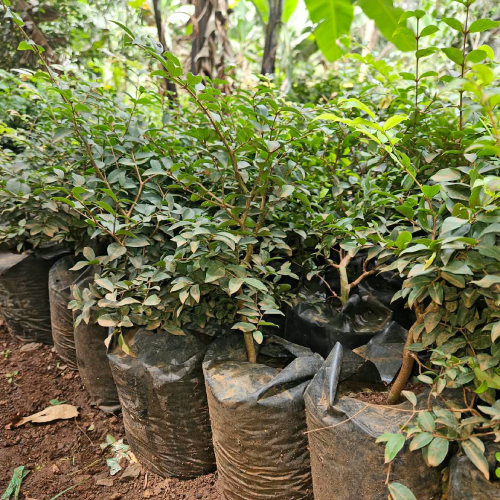
Description
Buy jaboticaba seedlings in Kenya at KSh 1,000 each from Fruit Africa Veriplant. Learn varieties, spacing, planting, yield, costs and how to order countrywide or for export.
Jaboticaba Seedlings in Kenya: Price, Varieties, Planting, Yield and Farming Guide
Jaboticaba is a fruit tree that grows fruit directly on its trunk and branches. The tree comes from Brazil. It is also called the Brazilian Grape Tree because the fruit looks like a large dark grape. Kenyan farmers who want to grow a fruit that few other farmers have are now asking for jaboticaba seedlings.
The fruit is sweet, the tree is attractive, and the market for rare fruit is growing in Kenya. If you have been looking for jaboticaba seedlings in Kenya, this guide explains the price, the varieties, how to plant, how long the tree takes to fruit, and what you need to think about before you put money into this crop.
Fruit Africa Veriplant sells jaboticaba seedlings at KSh 1,000 each. We deliver countrywide and we work with international buyers who send a request for quote. You reach us on 0714 994 444 or sales@fruitafrica.org. The rest of this article gives you the detail you need before you order.
What Is Jaboticaba?
Jaboticaba belongs to the genus Plinia. The most common type grown for fruit is Plinia cauliflora. It is native to Brazil, where it grows in the humid tropical forests of the south and southeast. The tree has spread to other tropical and subtropical regions because growers value the fruit and the tree’s unusual appearance.
The tree is evergreen. It keeps its leaves throughout the year. It grows slowly at first. A young tree spends its early years building a strong root system and a solid trunk before it starts to produce fruit. This slow start is normal for jaboticaba. It is not a sign of poor seedling quality. It is simply how the tree grows.
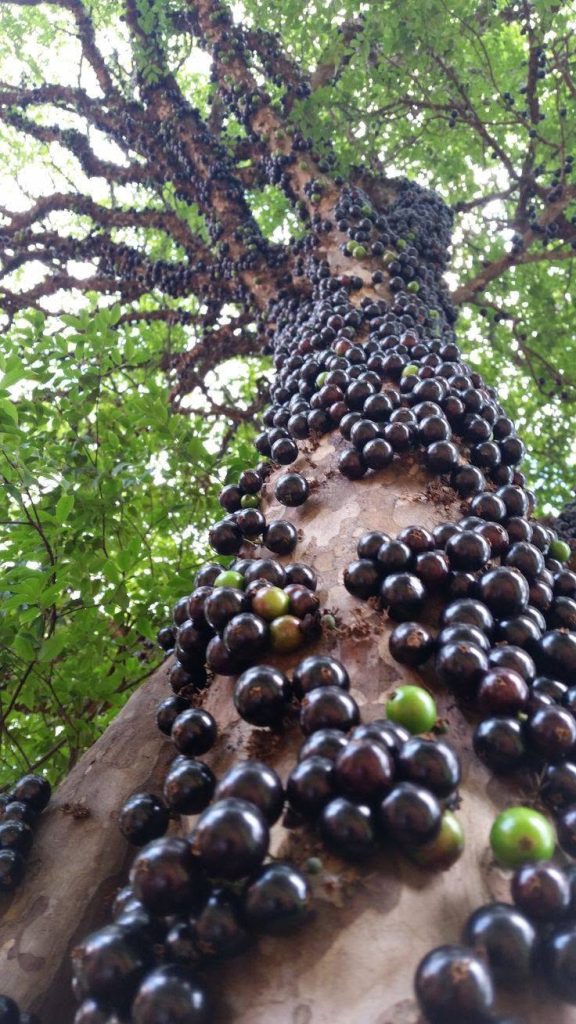
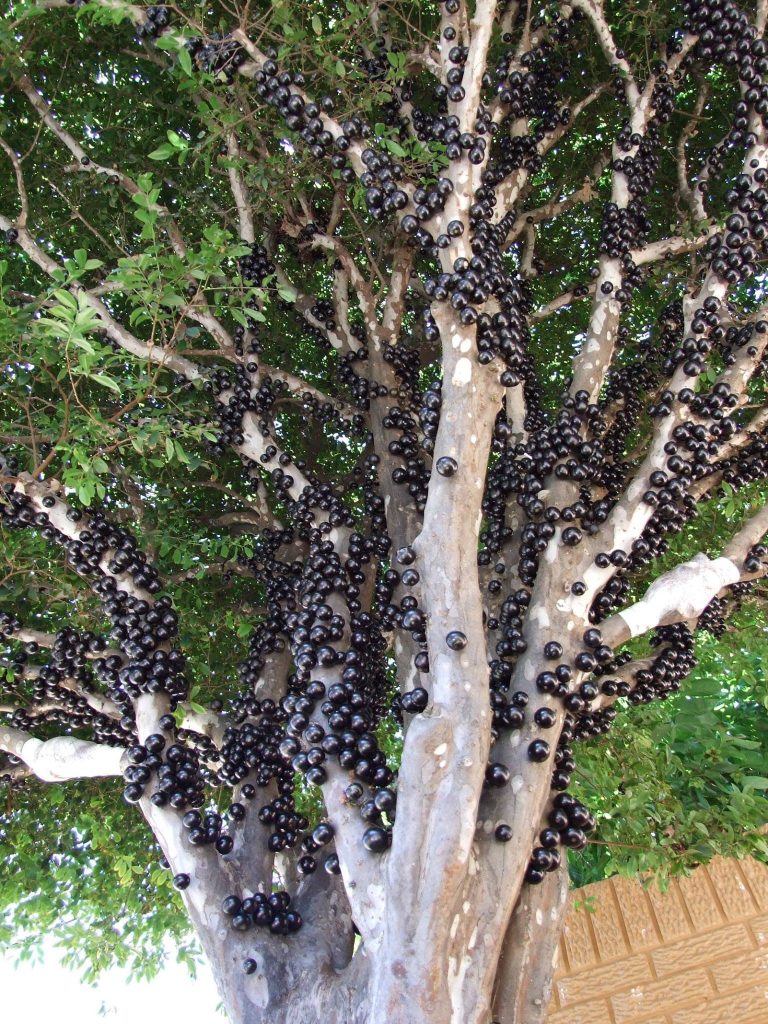
The fruit grows in clusters on the trunk and on the older branches. This growth habit is called cauliflory. Flowers emerge directly from the bark, and fruit follows soon after. The fruit is round and small, roughly the size of a large grape. The skin is dark purple to black when ripe. The flesh inside is white, sweet, and slightly acidic. Many people say the taste reminds them of grape, mangosteen, and guava at the same time. Each fruit holds one to four seeds.
The tree also has ornamental value. It has glossy dark green leaves. The bark peels in patches, giving the trunk a mottled, attractive look. When the tree fruits, the trunk and branches are covered in dark round fruit. This makes it a striking tree for home gardens and for orchards that double as tourist attractions.
Jaboticaba Seedlings in Kenya
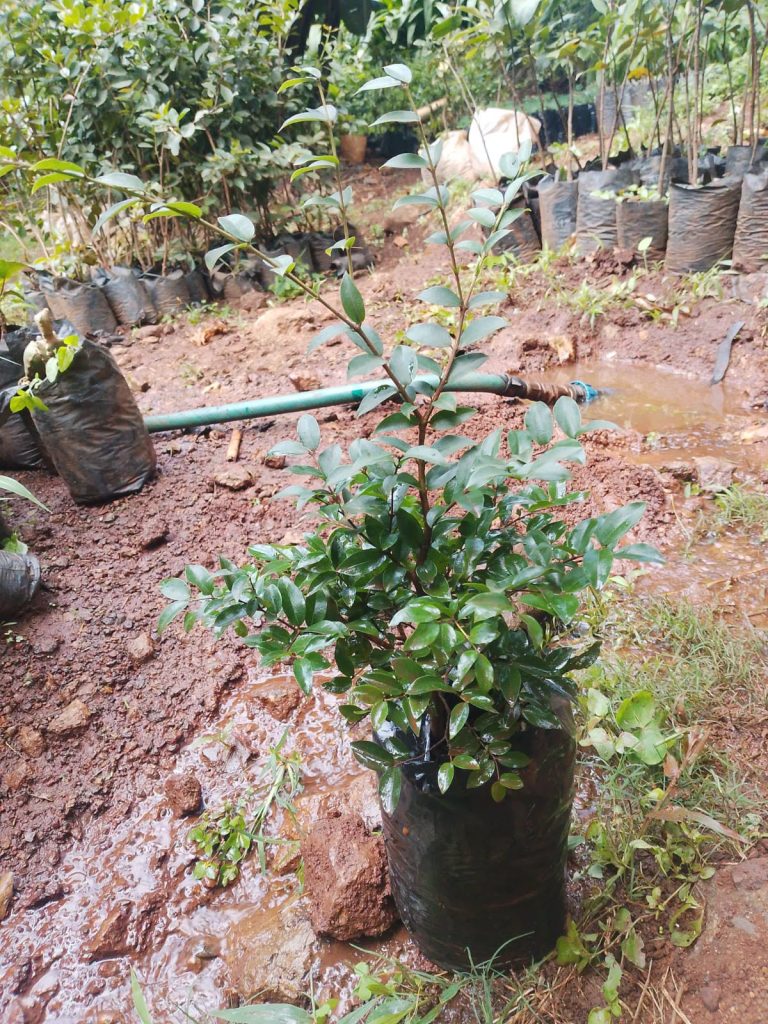
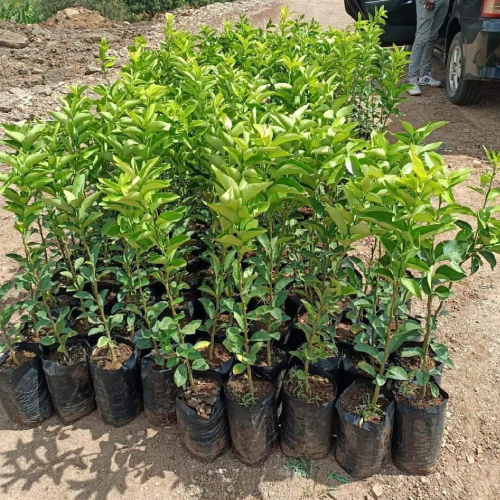
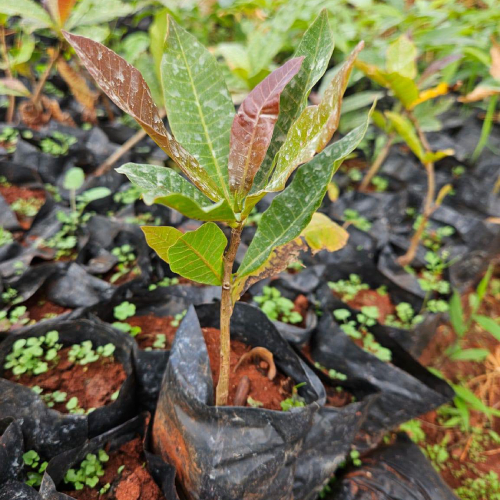
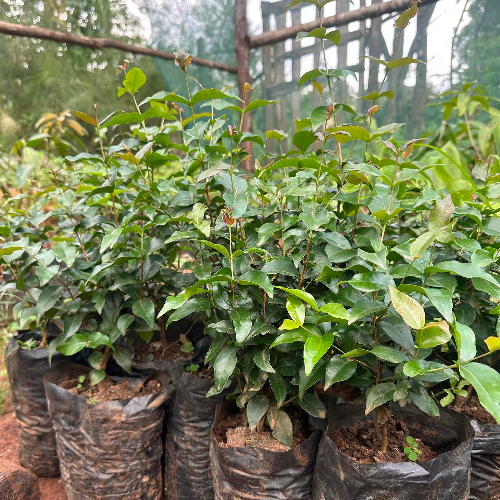
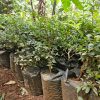
In Kenya, most farmers buy jaboticaba as a young rooted tree in a nursery bag. This is what we sell at Fruit Africa Veriplant. The seedling is ready to go into the ground. It has already passed the delicate stage of early growth. What you plant is what you harvest, provided you manage the tree well.
Jaboticaba is not a common crop in Kenya. Most farmers have never seen the tree. That is one reason the fruit attracts attention. When a tree carries fruit on its trunk, people stop and look. When they taste the fruit, they often want more.
Seedling quality matters more with jaboticaba than with many other fruit crops. The tree takes years to reach production. If you plant poor material, you will wait years before you discover the mistake. A weak seedling that never grows well wastes your land, water, labour, and time. A strong seedling gives you a healthy tree that produces fruit for decades.
Before you plant jaboticaba, think about your water source, your soil drainage, and your market plan. The tree needs reliable moisture. It does not like waterlogged soil. And because the fruit is not yet common in Kenya, you should know who will buy your harvest before you plant a large orchard.
The tree also suits mixed fruit farms. You can plant a few trees alongside other fruit crops and learn how the tree performs on your land. If it does well, you expand. If it does not, you have not risked your whole farm.
Jaboticaba Seedlings Price in Kenya
Jaboticaba seedlings from Fruit Africa Veriplant cost KSh 1,000 each. This is the price per rooted seedling. The seedling is hardened and ready for field planting.
Several things affect the price of jaboticaba seedlings. The first is the age and size of the seedling. A larger, older seedling costs more to raise and takes more resources in the nursery. The second is the propagation method.
Some planting material is more expensive to produce than others. The third is availability. Jaboticaba is not a common nursery crop in Kenya. When supply is limited, prices tend to stay firm. The fourth is the quality of the mother tree. Seed collected from a good mother tree produces better planting material, and that material costs more to produce.
What should you check before you pay? Look at the seedling closely. Check the leaves for colour and health. Check the stem for firmness. Check for any sign of pests or disease. Ask about the mother tree. Ask how the seedling was raised. A serious nursery will answer these questions without hesitation.
Cheap planting material is not automatically better. With jaboticaba, this matters even more than with fast crops. You will wait years to see whether the tree produces good fruit. If you save a few hundred shillings on a seedling that turns out weak, you lose years of time. The cost of the seedling is small compared to the cost of the years you spend waiting.
When you buy from Fruit Africa Veriplant, you get a seedling that has been raised with care. You also get guidance on planting and early management. That guidance is part of what you pay for, and it helps you avoid mistakes that cost more than the seedling itself.
Where to Buy Jaboticaba Seedlings in Kenya
Fruit Africa Veriplant sells jaboticaba seedlings in Kenya. We operate from Murang’a, Nairobi, and Embu. We serve farmers across the country.
To order, call or WhatsApp us on 0714 994 444. You can also email us at sales@fruitafrica.org. Tell us your location, the number of seedlings you need, and what you plan to do with the crop. We advise you on the right quantity and the best way to get the seedlings to you.
Local orders are handled directly. If you are near Murang’a, Nairobi, or Embu, you can collect from the nursery. If you are in another county, we arrange delivery to your nearest town. Call us to confirm the details for your area.
For international buyers, the process is different but straightforward. You send us a request for quote by email or WhatsApp. Tell us the number of seedlings you need, the variety you want, and your destination country and city. We respond with a quotation that covers the seedlings, packing, freight, documentation, and the timeline for delivery. We guide you on the plant health requirements for your country and connect you with agents who understand live plant imports.
We do not publish delivery charges because the cost depends on your location and the number of seedlings. Call us and we give you a clear figure.
Jaboticaba Varieties
Jaboticaba belongs to the genus Plinia. The most common type grown for fruit is Plinia cauliflora. This is the variety we stock at Fruit Africa Veriplant. It is the variety most people mean when they talk about jaboticaba.
The tree produces dark purple to black fruit with white flesh. The fruit is sweet and slightly acidic. It is used for fresh eating, juice, jam, jelly, wine, and dried fruit. The tree is attractive, with glossy leaves and a mottled bark that peels in patches.
There are other jaboticaba types in the wider family. Some produce larger fruit. Some produce fruit with different flavour. Some are grown mainly as ornamental trees. Availability in Kenya is limited, so the practical choice for most farmers is the common jaboticaba.
Within the common jaboticaba there is natural variation. Some trees produce rounder fruit. Some produce fruit with a slightly different sweetness. Some trees fruit more heavily than others. This is why mother tree selection matters in a nursery. If you collect seed from any tree you find, you get whatever that tree carries. If you collect seed from a tree that has proved itself for fruit quality and yield, you improve your chances of getting a good tree.
If you want a rare fruit tree with a distinctive look and a fruit that few Kenyans have tasted, jaboticaba is a good choice. If you want a crop with a guaranteed local market today, you should think carefully, because the market is still developing.
How Fruit Africa Veriplant Propagates Jaboticaba Seedlings
The way a seedling is raised determines how it performs in your field. At Fruit Africa Veriplant, we follow a careful process from mother tree selection to dispatch. Each step matters.
Mother Tree Selection
We start with mother trees. We select mother trees that produce good fruit. The fruit should be sweet. The size should be good. The tree should be healthy. We do not collect seed from any tree we find. We choose trees that have proved themselves over several seasons.
A mother tree that produces well in one year but poorly in the next is not a good mother tree. We look for consistency. We look for trees that produce fruit every year, not trees that produce heavily once and then rest. We also look at the fruit itself. Fruit from a good mother tree has good colour, good size, and good flavour.
Seed Collection
We collect seed from the selected mother trees when the fruit is fully ripe. We extract the seed and clean it. Jaboticaba seed does not store well. It loses viability quickly. We plant it fresh so that germination is reliable.
This is one reason jaboticaba seedlings are not cheap. The nursery cannot store seed for months and plant it when demand comes. The seed must be planted soon after collection. This limits how quickly a nursery can respond to orders.
Germination
We plant the seed in a well-drained potting mix. We keep the soil moist but not waterlogged. Germination takes time. Jaboticaba is not a fast germinator. Some seed germinates in a few weeks. Some takes longer. Patience is part of the process.
The potting mix matters. A mix that holds too much water causes the seed to rot. A mix that drains too fast dries out before the seed can germinate. We use a mix that holds moisture and drains well at the same time.
Transplanting to Individual Pots
Once the seedlings have grown enough, we move them into individual pots. This gives each plant room to develop its own root system. We use a potting mix that drains well, because jaboticaba does not like wet feet even at the seedling stage.
Moving seedlings to individual pots is labour intensive. It takes time. But it produces a better seedling. A seedling that stays crowded in a germination tray competes with its neighbours for light, water, and nutrients. A seedling in its own pot grows evenly and develops a strong root system.
Nursery Management
While the seedlings grow in the nursery, we manage them carefully. We water them when they need water. We keep the nursery clean. We monitor for pests and diseases. We remove any seedling that shows signs of disease before it spreads to the others.
The nursery is not a place where seedlings are left to fend for themselves. It is a place where they are watched. A seedling that is stressed in the nursery carries that stress into the field. A seedling that is well cared for in the nursery starts strong.
Hardening
We then harden the seedlings. Hardening means gradually exposing the young plants to outdoor conditions. This prepares them for the field. A seedling that has not been hardened struggles after planting. A hardened seedling settles into the soil and starts growing with less stress.
Hardening is not a single event. It is a process. The seedlings are moved gradually from shaded conditions to more open conditions. They are watered less often to encourage them to develop a deeper root system. By the time they leave the nursery, they are ready for the field.
Quality Inspection
Before dispatch, we inspect each seedling. We check the root system, the stem, and the leaves. We reject any seedling that shows signs of disease, pest damage, or poor growth. Only seedlings that meet our standard leave the nursery.
We do not sell a seedling that we would not plant on our own farm. That is the standard we keep. It protects you, and it protects our name.
Packing and Delivery
We pack the seedlings carefully for transport. The roots are kept moist and the stems are protected. We deliver to farmers across Kenya and arrange export for international buyers.
How to Choose Healthy Jaboticaba Seedlings
When you buy jaboticaba seedlings, look at the plant, not only at the price.
Check the root system. If you can see the roots, they should be firm and light coloured. Dark, mushy roots are a sign of rot. Roots that circle tightly around the pot are a sign that the seedling stayed too long in the nursery.
Check the stem. It should be firm and straight. The bark should be clean. Any soft patch or dark spot on the stem is a warning sign.
Check the leaves. They should be green and firm. Yellowing leaves suggest poor nutrition or root problems. Wilting leaves suggest the seedling has been stressed. Spots on the leaves suggest disease.
Check for pests. Look under the leaves and around the stem. Scale insects, mealybugs, and aphids are common nursery pests. A few insects are easy to manage, but a heavy infestation means the seedling has been neglected.
Check the container. The potting mix should be moist, not bone dry and not flooded. The pot should be intact. A cracked pot means the root ball may have been damaged.
Check the general health of the nursery. If the other seedlings around yours look sick, walk away. Disease spreads quickly in a nursery.
Do not buy a seedling simply because it is the biggest one on the table. Size matters, but health matters more. A healthy medium seedling will outperform a large unhealthy one.
Where Jaboticaba Grows Best in Kenya
Jaboticaba grows best in warm, humid conditions. The tree does not like frost. It does not like long dry spells without irrigation. It performs well where rainfall is reliable and temperatures stay mild to warm through the year.
In Kenya, the tree suits the warmer and more humid parts of the country. The western and Nyanza regions have suitable conditions. Parts of Central Kenya also work, especially where the altitude is moderate and water is available. The coastal region suits the tree as well, provided the soil drains well.
The tree does not do well in the very cold highlands. It does not do well in hot, dry areas unless you have irrigation and you can keep the soil moist. Frost will damage or kill young trees.
Altitude matters. The tree grows from low altitudes up to moderate altitudes. Temperature matters. The tree grows best where it does not get too cold. Rainfall matters. The tree needs moisture through the year, and irrigation covers the gap when rain is low. Humidity matters. The tree likes humid air. Soil matters. The tree needs soil that drains well. Water availability matters. The tree does not survive long dry periods without water.
Do not choose a site only because the county is known for fruit farming. Look at your own farm. Check your rainfall pattern, your water source, your soil, and your temperatures. If you are not sure, call us on 0714 994 444 and describe your farm. We tell you honestly whether jaboticaba suits your location.
Jaboticaba Soil Requirements
Jaboticaba prefers well-drained soil that is rich in organic matter. The tree does not like soil that stays wet for long periods. Waterlogged soil causes root rot, and root rot kills the tree.
Sandy loam and loam soils are good. Clay soils work if you improve drainage. Heavy clay that holds water after rain is a problem, and you need raised planting mounds or extra organic matter to fix it.
The tree prefers slightly acidic soil. Strongly acidic soil locks up nutrients. Alkaline soil causes nutrient deficiencies. A soil test tells you where your soil stands.
Organic matter matters. Compost and well-rotted manure improve soil structure, hold moisture, and feed the tree slowly. Jaboticaba responds well to organic matter.
Do a soil test before planting. It costs a small amount of money and tells you the pH, the nutrient levels, and the organic matter content. With that information, you can prepare the soil correctly instead of guessing.
Avoid sites where water collects after rain. Avoid sites where the soil is compacted and hard. Avoid sites where the topsoil has been removed. All three problems make it hard for the tree to establish.
Jaboticaba Climate Requirements
Temperature is important. Jaboticaba grows best in warm conditions. It handles heat, but it does not handle frost. Young trees are especially sensitive. If your area gets frost, plant in a protected spot or choose another crop.
Rainfall is important. The tree needs moisture through the year. Where rainfall is low or unreliable, you need irrigation. Do not assume the tree will survive a long dry season without water.
Water availability is important. The tree has a shallow root system. It depends on moisture near the surface. Mulching helps hold that moisture. Drip irrigation delivers water where the roots can use it.
Sunlight is important. The tree needs good light to produce fruit. Young trees benefit from light shade during the hottest part of the day, but mature trees produce best in open conditions.
Humidity is important. The tree likes humid air. Dry, windy conditions stress the tree and dry out the soil.
Wind is important. Strong wind damages young trees and dries the soil. A windbreak helps where wind is a problem.
Think about your area. Nyanza, Western Kenya, and the coast have humid conditions. Parts of Central Kenya have moderate conditions with cooler nights. The highlands can be too cold. The dry north needs irrigation and wind protection. Match the tree to your conditions, not the other way around.
How Many Jaboticaba Trees Fit on One Acre?
The number of trees per acre depends on the spacing you choose. The wider the spacing, the fewer the trees. The closer the spacing, the more trees you plant, but each tree has less room to grow.
At a spacing of 4 metres between rows and 4 metres between trees, each tree gets 16 square metres. One acre is about 4,047 square metres. Divide 4,047 by 16 and you get about 253 trees per acre. In practice, access paths, headlands, and other layout needs reduce the number. A workable figure is around 250 trees per acre.
Some farmers use closer spacing of 3 metres by 3 metres. Each tree gets 9 square metres. Divide 4,047 by 9 and you get about 449 trees per acre. Closer spacing gives more trees early on, but the trees crowd each other as they grow. You need more pruning and more careful management.
Some farmers use wider spacing of 5 metres by 5 metres. Each tree gets 25 square metres. Divide 4,047 by 25 and you get about 161 trees per acre. Wider spacing gives each tree more room. The orchard is easier to manage. The trade off is fewer trees and lower early production per acre.
The right spacing depends on your variety, your soil, your water supply, and how you plan to manage the orchard. Do not copy a spacing figure without thinking about your own farm.
Jaboticaba Spacing
Spacing is not only about how many trees fit on an acre. It affects how the orchard works for years.
Jaboticaba grows into a rounded tree. It needs room for the canopy to develop. If trees are too close, branches touch, light drops, and airflow falls. Poor airflow encourages disease.
You need room to walk between the trees. You need room to prune, spray, and harvest. You need room to move mulch and manure. You need room for irrigation lines.
Weed control is easier when rows are clear. Harvesting is easier when you can reach the trunk from both sides. Pruning is easier when you can see the branch structure.
A spacing of 4 metres by 4 metres is a practical starting point for most Kenyan conditions. You can adjust it based on your soil fertility, your water supply, and your management plan.
How to Prepare Land for Jaboticaba
Good land preparation gives the tree a strong start.
Clear the land. Remove weeds, bushes, and old crop residues. If there are tree stumps, remove them or work around them.
Test the soil. Check pH, nutrients, and organic matter. The results guide your manure and fertilizer plan.
Level the land if it slopes. You do not need a flat field, but you need even water movement. If water collects in one corner, fix it before planting.
Mark the planting positions. Use the spacing you chose. Keep rows straight so that management is easy.
Plan drainage. If your land holds water, make raised beds or mounds. Jaboticaba does not survive in waterlogged soil.
Add organic matter. Mix compost or well-rotted manure into the planting positions. This feeds the tree and improves soil structure.
Plan water access. You need water at planting and through dry spells. Drip irrigation is efficient and works well for jaboticaba.
Protect the site from livestock. Goats and cattle eat young trees. Fence the orchard if animals move through the area.
How to Prepare Jaboticaba Planting Holes
Dig the planting holes before the seedlings arrive. A hole that has been dug and left to settle is better than a hole dug on planting day.
A hole of 60 centimetres by 60 centimetres by 60 centimetres works well for jaboticaba. Separate the topsoil from the subsoil. The topsoil goes back into the hole. The subsoil goes to the side.
Mix the topsoil with well-rotted manure and a phosphate fertilizer. Compost also works. The aim is to give the young tree a fertile pocket where its roots can grow.
Put the mixture back into the hole. Leave the hole to settle for a week or two if time allows. This gives the soil time to settle and prevents the seedling from sinking after planting.
Do not fill the hole with raw manure. Raw manure burns roots. Use only well-rotted material.
How to Plant Jaboticaba Seedlings
Plant at the start of the rains if you can. If you have irrigation, you can plant at other times, but rain makes establishment easier.
Handle the seedling carefully. Do not throw it around. Do not drop it.
Remove the container. If the seedling is in a bag, cut the bag away. Do not pull the seedling out by the stem. You can damage the roots.
Keep the root ball intact. The root ball holds the fine roots that take up water. If it breaks apart, the seedling suffers.
Place the seedling in the hole. The base of the stem should sit at the same level as it was in the nursery. Do not plant too deep. Do not plant too shallow.
Fill the hole with soil. Firm the soil gently around the root ball. Do not stamp on it. You want the soil to hold the seedling without squeezing the roots.
Water immediately. Give the seedling a good soaking. This settles the soil around the roots and removes air pockets.
Mulch around the base. Keep the mulch a little away from the stem. Mulch holds moisture and keeps weeds down.
Protect the seedling. A small shade structure helps in hot weather. A stake helps in windy areas. A fence or guard helps where animals are nearby.
Jaboticaba Watering Requirements
Water is critical during establishment. Young roots are shallow and dry out quickly.
Water the seedling regularly during the first months. The exact frequency depends on your soil and weather. Sandy soil dries faster than clay soil. Hot weather dries soil faster than cool weather.
Once the tree is established, it still needs moisture. Jaboticaba is not a dryland tree. It comes from a humid climate. During dry spells, water the tree deeply and less often. Deep watering encourages roots to go down. Light watering keeps roots at the surface, where they dry out fast.
During fruit development, keep the soil moist. Dry soil at this stage affects fruit size and quality.
Mulch helps a lot. It slows evaporation and keeps the soil cool. It also adds organic matter as it breaks down.
Jaboticaba Manure and Fertilizer Requirements
Jaboticaba does not need heavy fertilization. The tree grows slowly and responds well to organic matter.
Use well-rotted manure or compost. Apply it around the base of the tree. Keep it a little away from the stem.
Soil testing guides your fertilizer plan. Do not apply fertilizer blindly. Excess nitrogen pushes leafy growth and reduces fruiting. Excess fertilizer also damages roots.
If your soil test shows low phosphorus, add a phosphate fertilizer at planting. If it shows low potassium, add potassium before fruiting. If it shows low organic matter, add compost.
Apply manure or compost once or twice a year. Spread it around the tree. Water after applying.
Avoid over-fertilizing. Jaboticaba is a slow grower. Too much fertilizer does not make it grow faster. It creates problems.
Jaboticaba Training, Pruning and Orchard Management
Young jaboticaba trees need little pruning. Let the tree build its structure. Remove weak or damaged branches.
As the tree matures, prune to open the canopy. Remove branches that cross or rub. Remove branches that grow inward. This improves airflow and light.
Remove shoots that grow from the base of the trunk. These take energy from the main tree.
Weed control matters. Weeds compete for water and nutrients. Keep the area around the tree clear. Mulch helps.
Monitor pests and diseases. Look at the leaves, the stem, and the fruit. Deal with problems early.
Keep the orchard clean. Remove fallen fruit and leaves. This reduces disease and pests.
How Long Does Jaboticaba Take to Produce Fruit?
This is one of the most important questions for anyone buying jaboticaba seedlings. The answer is not simple.
A jaboticaba tree grown from seed takes many years to fruit. The tree puts its energy into roots and trunk before it starts producing. A seedling grown from seed can take 5 to 8 years or more before the first fruit.
A rooted seedling from a selected mother tree can fruit sooner. The tree still needs time to establish and grow. A realistic expectation is 3 to 5 years before first fruiting, and longer before the tree reaches meaningful production.
Do not expect fruit in the first year. Do not expect a heavy crop in the second. Jaboticaba is a long-term crop. The tree is an investment in time as well as money.
Once the tree starts fruiting, it continues for decades. It produces multiple crops per year in good conditions. The long wait is repaid over a long production life.
If you need quick returns, jaboticaba is not the right crop. If you are patient and you want a tree that produces for decades, jaboticaba rewards you.
Jaboticaba Yield Per Tree
Yield per tree depends on the age of the tree, the variety, the soil, the water supply, the climate, and how you manage the orchard.
A mature jaboticaba tree produces 30 to 50 kilograms of fruit per year under good conditions. A well-managed tree in a good location can produce more. A tree in poor soil or with irregular water produces less.
Do not expect maximum yield from every tree. The figure is a planning guide, not a promise.
The tree produces multiple crops per year in good conditions. This means fruit is available over a longer period than with many other fruit trees.
Yield also depends on pollination. Jaboticaba is self-pollinating, but bees and other insects help. A healthy orchard with flowers and beneficial insects tends to set more fruit.
Jaboticaba Harvesting
Jaboticaba fruit is ready when the skin turns dark purple to black. The fruit comes away from the tree easily when ripe. In many cases, the fruit falls to the ground when ready.
Harvest in the cool part of the day. Handle the fruit gently. Jaboticaba bruises easily.
Sort the fruit. Remove damaged or overripe fruit. Grade by size and colour if you are selling to a buyer with specific requirements.
Jaboticaba is perishable. Fresh fruit lasts only a few days at room temperature. If you are not selling immediately, keep the fruit cool.
Pack the fruit in ventilated containers. Do not pile it too deep. Do not leave it in the sun.
If you have more fruit than you can sell fresh, process it. Juice, jam, jelly, and wine all work. Processing extends shelf life and adds value.
How to Sell Jaboticaba Fruit in Kenya
Jaboticaba is not a common fruit in Kenya. Most consumers have not tasted it. That means you need to build the market, not just supply it.
Direct sales work well. Sell to neighbours, friends, and local buyers. Offer samples. Explain what the fruit is and how to eat it.
Hotels and restaurants buy rare fruit. Chefs like ingredients that customers do not see every day. Approach hotels and restaurants in your area. Bring samples.
Fruit retailers and farmers markets work. A stall with a rare fruit attracts attention. People buy out of curiosity.
Processors work if you have volume. Juice and jam makers buy fruit when supply is steady. Talk to processors before you plant a large orchard.
Direct farm sales work. Invite buyers to the farm. Show them the tree and the fruit. Sell fresh fruit on site.
Find your market before you plant. A large orchard with no buyer is a problem. A small orchard with a clear buyer is a business.
Jaboticaba Farming Cost Per Acre
Costs depend on your location, your spacing, your water source, and how you prepare the land. The table below shows a planning framework. Use it to build your own budget with local figures.
| Cost item | Estimated requirement | Estimated cost |
|---|---|---|
| Seedlings | 250 at KSh 1,000 each | KSh 250,000 |
| Land preparation | Clearing, ploughing, marking | KSh 20,000 to KSh 40,000 |
| Planting | Labour | KSh 10,000 to KSh 20,000 |
| Manure | 20 kg per hole | KSh 20,000 to KSh 30,000 |
| Fertilizer | Phosphate at planting | KSh 15,000 to KSh 25,000 |
| Irrigation | Drip system | KSh 80,000 to KSh 150,000 |
| Labour | First year management | KSh 40,000 to KSh 60,000 |
| Other establishment costs | Mulch, fencing, tools | KSh 20,000 to KSh 40,000 |
| Total establishment cost | KSh 455,000 to KSh 615,000 |
These are planning figures. Your actual costs depend on your farm. Call us on 0714 994 444 if you want guidance on your budget.
Jaboticaba Farming Profit Per Acre
Profit depends on yield, price, and cost. Since jaboticaba is a rare fruit in Kenya, prices are not fixed. You need to find your buyer and agree on a price.
The table below shows scenarios, not promises. It assumes 250 trees per acre and a mature orchard.
| Scenario | Yield per tree | Total yield per acre | Price per kg | Gross sales |
|---|---|---|---|---|
| Conservative | 20 kg | 5,000 kg | KSh 500 | KSh 2,500,000 |
| Moderate | 30 kg | 7,500 kg | KSh 700 | KSh 5,250,000 |
| High | 50 kg | 12,500 kg | KSh 1,000 | KSh 12,500,000 |
Operating costs after establishment include water, manure, labour, and pest management. These costs reduce the surplus. The table does not deduct land cost, depreciation, or finance costs. Treat the figures as a planning guide, not a guarantee.
The tree takes years to reach production. Plan your cash flow around that wait. Intercrop with short season crops while the trees grow.
Example Jaboticaba Profitability Calculation
Here is a simple example using the moderate scenario. It shows how the numbers work.
| Item | Amount |
|---|---|
| Trees per acre | 250 |
| Yield per tree | 30 kg |
| Total yield | 7,500 kg |
| Selling price | KSh 700 per kg |
| Gross sales | KSh 5,250,000 |
| Annual operating cost | KSh 250,000 |
| Estimated surplus | KSh 5,000,000 |
This calculation assumes a mature orchard, a steady buyer, and a price of KSh 700 per kilogram. If your yield is lower or your price is lower, the surplus drops. If your costs are higher, the surplus drops further. Build your own calculation with your own numbers before you commit.
Common Mistakes When Growing Jaboticaba in Kenya
Many farmers make the same mistakes with jaboticaba. Avoid them.
- Buying poor planting material. Weak seedlings waste years.
- Planting without checking soil. Poor soil or poor drainage kills trees.
- Poor water management. Too little water stresses the tree. Too much water rots the roots.
- Incorrect spacing. Trees crowd each other and produce less.
- Weak land preparation. Hard soil and poor drainage slow establishment.
- Ignoring drainage. Waterlogged soil kills jaboticaba.
- Over-fertilizing. Excess fertilizer damages roots and reduces fruiting.
- Neglecting weed control. Weeds compete for water and nutrients.
- Planting without a market plan. A rare fruit needs a buyer who understands it.
- Expecting immediate returns. Jaboticaba takes years to fruit.
Can Jaboticaba Be Grown in Containers?
Jaboticaba grows slowly and has a shallow root system. These traits make it suitable for container growing in some situations.
A large container with good drainage works. Use a potting mix rich in organic matter. Water regularly. Move the container to protect the tree from frost and strong wind.
Container growing suits home gardeners and small-scale growers. It does not suit commercial production. For commercial fruit, plant in the ground.
Can Jaboticaba Be Grown on a Small Farm?
Yes. Jaboticaba suits small farms. The tree does not need large space. You can plant a few trees in a home garden or a small orchard.
A small planting reduces risk. You learn how the tree grows. You build a market for the fruit. You expand later if the crop works for you.
Small farms can intercrop jaboticaba with vegetables, beans, and other short season crops. This gives income while the trees grow.
Can Jaboticaba Be Grown Commercially in Kenya?
Commercial jaboticaba farming is possible, but you need to plan carefully.
- Check your climate. The tree needs warm, humid conditions and no frost.
- Check your soil. The tree needs well-drained soil with good organic matter.
- Check your water. The tree needs moisture through the year.
- Check your market. The fruit is not common. You need buyers who want it.
- Check your labour. The orchard needs regular management.
- Check your cash flow. The tree takes years to fruit. You need income from other sources while you wait.
If all these factors line up, jaboticaba can work as a commercial crop. If they do not, it is better to plant a few trees first and learn before you invest heavily.
Buying Jaboticaba Seedlings for Export
Fruit Africa Veriplant works with international buyers. The process starts with a request for quote.
Send us an email at sales@fruitafrica.org or a WhatsApp message to 0714 994 444. Tell us the number of seedlings you need, the variety, and your destination country and city.
We respond with a quotation. The quotation covers the seedlings, packing, freight, documentation, and the timeline. We guide you on the plant health requirements for your country. We advise you on the best shipping method, by air or sea, depending on the number of seedlings and how quickly you need them.
We pack the seedlings for long distance transport so they arrive in good condition. We keep you updated on the shipment from the moment it leaves our nursery to the moment it reaches your destination.
Send your request for quote today. We respond to every serious enquiry with clear numbers and clear timelines.
Frequently Asked Questions About Jaboticaba Seedlings
-
How much are jaboticaba seedlings in Kenya? Jaboticaba seedlings from Fruit Africa Veriplant cost KSh 1,000 each.
-
Where can I buy jaboticaba seedlings in Kenya? Buy from Fruit Africa Veriplant in Murang’a, Nairobi, and Embu. Call 0714 994 444 or email sales@fruitafrica.org.
-
How many jaboticaba trees fit on one acre? At 4 metres by 4 metres spacing, about 250 trees fit on one acre.
-
How long does jaboticaba take to produce fruit? A rooted seedling can fruit in 3 to 5 years. A seed-grown tree takes longer, often 5 to 8 years or more.
-
Is jaboticaba suitable for farming in Kenya? Jaboticaba suits warm, humid areas with reliable moisture and well-drained soil. It does not suit frost-prone areas or dry land without irrigation.
-
What soil is best for jaboticaba? Well-drained soil rich in organic matter, with slightly acidic pH.
-
How often should jaboticaba seedlings be watered? Water regularly during establishment. Frequency depends on your soil and weather. Keep the soil moist but not waterlogged.
-
What spacing is suitable for jaboticaba? A spacing of 4 metres by 4 metres works for most Kenyan conditions. You can adjust based on your farm.
-
How much does jaboticaba farming cost per acre? Establishment costs range from about KSh 455,000 to KSh 615,000 per acre, depending on your irrigation and land preparation.
-
How much fruit does one jaboticaba tree produce? A mature tree produces 30 to 50 kilograms per year under good management.
-
Is jaboticaba grown from seed or seedlings? Both. Rooted seedlings from selected mother trees are preferred because they fruit sooner and produce consistent quality.
-
Are grafted jaboticaba seedlings available in Kenya? Availability varies. Call Fruit Africa Veriplant on 0714 994 444 to confirm current stock.
-
Can jaboticaba grow in Nairobi? Nairobi has cooler conditions than the coast or western Kenya. Jaboticaba can grow in Nairobi if protected from cold and watered well. Check your specific site.
-
Can jaboticaba grow in Murang’a? Parts of Murang’a have suitable conditions. Call us to discuss your location.
-
Can jaboticaba be grown in containers? Yes, in large containers with good drainage. Container growing suits home gardeners.
-
When should jaboticaba seedlings be planted? Plant at the start of the rains, or anytime you have reliable irrigation.
-
How do I order jaboticaba seedlings from Fruit Africa Veriplant? Call or WhatsApp 0714 994 444, or email sales@fruitafrica.org.
-
Does Fruit Africa Veriplant deliver jaboticaba seedlings? Yes. We deliver countrywide and arrange export for international buyers.
-
Can international buyers order jaboticaba seedlings? Yes. Send a request for quote by email or WhatsApp. We respond with details on freight, documentation, logistics, and timeframe.
-
How do I get a quotation for jaboticaba seedlings? Call 0714 994 444 or email sales@fruitafrica.org with your location, quantity, and destination.
Final Buying Guide
Before you order jaboticaba seedlings, check a few things.
- Confirm your climate suits the tree. Jaboticaba needs warmth, moisture, and no frost.
- Confirm your soil drains well. Waterlogged soil kills the tree.
- Confirm your water source. The tree needs moisture through the year.
- Confirm your spacing. It affects tree population and orchard management.
- Confirm your market. Jaboticaba is a rare fruit. Find buyers before you plant a large orchard.
- Confirm your seedling source. Buy from a nursery that raises healthy planting material and stands behind it.
When you are ready, contact Fruit Africa Veriplant.
Fruit Africa Veriplant
Phone: 0714 994 444
Email: sales@fruitafrica.org
We supply jaboticaba seedlings across Kenya and work with international buyers who send a request for quote. Call or WhatsApp us today and let us help you get your jaboticaba orchard started.

Reviews
There are no reviews yet.