
Description
- Grafted Ruiru 11 coffee seedlings in Kenya cost KSh 100. This guide covers where to buy, how to plant, spacing, costs, government support and profitability.
Grafted Ruiru 11 Coffee Seedlings in Kenya: Price, Planting, Yield, Farming Guide and Profitability
The coffee tree you plant today will shape your farm income for the next two decades. That is not an exaggeration. Coffee is a long-term commitment, and the seedling you put in the ground determines whether you spend the next twenty years fighting disease, struggling with low yields, and watching your neighbours earn more from the same acreage.
Grafted Ruiru 11 coffee seedlings have changed that calculation for thousands of Kenyan farmers, and at Fruit Africa Veriplant we sell them at KSh 100 each.
This guide explains why this variety matters, how to plant it properly, what it costs to establish, and what kind of returns you can realistically expect.
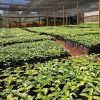
Grafted Ruiru 11 Coffee Seedlings in Kenya
Ruiru 11 is not a new variety. The Coffee Research Foundation released it in 1985 after nearly two decades of breeding work. The goal was simple: solve the two diseases destroying Kenyan coffee.
Coffee Berry Disease and Coffee Leaf Rust were wiping out crops across the country. Traditional varieties like SL28 and SL34 had excellent cup quality but no resistance to these diseases. Ruiru 11 changed that.
For decades after its release, adoption remained slow. Farmers worried about cup quality compared to the traditional varieties that built Kenya’s global reputation. That conversation has shifted.
As disease pressure intensifies and climate patterns become less predictable, the practical advantages of Ruiru 11 have become impossible to ignore. The variety carries dual resistance to both Coffee Berry Disease and Coffee Leaf Rust. It is compact, which means you can plant more trees per acre.
It responds well to fertiliser and irrigation. And it produces its first meaningful harvest in year two to three, compared to the longer wait for traditional varieties.
Grafted seedlings take this further. At Fruit Africa Veriplant, we graft our Ruiru 11 onto SL28 rootstock. This is a deliberate choice. SL28 is renowned for its exceptional cup quality and deep root system. When you graft Ruiru 11 onto SL28 rootstock, you get the disease resistance and compact growth of Ruiru 11 combined with the vigorous root system and cup quality characteristics associated with SL28.
Grafted Ruiru 11 Coffee Seedlings Price in Kenya
The price for grafted Ruiru 11 coffee seedlings varies across Kenyan nurseries. Fruit Africa Veriplant sells at KSh 100 per seedling. Other suppliers list grafted Ruiru 11 seedlings at KSh 150 to KSh 200 depending on age, batch size, and location.
Why the difference? Several factors drive seedling pricing.
The age of the seedling matters most. A seedling that has been in the nursery for six to eight months, properly hardened and ready for transplanting, costs more to produce than a younger seedling. The volume you order also affects the price. A farmer buying 500 seedlings pays less per seedling than one buying 50.
Location plays a role too. Nurseries closer to major coffee-growing counties have lower transport costs and can price more competitively.
At KSh 100, you are getting a grafted seedling that carries the full genetic package of Ruiru 11 on an SL28 rootstock. That means dual disease resistance, compact growth habit, early bearing, and a root system known for vigour and quality.
When you compare that to the cost of replacing trees lost to Coffee Berry Disease or the yield lost to Coffee Leaf Rust, the seedling price becomes one of the smallest expenses in your coffee farming budget.
Before you order, confirm the current price directly with your supplier. Prices shift with nursery batch, seedling age, and order volume. Fruit Africa Veriplant does not publish a fixed public price that stays static throughout the year. Request a current quote through the contacts at the end of this guide.
Where to Buy Grafted Ruiru 11 Coffee Seedlings in Kenya
Several nurseries and agricultural suppliers stock grafted Ruiru 11 coffee seedlings in Kenya. The challenge is not finding seedlings. The challenge is finding seedlings that are genuinely grafted, genuinely Ruiru 11, and genuinely healthy.
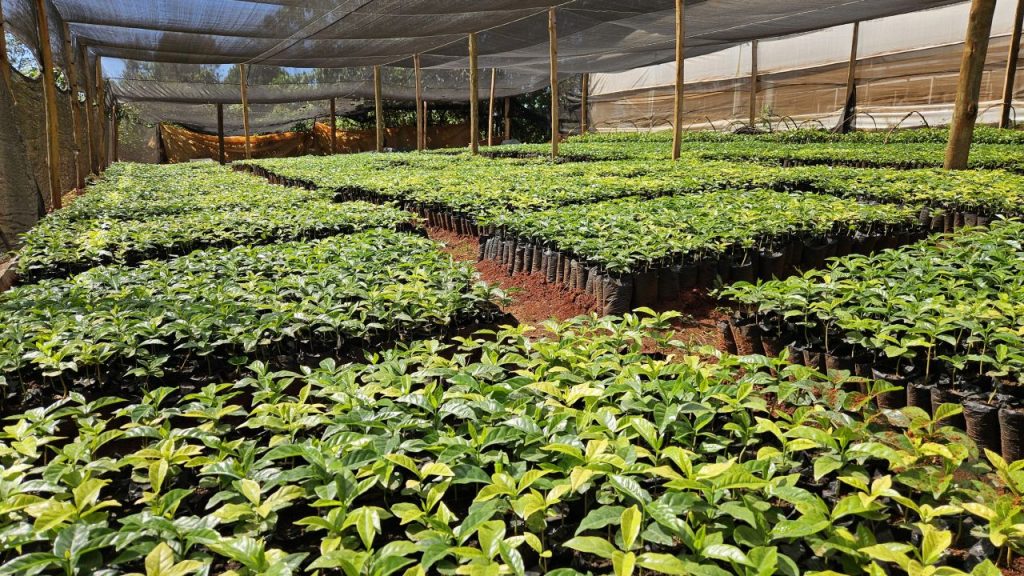
Fruit Africa Veriplant supplies grafted Ruiru 11 coffee seedlings directly to Kenyan farmers and international buyers. Our seedlings are raised in our own nursery, grafted onto SL28 rootstock, and hardened for field conditions before they leave our site.
What should you look for when buying? Ask about the rootstock. A grafted seedling should have a clear graft union, visible as a slight swelling where the scion and rootstock meet. Ask about the mother tree. A legitimate supplier should know the source of the scion material.
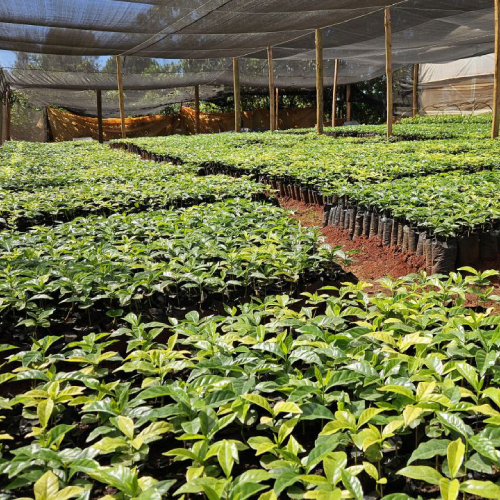
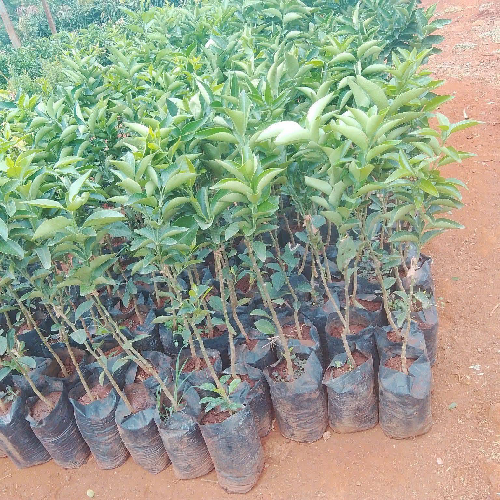
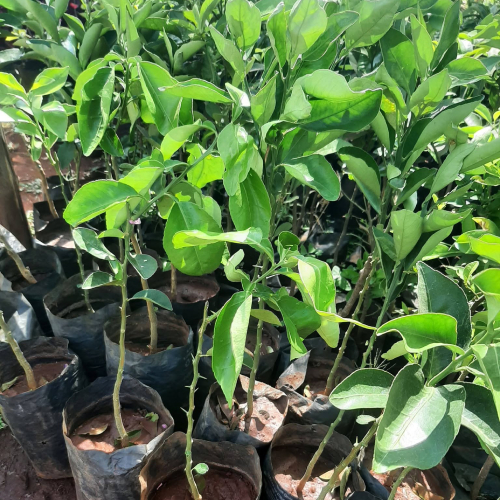
Ask how old the seedling is. A grafted coffee seedling ready for transplanting is typically six to eight months old and about 30 to 45 centimetres tall. Ask whether the seedling has been hardened. A seedling moved directly from a shaded nursery to open field conditions suffers transplant shock that can set it back by months.
Before you order, visit the nursery if distance allows. If you cannot visit, request current photos of the actual seedlings in the batch. A generic photo from the internet tells you nothing about what you are buying.
Fruit Africa Veriplant
Phone: 0714 994 444
WhatsApp: https://wa.link/di12my
Email: sales@fruitafrica.org
Contact Us: https://fruitafrica.org/contact-us/
Request for Quotation: https://fruitafrica.org/request-for-quotation/
What Is Ruiru 11?
Ruiru 11 is a coffee variety developed by the Coffee Research Foundation in Kenya and released in 1985. It was bred specifically to address the two diseases that were devastating Kenyan coffee farms: Coffee Berry Disease and Coffee Leaf Rust. The variety was named after the Ruiru research station where the breeding work took place.
The plant itself is compact. It grows smaller than SL28 or SL34, which means you can plant more trees per acre. It responds well to management. With proper fertiliser, pruning, and irrigation, Ruiru 11 produces high yields of quality coffee. The variety is also self-pollinating, which means you do not need to plant pollinator varieties alongside it.
The cup profile has improved over the decades. Early plantings of Ruiru 11 were criticised for lacking the bright acidity and complex flavour of SL28. As the variety has been refined and as farmers have learned to manage it properly, cup quality has improved. Today, well-managed Ruiru 11 consistently scores well in specialty coffee evaluations.
Why Grafted Ruiru 11 Matters for Kenyan Farmers
Coffee farming in Kenya has changed. Disease pressure has increased. Climate patterns have become less predictable. The cost of production has risen. And the margins have tightened for farmers who cannot achieve consistent quality and yield.
Ruiru 11 addresses several of these challenges directly.
Disease resistance is the first advantage. Coffee Berry Disease and Coffee Leaf Rust are the two most destructive diseases in Kenyan coffee. CBD attacks the developing berries, causing them to rot and drop before harvest. CLR attacks the leaves, reducing photosynthesis and weakening the tree. Both diseases can destroy a crop. Ruiru 11 carries resistance to both, which means fewer fungicide applications and lower crop losses.
Compact growth is the second advantage. Ruiru 11 grows smaller than traditional varieties. This allows higher planting density, which means more trees per acre and higher potential yield per acre. It also makes harvesting easier, because the trees are shorter and the branches are more accessible.
Early bearing is the third advantage. Ruiru 11 produces its first meaningful harvest in year two to three. Traditional varieties take longer to reach commercial production. For a farmer investing in a new orchard, earlier returns improve cash flow and reduce the payback period.
Grafting onto SL28 rootstock adds vigour. The SL28 root system is deep and efficient. When Ruiru 11 is grafted onto it, the tree has better access to water and nutrients, which supports stronger growth and higher yields.
How Fruit Africa Veriplant Grafts Ruiru 11 Coffee Seedlings
Grafting coffee is not the same as grafting mango or avocado. The process demands precision, patience, and a deep understanding of how the plant grows. At Fruit Africa Veriplant, we graft our Ruiru 11 onto SL28 rootstock.
Selecting Rootstock
SL28 is our rootstock of choice. The variety is known for its deep root system, vigour, and adaptability to a range of Kenyan growing conditions. Rootstock selection begins with seed from healthy, productive SL28 mother trees. The seed is planted in the nursery and raised until the seedling reaches a diameter suitable for grafting.
Selecting Scion Material
Ruiru 11 scion material comes from mother trees selected for vigour, disease resistance, and cup quality. The scion is taken from young, healthy shoots that have not yet hardened. The timing matters. Scion material collected in the morning, when the plant is fully hydrated, performs better than material collected later in the day.
Grafting Technique
The graft is made by joining the Ruiru 11 scion to the SL28 rootstock. The two cut surfaces are aligned so that the cambium layers meet. The union is wrapped to hold the pieces together and prevent moisture loss. The grafted seedling is then placed in a shaded recovery area where temperature and humidity are controlled.
Healing and Callusing
The graft union heals over several weeks. During this period, the seedling needs consistent moisture, shade, and protection from pests. The union forms a callus that connects the vascular tissue of the scion and rootstock. Once the union is strong, the seedling can be moved to a more exposed area for hardening.
Nursery Management
Grafted seedlings in the nursery need careful management. Watering is consistent but not excessive. The shade is gradually reduced as the seedling grows. Pests and diseases are monitored and controlled. A grafted coffee seedling stays in the nursery for six to eight months before it is ready for transplanting.
Hardening
Before a seedling leaves the nursery, it needs gradual exposure to more sunlight and less frequent watering. This hardening process prepares the plant for field conditions. A seedling moved directly from a shaded, heavily watered nursery bed to an open field will suffer. The shock can kill it or set it back by months.
Quality Inspection
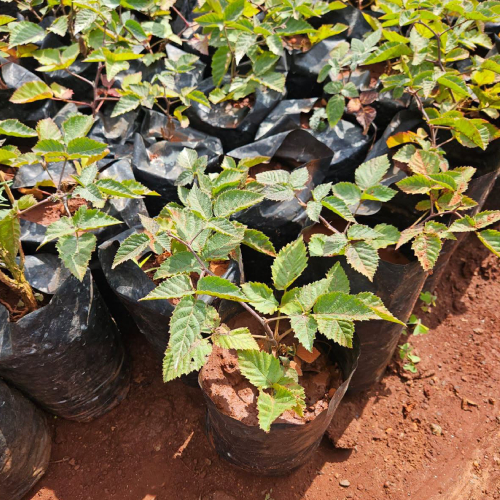
A quality grafted coffee seedling has dark green leaves, a firm stem, and a clean, fully healed graft union. The leaves should not show yellowing, spotting, or insect damage. The root ball should hold together when the polybag is removed, but the roots should not be circling tightly at the bottom. The graft union should show no signs of rot or separation.
Packing and Delivery
Grafted coffee seedlings travel poorly if handled roughly. The root ball must stay intact. Fruit Africa Veriplant packs seedlings so that the root zone is protected during transport. If you are collecting seedlings yourself, do not stack them in the boot of a car where they will be crushed. Keep them upright and shaded.
How to Choose Healthy Grafted Ruiru 11 Seedlings
Size is not the best indicator of seedling quality. A tall seedling in a small bag is often a stressed seedling that has stretched toward light. Here is what to look for instead.
Check the graft union. A healthy graft union is clean and fully healed. There should be no gap between the scion and rootstock, no sign of rot, and no suckers growing from the rootstock below the union. If you see suckers emerging from below the graft, the rootstock is trying to take over. Those suckers must be removed.
Check the leaves. Healthy coffee leaves are dark green and glossy. Pale or yellow leaves suggest nutrient deficiency or root problems. Spotted leaves suggest disease. Curled leaves suggest pest damage or moisture stress.
Check the stem. The stem should be firm and upright. A thin, weak stem that bends easily under its own weight will struggle in the field.
Check the roots if possible. Ask the nursery to remove one seedling from its bag as a sample. The root ball should hold together. The roots should not be circling tightly at the bottom of the bag. Brown or mushy roots mean the seedling stayed too wet.
Ask about seedling age. A grafted coffee seedling ready for transplanting is typically six to eight months old and about 30 to 45 centimetres tall.
Ask about the rootstock. A grafted seedling should have a known rootstock. At Fruit Africa Veriplant, our rootstock is SL28.
Where Coffee Grows Best in Kenya
Coffee thrives in specific conditions. Altitude, temperature, rainfall, and soil all matter. Kenyan coffee grows best in areas with altitudes between 1,400 and 2,100 metres above sea level. The temperature should range from 15°C to 24°C. Rainfall should be between 1,000 and 2,000 millimetres annually, well distributed throughout the year.
The main coffee-growing counties in Kenya include:
Central Kenya: Nyeri, Murang’a, Kirinyaga, Kiambu, and Thika. This is the heart of Kenyan coffee production. The high altitude and cool temperatures produce some of the finest coffees in the world.
Eastern Kenya: Embu, Meru, and Machakos. These counties produce significant volumes of coffee, with altitude and rainfall supporting good quality.
Rift Valley: Nakuru, Kericho, and Baringo. Coffee grows well in the highland areas of the Rift Valley.
Western Kenya: Kisii, Nyamira, and Bungoma. The western highlands produce coffee with distinctive characteristics.
Coastal Kenya: Taita Taveta. A smaller producing region, but with potential for quality coffee.
Ruiru 11 performs well across these regions. Its compact growth makes it suitable for areas where space is limited, and its disease resistance reduces the risk of crop loss in areas with high disease pressure.
Coffee Climate Requirements
Temperature is the first filter. Coffee performs best at 15°C to 24°C. Below 10°C, growth slows. Above 30°C, the plant suffers heat stress. Kenyan highland areas with cool nights and warm days are ideal.
Rainfall matters. Coffee needs 1,000 to 2,000 millimetres annually, well distributed. A pronounced dry season lasting more than a few weeks requires irrigation. Coffee is sensitive to drought, especially during flowering and fruit development.
Altitude affects quality. Higher altitudes produce slower cherry maturation, which concentrates sugars and flavours in the bean. That is why Kenyan coffee from high-altitude regions commands premium prices.
Coffee Soil Requirements
Coffee prefers deep, well-drained, slightly acidic soils rich in organic matter. The ideal pH range is 5.2 to 6.2.
Soils that hold water or become waterlogged damage the root system. Soils that are too shallow restrict root development.
A soil test before planting tells you two things: the pH and the nutrient status. If the pH is below 5.0, lime may be needed. If the pH is above 6.5, the soil is too alkaline for optimal coffee growth. If drainage is a concern, address it during land preparation, not after the trees are in the ground.
Organic matter is critical. Coffee responds well to soils rich in compost or well-decomposed manure. Organic matter improves soil structure, water-holding capacity, and nutrient availability.
How Many Coffee Trees Fit on One Acre?
The answer depends on the spacing you choose, and coffee spacing varies with variety, management system, and whether you are planting on flat land or sloping terrain.
For Ruiru 11, which has a compact growth habit, spacing can be tighter than for traditional varieties. Recommended spacing for Ruiru 11 ranges from 2 metres by 2 metres to 2.5 metres by 2.5 metres.
At 2 metres by 2 metres, you fit approximately 1,000 trees per acre.
At 2.5 metres by 2.5 metres, you fit approximately 650 trees per acre.
These numbers come from straightforward arithmetic. One acre is about 4,047 square metres. At 2m by 2m spacing, each tree occupies 4 square metres. 4,047 divided by 4 gives roughly 1,011 trees, which is rounded to 1,000 to account for access paths and boundaries. At 2.5m by 2.5m spacing, each tree occupies 6.25 square metres. 4,047 divided by 6.25 gives roughly 647 trees, which is rounded to 650.
Traditional varieties like SL28 are often planted at wider spacing, typically 2.5m by 2.5m or 3m by 3m. Ruiru 11 allows higher density because of its compact growth.
The table below summarises the spacing options for Ruiru 11.
| Spacing | Trees per Acre | Notes |
|---|---|---|
| 2m by 2m | 1,000 | High density, requires intensive management |
| 2.5m by 2.5m | 650 | Standard density, good balance |
| 3m by 3m | 450 | Lower density, easier management |
Coffee Spacing
Spacing is a decision that affects the orchard for the next 20 years. Get it wrong, and you live with the consequences.
Closer spacing means more trees per acre and higher potential yield per acre once trees mature. It also means faster canopy closure, more competition for water and nutrients, and greater difficulty moving through the orchard for weeding, spraying, and harvesting. Disease pressure rises when air cannot move between trees.
Wider spacing means fewer trees per acre and lower total yield potential. But each tree has more room to develop a full canopy, access to light is better, and management is easier. The cost per tree in terms of land is higher, but the cost per tree in terms of management is lower.
A practical approach for Kenyan farmers: if you have reliable irrigation and plan to manage intensively, 2m by 2m is a reasonable choice for Ruiru 11. If you are planting on rain-fed land with less intensive management, go wider. Do not copy a neighbour’s spacing without understanding why they chose it. Their soil, rainfall, and management capacity are not yours.
How to Prepare Land for Coffee
Start by clearing the land of competing vegetation. Coffee seedlings do not compete well with established weeds and grasses. Deep ploughing helps break compacted soil layers and improves root penetration. If your soil has a hardpan layer within the first metre, coffee roots will struggle.
A soil test before planting tells you two things: the pH and the nutrient status. If the pH is below 5.0, lime may be needed, but apply it well before planting and based on the test recommendation. If drainage is a concern, address it during land preparation, not after the trees are in the ground.
Windbreaks matter for coffee. The plant has brittle branches and does not tolerate strong winds. Coastal and exposed farms benefit from windbreak trees or hedges on the windward side.
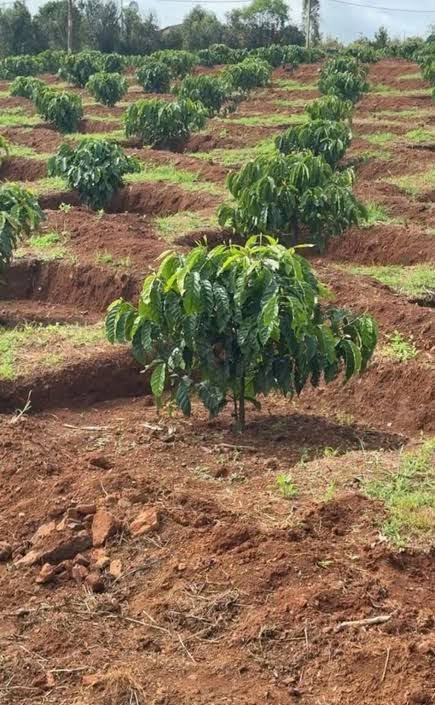
On sloping land, contour planting reduces soil erosion and improves water infiltration. Dig planting holes along the contour lines, and consider building contour bunds or terraces where the slope is steep.
How to Prepare Coffee Planting Holes
Planting holes should be dug at least 60 centimetres by 60 centimetres by 60 centimetres. Some sources recommend 45 centimetres by 45 centimetres by 45 centimetres for coffee. The larger hole gives the taproot room to grow straight without obstruction.
Mix the topsoil you removed from the hole with well-decomposed manure. Twenty kilograms of compost or manure per hole is a common recommendation. Add rock phosphate if your soil test shows phosphorus deficiency. Five hundred grams per hole appears in some recommendations.
Do not fill the hole with raw manure and plant immediately. The manure needs to be decomposed. Fresh manure burns roots.
How to Plant Grafted Ruiru 11 Coffee Seedlings
Plant at the beginning of the rainy season if you are relying on rainfall. If you have irrigation, the timing is more flexible, but avoid planting during the hottest, driest months.
Water the seedling thoroughly before removing it from the polybag. This keeps the root ball intact. Remove the polybag carefully. Do not pull the seedling out by the stem. Support the root ball with your hand and slide the bag off.
Place the seedling in the hole so that the top of the root ball sits level with the surrounding soil. Do not bury the stem deeper than it was in the nursery. For grafted seedlings, never bury the graft union. The graft union should sit at least 15 centimetres above the soil line.
Fill the hole with the soil-manure mix, firming gently as you go. Do not compact the soil with your foot. You want the soil to hold the roots without crushing them.
Water immediately after planting. A thorough watering settles the soil around the roots and removes air pockets.
Apply mulch around the base of the seedling, keeping it a few centimetres away from the stem. Mulch touching the stem causes rot. Mulch also conserves moisture and suppresses weeds.
Temporary shading protects young seedlings from intense sun during the first few months. A simple shade structure using sticks and banana leaves or shade netting reduces transplant shock and supports faster establishment.
Coffee Watering Requirements
Young coffee seedlings need consistent moisture. The root system is still developing, and the plant cannot tolerate drying out. In the first year, water regularly, especially during dry spells. Drip irrigation is efficient and keeps moisture consistent without waterlogging.
Mature coffee trees need irrigation during dry periods, especially from flowering through fruit development. Water stress during flowering reduces fruit set. Water stress during bean development reduces bean size and quality.
How much water? The exact amount depends on your soil type, evaporation rate, and rainfall. The principle is more useful than a fixed number: the soil around the root zone should stay moist but not saturated. If you can squeeze a handful of soil and it drips water, it is too wet. If it crumbles and dust falls off, it is too dry.
Mulching helps conserve moisture. A layer of organic mulch 10 to 15 centimetres thick around the base of the tree reduces evaporation and moderates soil temperature.
Coffee Manure and Fertilizer Requirements
Organic matter is the foundation of coffee nutrition. Compost and well-decomposed manure improve soil structure, water-holding capacity, and nutrient availability. Apply manure annually around the drip line.
For young trees in the first three years, focus on organic manure and micronutrients. Do not push nitrogen. Excessive nitrogen encourages vegetative growth at the expense of root development and future fruiting.
For mature trees, a balanced fertilizer program supports fruit development. Coffee responds well to nitrogen, phosphorus, and potassium. Potassium plays a role in bean quality. A fertilizer blend such as NPK 17:17:17 or a blend formulated for coffee appears in commercial recommendations.
Do not fertilize on a fixed calendar without considering your soil test and the tree’s appearance. Yellowing leaves, poor growth, and small beans are signals. Address the specific deficiency rather than applying a generic blend.
Coffee Mulching and Weed Management
Mulch is not optional for coffee. A layer of organic mulch 10 to 15 centimetres thick around the base of the tree conserves moisture, suppresses weeds, moderates soil temperature, and adds organic matter as it decomposes.
Keep mulch away from direct contact with the trunk. A gap of a few centimetres prevents stem rot.
Weed control matters most during the first three years. Weeds compete for water and nutrients that young coffee seedlings need. Hand weeding or careful mechanical cultivation is safer than herbicides near the shallow root zone.
Mature coffee trees develop a canopy that suppresses many weeds naturally, but the area around the trunk still needs management for access and to reduce competition.
Coffee Training and Pruning
Coffee pruning is essential for long-term productivity. The goal is to maintain a healthy canopy that captures sunlight efficiently, produces new growth for next year’s crop, and allows air movement through the tree.
There are two main pruning systems for coffee in Kenya: the single stem system and the multiple stem system. The single stem system maintains one main stem with primary branches. The multiple stem system allows two or three stems to develop from the base.
For Ruiru 11, the single stem system is common. The tree is trained to a single main stem, with primary branches spaced along it. After several years of production, the main stem is cut back to encourage new growth from the base. This cycle of pruning rejuvenates the tree and maintains productivity.
Remove dead, diseased, or crossing branches. Remove suckers that grow from the base or from the main stem. Suckers compete with the productive branches for resources. For grafted trees, remove any suckers that emerge from the rootstock below the graft union. These suckers are from the SL28 rootstock and will not produce Ruiru 11 fruit.
Coffee Pests and Diseases
Coffee has a long list of pests and diseases. The ones that matter most in Kenya include the following.
Coffee Berry Borer is a small beetle that bores into the coffee cherry and lays eggs inside. The larvae feed on the bean, destroying it. Control involves regular monitoring, timely harvesting, and removal of infested cherries.
Leaf Miners are small moths whose larvae tunnel through coffee leaves, leaving visible trails. Severe infestations reduce photosynthesis and weaken the tree.
Coffee Berry Disease is a fungal disease that attacks the developing berries. The fungus causes dark, sunken lesions on the berry, which then rots and drops. Ruiru 11 carries resistance to CBD, which is one of its main advantages.
Coffee Leaf Rust is a fungal disease that attacks the leaves, causing orange-yellow spots on the underside. Severe infections cause leaf drop, which weakens the tree and reduces yield. Ruiru 11 carries resistance to CLR.
How Long Does Grafted Ruiru 11 Take to Produce Coffee?
This is the question that determines whether coffee fits your farm plan.
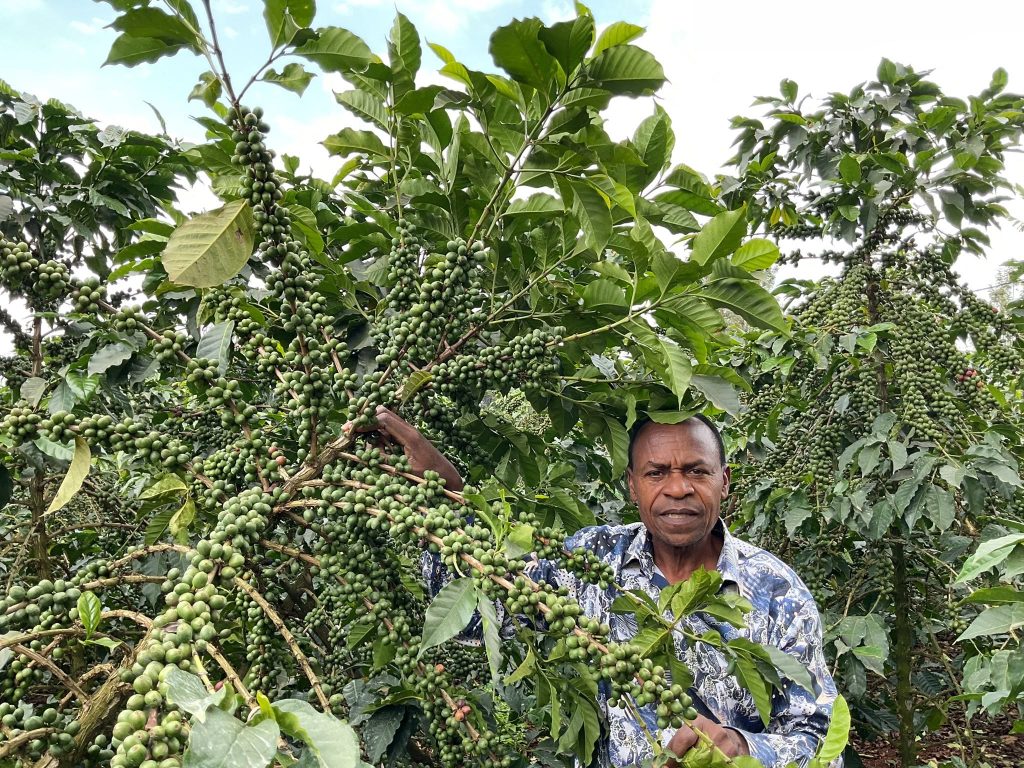
Grafted Ruiru 11 coffee seedlings begin producing their first meaningful harvest in year two to three after transplanting. That is faster than traditional varieties, which often take three to four years to reach commercial production.
The timeline depends on management. A well-managed tree with adequate water, nutrition, and pruning produces earlier and more heavily. A neglected tree takes longer and produces less.
The first harvest is small. A tree in year two might produce a few hundred grams of cherry. By year four to five, production increases significantly. Full production is reached around year six to eight.
Coffee Yield Per Tree
A mature Ruiru 11 coffee tree produces 2 to 5 kilograms of cherry per year under good management. Some trees produce more. Yield depends on altitude, rainfall, soil fertility, pruning, pest and disease management, and the age of the tree.
Cherry to green bean ratio varies. On average, about 5 to 6 kilograms of cherry produce 1 kilogram of green bean. Using 3 kilograms of cherry per tree and a 5:1 ratio, a tree produces about 600 grams of green bean per year.
At 1,000 trees per acre and 600 grams of green bean per tree, that is 600 kilograms of green bean per acre. At 650 trees per acre and the same yield per tree, that is 390 kilograms per acre.
These are mature orchard figures. Early production in years two to three is significantly lower. Full production builds gradually.
Coffee Harvesting
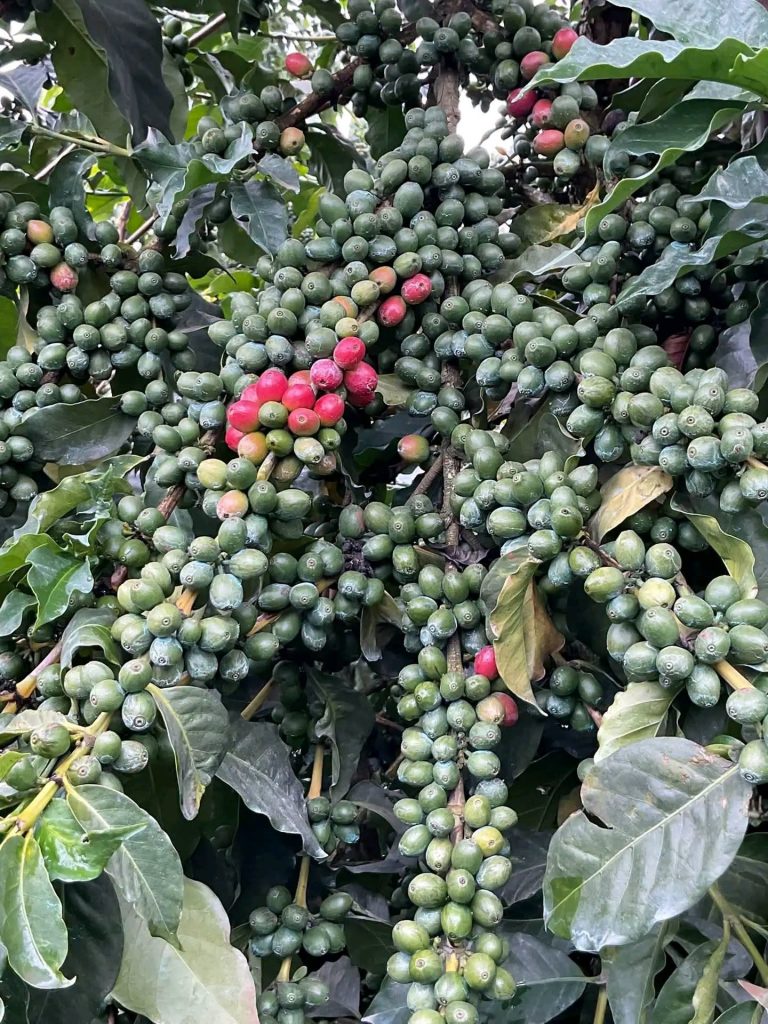
Harvest when the cherries turn deep red. Do not harvest green cherries hoping they will ripen off the tree. Coffee does not ripen like a banana or avocado. Green cherries produce inferior beans.
Harvest by hand. Selective picking ensures that only ripe cherries are harvested. Strip picking, where all cherries are removed at once, produces a mix of ripe and unripe fruit, which reduces quality.
Harvest in multiple passes. Coffee cherries ripen at different times, even on the same tree. A first pass harvests the ripest cherries. A second pass, one to two weeks later, harvests the rest. This selective harvesting improves quality.
Handle cherries gently. Bruising leads to rapid deterioration. Sort cherries immediately after harvest, removing damaged or diseased specimens.
Coffee Processing
After harvest, coffee cherries must be processed quickly to prevent spoilage. There are two main methods: wet processing and dry processing.
Wet processing involves removing the pulp from the cherry, fermenting the beans to remove the mucilage, washing the beans, and drying them. This method produces washed coffee, which is the standard for Kenyan specialty coffee.
Dry processing involves drying the whole cherry in the sun, then removing the dried pulp and parchment. This method produces natural coffee, which has a different flavour profile.
Most Kenyan coffee is wet processed. The process requires water, equipment, and careful management. Many farmers deliver their cherry to a cooperative or factory that handles processing.
How to Sell Coffee in Kenya
Coffee marketing in Kenya has changed significantly over the past decade. Farmers now have more options than selling to a cooperative.
Cooperatives remain the most common marketing channel. Farmers deliver cherry to the cooperative factory, which processes and sells the coffee. Cooperatives typically pay farmers in instalments, with a partial payment at delivery and a final payment after the coffee is sold.
Direct sales to roasters are growing. Farmers who produce specialty coffee can sell directly to roasters in Kenya or abroad. This channel offers higher prices but requires quality control, consistency, and marketing effort.
The Nairobi Coffee Exchange holds weekly auctions where coffee is sold to international buyers. Prices at auction reflect global market conditions and the quality of the coffee.
Farm-gate sales to traders are the simplest option but often offer the lowest prices. Traders buy cherry or parchment at the farm gate and handle processing and marketing.
The marketing lesson is simple. Find your buyer before you plant 1,000 trees. Coffee is a commodity, and prices fluctuate. Farmers who produce quality coffee and have multiple marketing channels are more resilient than those who rely on a single buyer.
Coffee Farming Cost Per Acre
Establishment costs for coffee are significant, but the investment pays back over decades. At KSh 100 per seedling and 1,000 trees per acre at 2m by 2m spacing, seedling cost alone is KSh 100,000. At 650 trees per acre at 2.5m by 2.5m spacing, seedling cost is KSh 65,000. That is before land preparation, manure, planting labour, irrigation, or fencing.
The table below organises the cost categories. Fill in your own figures based on local quotes.
| Cost Category | Notes |
|---|---|
| Seedlings | Multiply number of trees by current seedling price |
| Land preparation | Ploughing, harrowing, drainage work |
| Planting holes | Labour for digging and filling |
| Manure and compost | 20 kg per hole at minimum |
| Rock phosphate | If soil test indicates need |
| Irrigation system | Drip or micro-sprinkler installation |
| Mulch material | Straw, grass, or other organic material |
| Fencing | Protection from livestock and wildlife |
| Labour | Planting, watering, weeding for first year |
| Tools | Hoes, pruning shears, watering cans |
Coffee Farming Profit Per Acre
Profitability depends on yield, price, and the number of years you wait. A mature orchard at 1,000 trees per acre with 600 grams of green bean per tree produces 600 kilograms of green bean per acre. At a farm-gate price of KSh 500 per kilogram of green bean, gross revenue is KSh 300,000 per acre. At KSh 800 per kilogram, gross revenue is KSh 480,000.
These are gross figures. Subtract annual operating costs: labour, fertilizer, irrigation, pest management, harvesting, processing, and marketing. The surplus is your profit.
Coffee prices fluctuate. The Nairobi Coffee Exchange auction price varies with global market conditions. Farmers who produce specialty coffee and sell directly to roasters often achieve higher prices than those who sell through the auction.
The table below shows profitability scenarios at different yields and prices.
| Trees per Acre | Yield per Tree (kg green bean) | Total Yield (kg) | Price per kg (KSh) | Gross Revenue (KSh) |
|---|---|---|---|---|
| 1,000 | 0.4 | 400 | 500 | 200,000 |
| 1,000 | 0.6 | 600 | 500 | 300,000 |
| 1,000 | 0.6 | 600 | 800 | 480,000 |
| 1,000 | 0.8 | 800 | 800 | 640,000 |
| 650 | 0.6 | 390 | 500 | 195,000 |
| 650 | 0.6 | 390 | 800 | 312,000 |
These scenarios show that profitability swings widely with yield and price. The assumptions behind every number matter. If you cannot achieve the yield or the price, the profit changes. Do not treat the highest scenario as normal.
Kenya Coffee Production Statistics
Kenya’s coffee sector is recovering. Production has been climbing since the lows of the early 2000s, driven by government reforms, higher prices, and renewed farmer interest.
In the 2025/2026 coffee season, the Nairobi Coffee Exchange traded 36.36 million kilograms of clean coffee valued at approximately Sh31.94 billion. That surpassed the 31.33 million kilograms worth Sh23.4 billion traded in the entire 2024/2025 season.
Kericho County emerged as Kenya’s leading coffee producer by auction volume, nearly doubling its deliveries from 3.03 million kilograms to 6.00 million kilograms. Kirinyaga retained its reputation for premium coffee, posting the highest average price among major producing counties.
Western Kenya is the fastest-growing coffee region. Nandi increased its auction volumes by 92 percent. Bungoma grew by 97 percent. Kisii more than quadrupled its deliveries. Together, Kericho, Nandi, Bungoma, Kisii, Nyamira, and Trans Nzoia contributed 12.44 million kilograms, accounting for 34 percent of Kenya’s total auction volume, up from 19 percent the previous season.
The traditional Central Kenya bloc of Murang’a, Nyeri, Kirinyaga, and Kiambu saw its share decline from 62 percent to 51 percent. Narok County made its debut at the Exchange.
At the farm level, average prices have risen significantly. Farmers who previously earned about Sh45 per kilogram are now receiving approximately Sh185 per kilogram in some areas. The government has set a target of raising earnings to between Sh250 and Sh300 per kilogram through continued reforms.
Domestic consumption remains modest at around 62,000 bags annually, with exports dominating the market. Kenya exports approximately 940,000 bags per year, with demand strongest in Europe, the Middle East, and increasingly Asia.
Government Support for Coffee Farming in Kenya
The Kenyan government has made coffee revitalisation a priority. The National Coffee Sector Revitalisation Programme aims to increase annual production from 50,000 metric tonnes to 150,000 metric tonnes by 2029/2030.
The programme adopts a whole-of-government approach. County commissioners, county governments, the New Kenya Planters Cooperative Union, the Coffee Research Institute, and the Nairobi Coffee Exchange all participate in implementation at the county level.
Key reforms already implemented include:
Reduced payment periods from more than a month to five days after coffee sales.
The Direct Settlement System ensures farmers receive 80 percent of their earnings directly, with 20 percent going to their cooperatives.
The Coffee Cherry Advance Revolving Fund provides farmers with advance payments at harvest, addressing the cash flow challenge between harvest and final payment. The fund offers credit at 3 percent interest.
The government has released Sh4 billion to facilitate the waiver of historic coffee cooperative debts and is seeking an additional Sh2.8 billion to complete the exercise.
Sh500 million was allocated to the coffee sector in the previous financial year, increased to Sh1 billion in the current financial year. The funding supports propagation of 10 million high-yielding, disease-resistant seedlings annually.
The government is establishing strategic coffee milling plants in Eldoret, Kakamega, and several centres in the Mt Kenya region to reduce processing costs for cooperatives.
County governments in coffee-growing regions have their own programmes. Vihiga County distributes certified seedlings free of charge to registered farmers. Nyandarua County plans to distribute free coffee seedlings and establish nurseries for farmer groups. Nyeri, Murang’a, and Kirinyaga counties have invested in coffee seedling production and processing equipment.
The government is also expanding coffee cultivation into new frontier areas, including Nyanza, Western, and the Rift Valley. The goal is both vertical expansion (higher yields from existing bushes) and horizontal expansion (introducing coffee to new regions).
Major Players in the Coffee Sector
The Nairobi Coffee Exchange is the principal marketplace for coffee traded through the auction system. The weekly auctions bring together licensed marketing agents and international buyers, providing a transparent price discovery mechanism.
Marketing agents handle the largest volumes. New Kenya Planters Cooperative Union (New KPCU) is the dominant marketer, often handling over 30 percent of weekly auction volume. Alliance Berries Limited and Kirinyaga Slopes Coffee Brokerage Company are the other major players.
On the buying side, six major buyers account for approximately 85 percent of coffee traded at the NCE. Ibero Kenya, Kenyacof Limited, and C. Dormans SEZ alone control about 68 percent of traded volume. Other significant buyers include Taylor Winch, Global Mark Foods, and Sondhi Trading.
Direct sales are growing in importance. In March 2026, farmers and cooperatives earned Sh1.75 billion from direct coffee export sales, with coffees fetching an average price of Sh51,317 per 50-kilogram bag. That was far above the average price of Sh37,057 recorded at the Nairobi Coffee Exchange auction in the same period.
Kirinyaga County led direct sales, contributing 65 percent of total volumes. Switzerland emerged as the biggest buyer through direct sales, followed by the United Kingdom, Spain, Germany, Netherlands, China, South Korea, Taiwan, Saudi Arabia, Australia, and Ukraine.
Common Mistakes When Growing Coffee in Kenya
Planting coffee seedlings in the wrong climate is the most expensive mistake. The seedling may survive, but it will not thrive. You will spend years caring for a tree that will never produce well.
Planting in poorly drained soil is the second mistake. Coffee roots rot when they stay wet. If your soil holds water after rain, fix the drainage before planting or choose a different crop.
Buying seedlings based only on size is a third mistake. A tall seedling in a small bag is often a stressed seedling. Look at the graft union, the leaves, and the roots.
Establishing a large orchard without considering the time before production is a planning mistake. Coffee takes two to three years to produce the first meaningful harvest. If you have cash flow needs in the first two years, plan for intercrops or off-farm income.
Copying another farmer’s spacing without understanding their context is a mistake. Wider spacing is safer for a crop that grows as large as coffee.
Relying on rainfall alone in areas with unreliable precipitation is a mistake. Coffee needs consistent moisture. If your rainfall pattern has dry gaps, irrigation is necessary.
Selecting seedlings without confirming the graft union is a mistake. A grafted seedling should have a clean, fully healed graft union. Suckers from the rootstock must be removed.
Can Coffee Be Grown in Containers?
Coffee can be grown in containers, but the tree will not reach its full potential. The taproot needs deep soil. A standard pot restricts root development, and the tree stays small. Container growing is possible for a home gardener who wants the novelty of a coffee tree, but do not expect commercial yields.
If you attempt container growing, use a deep container, not a wide shallow one. The medium must drain well but hold moisture. Partial shade is necessary. The tree needs consistent watering because container soil dries faster than field soil.
Can Coffee Be Grown on a Small Farm?
Yes. Coffee is well suited to smallholder farming. A farmer with half an acre can plant 300 to 500 trees and produce a meaningful crop. The investment is manageable. The management is intensive but not overwhelming. And the market for Kenyan coffee is established.
The challenge on a small farm is the opportunity cost of the land. If that land could grow vegetables that produce income within a few months, coffee is a long-term bet. If you have space that is not needed for quick-income crops, coffee is a reasonable addition.
Can Coffee Be Grown Commercially in Kenya?
Commercial coffee farming in Kenya is well established. The country produces some of the finest coffee in the world, and the market for Kenyan coffee is strong. The constraints are real: disease pressure, climate variability, price fluctuations, and the cost of production. But the opportunities are also real.
Ruiru 11 addresses several of these constraints. Its disease resistance reduces crop losses. Its compact growth allows higher density. Its early bearing improves cash flow. And its cup quality has improved to the point where it competes well in specialty markets.
A commercial coffee orchard in Nyeri, Kirinyaga, or Murang’a with good management, irrigation, and a marketing plan has a different outlook than a dryland farm in a marginal area. Location matters. Management matters. Market access matters.
Buying Grafted Ruiru 11 Coffee Seedlings for Export
International buyers looking for grafted Ruiru 11 coffee seedlings from Fruit Africa Veriplant should request a quotation through email or WhatsApp. The buyer should provide the number of seedlings needed, preferred rootstock if any, destination country, destination city, and any relevant planting material requirements.
Fruit Africa Veriplant responds with details covering freight, documentation, logistics, and estimated timeframe. Specific freight prices and delivery times are quoted based on the destination and order size. Do not assume a standard rate.
Fruit Africa Veriplant
Phone: 0714 994 444
WhatsApp: https://wa.link/di12my
Email: sales@fruitafrica.org
Contact Us: https://fruitafrica.org/contact-us/
Request for Quotation: https://fruitafrica.org/request-for-quotation/
Frequently Asked Questions About Grafted Ruiru 11 Coffee Seedlings
1. How much do grafted Ruiru 11 coffee seedlings cost in Kenya?
Fruit Africa Veriplant sells grafted Ruiru 11 coffee seedlings at KSh 100 each. Prices vary by nursery and batch. Request a current quote before ordering.
2. Where can I buy grafted Ruiru 11 coffee seedlings in Kenya?
Fruit Africa Veriplant supplies grafted Ruiru 11 coffee seedlings directly to Kenyan farmers and international buyers. Contact through WhatsApp on 0714 994 444 or email sales@fruitafrica.org for current availability.
3. What rootstock does Fruit Africa Veriplant use for Ruiru 11?
We graft our Ruiru 11 onto SL28 rootstock. SL28 is known for its deep root system and exceptional cup quality.
4. What is the difference between grafted and non-grafted Ruiru 11?
Grafted Ruiru 11 uses a selected rootstock, in our case SL28, which provides root vigour and adaptability. Non-grafted Ruiru 11 is raised from seed and lacks the rootstock advantages.
5. How long do grafted Ruiru 11 seedlings take to produce coffee?
Grafted Ruiru 11 begins producing its first meaningful harvest in year two to three after transplanting. Full production is reached around year six to eight.
6. What spacing should I use for Ruiru 11 coffee?
Spacing ranges from 2m by 2m (approximately 1,000 trees per acre) to 3m by 3m (approximately 450 trees per acre). Ruiru 11’s compact growth allows tighter spacing than traditional varieties.
7. How many coffee trees fit on one acre?
At 2m by 2m, approximately 1,000 trees per acre. At 2.5m by 2.5m, approximately 650 trees. At 3m by 3m, approximately 450 trees.
8. What climate does coffee need?
Coffee needs temperatures of 15°C to 24°C, annual rainfall of 1,000 to 2,000 millimetres, and altitudes of 1,400 to 2,100 metres. It does not tolerate frost.
9. What soil is best for coffee?
Deep, well-drained, slightly acidic soil rich in organic matter with a pH of 5.2 to 6.2. Drainage is critical. Waterlogged soil damages coffee roots.
10. How do I prepare a planting hole for coffee?
Dig a hole at least 60cm by 60cm by 60cm. Mix topsoil with 20 kilograms of decomposed manure and 500 grams of rock phosphate if needed.
11. How often should I water coffee seedlings?
Young seedlings need consistent moisture. Water regularly during dry spells. Drip irrigation keeps moisture consistent without waterlogging. Mature trees need irrigation from flowering through bean development.
12. What fertilizer does coffee need?
Young trees benefit from organic manure and micronutrients. Mature trees need balanced fertilizer with nitrogen, phosphorus, and potassium. Avoid excessive nitrogen.
13. What pests attack coffee in Kenya?
Coffee Berry Borer and Leaf Miners are the main pests. Regular monitoring, timely harvesting, and removal of infested material reduce damage.
14. What diseases affect coffee?
Coffee Berry Disease and Coffee Leaf Rust are the most serious. Ruiru 11 carries resistance to both.
15. How much coffee does a mature tree produce?
A mature Ruiru 11 tree produces 2 to 5 kilograms of cherry per year under good management. Cherry to green bean ratio is about 5:1.
16. When should I harvest coffee?
Harvest when the cherries turn deep red. Selective picking ensures only ripe cherries are harvested. Harvest in multiple passes as cherries ripen at different times.
17. How do I sell coffee in Kenya?
Cooperatives, direct sales to roasters, the Nairobi Coffee Exchange, and farm-gate sales to traders are the main channels. Cooperatives remain the most common.
18. Is coffee farming profitable in Kenya?
Profitability depends on yield, price, and management. A well-managed orchard at 1,000 trees per acre producing 600 kilograms of green bean per acre at KSh 500 per kilogram generates KSh 300,000 in gross revenue. Subtract operating costs to get profit.
19. What government support is available for coffee farmers?
The National Coffee Sector Revitalisation Programme aims to increase production to 150,000 metric tonnes by 2029/2030. County governments distribute certified seedlings. The Coffee Cherry Advance Revolving Fund provides credit at 3 percent interest. The Direct Settlement System ensures farmers receive 80 percent of earnings directly.
20. Can I export grafted Ruiru 11 coffee seedlings from Kenya?
Yes. Fruit Africa Veriplant supplies international buyers. Provide the number of seedlings, preferred rootstock, destination country, destination city, and any planting material requirements. Request a quotation through the contacts above.
Final Guide to Buying Grafted Ruiru 11 Coffee Seedlings in Kenya
Buying grafted Ruiru 11 coffee seedlings is a decision that will shape your farm for the next twenty years. The price is KSh 100 per seedling. The rootstock is SL28. The variety carries dual resistance to Coffee Berry Disease and Coffee Leaf Rust. The tree is compact, early-bearing, and produces quality coffee.
Before you order, confirm your climate. Coffee needs altitude, temperature, and rainfall that match the crop’s requirements.
If you are not in a traditional coffee-growing area, check whether your microclimate genuinely matches what coffee needs. Check your soil drainage. If water sits on your land after rain, fix that problem before planting. Check your water source. Coffee needs consistent moisture, especially during flowering and bean development.
When you buy, inspect the seedling. Look at the graft union, the leaves, and the roots. Ask about seedling age and rootstock. Do not buy based on height alone.
Plan for the wait. Two to three years is a long time before the first meaningful harvest. Intercrop with beans or vegetables to generate income during the establishment years. Keep records of what you plant, when you plant it, and how the trees perform.
Find your market before you plant a large orchard. Coffee is a commodity with established marketing channels. Cooperatives, direct sales to roasters, and the Nairobi Coffee Exchange are the main options. Know which channel you will use before you invest.
Coffee farming in Kenya has a future. The government supports the sector. County governments are promoting coffee farming. Research institutions are developing better varieties and management practices. And the global demand for Kenyan coffee remains strong.
Fruit Africa Veriplant supplies grafted Ruiru 11 coffee seedlings to Kenyan farmers and international buyers. Request a current quotation for pricing, availability, and delivery details.
Fruit Africa Veriplant
Phone: 0714 994 444
WhatsApp: https://wa.link/di12my
Email: sales@fruitafrica.org
Contact Us: https://fruitafrica.org/contact-us/
Request for Quotation: https://fruitafrica.org/request-for-quotation/


Reviews
There are no reviews yet.