
Description
- Looking for grafted pear seedlings in Kenya? Learn grafted pear seedlings prices, planting, spacing, climate, soil, irrigation, pollination, orchard management, yields and marketing.
Pear fruits
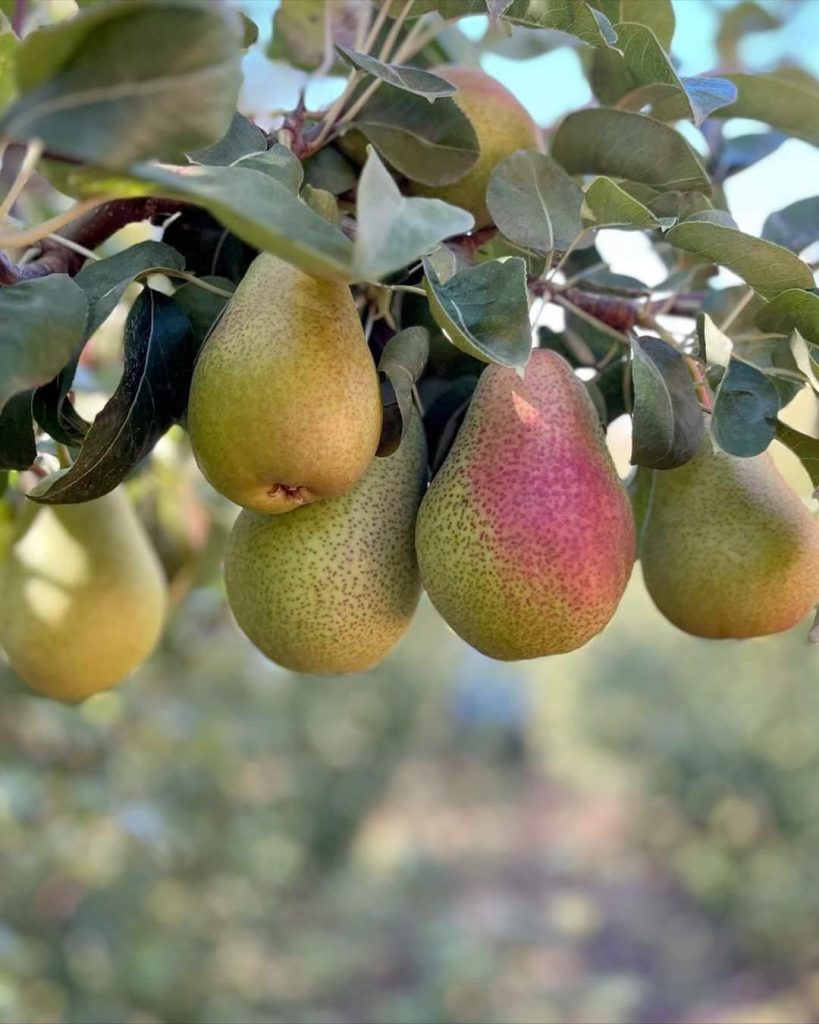
Grafted Pear Seedlings in Kenya: Price, Planting, Spacing and Farming Guide
Grafted pear seedlings are becoming an option for Kenyan farmers looking to establish fruit orchards for both local and commercial markets. Unlike pear trees raised from seed, grafted pear seedlings combine a selected fruiting variety with a root system, giving farmers a more defined starting point when establishing an orchard. However, buying good grafted pear seedlings is only the beginning. Successful pear farming depends on choosing a suitable site, selecting the right variety, preparing the soil properly, maintaining adequate moisture, managing the trees through pruning and nutrition, supporting pollination and developing a reliable market for the harvested fruit.
For farmers looking for grafted pear seedlings in Kenya, Fruit Africa Veriplant offers grafted pear seedlings at KSh 1,200 per seedling. Non-grafted pear seedlings are available at KSh 350 each. The difference in price means farmers need to consider their long-term orchard objectives rather than looking at the cost of one seedling in isolation. Pears are perennial fruit trees, and the planting material selected at establishment can influence how the orchard is managed for many years.
The cost of grafted pear seedlings also needs to be considered alongside the full cost of establishing an orchard. A farmer planting one acre will need to budget not only for seedlings but also for land preparation, soil testing, manure, fertiliser, irrigation, labour, staking, weed control, pruning, pest and disease management, harvesting, grading, packaging and transportation. A commercial pear orchard therefore requires a complete farm plan rather than a seedling purchase alone.
This guide explains what Kenyan farmers should know before buying grafted pear seedlings, including seedling prices, orchard spacing, climate and soil requirements, planting methods, irrigation, nutrition, pruning, pollination, pest and disease management, yield considerations, harvesting and marketing. It also provides practical calculations to help farmers estimate the number of grafted pear seedlings required for different farm sizes.
What Are Grafted Pear Seedlings?
Grafted pear seedlings are pear planting materials produced by joining a selected fruiting variety, known as the scion, to a root system known as the rootstock. The grafted plant grows as one tree, with the scion determining the characteristics of the fruiting portion while the rootstock contributes to the root system and influences aspects of tree growth.
This is important because growing a pear tree from seed does not necessarily produce a tree identical to the parent tree. Seed-grown trees can vary in fruit characteristics, growth and other important traits. For a farmer establishing a commercial orchard, this variation can make production planning more difficult, particularly when the intended market expects consistent fruit.
With grafted pear seedlings, the farmer can select planting material according to a known variety and the characteristics required for the intended production system. This makes it easier to plan the orchard around fruit quality, maturity period, pollination requirements and market demand.
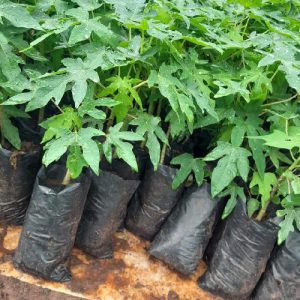
The quality of the grafted pear seedlings is equally important. A good seedling should have a healthy root system, a properly healed graft union and healthy above-ground growth. The stem should be free from serious physical damage, while leaves and shoots should not show significant signs of pest or disease damage.
Farmers should also establish the identity of the variety before purchasing large numbers of grafted pear seedlings. Simply buying trees labelled as “pear” does not provide enough information for a commercial orchard because different varieties can have different climate, chilling, flowering and pollination requirements.
Grafted Pear Seedlings Price in Kenya
The price of grafted pear seedlings in Kenya at Fruit Africa Veriplant is KSh 1,200 per seedling. Non-grafted pear seedlings are available at KSh 350 each. For a farmer planning a commercial orchard, the seedling price provides the starting point for calculating the planting material budget.
The number of grafted pear seedlings required depends on the spacing selected and the size of the farm. For example, an acre contains approximately 4,047 square metres. At a spacing of 5 metres by 6 metres, each tree occupies approximately 30 square metres, giving a theoretical population of about 135 trees per acre. At KSh 1,200 per seedling, the planting material cost would therefore be approximately KSh 162,000 per acre before accounting for space required for roads, boundaries, drainage and other farm infrastructure.
At 4 metres by 6 metres spacing, each tree occupies approximately 24 square metres. This gives a theoretical population of about 169 trees per acre. At KSh 1,200 per grafted pear seedling, the theoretical seedling cost would be approximately KSh 202,800 per acre.
These calculations are useful for planning, but they should not be mistaken for the total cost of establishing a pear orchard. A commercial farmer still needs to budget for land preparation, soil improvement, irrigation, labour, manure, fertiliser, fencing, crop protection, pruning and harvesting.
When comparing grafted pear seedlings from different nurseries, price should also be considered together with the condition of the planting material. A cheap seedling that is poorly grafted, weak or badly handled can create additional costs later. Farmers should therefore inspect the graft union, root system, stem and general health before making large purchases.
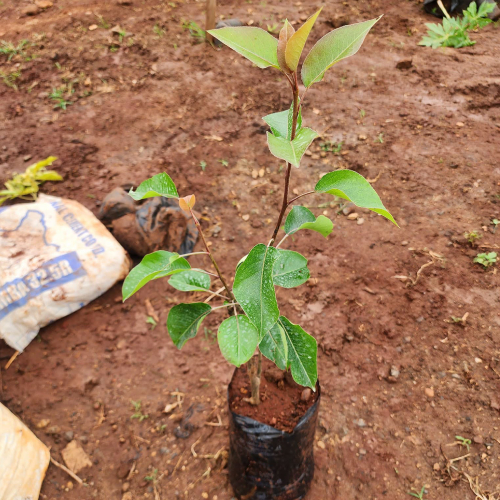
Grafted Pear Seedlings
Why Choose Grafted Pear Seedlings?
The main reason for choosing grafted pear seedlings is the greater control they give the farmer over the type of tree being planted. A selected fruiting variety provides a clearer basis for orchard planning than seedlings raised from seed, particularly where the farmer intends to establish a commercial orchard.
A commercial farmer needs to think about the final fruit rather than simply the number of trees planted. Buyers may have preferences regarding fruit size, appearance, taste, maturity period and consistency. Starting with selected grafted planting material makes it easier to establish an orchard around these requirements.
Grafting also allows the nursery to combine a selected scion with a root system. The rootstock can influence tree vigour and the way the tree interacts with the soil, while the scion provides the fruiting variety. This combination makes grafted planting material particularly useful where farmers want a more deliberate production system.
However, grafting does not eliminate the need for good farm management. A grafted pear seedling planted in unsuitable soil, poorly drained land or an environment that does not meet the variety’s requirements may still perform poorly. Good planting material must therefore be matched with suitable farm conditions.
The farmer should also remember that grafted pear seedlings are a long-term investment. The decision made when purchasing the seedlings affects orchard uniformity, variety selection and future management. This is why it is worth taking time to establish the variety and quality of the planting material before ordering.
Pear Farming in Kenya
Pear farming in Kenya requires careful consideration of climate because pears are deciduous fruit trees and different varieties have different environmental requirements. Temperature, cool conditions, flowering behaviour, water availability and the length of the growing season all influence tree performance.
Kenya has a range of agricultural environments, from cooler highland areas to warmer lowland and semi-arid regions. This variation means that pear production cannot be approached using one recommendation for every county. A variety that performs well in a cooler environment may not perform in the same way in a warmer location.
Farmers should therefore assess their own farm conditions before buying grafted pear seedlings. Altitude is useful when describing the general environment, but temperature and the actual chilling conditions experienced by the trees are more important when assessing suitability.
Water availability is another major consideration. Pear trees require adequate moisture for establishment and active growth, particularly during dry periods. A farm with unreliable rainfall should have an irrigation plan before establishing a commercial orchard.
Drainage is equally important. Pear roots require oxygen, and prolonged waterlogging creates unfavourable root conditions. A farm with heavy soils or areas where water collects after rainfall needs drainage planning before trees are planted.
Farmers should also consider exposure to strong winds and frost. Young trees can be damaged by strong winds, while flowers and developing fruit can be affected by frost in susceptible areas. Orchard design should therefore take local environmental conditions into account.
Climate Requirements for Grafted Pear Seedlings
Climate is one of the first factors to consider before planting grafted pear seedlings. Pears require suitable temperature conditions for normal growth, flowering and fruit development, while many varieties require a period of cool conditions during dormancy.
The chilling requirement varies between varieties. This means a farmer cannot simply assume that because pears are grown in one Kenyan location, the same variety will perform equally well in another location. The exact requirements of the selected variety should be considered before planting.
Cooler highland environments may provide more suitable conditions for certain pear varieties, but farmers still need to assess frost risk. Low-lying areas can sometimes experience colder conditions than surrounding land because cold air settles in those locations.
Warmer environments require a different assessment. If the selected variety requires more chilling than the farm naturally provides, flowering and fruiting can become irregular. This can make commercial production difficult even when other aspects of orchard management are good.
Rainfall patterns also matter. Excessive rainfall during certain periods can increase disease pressure, particularly where canopies are dense and drainage is poor. Dry conditions, on the other hand, increase the importance of irrigation and moisture conservation.
Sunlight should also be considered during site selection. Pear trees require sufficient light for healthy growth and fruit development, and orchard spacing and pruning should be designed to maintain good light penetration as the canopy develops.
Soil Requirements for Pear Trees
Grafted pear seedlings should be planted in soil that provides good drainage, adequate depth and sufficient fertility for root development. Soil that remains saturated for long periods creates an unfavourable environment for roots and increases the risk of root-related problems.
Very heavy soils can present drainage challenges, while very sandy soils may lose moisture quickly. Both situations can be managed to some extent through appropriate soil improvement and irrigation, but it is easier to establish a pear orchard on land that already provides suitable physical conditions.
A soil test should be carried out before planting. Testing gives the farmer information about soil pH and nutrient availability and helps determine whether amendments are required. It also provides a basis for developing a more appropriate fertiliser programme.
Organic matter can improve soil structure and moisture management. Where manure is used, it should be well decomposed rather than fresh. Fresh manure should not be placed directly against the roots or stem of young grafted pear seedlings because it can damage tender plant tissue.
Compaction should also be addressed before planting. Compacted soil can restrict root development and water movement, creating problems that are difficult to correct once an orchard is fully established.
Farmers should also consider the depth of the soil. A deep soil profile gives the root system more room to develop and provides a larger volume from which the tree can access moisture and nutrients.
Best Spacing for Grafted Pear Seedlings
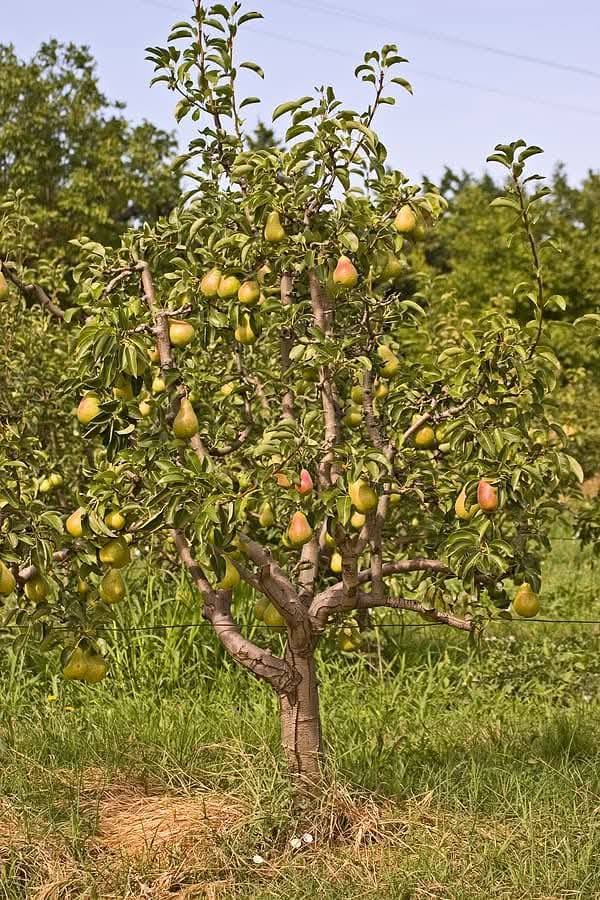
A pear tree in Kenya
Spacing is one of the most important orchard decisions because it determines the number of grafted pear seedlings that can be planted and affects how the trees will be managed when they mature.
A spacing of 5 metres by 6 metres provides approximately 30 square metres for each tree. Using the area of one acre, this gives a theoretical population of approximately 135 trees.
A spacing of 4 metres by 6 metres provides approximately 24 square metres per tree and gives a theoretical population of about 169 trees per acre.
| Spacing | Approximate theoretical population per acre |
|---|---|
| 5 m × 6 m | 135 trees |
| 4 m × 6 m | 169 trees |
The actual number of trees planted on an acre may be lower because the farmer needs to provide space for roads, drainage, boundaries, buildings, water infrastructure and access paths.
The wider 5 metre by 6 metre spacing provides more room for canopy development and can make pruning, spraying and harvesting easier as the trees mature. It also gives the farmer more room to move through the orchard.
The 4 metre by 6 metre arrangement allows a higher tree population but requires careful pruning and canopy management. If trees are allowed to become too large and crowded, light penetration and air movement can be reduced, while access to fruit becomes more difficult.
The appropriate spacing should therefore be selected according to the variety, tree vigour, management system and available resources rather than simply choosing the spacing that gives the highest number of trees.
How Many Grafted Pear Seedlings Do You Need Per Acre?
The number of grafted pear seedlings required per acre depends on the selected spacing. At 5 metres by 6 metres, approximately 135 trees are required before accounting for infrastructure. At 4 metres by 6 metres, approximately 169 trees are required.
For a farmer planting two acres at 5 metre by 6 metre spacing, the theoretical population would be about 270 trees. At KSh 1,200 per grafted pear seedling, the planting material cost would be approximately KSh 324,000.
At 4 metre by 6 metre spacing, two acres would require approximately 338 trees, giving a theoretical seedling cost of KSh 405,600 at the same price.
For five acres at 5 metre by 6 metre spacing, approximately 675 grafted pear seedlings would be required, giving a planting material cost of KSh 810,000. At 4 metre by 6 metre spacing, approximately 845 trees would be required, giving a seedling cost of KSh 1,014,000.
| Farm size | 5 m × 6 m | Estimated seedling cost | 4 m × 6 m | Estimated seedling cost |
|---|---|---|---|---|
| 1 acre | 135 | KSh 162,000 | 169 | KSh 202,800 |
| 2 acres | 270 | KSh 324,000 | 338 | KSh 405,600 |
| 5 acres | 675 | KSh 810,000 | 845 | KSh 1,014,000 |
| 10 acres | 1,350 | KSh 1,620,000 | 1,690 | KSh 2,028,000 |
These are theoretical calculations based on the full acre being available for trees. A practical orchard layout will usually contain fewer trees after allowing space for access roads, drainage, boundaries and other infrastructure.
How to Plant Grafted Pear Seedlings
Planting grafted pear seedlings correctly gives the trees a better opportunity to establish strong root systems. Begin by preparing the land before the seedlings arrive. The field should be cleared of problematic perennial weeds, the soil should be assessed and the orchard should be marked according to the chosen spacing.
Pegging the orchard before digging planting holes helps maintain uniform rows and makes future management easier. Straight rows allow workers to move through the orchard more efficiently and make irrigation, pruning and harvesting operations more organised.
Prepare planting holes according to the soil and size of the seedlings. Where manure or compost is needed, use well-decomposed material and mix it properly with soil rather than placing concentrated material directly against the roots.
When handling the grafted pear seedlings, protect the root ball from drying out. Avoid exposing the roots to direct sunlight and excessive wind for long periods. Seedlings should ideally be planted soon after reaching the farm.
Place the seedling upright in the planting hole and spread the roots naturally where necessary. The graft union should remain clearly above the final soil level. Do not bury the graft union because the scion may develop its own roots, undermining the purpose of the rootstock.
After filling the hole, firm the soil gently around the roots and water thoroughly. Where wind is a concern, provide a stake to support the young tree. The tie should support the tree without cutting into the expanding stem.
Mulching around the tree helps conserve soil moisture and reduce weed competition. Keep the mulch slightly away from the trunk so that excessive moisture does not remain against the bark.
Caring for Grafted Pear Seedlings After Planting
The first months after planting are critical because the young grafted pear seedlings are still developing their root systems. Water management is especially important during dry conditions because newly planted trees have limited access to moisture.
Weeds should be controlled around the trees because they compete for water and nutrients. Manual weeding, mulching and other appropriate methods can be used depending on the farm system.
Mulch is particularly useful during dry periods because it reduces evaporation from the soil surface. Organic mulch also contributes organic matter as it decomposes, although it should always be kept away from direct contact with the stem.
Young trees should be inspected regularly for signs of pest damage, disease, physical injury and water stress. Checking the orchard frequently allows the farmer to respond before small problems become widespread.
Staking should also be monitored. As the tree grows, ties can become tight around the stem. These should be adjusted so they do not restrict growth.
Livestock protection is important where animals have access to the farm. Goats, cattle and other animals can damage young trees through browsing or rubbing, potentially killing a seedling that has only recently been established.
Irrigation for Grafted Pear Seedlings
Water is essential during establishment and becomes increasingly important as the trees grow and eventually carry fruit. The irrigation programme should be based on rainfall, soil type, tree age and weather conditions rather than applying the same amount of water throughout the year.
Young grafted pear seedlings need consistent moisture while roots are becoming established. During dry periods, irrigation may be necessary to prevent water stress and support continued growth.
Drip irrigation can be useful because it allows water to be delivered close to the root zone. The system can also be adjusted as the trees become larger and their water requirements increase.
Farmers should avoid both under-watering and excessive irrigation. Too little water can restrict growth and contribute to stress, while excessive water can create waterlogged conditions and damage the root environment.
Mulching complements irrigation by reducing moisture loss from the soil surface. A combination of appropriate irrigation and moisture conservation can improve water-use efficiency, particularly in areas where dry periods are common.
Before establishing a commercial pear orchard, farmers should assess the reliability of their water source. Planting a large number of grafted pear seedlings without enough water for dry periods can expose the entire orchard to unnecessary risk.
Fertilizer and Nutrition for Grafted Pear Seedlings
The nutrient requirements of grafted pear seedlings change as the trees develop. Young trees need nutrients for root and shoot development, while mature trees require nutrition that supports both vegetative growth and fruit production.
Nitrogen is important for vegetative growth, but excessive nitrogen can produce very vigorous shoots and a dense canopy. This can make pruning more difficult and may interfere with the balance between vegetative growth and fruit production.
Phosphorus contributes to root development and plant energy processes, while potassium plays several roles in plant growth and water regulation and is important during fruit development. Calcium and magnesium also contribute to important plant functions, while micronutrients are required in smaller quantities where deficiencies occur.
The best fertiliser programme should be based on soil test results and observations of tree growth. Applying fertiliser simply because another farmer uses a particular product or quantity can result in unnecessary expense or nutrient imbalance.
Well-decomposed manure or compost can contribute organic matter and improve soil structure where needed. It should form part of an overall soil fertility plan rather than being treated as a complete replacement for all nutrient requirements.
As the trees mature, fertiliser management should take crop load into account. A mature tree carrying fruit removes more nutrients from the field than a young tree that has not yet entered commercial production.
Pruning and Training Grafted Pear Seedlings
Training begins while the grafted pear seedlings are young because the structure established during the early years affects the mature tree. The goal is to develop a strong framework that can support fruit while allowing adequate light penetration and air movement.
Branches that cross, crowd the centre of the tree or grow in weak positions may need to be removed or redirected. Dead and damaged branches should also be removed to maintain a healthy canopy.
Pruning becomes increasingly important as the trees mature because pears need to be kept within their allocated orchard space. Without regular canopy management, neighbouring trees can become crowded, reducing light and making harvesting more difficult.
The farmer should avoid removing productive branches without understanding the fruiting habit of the selected variety. Excessive pruning can stimulate unnecessary vegetative growth and reduce the amount of fruiting wood.
A well-managed canopy also makes pest and disease monitoring easier. Workers can inspect branches and leaves more effectively, while better air movement can reduce prolonged moisture within the canopy.
The exact training system should take the variety, tree vigour and spacing into consideration. Wider spacing gives the farmer more room to work with, while closer spacing requires greater attention to canopy size.
Pollination of Pear Trees
Pollination is an important consideration when establishing grafted pear seedlings because many pear varieties perform better when compatible varieties are available for cross-pollination. A farmer planning a commercial orchard therefore needs to consider pollination before purchasing all the seedlings.
The flowering periods of the selected varieties should overlap sufficiently for pollen transfer. Bees and other pollinating insects then move pollen between flowers, contributing to fruit set.
Farmers should not assume that planting two different pear varieties automatically guarantees successful pollination. Compatibility and flowering periods need to be considered when selecting the varieties.
The orchard layout should also allow pollinating insects to move effectively between compatible trees. Pollinator activity is especially important during flowering, and unnecessary pesticide applications during this period can interfere with beneficial insects.
Fruit set is influenced by more than pollination alone. Weather during flowering, tree health, water availability, nutrition and pest or disease pressure can all affect the final number of fruits that develop.
Pests Affecting Pear Trees
Pest pressure varies according to location and season, but pear trees can be affected by pests such as aphids, mites, scale insects, pear psylla and fruit-damaging insects.
Aphids commonly feed on tender shoots and leaves. Heavy infestations can distort young growth and weaken the tree. Some aphids also produce honeydew, which can encourage the development of sooty mould on plant surfaces.
Mites can damage leaves and may cause discolouration or bronzing when populations become high. Because some mites are small and difficult to see, farmers should regularly inspect both the upper and lower surfaces of leaves.
Pear psylla is another pest associated with pear production. Feeding can weaken trees and produce honeydew. Scale insects can also occur on branches and stems and may reduce tree vigour when infestations become severe.
The first step in pest management should be regular scouting. Walk through the orchard and inspect new shoots, leaves, stems and developing fruit. Early detection gives the farmer more options for responding before pest populations become difficult to control.
Integrated pest management should combine monitoring, orchard hygiene, appropriate cultural practices and protection of beneficial insects. Where pesticides are necessary, farmers should use products registered for the relevant crop and pest and follow the label instructions and required pre-harvest intervals.
Diseases Affecting Grafted Pear Seedlings
Disease prevention begins with healthy planting material and good orchard management. Poor drainage, excessive canopy density, prolonged leaf wetness and weak trees can increase disease problems.
Fire blight is a bacterial disease associated with pear production and can affect blossoms, shoots and branches. Symptoms can include browning and wilting of affected growth. Any suspected infection should be assessed promptly, particularly because the disease can spread through plant material.
Pear scab is another disease that can affect leaves and fruit, reducing appearance and marketability. Good canopy management helps improve air movement and reduce the period during which foliage remains wet.
Pear rust can also affect pear trees, with symptoms depending on the stage of infection. Farmers should avoid attempting to diagnose unfamiliar symptoms solely from photographs or assumptions.
Root diseases are often associated with poor drainage and waterlogged soil. This highlights why site selection and drainage need to be addressed before planting grafted pear seedlings rather than waiting until trees begin showing serious symptoms.
Farm sanitation is also important. Fallen or infected plant material should be managed appropriately, while pruning equipment should be kept clean when dealing with diseased trees.
Pear Yield Per Tree and Per Acre
There is no single yield that can be guaranteed for every grafted pear seedling or every acre of pear trees. Production depends on the variety, tree age, climate, pollination, water, nutrition, pruning, pest pressure, disease management and overall orchard care.
Tree population also affects the total harvest. For example, an orchard with approximately 135 trees per acre under 5 metre by 6 metre spacing would produce 2,700 kilograms if each tree averaged 20 kilograms of fruit. If the same trees averaged 30 kilograms, total production would be approximately 4,050 kilograms.
Under 4 metre by 6 metre spacing, approximately 169 trees would theoretically occupy an acre. At an illustrative 20 kilograms per tree, this would equal approximately 3,380 kilograms, while 30 kilograms per tree would give approximately 5,070 kilograms.
These are mathematical planning examples rather than guaranteed yields. Farmers should use conservative production assumptions when preparing a commercial business plan and adjust them as they collect actual orchard records.
Once the trees begin producing, recording harvests per tree and per acre becomes extremely useful. Production records help farmers understand which varieties and management practices are performing well under their own conditions.
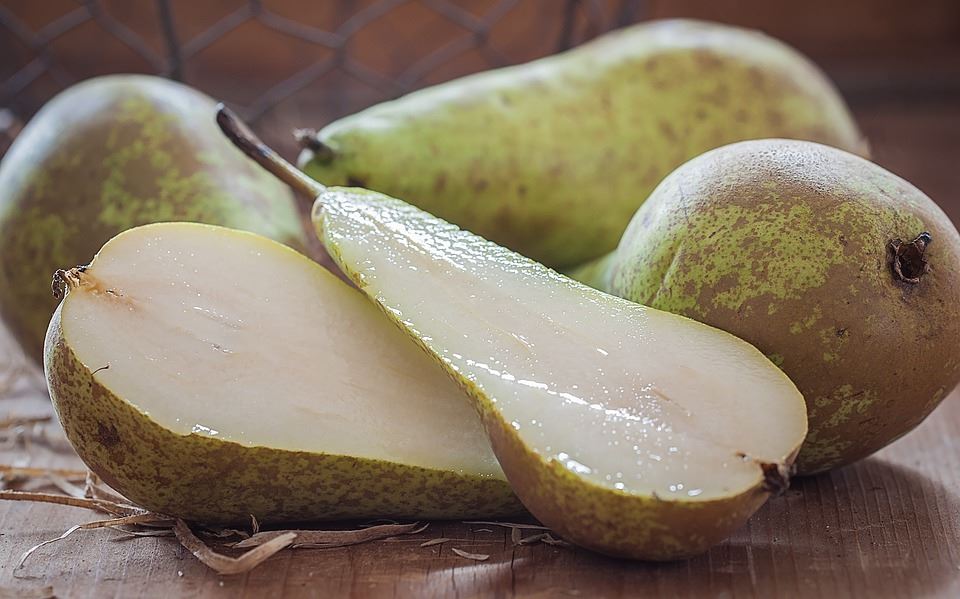
A sliced pear fruit ready to be consumed
When Do Grafted Pear Seedlings Start Producing?
The time required for grafted pear seedlings to begin producing depends on the variety, rootstock, tree health, climate and orchard management. Grafted trees can offer a more predictable route to fruit production than seed-grown trees, but farmers should avoid treating a fixed number of years as a guarantee for every variety and location.
The first priority after planting should be establishment. A strong root system and healthy canopy provide the foundation for future fruit production. Trying to force young trees into heavy production before they are properly established can compromise long-term tree development.
Water, nutrition and pruning need to be managed according to the age and growth of the tree. The farmer should focus on developing the right structure before expecting the orchard to produce commercial quantities of fruit.
Variety and climate also matter. A tree planted in conditions that do not meet its environmental requirements may establish slowly or produce inconsistently even when other management practices are good.
Farmers should therefore ask about the particular variety and planting material being purchased rather than relying on a general claim about how quickly all grafted pear seedlings fruit.
Harvesting Pears
Harvesting should be based on the maturity characteristics of the selected variety and the intended market. Pears are not necessarily harvested at the same stage at which consumers want to eat them, particularly when the fruit is intended for storage or distribution.
Farmers should assess fruit maturity using appropriate indicators for the variety rather than relying only on skin colour. Fruit size, firmness and the normal maturity pattern can help determine the appropriate harvest stage.
Handling is extremely important because pears can bruise easily. Fruit should be picked carefully rather than dropped into containers, and workers should avoid rough handling during sorting and transportation.
After harvesting, fruit can be sorted according to size, appearance and quality. Damaged or diseased fruit should be separated from marketable produce.
Packaging should protect the fruit from excessive pressure and movement. Poor packaging can lead to bruising during transport and reduce the price received by the farmer.
Harvest planning should also consider transport and market timing. A farmer needs to know where the fruit will go before harvesting large quantities so that produce does not remain on the farm unnecessarily.
Pear Prices and Market Opportunities in Kenya
Pear prices vary according to the market channel, season, fruit quality, variety and location. The supplied market information places farmgate and wholesale prices at approximately KSh 35 to KSh 80 per kilogram, while local retail and informal market prices can range from approximately KSh 80 to KSh 250 per kilogram.
Premium imported pears in supermarkets can be sold at substantially higher prices, with the supplied range being approximately KSh 450 to KSh 780 per kilogram. However, farmers should not use imported supermarket prices as a direct prediction of the price they will receive at farm level.
Retail prices include additional costs associated with transport, storage, packaging, handling, retailer margins and other supply-chain expenses. Imported fruit also has a different cost structure from locally produced fruit.
For a commercial farmer, the most useful approach is to identify potential buyers and establish the price they are prepared to pay for fruit meeting their requirements. Buyers may have specific preferences for variety, fruit size, appearance, maturity and packaging.
Seasonality can also influence prices. A farmer who understands when local supply is high or low can make better marketing decisions, although market prices will always change according to actual supply and demand.
Marketing Grafted Pears in Kenya
Marketing should be considered before planting a large number of grafted pear seedlings. A farmer who knows the intended buyer can make better decisions about variety, orchard size, fruit quality and harvesting.
Farmgate traders may purchase large quantities directly from farmers, reducing the farmer’s responsibility for transport and marketing but potentially offering a lower price than direct retail channels. Direct sales can offer greater control over pricing but require more time, packaging and customer management.
Supermarkets and other formal buyers may require consistent quality, grading and supply. Hotels and restaurants can also provide opportunities where the farmer can maintain reliable fruit quality and delivery.
Local markets provide another route for selling pears, especially where the farmer is located close to population centres. The cost of transporting fruit to the market should always be deducted when comparing different selling opportunities.
Farmers should also maintain records of the quantity harvested, quantity sold, selling price, transport expenses and rejected fruit. These records provide a more accurate picture of profitability than the selling price alone.
Commercial Pear Farming in Kenya
Commercial pear farming requires a long-term approach because the farmer is investing in perennial trees rather than a short-season crop. The orchard should therefore be planned around both establishment costs and future management requirements.
The first step is site assessment. Determine whether the climate and soil are appropriate, establish the availability of water and assess drainage before ordering the trees.
The next step is variety selection. The farmer should identify the desired fruit characteristics and understand the variety’s climate and pollination requirements. This information should be available before ordering a large quantity of grafted pear seedlings.
Spacing then determines the theoretical tree population. At 5 metre by 6 metre spacing, approximately 135 trees fit on an acre before infrastructure deductions. At 4 metre by 6 metre spacing, approximately 169 trees fit on an acre.
At KSh 1,200 per grafted pear seedling, the planting material cost can then be calculated. However, this is only one component of the orchard budget.
A commercial budget needs to include soil testing, land preparation, manure, fertiliser, irrigation, fencing, labour, pruning, crop protection, harvesting, grading, packaging and transport. The farmer should also account for the period before the orchard reaches meaningful commercial production.
The most reliable business plan is therefore based on the actual farm rather than a generic income claim. Use realistic production scenarios and current market information when calculating expected returns.
Grafted Pear Seedlings for Different Farm Sizes
Small-scale farmers can begin with a modest number of grafted pear seedlings while learning the management requirements of the crop. A smaller orchard can make it easier to monitor individual trees, maintain pruning and learn how the selected variety responds to the local environment.
For farmers with larger land holdings, the planning process becomes more important because mistakes affect a greater number of trees. A commercial grower should confirm the site, water supply, market, variety and pollination requirements before ordering hundreds or thousands of seedlings.
At one acre, the theoretical population is approximately 135 trees at 5 metre by 6 metre spacing or 169 trees at 4 metre by 6 metre spacing. At five acres, the theoretical population increases to approximately 675 and 845 trees respectively.
The larger the orchard, the more important irrigation, access roads, drainage, labour planning and market arrangements become. A farmer should not increase the number of grafted pear seedlings without also increasing the capacity to manage the resulting orchard.
Where to Buy Grafted Pear Seedlings in Kenya
Farmers looking for grafted pear seedlings for sale in Kenya should consider the quality and identity of the planting material before placing an order. The variety should be clear, the graft union should be properly healed and the seedlings should be healthy and suitable for transplanting.
Fruit Africa Veriplant supplies grafted pear seedlings at KSh 1,200 each and non-grafted pear seedlings at KSh 350 each. Farmers planning an orchard should calculate their required number of trees based on the chosen spacing and available land before ordering.
For a large order, it is useful to provide information about the farm location, acreage and intended planting arrangement. This makes it easier to plan the number of grafted pear seedlings required and organise delivery.
Farmers should also prepare their land before the seedlings arrive. Having the planting holes, water and labour ready helps reduce the time seedlings spend waiting before being planted.
Common Mistakes When Planting Grafted Pear Seedlings
One common mistake is buying grafted pear seedlings before assessing whether the farm is suitable for pears. Climate, soil, drainage and water should be considered first because even healthy planting material cannot overcome an unsuitable production environment.
Another mistake is planting without a clear spacing plan. Trees that are initially small can appear to have plenty of room, but their canopies expand significantly as they mature. Insufficient spacing creates problems with pruning, light penetration, air circulation and harvesting.
Burying the graft union is another important mistake to avoid. The graft should remain above the soil surface after planting so the rootstock continues to perform its intended function.
Farmers should also avoid overwatering young trees. Water is essential, but saturated soils create problems for roots. Irrigation should be adjusted according to rainfall and soil moisture.
Applying large quantities of fertiliser without soil testing can also lead to unnecessary expense and excessive vegetative growth. Nutrition should be based on the actual condition of the soil and the needs of the developing tree.
Finally, farmers should not wait until harvest to think about the market. Variety selection, fruit quality, harvesting practices and market requirements should all be considered before the orchard is established.
How to Plan a Grafted Pear Orchard
Planning should begin with the farm rather than the nursery. Start by assessing the climate, soil, drainage, sunlight, water availability and wind exposure. This helps determine whether the location can support the selected pear variety.
Next, decide what type of market you want to target. The intended buyer can influence the variety, fruit characteristics and orchard size. A farmer selling directly to consumers may have different requirements from a grower supplying a formal retail market.
Once the market and site are understood, select the variety and confirm its pollination requirements. Then choose the spacing and calculate the number of grafted pear seedlings required.
Prepare the land before the planting material arrives. Conduct soil testing, improve the soil where necessary, establish irrigation and mark the orchard accurately.
After planting, concentrate on establishment. Protect the trees from livestock, maintain moisture, control weeds and begin appropriate training and pruning. Monitor the trees regularly for pests and diseases.
As the orchard develops, maintain records of inputs, tree growth, flowering, fruit set, harvest quantities and selling prices. These records will help you improve management and calculate actual profitability.
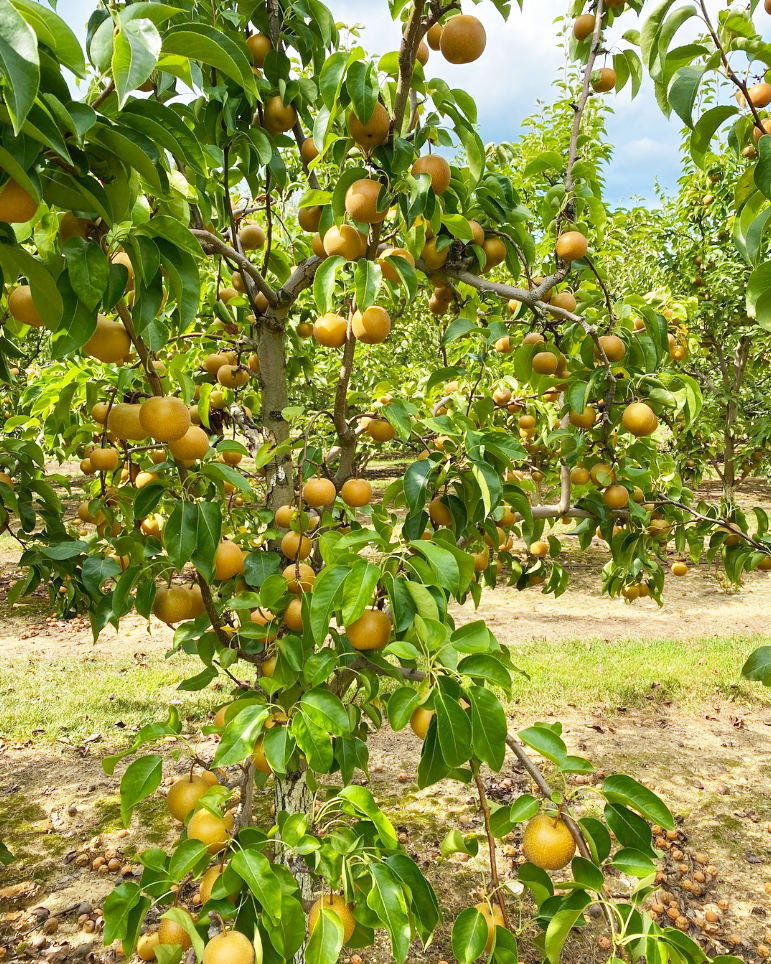
A pears farm in Kenya
Grafted Pear Seedlings and Long-Term Orchard Management
Grafted pear seedlings are a long-term investment, so the orchard needs to be managed with the mature tree in mind. The spacing selected at planting determines how much room the canopy has later, while the early training programme influences the shape and strength of the mature tree.
Irrigation infrastructure should also be planned for the future. Young trees have relatively small water requirements, but mature trees carrying fruit need more water during active growth and fruit development.
Pruning should become a routine orchard operation rather than something done only when branches become too large. Regular canopy management helps keep trees within their allocated space and maintains light and air movement.
Nutrition should also be reviewed as trees grow. Soil tests, tree growth and crop load provide information for adjusting the fertiliser programme.
Pest and disease scouting should remain part of normal farm operations. Regular observation helps identify problems before they become widespread and reduces the temptation to apply unnecessary pesticides.
The farmer should also maintain market relationships as production increases. Buyers value consistent quality and reliable supply, and harvest records help demonstrate what the orchard can produce.
Frequently Asked Questions About Grafted Pear Seedlings
1. How much are grafted pear seedlings in Kenya?
Grafted pear seedlings are available at KSh 1,200 each from Fruit Africa Veriplant. Non-grafted pear seedlings are available at KSh 350 each. The total amount a farmer spends depends on the number of trees required, which is determined by farm size and spacing. A farmer should also budget separately for land preparation, irrigation, manure, fertiliser, labour and other orchard establishment costs.
2. Where can I buy grafted pear seedlings in Kenya?
Farmers looking for grafted pear seedlings in Kenya can order from Fruit Africa Veriplant. The grafted pear seedlings are priced at KSh 1,200 each. Before placing a large order, farmers should confirm the variety available, assess the suitability of their farm and calculate the number of seedlings required based on the planned spacing.
3. How many grafted pear seedlings do I need for one acre?
At 5 metre by 6 metre spacing, approximately 135 grafted pear seedlings are required per acre before allowing for roads, boundaries and other infrastructure. At 4 metre by 6 metre spacing, approximately 169 seedlings are required. The actual number planted will depend on the final orchard layout.
4. What is the best spacing for grafted pear seedlings?
A 5 metre by 6 metre spacing provides approximately 135 theoretical trees per acre, while 4 metre by 6 metre provides approximately 169. The choice should depend on variety, tree vigour, pruning system, orchard equipment and the amount of space needed for access. Higher tree populations require stronger canopy management to prevent overcrowding.
5. What is the difference between grafted and non-grafted pear seedlings?
Grafted pear seedlings combine a selected fruiting variety with a rootstock, while non-grafted seedlings are not produced through the same grafting process. Seed-grown pear trees can vary in their fruit characteristics, making them less predictable for commercial production. Grafted planting material allows the farmer to select a known fruiting variety and plan the orchard more deliberately.
6. How do you plant grafted pear seedlings?
Prepare the land and mark the orchard according to the chosen spacing before digging the planting holes. Use well-decomposed manure where appropriate, handle the seedlings carefully and keep the root ball intact. Place the tree upright with the graft union above the soil surface, fill the hole gently, water thoroughly and stake the tree where necessary. Mulch around the root zone while keeping the mulch away from the stem.
7. How long do grafted pear seedlings take to produce fruit?
The time to fruiting varies according to the pear variety, rootstock, climate, tree health and management. Grafted trees are selected planting material and can provide a more predictable starting point than seed-grown trees, but farmers should not rely on one fixed fruiting period for every variety. Strong establishment during the early years is important for future production.
8. Which grafted pear varieties are suitable for Kenya?
Pear varieties have different climate, chilling, flowering and pollination requirements, so suitability depends on the farm. Farmers should confirm the exact variety available and compare its requirements with their location before ordering large quantities of grafted pear seedlings. The intended market should also influence variety selection.
9. Do grafted pear trees need pollination?
Many pear varieties benefit from cross-pollination, meaning the farmer may need compatible varieties flowering at the same time. Bees and other pollinating insects help transfer pollen between flowers. Pollination requirements should therefore be considered before establishing the orchard rather than after planting.
10. What soil is best for grafted pear seedlings?
Grafted pear seedlings perform best where the soil provides good drainage, adequate depth and suitable fertility. Waterlogged soils should be avoided because roots require oxygen. Soil testing before planting helps determine pH and nutrient status and provides information for soil improvement and fertiliser planning.
11. How often should grafted pear seedlings be watered?
Watering depends on rainfall, soil type, temperature and tree age. Newly planted grafted pear seedlings require consistent moisture during establishment, especially during dry conditions. Mature trees require adequate moisture during active growth and fruit development. Drip irrigation can provide controlled water delivery, while mulching helps reduce evaporation.
12. What fertilizer should I use on grafted pear seedlings?
The fertiliser programme should be based on soil fertility, tree age and growth. Nitrogen supports vegetative growth, phosphorus contributes to root development, and potassium supports several plant functions including water regulation and fruit development. Soil testing provides a better basis for fertiliser decisions than applying a standard quantity without knowing the soil condition.
13. How profitable is pear farming in Kenya?
Profitability depends on the actual yield, selling price, production costs and market channel. Farmers should not calculate expected income using supermarket prices without accounting for the costs and margins between the farm and consumer. A commercial pear business plan should use realistic production assumptions, actual farm costs and the price available to the farmer through the intended market.
14. How much do pears sell for in Kenya?
The supplied market ranges indicate approximately KSh 35 to KSh 80 per kilogram at farmgate and wholesale level, approximately KSh 80 to KSh 250 per kilogram in local retail and informal markets, and approximately KSh 450 to KSh 780 per kilogram for premium imported supermarket pears. Actual prices vary by season, variety, quality, location and market channel.
15. What pests attack pear trees?
Pear trees can be affected by aphids, mites, scale insects, pear psylla and fruit-damaging pests. Regular scouting helps farmers identify pest populations early. Management should combine monitoring, good orchard practices and appropriate crop protection. Any pesticide used should be registered for the intended crop and pest and applied according to the label.
16. What diseases affect pear trees?
Pear trees can experience diseases including fire blight, pear scab, pear rust and root-related diseases. Disease pressure can be influenced by drainage, canopy density, moisture and orchard sanitation. Farmers should seek proper identification when unusual symptoms appear rather than applying treatments without knowing the cause.
17. Can pear trees grow in warm areas of Kenya?
Suitability depends on the selected variety and its chilling requirement. Pears are deciduous trees, and different varieties require different environmental conditions. Farmers in warmer areas should establish whether the selected variety can perform under the local temperature and chilling conditions before investing in a commercial orchard.
18. How much does it cost to plant one acre with grafted pear seedlings?
At KSh 1,200 per grafted pear seedling, approximately 135 trees at 5 metre by 6 metre spacing would cost about KSh 162,000 in planting material. Approximately 169 trees at 4 metre by 6 metre spacing would cost about KSh 202,800. These figures cover seedlings only and exclude irrigation, land preparation, manure, fertiliser, labour, fencing, crop protection and other orchard costs.
19. Can grafted pear seedlings be planted for commercial farming?
Yes, grafted pear seedlings can be used when establishing a commercial pear orchard, provided the farm is suitable for the selected variety and the farmer has a clear management and market plan. Commercial production requires careful attention to spacing, irrigation, pruning, nutrition, pollination, pest and disease management, harvesting and marketing.
20. How do I order grafted pear seedlings in Kenya?
Farmers can contact Fruit Africa Veriplant for grafted pear seedlings at KSh 1,200 each. Call 0714 994 444, send a WhatsApp enquiry through https://wa.link/di12my, email sales@fruitafrica.org, or submit a quotation request through https://fruitafrica.org/request-for-quotation/. When making an enquiry, provide your farm size and intended planting arrangement so the number of grafted pear seedlings required can be calculated.
Final Guide to Buying Grafted Pear Seedlings in Kenya
Buying grafted pear seedlings is an important first step for farmers planning to establish a pear orchard, but the success of the enterprise depends on everything that happens before and after the seedlings are planted. The farmer needs to assess the site, understand the climate and chilling requirements of the selected variety, prepare the soil, establish reliable water access and design an orchard with sufficient room for mature trees.
The price of grafted pear seedlings in Kenya is also an important part of the initial budget. At Fruit Africa Veriplant, grafted pear seedlings cost KSh 1,200 each, while non-grafted pear seedlings cost KSh 350 each. At 5 metre by 6 metre spacing, an acre has a theoretical population of approximately 135 trees, giving a seedling cost of about KSh 162,000. At 4 metre by 6 metre spacing, approximately 169 trees would be required, giving a theoretical planting material cost of KSh 202,800.
These calculations show why spacing and farm size should be determined before ordering. A farmer should not simply order a fixed number of seedlings without considering roads, drainage, boundaries and other infrastructure. The orchard needs to remain accessible throughout its productive life.
After planting, the focus shifts to establishment and long-term management. Young grafted pear seedlings require adequate moisture, protection from livestock, weed control and appropriate nutrition. As the trees grow, training and pruning become increasingly important to maintain a manageable canopy with adequate light and air movement.
Pollination should be planned from the beginning where the selected varieties require cross-pollination. Pest and disease scouting should become a regular part of orchard management, while fertiliser and irrigation programmes should respond to soil conditions, rainfall, tree age and crop load.
The market also needs to be considered early. Farmgate, wholesale, retail and imported supermarket prices are not the same, and a farmer should calculate expected returns using the price actually available through the intended selling channel. Quality, grading, harvesting, packaging and transportation can all influence the final return.
For farmers ready to establish a pear orchard, grafted pear seedlings provide a more deliberate starting point than seed-grown planting material, but the seedlings need to be matched with the right farm conditions and management system. Start with site assessment, variety selection, soil preparation, spacing and market planning before placing a large order.
Fruit Africa Veriplant supplies grafted pear seedlings at KSh 1,200 each. To enquire or place an order, call 0714 994 444, send a WhatsApp message through https://wa.link/di12my, email sales@fruitafrica.org, or submit your requirements through https://fruitafrica.org/request-for-quotation/.


Reviews
There are no reviews yet.