
Description
- Buy Pepino Melon Seedlings in Kenya at KSh 100 each. Learn farming costs, production per acre, market prices and profitability for commercial Pepino Melon farming.
Pepino Melon Seedlings in Kenya: Complete Guide to Farming, Production, Costs and Profitability
Pepino Melon Seedlings give Kenyan farmers a fast way into fruit production. The crop matures in months, not years. One plant keeps producing for close to five years. The fruit sells in fresh markets, supermarkets, hotels and health food shops. For farmers who want a fruit crop that pays back quickly, pepino melon is worth a close look.
This guide covers what you need before you order Pepino Melon Seedlings in Kenya. It explains what the crop is, where it grows, how to plant it, what it costs to produce, what you can harvest per acre and what prices you can expect in the Kenyan market. It gives you the numbers to plan a commercial pepino melon enterprise.
Fruit Africa Veriplant supplies Pepino Melon Seedlings at KSh 100 each. The rest of this guide explains everything that comes after that order.
What Are Pepino Melon Seedlings?
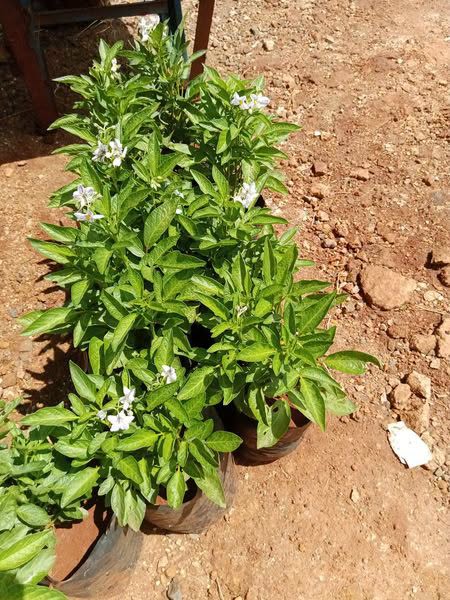
Pepino melon belongs to the Solanaceae family, the same plant family as tomatoes, potatoes and eggplants. The plant grows as a semi-woody shrub that reaches about 1.2 metres when mature. It is grown for its fruit, which tastes like a mix between honeydew melon and cucumber.
Pepino Melon Seedlings are propagated from cuttings, not from seed. This matters because plants grown from seed do not come true to type. Seed-grown plants produce fruit that varies in size, taste and quality from one plant to the next. For a commercial orchard, that variation makes planning difficult. Farmers who grow pepino for market need uniform fruit that buyers will accept. Cuttings from selected mother plants give you that uniformity.
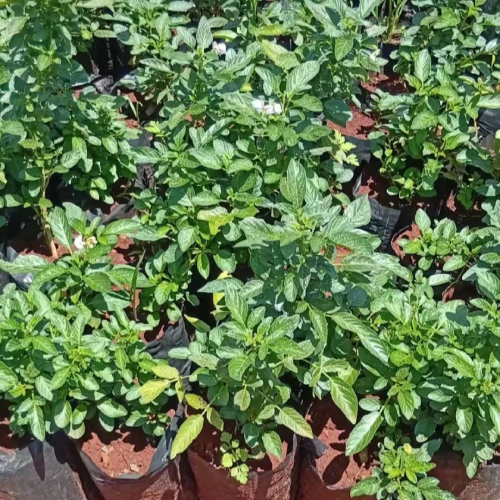
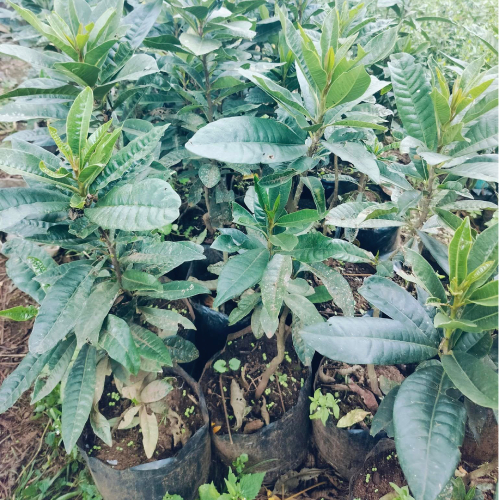
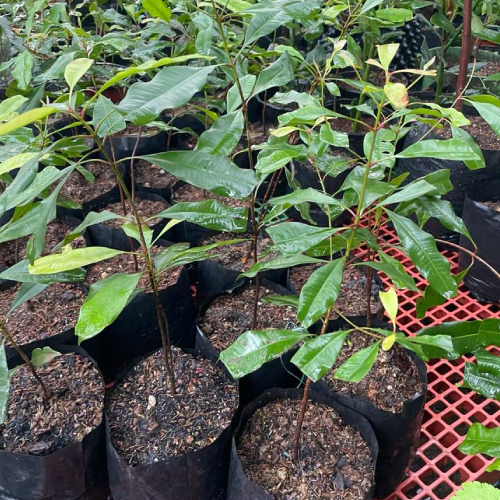
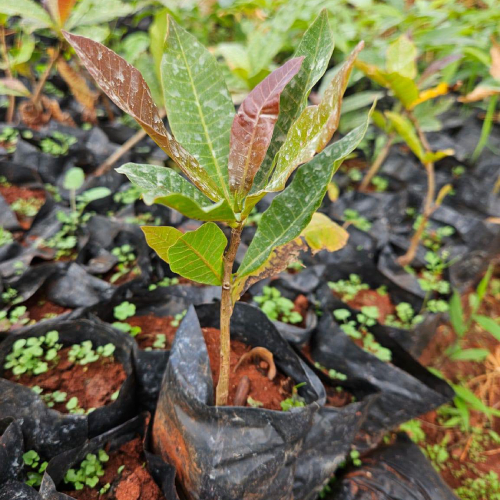
A good Pepino Melon Seedling has healthy roots, a firm stem and clean leaves. The plant should show no signs of disease, no yellowing and no pest damage. When you buy from a reliable nursery, you get planting material that has been selected for fruit quality and yield. That is the foundation of a commercial orchard.
Pepino Melon Seedlings Price in Kenya
Fruit Africa Veriplant supplies Pepino Melon Seedlings at KSh 100 each.
The total amount you spend on seedlings depends on how many plants you need for your land. A one-acre plot at 3 metres by 3 metres spacing holds about 450 planting positions. At KSh 100 per seedling, that comes to KSh 45,000 for planting material alone.
Seedling cost is only one part of what you will spend. Land preparation, manure, fertiliser, irrigation, labour, crop protection, staking and harvesting all add to the total investment. Budget for the full establishment cost before you place your order.
When comparing Pepino Melon Seedlings from different nurseries, look at the condition of the plant, not just the price. A weak seedling that fails to establish costs more than a healthy one that grows well. Check the roots, the stem and the leaves before you buy. Ask about the mother plants the cuttings came from.
Why Grow Pepino Melon in Kenya?
Pepino melon gives Kenyan farmers another fruit crop to sell. Most farmers already grow avocado, mango, banana, passion fruit or pawpaw. Adding pepino spreads your risk and gives you fruit to sell when other crops are not producing.
The crop also produces fast. You plant cuttings and harvest fruit within the same year if conditions are good. Compare that to fruit trees that take three to five years before the first harvest. For a farmer who needs income sooner, pepino melon makes sense.
The market for pepino melon is still small compared to mainstream fruits, but it is growing. Supermarkets, health food shops and hotels buy the fruit. Consumers who look for low-sugar fruits are interested in pepino because the fruit is mild and juicy. Farmers who move early can supply a market that not many growers serve yet.
Where Pepino Melon Grows in Kenya
Pepino melon performs well across a wide range of Kenyan environments. The plant grows from close to sea level up to about 3,000 metres above sea level. The best temperatures range between 12°C and 30°C, with optimal growth between 15°C and 25°C. When temperatures go above 30°C, fruit set drops. When they fall below 10°C, growth slows.
Suitable growing regions include Nyeri, Murang’a, Kiambu, Nakuru, Eldoret, Kericho, Machakos, Meru, Kisumu, Kakamega, Mombasa and Kilifi. The highlands of Central Kenya and the Rift Valley offer some of the best conditions.
Pepino melon needs consistent moisture but does not tolerate waterlogged soil. The crop does well in areas with annual rainfall between 800 millimetres and 1,400 millimetres. In drier areas, irrigation is essential for commercial production. The plant also needs good sunlight. Heavy shade from trees or buildings reduces growth and fruit production.
Soil Requirements for Pepino Melon
Pepino melon grows best in deep, well-drained soil. Loam and sandy loam soils are ideal. These soils hold moisture without staying wet. They also allow roots to spread easily.
Heavy clay soils cause problems if they stay wet. Pepino roots need oxygen. Waterlogged soil suffocates them and opens the door to root diseases. If your land has heavy soil, improve drainage before planting. Raised beds help in areas where water collects after rain.
The best soil pH for pepino melon is between 6.0 and 7.5. A soil test before planting tells you where your soil stands. If the soil is too acidic, lime corrects it. If it is too alkaline, organic matter helps bring it back into range.
Organic matter improves any soil. Well-decomposed manure or compost adds nutrients and improves soil structure. Mix it into the planting holes before you transplant the seedlings. Do not use fresh manure directly against the roots. Fresh manure heats up as it decomposes and damages young roots.
Preparing the Land for Pepino Melon Seedlings
Good land preparation starts before your Pepino Melon Seedlings arrive. Clear the field of weeds and old crop residues. Plough deep to break up compacted soil. Harrow to create a fine tilth that roots can grow through easily.
If your land has drainage problems, fix them before planting. Open drainage channels or build raised beds where water collects. Waterlogged soil kills young pepino plants quickly.
Mark your planting positions using the spacing you choose. A rope or tape measure keeps rows straight. Straight rows make irrigation, spraying and harvesting easier later.
Prepare planting holes about 45 centimetres wide, 45 centimetres deep and 45 centimetres wide. Keep the topsoil separate from the subsoil. Mix the topsoil with well-decomposed manure. Add a starter fertiliser if your soil test shows the need. Mix everything well before you put it back into the hole.
Spacing for Pepino Melon Seedlings
Spacing decides how many Pepino Melon Seedlings you plant and how much fruit you harvest per acre. Two systems work in Kenya.
The wide spacing of 3 metres by 3 metres gives each plant 9 square metres. One acre holds about 450 plants at this spacing. This system gives plants plenty of room to spread. Air moves freely through the field. Harvesting and spraying are easier because there is more room to work. This spacing suits farmers who want lower plant numbers and simpler management.
Closer spacing is also used. Some Kenyan growers plant at 1 metre by 1.5 metres, giving about 2,700 plants per acre. Others use 3 feet by 3 feet, giving between 4,000 and 4,900 plants per acre. Closer spacing produces more fruit per acre if you manage the crop well. It also needs more seedlings, more staking, more pruning and closer attention to disease.
Use the 3 metres by 3 metres model in this guide for planning calculations. It gives a clear, conservative picture. Adjust the spacing to suit your budget, your management capacity and your market.
| Spacing | Plants per Acre | Seedling Cost at KSh 100 |
|---|---|---|
| 3m × 3m | 450 | KSh 45,000 |
| 1m × 1.5m | 2,700 | KSh 270,000 |
| 3ft × 3ft | 4,000 to 4,900 | KSh 400,000 to KSh 490,000 |
Table 1: Pepino Melon Seedlings required at different spacings.
How Many Pepino Melon Seedlings Do You Need Per Acre?
One acre equals about 4,047 square metres. At 3 metres by 3 metres spacing, each plant takes 9 square metres. Divide 4,047 by 9 and you get about 450 plants.
At 1 metre by 1.5 metres spacing, each plant takes 1.5 square metres. Divide 4,047 by 1.5 and you get about 2,700 plants.
At 3 feet by 3 feet spacing, each plant takes about 0.84 square metres. Divide 4,047 by 0.84 and you get about 4,800 plants.
The actual number you plant is lower than these figures because roads, paths, drainage channels, water tanks and buildings take up space. Plan for between 10 and 20 percent less than the theoretical figure.
For different farm sizes at 3 metres by 3 metres:
| Farm Size | Plants | Seedling Cost at KSh 100 |
|---|---|---|
| ¼ acre | 113 | KSh 11,300 |
| ½ acre | 225 | KSh 22,500 |
| 1 acre | 450 | KSh 45,000 |
| 2 acres | 900 | KSh 90,000 |
| 5 acres | 2,250 | KSh 225,000 |
Table 2: Pepino Melon Seedlings required for different farm sizes at 3m × 3m spacing.
How to Plant Pepino Melon Seedlings
Planting day decides how well your Pepino Melon Seedlings establish. Handle the plants carefully from the moment they arrive.
Water the seedlings in their containers before you remove them. Wet roots hold together better than dry roots. If the seedlings travelled far, let them rest in a shaded area for a few hours before planting.
Plant in the cool hours of the morning or late afternoon. Avoid the midday heat. The sun dries roots quickly and stresses the young plants.
Place each seedling upright in its hole. Keep the plant at the same depth it was growing in the nursery container. Do not bury the stem deeper than it was. Firm the soil gently around the roots to remove air pockets. Water immediately after planting.
If you plant during the rainy season, watch the weather. A dry spell after planting can still stress the seedlings. Irrigate if the rain stops for more than a few days.
Irrigation for Pepino Melon
Pepino melon needs steady moisture. Too little water stresses the plant and reduces fruit size. Too much water causes root problems and splits fruit.
Young plants need water often during the first weeks. Their roots are shallow and dry out fast. Water lightly and frequently. As the plants grow, roots go deeper and you can water less often but more deeply.
Drip irrigation works well for pepino melon. It delivers water directly to the root zone. The leaves stay dry, which lowers disease pressure. Drip lines also let you apply fertiliser through the irrigation water if you want.
Mulching helps hold soil moisture. Spread dry grass or straw around the base of each plant. Keep the mulch a few centimetres away from the stem so the stem does not stay wet. Mulch also suppresses weeds and keeps the soil cooler during hot weather.
Avoid the pattern of letting the soil dry out completely and then flooding it. That swing stresses the plant and causes fruit cracking. Keep moisture steady through the season.
Fertiliser for Pepino Melon
Pepino melon responds well to balanced nutrition. The crop needs nitrogen for leaf and stem growth. It needs phosphorus for root development and flowering. It needs potassium for fruit size, fruit quality and disease resistance. Calcium and magnesium also matter, along with small amounts of micronutrients.
The right fertiliser programme starts with a soil test. The test tells you what your soil already has and what it lacks. Applying fertiliser without knowing the soil is guesswork. You can waste money on nutrients the soil already has or miss nutrients the crop needs.
At planting, mix well-decomposed manure into the soil. Add a phosphorus-rich starter fertiliser if the soil test shows low phosphorus. This supports root growth while the plant establishes.
As the plant grows, apply nitrogen in split doses. Split applications feed the plant steadily without pushing too much leafy growth at once. Too much nitrogen gives you a big leafy plant with few fruits. You want a balanced plant with strong stems, healthy leaves and good fruit set.
When the plant starts flowering, shift towards potassium. Potassium supports fruit development. It also helps the fruit hold quality after harvest. Apply it through the soil or through drip irrigation.
Watch the plants for signs of nutrient problems. Yellowing between leaf veins, poor growth or small fruit can all point to deficiencies. Correct them early so the crop does not lose yield.
Training, Support and Pruning for Pepino Melon
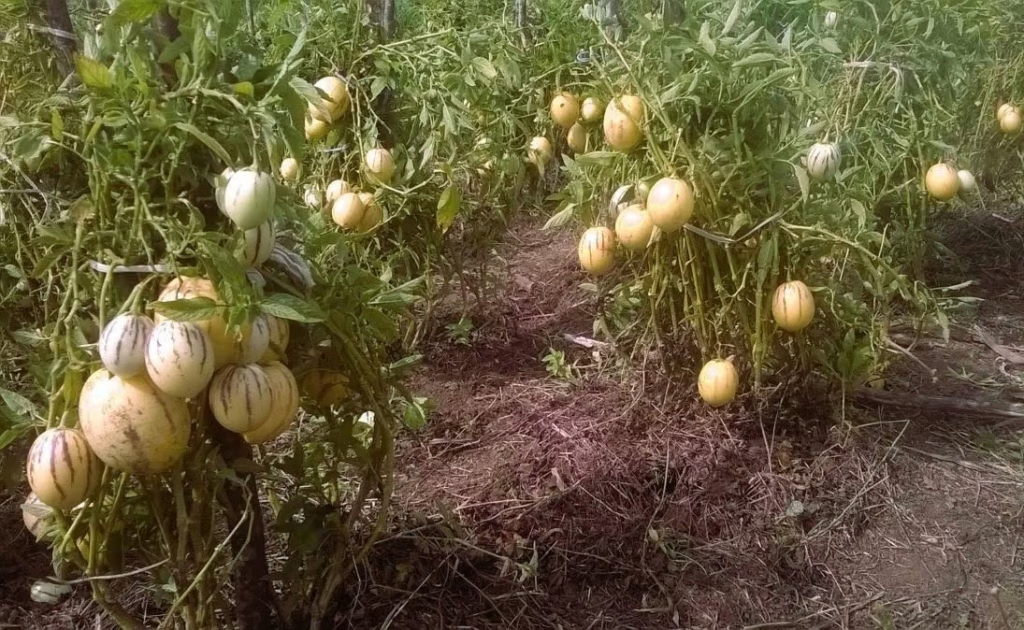
Pepino melon plants spread as they grow. The stems are soft and bend under the weight of the fruit. If you leave the plants unsupported, branches touch the ground. Fruit resting on wet soil gets damaged, develops rot and loses market value.
Staking or trellising keeps the plant upright. You can use wooden stakes, bamboo or wire trellises. The support keeps the fruit off the ground and makes harvesting easier. It also improves airflow around the plant, which reduces disease.
Pruning keeps the plant in shape. Remove dead and damaged stems. Remove weak suckers that take energy from the main stems. Keep three to five strong main stems per plant. Remove lower leaves that touch the soil. That opens the plant to air and light.
Do not over-prune. Pepino plants need leaves to feed the fruit. Removing too much foliage reduces yield. Prune to shape the plant and remove problem growth, not to strip it bare.
Weed control matters too. Weeds compete for water and nutrients. Keep the field clean, especially around the base of each plant. Hand weeding works well in small plots. In larger fields, use shallow cultivation so you do not damage the shallow pepino roots.
Flowering and Fruit Development
Pepino melon starts flowering a few weeks after planting. The flowers are small and look similar to tomato or potato flowers. Pollination happens with the help of wind and insects. Bees help move pollen between flowers.
Good pollination needs healthy plants and steady moisture. Stress during flowering reduces fruit set. Too much nitrogen at this stage pushes leaf growth and reduces flowers. Keep the plant balanced.
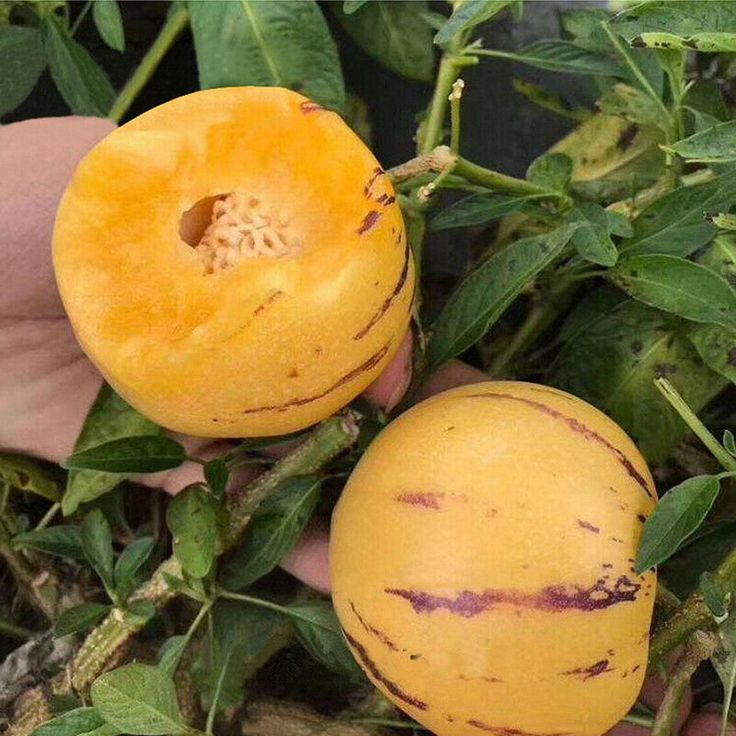
Fruit develops over several weeks. The fruit starts green and hard. As it matures, the skin turns pale yellow or cream with purple stripes. The fruit softens and sweetens as it ripens.
During fruit development, keep water steady. Sudden changes in moisture cause fruit cracking. Support the branches so the weight of the fruit does not break them. Remove malformed or damaged fruit so the plant puts energy into healthy fruit.
Pests Affecting Pepino Melon
Pepino melon shares pests with tomatoes, potatoes and other crops in the same family. Watch for these common problems.
Aphids cluster on young shoots and the undersides of leaves. They suck sap and weaken the plant. Heavy infestations cause leaf curling and stunted growth. Honeydew from aphids attracts ants and leads to sooty mould on the leaves. Control aphids early with insecticidal soap, neem oil or approved insecticides. Ladybirds and other natural predators also help.
Whiteflies feed on the undersides of leaves. They also spread plant viruses. A heavy whitefly population weakens the plant and can carry disease from one plant to another. Yellow sticky traps help monitor whitefly numbers. Remove heavily infested leaves and use approved control products when needed.
Spider mites thrive in hot, dry weather. They cause fine webbing on the undersides of leaves and yellow speckling on the upper surface. Heavy infestations turn leaves bronze and cause them to drop. Mites are tiny and easy to miss. Check the undersides of leaves regularly. Keeping the field moist helps reduce mite pressure. Miticides and neem oil help when numbers rise.
Scout the field every week. Walk through the crop and check leaves, stems and flowers. Early detection lets you act before pests spread through the whole field.
Diseases Affecting Pepino Melon
Disease control starts with healthy planting material. Pepino Melon Seedlings from a clean nursery carry less disease than plants from unknown sources. Field hygiene, good drainage and proper spacing also reduce disease pressure.
Bacterial wilt is a serious problem in pepino and other Solanaceae crops. The plant wilts suddenly and does not recover. There is no chemical cure once the plant is infected. Remove and destroy affected plants. Do not plant pepino in a field where tomatoes, potatoes, eggplants or peppers grew in the last two seasons. The bacteria survive in the soil and infect the next crop.
Powdery mildew shows as white powdery patches on leaves. It develops in humid conditions and in dense canopies. Good airflow through pruning and spacing reduces the problem. Approved fungicides help when the disease appears.
Root rot develops in poorly drained soils. The roots turn brown and soft. The plant wilts and dies. Improve drainage before planting. Avoid overwatering. Remove infected plants so the disease does not spread.
Leaf spots and blights appear during wet weather. Keep the canopy open. Avoid overhead watering. Use approved fungicides when the disease pressure is high.
Clean your tools between plants when you remove diseased material. Disease spreads on pruning knives and secateurs.
How Long Pepino Melon Takes to Produce
Pepino melon produces fruit fast compared to tree fruits. You plant cuttings, and the first fruits come within three to six months under good conditions. Some farmers harvest within four months of transplanting.
Production continues for close to five years if you manage the crop well. Pruning, feeding and pest control keep the plants producing. Older plants produce less fruit than young, vigorous ones. Many farmers replant after four or five years to keep yields high.
Harvesting Pepino Melon
Harvest pepino melon when the fruit reaches the right stage for its market. Fruit for nearby markets can be picked when the skin turns pale yellow with purple stripes. Fruit for long-distance transport is picked slightly earlier, when the skin is cream-coloured but still firm.
Use clean secateurs to cut the fruit from the plant. Leave a short stalk attached. Do not pull the fruit off the plant, because that damages the stem and the fruit.
Handle the fruit gently. Pepino melon bruises easily. Bruised fruit rots fast and loses value. Put fruit into padded crates in a single layer. Do not pile heavy fruit on top of soft fruit.
Harvest regularly. Removing ripe fruit encourages the plant to keep producing. Leaving ripe fruit on the plant too long reduces quality and attracts pests.
Post-Harvest Handling
Good handling after harvest protects the value of your crop. Sort the fruit by size, colour and quality. Remove damaged, diseased or over-ripe fruit. Grade the rest according to what your buyer wants.
Pack fruit in clean, vented crates. Do not pack too many fruit in one crate. Overpacking crushes the fruit at the bottom and causes bruising.
Keep harvested fruit in a cool, shaded place until it moves to market. Direct sun heats the fruit and speeds up ripening. If you have cool storage, use it. If not, harvest early in the morning and move the fruit quickly.
Transport matters too. A rough road shakes the fruit and causes bruising. Pack the crates so they do not shift during transport. Move fruit to market as soon as possible after harvest.
Production Per Acre
Production per acre depends on the number of plants, the yield per plant and how well you manage the crop. Under good management, a pepino melon plant produces 10 to 25 kilograms of fruit per season. Some plants produce more, some less, depending on conditions.
At 450 plants per acre, the total production ranges from 4,500 kilograms at 10 kilograms per plant to 11,250 kilograms at 25 kilograms per plant. At higher plant populations, the total production rises if management keeps up.
| Yield per Plant | Plants per Acre | Total Production |
|---|---|---|
| 10 kg | 450 | 4,500 kg |
| 15 kg | 450 | 6,750 kg |
| 20 kg | 450 | 9,000 kg |
| 25 kg | 450 | 11,250 kg |
Table 3: Production per acre at 450 plants with different yields per plant.
These are planning figures, not guaranteed yields. Your actual yield depends on your soil, water, nutrition, pest control and the weather. Record what you harvest each season and use those records to plan the next crop.
Cost of Production Per Acre
Establishing one acre of pepino melon costs money before you see any income. The table below shows the main items to budget for. The figures are estimates. Your actual costs depend on your location, labour rates and the materials you choose.
| Item | Estimated Cost |
|---|---|
| 450 Pepino Melon Seedlings at KSh 100 | KSh 45,000 |
| Land preparation | KSh 15,000 |
| Manure and application | KSh 25,000 |
| Fertiliser and soil amendments | KSh 25,000 |
| Irrigation setup | KSh 40,000 |
| Planting labour | KSh 10,000 |
| Weeding and field maintenance | KSh 15,000 |
| Pruning and training | KSh 12,000 |
| Pest and disease control | KSh 20,000 |
| Harvesting labour | KSh 20,000 |
| Crates and packaging | KSh 10,000 |
| Transport and marketing | KSh 20,000 |
| Contingency | KSh 10,000 |
| Total | KSh 267,000 |
Table 4: Estimated cost of establishing one acre of pepino melon at 450 plants.
This total covers the first season. In later seasons, you do not pay for land preparation, seedling purchase or irrigation setup again if the plants stay in the ground. Ongoing costs include fertiliser, labour, pest control, harvesting and packaging.
If you already own irrigation equipment or use family labour, your cash costs are lower. If you must buy everything new, they are higher. Work out your own budget based on your farm.
Market Prices for Pepino Melon in Kenya
Pepino melon prices change depending on where you sell. Different markets pay different prices for the same fruit. The table below shows the range you can expect.
| Market Channel | Price per Kilogram |
|---|---|
| Farmgate or wholesale | KSh 30 to KSh 80 |
| Local retail and open-air markets | KSh 80 to KSh 120 |
| Supermarkets and online retail | KSh 120 to KSh 180 |
| Export reference value | KSh 150 to KSh 200 |
Table 5: Pepino melon prices in different Kenyan market channels.
The farmer gets less than the retail price. Transport, packaging, market fees, spoilage and middlemen margins all take a share between the farm and the consumer. When you plan your income, use the price you can actually get, not the supermarket shelf price.
Prices vary by season too. When local supply is low, prices rise. When many farmers harvest at once, prices fall. Fruit quality matters. Clean, well-graded fruit sells faster and at better prices than mixed, damaged fruit.
Revenue Per Acre
Revenue depends on how much fruit you produce and the price you get. The table below shows gross revenue at different yields and prices. Gross revenue is the money you receive before subtracting your costs.
| Production | At KSh 40/kg | At KSh 80/kg | At KSh 120/kg |
|---|---|---|---|
| 4,500 kg | KSh 180,000 | KSh 360,000 | KSh 540,000 |
| 6,750 kg | KSh 270,000 | KSh 540,000 | KSh 810,000 |
| 9,000 kg | KSh 360,000 | KSh 720,000 | KSh 1,080,000 |
| 11,250 kg | KSh 450,000 | KSh 900,000 | KSh 1,350,000 |
Table 6: Gross revenue per acre at different yields and prices.
These are gross figures, not profit. You still need to subtract the cost of production, harvesting, packaging, transport and marketing.
Profit Per Acre
Profit is what remains after you subtract your costs from your revenue. Using the estimated production cost of KSh 267,000, the table below shows what is left at different yields and prices.
| Production | At KSh 40/kg | At KSh 80/kg | At KSh 120/kg |
|---|---|---|---|
| 4,500 kg | Loss of KSh 87,000 | Profit of KSh 93,000 | Profit of KSh 273,000 |
| 6,750 kg | Profit of KSh 3,000 | Profit of KSh 273,000 | Profit of KSh 543,000 |
| 9,000 kg | Profit of KSh 93,000 | Profit of KSh 453,000 | Profit of KSh 813,000 |
| 11,250 kg | Profit of KSh 183,000 | Profit of KSh 633,000 | Profit of KSh 1,083,000 |
Table 7: Estimated profit per acre at different yields and prices.
The table shows why yield and price both matter. At low yield and low price, you lose money. At high yield and high price, you make good money. Focus on both production and marketing.
Break-Even Price
Break-even price is the price you need per kilogram to cover your costs. It shows how much room you have before you start losing money.
At a production cost of KSh 267,000:
At 4,500 kg, the break-even price is KSh 267,000 divided by 4,500, which equals about KSh 59 per kilogram.
At 6,750 kg, the break-even price is KSh 267,000 divided by 6,750, which equals about KSh 40 per kilogram.
At 9,000 kg, the break-even price is KSh 267,000 divided by 9,000, which equals about KSh 30 per kilogram.
At 11,250 kg, the break-even price is KSh 267,000 divided by 11,250, which equals about KSh 24 per kilogram.
The lesson is clear. Higher production lowers the price you need to break even. If you produce more fruit, you can still make money at lower prices. If your production is low, you need a higher price to survive.
Planning a Pepino Melon Enterprise
A good pepino melon plan starts with the market, not the seedlings. Before you order Pepino Melon Seedlings, answer these questions.
Who will buy your fruit? Do you have a buyer lined up, or will you look for one at harvest? What price can you get from that buyer? How much fruit can you move through that channel?
How much will it cost you to produce? Add up seedlings, land preparation, manure, fertiliser, irrigation, labour, pest control, harvesting, packaging and transport. That total tells you what you need to earn.
How much fruit can your land produce? Use the plant population and yield figures in this guide. Be realistic. Do not plan on the highest yield if you are new to the crop.
Once you have those answers, you can decide how many acres to plant and which market to target. Start small if you are new to pepino. Learn the crop on a quarter acre or half acre. Expand once you know how the crop performs on your farm and where you can sell the fruit.
Selling Pepino Melon
Different markets pay different prices. Choose the one that fits your volume, your location and your capacity to deliver.
Farmgate sales are the simplest. A trader comes to your farm, buys the fruit and takes it away. You do not worry about transport or marketing. The price is lower, but your work is less.
Wholesale markets move large volumes. You take the fruit to a market and sell to traders there. Prices are moderate. You need transport and time.
Local retail and open-air markets pay more than wholesale. You sell directly to consumers or small shopkeepers. This takes more time and effort. You also need to grade and package the fruit well.
Supermarkets and online retail pay the highest prices, but the requirements are strict. Fruit must meet size and quality standards. Packaging must be right. Payment can take 30 to 90 days. Rejection rates are higher. Only supply supermarkets if you can meet their standards consistently.
Hotels and restaurants are another option. They buy quality fruit and pay fair prices. Build relationships with chefs and buyers. Deliver on time and keep quality high.
Pepino Melon and Export Markets
Kenya exports small quantities of pepino melon. Export markets pay higher prices than local markets, but the requirements are strict. Fruit must meet quality, size, packaging and phytosanitary standards. Exporters need certification and logistics arrangements.
Do not plan your farm around export prices unless you have a confirmed buyer and the systems in place to meet their requirements. Export is not a simple market to enter. It takes planning, investment and relationships.
Health and Nutrition of Pepino Melon
Pepino melon is mostly water. The fruit contains over 90 percent water, which makes it refreshing in hot weather. It also contains vitamin C and small amounts of other nutrients. The sugar content is low compared to many other fruits, which makes it suitable for people watching their sugar intake.
The fruit has mild sweetness and low acidity. It is easy to eat and gentle on the stomach. Some people eat it fresh. Others use it in fruit salads, smoothies and juices. Less ripe fruit can be used in salads in place of cucumber.
Do not make medical claims about pepino melon. It is a nutritious fruit, but it is not a medicine. Talk about its nutritional qualities, not its ability to treat disease.
Common Mistakes to Avoid
Many farmers lose money on pepino melon because of avoidable mistakes. Learn from them before you plant.
The biggest mistake is planting before finding a market. Pepino is not as common as mango or avocado. The market is smaller. If you plant a large acreage without a buyer, you may struggle to sell the fruit. Find your market first.
Another mistake is using supermarket prices to plan your income. The supermarket price is not your price. Subtract transport, packaging, market fees and middlemen margins. Plan with the price you can actually get.
Poor irrigation management causes problems. Both too little water and too much water hurt the crop. Keep moisture steady.
Overcrowding the field makes disease and pest control harder. Choose a spacing that matches your management capacity.
Treating yield figures as guarantees is another mistake. Yields depend on your soil, water, nutrition, pest control and the weather. Plan on conservative figures and improve from there.
Why Quality Pepino Melon Seedlings Matter
The planting material you start with determines what you harvest. Weak seedlings establish poorly. They grow slowly and produce less fruit. Diseased seedlings carry problems into your field that spread to healthy plants.
Healthy Pepino Melon Seedlings establish quickly. They grow strong and produce fruit within months. They carry the genetic potential for good yield and good fruit quality. Starting with quality planting material saves you time, money and frustration.
Buy from a nursery that selects mother plants for fruit quality. Ask about the source of the cuttings. Check the roots, stem and leaves before you buy. A little extra care at the buying stage pays off through the life of the crop.
Pepino Melon Seedlings for Commercial Farms
Commercial farmers need larger quantities of Pepino Melon Seedlings and careful planning. The number of seedlings depends on the acreage and spacing.
At 3 metres by 3 metres, one acre needs about 450 seedlings. Two acres need about 900. Five acres need about 2,250. At KSh 100 per seedling, the cost is KSh 45,000 for one acre, KSh 90,000 for two acres and KSh 225,000 for five acres.
Order your seedlings early so the nursery can prepare them for your planting date. Prepare your land before the seedlings arrive. Have irrigation ready. Have labour arranged. Planning the whole operation avoids delays and losses.
Where to Get Pepino Melon Seedlings in Kenya
Fruit Africa Veriplant supplies Pepino Melon Seedlings at KSh 100 each. The nursery serves farmers, commercial growers and orchard projects across Kenya.
To order, call 0714 994 444. Send a WhatsApp message through https://wa.link/di12my. Email sales@fruitafrica.org. Use the contact page at https://fruitafrica.org/contact-us/. Request a quotation at https://fruitafrica.org/request-for-quotation/.
When you enquire, give your farm size, spacing and planting date. That helps the team prepare the right number of seedlings and arrange delivery.
Frequently Asked Questions About Pepino Melon Seedlings
- How much do Pepino Melon Seedlings cost in Kenya?
Pepino Melon Seedlings from Fruit Africa Veriplant cost KSh 100 each. The total cost depends on how many seedlings you need for your land. A one-acre plot at 3 metres by 3 metres spacing needs about 450 seedlings, which comes to KSh 45,000. Add the cost of land preparation, manure, fertiliser, irrigation, labour and crop protection when you plan your budget.
- How many Pepino Melon Seedlings do I need for one acre?
At 3 metres by 3 metres spacing, one acre holds about 450 planting positions. If you choose closer spacing, such as 1 metre by 1.5 metres, you need about 2,700 seedlings. At 3 feet by 3 feet, you need between 4,000 and 4,900 seedlings. The actual number you plant is lower because roads, paths and drainage take up space.
-
What is the best spacing for Pepino Melon Seedlings?
The best spacing depends on your management capacity and budget. The 3 metres by 3 metres spacing gives plants plenty of room and makes management easier. Closer spacing produces more fruit per acre but needs more seedlings, more staking and closer attention to disease. Choose the spacing that matches your resources and your market.
-
How long do Pepino Melon Seedlings take to produce fruit?
Pepino melon produces fruit within three to six months after planting under good conditions. Some farmers harvest within four months. The plant keeps producing for close to five years if you manage it well. Pruning, feeding and pest control keep the plants productive.
-
Where can Pepino Melon Seedlings grow in Kenya?
Pepino melon grows in many parts of Kenya, from close to sea level up to about 3,000 metres. The best temperatures range between 12°C and 30°C. The crop needs steady moisture and well-drained soil. It does not tolerate waterlogged conditions. Regions like Nyeri, Murang’a, Kiambu, Nakuru, Meru and Kisumu are suitable.
-
What type of soil is best for Pepino Melon Seedlings?
Deep, well-drained loam and sandy loam soils are best. The soil should hold moisture without staying wet. The ideal pH is between 6.0 and 7.5. Add well-decomposed manure before planting to improve soil structure and fertility. Test your soil before planting so you know what amendments you need.
-
How much water do Pepino Melon Seedlings need?
Pepino melon needs steady moisture through the season. Young plants need frequent light watering. Mature plants need deeper watering less often. Drip irrigation works well because it delivers water to the roots without wetting the leaves. Mulching helps hold soil moisture and reduce how often you irrigate.
-
What fertiliser should I use on Pepino Melon Seedlings?
Start with a soil test. Pepino melon needs nitrogen for growth, phosphorus for roots and flowering, and potassium for fruit quality. Mix well-decomposed manure into the soil at planting. Apply nitrogen in split doses as the plant grows. Shift to potassium when flowering starts. Avoid too much nitrogen, which gives you leaves instead of fruit.
-
Do Pepino Melon Seedlings need staking?
Yes. Pepino melon plants spread as they grow. The stems are soft and bend under the weight of the fruit. Staking or trellising keeps the fruit off the ground and makes harvesting easier. It also improves airflow around the plant and reduces disease.
-
What pests attack Pepino Melon?
Aphids, whiteflies and spider mites are the most common pests. Aphids cluster on young shoots and cause leaf curling. Whiteflies spread viruses. Spider mites thrive in hot, dry weather and cause yellow speckling on leaves. Scout your field every week and act early when you see pests.
-
What diseases affect Pepino Melon?
Bacterial wilt is a serious disease. The plant wilts suddenly and does not recover. There is no cure, so remove and destroy affected plants. Powdery mildew, root rot and leaf spots also affect the crop. Good drainage, clean planting material and field hygiene reduce disease pressure. Do not plant pepino after tomatoes, potatoes or peppers.
-
How much can one acre of Pepino Melon produce?
At 450 plants per acre, production ranges from 4,500 kilograms at 10 kilograms per plant to 11,250 kilograms at 25 kilograms per plant. Your actual yield depends on your soil, water, nutrition, pest control and weather. Record what you harvest each season and use those records for planning.
-
What is the price of Pepino Melon per kilogram in Kenya?
Farmgate and wholesale prices range from KSh 30 to KSh 80 per kilogram. Local retail markets pay KSh 80 to KSh 120. Supermarkets and online retail pay KSh 120 to KSh 180. Export markets can pay more but have strict requirements. Prices change with season, quality and location.
-
How profitable is Pepino Melon farming in Kenya?
Profit depends on yield and price. At 9,000 kilograms per acre and a price of KSh 80 per kilogram, gross revenue is KSh 720,000. Subtract your production cost and you have your profit. At low yield and low price, you can lose money. At high yield and good price, you can make good returns. Plan with conservative figures.
-
How much does it cost to establish one acre of Pepino Melon?
The estimated cost is about KSh 267,000 for one acre at 450 plants. This covers seedlings, land preparation, manure, fertiliser, irrigation, labour, pest control, harvesting, packaging and transport. Your actual cost depends on your location and what you already own. If you have irrigation and use family labour, your cash cost is lower.
-
Can Pepino Melon Seedlings be grown organically?
Yes. Organic production avoids synthetic fertilisers and pesticides. Use compost, manure and approved organic inputs. Control pests with neem oil, insecticidal soap and biological controls. Organic production can attract premium prices if you find the right market. It also requires careful management to keep pests and diseases under control.
-
Do Pepino Melon Seedlings need pollination?
Pepino melon flowers are pollinated by wind and insects. Bees help move pollen between flowers. Good pollination needs healthy plants and steady moisture. Avoid spraying insecticides during flowering, because these products kill bees and reduce fruit set.
-
Can I grow Pepino Melon Seedlings in a greenhouse?
Yes. Greenhouse production protects the crop from pests, diseases and bad weather. It also allows you to control water and temperature. Greenhouse production costs more to set up, but it can produce higher yields and better quality fruit. It suits farmers who target premium markets.
-
How do I know when Pepino Melon fruit is ready to harvest?
The fruit is ready when the skin turns pale yellow or cream with purple stripes. Fruit for nearby markets can be picked at full colour. Fruit for long-distance transport is picked slightly earlier when the skin is cream but still firm. Use clean secateurs to cut the fruit, leaving a short stalk. Handle the fruit gently to avoid bruising.
-
Where can I buy Pepino Melon Seedlings in Kenya?
Fruit Africa Veriplant supplies Pepino Melon Seedlings at KSh 100 each. Call 0714 994 444. Send a WhatsApp message through https://wa.link/di12my. Email sales@fruitafrica.org. Use the contact page at https://fruitafrica.org/contact-us/. Request a quotation at https://fruitafrica.org/request-for-quotation/. Give your farm size, spacing and planting date when you enquire.
Order Pepino Melon Seedlings from Fruit Africa Veriplant
Pepino Melon Seedlings give you a fruit crop that produces fast and keeps producing for years. The crop needs steady moisture, well-drained soil, balanced nutrition and regular care. If you manage it well, it pays back within the first season and continues for close to five years.
Before you order, plan your market. Know who will buy your fruit and what price they will pay. Use the yield and cost figures in this guide to build your budget. Start with a smaller plot if you are new to the crop. Learn how pepino performs on your farm. Expand once you have records.
Order your Pepino Melon Seedlings early so the nursery can prepare them for your planting date. Prepare your land before the seedlings arrive. Have irrigation ready and labour arranged.
Fruit Africa Veriplant supplies Pepino Melon Seedlings at KSh 100 each. To order, call 0714 994 444, send a WhatsApp message through https://wa.link/di12my, email sales@fruitafrica.org, or submit your requirements through https://fruitafrica.org/request-for-quotation/.
Start with healthy Pepino Melon Seedlings and give your pepino melon enterprise the best chance to produce well.


Reviews
There are no reviews yet.