
Description
- Dwarf pawpaw seedlings in Kenya at KSh 100 each. Compare Red Royal F1, Malkia F1, Calina, Vega, Red Lady, Solo and Solo Sunrise, with spacing, planting, disease control, yields and buying advice.
Dwarf Pawpaw Seedlings in Kenya: Varieties, Price, Spacing and Full Farming Guide
Fruit Africa Veriplant sells dwarf pawpaw seedlings at KSh 100 each. The varieties are Red Royal F1, Malkia F1, Calina, Vega, Red Lady, Solo and Solo Sunrise. This guide explains what each one gives you, how to plant, what it costs to run an acre, and what the fruit sells for in Kenya today.
Two things matter before you buy. Pick the variety that fits the market you will sell to. And plant on land that drains well, because pawpaw dies fast in wet soil. Everything else in this guide builds on those two points.
The spacing here is 2 metres between plants and 3 metres between rows. At this spacing one plant uses about 6 square metres of land. One acre is about 4,047 square metres. So on paper an acre fits about 674 plants. That is the maximum count for a full, square block with nothing else on it. On a real farm you lose land to boundaries, paths, drainage lines and space to turn at the ends of rows, so you plant fewer than 674 and keep a few spare seedlings to fill gaps. At KSh 100 each, 674 seedlings cost KSh 67,400 and 1,000 seedlings cost KSh 100,000.
Pawpaw is the fruit some people call papaya. The plant grows fast and starts fruiting within months. It fruits for a short number of years, then you replant. Dwarf and compact types fruit low on the stem, so picking, spraying and checking the plants is easier.
Pawpaw seedlings are soft and break easily, so handle them with care from the nursery to the field. The plant also hates cold and wind. A frost kills it. Strong wind blows it over because the stem is soft and the roots are shallow.
The rest of this guide covers the varieties in full, the price and spacing sums for plots from a quarter acre to five acres, a real cost breakdown for one acre, real market prices for the fruit, the pests and diseases to watch, why so many pawpaws turn out male, and a checklist to use before you pay.
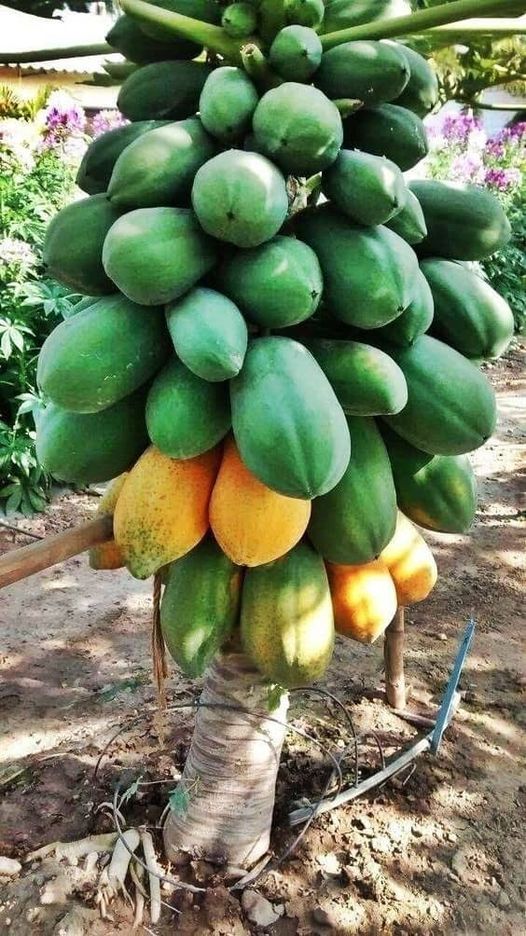
A Dwarf Pawpaw Tree
What Are Dwarf Pawpaw Seedlings
A dwarf pawpaw seedling is a young pawpaw plant grown from seed in a nursery. The nursery sows the seed, raises it in a bag or tray, and sells it once it is strong enough to move to the field.
Pawpaw is grown from seed. It is not grafted. So there is no rootstock and no join to check, the way you would with a grafted mango or avocado. What you check on a pawpaw seedling is the health of the plant and whether it is the true variety.
What “Dwarf” Really Means
The word dwarf tells you how the plant grows, not that it is a special species. A dwarf or compact pawpaw stays shorter and sets its first fruit low, often at a height you reach from the ground.
For you as a farmer this means:
- Picking is easier and cheaper because you reach the fruit without climbing.
- Checking the plant for pests and disease is easier.
- Spraying reaches the whole plant.
- The fruit stays within reach for longer as the plant grows.
Nurseries use the words dwarf, semi-dwarf and compact loosely, so not every plant sold as dwarf is a true genetic dwarf. Ask the nursery how tall the variety grows and how low it starts fruiting. A shorter plant is also a little steadier in wind than a tall one, but pawpaw of any height still needs shelter on a windy site because the roots are shallow.
Most of these varieties are F1 hybrids. Seed saved from a hybrid fruit does not grow back the same, so you buy fresh seedlings for every new planting. Plan for that repeat cost.
Pawpaw Seedlings Are Fragile: Handle Them Well
Pawpaw seedlings damage easily, and rough handling loses you plants and money before the crop even starts.
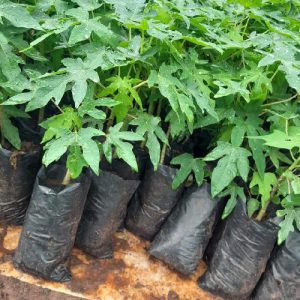
The stem is soft and snaps if you bend or squeeze it. The main root does not like being disturbed, so a seedling shaken out of its soil struggles to recover. Move the seedling by holding the bag or the ball of soil, never by pulling the stem.
Keep the seedlings cool, shaded and moist from the nursery to your farm. Heat and dry wind in an open pick-up will stress them within a short drive. Stand them upright and stop them rolling around and breaking.
Plant them on the same day they arrive, or as soon after as you can. Dig the holes before the seedlings reach the farm so nothing waits. Water each one right after planting. A seedling that sits for days in its bag after transport, or dries out, or gets its stem bruised, either dies or grows into a weak plant.
A Note on Seeds for Buyers Outside Kenya
Fruit Africa Veriplant sells seedlings, not seeds. Seedlings suit farmers in Kenya who can receive live plants and get them into the ground quickly.
If you are outside the country and cannot receive live seedlings, seeds are the practical option, and we can help organise seed where possible. Ask us through the contacts near the end of this guide. If you import seed, follow the plant import and phytosanitary rules of your own country, because bringing in planting material without the correct paperwork is against the law in most places.
How Pawpaw Seedlings Are Grown
These pawpaws come from seed selected for the variety, sown and raised in the nursery. A good nursery uses clean, true seed, keeps the young plants free of disease, and hardens them before sale so they cope with full sun in the field.
True-to-type seed matters because you want the variety you paid for. A healthy seedling has firm green leaves, a strong straight stem and white, well-spread roots. Ask about the seed source, and buy from a nursery that manages its stock well. Do not buy a seedling that shows spotted or twisted leaves, a soft rotten base or dark, smelly roots.
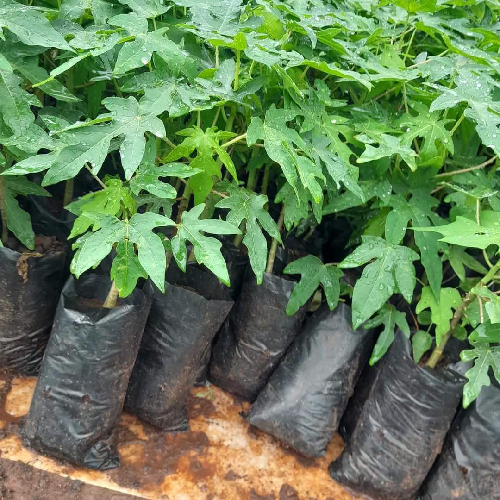
Dwarf Pawpaw Seedlings at Fruit Africa Veriplant
Dwarf Pawpaw Seedlings Price in Kenya
Fruit Africa Veriplant prices the dwarf pawpaw seedlings in this guide at KSh 100 each. The sum is simple. Multiply the number of seedlings by 100.
| Seedlings | Cost at KSh 100 each |
|---|---|
| 100 | KSh 10,000 |
| 250 | KSh 25,000 |
| 500 | KSh 50,000 |
| 674 | KSh 67,400 |
| 1,000 | KSh 100,000 |
The seedlings are only one part of the money you spend. Land preparation, drainage, manure, fertiliser, irrigation, sprays and labour add up to more than the seedlings on most farms. The seedling price is fixed at KSh 100. Every other cost depends on your area and your suppliers, so get local quotes. There is a full one-acre cost breakdown further down.
How Many Dwarf Pawpaw Seedlings Do You Need Per Acre
Start with the spacing. At 2 m by 3 m, one plant uses about 6 square metres. Divide the plot size by 6 to get the plant count.
| Plot size | Land (sq m) | Plant count on paper | Seedling cost at KSh 100 each |
|---|---|---|---|
| Quarter acre | 1,012 | about 168 | about KSh 16,800 |
| Half acre | 2,024 | about 337 | about KSh 33,700 |
| One acre | 4,047 | about 674 | about KSh 67,400 |
| Two acres | 8,094 | about 1,349 | about KSh 134,900 |
| Five acres | 20,235 | about 3,372 | about KSh 337,200 |
These are the counts on paper. They are not the number to order for every farm. A one-acre farm rarely plants a full 674 plants. Once you mark out boundaries, paths wide enough for a wheelbarrow and a sprayer, space to turn at the ends of rows, and drainage lines, the land you can plant shrinks. Most one-acre plantings end up near 600 to 650 plants.
The bigger the block, the more land goes into paths and working areas, so a five-acre planting loses a larger share than a small plot. The honest way to order is this. Measure the land you can actually plant after taking out paths and drainage. Divide it by 6 for the plant count. Then add a few extra seedlings to replace any that fail in the first weeks.
2 m × 3 m Pawpaw Spacing Explained
The 3 metre gap between rows and the 2 metre gap within the row is a working shape, not a random one.
Pawpaw carries a wide head of big leaves. Each plant needs room to open that head without pushing into the next plant. When plants are too close they grow tall and thin as they fight for light, they shade their own fruit, and they trap damp air in the leaves, which brings fungal disease.
The 3 metre row gap gives you space to work. You walk the row with a sprayer and reach both sides. You push a wheelbarrow of manure or fruit through. You lay and check a drip line. Air moves along the rows and dries the leaves after rain, so there is less disease. Light reaches the fruiting part of the plant instead of hitting a wall of leaves.
The 2 metre in-row gap keeps a good plant count without packing the plants so tight that they choke each other. Closer spacing gives more plants and more early fruit per unit of land, but harder work, more disease and a shorter life. Wider spacing is easier to manage but gives fewer plants. The 2 m by 3 m layout sits between the two for a farm growing pawpaw to sell.
Point the rows to catch good sun through the day. On a slope, run them to help water drain and to slow soil wash.
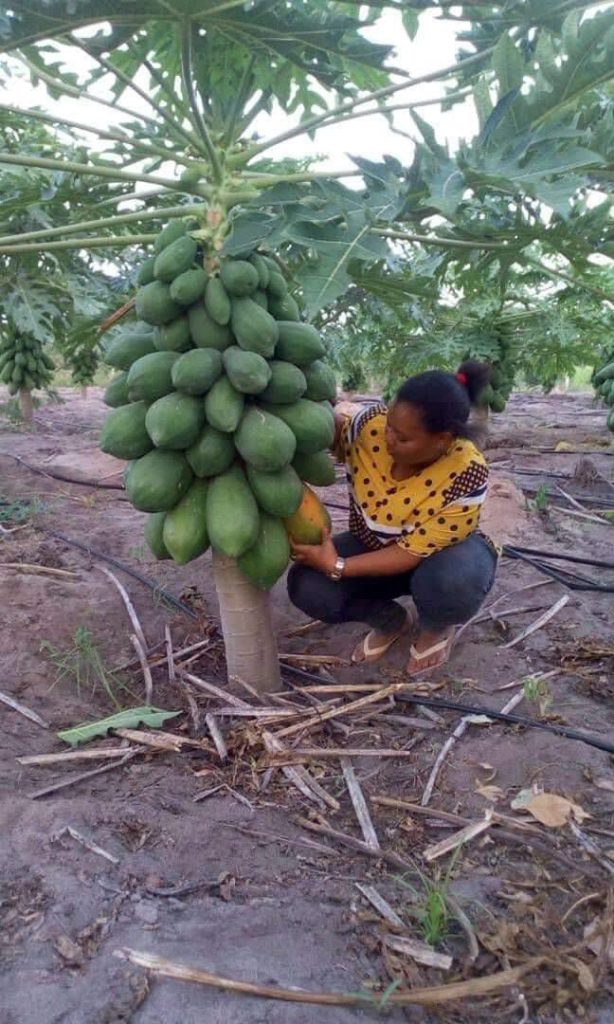
Dwarf Papaya Farm with seedlings supplied by Fruit Africa Veriplant
Dwarf Pawpaw Varieties Available in Kenya
The variety decides fruit size, flesh colour, taste, how well the fruit travels and where it sells. This is where you spend your thinking time. Below is honest coverage of each one. Fruit sizes are the usual ranges and shift with feeding, water and how many fruit the plant carries, so read them as a guide, not a promise. Where a detail is not well established, this guide says so instead of making one up.
Red Royal F1
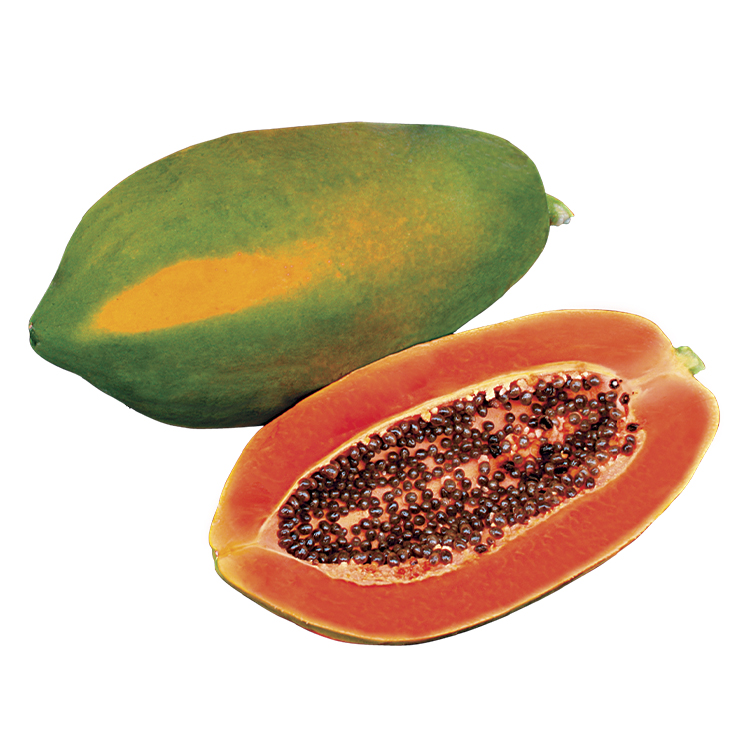
Red Royal F1 papaya
Red Royal F1 is a hybrid grown for fresh eating. The flesh is deep red to orange, sweet and firm. Fruit is medium, often around 1 to 1.5 kilograms, though this moves with management. Plants fruit low and early.
The firm flesh helps the fruit travel to town markets in good shape. The red colour and sweetness pull buyers who sell whole fruit by the piece and by weight. Medium red fruit like this sells well in the general fresh market, so it fits farm-gate and wholesale selling.
Malkia F1
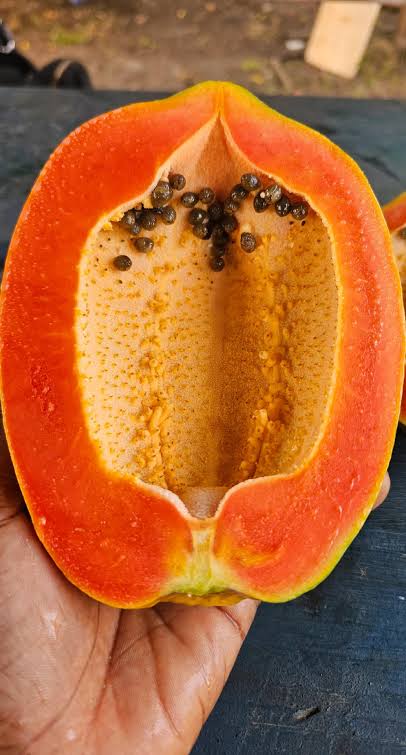
Malkia f1 papaya
Malkia F1 carries a Swahili name that means queen. It is sold for Kenyan conditions. The flesh is red to orange and sweet, the fruit medium, often in the 1 to 2 kilogram range, on compact, early plants. Farmers pick it for even, sweet fruit that is easy to reach and manage.
Ask your supplier what the current seed gives for fruit size and plant sex before you order, because seed lines are improved over time and the seed in stock now is what counts for your planting.
Calina
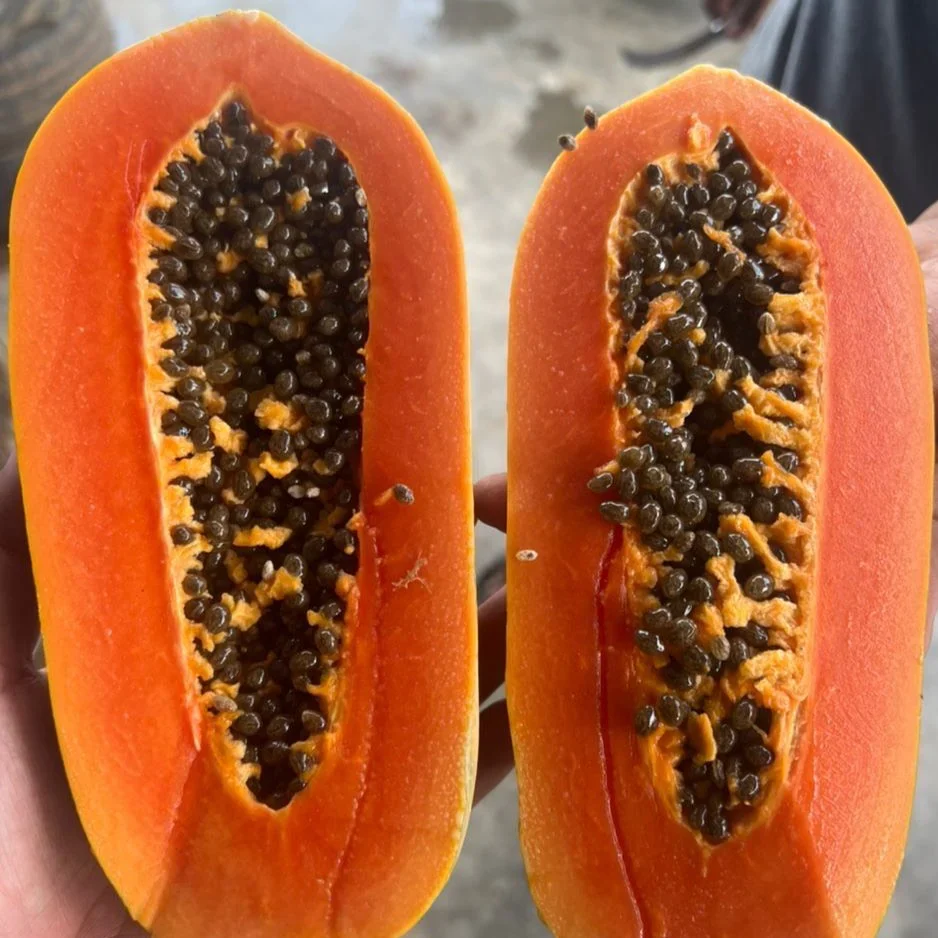
Calina IPB9 papaya
Calina gives medium fruit with sweet orange to red flesh and a thick wall of flesh. Fruit is often around 1 to 1.5 kilograms. It holds its shape, eats sweet and travels well.
The thick, eatable flesh and good handling make Calina a steady seller for fresh markets and for buyers a distance from the farm. It suits a grower who wants a reliable, sweet, medium fruit rather than the biggest or the smallest one.
Vega
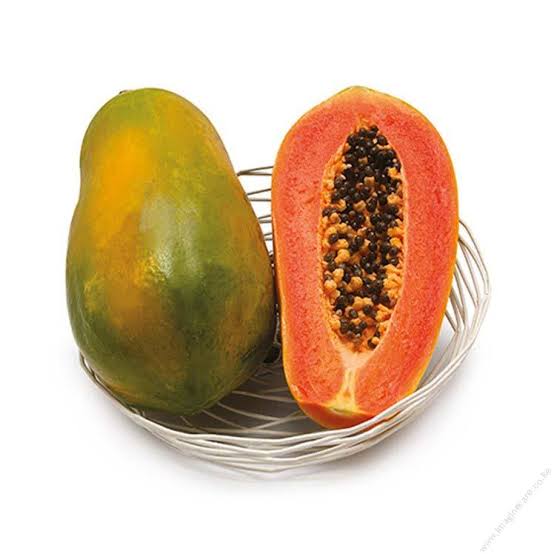
Vega F1 papaya
Vega is a hybrid with medium to large fruit and red flesh. The fruit runs larger than most of the others here, often above the 1.5 kilogram mark and sometimes more, again depending on how well you feed and water the plants. On self-fruiting plants the fruit is long. On female plants it is rounder.
Vega is vigorous and gives strong yields. The bigger fruit suits selling by weight in the fresh market and some juicing. If your buyer pays by the kilogram, larger fruit like Vega brings more per plant.
Red Lady
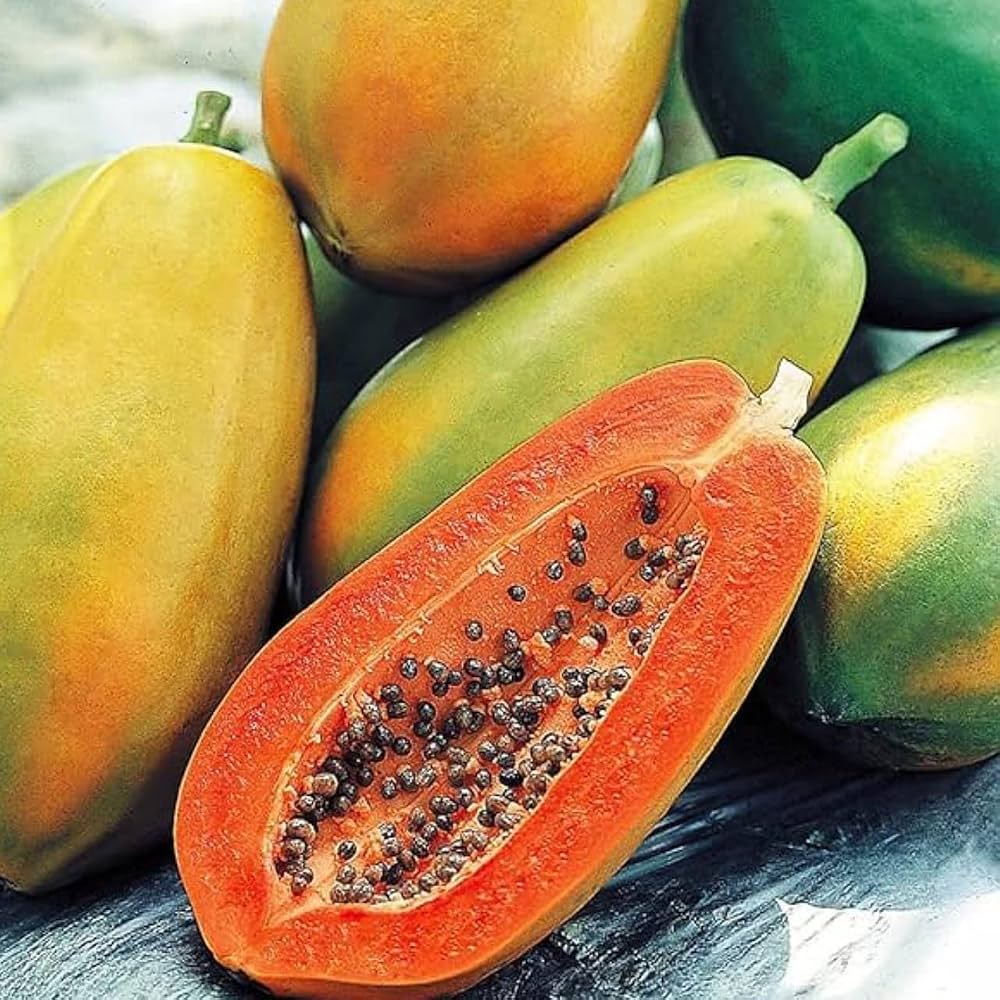
Red Lady papaya
Red Lady is one of the most planted hybrid pawpaws in the world, for good reason. Plants are compact and fruit low and early. Most plants are self-fruiting, which gives long fruit, while some come out female and give round fruit. Fruit is usually about 1.5 to 2 kilograms, moving with management and crop load.
The flesh is red to red-orange, thick and sweet with high sugar. The fruit stores and travels fairly well. Red Lady also has some tested tolerance to papaya ringspot virus, which helps in areas where the virus is around. Tolerance is not the same as being immune. Red Lady still catches ringspot under heavy pressure, so you still control aphids and pull out sick plants. Its mix of yield, sweetness, easy height and virus tolerance is why so many commercial growers plant it.
Solo
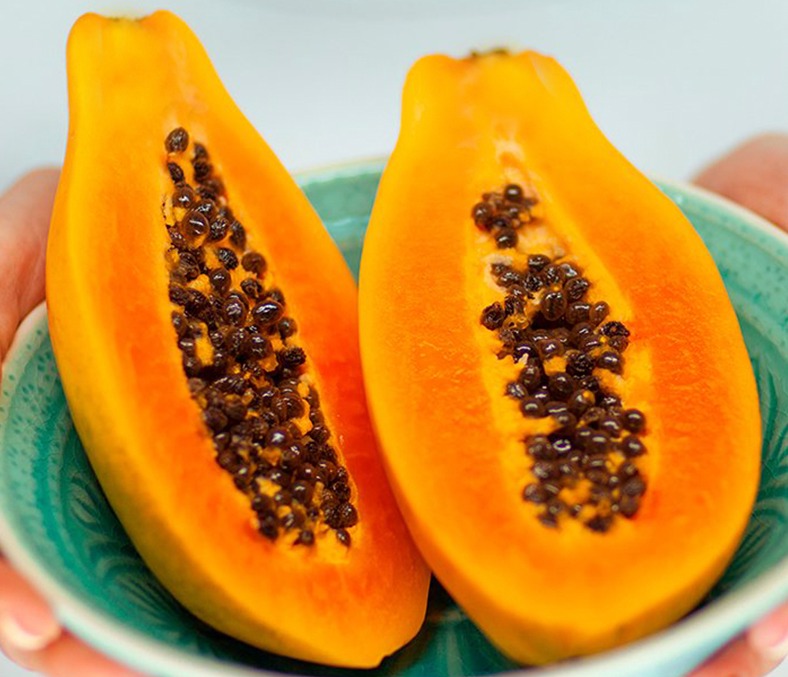
Solo papaya
Solo is the small Hawaiian type. Its name comes from the size, because one fruit suits one person. Fruit is small, often around 0.4 to 0.6 kilograms, pear-shaped, with sweet pink, reddish or yellow flesh and smooth skin.
Solo sells on sweetness and neat single-serving size, not on weight. You count the harvest in numbers of small fruit rather than heavy fruit. This suits selling to homes, hotels and grocers that pay a premium for a sweet, tidy fruit. Sold cheaply by weight in a bulk market, a small fruit returns little, so match it to the right buyer.
Solo Sunrise
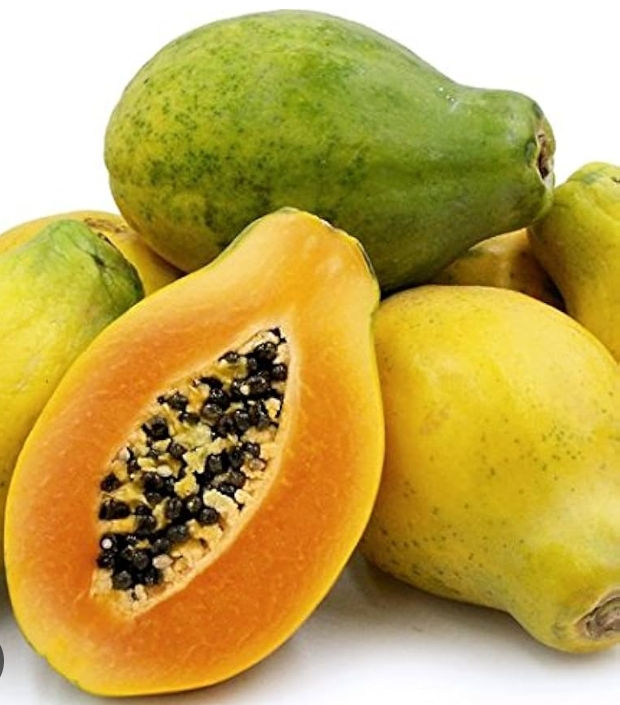
Solo Sunrise papaya
Solo Sunrise is a type within the Solo group. The fruit is small, around 0.4 to 0.6 kilograms, pear-shaped, with reddish-orange to pink flesh, smooth skin and a sweet, aromatic taste. It shares the small Solo size and the premium eating quality, with its own flesh colour and flavour.
Do not treat Solo and Solo Sunrise as one and the same in every detail. They are in the same group, but Solo Sunrise has its own character. It fits the same premium fresh and hotel market as Solo, chosen for a sweet, good-looking small fruit.
Dwarf Pawpaw Variety Comparison
Read fruit sizes as usual ranges that change with management. Where a detail is not sure, the table says to confirm it.
| Variety | Type | Fruit size | Flesh colour | Taste | Best market |
|---|---|---|---|---|---|
| Red Royal F1 | Hybrid | Medium, about 1 to 1.5 kg | Deep red to orange | Sweet | Fresh, by piece and weight |
| Malkia F1 | Hybrid | Medium, about 1 to 2 kg | Red to orange | Sweet | Fresh market |
| Malkia | Confirm with nursery | Confirm with nursery | Red to orange | Sweet | Fresh market |
| Calina | Confirm with nursery | Medium, about 1 to 1.5 kg | Orange to red | Sweet | Fresh, travels well |
| Vega | Hybrid | Medium to large, often above 1.5 kg | Red | Sweet | Fresh by weight, some juicing |
| Red Lady | Hybrid | About 1.5 to 2 kg | Red to red-orange | Sweet, high sugar | Fresh market |
| Solo | Group type | Small, about 0.4 to 0.6 kg | Pink, reddish or yellow | Sweet | Premium fresh, hotels |
| Solo Sunrise | Solo strain | Small, about 0.4 to 0.6 kg | Reddish-orange to pink | Sweet, aromatic | Premium fresh, hotels |
How to Choose a Pawpaw Variety for Your Market
Work back from your buyer. There is no single best variety. There is the one that fits what your buyer pays for and what your land grows well.
If you sell by weight to traders, retailers or processors, larger red-fleshed fruit pays best. Vega and Red Lady give size and yield. Red Royal F1, Malkia and Calina give solid medium red or orange fruit that moves at retail.
If you sell to homes, hotels and grocers who want a sweet single fruit, the Solo types earn their place. A neat, sweet Solo or Solo Sunrise sells on taste, which makes up for the smaller size.
Match the variety to your weather too. All these pawpaws want warmth and dry roots, and none stand cold or wet soil, so the land check comes first. A new grower does well to start with a proven, widely sold variety, learn how it grows on the farm and how it sells, then try the premium types later. Talk to your buyers about the varieties they want before you plant a whole block.
Why Your Pawpaws Turn Male
This is the question that troubles most seedling buyers, so it deserves a straight answer.
Pawpaw plants come in three sexes. Some are male. Some are female. Some are hermaphrodite, which means one plant has both male and female parts in the same flower.
Male plants give pollen but almost no usable fruit. When a farmer plants ordinary seed and half the plants turn out male, that farmer feels cheated, because those plants take up land, water and fertiliser and give nothing to sell. This is the root of the complaint that pawpaws turn male.
Female plants give round fruit but need pollen from a male or a hermaphrodite plant to set that fruit. Hermaphrodite plants fruit on their own and give the long, even fruit the market likes best. That is why growers prize them.
Here is why the sex problem happens and what to do:
- With ordinary open-pollinated seed, sex is a gamble. You get a random mix of male, female and hermaphrodite plants, so many males show up. This is the old headache.
- Hybrid F1 seed, like the varieties in this guide, is bred so that most plants come out hermaphrodite and fruit on their own. Far fewer turn male. This is a big reason to buy quality hybrid seedlings instead of cheap mixed seed.
- No hybrid gives zero males. Even a good hybrid crop throws a few females and the odd male. Do not expect a fixed number, and confirm the sex behaviour of the exact seed with your nursery.
- You cannot tell the sex of a seedling by looking at it. Sex only shows when the plant flowers. So with mixed seed, plant two or three seedlings per station and remove the males after flowering, keeping one good fruiting plant per spot.
- Very high heat and heavy stress can upset sex in some plants, causing poor or sterile flowers and weak fruit set for a spell. This is one more reason to plant in the right climate and to feed and water the crop well.
The short version. Buy hybrid seedlings from a nursery that tells you the sex behaviour of the seed. With hybrid seedlings you usually plant one per station. With mixed seed, plant extra and thin out the males.
Climate the Crop Likes
Pawpaw is a warm-weather crop. Warmth drives fast growth, good fruit set and sweet fruit. It grows from the lowlands up into the medium-altitude areas.
Cold slows the plant, delays fruiting and makes the fruit less sweet. High, cold ground suits it poorly. Frost kills it outright, so leave frost-prone areas out.
The plant needs steady water because it grows and fruits all the time. Long dry spells with no irrigation stress it, drop the flowers and shrink the fruit. Where the rain is patchy, you must irrigate.
Wind is a real danger. The soft, hollow stem and shallow roots make the plant easy to blow over, and a snapped plant is a full loss. On windy land, plant a windbreak and stake young plants until they hold.
Kenya has many climates within short distances, so a whole county is never all suitable or all wrong. Check your own site. Look at your altitude, temperature, rainfall pattern, water access and wind. Do not plant just because a farmer in a warmer or drier spot down the road did well.
Soil and Drainage Requirements
Drainage decides whether your pawpaw lives or dies, so read this part twice. Pawpaw roots and the base of the stem rot fast in soggy soil. A few days of standing water kills healthy plants. Poor drainage is behind a large share of failed pawpaw farms.
Good pawpaw soil is deep, rich in organic matter and free-draining, with a pH from slightly acidic to near neutral. Heavy clay that holds water and low ground where water collects are the wrong places.
If your only land has a drainage weakness, fix it before you plant. Do not hope the plants cope.
- Make raised beds or mounds so the base of the stem sits above any water that pools after rain.
- Use ridges to shed water off the planting line.
- Cut drainage channels to carry water off the block after heavy rain.
Raised planting is one of the best moves you make for pawpaw, and on any doubtful site the extra work pays for itself. Take a soil test before you plant. It tells you the pH, the nutrient level and what to correct, and it guides both your manure plan and your drainage work. Take samples from several spots, mix them and send one sample to a known lab.
How to Prepare Land
Clear the block of tough weeds and old crop trash. Pull out any diseased pawpaw left from a past crop. Pawpaw after pawpaw on the same ground raises the risk of soil disease and virus, so move to fresh land where you can rather than replanting the same spot at once.
Plough and harrow so roots grow out freely. On a slope, set the rows to slow erosion and guide water. Where drainage is weak, form the raised beds, mounds or ridges now.
Dig the planting holes before the rains. Keep the topsoil and subsoil apart as you dig. Mix well-rotted manure into the topsoil and put that soil back in the hole. Rotted manure feeds the young plant and improves the soil. Fresh manure burns roots and brings weed seeds, so use manure that has broken down. The amount of manure depends on your soil test and how fertile the land already is, so follow that guidance instead of a blanket figure. Correct pH or nutrient gaps now, while the hole is open.
How to Plant Pawpaw Seedlings
Plant in warm weather with steady moisture, at the start of the rains or under irrigation. Pawpaw settles fast in warm soil.
Handle the seedlings gently, as covered earlier, because they break easily. Set each plant at the same depth it grew in the nursery bag. Keep the base of the stem at soil level. Never bury the stem, because a buried base rots. Firm the soil around the roots to remove air gaps, without stamping it hard.
Water each plant right after planting. On raised beds, check that the water drains away from the base instead of pooling. Spread mulch around each plant to hold moisture and hold back weeds, keeping the mulch a little away from the stem so the base stays dry.
Watch for failures in the first weeks and replace dead or weak plants early, while the gaps are easy to fill and the new plants can catch up. This is why you order a few spare seedlings.
On plants per station, follow the seed. With hybrid seedlings that come out mostly self-fruiting, one plant per station is usually enough. With mixed seed, plant two or three per station and thin to one good plant after flowering.
Water and Irrigation
Pawpaw wants steady moisture and dry feet at the same time, and holding that balance is the whole job. Keep the roots moist as the plant settles and while it fruits, because dry stress slows growth, drops flowers and shrinks fruit. At the same time, never let water stand, because wet roots and a wet stem base bring the rots that kill the plant.
There is no fixed watering timetable. How often you water depends on your soil, the weather and the stage of the plant. Sandy soil in hot, dry weather with fruiting plants needs water far more often than heavier soil in cool, damp weather. Read the conditions instead of following a calendar. In wet spells, cut back and check the beds drain.
Drip irrigation suits pawpaw well. It puts water at the roots and keeps the surface and stem base drier, so there is less root and foot rot. Mulch works with the drip line to hold moisture and reduce how often you water. The two mistakes to avoid are letting the plants dry out at flowering and fruiting, and overwatering into waterlogging.
Fertiliser and Nutrition
Pawpaw grows fast and feeds heavily. It carries growth, flowers and fruit at the same time for most of its life, so it needs food all through. Build the feeding plan on your soil test, not on a fixed recipe, because the right amounts depend on your soil.
The crop uses the full range of nutrients. Nitrogen drives leaf and growth, and you balance it, because too much gives leaf and little fruit. Phosphorus builds roots and early growth. Potassium supports fruiting and fruit quality, and the plant wants more of it as it bears. Calcium and magnesium keep the plant sound, and small shortages of the trace nutrients show fast in a quick crop like this. Rotted manure at planting and topped up later feeds the soil alongside the mineral fertiliser.
Split the fertiliser through the season instead of dumping a lot at once, so the plant gets a steady supply that matches its steady growth. Let the soil test and a local agronomist set the rates, and adjust as the plants show you how they grow and fruit.
Weed Control
Keep the base of each plant and the strip along the row clear of weeds, above all while the plants are young and sharing water and food with the weeds. Weeds also hide pests.
Mulch along the rows holds down weeds and keeps in moisture, and it is safe near the stems. Weed shallow near the plants, because pawpaw roots run close to the surface and deep digging that cuts the roots opens the way for soil disease. If you use a weed killer, keep it off the plants and follow the label and the local rules.
Pest Management
Pawpaw draws several pests, and the mix changes with place and season. Walk the crop often so you catch trouble early, when it is cheaper to fix.
Aphids matter most, less for the sap they suck and more because they spread papaya ringspot virus from plant to plant. Look for them on soft new growth and under the leaves, and keep them down to slow the virus. Fruit flies sting the fruit and make it rot and drop, so watch the fruit and destroy any stung fruit instead of leaving it in the field. Red spider mites and other mites bronze and stress the leaves in hot, dry spells. Mealybugs and scale insects settle on stems and leaves and drain the plant. Nematodes attack the roots below ground, more so on land that grew a host crop before, and show up as stunted, weak plants even with good care.
Handle pests through integrated pest management, not routine spraying by the calendar. Scout, name the pest correctly, and act when numbers reach a level that threatens the crop. Clean fields, removal of stung and fallen fruit, help for natural enemies and good timing all cut the need for chemicals. Where you must spray, pick a product registered for that pest on pawpaw, follow the label rate and the pre-harvest interval, and obey the local rules. Do not use unregistered products or off-label rates.
Disease Management
One disease stands above the rest. Papaya ringspot virus is the big threat. Aphids spread it, and there is no cure once a plant catches it. It twists and mottles the leaves, marks the fruit with rings, stunts the plant and cuts the yield. In areas with heavy virus, it often decides how long the field lasts.
Control ringspot by planting clean seedlings, keeping aphids down to slow the spread, pulling out and destroying sick plants at once, and choosing a variety with some tolerance, such as Red Lady, where the virus is common. Tolerance softens the blow. It does not make the plant immune, so keep up the other steps on a tolerant variety too.
Wet soil drives the next group of problems. Root, foot and stem rots follow waterlogging, which is why drainage and raised beds matter so much. Damping off kills young seedlings in wet, crowded nursery beds, so buy from a nursery that manages moisture and spacing. Anthracnose spots and rots the fruit, often showing after harvest, so gentle handling and quick sale limit it. Fungal leaf spots appear in damp, crowded canopies, which good spacing holds back.
Prevention beats treatment. Plant clean seedlings, drain the soil, control aphids, remove sick plants and fruit, move to fresh ground after a disease loss, and handle fruit with care to cut rot after harvest. Where a fungicide is needed, use a registered product at the label rate and follow the pre-harvest interval and the local rules.
Flowering and Fruit Set
Fruit depends on the plant sex, covered in full above. In short, self-fruiting hermaphrodite plants set their own long fruit, female plants need pollen from a male or hermaphrodite plant to set round fruit, and male plants give little fruit.
Insects and wind carry the pollen. Very high heat at flowering can upset fruit set and fruit shape, one more reason to plant in the right climate. Avoid heavy spraying near flowering so you do not kill the insects that help pollination.
When Pawpaw Starts Producing
Pawpaw grows fast, and compact hybrids fruit sooner than the tall old types. After planting, the plant puts on growth, then flowers and sets fruit low on the stem, with the first harvest a few months later.
The exact time shifts with the variety, the warmth of the site, water and feeding, so treat any month figure as a guide, not a promise. Warm, well-fed, well-watered plants fruit sooner and heavier. Cold, dry, hungry or sick plants fruit later and less.
Once bearing, pawpaw fruits all the time, carrying fruit at several stages up the stem at once. Picking becomes a regular job over a long stretch. Yield and quality drop as the plant ages and the fruiting part climbs out of reach, and that is when you plan to replant.
Pawpaw Yield Per Acre
No single yield figure fits every farm, because production swings with the variety, the site and the care. A compact hybrid grown warm, fed and watered well, on land that drains, with the virus kept down, gives far more than a neglected crop on cold or wet ground.
Fruit size also changes the picture. A Solo crop gives many small fruit. A Red Lady or Vega crop gives fewer, heavier fruit. So comparing farms by fruit count alone misleads. Weight is the fairer measure when you sell by the kilogram.
Work out your own likely harvest instead of trusting a headline number:
- Count the marketable fruit on a set of average plants over a stretch of time, and weigh them.
- Scale that per-plant weight across the number of plants you actually planted, not the paper figure of 674.
- Take off the fruit you lose to grading, pests, disease and handling, and keep only the sellable fruit in your estimate.
The things that move the result are the variety and its fruit size, the sex mix in the field, the climate match, drainage, water, feeding, pollination, virus and pest pressure, and losses at harvest. Any yield figure you use should carry its assumptions in plain sight and be tested against a bad season as well as a good one.
Detailed Cost of Pawpaw Farming in Kenya Per Acre
Below is a worked example for one acre planted at 2 m by 3 m, using about 650 plants. Only the seedling line is a fixed price. Every other figure is an example to show the size of the job, and you must confirm your own numbers with local suppliers, because prices differ by region, season and how much work you do yourself. The ranges here are for planning, not exact quotes.
| Cost item | Example estimate for one acre (confirm locally) | Notes |
|---|---|---|
| Seedlings, about 650 at KSh 100 | KSh 65,000 | Fixed seedling price. Add spares for gaps |
| Land clearing, ploughing, harrowing | KSh 15,000 to KSh 30,000 | Depends on land state and hire rates |
| Digging holes, making raised beds or ridges | KSh 10,000 to KSh 25,000 | More on heavy or sloping land |
| Well-rotted manure | KSh 20,000 to KSh 50,000 | Depends on rate per hole and transport |
| Basal and season fertiliser | KSh 25,000 to KSh 60,000 | Set by soil test, split through the season |
| Drip irrigation system for one acre | KSh 60,000 to KSh 150,000 | Wide range by brand and layout. One-off cost |
| Water and power for irrigation | KSh 15,000 to KSh 60,000 per year | Depends on source and dry spells |
| Mulch | KSh 5,000 to KSh 20,000 | Grass, crop trash or bought mulch |
| Crop protection sprays and equipment | KSh 15,000 to KSh 40,000 | Follow integrated pest and disease management |
| Windbreak or staking | KSh 5,000 to KSh 20,000 | Only where wind is a problem |
| Labour through the season | KSh 40,000 to KSh 120,000 | Planting, weeding, spraying, watering, picking |
| Packaging and transport to market | Varies | Depends on volume, distance and buyer |
Add these up and a first-year acre of pawpaw commonly runs into the low to mid hundreds of thousands of shillings once you include the drip system and full-season labour. Your own total depends on how much you hire versus do yourself, whether you already have water, and your local prices.
A few honest points on this budget. The drip system is a one-off cost that serves you for more than one crop, so spread it over the life of the field when you judge the crop. Manure, fertiliser and labour repeat every season. The seedling cost repeats each time you replant, because hybrid seed is bought fresh. Get written quotes for each line before you plant, and keep a cash reserve for the season, because a crop that runs short of water or fertiliser halfway through loses far more than the money you tried to save.
Pawpaw Revenue and Profitability
Revenue is not profit, so keep the two apart. Here are real market prices reported in Kenya, followed by how to use them.
What Pawpaw Sells For in Kenya
Prices depend heavily on where and how you sell.
- Farm-gate and wholesale. Good-quality hybrid fruit at the farm gate runs about KSh 40 to KSh 60 per kilogram. General wholesale or local market prices start as low as KSh 30 per kilogram. Bulk farm-gate prices in areas such as Kajiado are reported around KSh 60 per kilogram.
- Online grocers and delivery services. Online and delivery vendors price pawpaw between KSh 130 and KSh 185 per kilogram. Reported examples include Doorstep Oko Hub at KSh 130 to 150, GoBEBA at KSh 150, and Kathy’s Fresh at KSh 185 per kilogram.
- Supermarkets and premium retailers. Big supermarkets and grocers charge the most. Zucchini Food Market lists pawpaw at KSh 179 to KSh 199 per kilogram, and Carrefour Kenya prices premium pawpaw at KSh 219 per kilogram.
Two things move your price. Grade and quality come first. Sweet fruit with high sugar and no chemical residue earns the top prices, while poor, blemished fruit sells low. Location comes next, because the same fruit fetches far more on a premium retail shelf in town than at the farm gate.
The gap between the farm gate and the shelf is large. A farmer selling at KSh 40 to KSh 60 sits at the bottom of the chain, while the grocer selling at KSh 150 to KSh 219 sits at the top. You will not get the shelf price at the farm gate, but the gap shows why direct sales, delivery and supplying grocers or hotels are worth chasing once your volume and quality are steady.
A Worked Revenue Example
This is an example to show the method. It is not a promise of what you will earn. Test it with your own yield and your own price.
Say you plant 650 plants on an acre. For illustration, assume each plant gives 25 kilograms of sellable fruit over its productive life. That is an assumption you must check against your own crop, because yields vary widely.
- 650 plants times 25 kg equals 16,250 kg of sellable fruit.
- At a farm-gate price of KSh 40 per kg, gross revenue is 16,250 times 40, which is KSh 650,000.
- At a farm-gate price of KSh 60 per kg, gross revenue is 16,250 times 60, which is KSh 975,000.
- If you sell part of the crop direct or to grocers at, say, KSh 130 per kg, that portion earns far more per kilogram, which is why the selling channel matters as much as the yield.
Now bring in the costs. Gross revenue is not what you keep.
- Gross revenue minus running costs equals gross margin. Running costs are the season costs like fertiliser, sprays, water, labour, packaging and transport.
- Gross margin minus your share of the set-up costs equals net profit. Set-up costs include the seedlings, land preparation and the drip system, spread over the years the field produces.
So from a gross of KSh 650,000 to KSh 975,000, you subtract the season costs and a fair share of the set-up costs to see what is left. Whether the number that remains is good depends on your real yield, the price you get, and how tightly you control costs. Build your own version of this with your figures, and run a bad-season version next to a good one, because the virus, a dry spell or a price fall can turn a strong plan into a weak one.
Harvesting and Post-Harvest Handling
Pick to match your buyer and the distance the fruit travels. For fruit going to a far market, pick at the first colour change, as the skin turns from green towards yellow or orange, because fruit picked then ripens well on the way and travels better. For local sale, let the fruit colour more on the plant for a riper, sweeter fruit.
Handle pawpaw gently, because it bruises easily and a bruise turns into rot and a lower grade. Pick often to keep up with the steady fruiting and to stop overripe fruit spoiling on the plant. After picking, keep the fruit cool and out of the sun. Sort out the damaged and diseased fruit, and grade the rest by size and ripeness so the buyer sees an even lot. Anthracnose often shows after harvest, so careful handling and quick sale cut the loss. Pack the fruit so it does not crush on the road, and time the harvest to when your buyer takes delivery.
Marketing Pawpaw in Kenya
Line up your buyer before you plant, because pawpaw fruits all the time and in volume, and a grower with no buyer sells at whatever price the day gives. The channels each want a different grade, size and volume.
- Fresh markets and local retailers take whole fruit graded by size and ripeness.
- Wholesale traders buy in bulk and move fruit to bigger markets, usually at a lower price for the convenience.
- Hotels, restaurants and institutions want steady supply of good fruit and often pay well for it, which suits the sweet Solo types and the premium red hybrids.
- Direct sales to homes and offices, and delivery services, pay far more per kilogram, as the price list above shows, but take time and effort to run.
- Processors and juice makers take volume at lower prices with looser looks grading.
Variety and channel go together. Larger red hybrids like Vega, Red Lady, Calina, Red Royal F1 and Malkia suit selling by weight and some juicing. Solo and Solo Sunrise suit homes, grocers and hotels that pay for a sweet single fruit. Talk to buyers early, learn what they pay and what grade and volume they want, and size your planting around real demand.
Health Benefits of Pawpaw
Ripe pawpaw is a good food, and its value helps it sell. The points below are nutrition facts, not medical claims. Pawpaw is part of a healthy, mixed diet, not a cure for any illness.
- Vitamin C. Pawpaw is a good source of vitamin C, which supports the body’s normal defences.
- Vitamin A from carotenoids. The orange and red flesh holds carotenoids like beta-carotene, which the body turns into vitamin A for normal sight, skin and defence.
- Antioxidants. Red-fleshed pawpaw holds lycopene, an antioxidant, along with other plant compounds.
- Fibre. Pawpaw gives dietary fibre, which supports normal digestion and helps you feel full.
- Folate. Pawpaw holds folate, a B vitamin that helps normal cell function.
- Potassium. Pawpaw gives potassium, a mineral for normal muscle and nerve function as part of a balanced diet.
- Papain. Pawpaw holds papain, an enzyme that breaks down protein, used in cooking to tenderise meat.
- Water content. Ripe pawpaw is high in water and low in calories for its size, which suits a balanced diet.
Eat pawpaw as part of a varied diet. For any special diet need or health concern, including pregnancy, ask a qualified health worker rather than relying on general fruit facts.
Uses of Pawpaw Fruit
How ripe the fruit is decides how you use it, which widens your market. Ripe fruit goes into fresh eating, fruit salads, juice, smoothies and desserts. The sweeter, more aromatic types like the Solo group suit fresh dessert use, while the larger red hybrids serve both fresh eating and juicing.
Green, unripe pawpaw has its own uses. The firm green fruit is cooked in some dishes and salads, which gives you an outlet before the fruit ripens. Papain from the fruit and plant is used in food processing to tenderise meat. A grower who knows these outlets sells to a wider set of buyers and is not stuck moving every fruit through one channel.
Common Pawpaw Farming Mistakes
Most pawpaw failures come from a short list of avoidable errors:
- Planting on wet or poorly drained land, which rots the roots and stem. This is the most common and most preventable loss.
- Planting in a cold or frost-prone spot, where the crop grows poorly and the fruit turns out less sweet.
- Ignoring wind, which blows over the soft, shallow-rooted plants.
- Picking the wrong variety for the market, so good fruit sells poorly.
- Saving seed from hybrid plants, which does not grow back true and gives a mixed, weak crop.
- Buying cheap mixed seed and then wondering why many plants turn male.
- Handling seedlings roughly and losing plants to broken stems and dried-out roots.
- Skipping aphid control and leaving sick plants standing, which spreads the virus.
- Underfeeding a heavy feeder, which shows fast in poor growth and small fruit.
- Rough handling at harvest, which bruises fruit and brings rot.
Pull out plants that turn male where you wanted fruit, that show clear virus, or that fail to grow, so the good plants around them are not held back. Replant a whole block when yield and quality drop as the plants age, or when the virus has spread too far, and after a disease loss move to fresh ground with clean seedlings.
How to Choose Healthy Pawpaw Seedlings
Your crop starts with the seedling, so learn to read it before you pay. A healthy seedling has firm green leaves with no spots, mottling or twisting, a strong straight stem, and white, well-spread roots with no rot or knots when you tip it from the bag. A good seedling looks stocky, not thin and stretched.
Run this checklist at the nursery:
- Confirm the variety and that the seedling is the true type you want.
- Ask about the seed source, since good seed gives better seedlings.
- Confirm it is an F1 hybrid where that applies, and ask what that means for plant sex.
- Ask the plant sex behaviour of the exact seed, so you know how many to plant per station.
- Check the leaves for mottling or twisting that points to virus, and refuse a batch showing virus signs.
- Check the base of the stem, which should be firm with no soft rot.
- Check the roots, which should be white, well-spread and free of rot and knots.
- Confirm the seedlings have been hardened for full sun.
- Pick stocky, well-rooted seedlings, not overgrown pot-bound plants or very young tender ones.
- Confirm the number you need against your usable land, and the total at KSh 100 each.
- Agree how delivery works, and ask the nursery what happens if plants arrive damaged, so you know the position before you order.
Because the seedlings are fragile, plant on the day they arrive or very soon after. Dig the holes and form the beds first. Keep the plants shaded and upright in transport, water them in on planting, and mulch without delay.
Where to Buy Dwarf Pawpaw Seedlings in Kenya
Fruit Africa Veriplant supplies the dwarf pawpaw seedlings in this guide at KSh 100 each, across Red Royal F1, Malkia F1, Malkia, Calina, Vega, Red Lady, Solo and Solo Sunrise. Orders and questions go through the contacts below.
- Phone: 0714 994 444
- WhatsApp: https://wa.link/di12my
- Email: sales@fruitafrica.org
- Contact page: https://fruitafrica.org/contact-us/
- Request for quotation: https://fruitafrica.org/request-for-quotation/
We sell seedlings within Kenya. If you are outside the country and need seed instead, ask us and we will help organise it where possible, and you follow your own country’s import rules. Whatever nursery you buy from, name the variety, confirm the plant sex behaviour of the exact seed, and check the seedlings against the list above before they leave for your farm.
Frequently Asked Questions
1. How much are dwarf pawpaw seedlings in Kenya?
Fruit Africa Veriplant sells them at KSh 100 each. Multiply the number of seedlings by 100, so 250 cost KSh 25,000 and 1,000 cost KSh 100,000. Budget separately for land work, drainage, manure, fertiliser, water, sprays and labour, which cost more than the seedlings.
2. How many dwarf pawpaw seedlings do I need for one acre?
At 2 m by 3 m, one plant uses about 6 square metres, so an acre fits about 674 plants on paper. After paths, boundaries and drainage, most growers plant near 600 to 650 per acre and keep spares for gaps. Measure the land you can actually plant, divide by 6, and add a few extra.
3. What spacing should I use for dwarf pawpaw?
Plant 2 metres apart within the row and 3 metres between rows. This gives each plant room for its leaves, lets you move through with a wheelbarrow and sprayer, lets in light and air, and makes watering, feeding and picking easier.
4. How much do 1,000 dwarf pawpaw seedlings cost?
At KSh 100 each, 1,000 seedlings cost KSh 100,000. That is roughly enough for one and a half acres at 2 m by 3 m with one plant per station, plus a margin for replacements.
5. Which dwarf pawpaw variety is best?
There is no single best one. Red Lady, Vega, Calina, Red Royal F1 and Malkia give medium to large red or orange fruit for selling by weight. Solo and Solo Sunrise give small, sweet fruit for homes, grocers and hotels. Match the variety to your buyer and your climate.
6. What is the difference between Malkia and Malkia F1?
They share the same family of sweet, red-fleshed pawpaw for Kenya, and the name alone does not tell you the exact difference. Ask the nursery whether the Malkia seed is the F1 hybrid or another form, and confirm its fruit size and plant sex before buying. Buy on the real answers, not the label.
7. How big are the fruits of each variety?
Sizes vary with care. Red Royal F1 and Calina are medium, around 1 to 1.5 kg. Malkia F1 is medium, around 1 to 2 kg. Vega is medium to large, often above 1.5 kg. Red Lady is about 1.5 to 2 kg. Solo and Solo Sunrise are small, around 0.4 to 0.6 kg. Confirm current sizes with the nursery.
8. Are dwarf pawpaw seedlings grafted?
No. Pawpaw grows from seed, so these are seed-grown seedlings with no rootstock or graft join. What you check is plant health and true variety.
9. Why are most of these varieties F1 hybrids?
Hybrids fruit low and early, give even sweet fruit and strong yields, and produce mostly self-fruiting plants. The trade-off is that seed saved from a hybrid plant does not grow back true, so you buy fresh seedlings each planting.
10. Why do so many pawpaws turn out male?
With ordinary mixed seed, sex is random, so many plants come out male and give no fruit. Hybrid F1 seed is bred so most plants are self-fruiting and few are male. You cannot tell a seedling’s sex by looking, so with mixed seed plant two or three per hole and remove males after flowering. Buy hybrid seedlings to avoid the problem.
11. Do I need male and female plants?
It depends on the seed. Self-fruiting hybrid plants set fruit on their own, so one plant per station is usually enough. With mixed seed that has female plants, keep some pollen-producing plants nearby. Confirm the sex behaviour of your exact seed with the nursery.
12. How fragile are the seedlings?
Fragile. The stem snaps if bent and the roots resent disturbance. Hold the seedling by the bag or soil ball, keep it cool, shaded and moist, transport it upright, and plant it the same day. Rough handling kills plants or leaves them weak.
13. Can you supply seeds instead of seedlings, especially outside Kenya?
We sell seedlings within Kenya. If you are outside the country and cannot receive live plants, ask us and we will help organise seed where possible. You must follow your own country’s plant import and phytosanitary rules.
14. When should I plant pawpaw in Kenya?
Plant in warm weather with steady moisture, at the start of the rains or under irrigation. Pawpaw settles fast in warm soil. Avoid cold and frost-prone times and places.
15. How long before the first harvest?
Compact hybrids fruit within a few months of planting, but the exact time depends on the variety, warmth, water and feeding. Warm, well-fed, well-watered plants fruit sooner. Treat any month figure as a guide, not a promise.
16. Why does pawpaw die in wet soil, and how do I prevent it?
The roots and stem base rot within days of standing water. Plant only on free-draining soil. On doubtful land, use raised beds or mounds, ridges and drainage channels, and never plant in a low, wet spot or heavy clay.
17. What diseases and pests should I watch for?
Papaya ringspot virus is the main disease, spread by aphids and with no cure, so control aphids and remove sick plants. Watch also for root and stem rots from wet soil, anthracnose on fruit, fruit flies, mites, mealybugs and nematodes. Clean seedlings, good drainage and regular scouting matter most.
18. Does Red Lady resist ringspot virus?
Red Lady has some tested tolerance to ringspot, which softens the damage where the virus is present. It is not immune. It still catches the virus under heavy pressure, so you still control aphids, plant clean seedlings and pull out sick plants.
19. What does pawpaw sell for in Kenya?
Prices depend on where you sell. Farm-gate and wholesale for good hybrid fruit runs about KSh 40 to KSh 60 per kg, with general local prices as low as KSh 30. Online and delivery vendors charge about KSh 130 to KSh 185 per kg. Supermarkets and premium grocers charge the most, around KSh 179 to KSh 219 per kg. Sweet fruit with no chemical residue earns the top prices.
20. Where can I buy dwarf pawpaw seedlings in Kenya?
Fruit Africa Veriplant supplies them at KSh 100 each across all the varieties in this guide. Reach us on 0714 994 444, on WhatsApp at https://wa.link/di12my, by email at sales@fruitafrica.org, through https://fruitafrica.org/contact-us/, or request a quote at https://fruitafrica.org/request-for-quotation/. Name your variety, confirm the seed’s sex behaviour, and check the seedlings before you pay.
Before you order, settle the two decisions that matter most. Pick the variety that fits the buyer you have talked to, and prove your land is warm enough and drains well enough for pawpaw. Then plan your beds, water and wind protection, get local quotes for every cost line, measure the land you can plant, and order seedlings to match it at 2 m by 3 m with a few spare. Handle every seedling with care, and plant it the day it reaches your farm.


Reviews
There are no reviews yet.